




Abstract

TLFurrer / Getty Images
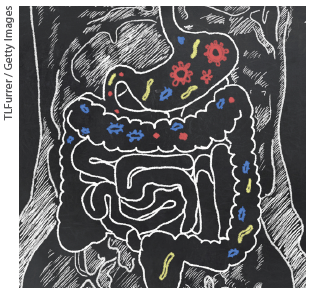
Next-generation sequencing studies by Alan E. Hoban, Ph.D., Gerard Clarke, Ph.D., and colleagues at the the APC Microbiome Institute at University College Cork, Ireland, have uncovered a link between the gut microbiome and microRNA (miRNA) expression in the brains of rats and mice that could feasibly lead to new approaches to treating anxiety disorders by modulating the gut microbiota.
In the study, Hoban and colleageus showed that compared with normal mice, germ-free (GF) mice that are born with no gut microbiota demonstrated altered expression of 103 miRNAs in the amygdala and 31 in the prefrontal cortex regions of the brain, which are areas known to be involved in anxiety and depression. A number of the miRNAs identified have previously been linked with stress and fear responses in mice and with the regulation of neuronal growth and development.
The researchers’ experiments also found that restoring the microbiome in GF mice led to partial normalization of miRNA expression in the same brain regions. Nevertheless, the expression of a large number of miRNAs remained changed even after the GF mice exposed to microbes.