




Abstract

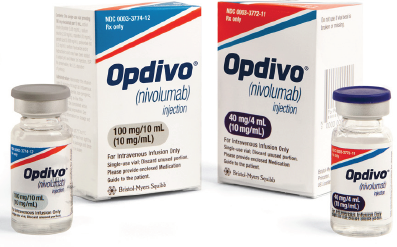
Bristol-Myers Squibb (BMS) has acknowledged that the FDA has placed a partial clinical hold on three clinical trials investigating combination therapies based on its marketed cancer immunotherapy Opdivo® (nivolumab) in patients with relapsed or refractory multiple myeloma.
The FDA based its action on a conclusion that the risks outweighed the benefits for treatments that combined programmed cell death protein 1/programmed death-ligand 1 (PD-1/PD-L1) cancer immunotherapies with pomalidomide or lenalidomide, and possibly PD-1/PD-L1 treatments alone or with other combinations.
The agency’s conclusion came from findings from non-Opdivo combination-therapy studies, BMS said.
“BMS remains steadfast in our commitment to improve outcomes for patients with multiple myeloma, and will work closely with the FDA to address concerns,” the company said in a statement.
Trials halted by the FDA include:
CheckMate-602, a Phase III trial assessing combinations of Opdivo, BMS’ Empliciti (elotuzumab), Celgene’s Pomalyst (pomalidomide), and dexamethasone in relapsed and refractory multiple myeloma (rrMM) (NCT02726581).
CA204142, a Phase II, multiple-cohort study assessing Empliciti with Pomalyst and low-dose dexamethasone, and with Opdivo in patients with rrmm to prior treatment with lenalidomide (NCT02612779).
CheckMate-039, a Phase I study to establish the tolerability of Opdivo and the combination of Opdivo and Janssen Biotech ’s [Johnson & Johnson] Darzalex (daratumumab), with or without Pomalyst and dexamethasone, in subjects with rrMM (NCT01592370).
Patients currently enrolled in the three trials can continue treatment if they are experiencing clinical benefit, BMS added, though no new patients will enroll in the studies. The partial holds come two months after the agency placed clinical holds on three trials assessing combinations using Merck & Co.’s approved cancer immunotherapy Keytruda (pembrolilzumab) to treat multiple myeloma.
The agency acted after the trials’ Data Monitoring Committee reviewed data and found more deaths among patients treated with Keytruda in two Phase III studies among the three halted by the FDA, KEYNOTE-183 and KEYNOTE-185. That finding prompted Merck to halt enrollment in both trials in June.