




Abstract

The concept of variable patient response to medication is nearly 2,500 years old, first proposed by the father of modern medicine, Hippocrates, in his work the Hippocratic Corpus. While Hippocrates' method relied on what could be determined in his day—patient age and condition—today, the detection of genetic variation between patients increasingly allows doctors to apply this knowledge in the selection and the dosing of medications for patients based on their molecular makeup.
Pharmacogenomics—the use of genomic information to personalize drug selection and dosing—is still relatively rare in the clinical setting. But that is beginning to change through the efforts of clinical pioneers—among them St. Jude Children's Research Hospital, in Memphis, TN, and the Mayo Clinic—and international coalitions such as the Clinical Pharmacogenetics Implementation Consortium (CPIC), that are spearheading efforts to provide both pharmacogenomics-based clinical guidelines, as well as evidence of improved patient outcomes via its application.
The opportunity to positively impact patient care is significant. CPIC estimates 95% of people have at least one clinically actionable genetic variant that affects drug response (Richard Weinshilboum, M.D., and his team at the Mayo Clinic Center for Individualized Medicine's Pharmacogenomics Program estimate it is as high as 99%).
Jayk7 / Getty Images

“The focus and awareness of precision medicine really opens up pharmacogenetics in the clinical setting,” said Ulrich Broeckel, M.D., a professor of pediatrics at Medical College of Wisconsin, and founder and CEO of fledgling pharmacogenetics testing company RPRD Diagnostics. Some of the push toward this is coming directly from patients, Broeckel noted, as their knowledge of genetic testing has increased due to the marketing efforts of direct-to-consumer genetic testing companies like Ancestry.com and 23andMe.
“The general population of patients recognizes the importance of genetics, and the added emphasis on precision medicine really raises the awareness of hospitals, other healthcare organizations, and physicians,” he said. “It is not just academic medical centers that are driving this. There are major healthcare organizations that are recognizing [pharmacogenomics] is a differentiator for them in the market, so they want to start implementing it.”
Hero Images / Getty Images

Improved Safety, Improved Treatment
Application of pharmacogenomics in the clinical setting promises to help reduce the rate of adverse drug reactions (ADRs) in patients for drugs post approval. While patients are encouraged to self-report to the FDA any adverse reactions to prescription medication use, there is no comprehensive reporting structure in the U.S. to accurately quantify either the rate of injury, or death, attributed to the use of prescription medications (excluding those related to overdose or misuse).
Despite this data gap, researchers have attempted to derive estimates of the toll taken by properly prescribed medications that end up harming patients. One often-cited study from 20 years ago published in the Journal of the American Medical Association (Lazarou, et al.) estimated that each year roughly 106,000 people die in the U.S. due to an ADR. Other, more recent research pegs the number a bit higher—more than 125,000 annually. That's a rate roughly matched by the number of people who die each year from stroke, the fourth leading cause of death.
While it is known that virtually every person has at least one genetic variant that affects drug response, these responses differ significantly from individual to individual. Further complicating the process of pinpointing proper drug selection and dosing is the broad range of therapies available to treat patients.
“The issue that we are trying to solve with pharmacogenomics hasn't changed and never will change,” said Howard MacLeod, PharmD, director of the DeBartolo Family Personalized Medicine Institute at the University of South Florida Moffitt Cancer Center, in a 2016 National Human Genome Research Institute presentation. “That is we now have many different active therapies for the treatment of most diseases, and the changes that will occur will be that there will be even more therapeutic options for these diseases.”
One example cited by MacLeod is high blood pressure, which currently has more than 100 FDA-approved drugs, or drug combinations on the market for its treatment. Physicians face the daunting task of which one to choose for a patient, with prescribing choices often based on a doctor's familiarity with a specific drug, or choosing a drug that has worked well recently for a few patients. Quite often, the first drug doesn't work and the physician is faced with changing the treatment.
“That really speaks to the need for something more precise in how we choose from amongst the various medicines,” MacLeod added. “We need to be thinking about how do we best choose from amongst the options. The reason we do that is there is so much variation in the response to most types of therapy.”
Building the Case
At St. Jude, the commitment to applying pharmacogenomics for drug prescribing is embedded in how care is delivered. According to Mary Relling, PharmD, chair of the pharmaceutical department, the hospital embarked on its first pharmacogenetics study in 1986, which led in the early 1990s to the hospital routinely testing patients for the proper dosing of an anticancer drug. Over the ensuing 30 years, St. Jude has identified another nine genes that help inform the selection and dosing of as many as 30 different drugs.
“If a patient has a high-risk genetic test result, we utilize that with interruptive clinical decision support to modify our prescribing for the patient based on that test result,” Relling said. “We use it the same way somebody might use a drug interaction alert or a renal function alert.”
While St. Jude is well ahead of the curve in applying pharmacogenomics to patient care, the fact that its three decades of research have yielded relatively few evidence-based gene-drug pairs for more accurate medication prescribing shows the field is still in its relative infancy. Surveys show that “a very small percentage of hospitals, and an even smaller percentage of all clinicians use pharmacogenetics tests routinely—in the single digits for sure,” Relling said.
In an effort to simultaneously discover more gene-drug combinations to add to its treatment regimen, and to help provide evidence for other healthcare systems on the efficacy of a comprehensive pharmacogenomics program, St. Jude is conducting an internal clinical study dubbed PG4KDS. As of November, the program had enrolled more than 4,000 St. Jude patients, with the broad goal of identifying which genes are important enough to be added to its list for testing.
Integration of Preemptive Testing
Like the PG4KDS program, the Mayo Clinic Center for Individualized Medicine's RIGHT Protocol (which stands for Right Drug, Right Dose, Right Time: Using Genomic Data to Individualize Treatment), is studying how pre-emptively embedding a patient's genetic information in the electronic medical record (EMR) affects doctors' prescribing practices, and whether it improves long-term health outcomes.
Implementing a pharmacogenomics program carries upfront costs related to the genetic testing and the work needed to integrate the data within the EMR or medication prescribing systems. Mayo's RIGHT Protocol seeks to find out if those investments eventually pay off.
“This is a new enough area that no one really knows if you implement pharmacogenomics widely across the United States, will it be cost-effective?” Jennifer St. Sauver, Ph.D., an epidemiologist at Mayo involved with the study noted in a blog post. “Is it worth genotyping all of these patients?”
Others, including Relling, are more bullish on the value of preemptive genotyping of patients, with the caveat that the information easily moves with the patient from care setting to care setting, and is embedded in the EMR.
Bryan Dechairo, chief medical and scientific officer for Assurex Health, a precision medicine company leveraging pharmacogenomics via its GeneSight test, notes that allowing doctors to have the pharmacogenomics information at their fingertips can head off the diagnostic and treatment odyssey many patients experience.
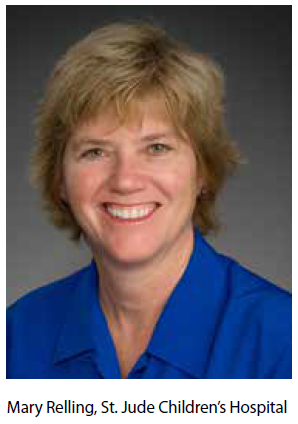
Mary Relling, St. Jude Children's Hospital
“What is happening with many patients is it takes two months for the physicians to figure out that a medication is not working,” Dechairo said. “When the patient comes in, they want a change right then, and if you can't give the physician tools to make that change right away, neither the patient nor the physician are going to be happy.”
And while the costs associated with preemptive genotyping of patients may seem unnecessary to some, proponents note that it is an investment that only needs to be made once, but can pay dividends over the lifetime of a patient.
“Pharmacogenetics testing results remain valuable and retain their value over the lifetime of the patient,” noted Broeckel. “The turnaround time for the first comprehensive genotype and putting the data in the medical record is a few days or a week. If you think about the second use, the turnaround time is effectively zero, since the information is already there.
“As healthcare organizations take the first step into precision medicine, they recognize that pharmacogenetics is a place where they can have immediate impact on patient care and outcomes,” Broeckel continued. “As the reimbursement goes more to outcomes-based reimbursement, I think pharmacogenetics can play an important role there as well.”