




Abstract

STEVE GSCHMEISSNER / SCIENCE PHOTO
LIBRARY / Getty Images
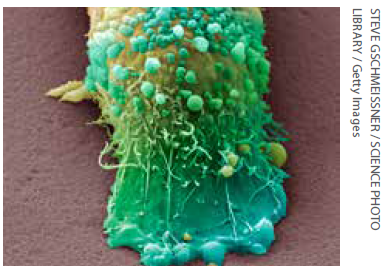
A rare resistance mutation first thought to appear in melanoma following treatment with a targeted therapy has instead turned out to be hiding in the tumor all along, poised to stop the treatment in its tracks before it could begin, according to a recent study.
Lawrence Kwong, Ph.D., assistant professor of translational molecular pathology at The University of Texas MD Anderson Cancer Center, led a research team that set out to find resistance mechanisms against a combination of MEK and CDK4 inhibitors designed to treat melanoma that has a mutation in the NRAS gene.
The mutation to the PIK3CA gene initially appeared to be an acquired resistance variation arising after treatment. But by re-analyzing the pretreatment biopsy, Kwong and colleagues were able to establish that it was rare but present from the start, hiding on one side of the tumor. The researchers published their findings March 1 in the journal Cancer Discovery.
“Our study is the first to measure multiple regions in pre-treatment tumor biopsies at high resolution and then track the resistant mutation over years of treatment through six biopsies,” Kwong said in a statement. “We are able to say that this mutation started out rare and then rapidly expanded as the MEK/CDK4 inhibitors killed off a large number of non-resistant cells.