




Abstract

Victory often depends on good counterintelligence—and the war on cancer is no exception. Scientists have proven the value of circulating tumor DNA (ctDNA) and circulating tumor cells as informants, and the number of publications starring these double agents has rocketed skyward over the past several years. While “liquid biopsies” have the potential to improve clinical care for late-stage disease by providing clinicians with information on patient prognosis, treatment efficacy, and disease recurrence, research has also demonstrated their ability to alert clinicians to tumors before standard screening methods—allowing earlier intervention and, ultimately, saving lives.
Several companies—including Grail, Illumina’s billion-dollar spin-off—have entered an arms race for earlier detection of these sentinels, and now a team of researchers at Johns Hopkins Kimmel Cancer Center has made significant strides in the search for oncology’s so-called holy grail. Described in a recent Science article, entitled “Detection and localization of surgically resectable cancers with a multi-analyte blood test,” the team’s blood-based diagnostic, CancerSEEK, marks a new milestone for early-stage cancer detection.
On average, the test detected 70% of cases in a 1,005-patient cohort diagnosed with eight common forms of non-metastatic tumors including breast, colorectal, esophageal, liver, lung, ovarian, pancreatic, and stomach. The test’s sensitivity ranged from 33% in breast cancer to 98% in ovarian cancer. Together, these eight cancers account for an estimated 360,000, or 60%, of cancer deaths annually in United States, and no screening methods currently exist for five of these.
While physiological limitations make it extremely difficult to detect the minuscule amount of ctDNA amongst normal cell-free DNA—analogous to finding a needle in a haystack—with high enough sensitivity and specificity for early-stage cancer screening, CancerSEEK overcomes these limitations by combining a panel of 16 genes, known to harbor cancer-driving mutations, with 8 protein biomarkers. In a conversation with Genetic Engineering & Biotechnology News, the paper’s senior author, Nickolas Papadopoulos, Ph.D., professor of oncology and pathology at Johns Hopkins remarked, “The use of a combination of selected biomarkers for early detection has the potential to change the way we screen for cancer.”
Successful screening tests need to maximize detection sensitivity, ideally outperforming current methods, while also minimizing both cost and false-positive results. In addition to having an estimated cost of less than $500, CancerSEEK demonstrated a specificity of >99% with only seven out of 812 samples from healthy individuals giving false-positives. According to co-author Anne Marie Lennon, M.D., Ph.D., associate professor of medicine, “Having a small, robust panel allows us to minimize false positive results, which, in screening, is extremely important, because you really need to have a specificity of 99%. In addition, having a smaller panel allows us to keep the test affordable.”
CancerSEEK takes a multi-analyte approach to cancer detection.

The DETECT study at Geisinger Health system will enroll 10,000 women between the ages of 65 and 75 in the first large scale research to determine CancerSEEK’s viability as a clinical diagnostic tool.

The researchers applied the law of diminishing returns to optimize their panel of genetic mutations by identifying the minimum number of short DNA sequences, or amplicons, that would allow them to detect at least one driver mutation in each of the eight tumor types. They observed a plateau in detection sensitivity around 60 amplicons, and exceeding this number, the authors claimed, would increase the probability of false positives without a substantial increase in sensitivity. Armed with an optimized 61-amplicon panel, the team used an immunoassay platform to whittle their list of 41 protein biomarker candidates down to 8 that proved particularly useful for distinguishing cancer patients from healthy controls.
However, integrating data from multiple analytes presented a unique challenge. “This is the first time that an algorithm has been built for this specific type of data,” said co-author Cristian Tomasetti, Ph.D., associate professor of oncology. Tomasetti led the team of biostatisticians that developed the algorithms supporting CancerSEEK, which uses a logistical regression to classify samples as “positive” or “negative” based on mutation frequency and protein levels.
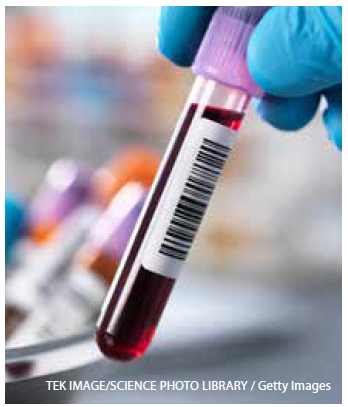
TEK IMAGE/SCIENCE PHOTO LIBRARY / Getty Images
If scored positive, a supervised, machine-learning algorithm uses the information on mutation frequency and protein levels to determine the most likely location of the tumor based on tissue-specific patterns, and CancerSEEK successfully localized cancers to a small number of anatomic sites in 83% of patients. Since different tumors often share the same driver mutations, the ability to localize the cancer after detection is one of the major impediments to the successful implementation of a blood-based test that screens for multiple tumor types.
Despite these promising results, the study has received several critiques. For instance, in an interview with NPR, Joshua Schiffman, M.D., pediatric oncologist at the Huntsman Cancer Institute at the University of Utah, pointed out that the test only identified 43% of Stage I cancers. “If we have a test result that is negative we don’t want to give false reassurance to the patient,” he remarked.
Lennon expressed a different perspective on these numbers: “If you had a drug that improved cancer survival by 40% people would say that it is brilliant… If we can identify 43% of the patients with Stage I cancer who are asymptomatic—that is a huge thing for those patients.”
In a true screening setting, however, patients will have less advanced disease than the cohort used for the study, which already had diagnosed cancers, and individuals with inflammatory diseases that increase protein levels could increase the rate of false-positive results. “[CancerSEEK] needs to be validated in a large prospective study on healthy individuals to see exactly what the sensitivity and specificity is in that cohort,” explained Lennon. Such a study is currently underway at Geisinger Health System.
Geisinger has initiated the first, 18-month phase of the study, which will enroll 10,000 women between the ages of 65 and 75 with no previous history of cancer. If the first phase goes well, the DETECT study plans to enroll an additional 40,000 participants in a 5-year, $50 million research initiative funded by the Marcus Foundation, a private philanthropic group.
Participants with two positive test results will undergo additional testing to identify and treat potential tumors. According to Adam Buchanan, assistant professor, who is leading the research at Geisinger, one of the most important and challenging aspects of the study is “making that clinical handoff from a research endeavor to a clinical endeavor for those who are eventually found to have cancer.” In addition to evaluating how participants react to test results, the DETECT study will also assess how well CancerSEEK detects different stages of cancer.
Early detection could turn the tide in the war on cancer for many individuals, but, despite CancerSEEK’s promising results, the search for oncology’s “holy grail” is far from over. However, as Dr. Schiffman told NPR, “This is the paper that’s going to set the field in motion.”