Abstract

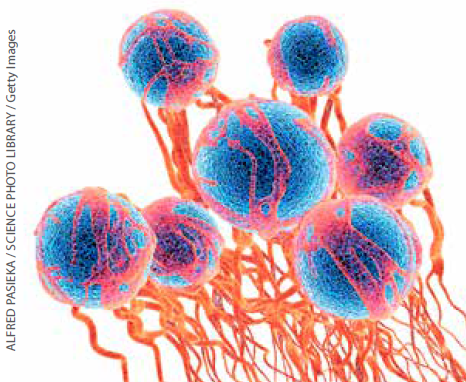
A new study from a team of investigators at Northwestern University Feinberg School of Medicine has discovered why Huntington Disease (HD) is so toxic to cancer cells, and are harnessing it as a novel approach to treat cancer.
HD is caused by an overabundance of a certain type of repeating RNA sequences in one gene, huntingtin, present in every cell. These repeating sequences—in the form of so-called small interfering RNAs (siRNAs)—attack genes in the cell that are critical for survival. Nerve cells in the brain are vulnerable to this form of cell death. However, cancer cells appear to be much more susceptible.
“This molecule is a super-assassin against all tumor cells,” noted senior study investigator Marcus Peter, Ph.D., professor of cancer metabolism. “We’ve never seen anything this powerful.”
To test the “super-assassin” molecule in a treatment scenario, the Northwestern team delivered the molecule in nanoparticles to mice with human ovarian cancer. The treatment significantly reduced the tumor growth with no toxicity to the mice. More importantly, the tumors did not develop resistance to this form of cancer treatment.
ALFRED PASIEKA / SCIENCE PHOTO LIBRARY / Getty Images