




Abstract

GSK’s $300 million investment and collaboration with 23andMe comes as the company has refocused its drug development efforts and has increased its genomics partnerships.
Jeff J Mitchell / Staff / Getty Images
23andMe has received a $300 million equity investment from GlaxoSmithKline (GSK) under a collaboration designed to use genetic data to identify new drug targets, and thus accelerate development of new therapies from both companies.
The collaboration is intended to combine 23andMe’s expertise in gathering and analyzing data from the 5 million customers in its research platform—which the company says includes the world’s largest consented, re-contactable database—with GSK’s know-how in R&D and commercialization.
GSK has disclosed one potential new therapy it plans to study with 23andMe—a small-molecule Leucine-Rich Repeat Kinase 2 (LRRK2) inhibitor now in preclinical development for Parkinson’s disease, having been implicated in the autosomal dominant form of the disorder.
The inhibitor of the LRRK2 mutated protein appears in only 1% to 2% of people with Parkinson’s, the second-most common neurodegenerative disease affecting roughly 10 million people worldwide—1 million of them in the U.S. according to the Parkinson’s Foundation. Two hundred-fifty customers of 23andMe reportedly have the disease.
“The idea that there’s 250 patients in the 23andMe database, most of whom have probably consented to research, and for whom there might be an available therapy, but would have taken maybe many, many years to conduct a trial, could be done significantly faster,” Hal Barron, M.D., GSK’s CSO and president, R&D, told reporters during a conference call. “We can really speed up the development time as well, making us very excited about the opportunity of pursuing this.”
Added Anne Wojcicki, CEO and co-founder of 23andMe: “With over 80% of customers consenting to participate in research, it’s really clear that a lot of our customers want to play an active role in discovering and developing treatments and cures for diseases.”
Last year, GSK terminated a Phase I observational study (NCT01424475) designed to assess the phenotypic neurocognitive abnormalities of Parkinson’s patients with the LRRK2 mutation—with the aim of identifying potential PD endpoints related to the LRRK2 mutation for future Phase I or II clinical trials of LRRK2 inhibitors.
But finding patients proved to be a challenge. Only five were recruited, GSK disclosed on ClinicalTrials.gov in May 2017: “Following extensive efforts to increase recruitment, it will not be possible to complete the study protocol within a reasonable time.”
Strength in Numbers
The prospect of much larger patient populations for future trials of the LRRK2 inhibitor and other candidates is attractive to both companies, said Henry T. Greely, director of the Center for Law and the Biosciences at Stanford University, where he is also director of the Stanford Program in Neuroscience and Society.
“GSK is not just paying $300 million to be able to pursue this Parkinson’s trial, but other similar trials. That’s a nice example of a potential payoff in terms of being able to do better research,” said Greely, professor (by courtesy) of genetics at Stanford School of Medicine. “Plus, they’ve got the fallback that if nothing else, they’ve got some stock in the company that may be worth something.”
Don Murray / Stringer / Getty Images
GSK is among biopharma giants intent on enhancing their drug R&D by accessing 23andMe’s data. Genentech and Pfizer also have collaborations, as do several academic institutions, according to a 23andMe spokesperson. The company has not identified other partners or disclosed how many such collaborations it has.
“23andMe’s existing collaborations will continue. We will also continue to provide data and analyses to academics and researchers in areas outside of target discovery,” the company spokesperson said. “The agreement with GSK is a highly focused approach with a collaborator who has the expertise and resources to accelerate drug discovery. We look at this as a way of potentially delivering more personalized treatments quicker and more cost effectively, which is the ultimate goal.”
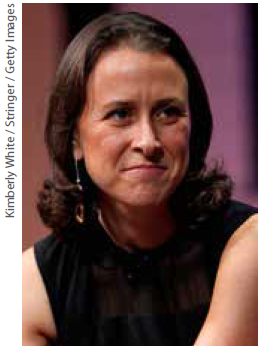
Anne Wojcicki, CEO and co-founder, 23andMe
Kimberly White / Stringer / Getty Images
The pharma collaborations also enable 23andMe to generate revenue beyond the sales of its marketed tests, the $99 Ancestry Service, and the $199 Health + Ancestry Service designed to offer insights on variants associated with higher risk of developing a disease, carrier status, traits, wellness, and ancestry. Both are based on saliva samples customers submit for lab analysis via the company’s collection kits.
The collaborations do not signal a shift of business strategy, said 23andMe, which stands to gain up to $60 million from Genentech alone, Forbes reported in 2015. Privately held 23andMe does not disclose revenues, but has raised $491 million since it was established in 2006. That includes $250 million in financing raised last year.
‘Appropriate Concerns’
Wojcicki’s announcement of the GSK collaboration on 23andMe’s blog sparked requests from six people to opt out of having their data shared. “Customers can choose to opt-in or opt-out at any time,” the company stated.
Greely said the data sharing raises ethical concerns.
“Reasonable people can differ on how important they are,” Greely said. “There are certainly appropriate concerns about privacy—not only what the company can do with your data, and what they might learn about you from your data, but the possibility of leaks, of hacks, and particularly of re-identification.”
“If privacy really concerns you, either you shouldn’t sign up with consumer genomics companies at all, or you should only sign up in a context where they allow you to opt out of your data being shared,” Greely added.
Henry T. Greely, director, Center for Law and the Biosciences, Stanford University

Yet along with the risks, he added, come the altruistic benefits of helping advance research, and develop life-saving treatments. For biopharmas, that process increasingly relies on genomics. GSK says more than 60% of the targets elected for its new drug discovery programs over the past year were supported by human genetic evidence.
GSK has stepped up genomics-based research collaborations in recent years. In addition to partnering with academic researchers, GSK has also pursued larger initiatives.
In March 2017, GSK joined Regeneron’s Genetics Center, a subsidiary of Regeneron Pharmaceuticals, in investing an undisclosed amount toward sequencing the first 50,000 exomes from the UK Biobank, an initiative that has been completed. And in December, GSK took another partnership tack, contributing £40 million (about $52 million) to launch a new genomic research partnership with the U.K. government and other public and private partners. A month later, Regeneron formed a $50 million consortium with five other biopharmas to speed up by three years exome sequencing of all 500,000 people within the UK Biobank.
GSK has said its contribution would support its partnership’s sequencing of all 500,000 exomes in the UK Biobank—as well as GSK’s Open Targets collaboration with the European Bioinformatics Institute, the Wellcome Sanger Institute, Biogen, and Takeda Pharmaceutical. On May 3, Celgene joined Open Targets, whose partners have committed to systematically identify and prioritize targets for new treatments.
The Altius Institute for Biomedical Sciences—an independent nonprofit research institute in Seattle to which the company has committed $95 million over its first five years—aims to combine automated functional genomics, genome engineering, advanced imaging, and integrative computation to define fundamental mechanisms regulating genes and cells and connect these with human physiology, pathology, and therapeutics.
Discovering Targets
GSK and 23andMe say they have yet to nail down all their early-stage programs.
“23andMe significantly enhances and complements data derived from GSK’s existing collaborations,” GSK spokes-person Mary Ryne said. “The two companies will be initiating several joint target discovery efforts based on 23andMe’s analysis of their genetic database in the coming months.”
GSK says its partnership with 23andMe reflects a new R&D strategy focusing on science related to the immune system, use of genetic data, and investments in advanced technologies.
Under Emma Walmsley, who became CEO last year, GSK has overhauled its R&D pipeline, terminating more than 30 clinical and preclinical programs deemed unlikely to generate sufficient returns. The company now has more than 40 new molecular entities, with two HIV combination treatments—dolutegravir+lamivudine and cabotegravir+ripilvirine—and the oncology treatment GSK 2857916 expected to reach the market within the next two years.
Richard Scheller, Ph.D., 23andMe’s CSO and head of therapeutics, disclosed at the conference call that 23andMe’s therapeutics division has “a number of drug discovery projects that we’ve started in the areas of autoimmune, cancer immunotherapy, cardiovascular disease, osteoarthritis, liver disease, and so on.”
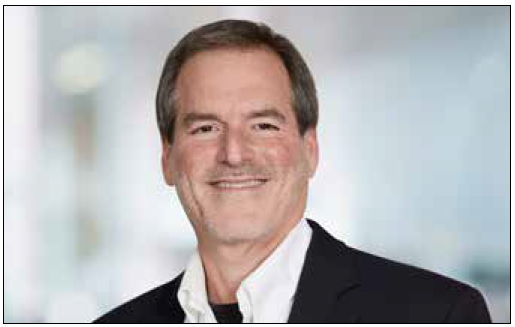
Hal Barron, M.D., CSO and president of R&D, GSK
Scheller and Barron were colleagues at Genentech, where Barron was once SVP of development and chief medical officer. He later served as president of R&D at Calico, a Google-backed company launched in 2013, before joining GSK. Scheller served as Genentech’s EVP of research and early development until 23andMe appointed him in 2015 to lead its therapeutics group.
Since then, Scheller said, the group has launched several drug discovery programs and built out 23andMe’s capabilities for finding drug targets, which the company has not disclosed.
“We have a lot of information about immune phenotypes and immune dysregulated diseases, including psoriasis, osteoarthritis—way, way too many to even comment on. We also gain insights into the immune system from asking questions like, ‘How do you respond to poison oak or a mosquito bite?’ and so on,” Scheller said.
“One of the most interesting sets of observations that we’ve made has to do with potential cancer immunotherapy targets, when we find a certain group of patients have an increase in autoimmunity and a decrease in certain types of cancer, suggesting that these variants are in genes that may be good targets for cancer immunotherapy,” he added. “We have a vast amount of information on human variants and the response of the human immune system to these variants, and we look forward to working with GSK to exploit this data.”