




Abstract

nycshooter / Getty Images
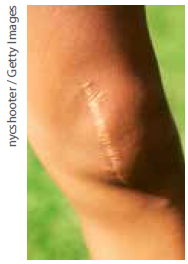
Dermatologists and plastic surgeons have long observed that older people’s wounds heal with thinner scars. Now, a new study has exposed the role of a blood-borne stromal factor in scarring, suggesting that suppression of this factor, which is expressed by the SDF1 gene, could improve tissue regeneration.
SDF1 is a signaling molecule previously shown to play a role in scar formation in the skin, liver, and lung. Working with model mice of different ages, the scientists narrowed in on SDF1 after observing lack of scarring of pierced ears of the older mice compare to the younger mice, then examining the gene expression signatures in both their tissue and blood.
“This is a rare instance where aging actually improves the body’s ability to heal rather than diminishing it,” says Thomas H. Leung, M.D., Ph.D., at UPenn School of Medicine. “When we’re younger, we secrete more SDF1 into the bloodstream to form scars, but as we age, we lose this ability, which allows tissue to regenerate.”