Abstract

John Lund / Getty Images

Mazmanian’s work goes far beyond cataloging the panoply of bacteria that can be found in the gut. Rather, his lab and the two companies that he has started are developing novel ways to use those bacteria to be at the center of treating human disease. Senior Editor Julianna LeMieux, who first met Mazmanian 10 years ago at a bacterial genetics conference, recently found time to catch up with him to discuss his current work in the field.
ChrisChrisW / Getty Images
At the company that I started, Axial Biotherapeutics, we are executing this plan for both autism and Parkinson’s disease (PD.) We know that you can deliver molecules to the gut, drugging microbial pathways (that inherently do not exist in humans or mice), and by manipulating those, you can exacerbate or ameliorate neurodegeneration and behaviors linked to autism.
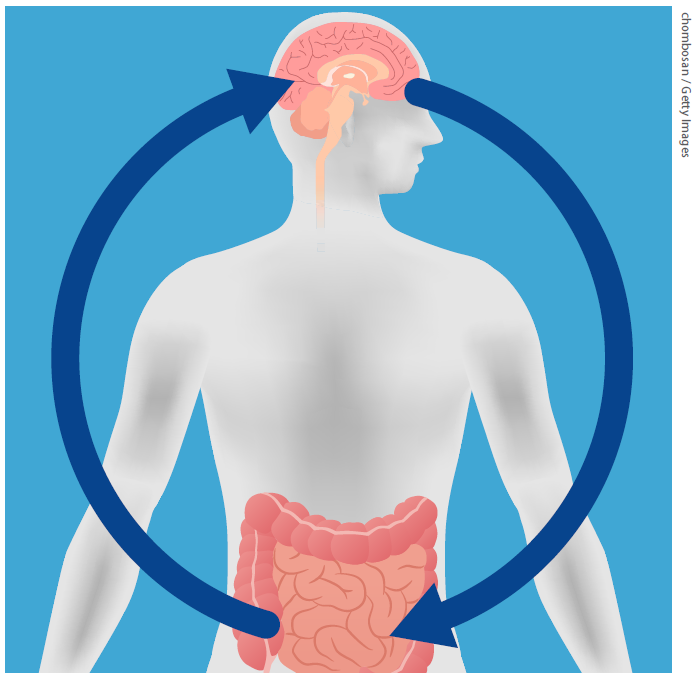
The drugs that are being developed are completely gut retentive—they do not enter the circulation. Yet, there are incredible changes in the brains of the animals that are being drugged. So, the main focus of our work is to bypass the hurdle of getting the drugs across the brain, and to let the microbiome do the work to connect the gut and the brain.
One interesting finding about PD patients that was first documented in 1817 in the first paper written on PD—at that time, referred to as “shaking palsy”—by James Parkinson, was that many patients had GI issues. We now know that up to 80% of PD patients suffer from constipation.
We wanted to follow up on why people with a neurological condition have GI issues. What we showed is that if you remove the microbiome from a PD mouse model, the mouse exhibits no motor symptoms (hallmark disturbances in gait and posture stability). Additionally, the germ-free version of this mouse has no motor symptoms, which gave us a tool to test the human microbiome.
We knew, through research that sequenced the DNA in fecal samples, that the microbiome is different between a PD patient and a healthy control. But we wanted to test the causal relationship between the human microbiome and PD. So, we took microbiota from human PD patients and healthy controls and transplanted them into the germ-free mice. The mice that received the microbiomes from PD patients developed severe PD symptoms (motor symptoms, α-synuclein, neuroinflammation). However, mice that received microbiota from a healthy human control had much less disease.
This told us that the microbiome is, indeed, contributing to the symptoms and they are not a consequence of some other change. This experiment also developed a mouse model with human microbes as opposed to mouse microbes, (there is only a 5% overlap between the mouse and human microbiota) where the microbiome is driving the symptoms.
We then asked what is different about the human microbiota in PD? To find that, we mined our microbiome data and publically available databases and identified candidates of both species of bacteria and genetic microbial pathways that were dysregulated between healthy controls and PD patients.
Although we are working our way through all of the potential candidates, Axial is currently leveraging a single species of bacteria that induces all PD phenotypes in the mice upon transplantation. To take it one step further, we have identified the genes that are responsible for inducing the PD symptoms. When the gene is knocked out, the symptoms are no longer present. These genes are not found in metazoans—they are completely microbial pathways.
Axial has developed small molecule inhibitors against the gene produces in that pathway. Using them, they can, essentially, drug the ability of this bacteria to produce this product. When they do this, the bacteria are completely viable, but the mice are absolutely healthy. In addition, the molecules are made to be completely gut selective. Meaning that they do not enter the circulation—the molecule is not found in the urine, serum, nor the brain. This is proof of concept that we can deliver molecules that are highly gut specific and target microbial pathways to achieve benefits in a classic neurological condition.
Given these data, in theory, by drugging the microbiome, you should be able to restore health and that is what we are doing at Axial, by developing drugs and going into the clinic. Our first clinical trial will begin at the end of this year with a gut selective molecule that targets a microbial pathway, that is completely inert to a mammalian system, in about 100 PD patients.
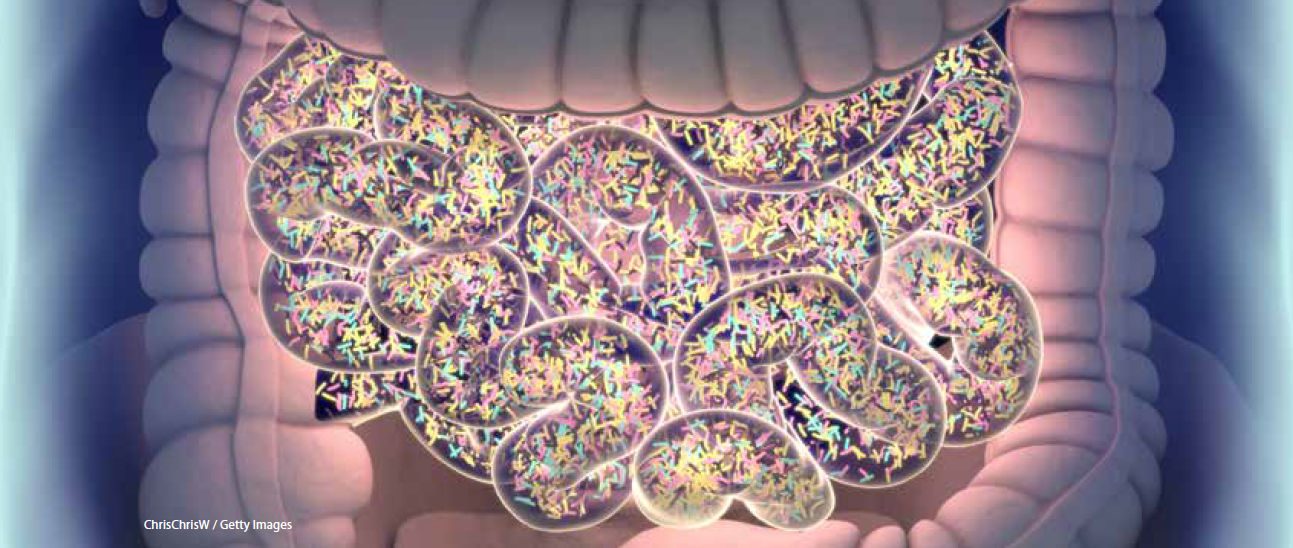
It is really the function of the microbiome that is important to understand and that is where we have the least amount of evidence. Not which bacteria are there in terms of genus and species and not even what is there in terms of genes. Rather, what are the molecules that are being made? We have some glimpses of that answer from fecal and serum metabolomics. These bacterially derived molecules are almost completely unstudied and do not look like anything else that has never been studied before.
As we sit here today, we are much closer to knowing nothing than we are to knowing anything as far as function of the microbiome. Cataloging what bacteria are there has been done. But no one knows what that information is telling us about biology.
The hype and the claims that the companies make concerns me. Some people are making promises to society that will almost certainly not be kept. There are going to be consequences and backlash to that. If companies continue to make claims to customers who pay hundreds of dollars for a product and nothing is received in return, they will think that the microbiome is just another fad. The long-term issue of too much hype may come back to really hurt the field.
I know I can’t control that. But, I do know that if we do the most rigorous and informative experiments, if we ask the right questions, if we translate the findings from mice to humans and show clinical efficacy in people, it will validate the field. For me, that is the blueprint that will uncover the microbiome as an avenue to understand health and disease and to leverage it to help people. This is going to take time. It will take 5 to 10 years. But, once we have those clinical wins, and if we can achieve the goals, that will be validation needed to believe that the microbiome can be harnessed to help people.
chombosan / Getty Images