




Abstract


The Advances in Genome Biology and Technology (AGBT) Precision Health Meeting came together in the San Diego suburb of La Jolla in early September. A spin off of the technology-focused AGBT meeting traditionally held in February, the smaller precision health conference is largely attended by researchers and clinicians working on the frontlines of genomic and precision medicine.
The meeting is unique, in large part because of the field that it represents. Developments at the interface of genomics, medicine, and health are generating genomic and phenotypic information at a pace that scientists and clinicians in the field struggle to keep pace with. The impression given by the people in the field is that organizing and sharing the newly generated data is a lot like chasing a ball rolling down a steep hill.
The list of speakers was a who’s who in the world of clinical genomics, including Marc Williams, M.D., from the Geisinger Genomic Medicine Institute, who gave an overview of Geisinger Health and how it is revolutionizing precision medicine in healthcare. Similarly, Robert Green, M.D., from Harvard Medical School and The Broad Institute talked about the MedSeq and BabySeq programs and what his team has learned about the line where genomic sequencing and public perception meet. Also, Stephen Kingsmore, M.D., wowed the room with the near miraculous diagnostics provided in less than 24 hours at the Rady Children’s Institute for Genomic Medicine.
Mixed in with the big names and their stories that have become virtually synonymous with precision medicine, were talks from researchers making some of their early contributions to the field in emerging areas of precision health. These stories, which we highlight here, are the future of precision medicine. For example, precision psychiatry, exome sequencing to evaluate fetal anomalies and the clinical applications of population genetics. These topics are the offshoots of the pioneering work that has been done in the field, expanding the role of genomics in medicine.
Is There a Future for Precision Psychiatry?
Jordan Smoller, M.D., Harvard Medical School

Jordan Smoller, M.D., a professor of psychiatry at Harvard Medical School, started his talk by detailing how common psychiatric disorders are, affecting more than a quarter of the population in any given year and more than half of all people over the course of a lifetime. For that reason, Smoller said that there is an important future for precision psychiatry, despite being in its infancy and that, similar to the pioneering work that has been done in precision approaches to cardiology, progress is being made. He hopes that the tremendous resources like the Electronic Medical Records and Genomics (eMERGE) Network, a national consortium organized by the National Human Genome Research Institute (NHGRI) and UK Biobank will incorporate mental health data as they grow, to enable more research.
Smoller touched on several different areas were the integration of precision medicine could benefit psychiatry including pharmacogenetics, risk stratification, prevention of intervention, and genome guided therapies.
He noted that drugs for mental health are limited—available FDA approved therapeutics are based on mechanisms identified in the 1950s or 60s and too often fall short or have intolerable side effects. And yet, 1 in 5 Americans are on psychotropic drugs. The result is that when they are prescribed, “we really don’t know who is going to respond to what” and that genomic information could be used to inform that process, Smoller noted.
One goal of precision psychiatry is to combine EHR data with clinical genomics to predict risk. Using bipolar disorder as a model, researchers created an algorithm that could evaluate risk of having bipolar disorder and tested it, head to head, with psychiatrists’ diagnoses. To rigoruously test the method, they used a group of people with depression and schizophrenia, two disorders that are often conflated with bipolar disorder. The algorithm performed almost the same as an expert clinician.
VICTOR DE SCHWANBERG/SCIENCE PHOTO LIBRARY / Getty Images
Smoller added that “predicting risk early for something like schizophrenia is compelling.” There are 100,000 people who have a first episode of psychotic illness each year in the U.S. Many of these people go undiagnosed and the longer someone goes without a diagnosis or treatment, the worse the outcomes are. So, the goal is to flag people earlier who are affected but undiagnosed.
Because the only ways to decrease the chances of having mental illness are not necessarily actionable—i.e., not having an affected first degree relative and avoiding significant childhood adversity—people are looking to genomics to uncover other preventative strategies. Two that have garnered attention are physical activity and social support. Using GWAS data from the UK Biobank combined with data on people’s level of activity, Smoller’s team found a causal protective effect of physical activity on depression. Similarly, analyzing a variable called “unit cohesion” in soldiers that were pre- and post-deployment in Afghanistan, they found that it has a protective effect, work that could lead to genome guided therapeutic development.
While the field of precision psychiatry is just beginning,. Smoller says, “The need is tremendous, the future is long and no family goes untouched.”
Exome Sequencing in the Evaluation of Fetal Anomalies
Programming a talk on psychiatry followed by one on fetal anomalies, AGBT Precision Health illustrated just how diverse the field of precision medicine has become.
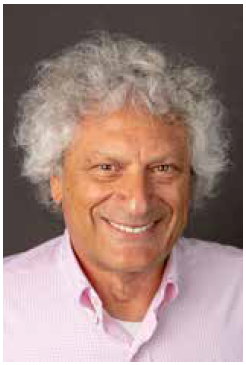
Ronald Wapner, M.D., the director of Reproductive Genetics and the vice chair of research in Obstetrics and Gynecology for Columbia University Irving Medical Center, was a familiar face as he had performed my pre-natal genetic testing just three years prior, during my last pregnancy.
Ronald Wapner, M.D., Columbia University Irving Medical Center
Wapner kicked off his presentation with a 1977 paper from The Lancet which stated that “virtually all chromosomal abberations and many biochemical disorders can be detected by amniocentisis and prenatal testing.” Laughing that hubristic statement off, Wapner’s decades of experience dealing with the limitations of the available technologies made his passion for the future even more apparent. He added, “we’ve been looking for a way to do this for a long time.”
Prenatal testing has challenges that do not exist in the postnatal arena. Wapner explained that “some subtle abnormalities cannot be seen until the fetus is in front of you” and “no neurocognitive abnormalities are available. The timing poses a challenge where the phenotype is rapidly evolving and there is a huge burden of turnaround time,” he added. “We cannot take more than 2 or 3 weeks as some patients may choose to not continue the pregnancy, and some findings are not detectable until you are very close to those limits.”
With the stage set, Wapner moved from prenatal diagnosis to the focus of his talk: maternal fetal precision medicine. He added, “this is not just about terminating the pregnancy.” Rather, it is about precision medicine on fetuses with structural anomalies.
Wapner’s research group has been working on a project for the last two years that performs trio (mother, father and baby) whole-exome sequencing (WES) on every pregnancy that walks into their center with any structural abnormality. The goal is to answer the question, “Is sequencing incrementally valuable at many levels for the evaluation of fetuses with an anomaly?”
Out of 1,075 fetuses with congenital structural anomalies, roughly 600 were excluded due to lack of father (an incomplete trio) and/or lack of consent, resulting in 364 sequenced patients. Fifty (13.7%) had a genetic diagnosis on sequencing. Wapner walked through several clinical cases to illustrate that there is valuable information gained that is often reassuring and does not necessarily lead to early termination. For example, it allows health professionals to be prepared to provide appropriate clinical care immediately upon delivery and informs the correct drugs to give upon birth based on a particular genetic variant. In one case, the team was prepared for heart surgery within 24 hours of birth, something that would almost certainly not have been done without the prenatal sequence information.
Other benefits of this approach include making informed decisions on where to deliver a baby and the type of delivery. In addition, in utero fetal invasive surgery for certain disorders can be performed. Upon the diagnosis of a lethal abnormality, some parents make the decision for compassionate care and when that decision is made earlier, there is more time for preparations and more support.
Science Photo Library - SCIEPRO / Getty Images

It is the Obstetrical Society’s opinion that prenatal sequencing should be performed only in labs that have prior experience in prenatal diagnosis. Wapner warned that, “if you add a test in obstetrics, it will grow like wildflowers,” but he believes that whole-exome sequencing should only be done in exclusive settings, with groups that are adept at this area.
But in order for this method of precision care to take root, more data on genotypes and phenotypes is needed, including a repository exclusively for fetal phenotypes. The currently available post-natal data is not translatable to the prenatal world.
Wapner and his group will continue to look more deeply into whether prenatal genomic sequencing changes outcomes and care. And, he predicts that in just 3 to 5 years, there will be non-invasive fetal sequencing.
Population Genetics Approaches for Medical Genomics
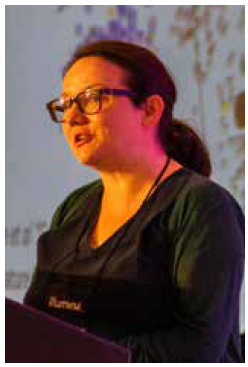
During a Friday afternoon presentation, AGBT attendees found themselves at the intersection where anthropology and medical genomics meet. Presenter Eimear Kenny, Ph.D., is an assistant professor of genetics and genome science at the Icahn School of Medicine at Mount Sinai Hospital. The goal of Kenny’s lab is to “realize the full potential of genomics to infer human history and evolution and to inform better models for clinical medicine.”
Eimear Kenny, Ph.D., Icahn School of Medicine, Mount Sinai Hospital
She does this by measuring genetic variation in populations and uncovering complex patterns of genetic diversity. Her lab sequences large numbers of ethnically diverse human genomes to study humans. This yields information that can be used to understand properties of humans in multiple different ways. One example is her recent work describing a novel variant that causes blond hair in the Solomon Islands, Melanesia. However, other aspects of her work focus on health and disease related questions, such as findings regarding how pathogenic genetic variants are distributed over populations. The more ethnically diverse human genomes that her groups sequences, the more it becomes apparent that the majority of the genetic variants in the human genome are rare and geographically restricted.
The take home message from Kenny’s talk was that, in order for precision medicine to reach its fullest potential, we need to “embrace diversity, embrace complexity, and embrace opportunity.”
Kenney’s research shows that focusing a great deal of effort on a few “target populations” in medical genomics—a common practice—under the assumption that variants found in these populations will be relevant to other groups, is not sufficient. This is especially true if disease variants follow suit with what has been demonstrated with the rest of the genome.
Corbis/VCG / Getty Images

Kenny recently started a new four-year program known as NYCKidSeq to study the impact of providing genome sequencing to 1,100 children from the Bronx and Harlem. Kenny said that “it’s very likely that in the next five to 15 years, everyone walking into a health system will have their genomes sequenced. We don’t want New York City children to be last to benefit from this particular advancement.”