




Abstract

In what could become a model for other states on how to tackle and manage the spread of carbapenem-resistant enterobacteriaceae (CRE) infections and other anitmicrobial resistant bacteria, the New York State Department of Health (DOH) and its Wadsworth Laboratory have teamed with Merck Healthcare Services and Solutions subsidiary ILÚM Health Solutions and OpGen on a pilot program to develop a near real-time pathogen detection and reporting system designed to radically reduce the spread of antimicrobial resistant infections.
According to estimates by the Centers for Disease Control and Prevention (CDC), antibiotic resistant infections affect more than 2 million people annually, resulting in 23,000 deaths, and take a $35 billion dollar toll on the economy via lost productivity. CREs are a particular focus as they have become resistant to all or nearly all the antibiotics available today. Almost half of hospital patients who get bloodstream infections from CRE bacteria die from the infection. As a result, the CDC has classified CREs as one of three urgent threats to public health.
OpGen’s Acuitas AMR gene panel provides detection of multidrug-resistant bacterial pathogens in as little as three hours.
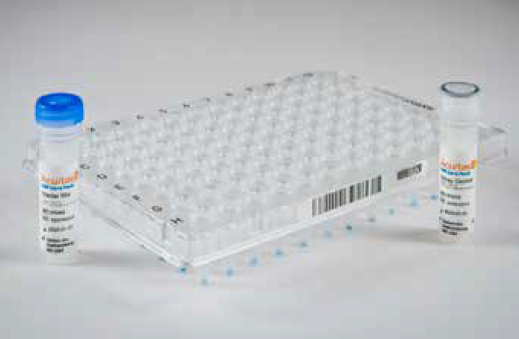
The pilot program, kicked off the beginning of the year, is a first step to build a broader, integrated program to mitigate this threat. It will leverage OpGen’s rapid diagnostics capabilities that can detect and identify multidrug-resistant pathogens in under three hours, and ILÚM’s health information platform designed to gather and anlyze data from hospitals via the state’s health information exchanges (HIEs).
As Jill Taylor, Ph.D., director of the Wadsworth Center see it, there exists a pressing need to develop a comprehensive system for quickly identifying infected patients both for treatment and to quickly isolate them to prevent spread to other patients.
“I think that the WHO statement that says ‘we are heading for a post-antibiotic era in which common infections and minor injuries can once again kill’ summarizes the significance and the reality very clearly,” Taylor said. “The problem is exacerbated by the fact that no new classes of antibiotics have been developed for many years, so we are rapidly running out of options to treat drug resistant infections. Imagine the possibility that soon relatively common surgical procedures like hip or knee replacements could become very high-risk operations.”
Real-time identification
When it comes to the battle against multidrug-resistant pathogens, hospitals and health systems are too often playing catch-up instead of proactively treating patients with a known drug-resistant bacterium.
urfinguss / iStock / Getty Images

“One of the problems is that we have not had the rapid methods to be able to identify the bacterium that the patient is infected with and, most importantly, determine if it is resistant to any antibiotics before, or at least very soon after, the patient is actually given an antibiotic,” Taylor noted. “The patient who is on the wrong antibiotic, therefore, continues to be infected and can transmit the infection to others and the environment.”
That’s where the combined technologies of OpGen and ILÚM come in. Both have tackled similar issues—together and separately—over the past few years. A notable collaboration between the two companies was the creation of an antimicrobial steward-ship and infection prevention and control technology that could be deployed in middle and lower income markets. Developed under a one-year $860,000 grant from the CDC, the smartphone-based clinical decision support solution was rolled out in three Colombian hospitals in 2017 and is still running today.
Evan Jones CEO, OpGen
Under the new pilot with New York, OpGen is providing its Acuitas AMR gene panel for rapid detection of multidrug-resistant bacterial pathogens, along with its Acuitas Lighthouse software for pathogen tracking. ILÚM provides the technology backbone that will pull data from the state’s network of HIEs to collect, in near real time, data that includes laboratory test results, pharmacy orders, and admissions, discharges, and transfers (ADT).
Paul Edwards, managing director and CEO of ILÚM, views the pilot project as one that brings a precision medicine approach to managing CREs and other antibiotic resistant pathogens. Its goal is to identify individual patients infected with a drug-resistant bacterium, get them on the most effective drug for treating that specific bug, while also proactively isolating the patient to prevent further spread of the bacterium, not just within a single hospital or network, but within the entire public health system.
“If you get to a point where you can help a physician know which antibiotic will work by the time the second dose is due—which is not something you can do today—you will change dramatically resistant mechanisms, you will change patient outcomes, and you will change hospital economics,” Edwards told Clinical OMICs.
Statewide effort
The pilot project fits within a larger framework in the state that is tasked with tackling the health threat posed by antibiotic resistance and managed under the NYS Antimicrobial Resistance Prevention and Control Task Force. One effort called STARR (NY STop Antibiotic Resistance Roadmap) created a series of recommendations last year the state can take to aid hospitals and health systems reduce the spread and prevalence of AR pathogens.
“From the Department of Health perspective, it is our understanding that they are hoping to build a digital health surveillance infrastructure,” said Evan Jones CEO of OpGen. “This project is the first use case for that. For instance, they will be looking for events of candida auris, a new threat that has emerged. One of the metrics the DoH is looking for is does this approach work and can it be used for a real-time disease monitoring platform for the state.”
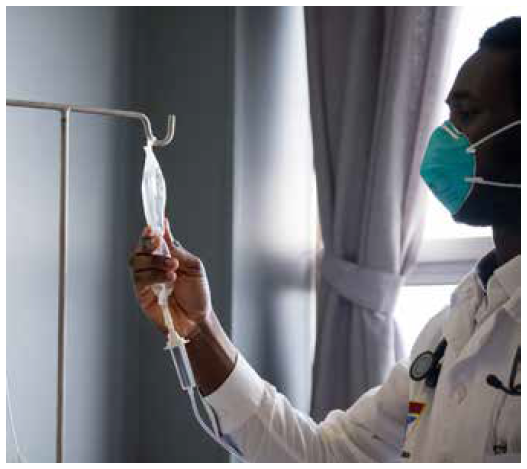
New York’s Department of Health hopes a pilot study with private companies OpGen and ILÚM will help it develop a statewide program to significantly reduce mortality rates and the spread of antibiotic resistant pathogens.
nattrass / E+ / Getty Images
To prove this out, the research project is operating with a small handful of hospital networks in the five boroughs of New York City, a geographic area the STARR report from last year identified as having one of the highest incidence rates of CREs in the state.
Testing for pathogens will be conducted at the individual hospitals using OpGen’s gene panel. In the event of a positive test result indicating a bacterium carries drug resistant mutations—delivered in around three hours—the treating physician can prescribe an appropriate medication to the patient right way, something not possible currently.
Further, since the ILÚM platform doesn’t take data directly from the hospitals and instead from the state’s HIEs, it can track, in near real time using ADT data—patient movement from one provider of care to another—allowing the hospitals to properly manage and isolate new patients and control the spread of drug-resistant bacteria.
“With ILÚM’s technology, they will be looking in near real time for the specific patterns or results of the traditional microbiology testing, flagging certain patients and certain samples,” said Vadim Sapiro, OpGen’s CIO. “For the purposes of the pilot, we are looking at the CRE markers or CRE type patterns of recurrence, and those samples will be flagged to be tested by our technology and (if there is a positive result) further referred for sequencing.”
Vadim Sapiro, CIO, OpGen

Jones is optimistic that the combined technologies of the two companies will prove the concept that a technology that collects and flags health data combined with rapid testing can effectively help manage antimicrobial resistant bacteria and potentially serve as a model for other efforts.
“The bigger picture is we would like to demonstrate that this technology can be scaled and, to the extent it can be deployed across the state of New York; not only is that a nice commercial opportunity for us, but in theory we should be able to take that to other states and perhaps become something that is standardized across the U.S.,” Jones noted.
From Taylor’s perspective, the combination of the two technologies, with support from the Wadsworth Center, represents an effective public-private partnership to improve public health.
“It is early and we are only in the Pilot Phase now, working through all the challenges of how best to make the system work efficiently and effectively, but I think there is huge potential for us to really slow the spread of drug resistant bacteria to save lives, and reduce healthcare costs,” Taylor said.
“I am also excited by the fact that we have developed a public-private partnership in which there is a real overlap of missions between the partners, one that benefits the residents of New York State as well as private industry. It is an added bonus that the members of the ILÚM and OpGen teams are really great collaborators and we are all benefitting from the experience of working closely together. That is public health at its best.”