




Abstract

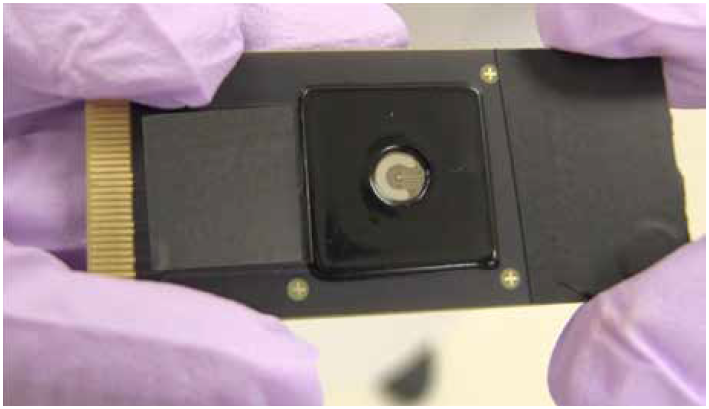
NanoSens Innovations, based in San Diego, is another startup getting in the CRISPR diagnostics game. Co-founded by Kiana Aran, Ph.D., of the Keck Graduate Institute, the company has built a slightly more high-tech testing tool called CRISPR-Chip. The hand-held device combines thousands of Cas9 molecules with electronic transistors made of graphene manufactured by Cardea Bio, also headquartered in San Diego.
The Cas9 proteins are deactivated so that they can bind to certain DNA sequences but not cut them. The binding creates an electrical charge on the surface of the graphene, which can be picked up by a digital biosensor in the CRISPR-Chip. The tool allows for detection of a specific genetic mutation from a patient's DNA sample, without the need for amplification or sequencing, in about 15 minutes.
In a recent paper in Nature Biomedical Engineering, Aran and her team tested the sensitivity of their CRISPR-Chip by using it to detect two common genetic mutations in blood samples from Duchenne muscular dystrophy (DMD) patients. The team is also testing it for sickle cell disease, which is more difficult to detect, and hopes to increase the sensitivity so it can be used to identify infectious diseases as well.
Rapid genetic testing could allow doctors to start patients on treatment sooner than they can currently. It could also quickly identify genetic variations that make some people unresponsive to certain drugs—like the blood thinner Plavix—to help doctors personalize treatment plans. A nurse or physician can take a blood sample and process it with the CRISPR-Chip without the need for specially trained lab technicians.
Aran said the CRISPR-Chip can also be programmed to look for a healthy gene or region of a gene. If the CRISPR-Chip doesn't find its target, that would indicate a negative result, or a mutation in the gene.
In an interview, Aran said the CRISPR-Chip is “very close to a commercial system” but still needs to go through rigorous testing before it can be used as a health diagnostic. In the meantime, she thinks the tool will be useful for biotech and pharma companies pursuing CRISPR-based therapeutics. She said the CRISPR-Chip can be used to test and monitor gene editing efficiency and help speed CRISPR therapies to the clinic. “We're trying to make a quality control tool to help companies design better CRISPR complexes and make sure they actually do what they're supposed to do,” Aran said.