




Abstract
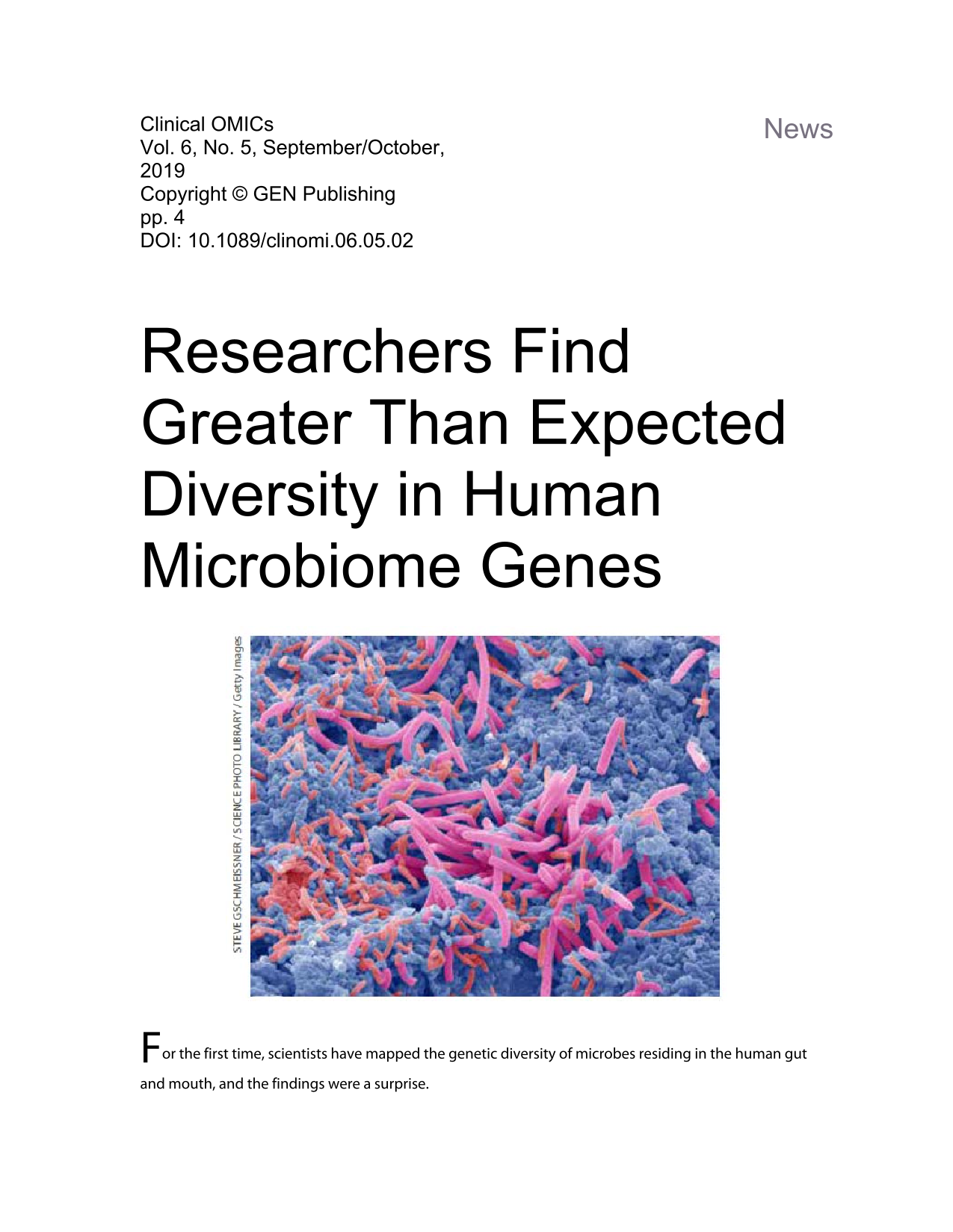
STEVE GSCHMEISSNER / SCIENCE PHOTO LIBRARY / Getty Images

For the first time, scientists have mapped the genetic diversity of microbes residing in the human gut and mouth, and the findings were a surprise.
The findings by researchers at Harvard Medical School (HMS), published in August in the journal Cell Host & Microbe, identified 46 million genes, with at least half of these genes appearing to be unique to each individual—a diversity far exceeding the researchers' expectations.
“The field still does not have a grasp on the scope of the microbiome's genetic content—in the gut and otherwise—a question crucial for understanding microbial function in the context of host disease,” researchers from the HMS labs of Aleksandar Kostic and Chirag Patel wrote.
Scientists estimate that the human microbiome—the collective body of microbes that populate our guts, mouths, skin, and other parts of the body—contains trillions of bacteria, most of them harmless, many beneficial, and some disease-causing.
Earlier work found that changes in both bacterial count and bacterial content have been linked to the development of conditions ranging from cavities in teeth and gut infections to more serious ones, including chronic inflammatory bowel disease (IBD), diabetes, and multiple sclerosis.
Cataloging the array of microbial genes could inform the design of precision-targeted treatments, said Kostic, assistant professor of microbiology and an investigator at the Joslin Diabetes Center. “Such narrowly targeted therapies would be based on the unique microbial genetic make-up of a person, rather than on bacterial type alone.”