




Abstract
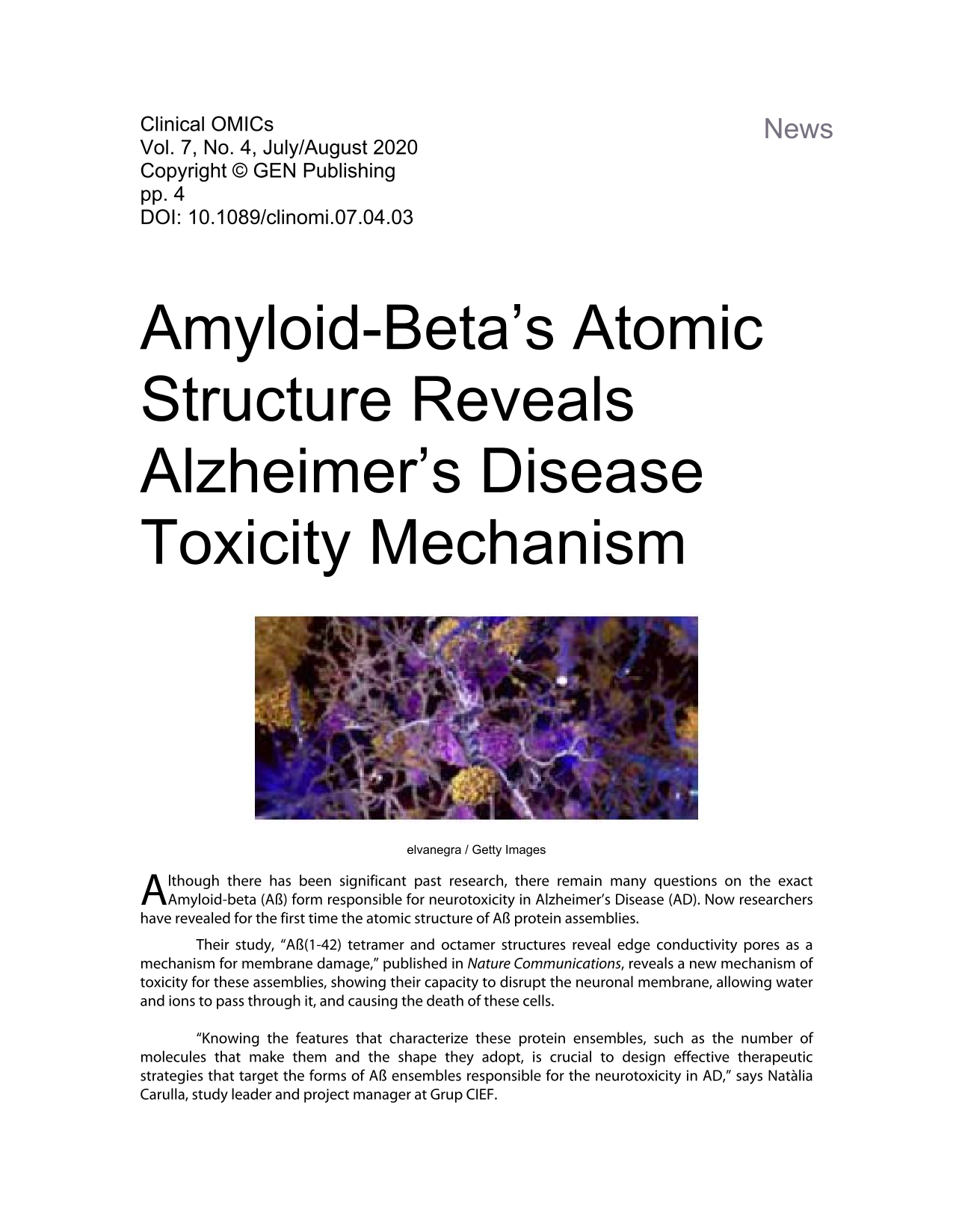
elvanegra / Getty Images
Although there has been significant past research, there remain many questions on the exact Amyloid-beta (Aβ) form responsible for neurotoxicity in Alzheimer's Disease (AD). Now researchers have revealed for the first time the atomic structure of Aβ protein assemblies.
Their study, “Aβ(1-42) tetramer and octamer structures reveal edge conductivity pores as a mechanism for membrane damage,” published in Nature Communications, reveals a new mechanism of toxicity for these assemblies, showing their capacity to disrupt the neuronal membrane, allowing water and ions to pass through it, and causing the death of these cells.
“Knowing the features that characterize these protein ensembles, such as the number of molecules that make them and the shape they adopt, is crucial to design effective therapeutic strategies that target the forms of Aβ ensembles responsible for the neurotoxicity in AD,” says Natàlia Carulla, study leader and project manager at Grup CIEF.