




Abstract

In late October, Exact Sciences announced two acquisitions totaling roughly $2.5 billion that the company said will position it to become a leading provider of early cancer detection diagnostics. The larger acquisition was the $2.15 billion deal for Thrive Earlier Detection and its CancerSEEK test that was developed in the Vogelstein Lab at Johns Hopkins University. The second acquisition added the technology of DNA methylation company Base Genomics.
With CancerSEEK, Exact acquires a DNA- and protein-based liquid biopsy designed to detect cancer by analyzing tumor-specific genomic mutations in the circulating tumor DNA (ctDNA) and cancer-associated protein biomarkers in plasma to identify abnormalities that are common across multiple cancers.
In a press conference announcing its purchase of Thrive, Kevin Conroy, CEO of Exact Sciences called the acquisition “a giant leap forward toward ensuring blood-based, multicancer screening becomes a reality and eventually the standard of care. This puts us at the forefront of an incredible opportunity to serve patients.
“The need to detect cancers at earlier, more treatable stages is urgent. We believe multicancer screening will have a powerful impact on outcomes.”

As Conroy sees it, the combination of Thrive with Exact Sciences will create a premier team for research and development efforts specializing in methylation, next-generation sequencing, and bioinformatics in liquid biopsy that will eventually enable “robust clinical and evidence generation capabilities.” The might of the publicly traded Exact should allow for accelerated approval and commercialization timelines while also positioning the company as a research and commercialization partner.
Peter Dazeley / Getty Images
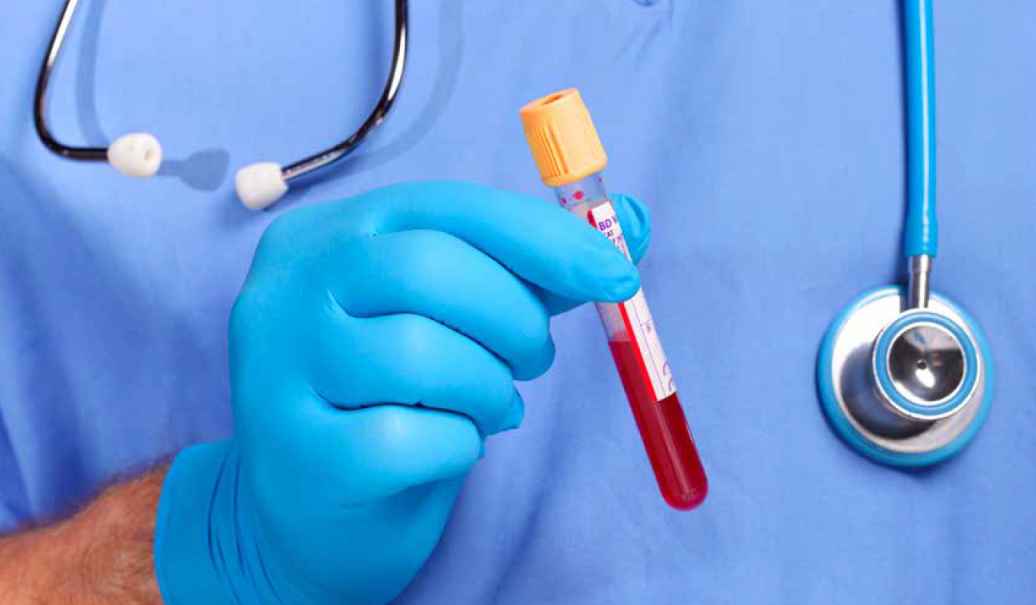
Thrive and Exact both already boast top-tier research partnerships with the likes of Johns Hopkins University, Mayo Clinic, and Geisinger Health.
“Our team has made significant progress toward our mission, and we are eager to collaborate with and benefit from Exact Sciences' expertise and believe that together we will enable broader, quicker adoption of our test,” adds David Daly, CEO of Thrive. “With the support of our ongoing partnership with Johns Hopkins University, we are energized to contribute meaningfully to our shared mission of advancing the fight against cancer and providing life-changing answers to patients in need.”
Thrive was thriving
Earlier this year, Thrive, along with researchers from Johns Hopkins University School of Medicine and Geisinger Health, published findings in Science from the DETECT-A (Detecting cancers Earlier Through Elective mutation-based blood Collection and Testing) study, which enrolled 10,000 women with no prior history of cancer. Its purpose was to identify multiple cancer types in asymptomatic individuals using an early version of CancerSEEK developed in 2016. The prospective, interventional study was designed to see if the blood-based test can work in real-world clinical settings to detect cancer in those not previously diagnosed.
The blood test more than doubled the number of cancers that were first “screen-detected.” Twenty-five percent of the women who were diagnosed with cancer were identified by current standard-of-care tests.
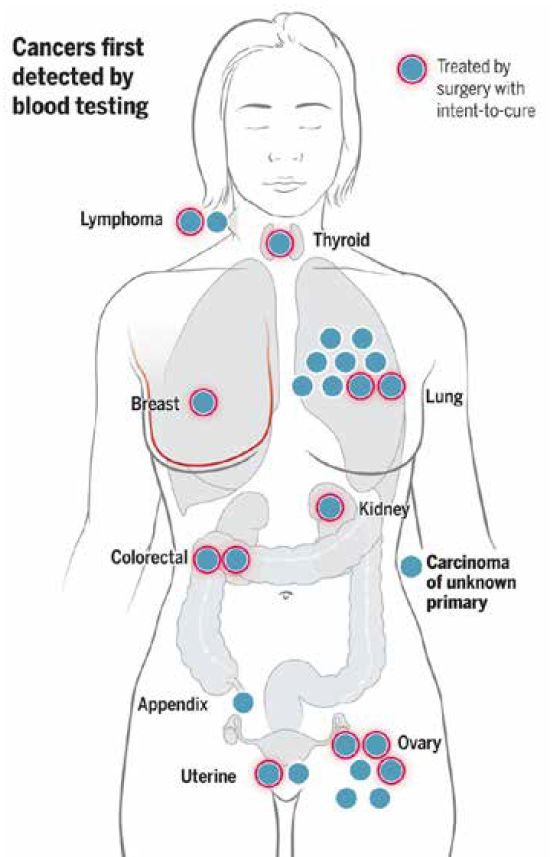
By incorporating Thrive's blood test, the percentage of “screen-detected” cancers increased from 25% to 52%. CancerSEEK, when used in combination with imaging, minimized false positive results with 99.6% specificity. Perhaps most importantly, the test identified cancers across 10 different organs, seven of which currently have no standard-of-care screening.
“This study is a seminal moment in cancer screening that advances the entire field,” said Christoph Lengauer, Ph.D., co-founder and chief innovation officer of Thrive at the time of the DETECT-A publication. “For the first time, a blood test was utilized in a real-world setting and was able to more than double the number of cancers first identified through screening methods. We learned that it can be both complementary to existing standard-of-care screening tools, and a significant benefit for many types of cancers like ovarian, appendix and kidney, which do not have any current screening modalities.”
Christoph Lengauer

In large part due to the success of the DETECT-A study and the promise of early cancer detection—which Exact CEO Conroy characterizes as a $25 billion market opportunity—Thrive announced in July it had raised $257 million in a Series B financing. The bulk of the cash infusion, the company said at the time, would be plowed into pursing a registrational trial for the newest iteration of CancerSEEK. The financing round was led by Section 32 and Casdin Capital—whose Chief Investment Officer founder Eli Casdin was appointed Thrive's board of directors, a position he also holds with Exact Sciences.
According to Thrive's Executive Chairman Steven Kafka, who is also a managing partner of Section 32, the company's intended strategy as recently as early summer was to pursue not only regulatory approval for CancerSEEK, but also an accelerated pathway to reimbursement.
Steven Kafka, executive chairman, Thrive

Kafka, president and COO of leading cancer diagnostics developer Foundation Medicine from 2103 to 2018, said Thrive was intending to use the work at Foundation Medicine to first gain approval for its flagship FoundationOne cancer diagnostic as a roadmap for CancerSEEK.
“Foundation was, in many ways, a pioneering company,” Kafka says, “not just financially successful, but really cut new ground for the reimbursement pathway and even how physicians think about new things. We thought about building Thrive in a similar way—that obtaining regulatory approval and evidence generation to support reimbursement from the get-go is critically important.“
The DETECT-A springboard
While many cancer diagnostic tests for later stage cancers seek to find specific somatic mutations in tumors for diagnosis, the race to develop earlier cancer detection tests has focused on blood tests, a blood provides a source of circulating tumor DNA. In the DETECT-A study, the researchers used a panel of 1,933 bases in the DNA covering regions of 16 genes. But, like other companies pursuing early cancer detection that rely on multianalyte tests, the study also incorporated nine protein markers of that are known bio-markers of cancer development.
Of the cases identified in DETECT-A, 65% were localized or regional cancers. Genetic mutations accounted for 57% of the identified cases, while protein markers accounted for the other 43% of positive tests. And, as stated above, DETECT-A demonstrated the ability to detect 10 different types of cancer, those with standard-of-care screening (breast, lung, and colorectal) as well as seven others.
In the DETECT-A study, CancerSeek provided early identification of a number of different cancers.
Isaac Kinde, M.D., Ph.D., Thrive's co-founder and head of research and innovation, at work in the company's lab.

Adam Buchanan, director of the Geisinger Genomic Medicine Institute and principal investigator of DETECT-A, notes that while it CancerSEEK performed well as a multicancer test, its ability to detect the 10 cancers varied. For instance, breast cancer was detected at a lesser rate than others. Buchanan thinks there are a couple of possible reasons for this.
“There are probably several potential explanations, biological explanations, of what types of tumor are really likely to shed much DNA early on in the process, or tumors where there's already standard-of-care screening,” he notes. With breast cancer, which already has a well-established screening protocol employing mammography for early detection, the lower detection rates may simply have been a reflection of a well-screened patient population.
More significant, however, could be the test's ability to provide early detection in cancers for which there is currently no workable early screening protocol. Buchanan was particularly encouraged by the early detection of ovarian cancer, which is typically only diagnosed as stage 3 or stage 4 disease and carries a poor prognosis.
“It's an incredibly promising approach, if you're able to take a blood test and look for multiple cancer types that can be detected early when there are no standard screening tests for those cancers. That's tremendous promise if it's borne out in practice,” Buchanan says. “So that's what we're all working on right now. If it works well, then it's a game-changer in terms of how we can detect cancer and when we can detect it.”
The DETECT-A study is ongoing and the team at Geisinger will continue to collect data on patients. “We're intending to test at three and five years post-enrollment, so we can get a sense of when there might be that stage shift,” Buchanan notes. “What's the right frequency for doing this kind of screening to lead to that stage shift? We are anticipating a continued relationship with Thrive to work on this.”
Meanwhile Thrive and, once the acquisition is complete, Exact Sciences will now move to a registrational trial that Kafka says will seek to enroll “tens of thousands” of participants to include diverse patient populations. The higher bar of the trial will seek to show that not only does CancerSEEK provide earlier detection of multiple cancers, but that it also helps to improve patient outcomes.
While gaining approval for the test is paramount, Lengauer says CancerSEEK will need to have other attributes in order to make a maximum impact on patient care. “The value proposition is trivial. What isn't trivial is to implement it, because a physician hasn't enough time,” he says. “It needs to be integrated in their electronic medical record, otherwise it won't get ordered. It needs to be easy. It must be affordable. Those very practical, important components, I think are (the challenges), not the scientific rationale or what the health economics argument is.”
Meantime, other companies, such as deep-pocketed GRAIL, are also racing to develop their tests for early cancer detection and to compete with Thrive. But Kafka thinks there will be plenty of room for multiple companies and approaches.
“There are 90 million Americans over the age of 50 that can benefit from earlier detection of cancer. It doesn't have to be a winner-take-all market,” Kafka notes. “I also think that the science is such that we're going to learn from multiple approaches, and that's a benefit for payers and practice providers, as well.”
Buchanan agrees. “As someone who takes care of individuals either with cancer or at risk for cancer, it doesn't matter which horse wins that race. My hunch is that it's going to take multiple horses to make it happen.”