




Abstract
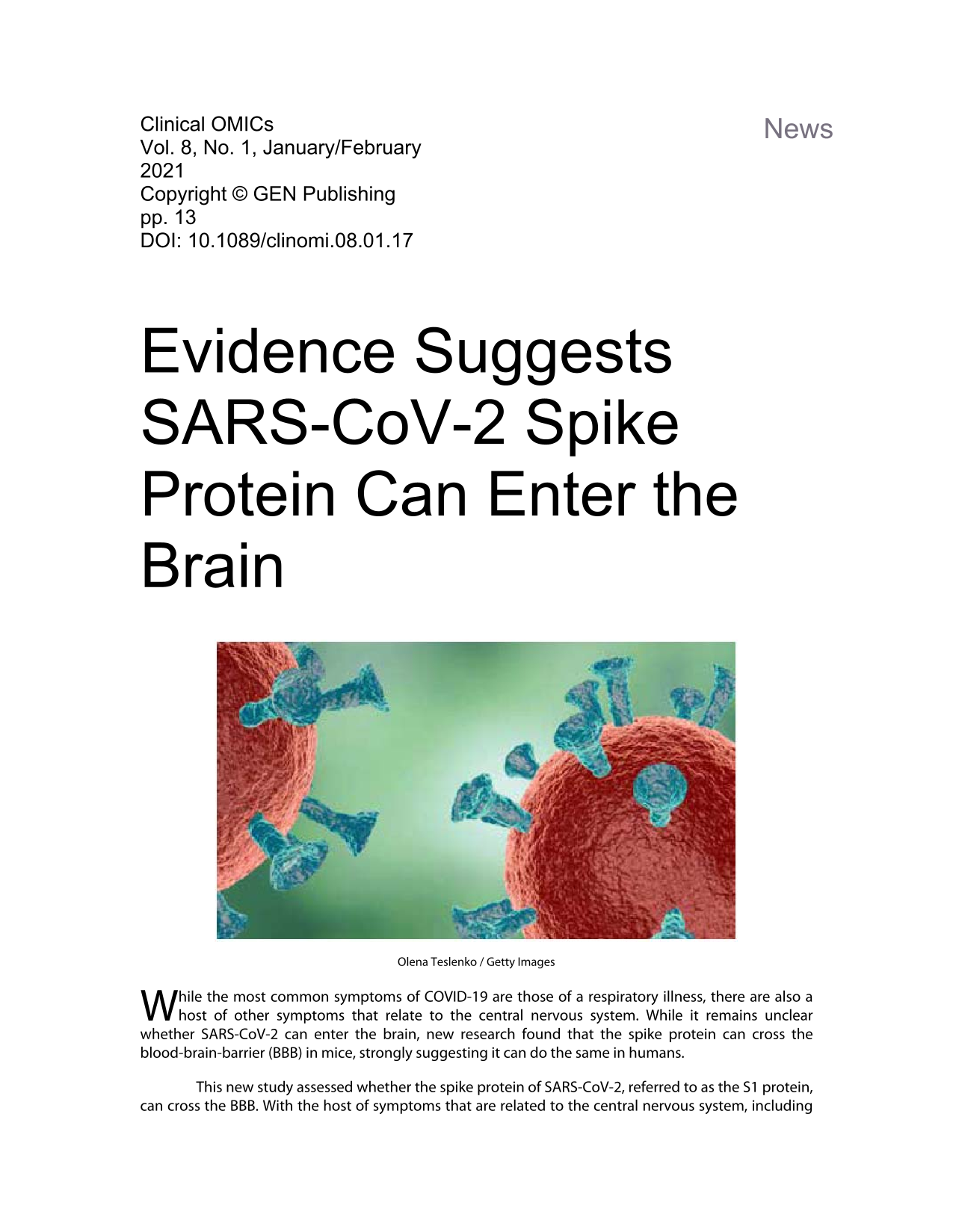
Olena Teslenko / Getty Images
While the most common symptoms of COVID-19 are those of a respiratory illness, there are also a host of other symptoms that relate to the central nervous system. While it remains unclear whether SARS-CoV-2 can enter the brain, new research found that the spike protein can cross the blood-brain-barrier (BBB) in mice, strongly suggesting it can do the same in humans.
This new study assessed whether the spike protein of SARS-CoV-2, referred to as the S1 protein, can cross the BBB. With the host of symptoms that are related to the central nervous system, including loss of taste and smell, headaches, twitching, seizures, confusion, vision impairment, nerve pain, dizziness, impaired consciousness, nausea and vomiting, hemiplegia, ataxia, stroke, and cerebral hemorrhage, uncovering the link between the virus and the nervous system is of paramount importance.
The authors noted that the S1 protein can be used to “model the activity of the virus.” If the viral binding protein crosses the BBB, they say, “it is likely that protein enables the virus to cross the BBB as well.”
Binding proteins like S1 usually cause damage by themselves as they detach from the virus and cause inflammation, noted William A. Banks, M.D., a professor of medicine at the University of Washington School of Medicine. “The S1 protein likely causes the brain to release cytokines and inflammatory products,” he said.