




Abstract

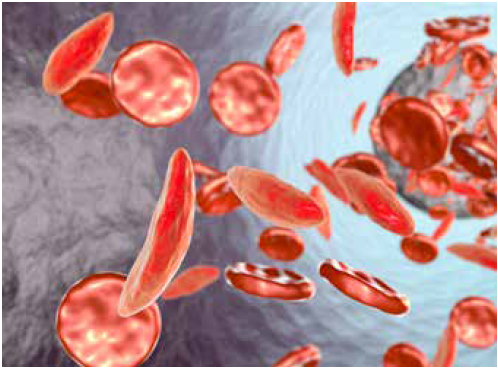
Free floating mitochondrial DNA fragments in the blood are a trigger for inflammation in people with sickle cell disease, suggests research carried out at the NIH's National Heart, Lung, and Blood Institute in Bethesda.
The team, led by Swee Lay Thein, M.B., D.Sc., chief of the Sickle Cell Branch at the National Heart, Lung, and Blood Institute, discovered that the red blood cells of people with this chronic condition seem to accumulate mitochondria, which are absent from healthy blood cells. When these organelles break up their DNA is also broken up and found circulating in the blood of people with sickle cell disease.
The researchers found that the circulating mitochondrial DNA they found in the blood of these patients had abnormally low levels of methylation. They think this could be linked to the excessive inflammation these fragments seem to cause.
Thein and colleagues carried out an in-depth analysis of DNA and DNA fragments extracted from the blood plasma of 34 people with sickle cell anemia, published in the journal Blood, as well as from eight healthy volunteers.
The researchers found that the mitochondrial fragments triggered the formation of neutrophil extracellular traps (NET) – the formation of tiny fibers made of DNA from neutrophils that trap pathogens and form the bodies first line of defense against infection. As with any immune response to supposed infection, this also triggers inflammation.
The research team are now looking at therapeutic options linked to their findings. For example, Thein and colleagues were able to block NET formation using a small molecule inhibitor and want to explore other possible drug candidates that could block this type of inflammation.