




Abstract

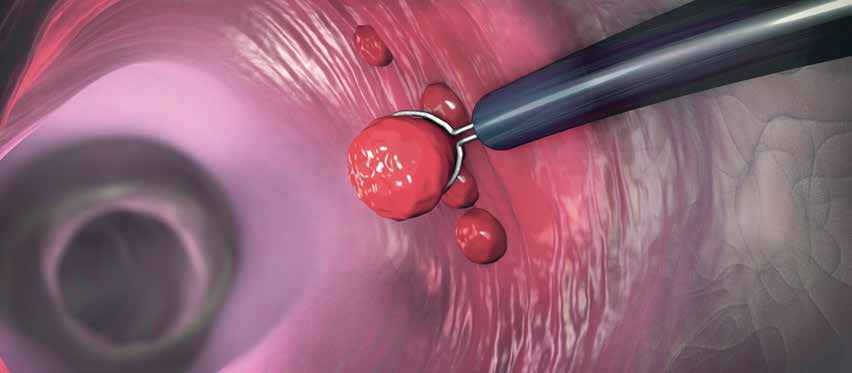
In oncology care today there is plenty to be excited about with the development of new targeted therapies and the continued development of gene and immunotherapies to fight the disease. But another weapon in the war against cancer is early detection. If cancer is detected early, it has a significant impact on patient outcomes. A good example of this is colorectal cancer (CRC). When CRC is detected at stage I, a patient's chances of survival after 5 years are 89.9%. Detected at stage III, this number falls to 14.2%.
Despite early detection being key to survival in CRC, only 40% of CRC cases in the United States are diagnosed at an early stage, and fewer than 70% of U.S. adults get screened for CRC, as per reports from the CDC.
The most common diagnostic methods for CRC are colonos-copy and the fecal immunohistochemical test (FIT). Colonoscopy is expensive, invasive, and not ideal for detecting early-stage lesions, while FIT, although inexpensive, can miss cancers that do not bleed.
For this reason, stool- and blood-based biomarker screenings for early-stage CRC that are precise, non-invasive, cost-efficient, and have a low risk for adverse events—that are largely automated minimizing manual error—have a significant role to play in detecting CRC patients earlier and getting them the care they need.
One such test, Cologuard, developed by Exact Sciences, is the only stool-DNA screening test for colon cancer approved in the United States by the FDA.
“Cologuard includes the methylation markers NDRG4 and BMP3. These, combined with the KRAS mutation markers and hemoglobin, provide excellent performance. Next generation products will include other higher performing methylation biomarkers,” says Mike Domanico, vice president of product development at Exact Sciences. “A positive Cologuard test is followed up by colonoscopy.”
Stool-based screening detects genetic and epigenetic abnormalities in cells shed into the colon. Abnormal methylation of tumor-suppressor genes changes the expression of downstream genes, resulting in tumors. Recent studies have linked a battery of methylated genes to CRC, such as SEPT9 and vimentin. Both increases and decreases of biomarker methylation have been linked to CRC. “However, hypermethylated biomarkers are more informative in CRC detection,” says Domanico.
“Not every marker is detected in every patient because there are different pathways that lead to cancer. Cologuard uses markers that are complementary to each other and accurately detect the highest number of positive patients,” Domanico adds.
Tested in samples from patients of various ethnicities, the methylation biomarkers for CRC included in Cologuard are detected in all populations tested.
Early-stage lesions are potentially detected through DNA methylation as epigenetic changes occur early in tumorigenesis. “With stool-based testing, detection at the pre-cancerous stage is common,” says Domanico. “There is a strong correlation of lesion size to ability to detect, primarily because more DNA is present. Large pre-cancerous lesions and early-stage cancers can be detected at a high rate.”
Because there are challenges to detecting methylation bio-markers in blood and plasma samples, tests need to look at other biomarkers that can indicate the early onset of disease. “Stool-based assays work well for early detection since the stool is in direct contact with the lesion. Blood assays are limited by the amount of DNA, making pre-cancerous lesion detection difficult,” says Domanico.
Another company looking to enter the market for early detection of CRC is Guardant Health, which has potentially solved some of the challenges of using blood samples for this kind of test. The company's ECLIPSE trial, currently in its final lap, is a 10,000-patient prospective study that evaluates the performance of Guardant Health's LUNAR-2 blood test for CRC in comparison to colonoscopy. The screen targets average-risk US adults between 45 and 84 years.
“At Guardant we are developing a novel assay in single-sample chemistry to look at somatic genomic biomarkers on top of epigenomic variations including methylation changes in cell-free DNA,” says AmirAli Talasaz, Ph.D., president and COO at Guardant Health.
Chemical methods such as bisulfite treatment, traditionally used in detecting methylation, damage DNA. “In early cancer detection you cannot tolerate loss of signal from the cell-free DNA you have in a tube of blood. Our assay gently converts methylated DNA into barcoded DNA for detection,” says Talasaz.
Comparing stool and blood-based assays for early CRC detection, Talasaz says, “Stool samples have higher level of signals than in blood, but we have a highly sensitive and specific assay that can detect biomethylation markers even in blood. We wanted to develop a more comfortable technology. We believe detection in blood in the regular screening setting would have a tremendous advantage over detection in stool samples, especially bulky stool samples.”
The readout in the Guardant blood test is based on next-generation sequencing (NGS). “We're leveraging the value that sequencing offers to build a low-cost and very comprehensive assay. Some of the commercially available technologies that detect colon cancer in stool use only 2-5 markers and perhaps two methylation biomarkers. We are looking at orders of magnitudes more than that. Our panel sequences epigenomic variations in 100s of 1,000s of bases. That is why we get high clinical sensitivity in detecting early-stage colon cancer in blood,” says Talasaz.
With the recent advances in NGS, Guardant's approach can raise accuracy while keeping costs low. The large panel of biomarkers also enable the detection of different stages of the disease. “There are some minor changes in the methylation signature at different stages of the disease. With NGS and the highly accurate and sensitive assays, we can detect colon cancer at different stages. This blood-based, integrated genomic and epigenomic multimodal, circulating tumor DNA test achieved clinically significant values for the detection of CRC with 90% sensitivity and 94% specificity,” says Talasaz.
Guardant Health's ECLIPSE trial is a 10,000-patient prospective study that evaluates the performance of Guardant Health's LUNAR-2 blood test for CRC in comparison to colonoscopy. The screen targets average-risk US adults between 45 and 84 years.
Guardant's panel was built using scientific literature, public databases of methylation changes in colon tissue in CRC patients, and “insights on biology that we have gathered throughout the years enabled by our experience as the market leader in liquid biopsy,” according to Talasaz. The team also captured data using different colon cancer blood sample cohorts.
“We believe that a very simple blood test with very easy administration and testing logistics will tremendously increase the compliance for screening. In time, if we continue to show good performance compared to stool-based screening, I can see a lot of people switching to blood-based screening for the convenience,” says Talasaz.
But a positive blood test will not preclude the need for a follow-up colonoscopy. Colonoscopy is not just a screening tool, it is also a diagnostic and interventional tool. It can confirm whether a patient has advanced colon cancer or adenoma, while simultaneously removing the lesion.
As per guidelines issued by the Centers for Medicare & Medicaid Services (CMS), a blood-based biomarker screening test for CRC must have at least 74% sensitivity and 90% specificity for reimbursement. “We feel confident that we can meet those minimum requirements, and hopefully much higher than that,” says Talasaz.