




Abstract
Abstract
Many individuals suffer from anxiety, stress, and depression and those serving in the U.S. military are no exception. Warfighters keep returning from theater with combat stress. Several of these military service members are also technology oriented and tend to prefer performing their daily life activities with and/or near computerized systems. Fortunately, some researchers specialize in helping warfighters via gaming or virtual reality technologies. Nevertheless, a dearth of literature is published about challenges researchers face when conducting these types of studies. This article shares the experiences of a research team, under a uniformed Army Research Psychologist (Stetz), who runs research studies (a) with warfighters, (b) with technological equipment, and (c) in nonstandard laboratory settings.
Introduction
Designing a Military Study
To avoid wasting precious resources, a few important points must be considered before running a study with and within the military. It is highly recommended that researchers apply the “5 Ws and the How”:
What do we want to study (e.g., operational/measurable definition of the problem)? Why do we want to study it (e.g., is there really a problem)? When can we start (e.g., after approved protocol)? Where will it take place (e.g., in a laboratory area, in the field)? Who will be the participants (e.g., soldiers, sailors, airmen, marines)? How will we run the study (e.g., the equipment and staff necessary to help collect and analyze the data)?
Combat Stress Assessment and Treatment
Military researchers must be good scientists and highly skilled in planning, logistics, and operations. Presented below is a brief historic journey of how Major Stetz (Army research psychologist) and her research (civilian and military) staff have run their protocols.
Survey-only studies
One way to study stress in the military is by obtaining (archival) information. Stetz et al. 6 analyzed 5,671 cases of medical evacuations (MEDEVACs) from Operation Enduring Freedom (OEF) and Operation Iraqi Freedom (OIF). In this study, behavioral health diagnoses accounted for 7% of the MEDEVAC cases during OEF and 6% of those during OIF. Behavioral health diagnoses were ranked among the top five reasons for medevacs from each theater of operations.
Archival data studies face many challenges. For example, this research team obtained the records from the Transportation Command Regulating and Command and Control Evacuation System (TRAC2ES), a joint command headed by the U.S. Air Force and designed for transporting supplies and personnel around the world. Information not protected by Health Insurance Portability and Accountability Act (HIPAA) was extracted from TRAC2ES records and transferred to spreadsheets (e.g., Microsoft Excel), then further analyzed with the Statistical Package for the Social Sciences. This analysis suggested that 21%, or 106 out of 509, personnel had psychiatric histories prior to deploying. 7 Although both the U.S. Air Force and U.S. Army are part of the same military, obtaining additional records was not an easy task. The different transportation systems made it difficult to collect additional data for more follow-up analyses.
Another archival study conducted on mild traumatic brain injury (mTBI) records 8 had a sample composed of males between 20 and 76 years old (mean age 30). Twenty of 35 were military service members. Results from the entire sample showed that 34 patients complained of a wake/sleep–related problem, such as insomnia (p < 0.001). The main challenge presented in this study was that the neurologist who collected the medical records had to de-identify (in accordance with HIPAA) the records before the researcher (Stetz) could build an electronic data set and statistically analyze it.
However, when there is no data available on an existing problem, researchers must plan how to collect the needed data. Therefore, they must factor in time and monetary constraints to their research protocol. For example, Stetz et al. 9 administered surveys to Military Police (MP) reservists (N = 263) activated after the September 11, 2001, terrorist attacks. Most of the reservists reported low psychological well-being and low intentions to stay in the military. Incidentally, they also reported high workload, high organizational constraints, and high uncertainty on when they would return home. One of the problems encountered during this study was that it involved many data collection points due to their shift-work schedule (Fig. 1). In a follow-up study, the research team also interviewed some of the supervisors of this reserve sample to learn about their leadership support. 10 Fifty-six percent of supervisors consented to a telephone interview. Sixty-eight percent stated that their employees were difficult to replace. Interviewing only those supervisors with an accessible phone, time, and the willingness to answer the questions represented one research challenge.
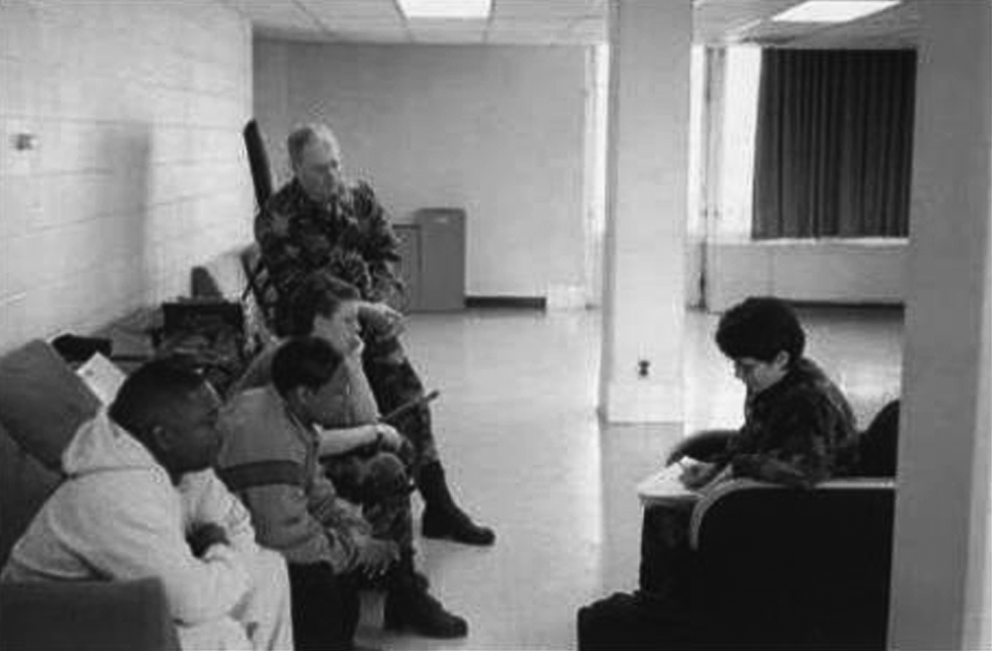
Major Stetz collecting data during a shift change.
Stetz 11 designed another protocol to study aviators' stress while in support of OEF and OIF. In the sample of 283 aviators, the most reported stress symptoms were difficulty sleeping (21%), irritability (20%), feeling distant (18%), feeling emotionally numb (13%), and anhedonia (12%). The preferred coping strategies were going to the gym (66%), listening to music (65%), watching movies (62%), sleeping (61%), playing computer games (39%), joking around (38%), smoking (30%), chatting (29%), card games (26%), and playing sports (11%). Participants preferred to first chat with peers, chaplains, and leaders before consulting a mental health professional. Similarly, other researchers 12 have reported that soldiers would rather utilize mental health care technologies (e.g., video teleconferencing, internet-based treatments, and virtual reality) than talk to a counselor in person.
However, the aviation data from Stetz 11 was painstakingly gathered only by her, while in theater, and in one month. That is, even though this principal investigator (PI) wrote and submitted the protocol 4 months before her deployment, personnel rotations in both review boards (United States and Iraq) resulted in a delayed approval. In Figure 2, this PI is processing some of the surveys while still in Iraq. Other military researchers have also noted that the OPTEMPO (operational tempo/fast-demanding war pace) can result in difficulty running a research effort. 13
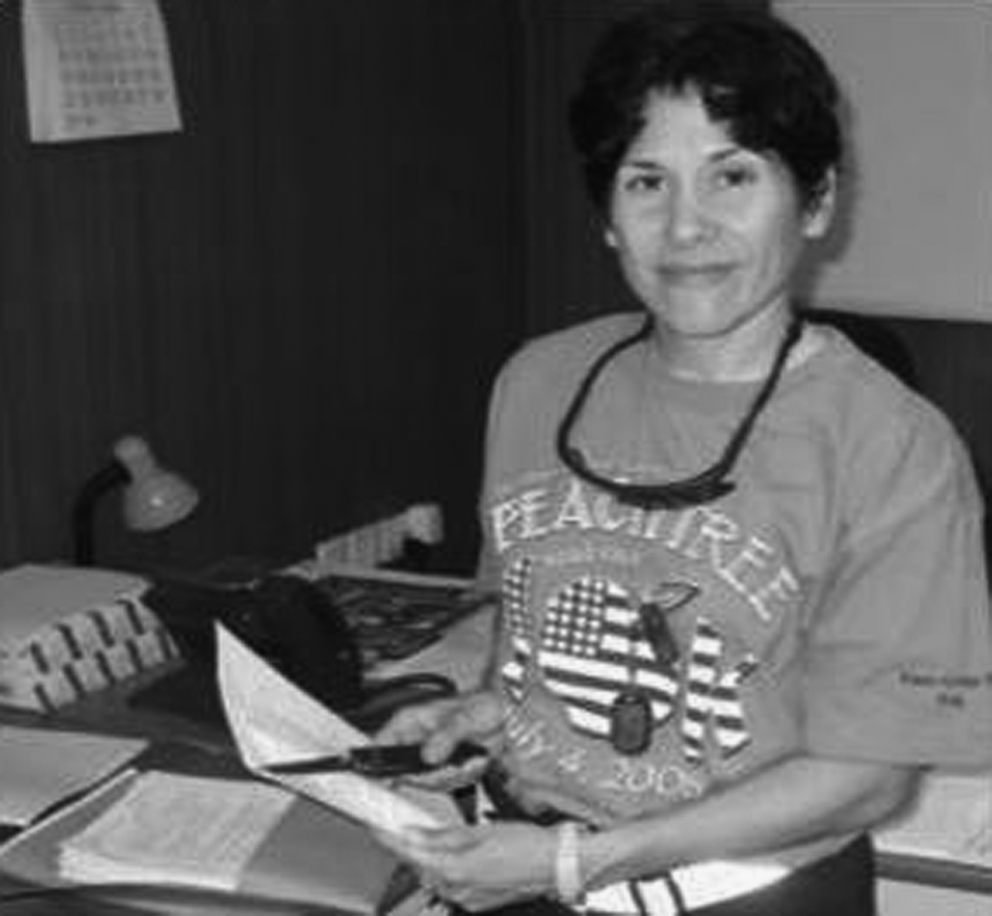
Major Stetz in Iraq collecting data.
Technology and virtual reality studies
Some investigators 14 have encountered technical barriers while conducting research in the field, specifically, issues involving the need for a database architecture that can easily accommodate different data types from various sources. Other researchers have learned that performing research in realistic environments can be monetarily expensive. 15 Therefore, one benefit of using VR technology, such as video games and head-mounted displays (HMDs), is that stressors can be systematically added to virtual environments to increase immersion. Another benefit of VR technology is that it can serve both as a stressful training simulator for warfighters, such as navigating the streets of Iraq, or as a relaxing virtual environment. Nonetheless, VR studies can still benefit from collecting data through paper-and-pencil/computerized surveys and physiological equipment (e.g., biofeedback).
Wiederhold et al. 16 reported success when applying VR to mitigate the negative effects of combat stress. Similarly, Stetz et al. 17 examined the usefulness of VR technology with a sample of medics (N = 60). Most of this sample was composed of officers (n = 43; 72%) in the regular army (n = 45; 75%) who had been previously deployed (n = 31; 52%) and were getting ready for another deployment (n = 38; 63%). Most of them (n = 48; 80%) reported having previous experience with gaming systems (e.g., computerized, VR). For example, the research examined the emotional levels of participants (Fig. 3) who were either in a group to practice combat medical skills (VR-only) under virtual stress, in a group to practice relaxation techniques in a virtual environment (VR-coping), or in a group to practice both options (VR-both). The VR-only group showed higher levels of hostility than the rest of the groups, suggesting immersion and ongoing inoculation in the VR world. One of the challenges faced during this study was that the sample was composed of medics attending a Flight Medic course. As this course is physically and academically rigorous, data collection had to take place during work-free time (i.e., lunch, evening, and weekends).

Participant saving a virtual reality patient.
Most recently, Stetz et al. 18 reported that many individuals who practiced relaxation (Fig. 4) via VR scenarios (n = 29 of 30) would probably continue practicing after the study. A problem during this study was that it took place in a location requiring excessive travel time to the data collection site. Also, the VR and biofeedback system suffered excessive handling, leading to equipment breakdown. Furthermore, hospital demands sometimes took priority over the confirmed data collection sessions.

Participants in a coping study completing a cognitive battery.
During another VR study, 19 preliminary data suggested that participants who were wearing head-mounted display (n = 30) while watching videos of angry bosses yelling at them showed higher levels of “presence”/immersion and emotional reactivity to anger than those watching the videos via a flat screen (n = 30). A challenge faced during this study protocol was that it was written a few years prior to conducting the data. Therefore, hardware and software had to be upgraded and it was necessary for modifications to be submitted for more review approvals.
Conclusion
Warfighters will continue to experience a significant level of stress as part of their duty lives. Conducting studies on warfighters can involve many challenges. Similarly, building a VR lab involves precious time and money. However, the data emphasizes the importance and benefits of enhanced research when incorporating cutting-edge technology. That said, VR studies can greatly benefit warfighters while in training and at war using assessment, inoculation, and therapy.
Footnotes
Disclosure Statement
No competing financial interests exist.