




Abstract
Abstract
The current research examines the persuasive effects of reciprocity in the context of human–robot interaction. This is an important theoretical and practical extension of persuasive robotics by testing (1) if robots can utilize verbal requests and (2) if robots can utilize persuasive mechanisms (e.g., reciprocity) to gain human compliance. Participants played a trivia game with a robot teammate. The ostensibly autonomous robot helped (or failed to help) the participants by providing the correct (vs. incorrect) trivia answers. Then, the robot directly asked participants to complete a 15-minute task for pattern recognition. Compared to no help, results showed that a robot's prior helping behavior significantly increased the likelihood of compliance (60 percent vs. 33 percent). Interestingly, participants' evaluations toward the robot (i.e., competence, warmth, and trustworthiness) did not predict compliance. These results also provided an insightful comparison showing that participants complied at similar rates with the robot and with computer agents. This result documents a clear empirically powerful potential for the role of verbal messages in persuasive robotics.
R
Reciprocity involves a norm-based moral code 6 where societies teach members to return a favor. 7 This research utilizes the moral code for robots to gain compliance from human partners. After receiving a favor, such as help, the unreturned favor creates a feeling of obligation. This is such an aversive feeling that it motivates the individuals who have received an unreturned favor to comply with requests from the favor giver. This compliance is to essentially do what the favor giver asks, such as completing a task.
Previous research offers clear support for the effect of reciprocity on compliance in human interactions. For example, small favors such as giving a can of Coca-Cola 8 or bottled water 9 can effectively increase the likelihood of compliance for donation, even among strangers. 10 Therefore, reciprocity serves as a robust form of norm-based influence that affects how individuals comply with requests from the favor giver.
This research applies reciprocity with verbal robot messages. Foundationally, this research builds on prior research examining computer agents.11,12 The goal of this research is to test the viability of persuasive robotics by capitalizing on the design from prior experiments. Such a design produces important comparison data between robots and agents in terms of compliance rates described in the Results section.
Literature Review
Previous research demonstrated that reciprocity occurred between computers and humans. One of the first studies examined how users returned the favor to help computers. Fogg and Nass 13 found that participants who worked with a computer that helped them more in a separate task were more likely to help the computer do comparison tasks than participants who worked with unhelpful computers. Moon 14 also found that people engage in reciprocal self-disclosure when a computer reveals intimate information about itself. Lee and Liang 12 further extended the literature by investigating the underlying mechanism responsible for compliance. The results demonstrated that at a robust level, norm-based mechanisms, such as reciprocity, affected compliance. This is an important finding as it establishes the efficacy of particular verbal strategies in human–agent interaction.
Yet, robots and agents share some critical similarities and differences that warrant the current investigation. First, robots may appear similar to agents as anthropomorphized technologies; however, robots are essentially embodied technologies in that they have a physical presence and body. This characteristic may introduce social dynamics to reciprocity, possibly enhancing the effects. For instance, the systematic review by Li 15 reported that physical robots elicit more positive evaluations compared to virtual agents. Second, much work related to robots and persuasion has inferred the effects indirectly through nonverbal aspects (e.g., robots are more persuasive when the robot gazes at the human partner more; male participants are more likely to be persuaded by female robots).2,16 Using a verbal message definitively clarifies that the robot is indeed the source of communication and, thus, serves as a key to unveiling the actual communication dynamic between human and robots.
Method
Design and procedure
The current research applies the Lee and Liang's 12 experimental design to human–robot interaction. Participants were asked to take part in a laboratory experiment and arrived individually. In the experiment, each participant was instructed that he or she would play a trivia game with an ostensibly autonomous robot partner named CHRIS (Collaborative Human Robot Interaction System [Fig. 1]). Unbeknownst to participants, CHRIS was a Double Robotics telepresence robot with an animated face on the screen. Each participant was greeted by CHRIS as well as the human experimenter and told that CHRIS was an automatic information retrieval system, analogous to IBM®'s “Watson” system featured on the popular TV show JEOPARDY!. To make the experiment appear more realistic, the experimenter explained the ostensible mechanism of CHRIS: it extracts keywords from the questions, retrieves information, and verbally suggests the most relevant answer. Although appearing autonomous, in actuality, all of CHRIS's responses were operated by a research assistant behind a one-way mirror. In postexperiment interviews, most participants reported that they were unaware of the remote operation and believed that CHRIS was indeed autonomous.
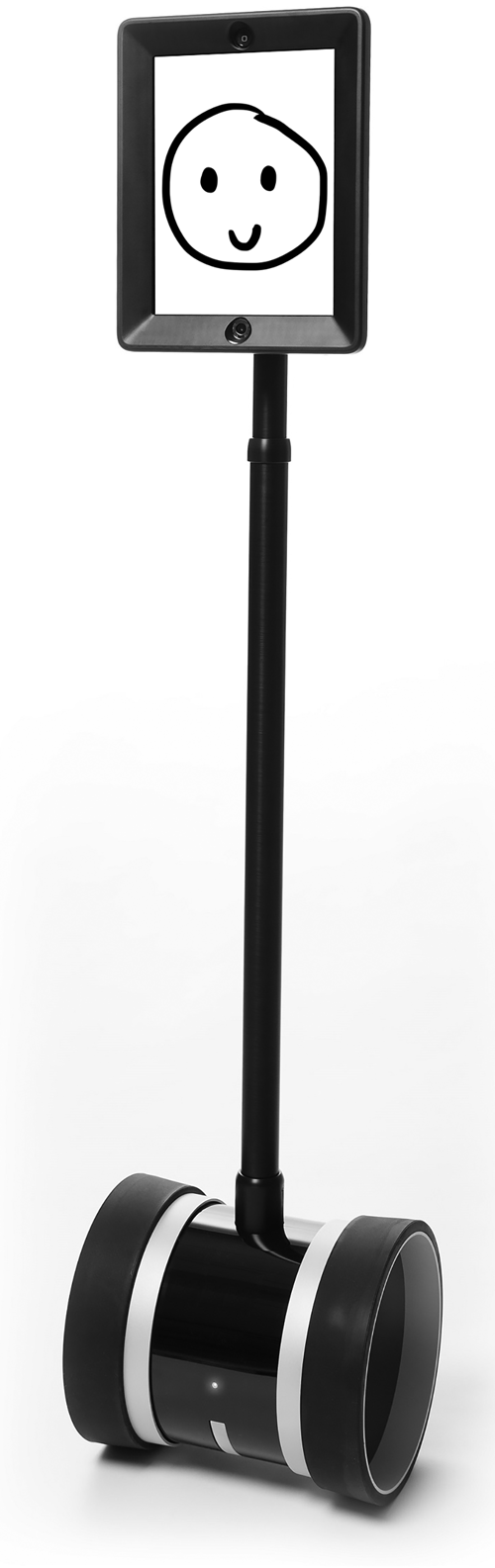
Ostensibly autonomous teleoperated robot.
The trivia game began after participants signed an informed consent. CHRIS assisted participants by recommending a choice for every question. Participants had to rely on the assistance from CHRIS, as most questions in the trivia game were difficult (e.g., “Who was Herbert Hoover's Vice President?”) and participants were given only 30 seconds to answer.
Participants were randomly assigned to the experimental conditions. In the helpful condition, CHRIS provided one erroneous and nine correct recommendations. In the unhelpful condition, CHRIS provided only two correct responses, six erroneous responses, and two responses where the answers were not retrieved. Postanalysis revealed that for this 10-item trivia quiz, participants in the helpful condition (M = 8.23, SD = 1.55) outperformed participants in the unhelpful condition (M = 4.90, SD = 1.45), t(58) = 8.62, p < 0.001, r = 0.73.
The experimenter left the laboratory once the trivia game began and returned at the completion of the game. The experimenter announced that the game was over and that participants may leave after filling out a short questionnaire, and then left the room again to minimize any undue effects related to experimenter presence.
Participants filled out paper and pencil self-report measures of perceptions toward CHRIS, including competency, warmth, and trustworthiness, as well as demographic information. When participants completed the questionnaire and stood up from the chair to leave the room, CHRIS prompted a compliance gaining request in a synthesized voice: “Could you please complete 30 pattern recognition tasks? It should take about 15 minutes.”
If participants agreed, they were led to conduct a series of CAPTCHA (Completely Automated Public Turing test to tell Computers and Humans Apart) tasks that require reading letters from distorted images that appear on the robot's screen. This task was selected as a robot or computer is unable to resolve it without human assistance.
Participants
Participants were 60 undergraduate students (43.3 percent male, 57.6 percent female) at a Southern university in the United States. Participants' average age was 20.9 (SD = 3.0). European Americans composed the majority of the participants (80.0 percent). The rest of the participants were African American (11.7 percent), Hispanic American (3.3 percent), Asian American (3.3 percent), and others (1.7 percent). Among participants, 29.3 percent were freshmen, 15.5 percent were sophomores, 22.4 percent were juniors, and 32.8 percent were seniors.
Measurement
Participants' compliance was measured by their verbal agreement to the robot's request and completion of the task. Participants who disagreed to the robot's request or failed to complete the task were counted as noncomplying. To assess participants' evaluations toward the robot, a 10-item, 7-point Likert-type scale (1 = strongly disagree; 7 = strongly agree) was developed to examine the three dimensions of source evaluation: competence, warmth, and trustworthiness. Competence items included “CHRIS is intelligent,” “CHRIS is knowledgeable,” and “CHRIS is competent.” Warmth items included “CHRIS is likable,” “CHRIS is sociable,” “CHRIS is friendly,” and “CHRIS is personal.” Trustworthiness items included “CHRIS is trustworthy,” “CHRIS is reliable,” and “CHRIS is honest.” A confirmatory factor analysis yielded an acceptable fit for the three-factor model, χ2/df = 1.61, CFI (comparative fit index) = 0.93, TLI (Tucker-Lewis index) = 0.93, and SRMR (standardized root mean square residual) = 0.10. The Cronbach's alpha reliabilities for each dimension were 0.86, 0.80, and 0.69, respectively.
Results
Table 1 reports zero-order correlations among all study variables. The results indicated that the robot's helping behavior was highly correlated with perceived competence, r(29) = 0.73, p < 0.001, and trustworthiness, r(29) = 0.50, p = 0.004, but not with warmth, r(29) = 0.23, p = 0.21. However, none of these evaluations was significantly correlated with compliance.
p < 0.05; **p < 0.01.
The result of a χ2 test (Table 2) indicated that participants in the helpful robot condition were more likely to comply with the robot's request, compared with those in the unhelpful robot condition (60 percent vs. 33 percent compliance rate), χ2(1) = 4.29, p = 0.04, φ = 0.27, odds ratio = 3.00.
Compared to the previous study using a computer agent with a similar experimental design and a comparable participant pool, 2 participants evaluated the physical robot more favorably than the virtual agent for warmth (robot M = 4.96, SD = 1.00 vs. agent M = 4.19, SD = 1.48), t(205) = 3.72, p < 0.001. However, no significant differences were found for competence (robot M = 5.04, SD = 1.42 vs. agent M = 4.65, SD = 1.76), t(209) = 1.51, p = 0.13, or trustworthiness (robot M = 4.77, SD = 1.20 vs. agent M = 4.40, SD = 1.48), t(205) = 1.72, p = 0.09. Participants in the helpful conditions complied at similar rates (robot 60.0 percent vs. agent 57.0 percent), χ2(1) = 0.08, p = 0.77, φ = 0.03, odds ratio = 1.13. Participants in the unhelpful conditions also complied at similar rates (robot 33.3 percent vs. agent 41.6 percent), χ2(1) = 0.64, p = 0.43, φ = 0.07, odds ratio = 0.70.
Discussion
The results document a clear empirically powerful potential for persuasive robotics. Persuasive robotics originated with the idea that robots can afford social dynamics and serve to influence human behaviors. 5 Few or little studies have used actual verbal requests, in conjunction with a compliance gaining mechanism, from a robot to ask human partners to comply with a request. Specifically, this research shows that a robot may be effectively able to get people to do as the robot asks by capitalizing on the persuasive strategy (i.e., pregiving) and following with a verbal request.
Reciprocity was equally effective, despite the differences between robots and agents. The compliance rate (60 percent) was similar to that from an earlier experiment 17 based on virtual agents (57 percent). Consistent with the literature, 15 the physical robot was evaluated as more likeable, sociable, and friendly (i.e., warmth) compared to agents. However, the positive evaluation due to physical embodiment and presence did not elicit higher compliance. This finding continues to support that the norm of reciprocity operates independently from source evaluations.8,10,12 More importantly, it suggests reciprocity as a general principle in human–machine communication: the norm of reciprocity compels people to return a favor even when the favor is given by machines.
The major limitation for this work is the unique experimental design and the context based on previous research. The findings may not be applicable in different settings. The request size of 15 minutes is relatively small and the extent to which it compares with other types of request application (e.g., donation, energy conservation) requires additional research. However, these results are encouraging as they are the first in several steps of programmatic research aimed at uncovering the effects of verbal messages in persuasive robotics. Future studies will examine the underlying mechanisms (e.g., presence, indebtedness, gratitude) to identify if the effects are indeed attributable to the norm of reciprocity in human–robot interaction and apply other compliance-gaining mechanisms to extend verbal communication to move toward a multifaceted theory of persuasive robotics.
Footnotes
Author Disclosure Statement
No competing financial interests exist.