




Abstract
Abstract
This study investigates how different interface modality features of online dating sites, such as location awareness cues and modality of profiles, affect the sense of social presence of a prospective date. We also examined how various user behaviors aimed at reducing uncertainty about online interactions affect social presence perceptions and are affected by the user interface features. Male users felt a greater sense of social presence when exposed to both location and accessibility cues (geographical proximity) and a richer medium (video profiles). Viewing a richer medium significantly increased the sense of social presence among female participants whereas location-based information sharing features did not directly affect their social presence perception. Augmented social presence, as a mediator, contributed to users' greater intention to meet potential dating partners in a face-to-face setting and to buy paid memberships on online dating sites.
Introduction
T
In that regard, previous studies found that positive credibility perceptions are key in actual relationship building and satisfaction with online dating services. 5 Consumer trust is also a key predictor of purchase intention (PI) online.6,7 Online dating sites thus seek ways to reduce such uncertainties 8 and ensure credibility by offering various interface features such as allowing users to present themselves with higher image resolution, in videos and moving images, and in graphic interchange format (GIF) images, as well as location awareness services (i.e., location-based information sharing or LBIS) with which users check the location of potential dating partners.
Uncertainty reduction in dating
Any user's selection in online dating involves a greater feeling of uncertainty. CMC scholarship has long examined uncertainty reduction strategies (URSs) and warranting principles. 2 Users' perceptions about high levels of uncertainty and the possibility that CMC may lead to offline communication are altogether associated with concerns of personal security, misrepresentation, and recognition.2,9 To address such high levels of uncertainty, individuals engage in various activities to try to minimize uncertainties associated with online communication,4,8,10 such as searching for additional information about communication partners online. With these risk perceptions unresolved, people may be hesitant about using services or making purchases for further engagement.
Then, it is important for online dating site designers to create the perception that online dating services are credible places for finding dating partners; this perception contributes to actual relationship building and user satisfaction with the online dating service. 5 What, then, can be done to ensure user credibility perception and reduce uncertainties associated with online dating behaviors? We propose that newly added interface features, such as LBIS and richer media features, could give warranting information that increases credibility perception and reduces risk perception.
Information about geographical proximity to the potential date may create a sense of closeness. Richer modality features such as video profiles and moving images, which provide more context and information than text-only information, may contribute to reducing risk perception and as a result increase the possibility for further engagement with online dating services. Those little cues may be all the more appreciated by and have greater impacts on online dating site users, considering the nature of online communication where only a limited number of informational and communicative cues are available.11,12 However, the link between technologically advanced features such as LBIS, video profiles, and URSs has not been studied yet in online dating contexts.
Social presence and LBIS
Social presence refers to the degree to which users of media feel as if they are “being with others” in CMC.13–15 The concept of social presence in CMC is rooted from Goffman's 16 analysis of copresence. Biocca et al. 17 defined social presence as a sense of being in the same virtual place or environment. If someone perceives that someone else is nearby or in the same place, he or she feels copresence. Therefore, cues of co-location are also conceptually related to social presence. Recently, LBIS has begun to indicate “place.” A study on LBIS on social media found that most social media users interact with and establish social media friendships with other users who are geographically close to themselves. 18 Based on this foundation, we hypothesize the following:
Modality richness
Modality richness literature demonstrates that increased media richness is associated with an increased sense of social presence. 19 Social presence literature posits that media providing richer stimuli elicit a greater perception of presence than media that is less rich in modality, and visuals yield more social presence than text-only formats.19,20 A few online dating apps, Badoo and Charm, in fact, provide video services for the purpose of increasing user satisfaction and ensuring credibility. Thus, we propose the following hypothesis:
Interface features moderate effects of the URSs
Due to the limited social cues in CMC, users implement various uncertainty reduction strategies. 10 Several studies testing social presence in CMC explored the linkage between social cues and credibility since the credibility assessment is mutually related to uncertainty and warrants in CMC. 2 However, the direct association between social presence cues and the URSs has not been thoroughly studied. Thus, this study explores how social cues from the rich modality medium19,20 and the LBIS21,22 interplay with the URSs in affecting levels of social presence.
Online to offline
Indirectly, feelings of social presence can affect the attributions one makes about others. The feeling of social presence has been identified as a key factor that increases purchase intention in e-commerce studies.6,7 In addition, online daters often switch from CMC to FtF communication 23 because FtF meetings could complement CMC interactions by strengthening their relationships. 24 Thus, we explore how increased levels of social presence affect users' PI for paid memberships and FtF meetings.
Gender differences
Gender differences in online dating behaviors have been well documented in previous literature.25,26 A study demonstrated that women are likely to have greater concerns about their appearance and thus try to look good using various strategies. 26 One commonly found pattern of gender differences in partner selection is that men are more concerned about dating partners' physical attractiveness, whereas women are more sensitive to cues of male status such as earning potential. 27 While it is difficult to directly apply criteria developed in gender difference mate selection theory to online dating, we can explore whether gender differences appear in an examination of interface cues in integrated technology such as LBIS and richer modality technology in profiles.
Methods
A 2 (geolocation proximity; distant vs. close) × 2 (modality richness; video vs. photograph profile) between-subject factorial design was used to examine the effects of user interface elements and URSs on social presence and behaviors such as intention to purchase membership and engage in FtF interaction. A total of 590 participants (men = 297, women = 293, aged from 18 to 71 with a mean of 33.45, SD = 10.41) provided valid and complete data to earn compensation on Amazon Turk (Table 1). Participants were randomly assigned to one of four experimental conditions, all resembling a fictitious online dating site (Figs. 1).
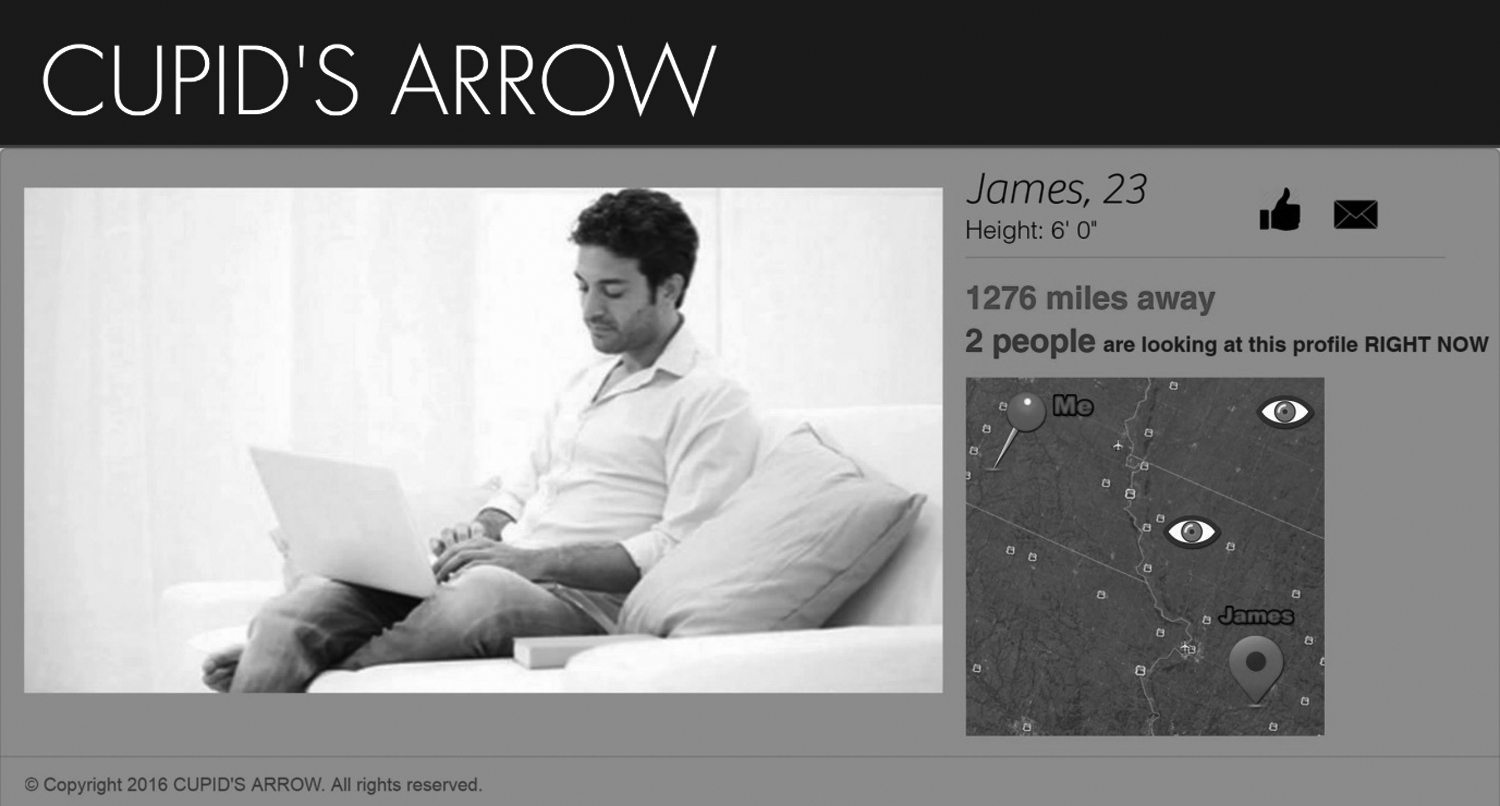
An example of stimulus for female participants (photograph × long distance).
We attempted to limit the participants to heterosexual individuals and controlled the potential impact of racial identification[40] and sexuality.
M, mean; SD, statndard deviation.
Manipulation check and measures
To ensure that participants read and understood the study material, we asked several manipulation check questions (Table 2.). Cronbach's α values for items used for measuring tested variables are above 0.70 (Table 2).
FtF, face-to-face; URSs, uncertainty reduction strategies.
Results
A path analysis using WarpPLS5.0 software controlling for age [i.e., age was regressed toward the URSs and set to impact the mediator, perceived social presence (PSP), and dependent variables (DV), PI, and FtF switch intention (FtF)] was conducted to test effects of participants' URSs and online dating site features on PSP, online dating site membership PI, and intention to meet dating partners offline (FtF). Age was significantly associated with URSs, PSP, PI, and FtF. In WarpPLS, the statistically significant average path coefficient (APC) and average R-squared (ARS), an average variance inflation factor (AVIF) value of <3.3, and an average full collinearity VIF (AFVIF) value smaller than 3.3 indicate a good model fit. 28 The multiple model fit indices all indicate that our model explains the data within a small degree of error, APC = 0.18 (p < 0.001), ARS = 0.11 (p = 0.001), AVIF = 1.06, and AFVIF = 1.2. The average adjusted R-squared (AARS) score was 0.104 and statistically significant (p = 0.003), meaning that about ten percent of variation was explained by the independent variables tested in the model that had impacts on the DV.
First, across all gender groups, the use of a rich medium (e.g., Video) in profile predicted greater levels of social presence (SP) (low = 0 and high = 1), β = 0.21, p < 0.001. LBIS features on online dating sites (close = 1 and distant = 0) also significantly affected dating site users' PSP. The closer the geographical distance that users perceived between themselves and the potential dating partner, the greater SP they felt (β = 0.06, p = 0.03, one tailed). In addition, the more they engaged in the URSs, the greater SP they were likely to experience (β = 0.16, p < 0.01).
In addition to testing the main effects of the URSs, geographic proximity cue, and rich modality cue on PSP, both the rich medium cue and proximity cue positively moderated the relationship between the URSs and PSP; exposure to video profiles (low photo = 0 and high video = 1) amplified the impact of the URSs on increasing PSP (β = 0.13, p < 0.001) and the perception of close proximity (close = 1 and distant = 0) magnified the positive association between the URSs and PSP (β = 0.09, p = 0.014).
Heightened social presence, in turn, was positively and strongly associated with behavioral outcomes, such as online dating site membership PI (β = 0.32, p < 0.001) and FtF intention (β = 0.46, p < 0.001).
A bootstrapping test 29 with 500 samples was conducted to examine the mediating role of social presence. Modality richness (Independent Variable) was directly associated with PSP (the proposed mediator), as previously mentioned, and PSP was a significant predictor of FtF intention (total effect = 0.1 and indirect effect = 0.1, p < 0.001) and PI (total effect = 0.07 and indirect effect = 0.07, p = 0.009), indicating full mediation models. In other words, modality richness does not directly affect behavioral outcomes such as PI and FtF. However, such behavioral outcomes take place only after people experience high levels of PSP. While there are significant paths linking the proximity cue to PSP, and PSP to behavioral outcomes, PSP does not significantly mediate the relationship between the LBIS feature and behavioral outcomes. However, another full mediation model indicates that PSP significantly mediates the association between URSs and PI (total effect = 0.051 and indirect effect = 0.051, p = 0.039) and between URSs and FtF (total effect = 0.074 and indirect effect = 0.074, p = 0.005) (Figs. 2 and 3).
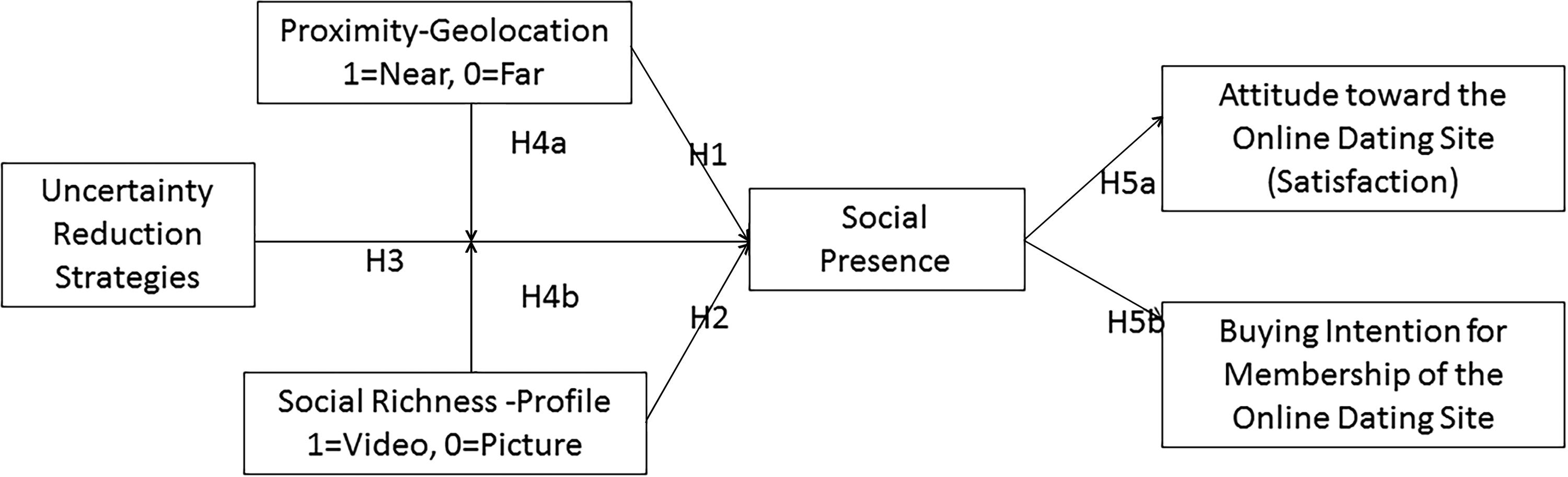
Proposed model: Hypotheses of moderated mediation model for the indirect effects of URSs for male and female participants. URSs, uncertainty reduction strategies.
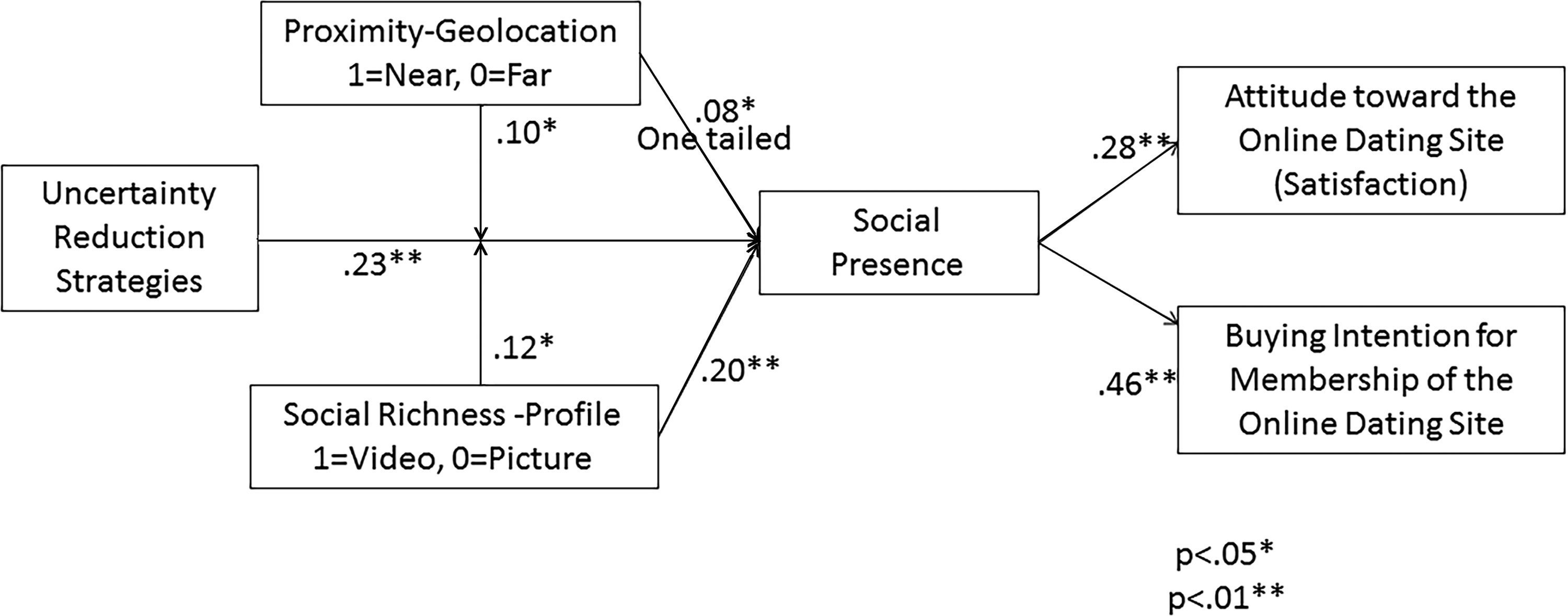
Final model: Moderated mediation model for the indirect effect for male and female participants.
To examine how men (Figs. 4 and 5) and women (Figs. 6 and 7) respond differently to LBIS cues and different degrees of modality richness, a path analysis for each gender group, controlling for age, was also administered. The AARS values were both significant for the female participants only model (value = 0.111, p = 0.013) and male participants only model (value = 0.112, p = 0.013). For male participants, close proximity also predicted higher PSP (β = 0.08, p = 0.04, one-tailed). However, there was no significant main effect of the close proximity cue on PSP among female participants (p = 0.243).
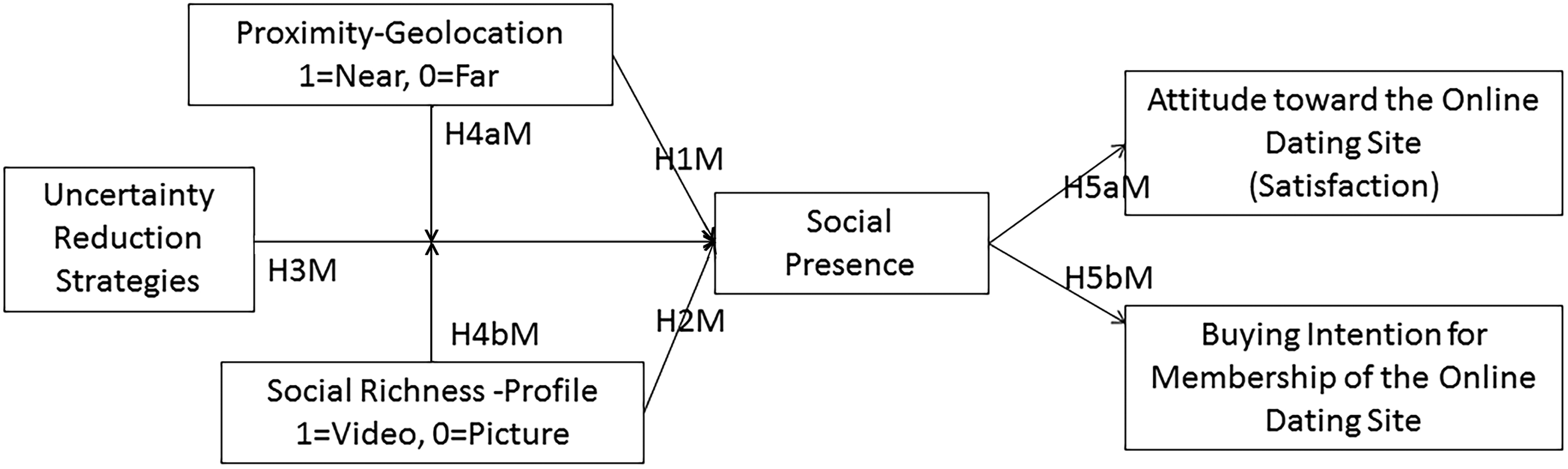
Final model for male participants only.
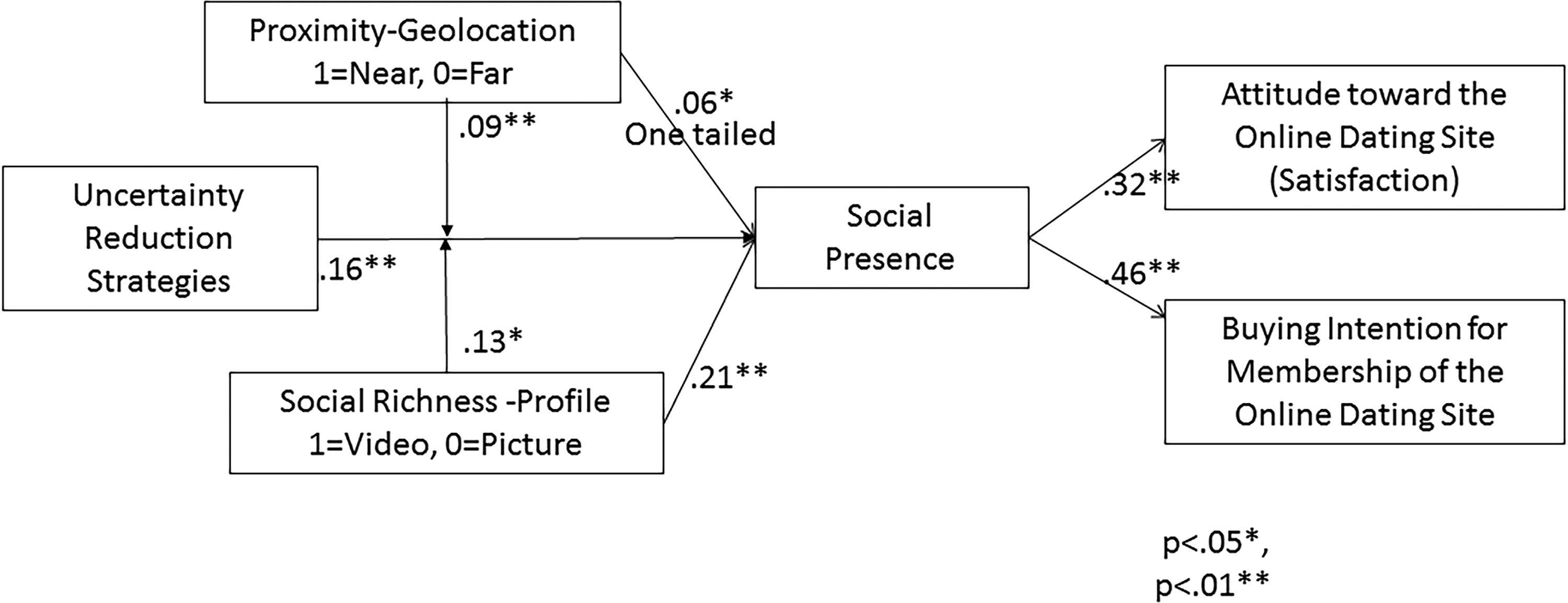
Final model for male participants only.
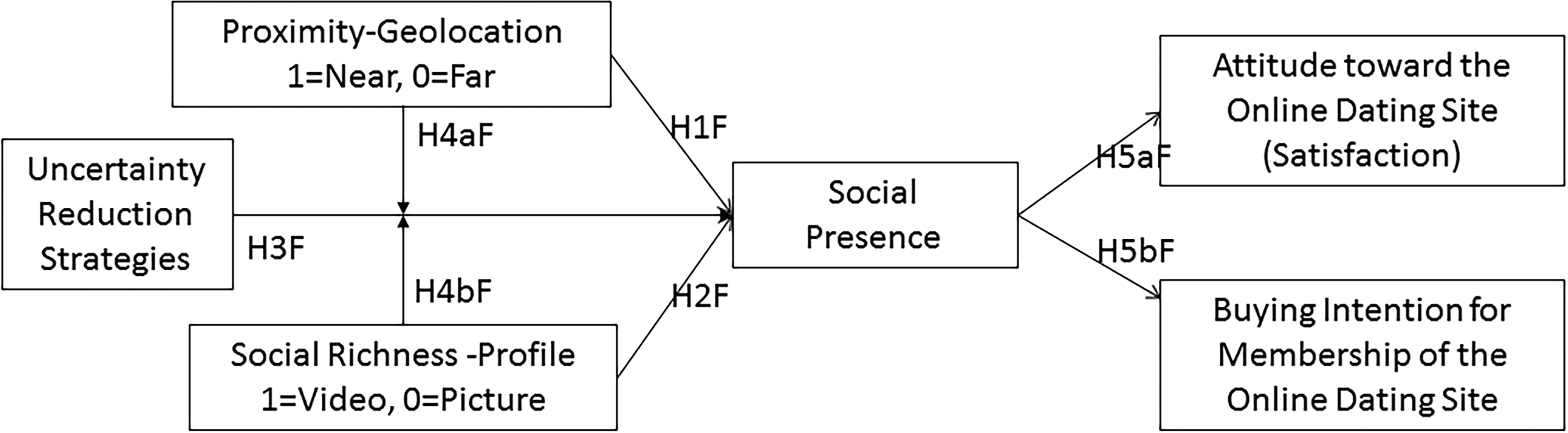
Proposed model for female participants only.
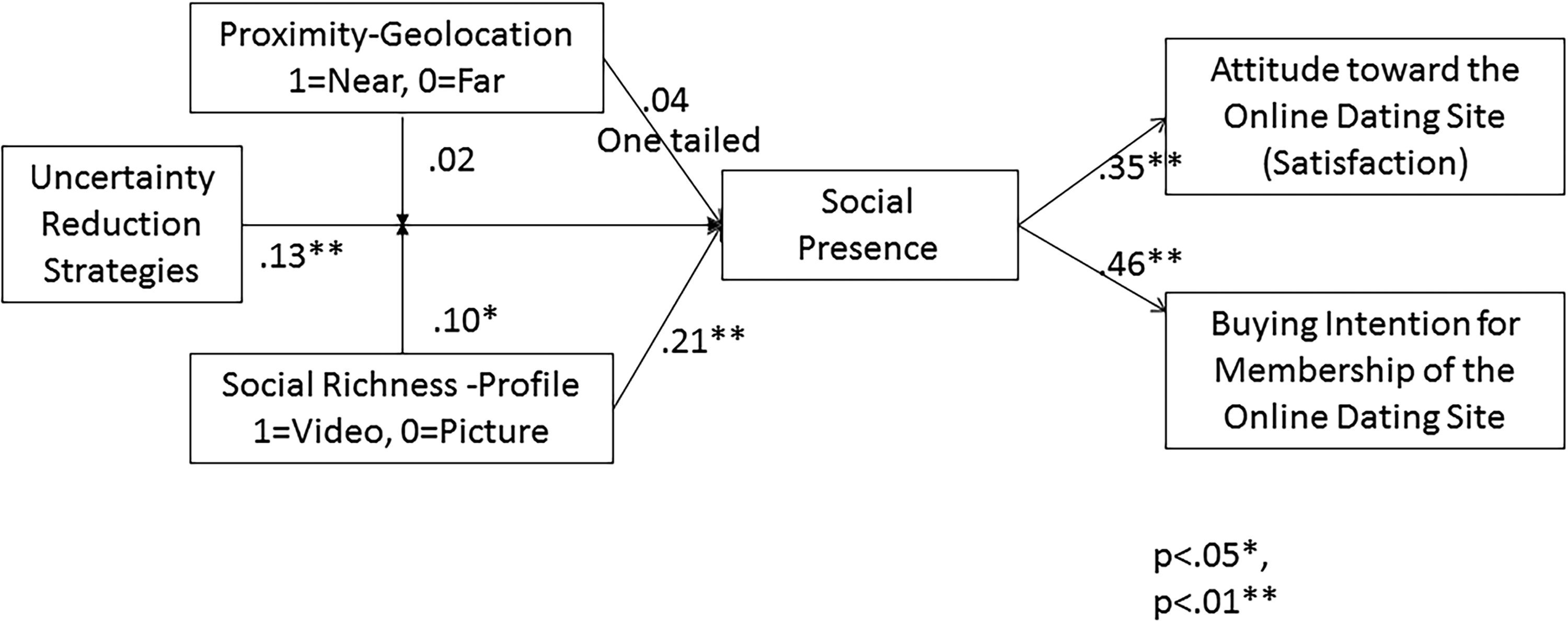
Final model for female participants only.
For male participants, rich modality features predicted higher PSP (β = 0.2, p < 0.001). In addition, there was a significant difference in PSP depending on the degree of modality richness for female participants (β = 0.21, p < 0.001). In addition, URSs were positively associated with PSP among male (β = 0.23, p < 0.001) and female participants (β = 0.13, p = 0.013).
Modality richness (β = 0.12, p = 0.016) and the proximity cue (β = 0.1, p = 0.038) intensified the impact of URSs on PSP with male participants. Among female participants, online rich modality cues (video) moderated the relationship between URSs and PSP; exposure to a richer medium increased the impact of URSs on increasing PSP (β = 0.1, p = 0.042). However, proximity cues did not impact the perception of PSP, nor did it impact PSP directly (i.e., there was no main effect) or indirectly in conjunction with the URSs (i.e., there was no interaction effect; p = 0.361).
We also found that there was a significant positive relationship between PSP and PI among male (β = 0.28, p < 0.001) and female participants (β = 0.36, p < 0.001). Our path analysis also revealed that PSP was positively associated with FtF interaction in both female (β = 0.26, p < 0.001) and male participants (β = 0.46, p < 0.001) (Table 3).
p < 0.05; **p < 0.01.
F, female; LBIS, location-based information sharing; M, male.
Discussion
Our study aimed to explore the URS theory on an online dating site and the effects of its features, such as proximity (LBIS) and rich modality of self-presentation (video), on social presence. Our hypotheses proposed that the proximity and rich modality cues would both directly positively predict the higher level of social presence, as a mediator, which would result in greater intention to purchase membership and switch to FtF communication. Since both features warrant uncertainty in the context of online dating, we also hypothesized that the features would moderate the effects of users' URSs. Our findings suggest that video profiles and close proximity reduce uncertainty in online dating and users feel more social presence with video profiles and proximity.
This study suggests theoretical and practical implications of online dating sites. First, proximity (LBIS) and rich modality (video) cues moderate the impacts of URSs, while the URS alone increases the level of social presence, these features, proximity cues and rich modality in profiles, intensify the impact of the URS on social presence. These cues provide additional, richer warranting information about their potential dating partners. As a result, users are less likely to use their own URSs to reduce the inevitable uncertainties involved in online interactions. In addition, these interface features directly increase the level of social presence people experience with a potential dating partner. If dating sites use these features, it would expand the variety of users who may not be skilled in using URSs or are greatly concerned about uncertainties such as deception in online dating context. A few dating applications, like Baddo, Lively, and Charm, have in fact introduced GIF or video profiles. Our study provides empirical support to the effectiveness of using such interface features as richer modality profiles and LBIS in online interactions.
Our study also suggests that the greater social presence users felt through the use of video profiles and the related mechanisms of perception is positively associated with behavioral outcomes, among both men and women, such as stronger intention to purchase paid memberships and greater willingness to meet in person. Therefore, if dating site designers focus on tailoring their features to enhance users' levels of social presence, it would result in a greater number of paying members for their sites and greater likelihood of an actual relationship building. Users' levels of social presence can be increased by offering richer modality options, not only in the form of video profiles but also with augmented reality stickers such as those introduced by Snapchat.30,31
Last, men and women were found to be influenced by different mechanisms with respect to their intentions to buy memberships for online dating sites; proximity (LBIS) and modality richness (video) increased feelings of social presence for men, while only modality richness increased feelings of social presence for women. Gender has also been explored with regard to self-presentation and deception in the dating context. 25 Our results exhibit a pattern similar to those shown in previous gender difference studies in dating and mate selection behaviors; women indicate more caution about potential deception associated with self-presentation.
Dating site developers can also find ways to meet different gender-related needs such as offering richer modality to female users and highlighting geographical information for male users. Doing so can ensure users' feelings of social presence to subsequently induce a potentially more committing engagement with online dating sites.
Footnotes
Acknowledgment
The project was supported, in part, by the Newhouse endowment, Syracuse University, awarded to Frank Biocca.
Author Disclosure Statement
No competing financial interests exist.