




Abstract
Abstract
The increasing utilization of social media provides a vast and new source of user-generated ecological data (digital traces), which can be automatically collected for research purposes. The availability of these data sets, combined with the convergence between social and computer sciences, has led researchers to develop automated methods to extract digital traces from social media and use them to predict individual psychological characteristics and behaviors. In this article, we reviewed the literature on this topic and conducted a series of meta-analyses to determine the strength of associations between digital traces and specific individual characteristics; personality, psychological well-being, and intelligence. Potential moderator effects were analyzed with respect to type of social media platform, type of digital traces examined, and study quality. Our findings indicate that digital traces from social media can be studied to assess and predict theoretically distant psychosocial characteristics with remarkable accuracy. Analysis of moderators indicated that the collection of specific types of information (i.e., user demographics), and the inclusion of different types of digital traces, could help improve the accuracy of predictions.
Introduction
Emergence of social media
T
The terms “digital traces,” “digital footprints,” and “digital records” are used interchangeably; throughout this article we use “digital traces” for consistency. Defined as information generated by users on their social media profiles, digital traces consist of personal information about age, gender, sexual orientation, and location, as well as activity information, including network size, shared text, pictures, and videos. 15 The availability of large data sets from social media, fostered by the convergence between social and computer sciences, allows researchers to not only seek to gain insights from studying human behaviors on social media but also to predict psychological characteristics and behaviors based on automated data mining and the analysis of digital traces.
Studies using automated approaches mostly aim at developing models to predict individual characteristics using the information available on social media profiles (e.g., predicting personality using data referring to activity statistics, language use, and pictures posted on social media).6,14 These type of researches are mainly data-driven, using features extracted from digital traces to predict psychological characteristics without referring to specific a priori theories or hypotheses.6,16 Studies in this field focus on association rather than causation, without providing theoretical explanation of the relationship between predictors and outcomes. 17 The present review focuses on this type of researches.
Predicting individual characteristics via automated analysis of digital traces
Studies focusing on the prediction of psychosocial and behavioral characteristics based on digital traces from social media generally use a common methodology, consisting of the following steps: (1) users are contacted and asked to complete self-report questionnaires assessing the characteristics of interest, and provide complete or limited access to their digital traces on social media, (2) digital traces are collected and analyzed using automated approaches to extract sets of profile attributes, or features (e.g., activity statistics, such as number of friends, and status updates; linguistic features, such as frequency of words in predefined categories in posts), and (3) the predictive power of these features is examined over participants' individual characteristics as assessed via self-reports, using a varied set of predictive methods, ranging from univariate linear regression modeling to classification via machine learning.
One of the earliest projects using this approach is the MyPersonality project, 13 which has cultivated a data set consisting of self-report data for a wide range of psychosocial characteristics (e.g., personality, satisfaction with life, substance use), and digital traces of nearly 3 million Facebook users. Many researchers have used this data set to conduct automatic coding of user profiles and assess or predict distinguishing features of user personality and well-being.5,6,9,10,13,18–22 Furthermore, scholars have demonstrated the feasibility of predicting many psychosocial characteristics from features extracted from a variety of digital traces (e.g., user demographics, 20 activity statistics,8,18 linguistic features, 6 and features extracted from pictures 23 ), social media platforms (e.g., Facebook, 24 Twitter, 25 and Sina Weibo 2 ), and by using different analytical approaches (e.g., use of a single type of digital trace 8 vs. multiple sources of digital traces 20 ).
Aims
The aim of the current study is to conduct a series of meta-analyses to determine the mean effect size of associations between digital traces from social media and specific individual characteristics. Meta-analyses were conducted on characteristics investigated by at least three studies, namely personality, psychological well-being, and intelligence. Given the expected presence of effect size heterogeneity among studies, potential moderator effects were analyzed with respect to type of social media platform (public vs. private), type of digital traces, and study quality.
Materials and Methods
Search strategy and inclusion criteria
An initial data set of 1,677 articles was identified in July 2016 by submitting a search query to Scopus, ISI Web of Science, PubMed, and ProQuest databases. The query searched keywords in the “title,” “abstract,” and “keyword heading” fields. The following keywords and stems were used in separate and combined searches:
psych*, behavior, personality, health, well-being, risk, depression, quality-of-life, life satisfaction, risk-behavior, substance, abuse, psychological-assessment, cyberpsychology, emotional-well-being, mental-health, gender, age, in conjunction with Myspace, Facebook, Instagram, Twitter, Youtube, Photobucket, Linkedin, social network, Reddit, social media, Snapchat, Periscope, social-networking, status-updates, mypersonality, machine-learning, data-mining, text-analysis, language-processing, closed-vocabulary, closed-dictionary, liwc, open-vocabulary, open-dictionary, support-vector-machines, text-mining, topic-modeling, dictionary, latent-dirichlet-allocation, differential-language-analysis, digital-footprint, differential-language, computational-social-science, content-analysis, linguistic-studies
After duplicates were removed, a set of 1,241 articles was screened for the following inclusion criteria—(1) studies must focus on human behavioral or psychological characteristics, (2) studies must focus on individual human behavioral or psychological characteristics, (3) studies must be at least partially quantitative in nature, (4) studies must analyze digital traces of human behavior, and (5) studies must include a valid self-report measure to assess individual characteristics. A total of 1,203 articles were excluded on inspection of their abstracts, and full-text assessment for eligibility was conducted for 38 articles. This screening process resulted in the initial selection of 25 articles for inclusion in our analysis.
We then identified an additional 34 articles through a review of the “citations” from the 25 originally selected articles; of these, 13 were selected for inclusion in our review based on the aforementioned inclusion criteria. This resulted in a final set of 38 articles selected for the review. The article selection process is depicted in Figure 1.
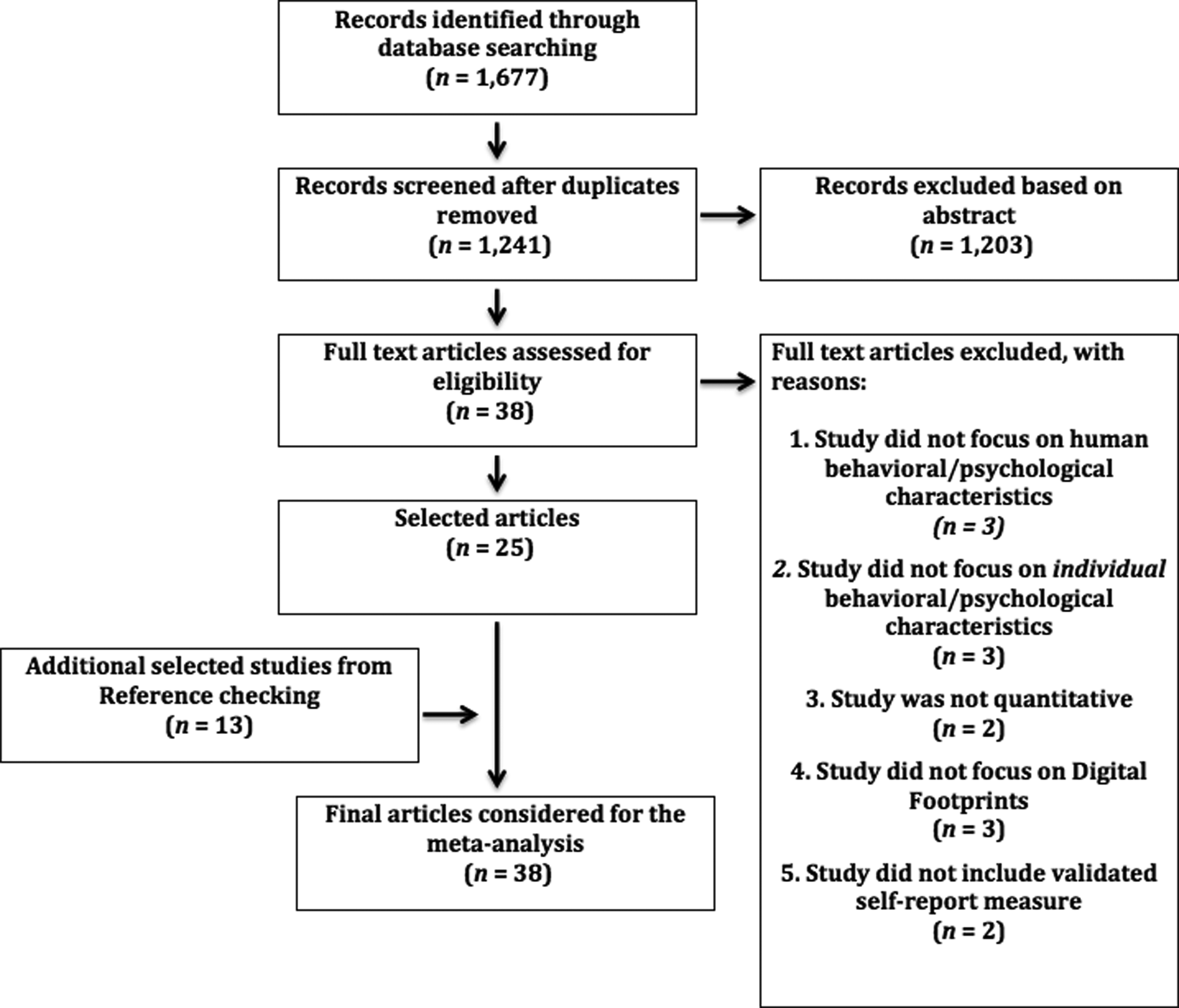
Flowchart of article selection.
Research coding
Coding of psychological and behavioral characteristics
Investigated characteristics varied across studies. We identified three general psychological characteristics, which were investigated at least by three studies: personality traits (Big 5 and Dark Triad), psychological well-being (depression, anxiety and stress, life satisfaction), and intelligence. Other characteristics were present in less than three studies: personal values, coping strategies, substance use, and self-monitoring skills (Table 1).
Note: Studies included in the meta-analyses are in bold.
Study using MyPersonality data sets.
IPIP, International Personality Item Pool Questionnaire; SPM, Standard Progressive Matrices; TIPI, Ten Item Personality Inventory.
Coding of digital traces
Studies varied considerably in terms of digital traces analyzed. We distinguished between the following types of digital traces: (1) user demographics (e.g., gender, age, and location), (2) user activity statistics (e.g., number of posts, number of friends, number of likes, comments, and mentions), (3) language (e.g., tweets, status updates, and comments), (4) Facebook likes (i.e., expression of interest in Facebook pages about events, persons, locations, and products), and (5) pictures (e.g., profile pictures and Instagram photos).
Coding of moderators
We considered seven potential moderators that were dichotomously coded. (1) Type of social media platform (private vs. public), (2) use of user demographics (yes vs. no), (3) use of activity statistics (yes vs. no), (4) use of language-based features (yes vs. no), (5) use of pictures (yes vs. no), (6) use of multiple versus single types of digital traces (e.g., language vs. language+pictures), and (7) study quality. Concerning the distinction between types of social media platform, we chose to group social media based on their default privacy settings, distinguishing between public (platforms that make posts and updates public by default, i.e., Twitter, Sina Weibo, Reddit, and Instagram) and private (platforms in which user posts are visible only by users' friends, i.e., Facebook).
Concerning study quality, given that the heterogeneity of the research areas in which analyzed studies were conducted makes it impossible to define a methodological standard, study quality was assessed using the quality of the source the study was published in. Articles were categorized into top, middle, and low tiers using the quartile that sources belong to in the 2016 Scopus CiteScore; ranking quartile 1 as top tier (high quality), quartile 2 as middle tier (medium quality), and quartile 3 or 4 and nonindexed studies as low tier (low quality).
Independence of studies
When selecting studies for inclusion in the meta-analyses, we found that several articles contained potentially overlapping samples. For example, studies using data collected by the MyPersonality project potentially share parts of the same sample and data, and often investigate the same main characteristic. In general, a potential lack of independence exists between many of those studies, violating certain statistical assumptions of the meta-analysis. In efforts to resolve this issue, we followed recommendations from previous studies.26,27 We considered studies as nonindependent if they met the following criteria: (1) each correlation was based on responses from overlapping sample subjects, (2) the main assessed characteristics were the same, (3) digital traces were extracted from the same social media platform, and (4) type of digital traces used to predict characteristics was the same or partly overlapping.
When studies were found to be nonindependent, the study with the most comprehensive set of digital traces was included in the analysis. In the case of nonindependent studies analyzing the same set of digital traces, the one with the larger sample size was included in the meta-analysis. In the case of studies including more than one effect size referring to the same psychological characteristic (e.g., Big 5 traits), we averaged the effect sizes to obtain a single effect size to ensure independence of the correlations entered into the meta-analysis. 28
Strategy of analyses
For each study, an effect size was calculated. We used Pearson's r to express the relationship between digital traces and investigated outcomes. We chose not to transform correlations into Fisher's z scores for meta-analytic calculations because this transformation produces an upward bias in the estimation of mean correlation, which is usually higher than the downward bias produced by the use of untransformed correlations. 29
When studies did not report Pearson's r, but instead reported alternative effect-size indicators (e.g., when characteristics were examined in dichotomous form by distinguishing individuals at low and high levels using validated or empirically derived cutoffs), reported effect sizes were converted to correlations. Area under the receiver operating characteristic curve statistics was first converted to Cohen's d, 30 and then converted from Cohen's d to r. 31 When studies provided specificity and sensitivity values, or positive predicted values and negative predicted values, or enough information was available for computing these statistics, we used this information to compute odds ratios, 32 then transformed odds ratios to Cohen's d, 33 and finally converted Cohen's d to correlations. 31
When studies only reported the mean absolute error (MAE) and root mean square error (RMSE) statistics (n = 7), and thus did not provide enough information to compute correlations, or results were not fully reported in the study (n = 2), we contacted the first author of the study to obtain any missing information. Missing information was obtained for one study (n = 1).
We conducted separate meta-analyses for each main characteristic (i.e., personality, psychological well-being, and intelligence). Meta-analyses were performed using a random-effects model as the true effect size was likely to vary in the individual studies; owing to the variety in data sources, study designs, and analytic approaches. Grubb's test was used to identify outliers. Heterogeneity of the studies' effect sizes included in each pooled analysis was evaluated by examination of (1) the chi-square Q statistic of heterogeneity, (2) the T2 estimate of true between-study variance, and (3) the I2 statistic of proportion of variation in observed effects due to the variation in true effects. Possible publication bias was evaluated by inspecting the funnel plot, by the statistical significance of the Begg and Mazumdar's adjusted rank correlation test 34 and Egger's test of the intercept, 35 Duval and Tweedie's trim-and-fill procedure, 36 and classic fail-safe N.
The effect of moderators on study effect sizes was measured by random-effects univariate meta-regressions using maximum-likelihood estimation. To obtain sufficiently robust coefficient estimates, we followed the suggestion by Fu et al. 37 and examined the effect of grouping variables only if at least four studies per group were available. We used a critical value of α = 0.05 in our meta-regression analyses, but due to the low number of studies, effects approaching statistical significance (p < 0.10) are commented as suggestions of possible links worthy of being explored by future researches.
Results
Overview of studies
We found 38 articles, resulting in 50 different effect sizes (Table 1). Information about all selected studies is shown in Tables 1 and 2.
Overall, we found three characteristics for which at least three studies were published, namely personality (26 articles,1,4,6–10,13,14,18–22,25,38–48 including 30 effect sizes), psychological well-being (10 articles,2,3,5,11,13,19,24,49–51 including 10 effect sizes), and intelligence (3 articles,13,19,23 including 3 effect sizes). Other characteristics for which we found fewer than three studies were social satisfaction, 2 substance use, 13 self-monitoring skills,21,52 personal values,38,53 and coping style. 54
Meta-analyses were performed on characteristics that were reported in at least three studies. After inspection of studies for nonindependence, we selected a subset of 25 articles, including 30 independent effect sizes, about the three main characteristics, namely personality (n = 18), psychological well-being (n = 9), and intelligence (n = 3) (Table 1). Grubb's test failed to identify any outliers, resulting in no further studies being excluded. Results of meta-analyses are reported below.
Meta-analyses
Personality
Mean effect size
To establish the magnitude of the association between digital traces and personality, we analyzed 18 independent effect sizes. The estimated meta-analytic correlation was 0.34, 95% CI [0.27–0.34] (Fig. 2), and this effect was significantly greater than 0, z = 9.58, p < 0.001. Q test for heterogeneity was significant: Q (17) = 318.33 (p < 0.001). There was low true heterogeneity between studies, T2 = 0.02 (T = 0.14), and the observed dispersion of effect sizes was mostly due to true heterogeneity (I2 = 94.66).
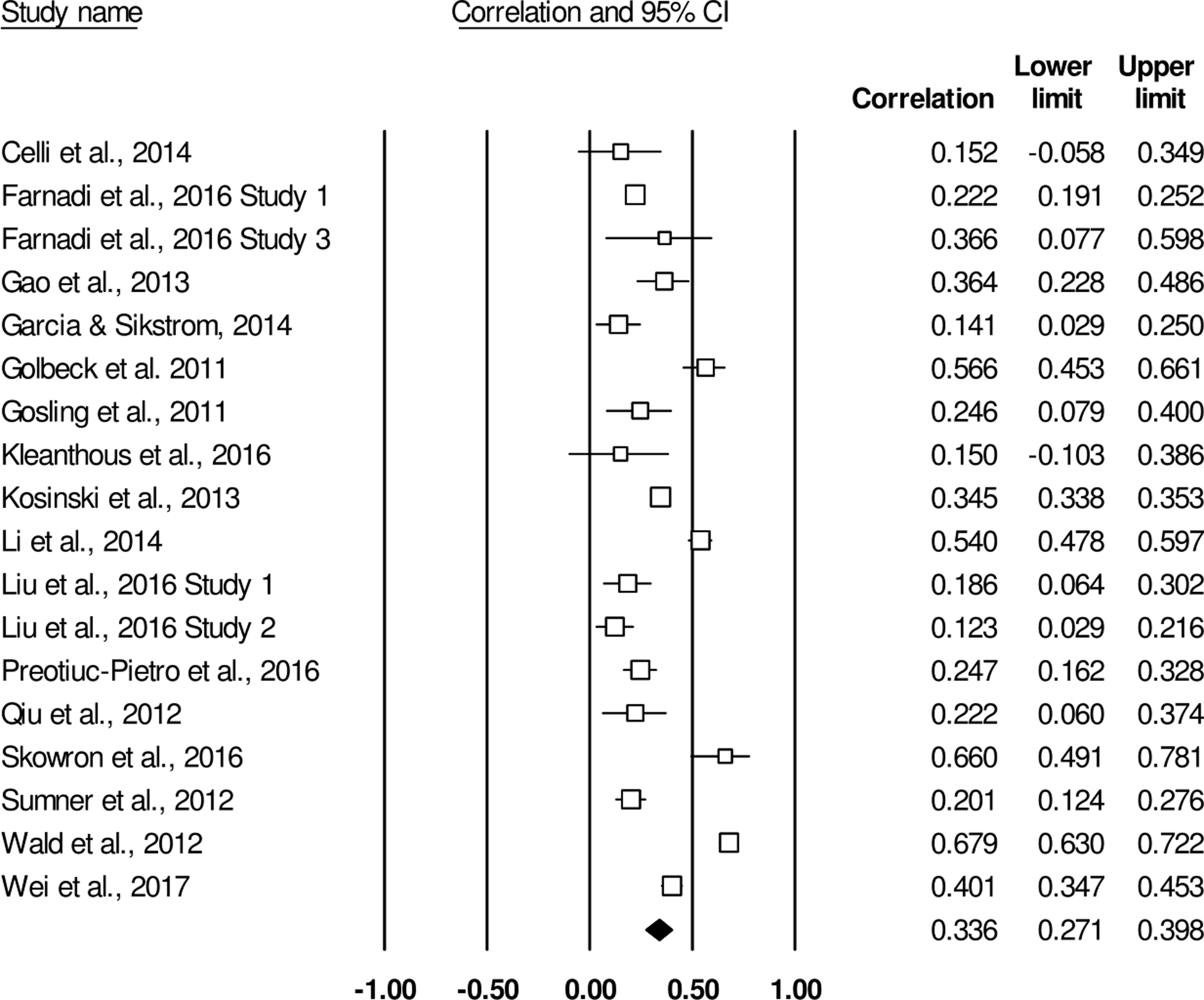
Forest plot of personality study-average effect sizes by weight.
Publication bias
First, we inspected the funnel plot (Fig. 3), plotting the included studies' effect size against its standard error. The funnel plot was symmetrical, suggesting lack of publication bias. Trim-and-fill analysis suggested that no studies were missing on the left side of the mean effect. The p-values of Begg and Mazumdar's test and Egger's test were p = 0.52 and p = 0.43, indicating no significant evidence of publication bias. The result of classic fail-safe N suggested that 9,638 null reports would be required in order for the combined two-tailed p-value to exceed the alpha level of 0.05. The fail-safe N value was larger than 100, corresponding to the recommended rule-of-thumb limit of 5k+10. 55 The results of these four tests indicated that it is unlikely that publication bias poses a significant threat to the validity of the findings reported in the current analysis.
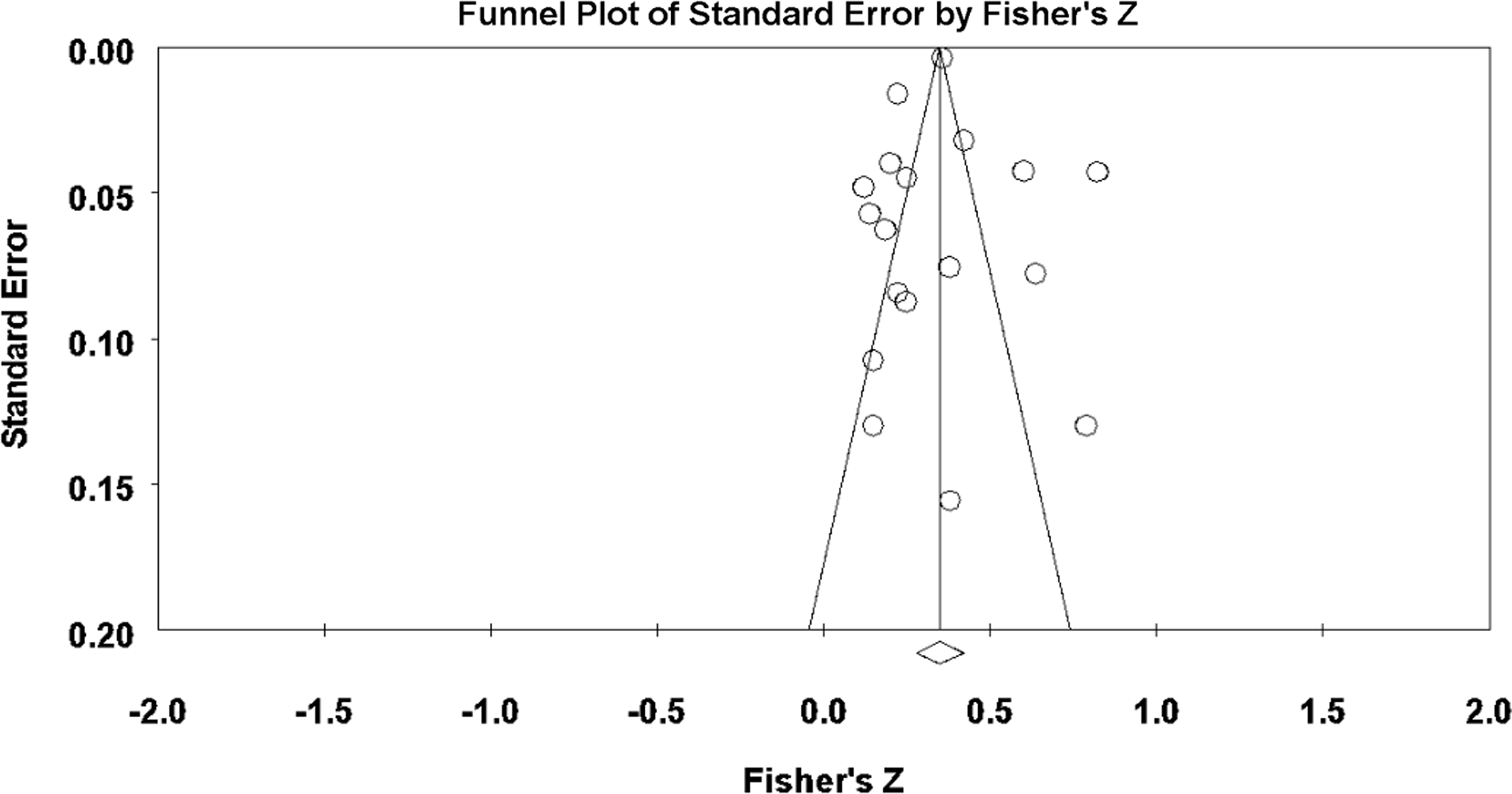
Funnel plot displaying effect sizes for personality by SEs. SE, standard error.
Moderator analyses
We examined the following moderating effects. (1) Privacy versus public oriented social media platform, (2) multiple versus single types of digital traces, (3) use of user demographics, (4) use of activity statistics, (5) use of language-based features, (6) use of pictures, and (7) study quality. Results of univariate meta-regressions, shown in Table 3, indicated an increase in strength of association between digital traces and personality when studies examined multiple types of digital traces compared with only one type (K = 18, β = 0.19, p < 0.05). Use of demographic statistics for prediction purposes was also associated with an increase in correlation strength between digital traces and personality (K = 18, β = 0.23, p < 0.05). The remaining moderators did not show significant effects.
Psychological well-being
Mean effect size
The magnitude of the association between digital traces and psychological well-being was analyzed by summarizing nine independent effect sizes. The estimated meta-analytic correlation was 0.37, 95% CI [0.28–0.45] (Fig. 4), and this effect was significantly greater than 0, z = 7.54, p < 0.001. Q test for heterogeneity was significant: Q (8) = 124.67 (p < 0.001). There was relatively low true heterogeneity between studies, T2 = 0.02 (T = 0.14), and the observed dispersion of effect sizes was mostly due to true heterogeneity (I2 = 93.58).

Forest plot of psychological well-being study-average effect sizes by weight.
Publication bias
Inspection of funnel plot (Fig. 5) and trim-and-fill analysis suggested that no studies were missing on the left side of the mean effect. The p-values of Begg and Mazumdar's test and Egger's test were p = 0.37 and p = 0.07, indicating low probability of publication bias. The result of classic fail-safe N suggested that 1,618 null reports would be required in order for the combined two-tailed p-value to exceed the alpha level of 0.05. The fail-safe N value was larger than the recommended rule-of-thumb limit of 55. Overall, results did not suggest existence of significant publication bias.
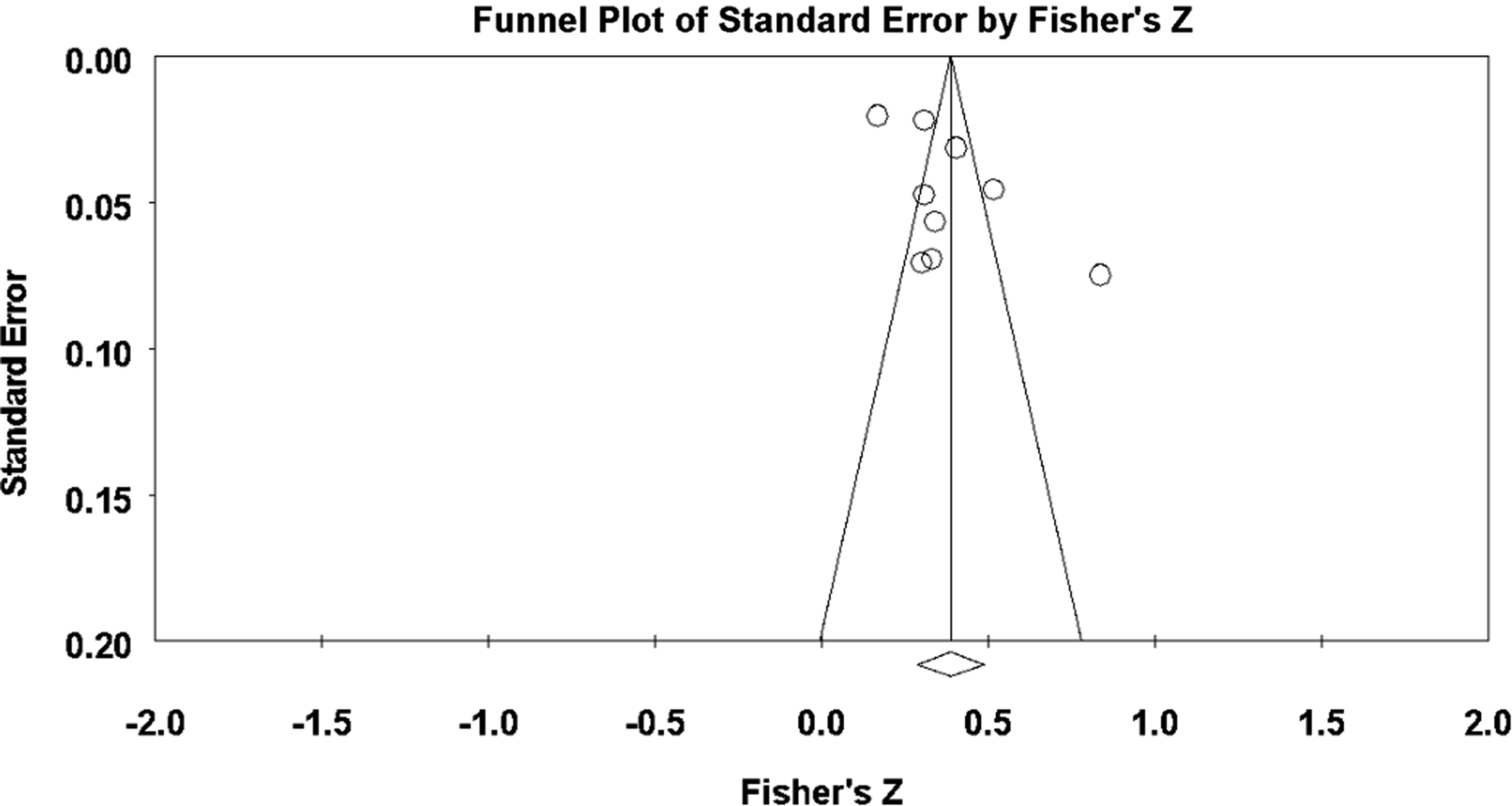
Funnel plot displaying effect sizes for psychological well-being by SEs.
Moderator analyses
We examined the following moderating effects. (1) Multiple versus single sources of digital traces, (2) type of social media platform (private vs. public), (3) use of activity statistics, and (4) study quality. Remaining categorical moderators were not tested because they did not reach the per-group minimum value of four distinct studies. Results of univariate meta-regressions (Table 3) seem to indicate a relevant increase in the effect size of the association between digital traces and psychological well-being when using multiple types of digital traces compared with use of only one type (K = 9, β = 0.18, p < 0.10). In addition, when comparing studies conducted on private social media platform (e.g., Facebook) with those conducted on public platforms (e.g., Twitter), a relevant difference in effect size in favor of public platforms emerged (β = −0.18, p < 0.10), even if the effect did not reach proper significance.
However, given the perfect collinearity between the variables concerning private/public platforms and multiple/single types of digital traces, a univocal interpretation of these moderator effects is not possible. A larger and more differentiated sample of studies will permit to ascertain both the presence of a significant impact of the type of platform and distinguish between the effects of multiple versus single types of digital traces and type of platform analyzed. Remaining moderators did not show relevant effect.
Intelligence
Mean effect size
The magnitude of the association between digital traces and intelligence was analyzed by summarizing effects presented in three studies. The estimated meta-analytic correlation was 0.29, 95% CI [0.19–0.38] (Fig. 6), and this effect was significantly greater than zero, z = 5.65, p < 0.001. Q test for heterogeneity was significant: Q (2) = 24.01 (p < 0.001). There was low between-study heterogeneity, T2 = 0.01 (T = 0.09), and the observed dispersion of effect-sizes was mostly due to true heterogeneity (I2 = 91.67).

Forest plot of intelligence study-average effect sizes by weight.
Publication bias
On examination, funnel plot (Fig. 7) was found to be symmetrical, suggesting no publication bias. In addition, trim-and-fill analysis suggested that no studies were missing on the left side of the mean effect. The Begg and Mazumdar's (p = 0.99) and Egger's test (p = 0.84) and the result of classic fail-safe N suggested (463 null reports required to exceed the alpha level of 0.05) lack of publication bias.
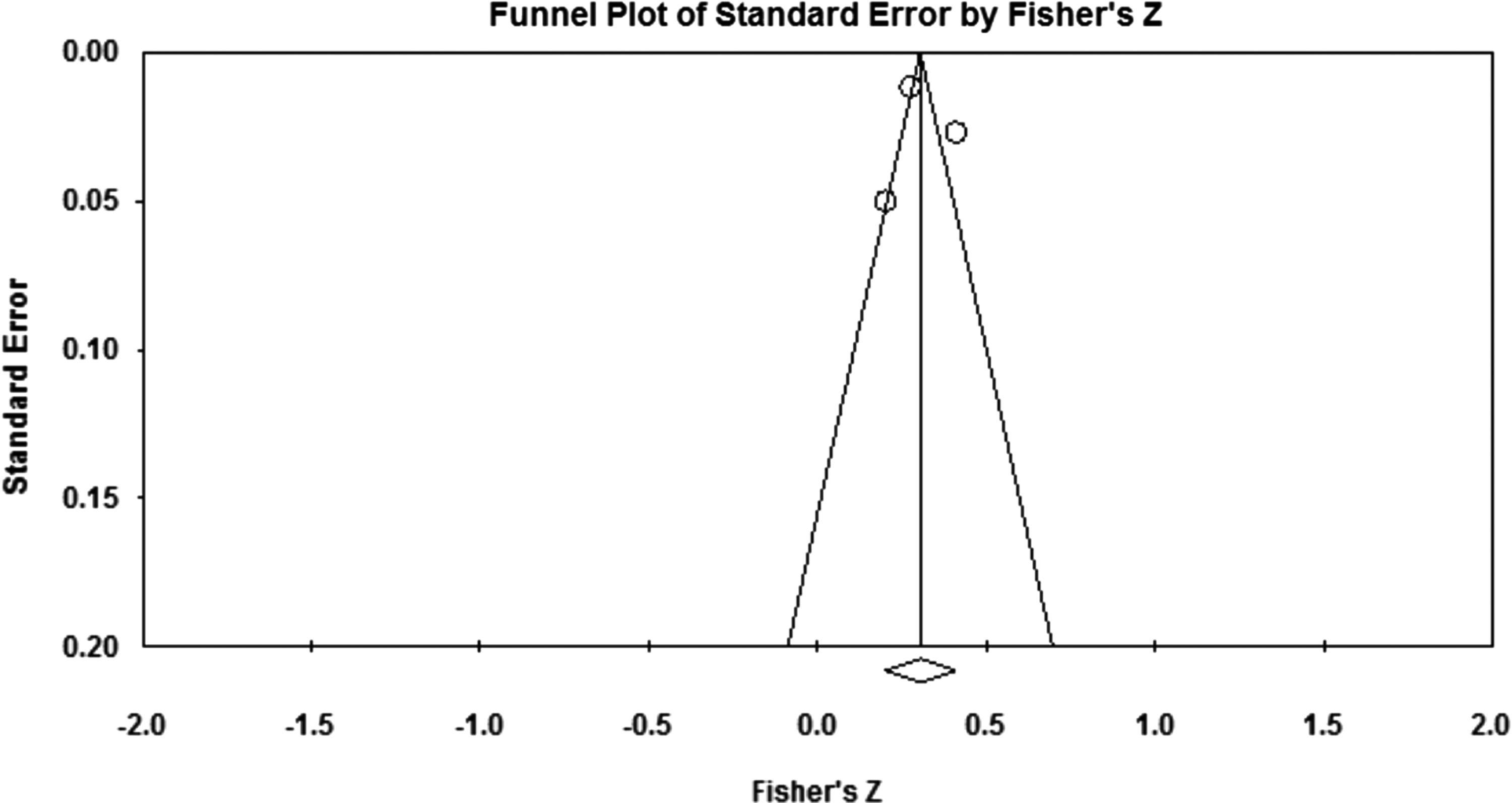
Funnel plot displaying effect sizes for intelligence by SEs.
Discussion
To our knowledge, this is the first meta-analysis summarizing results from studies investigating the use of digital traces collected from social media to predict psychological and behavioral characteristics. Our main aim was to determine the mean effect size of associations between digital traces from social media and specific individual characteristics. We found 38 articles using features automatically extracted from digital traces of human behavior on social media to predict different psychosocial characteristics. Meta-analyses were conducted on characteristics investigated by at least three independent studies; personality, psychological well-being, and intelligence. Overall, we found the majority of reported associations between features extracted from digital traces and investigated characteristics to be at least of moderate strength. Significant associations with digital traces were found for each of the most investigated characteristics, with mean correlation values (Pearson's r) ranging from 0.29 (intelligence) to 0.37 (psychological well-being).
Included effect sizes showed low-to-moderate dispersion that was mostly due to true differences across studies. Given the presence of heterogeneity of effects among studies, potential moderator effects were analyzed with respect to the following possible sources of variation: type of social media platform (private vs. public), type of extracted features, and analytical approaches (e.g., use of multiple vs. single types of digital traces). Our hypothesis was that each of these factors and their interactions could contribute to the overall heterogeneity of effects. Unfortunately, given the small number of studies included in the meta-analyses, we were able to perform moderator analyses for only two characteristics; personality and psychological well-being. Moreover, we were able to investigate the influence of only a subset of the moderators, and it was not possible to test the influence of interaction effects between moderators.
Our results indicate that the association between digital traces, and both personality and well-being, was stronger when multiple types of digital traces were analyzed. Regarding the type of extracted features, use of demographics extracted from social media positively affected the strength of the relationship between personality and digital traces, suggesting the opportunity to include them in models aimed at increasing the predictive power of digital traces. Furthermore, the type of social media platform (public vs. private) did not affect the strength of association with personality, while digital traces extracted from private platforms were less strongly associated with psychological well-being.
Overall, analysis of moderators outlined that a significant part of the effect size heterogeneity can be traced back to the amount of digital traces included in the studies: generally, higher effect sizes have been achieved by studies, including multiple types of digital traces. We hypothesize that future studies will confirm this relationship; hence, to reach a higher predictive power, scholars should collect data from a large set of different digital traces, possibly combining different types of data (e.g., pictures and text) from different social media platforms.
As noted in the Introduction, most of the reviewed studies focused on predicting individual characteristics without providing explanations or hypotheses regarding the existing relationships between specific digital traces and outcomes. This approach is quite common in computer science, while relatively novel among other disciplines. As this approach becomes more common in psychology and social sciences, we expect that findings of predictive studies may significantly contribute to the refinement of existing, and the building of new theories.
Conclusions
The present meta-analysis demonstrates that digital traces extracted from social media can be used to infer specific psychological characteristics. The presence of significant associations between digital traces and psychosocial characteristics and the lack of relevant differences in the strength of these associations indicate that records of digitally mediated behaviors from social media can be used to study and predict theoretically distant psychosocial characteristics with comparable accuracy. The relationship between digital traces of online behavior and psychological characteristics is quite strong, apparently stronger than the association found by scholars studying the link between personality and offline behaviors.56,57 We expect the accuracy to grow in the future due to the ongoing transition from the use of traditional analytic approaches toward a more pervasive use of data mining techniques, 58 and the emergence of new techniques to extract meaningful information from visual data, 59 which is especially important, given the current shift in content sharing on social media, from text to photos and videos. 60 These methodological improvements will hopefully help this research area become more mainstream among social scientists, which in turn will favor the theoretical reflection regarding the relationship between actual online behaviors and individual characteristics.
Results from the present study have implications on the development of tools allowing for the unobtrusive assessment of psychological characteristics of social media users, which in turn can be beneficial for a variety of purposes, including commercial applications (e.g., user-tailored advertising and online experiences) and health-related purposes (e.g., early detection of individuals at risk for depression, longitudinal tracking of mental well-being trends).
However, possible questionable uses of these tools also exist: recently, newspapers reported cases showing the feasibility and the efficacy of targeting political messages on the basis of unintentionally disclosed information on social media61,62 or targeting ads on the basis of users' emotional state. 63 The risks associated with the application of these new techniques to specific areas and subjects should be carefully considered by scholars.
Footnotes
Author Disclosure Statement
No competing financial interests exist.