




Abstract
Preschool children are generally assumed to lack the skills to critically respond to advertising despite being exposed to a high number of advertising messages while watching videos on YouTube. However, research on how preschool children process YouTube advertising is scarce. This study conducts an experiment to examine how preschool children's (4–5 years old, N = 62) responses to video advertising (20-second toy commercial) vary between YouTube and television viewing. The results suggest that almost half of the children were able to distinguish advertising from regular media content, and almost 70% of the children could correctly identify that the video was advertising. No differences were found between the two media. Children were not skeptical toward the video advertisement. With regard to ad effects, the results show low brand and product recall, whereas aided recall was higher (around 40% of the children could correctly recognize the product and brand shown in the advertisement). These findings suggest that 4–5-year-old children already have a proper understanding of advertising, but lack a critical attitude. Furthermore, children's advertising literacy does not vary between YouTube and television advertising.
Introduction
Preschool children's (aged 3–5 years) media consumption has heavily shifted from traditional TV viewing to digital media use. Watching YouTube videos, such as cartoons, nursery rhymes, or toy unboxing videos (in which children unpack toys), has become an important leisure activity for this age group.1,2 On YouTube, children come across a variety of advertisements that are shown prior (i.e., pre-roll advertisements) or during videos (i.e., mid-roll advertisements). Even on the YouTube Kids app, especially designed for children, advertising messages are shown. 3 Although research confirms the impact of advertising on preschool children's attitude and behavior,4,5 limited research is available on their advertising literacy. 6
Advertising literacy refers to an individual's knowledge and skills related to advertising. 7 Previous research assumed that children only gain advertising literacy skills after 5 years of age. 8 Nevertheless, some researchers acknowledge that even preschoolers may have a primitive level of advertising literacy. 9 The limited literature available on preschool children, however, mostly focuses on traditional TV advertising.5,10–12 Most of these studies rely on parents' perceptions of how their children respond to advertising. Research that examines preschool children's responses to advertising on digital media and the role that advertising literacy plays in this matter is scarce. 9 The present study aims to examine whether preschool children respond differently to video advertising (a 20-second toy commercial) when displayed on TV versus YouTube. The viewing experience on digital media differs from traditional TV viewing. 13 While TV viewers look at a (large) screen from a distance, YouTube is mostly watched on smaller, hand-held devices, which may affect (children's) advertising processing. Accordingly, this study examines whether children's advertising literacy varies by format (YouTube versus television viewing), as well as explores the effects that video advertising may have on them in terms of product and brand recall. This work focuses on preschool children aged 4–5 years and takes their theory of mind (ToM) into account when examining their responses. ToM refers to the ability to think about the thoughts and feelings of other people and is an important developmental skill to be able to understand advertising. 14
Theoretical Framework
The processing of commercialized media content model states that a commercial message will only be thoroughly elaborated when both the ability and the motivation to process the message are high. 15 As preschool children have limited critical thinking skills, they are more likely to process advertising messages automatically. Furthermore, preschoolers are at the beginning of their consumer socialization, in which they acquire the skills, knowledge, and attitude needed to function as consumers. 16 One of these skills learned through socialization is advertising literacy. 7 Researchers differentiate between conceptual and attitudinal advertising literacy. 17 The former refers to the ability to recognize and understand advertising messages. 18 This suggests that a person understands that advertising is trying to sell something (i.e., the selling intent) and to change an attitude (i.e., the persuasive intent). The latter refers to having a critical attitude toward advertising or ad skepticism. 17
Ability to identify commercial content
The first step in critically coping with advertising is awareness that one is being exposed to advertising. 7 This skill encompasses the ability to differentiate commercial content from regular media content 19 and to identify the commercial content as advertising. To do so, children often rely on perceptual features (e.g., jingles and advertising disclosures). In addition, they need to be able to recognize this different content as advertising. Before the age of five, children are assumed not to be able to discern advertising as different from regular content, and they instead see it as entertainment. 20 Around 5 years of age, children start to develop this skill. However, previous research has shown that children have difficulties discerning online advertising from TV advertising. 21 We therefore formulate the following research question (RQ):
RQ1a: Is there a difference in the ability to discern commercial content from media content between children who see a commercial on TV and children who see a commercial on YouTube?
RQ1b: Is there a difference in the ability to recognize advertising between children who see a commercial on TV and children who see a commercial on YouTube?
Advertising understanding
To critically reflect on advertising, children need to understand the advertising intent. Around the age of seven, children are assumed to gain this insight. 8 However, researchers have acknowledged the importance of looking at other developmental variables besides age.6,22 The most notable one is the ToM skill, which develops somewhere between the ages of three and five. Children who have this skill can understand the mental states of others and predict others' future behavior. 6 Understanding one another's thoughts is assumed to be a vital ability for conceptual advertising literacy; a child should be able to assess that advertisers want to sell their products, thus identifying advertiser' intent. 6 Consequently, children with ToM skills may already possess some level of advertising literacy even before the age of five. 6 Empirical research on traditional TV advertising has shown that preschool children can possess advertising literacy skills, although not advanced. 6 Basing on these insights, we formulate the following RQ:
RQ2: Is there a difference in advertising understanding between children who see a commercial on TV and children who see a commercial on YouTube?
RQ3: Is there an association between children's ToM skills and their conceptual advertising literacy skills?
Attitudinal advertising literacy
Being knowledgeable about advertising does not entail that one is also skeptical. 23 Following cognitive development theory, researchers assume that attitudinal advertising literacy increases with age.8,23 To the best of our knowledge, no studies on attitudinal advertising literacy and YouTube advertising among preschool children have been conducted. Among adults, YouTube advertising is associated with a higher sense of annoyance 24 and is considered more intrusive. 25 This may be explained by the difference in screen size. A greater screen size is associated with a higher feeling of presence (i.e., being there in the media environment), 26 which, in turn, leads to more positive emotions. 13 Following the above, we formulate the following RQ:
RQ4: Is there a difference in attitudinal advertising literacy between children who see a commercial on TV and children who see a commercial on YouTube?
Advertising effects
More research is available concerning advertising effects on preschool children, such as product and brand memory (i.e., unaided and aided product or brand recall).14,27 Unaided brand or product recall refers to being able to name a brand or product after being exposed to its advertising message, whereas aided brand or product recall refers to being able to choose the correct brand or product from a list. 27 In empirical research, children younger than the age of seven generally score low on unaided recall, whereas children from 3 years of age may already be able to identify the correct product or brand they see from a list. 27 This skill increases with age and is dependent on the type of brand involved. Preschool children more easily remember food brands or brands marketed at children. 14
Empirical insights into how advertising effects differ between YouTube and TV are limited, even among adults. 13 One recent study on adults investigating the difference in viewing experience on YouTube and TV established no differences in brand memory between both formats. 13 In the present study, we focus on preschool children, resulting in the following RQ:
RQ5: Is there a difference in product and brand memory between children who see a commercial on TV and children who see a commercial on YouTube?
Method
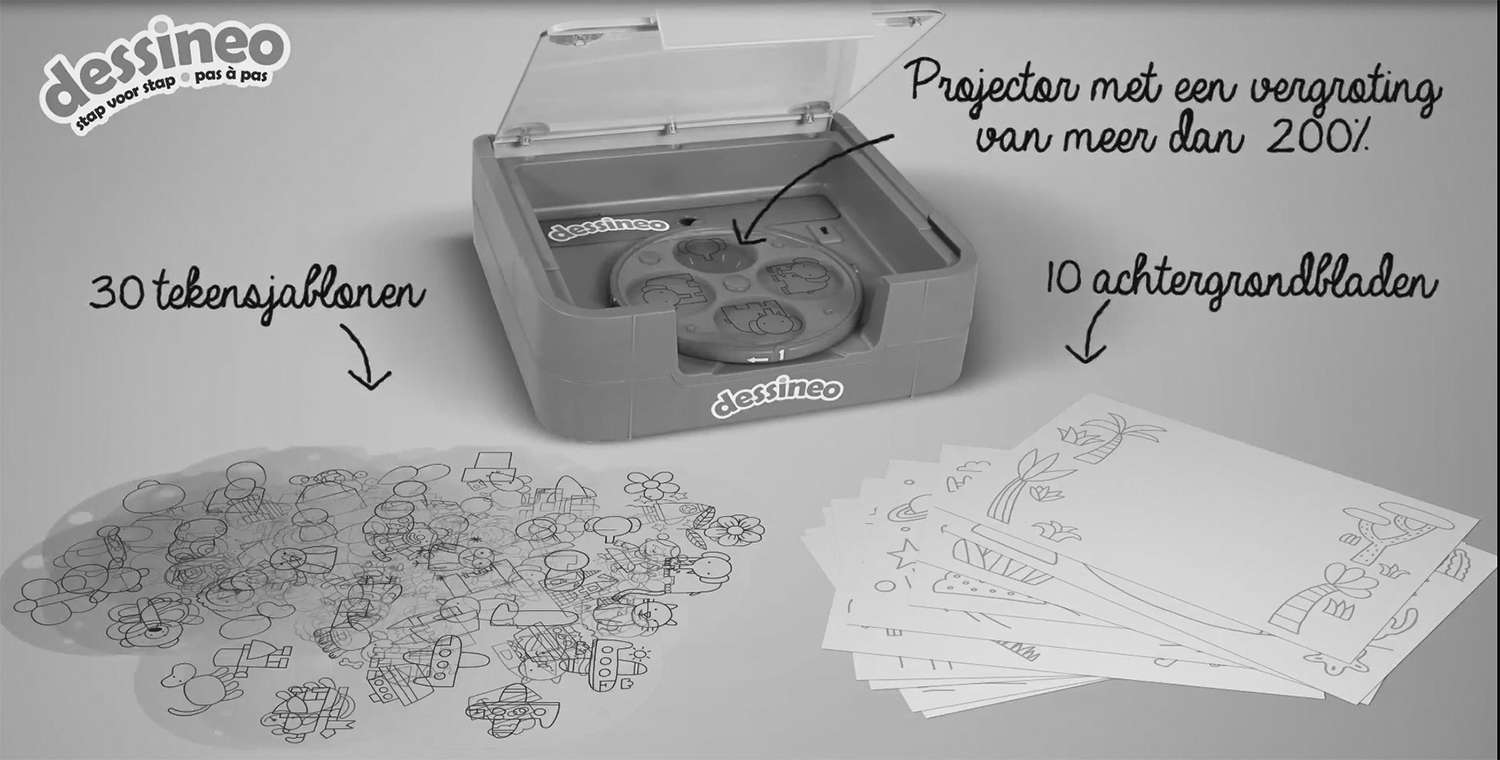
A between-subject single-factor design (format: TV vs. YouTube commercial) was used, in which each child was exposed to one condition. This allowed us to examine how the children respond to the same video advertisement (a 20-second pre-roll ad), either on a TV screen or on a tablet in the YouTube app. The respondents were asked to watch a five-minute episode of a children's program (Bobo), either on TV (Fig. 1) or on a tablet (Fig. 2). Before the episode, a commercial for a toy (drawing machine) was shown. The commercial was an existing ad shown in the country where the study was conducted and depicted an existing, yet, fairly unknown brand (Dessineo©).

YouTube condition.
Television condition.
Each experiment was conducted individually at preparatory school. Each participant was asked by his/her teacher to follow the researcher to a separate classroom. Thereafter, the respondent was randomly assigned to one of the experimental groups by the researcher. In the TV condition, the children were asked to watch the episode on a big screen. In the YouTube condition, the children were handed a tablet device showing a YouTube mock-up page. This mock-up, developed for research purposes, has the look and feel of YouTube and serves as an environment where the researchers control the viewing experience. The commercial was disclosed, as prescribed by European regulation (Consumer Rights Directive COM/2018/0183, EUR-Lex, 2018) 28 and done in practice in the country of the study. Specifically, a visual disclosure containing the word “advertising” was displayed before the TV commercial and during the YouTube commercial (Fig. 3). Afterward, the researcher asked the participants questions regarding the commercial using a structured questionnaire. The researcher read each question aloud and entered the responses into a survey (using Qualtrics software). Afterward, all participants received a small incentive (a bread box).

Television condition.
Participants
The data were gathered from 62 preschool children (4–5 years of age; 53% boys and 47% girls) recruited from four preparatory schools. Before the data collection, school principals and teachers were asked for permission, and active parental consent was also obtained. All children were informed that they could end their participation at any given time. This study was approved by the university's Ethics Committee (blind review).
Measurements
The questionnaire (Table 1) consisted of age-appropriate answering options, with four-item smiley scales 12 and color codes (green for yes, red for no). 29 The answering options were practiced before the survey, and assisted children with limited verbal skills.
Construct Overview
ToM, theory of mind.
Content differentiation
The extent to which the children were able to identify that the advertising was different from regular content was measured using the item “Was this clip a part of the episode of Bobo?” Advertising recognition was measured using the item “Do you think this clip was advertising?” A yes/no color code was used to indicate the children's answer.
Unaided and aided product and brand recall
Brand and product recall were measured using an open question (“Do you remember seeing a brand/product?”). Before each question, the researcher explained the words product and brand. Aided recall was measured using a list with three other brands/products. Both variables were recoded into a dichotomous variable (correct/incorrect).
Advertising understanding
Before the following questions, the children were shown the advertised drawing machine, with the researcher explaining that there was a clip of a drawing machine before the episode. Advertising understanding was measured using an open question (i.e., “Do you know why there was a clip of a drawing machine shown before Bobo?”). The answers were coded into a dichotomous variable (correct/incorrect). Answers referencing to the selling or persuasive intent were marked correct. Next, two closed items measured the children's understanding of the selling and persuasive intent. A yes/no color code was used to indicate the children's answer.
Attitudinal advertising literacy
Two items assessed advertising liking and advertising annoyance. The respondents were asked to answer on a four-point smiley scale, ranging from 1 (strongly dislike) to 4 (strongly like).
ToM skills. Three false-belief tasks measured ToM skills30,31 (Appendix A1). A child's total score ranged from 0 to 6, with high scores referring to a high ToM (M = 2.4, SD = 2.1).
Results
Advertising literacy
Regarding content differentiation (RQ1a), 42% of the children were able to discern the commercial content, with no significant differences between TV (35%) and YouTube (48%), z = −1.04, n.s. Overall, 69% indicated that the commercial they saw was advertising (RQ1b), with no significant differences between TV (71%) and YouTube (68%), z = −0.27, n.s.
Concerning the understanding of advertising (RQ2), only two respondents (3%) were able to respond to the open question on why the advertisement was integrated. Both respondents referred to the selling intent of the advertising (i.e., that you can buy the product in a shop). In the two closed questions, most respondents showed a good advertising understanding. Seventy-six percent were able to correctly identify the selling intent, with no significant differences between TV (68%) and YouTube (84%), z = 1.47, n.s. Furthermore, 86% of the respondents were able to correctly identify the persuasive intent, with no significant differences between TV (84%) and YouTube (87%), z = −0.33, n.s.
Four logistic regression analyses were performed (content differentiation, advertising recognition, understanding selling, and persuasive intent were added as dependent variables) with the experimental condition, ToM, and their interaction entered as the independent variables to take into account the children's ToM skills with regard to their conceptual advertising literacy skills (RQ3). No significant effects on neither of the dependent variables were found (Tables 2–5).
Summary of Binary Logistic Regression Predicting Content Differentiation (N = 62)
The model explained 9.4% (Nagelkerke R2) of the variance in content differentiation, but was not found significant χ 2 (3) = 4.68, p = ns.
Summary of Binary Logistic Regression Predicting Advertising Recognition (N = 62)
The model explained 7.9% (Nagelkerke R2) of the variance in advertising recognition, but was not found significant χ 2 (3) = 3.59, p = ns.
Summary of Binary Logistic Regression Predicting Understanding Selling Intent (N = 62)
The model explained 6.6% (Nagelkerke R2) of the variance in understanding selling intent, but was not found significant χ 2 (3) = 2.80, p = ns.
Summary of Binary Logistic Regression Predicting Understanding Persuasive Intent (N = 62)
The model explained 7.2% (Nagelkerke R2) of the variance in understanding persuasive intent, but was not found significant χ 2 (3) = 2.58, p = ns.
Further, the analyses showed a rather low attitudinal advertising literacy (RQ4), with all participants having a rather positive attitude toward the advertisement. The children reported a high liking of the advertisement (M = 3.81, SD = 0.38) and were not annoyed by it (M = 3.06, SD = 1.02). Independent samples t-tests revealed no significant differences in ad liking between YouTube (M = 3.77) and TV (M = 3.87; t(60) = −989, n.s.), nor in ad annoyance (MYouTube = 3.06; MTV = 3.06; t(60) = 0.00, n.s.). No significant difference was found with regard to ad liking (t(60) = −1.69, p = n.s.) between the children who recognized the commercial as advertising (M = 3.86) and those who did not (M = 3.74). Similarly, no difference in ad annoyance was found between the children who recognized the advertisements (M = 3.02) and those who did not (M = 3.16; t(60) = −0.475, n.s.).
Advertising effects
Regarding unaided product and brand recall (RQ5), only three children (5%) correctly recalled the toy, and none of them was able to name the brand. As expected, aided brand and product recall were higher: 37% of the children were able to recall the brand correctly from a list, and 37% were able to recall the product. Although a higher number of respondents in the TV condition (42%) were able to recognize the brand compared with the respondents in the YouTube condition (32%), no significant difference was found between both conditions, z = −0.82, n.s. In addition, no significant differences were found between TV (36%) and YouTube (39%) with regard to aided product recall, z = 0.244, n.s.
Association between advertising literacy and advertising effects
Concerning conceptual advertising literacy, a significant effect was found between advertising recognition and aided product recall, z = 2.25, p < 0.05. Whereas 47% of the children with high advertising recognition were able to recognize the product, only 16% of the children with low advertising recognition were able to do so. The same association was found with regard to aided brand recall: 46% of the children with high advertising recognition recognized the brand correctly compared with only 17% of the children with low advertising recognition (z = 2.25, p < 0.05). No significant associations were found between content differentiation and aided product (z = 0.26, n.s.) and brand recall (z = 1.39, n.s.).
Attitudinal advertising literacy was not significantly related to advertising effects; point-biserial correlation analyses showed that ad liking was not related to aided product recall (rpb = 0.08, n.s.) nor to aided brand recall (rpb = 0.02, n.s.), and neither was ad annoyance related to aided product recall (rpb = 0.15, n.s.) nor to aided brand recall (rpb = 0.05, n.s.).
Discussion
The aim of this study was to investigate whether children process advertising differently when it is displayed on YouTube versus on TV. In contrast to a previous finding that the different viewing experiences on YouTube and TV lead to differences in advertising processing among adults, 13 our study could not confirm this for preschool children. Furthermore, although consumer socialization researchers often assume that preschool children lack advertising literacy skills, 8 our study found that preschool children are fairly able to recognize advertising and to understand its intent. This supports the assumption of ToM researchers that children aged 4–5 years have some advertising literacy skills. 6 Still, we did not find any association between having ToM skills and advertising literacy skills. However, our respondents scored fairly low on their ToM skills, so future studies should further investigate this finding by also including older children who are likely to score higher on ToM skills.
Remarkably, although almost 70% of the children confirmed that the commercial was advertising, over 60% still thought that it was a part of the regular content. Combined with the finding that preschool children do have some level of advertising understanding, our findings challenge the assumption that one should first be able to discern an advertisement before being able to understand its intent. One plausible explanation may be that these children, due to their frequent exposure to embedded advertising, are accustomed to see advertising content being integrated into regular media content. This would suggest that for this generation, the boundaries between entertainment and advertising are even further fading away. Still, future research should investigate this statement more in-depth.
Our study further showed that the preschool children scored low on attitudinal advertising literacy, as most of them scored high on advertising liking and low on advertising annoyance. This implies that preschool children are not able to critically process advertising. Furthermore, in contrast to previous findings among adults, 25 the children did not differ in their critical assessment of YouTube and TV advertising. In accordance with previous findings on children's brand memory, 27 the children in our study also scored low on unaided brand and product recall, which suggests that they did not spontaneously remember the brand and/or product. Their aided brand and product recall scores were slightly higher. These findings indicate that both TV and YouTube advertising lead to low memory effects among preschool children. The brand used in this study was an existing brand. Future research should therefore also include nonexisting brands or well-known brands. They could likewise focus on more embedded advertising strategies, such as influencer marketing (i.e., toys being shown in a toy unboxing video).
Despite careful preparation, this study has its limitations. First, we opted to focus on pre-roll advertisements instead of mid-roll ones. Future research on children's processing of YouTube advertising should investigate whether the timing of showing an ad (prior or during) affects advertising processing. For instance, it could be that mid-roll advertisements cause a higher level of annoyance, as they interrupt the media content. Second, we did not assess the effectiveness of the disclosure label. In our stimulus material, we added a visual disclosure cue in both formats, which is in line with current regulations in Belgium (i.e., the study where the study was conducted). However, not every country requires the inclusion of a disclosure cue. As such, the usage of a disclosure cue in this study may have positively affected children's ability to recognize advertising. Further research investigating how a disclosure cue can assist preschool children in recognizing advertising on YouTube would be relevant. For instance, future studies could investigate whether an auditory disclosure cue is more effective among preschool children than currently used visual cues are.
Our research was the first of a series of studies on preschool children and YouTube advertising. The next steps in this research field will entail studies comparing preschool children with primary school children, as well as including more embedded advertising formats, such as influencer marketing. Most importantly, our study suggests that the current theoretical framework on children's advertising literacy should also include insights into preschool children, a target group often ignored in contemporary research.
Footnotes
Author Disclosure Statement
No competing financial interests exist.
Funding Information
The first author was supported by the research grant from the Ghent University Special Research fund (grant number 01J04519). The second author has the title of postdoctoral fellow fundamental research of the FWO (grant number FWO.3.E0.2015.0035.01).