




Abstract
As Internet use increases, there is a growing risk of online harms, including cyber stalking and cyber harassment. However, there has been limited research investigating the impact of such online harms upon adults' well-being. This article engages in a systematic literature review concerning the mental health impact of online stalking and harassment for adult victims to further understand their experiences and the effects these have on their lives. Our research utilized the preferred reporting items for systematic reviews and meta-analysis technique to review articles published in eight online databases. A total of 1,204 articles were extracted and, ultimately, 43 articles analyzed. Forty-two of the reviewed articles reported that victims of cyber stalking and/or harassment experienced a multitude of harmful and detrimental consequences for their mental health, including depression, anxiety, suicidal ideation, and panic attacks. Victims recounted the lack of support they received from the criminal justice system and their subsequent distrust of technology postabuse. Only one study found no relationship between cyber abuse victimization and the well-being dimensions they examined. Our research highlights the need to devise practical solutions to tackle and minimize this victimization. Furthermore, it underlines the necessity for adult education concerning safer technology use, as well as for researchers to be transparent regarding the platforms that victims have been abused on, so we can better infer where and how exactly individuals need support to interact safely online.
Introduction
The Internet and online applications have become fundamental parts of society. While undoubtedly beneficial, they also present threats to children, adolescents, and adults alike. Cyber stalking and cyber harassment are two of these dangers. 1 Cyber stalking can be defined as “the use of the Internet, e-mail, or other electronic communications devices to stalk another person”. 2 Cyber harassment and cyberbullying have been used analogously, 3 with cyberbullying defined as “the repeated and intentional use of various forms of technology such as cell phones, pagers, e-mail, instant messaging, and Web sites by individuals or groups to harm others.” 4
Traditional (offline) stalking and harassment have long been associated with causing a myriad of negative impacts upon victims' mental health, including anxiety, depression, nightmares, flashbacks, and suicidal thoughts.5–7 Periodically, it is essential to reflect on what existing research states about mental health of victims and examine what research is missing within the cyberpsychology field. Most research focuses on adolescents and school-aged children,8,9 but there is a lack of understanding on adults' experiences.
Using the WHO's definition of mental health, 10 we aim to examine the impact that being a victim of cyber stalking or harassment has on adults' mental health and well-being. Therefore, our research question (RQ) is: How does cyber stalking and harassment impact the mental health of adult victims?
Systematic reviews have been conducted examining cyber victimization and adolescents' mental health.11,12 Furthermore, a systematic map was recently conducted examining the relationship between cyberbullying and mental health both in children and young people. 13 To our knowledge, however, a review regarding the impact of cyber stalking and harassment on the mental health of adult victims (i.e., aged 18 and over) has not yet been conducted. Such a review would provide greater insight into adult victims' experiences of cyber abuse, which may differ to children and adolescents.
The contributions of our article are:
A systematic review of existing research on the mental health impact of cyber stalking and harassment for adult victims. A compilation of the psychological harms experienced by adult victims of online stalking and harassment. A highlight of the distrust toward technology felt by individuals after victimization and the need for this to be addressed regarding future technology use. An outline of related areas for future cyberpsychology research.
Methods
Systematic review
Our systematic review utilized the parameters established by preferred reporting items for systematic reviews and meta-analysis (PRISMA) group, 14 ensuring that the search process was rigorous and without researcher selection bias. 15 PRISMA was selected because its 27-stage checklist (some key stages depicted in Fig. 1) provides a robust and thorough platform for a critical review. 14
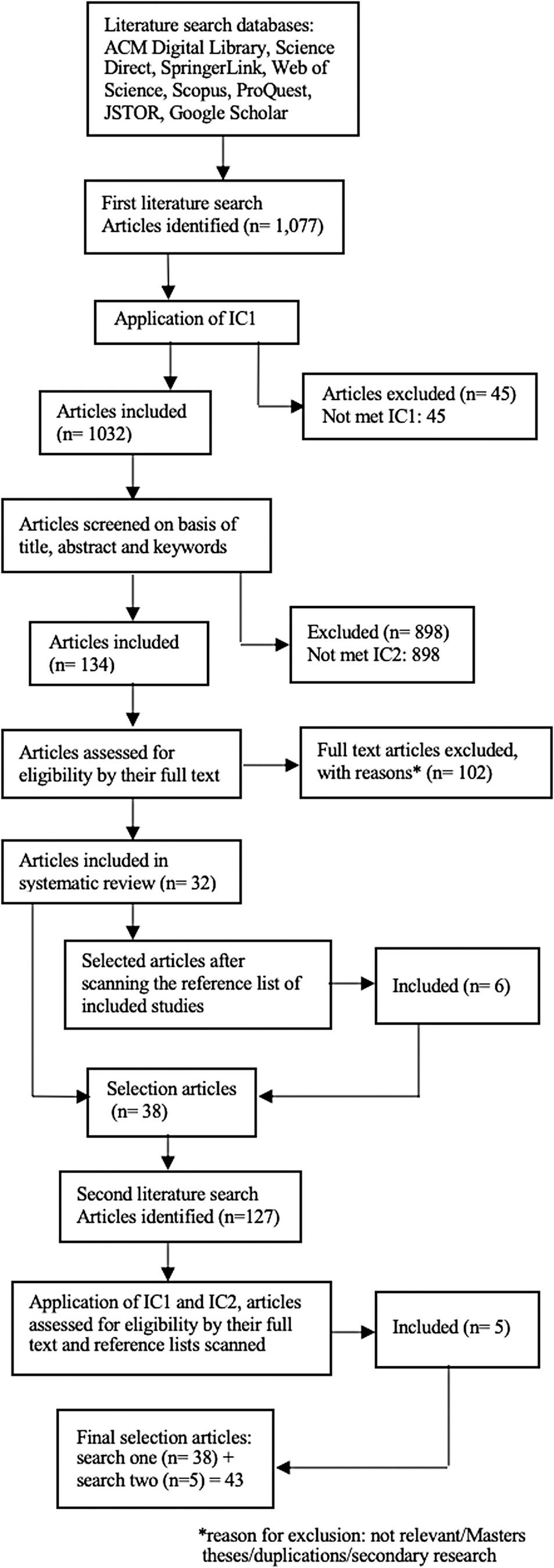
Preferred reporting items for systematic reviews and meta-analysis flow diagram.
Eligibility criteria
We defined two study inclusion criteria (ICs): the articles were in English (IC1) and of relevance to the RQ (IC2). These ICs were chosen as we (the authors) speak English and were seeking to answer how cyber stalking and harassment impact adult victims' mental health. In addition, the articles had to be peer-reviewed and consist of primary research (where researchers collected original data themselves) to be eligible for the final qualitative synthesis.
Data sources
We used eight databases to find relevant articles: ProQuest, Scopus, JSTOR, Web of Science, Science Direct, SpringerLink, ACM Digital Library, and Google Scholar. The search was conducted between December 2019 and January 2020.
Article selection and data collection
The article selection and data collection processes were as follows:
Searching the databases above, using the terms: ([“cyber stalking” OR “cyberstalking” OR “online stalking” OR “internet stalking” OR “internet harassment” OR “online harassment” or “cyber harassment”] AND victim AND “mental health”) (with the application of IC1). It should be noted here that as cyberbullying usually refers to children and adolescents, “harassment” was selected instead. 16
Screening the articles based on their title, abstract, and keywords (application of IC2).
The remaining articles were read in their entirety to establish eligibility.
Each of the eligible articles was read again, while data were extracted and compiled into a data table.
The reference lists of the final articles were examined to ensure that no further relevant literature was missed. Stages 2 and 3 were repeated, while keeping the remainder of the eligibility criteria.
Discussions took place between the authors if any hesitation arose concerning whether an article should be included, to ensure that we agreed with the final selection.
Data items
The data items (aspects of interest within each article) collected are: how cyber stalking and/or harassment are defined; research methods utilized; types of participants; types of cyber stalking and harassment victimization; mental health effects victims' experienced; platforms the abuse occurred on; and key research contributions. These data items were selected as they highlighted key areas related to our RQ.
Results
Study selection
The first literature search produced 1,077 articles. Forty-five were excluded as they were not written in English (IC1). The outstanding 1,032 articles were screened on the basis of their title, abstract, and keywords. Next, 898 articles were removed as they were not relevant (IC2). The remaining 134 articles were then assessed for eligibility based on their full text, with a further 102 articles excluded for one or more of the following reasons: not relevant, not peer reviewed, a duplication, or consisted of secondary research. Thirty-two articles remained, and their reference lists were scanned to ensure that all possible appropriate literature was searched for; a further six articles were found to be relevant, adhering to IC1 and IC2. Therefore, the number of selected articles was 38.8,9,17–52
A second search, using the identical article selection and data collection processes, was conducted in July 2020 to determine whether there were any recently published articles of relevance. Five additional articles53–57 were added, bringing the total number to 43 articles.
Figure 1 shows our PRISMA flow diagram, illustrating the method and results for both searches.
Study characteristics
Once the final set of articles was selected, the data items were collected. Table 1 displays an excerpt of the final data table for three articles. Over half (24) of the articles were published within the last 5 years, illustrating the growth in this research area and the increasing problems faced while interacting online. A cross-sectional research design was commonly used.
Excerpt of Extracted Data Items
Article stated: “Section 2 of the questionnaire consisted of 14 questions that inquired about cyberbullying experiences and individuals interested in obtaining a copy of the survey may contact the authors.”
CDA, cyber dating abuse.
Definitions of cyber stalking and harassment
Many of the articles acknowledge the lack of definitional consistency of cyber stalking and harassment (or cyberbullying). A significant difference is the specification (or absence) of how frequently the offense must occur to be deemed stalking or harassment. For example, one study defines cyber stalking generally as “threatening behavior or unwanted advances directed at another”, 24 while another stipulates that it is the “repeated pursuit (2 or more times), by the same person.” 32
Research study methods and participants
Thirty studies used a survey research method as their sole or one of their methods to gather data, making it the most common approach. Eight utilized questionnaires, seven studies conducted interviews, and two ran focus groups, again as their sole or as part of their mixed or multimethod procedure. One study utilized a mixed-method approach, 23 and two selected multimethod.27,39
Thirty-seven studies were conducted in Western countries, predominantly within the United States and Canada. Only one study had a nationally representative sample, 8 with convenience and purposive sampling being the predominant choice. Twenty-four studies' samples comprised exclusively of university/college students; one with students and faculty members; 27 and two with just faculty members.23,26 Therefore, a total of 27 of the 43 studies concerned themselves solely with university/college personnel. Table 2 displays the publication dates, geographical locations the research was conducted in, and research methods used.
Overview of Articles
Nineteen studies described samples' racial/ethnic background, with 17 samples having a majority of Caucasian participants, and only one having more African American participants than Caucasian. 38 Thirty-four studies provided their samples' gender breakdown, with 27 having a majority of female participants, three having more males than females,28,33 and four having solely female.9,25,39,43
Use of different technologies to perpetrate cyber victimization
Platforms cyber abuse occurs upon
A multitude of platforms were utilized by perpetrators: e-mail (listed by 26 studies), text messages (21), Facebook (16), chatrooms (8), blogs (7), and GPS applications, such as Find My Friends 50 (3). Eleven studies did not provide specific information, stating “digital technologies”, 9 the “internet”,8,21 and “social networks”. 21 Table 3 summarizes platforms used by perpetrators.
Platforms Which Perpetrators Used to Undertake Cyber Abuse
Forms of online stalking and harassment
Thirty-one articles provided a myriad of cyber stalking and harassment examples, including receiving threatening and abusive messages, having their accounts hacked (including social media, e-mail, and online banking), and degrading comments posted about themselves. Eighteen articles referenced examples of abuse involving intimate images/photographs, including nonconsensual pornography,9,36,50 a victim's face being photoshopped onto another person's body, 27 and profiles being set up in a victim's name on “sexually explicit websites inciting men to make contact with her”. 40 Four articles mentioned password issues, including being changed to prevent the victim from accessing their accounts,45,49 stolen, 22 or demanded 50 so that the perpetrator could access the victim's private information.
However, 12 articles did not specify examples, instead used vague terms, including “online messages” 37 and “cyberbullying experiences.” 52
Consequential distrust of technology
Six studies mentioned that trust issues developed as a result of their cyber victimization.24,25,28,41,46,51 Participants reported how it prevented them from continuing with their regular routine; reducing time spent outside, withdrawing from online life and developing a distrust of technology, and mistrust of people. One woman described how she became very paranoid, further becoming “reluctant to trust indirect communications,” while another continues to have “flashbacks and experience anxiety when going to my inbox,” with her health not being the same since. 45 Other victims stated that they no longer owned mobile phones and refused to use social networking sites again, with one declaring that they “quit the internet totally”. 51 Withdrawing from technology is a coping mechanism, but can further isolate victims from society and potential support systems.39,50
Impact of cyber victimization
Consistently within all of the reviewed articles except one, victims of cyber stalking and/or harassment experienced many harmful consequences for their mental health. The negative emotions and physical symptoms experienced include the following: anxiety, depression, sadness, anger, fear, shame, embarrassment, isolation, low self-esteem, paranoia, stomach aches, panic attacks, post-traumatic stress disorder (PTSD), self-harming behavior, and heart palpitations. Nine studies disclosed that some victims experienced self-harm or suicidal thoughts, with a few stating that they had attempted suicide.25,39,44
In one study investigating cyberstalking with 6,379 social media users, just 2.5 percent reported that cyberstalking had no negative consequences for them. 28 Research conducting a thematic analysis of the impact of cyberstalking described one participant explaining due to the extreme fear she had experienced, her “whole life stopped,” while another became very ill, now suffering from “complex PTSD/depression as a result of the harassment and abuse”. 45 Negative effects of cyber victimization can endure, with participants describing still feeling very anxious whenever they check e-mails or hear their telephone ring. 51 Table 4 summarizes the most common emotions experienced.
Emotions Experienced by Victims
Some led to self-harm/suicide attempts.
Two studies highlighted female victims experiencing more distress22,47 and fear compared to male victims,17,48 while men were more likely to feel anger and hatred. 17 However, one study described males reporting symptoms of depression and females reporting panic symptoms, 20 whereas others found that females in particular experienced depression.33,37
While considering age, one study (with participants aged 15–61+) found that correlations between cyberbullying victimization and poor mental health and substance use were strongest among adolescence, weakening across the adult age groups, 8 while another reported that older participants felt more distressed by their victimization. 47
When victimization occurred within an office or university/college environment, adults explained that they felt a desire to leave their job (with some actually quitting26,27,51), it affected their work 26 or school assignments, 30 and found it harder to understand lectures than usual. 53 One student explained that cyberbullying caused her to stop playing softball in her senior year at school, which she believes resulted in her losing a chance for a college scholarship. 25
Just one of the reviewed studies found no relationship between the cyber dating abuse (CDA) victimization and well-being dimensions they examined (emotional, social, and psychological), 56 compared with the 42 studies reporting negative impacts for victims.
Key research contributions
Forty-two of the articles reviewed provide empirical evidence demonstrating that cyber stalking and harassment negatively affect adults' mental health in devastating ways. The evidence reinforces how these damaging effects of cyber victimization can be comparable to offline stalking and harassment31,46 and, therefore, must be treated as seriously. Crucially, the distrust of technology reported by victims must be taken into account when considering how individuals will continue to use—or in some cases not use—technology.
Many victims described the lack of support received from friends and organizations intended to help them. This included universities and law enforcement departments; local police finding the situation amusing, not taking the victim seriously, victims being made to feel that they were partly to blame, or overreacting.35,39,40,41,51 One victim was told that it was their “fault for putting the information online in the first place”. 45 Furthermore, some participants contacted Facebook for support, never receiving a response. 51
Discussion
Summary of evidence
The main features of our systematic review are considered below.
Definitions of cyber stalking and harassment
The range of definitions presented demonstrates the lack of a universal understanding of what constitutes an act of cyber stalking and/or harassment. This can be problematic concerning prevalence rates. Estimations of cyber stalking victimization have ranged from 3.7 to 82 percent. 28 This absence of definitional consistency also results in individuals who have experienced such forms of cyber abuse not necessarily recognizing it as such. 39 When victims do not identify their experiences as abuse, this can cause victimization to continue, especially because victims feel confusion and shame, without realizing they are not to blame. Perception issues pertaining to what cyber abuse actually is can also arise when individuals deliberate whether to tell peers and officially report such offences.
Furthermore, various scales are used to assess participants' emotional impacts across the articles. Table 5 illustrates the measurements utilized to define depression from the 23 studies that reference it as an experienced outcome. This is challenging when analyzing mental health impacts as measurements are either inconsistent or no scale is used; therefore, it relies on self-reporting. These validity issues are also a concern for anxiety and other emotions participants experienced.
Measurement/Scale Used to Measure Depression
23 of the reviewed studies referenced depression as an experienced emotional impact.
Research study methods and types of participants
Surveys were the most common method for conducting research, with the majority of the 30 surveys run online. These enable researchers to capture information from many participants simultaneously. However, as our systematic review has found, victims of cyber abuse sometimes remove themselves from technology as a coping mechanism; therefore, these individuals may not be represented in such surveys. 51
One study utilized a mixed-methods approach: an online quantitative survey and qualitative interviews. 23 Research, which collects and combines both close-ended and open-ended data, allows for a greater understanding of the research problem. 58 Quantitative statistics from a large survey sample, brought together with rich data elicited from in-depth interviews with a smaller number of individuals, is an ideal approach if time and resources enable it.
The samples within the 43 articles highlight the need for a wider range of participants, instead of predominantly Caucasian females within a Western country. When samples lack diversity, the circumstances of the victims' abuse may not be thoroughly understood, as factors like race, ethnicity, gender, sexuality, and disabilities could mean that individuals experience abuse in different ways.41,44,49 Contradictory findings regarding age and gender were found regarding emotional harms experienced. This is also the case for prevalence rates concerning gender and the country the research was conducted within. Two studies reported much higher victimization rates among females26,28 (Canada and Germany), while one reported the opposite 22 (United States). However, the only study with a nationally representative sample where results can be generalized found it to be very similar between the two genders 8 (Canada), highlighting conflicting findings within Canada alone. The lack of representative samples, that more than half of the samples consisted of students, and that seven of the countries we reviewed articles from had just one relevant study that had been conducted, illustrates how more research is needed to reach conclusive findings concerning victimization factors and prevalence rates.
Use of different technologies to perpetrate cyber victimization
Platforms cyber abuse occurs upon
Although certain technologies may not have been created to cause harm, many are now used maliciously. GPS applications, such as Find My Friends, were intended for friends to share their location, but are now also used to stalk individuals. 50
It is valuable to consider how platforms chosen by perpetrators change over time. Chatrooms were listed by participants in eight studies, which all conducted their research before 2016. However, of the 10 most recently published studies (2019–2020), only five listed the platforms the perpetrators used, and chatrooms were not included. 39 Being privy to greater detail would mean that we could make inferences regarding technologies and platforms involved, including changes that may occur. Furthermore, no article mentioned technology-facilitated abuse through smart devices, yet societies are witnessing an increase in this form of abuse. 59 Future research must take such abuse into account.
It can also be difficult to make inferences whether the mental health impact differs depending on the technology the perpetrator chose without being privy to platform use. For example, one study listed e-mail, text messages, and Facebook, but did not list any emotional impacts, instead describing outcomes, including alcohol/substance abuse. 22 Another study listed the same three platforms, but depression, anxiety, and fear were reported as emotional outcomes experienced by victims. 25
Education to ensure safer technology interaction
Victims' distrust of technology must be tackled and reduced to facilitate healthier relationships with it in the future; isolating oneself from technology can prove to be more harmful. 50 This illustrates the need for education around technology use, to help prevent individuals from becoming a victim, or from revictimization. Some participants identified needing “to become more cautious” with their technology use, 41 while others were keen for an education surrounding cyberbullying. 52 One study showed that 38.5 percent of participants (235 individuals) gave their telephone number to a stranger online, 52 suggesting a requirement for greater public awareness regarding online security.
We must further consider how to educate adults who are not at university/college. Examples from the reviewed articles include The Technology Safety Project 49 and the Domestic Violence Resource Centre Victoria (DVRCV), 50 which provide education and technology safety resources to victims of domestic abuse. These projects are of the utmost importance, but we must also ensure that educational programs exist for victims of cyber abuse if they are not part of domestic violence.
Impact of cyber victimization
The wide scope and high prevalence of negative mental health impacts demonstrate that cyber stalking and harassment adversely affect people psychologically, socially, physically, and even financially when job loss or academic interruption occurs. Our RQ has been clearly answered by the multitude of negative mental health effects experienced by participants within all but one of the reviewed articles. The impacts range from distress, shame, and panic to anxiety, self-harm, and attempted suicide. This affects victims' lives in the present moment of the victimization and afterward with resulting depression and PTSD.
A systematic map exploring cyberbullying and youths' mental health also found that depression and anxiety were the most commonly experienced emotions by victims. 13 However, self-blame/shame was referenced in eight of the articles we reviewed, but not mentioned in the systematic map. 13 This suggests that self-blame/shame might be a predominantly adult experienced emotion. Another systematic review of cyberbullying and adolescent mental health likewise found that cyber bullying victimization was commonly associated with depression. 12 In contrast, only two of the 25 articles in another critical review and synthesis of research examining cyberbullying victimization of children/adolescents referenced depression. 11 However, it solely synthesized quantitative research; therefore, participants may not have had the opportunity to discuss that emotional impact if they were not directly asked.
The authors of the study we reviewed, which found no relationship between CDA victimization and well-being, 56 stated that this was surprising, potentially being a consequence of the victims not identifying these experiences as serious as other types of aggressive behaviors. 56
Key research contributions
It is concerning that research illustrates how victims have not been adequately supported. Participants commented that without “physical attack,” 51 police do not feel compelled to act. Our review has highlighted that victims of online stalking and harassment suffer from many negative mental health effects, in the same way that victims of traditional means of stalking and harassment do; thus, criminal justice systems must recognize this. Platforms like Facebook and Twitter and newer ones, including Snapchat and TikTok, must truly comprehend the seriousness of such crimes and have a legal obligation to aid victims as best as they can. This lack of support needs to be rectified to better support victims and help with their reintegration regarding technology use.
Conclusions and Future Work
This systematic review has answered our RQ: how does cyber stalking and harassment impact the mental health of adult victims? Forty-two of the 43 studies reviewed illustrate the negative impact that such victimization has had on mental health. Furthermore, as is the case with adolescent and child victims, adults' well-being suffers from such abuse. We have identified and analyzed the wide range of psychological harms this cyber abuse causes, while reviewing and critiquing existing research that has been conducted in this field. It is widely understood that offline stalking is a significant public health issue, 51 and online stalking and harassment must also be treated as such due to the harmful consequences of cyber abuse being akin to offline abuse.
Future research and outstanding challenges
Definitional consistency
The range of definitions of cyber stalking and harassment—and scales measuring such victimization—greatly affects prevalence rates. Future research should seek to determine a widely-accepted definition/measurement. This could be achieved by asking victims what they consider cyber abuse to be and their definitions. Involving relevant government personnel, charities, and nongovernmental organizations would also be of benefit. Furthermore, scales/measurements utilized to assess emotional impacts, including depression and anxiety, must have uniformity to improve the validity of these findings.
Longitudinal research
Using a longitudinal research design in future research would allow for the consideration of causality, not solely correlational relationships. Cross-sectional research only looks at samples in one moment in time. 35 While a cross-sectional design means several variables can be examined simultaneously, it leaves the possibility that an alternative variable could be (or at least part of) the reason for the experienced negative mental health impact. For example, within university/college environments, it can be difficult to attribute problematic alcohol use to cyber victimization when it can be associated generally with wider “collegiate culture.” 43
Platforms utilized
Future research should give sufficient attention to the platforms used by perpetrators of cyber abuse to better understand where victimization is occurring. This would also aid the formation of adult educational programs regarding safer technology use.
Exploring different factors
Factors, including age, race, and gender, must be further researched while exploring cyber victimization to greater determine their relationship to prevalence rates and how they influence emotional impacts experienced. In addition, a greater diversity of participants for samples is needed.
Usable solutions
This systematic review has drawn attention to the need for usable solutions concerning future technology interaction. Research needs to better understand how cyber abuse victims continue to interact with technology after victimization and what solutions could help reduce future risk. The research field is still trying to understand the harms and has not yet fully moved onto the solutions.
Survey research
Future research exploring the consequential distrust of technology should use quantitative survey methods to understand the prevalence. The articles highlighting this issue utilized a qualitative and quantitative survey methodology, 50 qualitative surveys,45,51 and interviews. 39 This is also relevant for research exploring authorities' dismissiveness, as the studies that demonstrated this utilized an interview method,39–41 a qualitative survey,45,51 and a qualitative and quantitative survey methodology. 35
Limitations
The search terms did not include “cyber bullying.” Although our searches still found many articles with “cyberbullying” in the title, we acknowledge that is not possible to ensure that we did not miss any research. Second, we only included articles written in English; thus, relevant research written in another language may have been excluded.
Footnotes
Author Disclosure Statement
No competing financial interests exist.
Funding Information
No funding was received.