




Abstract
This study assessed the mediating roles of problematic gaming, problematic social media use, and problematic smartphone use in the associations between psychological distress and screen time use among primary school children during the school hiatus due to the outbreak of the novel coronavirus disease 2019 (COVID-19). Students (n = 2,026; mean [standard deviation] age = 10.71 years [1.07]; 1,011 [49.9 percent] girls) in Sichuan, China completed a cross-sectional online survey, and this study was approved by the ethics committee of the Hong Kong Polytechnic University (IRB ref: HSEARS20190718001). The Internet Gaming Disorder Scale-Short Form, Bergen Social Media Addiction Scale, and Smartphone Application-Based Addiction Scale were used to assess problematic gaming, social media use, and smartphone use. The Depression, Anxiety, Stress Scale-21 was used to assess distress, and an item rated on a 0–10 scale was included to assess fear of being infected by COVID-19. Fear of being infected by COVID-19 was assessed because this could be a confounding variable in the association between psychological distress and screen time use. Increased time spent on gaming, social media, and smartphones was associated with greater problematic gaming, problematic social media use, problematic smartphone use, and psychological distress, but was not associated with fear of COVID-19 infection. Mediation analyses showed that problematic gaming, problematic social media use, and problematic smartphone use were significant mediators in the association between psychological distress and increased time spent on Internet-related activities during the COVID-19 outbreak period. Children who had psychological distress during COVID-19 outbreak might have spent longer time on Internet-related activities due to the school hiatus and problematic use of Internet-related activities. Parents/caregivers are recommended to monitor their children's use of Internet while encouraging children to engage in positive activities to ease the concern of negative psychological responses during the COVID-19 pandemic.
Introduction
The outbreak of 2019 novel coronavirus disease (COVID-19) has caused huge impacts in more than 165 countries/territories and millions of people in various ways. 1 In addition to the direct threat to life and health condition among confirmed cases, the anxiety and fear of being infected has been observed among the general population. 2 Indeed, a recent study among the Iranian general population reported very high fear levels of COVID-19, which may hinder the effects of infection control. 3 Students have also been found to experience psychological impacts due to the COVID-19 outbreak, including higher levels of stress, anxiety, and depression. 2 Moreover, fear of COVID-19 infection may have increased psychological distress among students when they experienced illness during the pandemic. 4 Therefore, implementing targeted strategic policies to control the transmission rate and enhancing mental resilience is essential to avoid psychological distress resulting from COVID-19.4,5
Unfortunately, many national policies implemented to control the spread of COVID-19, such as travel and border control and suspension of school and work, may amplify rather than relieve psychological, social, and economic burdens.6,7 One consequence of concern is the increase of screen time due to online teaching and learning (due to prolonged school hiatus) and home quarantine. Because prior research has found an association between increased screen time and psychological distress, it is possible that schoolchildren may encounter psychological distress due to prolonged school hiatus and home quarantine. Furthermore, considering that the fear of COVID-19 infection was found to be associated with problematic social media use possibly due to information search, 7 it is also speculated that a similar influence presents among schoolchildren and that the fear of COVID-19 infection may be a potential confounding variable in the association between psychological distress and screen time use. However, the underlying mechanisms related to psychological distress under these unprecedented circumstances remain understudied. More specifically, it is unclear whether increased psychological distress is associated with problematic gaming, problematic social media use, and problematic smartphone use, and consequently increased time spent on the Internet is mediated by the important confounders. Given that the Internet is already a medium that is utilized for a wide range of activities, 8 schoolchildren may have prolonged and problematic use of gaming, social media, and smartphone at home when they experience increased psychological distress.
Prolonged home quarantine interrupts individuals' life routine and may raise anxiety toward the disease, increase financial stress, and intensify other stress factors. A recent Chinese study found that since the outbreak of COVID-19, a significant proportion of the general population spent 20–24 hours at home due to school and business closures. 2 Moreover, individuals who stay home and self-isolate for long periods of time frequently develop negative psychological responses.9,10 Other contributing factors to current distress related to COVID-19 include the unavailability of other activities in which participants may engage in a normal day (e.g., social contact) and fear of family or oneself contracting the virus. Therefore, negative psychological impacts may occur during the COVID-19 pandemic.
Such psychological distress may further impact an individual's activities of gaming, social media use, and smartphone use (i.e., time spent on the aforementioned activities and problematic use in the aforementioned activities). More specifically, Brand et al. 11 proposed the Interaction of Person-Affect-Cognition-Execution (I-PACE) model that explains how the problematic use of Internet-related activities develops. Within stressful environmental contexts (e.g., COVID-19 outbreak and school hiatus; i.e., the subjectively perceived situation defined in the I-PACE model), an individual may have an emotional response (e.g., psychological distress; i.e., among the affective and cognitive responses defined in the I-PACE model). Such emotional responses may facilitate addictive behaviors (e.g., problematic use of Internet-related activities; i.e., reductions of executive functions/inability control in the I-PACE model), and consequently lead to prolonged time spent on Internet-related activities (i.e., the decision to use a specific application in the I-PACE model). 12 Therefore, according to the I-PACE model, schoolchildren who experienced the COVID-19 outbreak and school hiatus perceive the stress of this specific situation. Consequently, their perceived stress induces emotional responses as reflected by their subsequent psychological distress. Following this, the increased psychological distress reduces their ability to inhibit their craving for gaming, social media use, and/or smartphone use. Finally, given the inability in their inhibitory control, the schoolchildren increase their time spent on gaming, social media use, and/or smartphone use.
Moreover, Chinese primary schoolchildren who are housebound, have relied on the Internet and social media for learning and assignment completion because their schools have been closed to help prevent the spread of the virus. 13 With the restriction of outdoor activities due to school hiatus, participation in other activities (e.g., exercise, watching television, smartphone use) may increase or decrease. As a result, some students may be at risk of problematic Internet and social media use (i.e., which for a small minority may be addictive). 14 Although young children are usually under supervision by parents who monitor their gaming, social media use, smartphone use, television watching, and gaming behaviors,15–17 the current unprecedented situation may result in parents overlooking mental health and behavioral consequences such as increased time spent online by their children.
To investigate the concerning psychological distress and associated factors among Chinese primary schoolchildren during the COVID-19 public health crisis, this study had two aims which were to: (a) evaluate levels of problematic gaming, problematic social media use, and problematic smartphone use; distress (including fear of COVID-19 infection, depression, anxiety, and depression); and time spent on different activities (gaming, social media, smartphone applications, television viewing, exercise, and reading/studying); and (b) test the mediating roles of problematic gaming, problematic social media use, and problematic smartphone use in the associations between psychological distress (depression, anxiety, and stress) and screen time use.
Methods
Participants and procedure
The study was approved by the research team's University Ethics Committee (IRB ref: HSEARS20190718001). Moreover, the study utilized a cross-sectional design and convenience sampling. The data collection period was between March 4 and 16, 2020, a period that the schoolchildren in mainland China were not allowed to attend school. The sample analyzed in the present study was part of the sample from a previous study. 4 Additionally, the COVID-19 outbreak in mainland China was in February 2020 and the schoolchildren received online teaching during the present study's data collection. 4
Teachers of three primary schools in Sichuan assisted in distributing the survey to their students. More specifically, an online survey was generated by the research team and the survey hyperlink was sent to the students by teachers. The objectives and participants' rights were clearly stated on the survey's first page. All participants (and their parents) provided informed consent following international ethics principles in human research (i.e., only those who agreed to participate were able to complete the survey). The inclusion criteria for eligible primary schoolchildren were: (a) they could read and understand written Chinese in simplified characters; (b) they used at least one smartphone with Internet access; and (c) they had the ability to complete the online survey without difficulties. There were no exclusion criteria in the present study. There were no significant differences in the gender distribution between the participants in the present sample and that of the entire population in the three schools (χ 2 [1] = 0.25 and p = 0.62). 4 However, the participants in the present sample were significantly older than the entire population in the three schools (t = 29.87 and p < 0.001). 4
Instruments
Background information
Data were collected concerning participants' birthdate, grade, ethnicity, gender, health condition, and several COVID-19-related items. The COVID-19-related items (answered yes/no) were: (a) “Have you increased the time spent gaming due to COVID-19?”; (b) “Have you increased time spent on social media due to COVID-19?”; (c) “Have you increased time spent on your smartphone due to COVID-19?”; (d) “Have you increased time spent watching television due to COVID-19?”; (e) “Have you increased time spent exercising due to COVID-19?”; (f) “Have you increased time spent reading/studying due to COVID-19?”; (g) “Are you afraid of being infected by COVID-19?” (answered on a scale from 0 [not at all afraid] to 10 [completely afraid]). No time frame was provided in relation to the COVID-19 questions because it was assumed that participants would answer these based on the moment that they completed the survey.
Internet Gaming Disorder Scale-Short Form
The Internet Gaming Disorder Scale-Short Form (IGDS-SF9) comprises nine items that assess problematic gaming use based on the Internet gaming disorder (IGD) criteria in the DSM-5.18,19 All items are rated on a five-point Likert scale. After summing all item scores, a higher IGDS-SF9 score indicates a higher level of problematic gaming use. Prior studies have demonstrated very good psychometric properties for the IGDS-SF9.8,20,21 Although the original IGDS-SF9 asks participants to consider IGD symptoms over the past year, the present study revised the timeframe to “past week.” Moreover, the Chinese IGDS-SF9 used in the present study was validated by Yam et al. 8 and Chen et al. 20 The internal consistency of the Chinese IGDS-SF9 in the present study was excellent (α = 0.922).
Bergen Social Media Addiction Scale
The Bergen Social Media Addiction Scale (BSMAS) comprises six items that assess problematic social media use (i.e., social media addiction).8,22–25 All the items are rated on a five-point Likert scale. After summing all item scores, a higher BSMAS score indicates a higher level of problematic social media use. Prior studies have demonstrated very good psychometric properties for the BSMAS.26–29 Although the original BSMAS asks participants to consider problematic behaviors over the past year, the present study revised the timeframe to “past week.” Moreover, the Chinese BSMAS used in the present study was validated by Yam et al. 8 and Chen et al. 20 The internal consistency of the Chinese BSMAS in the present study was very good (α = 0.875).
Smartphone Application-Based Addiction Scale
The Smartphone Application-Based Addiction Scale (SABAS) comprises six items that assess problematic smartphone application use (i.e., smartphone addiction).8,24,25,30 All items are rated on a six-point Likert scale. After summing all item scores, a higher SABAS score indicates a higher level of problematic smartphone application use. Prior studies have demonstrated very good psychometric properties for the SABAS.8,31–34 Although the original SABAS asks participants to consider problematic behaviors over the past year, the present study revised the timeframe to “past week.” Moreover, the Chinese SABAS used in the present study was validated by Yam et al. 8 and Chen et al. 20 The internal consistency of the Chinese SABAS in the present study was very good (α = 0.882).
Depression, Anxiety, Stress Scale-21
The Depression, Anxiety, Stress Scale-21 (DASS-21) has three subscales that assess depression (seven items), anxiety (seven items), and stress (seven items). 35 All items are rated on a four-point Likert scale. After summing all item scores in each subscale, higher scores indicate a higher level of depression, anxiety, or stress. Prior studies have demonstrated good psychometric properties for the DASS-21.36,37 Moreover, the DASS-21 has been used in mainland China and Singapore with satisfactory psychometric properties during the COVID-19 outbreak period.38,39 The timeframe used in the original DASS-21 (i.e., asking about psychological distress in the past week) was applied in the present study. The internal consistency of the Chinese DASS-21 in the present study was good (α = 0.820 for depression subscale; 0.778 for anxiety subscale; and 0.813 for stress subscale).
Data analysis
Independent t-tests were performed to examine whether the time spent on different activities increased or reduced problematic use (gaming, social media, and smartphone application) and psychological distress (including fear of COVID-19 infection, depression, anxiety, and stress). Given that the large sample size in the present study might make t-tests with a negligible difference significant, effect sizes (ESs) using Cohen's d were calculated to capture the difference magnitude: 0.2 indicates small; 0.5 is moderate; and 0.8 is large. 40 Pearson correlation coefficients were conducted to understand the bivariate associations between problematic use and psychological distress. The magnitude of Pearson correlation was small at 0.1; moderate at 0.3; and large at 0.5. 40
Nine mediation models were developed to understand whether problematic gaming use, problematic social media use, and problematic smartphone use were significant mediators. All nine models shared the same controlled variables of age, gender, and fear of COVID-19 infection. The first three mediation models used the same dependent variable (increased gaming time) and mediator (IGDS-SF9 score) with different independent variables (depression, anxiety, and stress). The next three mediation models used the same dependent variable (increased social media time) and mediator (BSMAS score) with different independent variables (depression, anxiety, and stress). The final three mediation models used the same dependent variable (increased smartphone time) and mediator (SABAS score) with different independent variables (depression, anxiety, and stress). Model 4 in the PROCESS macro for SPSS 41 with 1,000 bootstrapping resamples was applied to all the mediation models.
Results
Of the 2,026 students (mean age = 10.71 years; standard deviation ±1.07), the majority were fifth graders (n = 832; 41.1 percent). Other participants' characteristics are presented in Table 1. During the school hiatus period, 23.7 percent of the participants increased their time spent in gaming; 38.9 percent increased time spent using social media; 49.9 percent increased time spent using smartphones; 49.0 percent increased time spent watching television; 53.9 percent increased time spent exercising; and 69.8 percent increased time spent reading/studying.
Participant Characteristics (N = 2,026)
Note: the sample characteristics have been reported in a previous study 4 because both studies used the same sample to analyze different issues.
SD, standard deviation.
Table 2 demonstrates how problematic use among different types of Internet-related behaviors (gaming, social media, and smartphone applications) and psychological distress (fear of COVID-19 infection, depression, anxiety, and stress) differed between children who had increased time spent and those who did not increase time spend among various activities.
Comparing Levels of Problematic Internet-Related Use, Psychological Distress, Time Increased, and Time Not Increased Among Different Activities
Note: ES analyzed using Cohen's d. Fear: an item using Visual Analog Scale from 0 (no fear at all) to10 (complete fear) to assess fear of COVID-19 infection. Depression: depression subscale score of the Depression, Anxiety, Stress Scale. Anxiety: anxiety subscale score of the Depression, Anxiety, Stress Scale. Stress: stress subscale score of the Depression, Anxiety, Stress Scale. Including gaming, social media use, and smartphone application use.
Fear of COVID-19 infection.
Including depression, anxiety, stress, and fear of COVID-19 infection.
BSMAS, Bergen Social Media Addiction Scale; COVID-19, novel coronavirus disease 2019; ES, effect size; IGDS-SF9, Internet Gaming Disorder Scale-Short Form; SABAS, Smartphone Application-Based Addiction Scale.
Scores in IGDS-SF9, BSMAS, SABAS, depression, anxiety, and stress were positively and significantly correlated from moderate to high magnitude (r = 0.355–0.798; p < 0.001). Fear of COVID-19 infection was weakly and significantly correlated with IGDS-SF9 (r = 0.096), BSMAS (r = 0.058), depression (r = 0.137), anxiety (r = 0.117), stress (r = 0.124), and not significantly correlated to SABAS (r = 0.043) (Table 3).
Pearson Correlation Matrix Between Levels of Problematic Internet-Related Use and Psychological Distress
Note: Fear: an item using Visual Analog Scale from 0 (no fear at all) to 10 (complete fear) to assess fear of COVID-19 infection; Depression: depression subscale score of the Depression, Anxiety, Stress Scale; Anxiety: anxiety subscale score of the Depression, Anxiety, Stress Scale; Stress: stress subscale score of the Depression, Anxiety, Stress Scale. Values in parentheses are Cronbach's α. Including gaming, social media use, and smartphone application use. Including depression, anxiety, stress, and fear of COVID-19 infection.
Fear of COVID-19 infection, it contains only one item and cannot compute Internal consistency.
p < 0.05; **p < 0.001.
The first three mediation analyses (Fig. 1) showed that problematic gaming was a significant mediator in the association between psychological distress (depression, anxiety, and stress) and increased gaming time during the school hiatus. The next three mediation analyses (Fig. 2) showed that problematic social media use was a significant mediator in the association between psychological distress (depression, anxiety, and stress) and increased social media use time during the school hiatus. The final three mediation analyses (Fig. 3) showed that problematic smartphone use was a significant mediator in the association between psychological distress (depression, anxiety, and stress) and increased smartphone use time during the school hiatus. However, the direct paths of the associations between psychological distress and screen time were very similar irrespective of the mediators included in the model (i.e., problematic gaming, problematic social media use, and problematic smartphone use). Therefore, the mediation effects were only partial and the mediators might not substantially impact the direct effect between psychological distress and screen time.
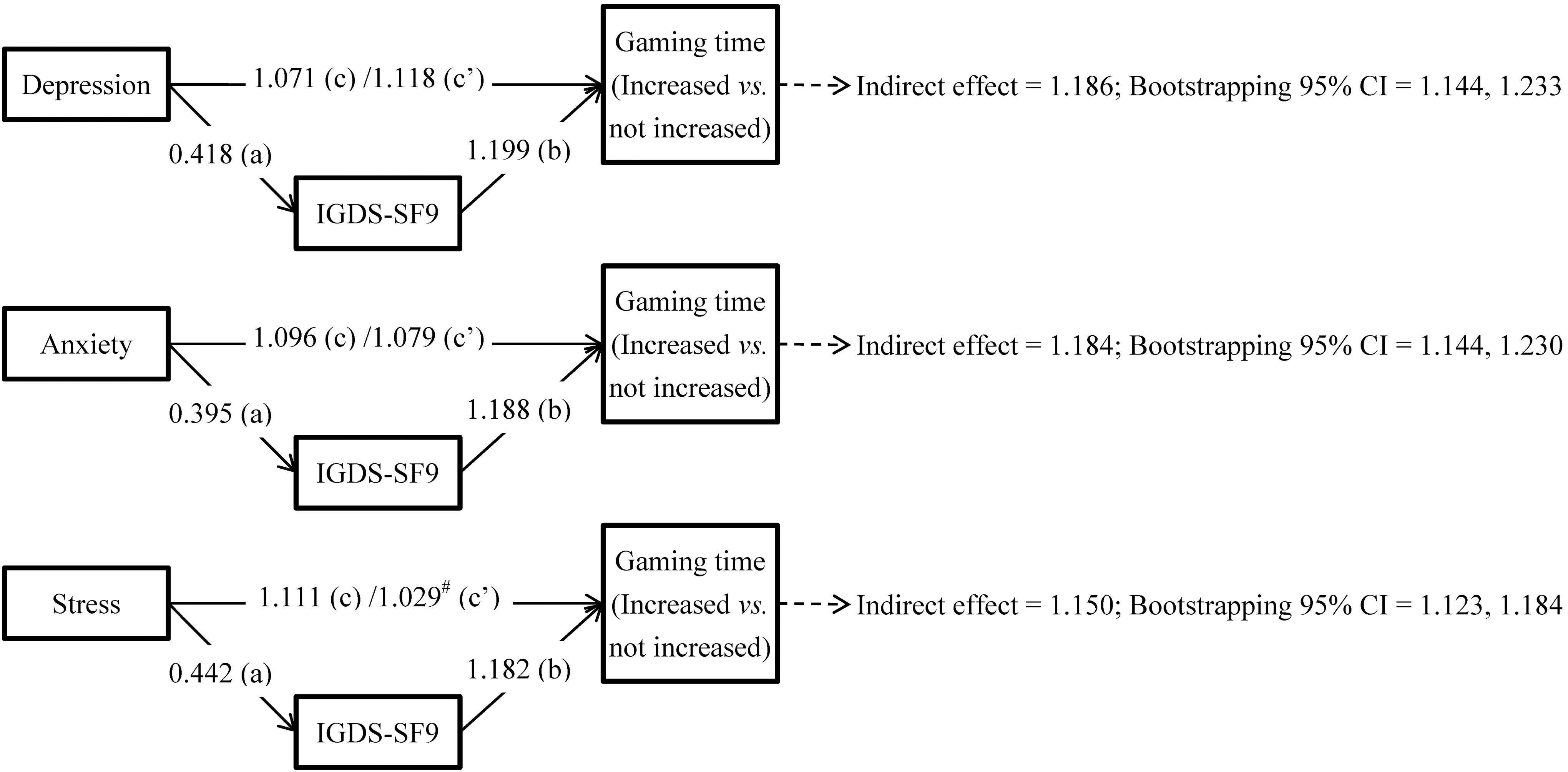
Mediated effects of level of problematic gaming in the associations between psychological distress (including depression, anxiety, and stress) and gaming time. All the models used 1,000 bootstrapping resamples and controlled for age, gender, and fear of infecting novel coronavirus disease 2019. Path coefficient (a) is standardized coefficient; path coefficients (b), (c), and (c′) and indirect effects are odds ratios. All path coefficients are significant, except for those with #. Path (c) did not include the mediated effects of problematic gaming; Path (c′) included the mediated effects of problematic gaming. Increased time was coded as 1; not increased time was coded as 0. IGDS-SF9, Internet Gaming Disorder Scale-Short Form.
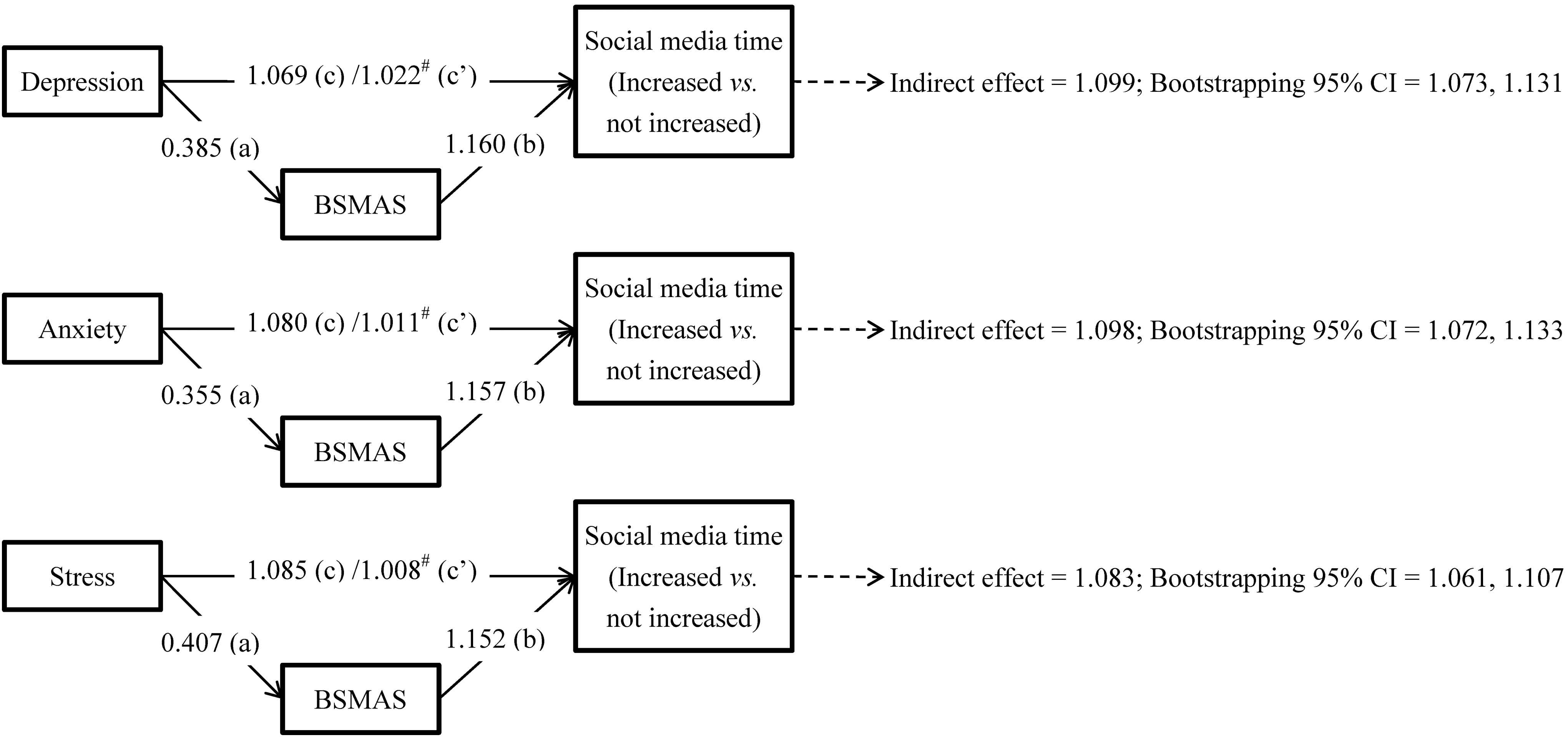
Mediated effects of level of problematic social media use in the associations between psychological distress (including depression, anxiety, and stress) and social media time. All the models used 1,000 bootstrapping resamples and controlled for age, gender, and fear of infecting novel coronavirus disease 2019. Path coefficient (a) is standardized coefficient; path coefficients (b), (c), and (c′) and indirect effects are odds ratios. All path coefficients are significant, except for those with #. Path (c) did not include the mediated effects of problematic social media use; path (c′) included the mediated effects of problematic social media use. Increased time was coded as 1; not increased time was coded as 0. BSMAS, Bergen Social Media Addiction Scale.
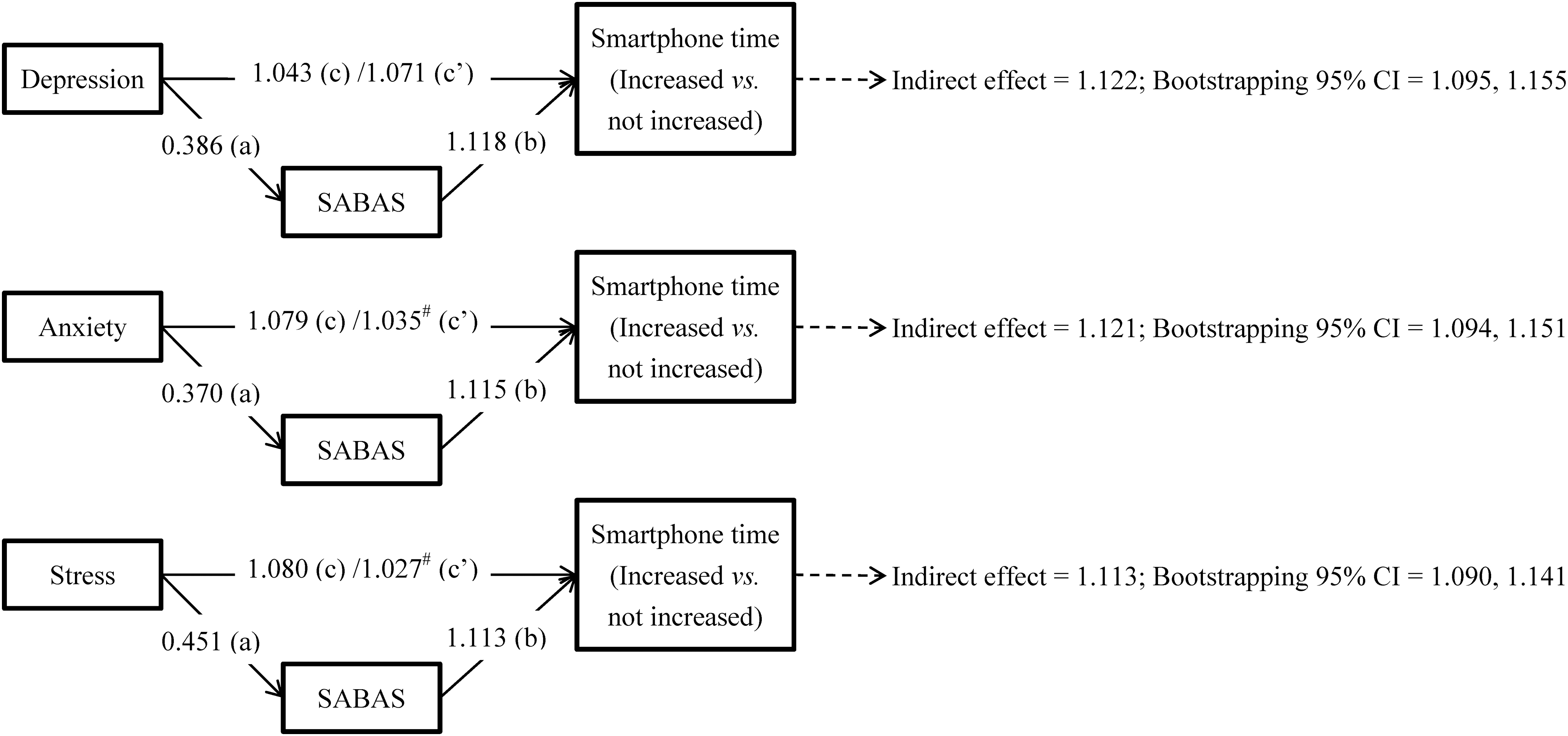
Mediated effects of level of problematic smartphone use in the associations between psychological distress (including depression, anxiety, and stress) and smartphone use time. All the models used 1,000 bootstrapping resamples and controlled for age, gender, and fear of infecting novel coronavirus disease 2019. Path coefficient (a) is standardized coefficient; path coefficients (b), (c), and (c′) and indirect effects are odds ratios. All path coefficients are significant, except for those with #. Path (c) did not include the mediated effects of problematic smartphone use; path (c′) included the mediated effects of problematic smartphone use. Increased time was coded as 1; not increased time was coded as 0. SABAS, Smartphone Application-Based Addiction Scale.
Discussion
In the present study, the problematic use of gaming, social media, and smartphones showed mediating effects in the associations between psychological distress (including depression, anxiety, and stress) and screen time use among Chinese primary schoolchildren during their school hiatus due to the COVID-19 outbreak. However, the fear of being infected by COVID-19 did not impact on any noticeable changes concerning increased time or problematic gaming, problematic social media use, and problematic smartphone use given the weak significant correlations with small ESs (i.e., between 0.117 and 0.137). In contrast, children who increased their time reading/studying or exercising showed less problematic use of Internet-related activities and less psychological distress during school hiatus.
Children reported increased time spent gaming (23.7 percent), watching television (49.0 percent), using social media (38.9 percent), and using their smartphones (49.9 percent) during the COVID-19 outbreak period. Some increased usage may be due to the need for online learning and getting social support on top of staying home for long periods of time. Another explanation for increased screen time is explained by the I-PACE model 11 (i.e., psychological distress leads to the problematic Internet-related activities and consequently contributes to prolonged time spent on Internet-related activities). Because elevated psychological distress during the COVID-19 outbreak has been found in prior research, 2 such psychological distress may indirectly increase schoolchildren's screen time use as proposed by the I-PACE model. More specifically, excessive gaming and social media use could be coping strategies for self-regulation in response to the stress, fear, uncertainty, and changing lifestyle, for example, the school hiatus caused by the COVID-19 pandemic for schoolchildren. This phenomenon may lead to increased risk of problematic behaviors. Supportively, the present study (predictably) found that those children who increased their time spent gaming, on social media and on smartphones, had higher levels of problematic use than those who did not increase their time using these technologies. More importantly, this finding may reflect that the supervision and support from parents/caregivers was not sufficient when children are experiencing school habitus and suggests the need for better coping strategies in such situations.
It was presumed that the fear of being infected by COVID-19 may amplify problematic gaming, social media, and smartphone use. Meanwhile, longer exposure to social media and television may increase this fear due to the information they see.3,5 However, children in the present study did not demonstrate this tendency. Moreover, the children reported that their fear of COVID-19 infection was less than 5 (out of 10). These findings may indicate that children recruited in the present study have not yet reached the age to have sufficient understanding about all the potential influences caused by COVID-19 outbreak and/or their parents have minimized the fear to protect their children from worrying. However, additional research is needed to corroborate such speculations.
Children who increased time spent on studying/reading and exercise showed lower levels of problematic Internet-related activities use and psychological distress than those who did not increase time spent on these activities. Most likely, when children spend more time on these activities, they spent less time on Internet-related activities. This appears to be true for gaming and social media use because the present study's results indicated that 75 percent of participants who spent increased time on studying, reported less time spent on gaming, and 58 percent of participants who spent increased time on studying reported less time spent on social media. However, 45 percent of participants who spent increased time on studying reported less time spent on smartphones. A possible reason is that smartphones were used by some children to access online learning materials. Furthermore, children may have sense of achievement when they complete schoolwork or exercise, and this sense of achievement may subsequently elevate their satisfaction, resulting in positive psychological effects.42,43
Given that the outbreak of COVID-19 is causing increasing school closures worldwide, the present study's findings may provide some guidance and suggest strategies to help ease problematic use of Internet-related activities. It is recommended that parents or caregivers should be made more aware of the time that children spend on gaming, social media, smartphones, and watching television. One possible way to achieve this goal is to encourage children to spend time on exercising and other activities, which may reduce the risk of problematic gaming, problematic social media use, and problematic smartphone use. Given that Internet access is essential for online learning from home, children's use of the Internet and social media should be carefully monitored by parents. Sufficient family support comprising quality time between parents and their children may be crucial in this process. 44
There are several limitations in this study. First, participants in this study were recruited from a single province in China, and therefore the findings may not be fully generalized to other provinces of countries undergoing the same public health crisis. For example, children in Europe have different learning strategies and school systems. Consequently, the impact of school hiatus may vary across countries, which requires other ethnic population-based studies to suggest better country-specific recommendations to facilitate mental health among children during this challenging time. Second, the present study was cross-sectional without longitudinal follow-up to confirm possible cause-and-effect relationships. Therefore, the associations between problematic Internet-related activities and psychological distress identified here should be interpreted with caution. Third, the outcome measures were based on children's self-report. Although the scales used have very good psychometric properties,8,21,26–39 the lack of objective measures (i.e., objective indices of time spent on Internet-related behaviors and objective/structured diagnoses of depression and anxiety) is still a potential limitation of this study. Fourth, some confounders were not controlled in this study, such as parenting style (whether parents set any screen time rules for their children), therefore, future studies are warranted, including more comprehensive variables that may impact on children's behaviors and psychological distress. Finally, the present study did not ask information regarding whether schoolchildren's family members or friends were at risk of death from COVID-19. Without the information, this study cannot conclude whether the present participants had direct contacts to those infected by COVID-19. More specifically, the schoolchildren's family and friends might not be infected by COVID-19. As a result, they had low fear levels. Future studies are thus needed to clarify this postulation.
Conclusion
School hiatus caused by the COVID-19 outbreak may cause psychological distress, including depression, anxiety, and stress among primary schoolchildren. However, these negative impacts were associated with increased time on gaming and the use of social media and smartphone (rather than the fear of COVID-19), which may lead to problematic use of these Internet-related activities. 45 Based on this study's findings, implications can be made in two aspects. From the aspect of scientific research, future studies on the field of Internet use can consider the I-PACE model to construct their research questions. From the aspect of practice, parents and caregivers need to monitor the use of Internet-related activities of their children while finding ways to facilitate the time spent on exercise and studying, which may contribute to better mental health among their children.
Footnotes
Authors' Contributions
C.-Y.C. conceptualized and designed the study, drafted the initial article, and reviewed and revised the article. I.-H.C. designed the data collection instruments, coordinated and supervised data collection, carried out the initial analyses, and reviewed and revised the article. A.H.P. interpreted the data and critically reviewed the article for important intellectual content. M.D.G. interpreted the data and critically reviewed and revised the article for important intellectual content. C.-Y.L. conceptualized and designed the study, designed the data collection instruments, interpreted the data, drafted the initial article, and reviewed and revised the article. All authors approved the final article as submitted and agree to be accountable for all aspects of the article.
Author Disclosure Statement
The authors have no conflicts of interest relevant to this article to disclose.
Funding Information
No funding was reported for this article.