




Abstract
This study used virtual reality to examine how environmental attributes interact with health communication to influence psychiatric help-seeking behavior, using the example of a subway station. We used a 2 × 2 factorial design crossing two noise conditions (high noise [75 dB] or low noise [30 dB]) and two visual clutter conditions (low clutter [a tidy trash can and orderly construction materials] or high clutter [scattered trash and construction materials]). We found that participants in the high (vs. low) visual clutter condition reported lower cognitive capacity levels, and there was a significant correlation between cognitive capacity and message elaboration. However, we found no effects of noise conditions. Serving as a proof-of-concept study to investigate the contexts in which environmental stressors may influence information processing, this study contributes to the field of health communication environmental design research.
Clinical Trial Registration:
Introduction
Health communication often occurs in public spaces, but little is known about how environmental features of these spaces (e.g., noise, visual clutter) interact with messages.1–7 Considering the features of the environment in which health information will be encountered is important for understanding information processing.5,7 We report a proof-of-concept study using a virtual reality (VR) environment to systematically study the naturalistic combination of noise and visual clutter in a VR subway station. 5 This project illustrates the potential value of immersive VR for examining the environments in which health information may be encountered.5,6
Research significance
Environmental factors may significantly affect how people process health information, which may be posted in noisy and disorderly public places.5–7 Noise can increase state anxiety,7,9–11 but whether increased state anxiety due to noise can impact message elaboration of health information is unclear.5–7 Similarly, visual clutter can lower persistence on challenging tasks, 3 (e.g., performance on the Stroop task) but whether exposure to visual clutter can reduce cognitive performance, thus reducing message elaboration, is unknown.5,6
The Elaboration Likelihood Model theory 12 predicts how message elaboration (the effort required to process and evaluate information) 13 is driven by motivation and capacity to influence attitude change. While increased motivation may make up for capacity deficits during high state anxiety conditions, 8 reduced capacity 14 can lead to poorer performance on tasks requiring cognitive resources, such as message elaboration.5,14,15 Variables (e.g., noise) that reduce capacity available for processing a persuasive message can thus reduce message elaboration.5,7,15
The impact of noise on state anxiety and message elaboration
In experimental settings, state anxiety increases as noise increases.5,9–11 High state anxiety decreases information processing ability, reducing message elaboration.5,14 Thus, we propose:
H1: There will be an impact on noise on state anxiety. On average, participants in the high noise condition will report a higher state anxiety that those in the low noise condition.
H2: There will be a statistically significant correlation between self-reported state anxiety and self-reported message elaboration.
The influence of visual clutter on cognitive capacity, self-regulation, and message elaboration
Visual clutter, the perception of disorder due to features such as space, color, and cues such as litter,1,3,5,6 is negatively associated with quality of life. 16 Disorderly environments promote disorderly and/or impulsive behaviors.3,17 For example, greater levels of perceived powerlessness were reported by those who think of their neighborhoods as visually disordered.5,18 Perceived neighborhood disorder mediated the relationship between poverty and depression,5,19 and exposure to disorderly environments reduced self-regulation. 3 Notably, perceived powerlessness and self-regulatory failure are also associated with health risk perception. 6
Difficulty in processing health messages would exhaust cognitive resources required for self-regulation.20–22 Effortful regulation of negative thoughts and feelings may reduce one's cognitive capacity to exert self-regulated behavior. 20
Ego depletion theory states that self-regulation relies on a finite pool of mental resources. 23 Using regulatory resources in one task (e.g., regulating negative thoughts when processing visual clutter) reduces the amount of available resources to perform an immediate subsequent task (e.g., health risk perception), even if the tasks are mostly unrelated. 24 Thus, cognitive capacity tends to covary with message elaboration. 12 We predict that there will be a correlation between cognitive and message elaboration, with lower cognitive leading to fewer topic-related thoughts when seeing information on psychiatric help seeking.5,14
H3: There will be an impact of visual clutter on cognitive capacity. On average, participants in a high visual clutter condition will demonstrate a lower level of cognitive capacity than those in the low visual clutter condition [number of errors on Stroop Test (3A) and near misses (3B)].
H4: Cognitive capacity will be correlated with self-regulation.
Exploratory Research Question 1: Will cognitive capacity correlate with self-reported message elaboration?
Noise and visual clutter context: Subway station sound effect and litter and construction materials
As people often see health information in subway stations (Fig. 1), we selected a subway platform as our “environment of interest.”5,6 We used psychiatric help-seeking messages, which encourage viewers to seek help for conditions such as depression, as our topic.5–7 We displayed seven posters in the virtual subway boarding area (Fig. 2)5,6 showing messages adapted from Leite. 25
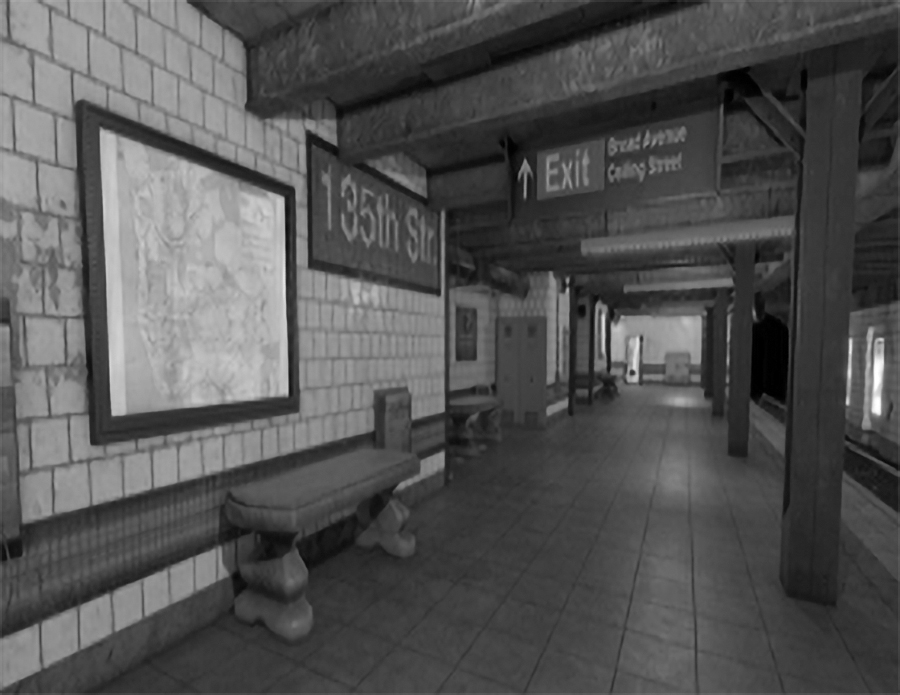
Psychiatric help-seeking messages on the subway platform.
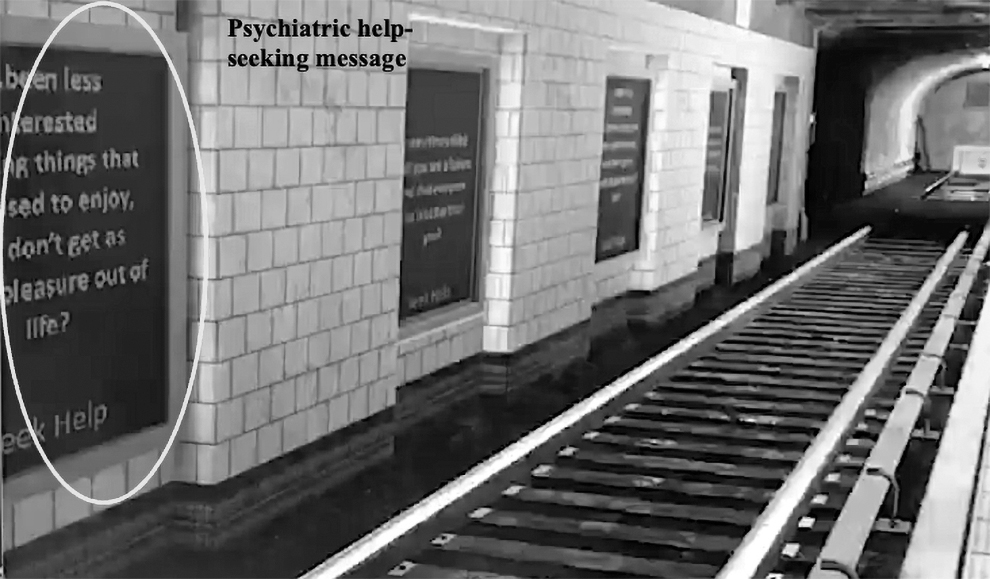
Subway station.
Materials and Methods
We used a 2 × 2 factorial design (two noise conditions × two visual clutter conditions).
5
Participants experienced either high (75 dB) or low (30 dB) noise in the form of ambient subway sound effects.5,6 Participants in the low clutter condition saw trash placed in a trash can and construction materials placed in an orderly manner.5,6 In the high clutter condition, trash was scattered around the receptacle and construction materials were disordered.5,6 We conducted the IRB-approved study in Spring 2019: preregistered here:
Participants
We recruited 124 first-year undergraduates (∼30 per condition), giving us the power to detect f = 0.06. 5 Table 1 presents the demographic distributions. All participants provided informed consent and received a $10 gift card or two course credits. 5
Summary of Demographics
Experimental environment
Participants wore an Oculus Rift head-mounted display and headphones without accompanying hand controllers.5,6 They were not embodied in an avatar.5,6 A virtual subway station, purchased from the Unity Asset Store, was modified as described above (Figs. 2–5).5,6

Trash can.
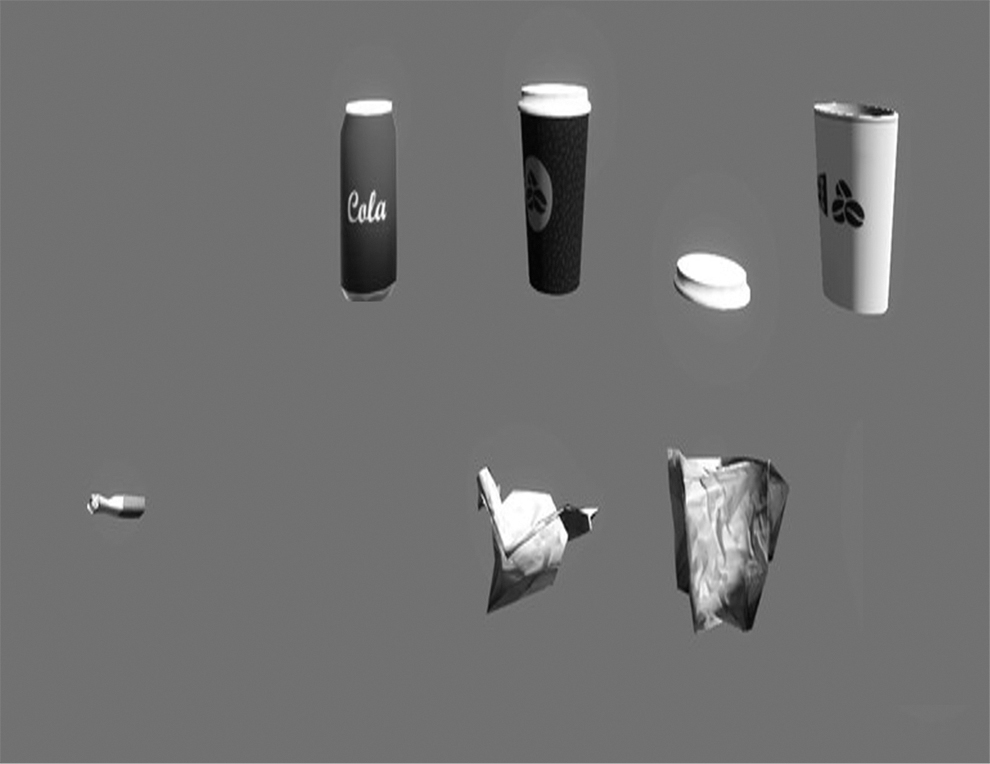
Trash.

Construction materials.
Procedure
Each session took ∼30 minutes. 5 After consenting, participants were told to “wait for the Q train” as they stood in the simulated station. 5 No special measure directed their attention to the posters. 5 After 8 minutes, participants completed a Stroop Test and their response accuracy was noted.5,22 They then completed a survey. 5
Measures
Table 2 presents the dependent variables and manipulation checks.
List of Dependent Variables, Manipulation Checks, and Psychiatric Help-Seeking Messages
Results
Alpha was set at 0.05. 5 Outliers were assessed by inspecting a boxplot, normality was assessed using Shapiro–Wilk's normality test for each cell of the design, and homogeneity of variance was assessed by Levene's test. 5 Table 3 presents the number of participants per condition, statistical test used, and results. Participants in the high (vs. low) visual clutter condition reported lower cognitive capacity level. 5 The correlation between cognitive capacity and message elaboration was statistically significant. 5 However, we found no effects of noise conditions. 5
Summary of Hypotheses, Participants Per Conditions, Statistical Tests Used, and Results
Discussion
This study examined the impact of noise on state anxiety and message elaboration, the impact of visual clutter on cognitive capacity and self-regulation, and whether cognitive capacity and message elaboration were correlated. 5 We found that noise did not impact state anxiety, and state anxiety and message elaboration were not correlated. 5 Participants in the high (vs. low) visual clutter condition reported lower cognitive capacity level. 5 Cognitive capacity and self-regulation were not correlated, but cognitive capacity and message elaboration were correlated. 5
The impact of noise on state anxiety and message elaboration
Participants were exposed to noise for only 8 minutes. 5 Past research has not previously studied the impact of noise on state anxiety over such periods of time, implying that the role of the noise might be different for other durations.5,9–11 In addition, since subway noise is relatively common, participants may be “accustomed to” the noise. 5 However, this explanation is less likely as the same statistical analysis was conducted with potential covariates (i.e., environmental familiarity, subway station usage frequency) and still found no significant results. 5
We found no significant correlation between state anxiety and message elaboration. 5 As participants were asked to look toward the train track, they may have been “primed” to look toward the location of the psychiatric help-seeking posters, leading to the nonsignificant differences across conditions. 5
The impact of visual clutter on cognitive capacity
The results show a significant main effect of visual clutter on cognitive capacity (performance on the Stroop test) between the high and low visual clutter conditions, supporting H3a and H3b. 5 Fewer accurate responses point to a lower cognitive capacity level, indicating that resource-demanding activities like vigilance, monitoring, and distraction are required when people experience and cope with threats (e.g., seeing visual clutter).5,27 The number of “near misses”—an exploratory proxy measure of cognitive capacity—was significantly lower in the high visual clutter condition, highlighting the potential for this measure to be used in future research. 5
The correlation between cognitive capacity and self-regulation
Findings did not show that cognitive capacity and self-regulation were correlated. 5 To our best knowledge, past research has not examined the impact of visual clutter on general measures of self-regulation or specifically on self-regulation in the context of psychiatric help seeking. 5 Although Ref. 27 used the measure of self-regulation (psychiatric help seeking) to investigate cognitive representations of depression in the context of mental health literacy, the internal consistency coefficients and test–retest reliability coefficients of this measure have not been validated. 5 Overall, the construct and content validity of these two measures require further validation. 5 In addition, this finding should be considered in light of recent critiques of ego-depletion theory, citing conceptual issues that hinder the derivation and testing of specific falsifiable predictions.5,30
The correlation between cognitive capacity and message elaboration
Findings show that cognitive capacity and message elaboration were significantly correlated, supporting the exploratory analysis. 5 Ongoing elaboration of distraction, such as visual clutter, may hinder participants' information processing. 5 Thus, visual clutter lowers the level of cognitive capacity available to process a message, hence, impacting a participant's level of message elaboration.5,15
Theoretical implications
Factors influencing health behaviors are complex.5,7,26 Models and theories (e.g., The Elaboration Likelihood Model) can help us better understand how the world operates and how improvements can be made, particularly if multidimensional factors that impact people's lives can be included. 28 However, theoretical advancements tend to be rooted within specific disciplines lowering the likelihood of developing behavioral interventions applicable to the broader population.5,29,30 Disciplines like health communication (informed by social psychology) and design lack systematic investigation into environmental attributes that may influence information processing, particularly in lived environments.5,7 VR can address this need.5,6 In our study, the use of VR allowed us to systematically investigate the effects of noise and visual clutter in a tightly controlled setting, leading to the novel finding that participants experiencing high visual clutter indicated a lower cognitive capacity level. 5
Practical implications
Our research findings point to a larger set of issues to which health communicators, designers, and policymakers should attend—physical environments shape how we process messages.5,7 Past research (e.g., Refs.9–11 ) found that environmental stressors can influence one's psychological state and information processing—although in a highly simulated environment. This proof-of-concept study indicates the need for more of a robust understanding of which environmental features critically influence information processing in lived environments. 9 Systematic isolation of environmental-design attributes can help establish more evidence-based guidelines for the strategic communication of health information in lived environments. 5
In the context of psychiatric help seeking, awareness of the appropriate environments for sharing information will help in locating such messages where they will be most effective.5,7 Rather than placing messages in chaotic environments associated with crowds such as subways, less chaotic spaces might be more useful (e.g., park benches or libraries). 5 In an epoch where mental health problems appear to be increasing, good communication of health treatment options is critical.5,7
Because visual clutter influences cognitive capacity and downstream psychiatric help-seeking measures, communication practitioners should think about the impact of visual clutter in physical and digital environments where health information is located. 5 Using VR as a research tool to examine the influence of common environmental stressors on psychosocial factors, researchers can virtually conceptualize, create, and examine the effects of environments on health communication. 5 By enhancing our knowledge of the design and use of VR, VR research may improve our understanding of (a) how health communication in various environments can be impacted by the intersection between communication and environmental-design attributes and (b) environmental factors that influence behavior and how to alter environmental- and/or policy-based interventions.5,8
Conclusions
This study examined how communication and environmental attributes can interact to influence psychiatric help seeking through communication in public spaces, using the example of a subway station.5,6,8 Specifically, we examined the respective influences of noise and visual clutter on viewer elaboration and cognitive capacity.5,6
Limitations and future research
Participants indicated state anxiety after exposure to noise for eight minutes, but the exposure duration may be a threat to construct validity. 5 Future research may include noise of other durations or ranges. 5
Participants mostly indicated self-reported measures (e.g., state anxiety) after being exposed to the virtual environment. 5 Research in the future should explore approaches to measure physiological, behavioral, and attitudinal responses while participants are still in the virtual environment. 5
Footnotes
Acknowledgments
The authors thank Mr. Frank Rodriguez for helping to design the virtual environment and Ms. Francoise Vermeylen and Ms. Erika Mudrak of the Cornell Statistical Consulting Unit for their help with the analysis.
Authors' Contributions
J.N., M.S., and A.W. conceived and planned the experiment. J.N. carried out the experiments. J.N., M.S., and A.W. contributed to the interpretation of the results and writing of the article. All authors provided critical feedback and helped shape the research, analysis, and article.
Author Disclosure Statement
No competing financial interests exist.
Funding Information
No funding was received for this article.