




Abstract
COVID-19 has prompted conferences to transition to online formats, inadvertently diminishing their emphasis on the social element. In online events, a sense of presence leading to a sense of companionship is limited in conventional conferencing platforms. Although the extant body of research on virtual conferences is growing, academic events in the Metaverse get little attention. Such events and their relevance to social presence within the Metaverse and associations among observable factors are seldom discussed. This study examined the perspectives of scholars in an online seminar during COVID-19 hosted in Gather.Town, a Metaverse-like conferencing environment. A hypothetical model was built to determine whether social presence and technology self-efficacy impact scholars' satisfaction and facilitate academic interactions. Ninety-three scholars in an academic seminar for research projects in information and computer education were polled to obtain data, which was then evaluated using partial least squares structural equation modeling (PLS-SEM). The proposed model explained 57.1 percent of the variables, and the findings showed that social presence and technology self-efficacy had a positive and significant impact on academic interactions and exchanges, as well as technology self-efficacy playing an essential role in determining overall satisfaction. However, social presence does not appear to have a direct impact on satisfaction, implying that a positive academic experience may still be achieved with or without the feature of being with others supported by the Metaverse. Although digital communication will only become more diverse and intense, it is important to understand how to maintain the basic character of human interactions virtually, even amid a pandemic. This research attempts to shed light on some critical factors in creating a conducive environment for future Metaverse-like academic events.
Introduction
The Metaverse is a postreality world where users engage with others using avatars to interact in an immersive multiuser cyberspace that has the potential to augment social connections.1–5 It exists alongside our physical reality and is gaining momentum across various sectors that are closely intertwined with our everyday lives.1,4 It has been anticipated that individuals will be able to enter the Metaverse by using head-mounted displays and embody realistic avatars to meet other people and engage in a variety of activities 5 in a shared, persistent, and decentralized world. 2
Furthermore, it presents a unique affordance by psychologically projecting what might be experienced in real social life. 5 This state-of-the-art cyberspace holds promise for shaping parallel realities. However, the Metaverse is currently limited by technical constraints and privacy concerns that must be addressed before its full potential can be realized. 6 Considering the definition and limitations discussed earlier, this study adopts the term Metaverse-like to describe virtual environments that exhibit core qualities resembling a Metaverse but have not yet attained this full realization as the Metaverse.
The COVID-19 pandemic has expedited the development of the digital/virtual world, including the Metaverse. In academia, conference experience is an integral part of scholarly exchanges as well as social connectivity. Owing to the outbreak of COVID-19, many conferences have been transformed into online experiences. However, the social element of a professional conference is much overlooked or desired,7,8 specifically the opportunity of building a rapport with research partners.
Existing literature examining virtual conference platforms, such as Zoom, highlights the advantages of flexibility and increased participant inclusion.7–9 In addition, participants have also expressed a need for social networking within these virtual conference settings.7,8 This is especially true where eye contact, body movement, and informal interactions are difficult to achieve, thus rendering the experience less engaging in its lack of socialization, connection, and intimacy with academic cohorts. To lift this barrier, avatar-based platforms have been suggested, which might assist in replicating some physical interactions. 7
Although the concept of the Metaverse appeared before the pandemic, conferences held in the Metaverse heretofore have remained fairly limited. Although previous research revealed discussions of adopting Second Life, a Metaverse-like platform, as a virtual conference venue,10–12 the social element was not particularly well addressed or examined. Previous literature has discussed the adoption and potential challenges of Second Life in educational settings.
Notably, Second Life has been explored for various purposes, including role-play activities, 13 enhancing interactive learning, 14 and facilitating student-centered/task-based learning. 15 However, researchers have also identified challenges associated with its open-ended structure, which can potentially lead to user distractions. 16 These findings provide a valuable foundation for the future application and development of Metaverse-like platforms.
Informal social interactions are essential for setting the groundwork for establishing a trusting environment, as well as bridging and initiating collaborations in academic society.17,18 It is also believed to be a decisive indicator for satisfactory mutual learning experiences. 19 Nevertheless, social interactions in online academic events are limited in the context of conventional conferencing platforms such as Zoom and Google Meet, due to their technological limitations with relatively static videoconferencing. 20
With recordings replacing spontaneous talk and private verbal chats being hard to achieve without being overheard, the experience of conventional conferencing platforms has thus turned more or less into a less engaging experience lacking the core spirit of socializing and being connected to an academic cohort. Although the research in relation to virtual conferences is growing, virtual conferences in the Metaverse pertinent to the sense of academic interactions and exchanges remain scarce in the literature.
Unlike conventional conferencing platforms, several Metaverse-like platforms have emerged to potentially heighten social presence in the virtual world. In Metaverse-like platforms such as Second Life and Gather.Town, users are represented through customizable avatars, which are able to move around and explore the virtual world. Users can also converse with those who are in proximity through audio, video, or screen sharing. By utilizing spatial-audio technology, Metaverse-like platforms facilitate communication among users based on the proximity of their avatars.
This unique feature of proximity-based virtual communication promotes social interactions that closely resemble informal conversations in real-life settings. 18 This capability sets Metaverse-like platforms apart from traditional videoconferencing platforms, which lack the dynamic nature and spatial aspect of interaction found in Metaverse-like platforms. In addition, research has demonstrated that social presence can enhance the affective and cognitive reactions to communications in light of its illusion of nonmediation. 21
This research aims to explore and identify factor associations emerging from an academic seminar held in a Metaverse-like conferencing platform for scholars in a postpandemic era. In this research, it is hypothesized that since a Metaverse-like conferencing platform is more akin to real-world interaction in terms of its proximity-based feature through which users can naturally converse and only be heard by people who are nearby, 22 a greater sense of social presence is expected to be achieved compared with traditional conferencing platforms. By virtue of a sense of companionship and connectivity elicited in a more space-aware Metaverse, this research intends to identify factor associations that might contribute to an enhanced conference experience.
Metaverse and Gather.Town
The Metaverse is considered the next revolutionary technology since it can provide the sensation of being in a location and body, generate emotions, and synchronize and attune brainwaves with others. 23 Brain-to-brain synchrony occurs during social interactions. 24 The synchronization between two or more individuals is considered an indicator of shared attention, interpersonal interaction or social dynamics.25,26 With its unique affordance of the Metaverse, the senses of immersion and presence could potentially be activated, thus creating the illusion of being in a place and accompanying others virtually.
Although the Metaverse is not yet fully realized, Metaverse-like platforms are emerging to enable virtual interactions to be more humane. Among such platforms,
In addition, users in
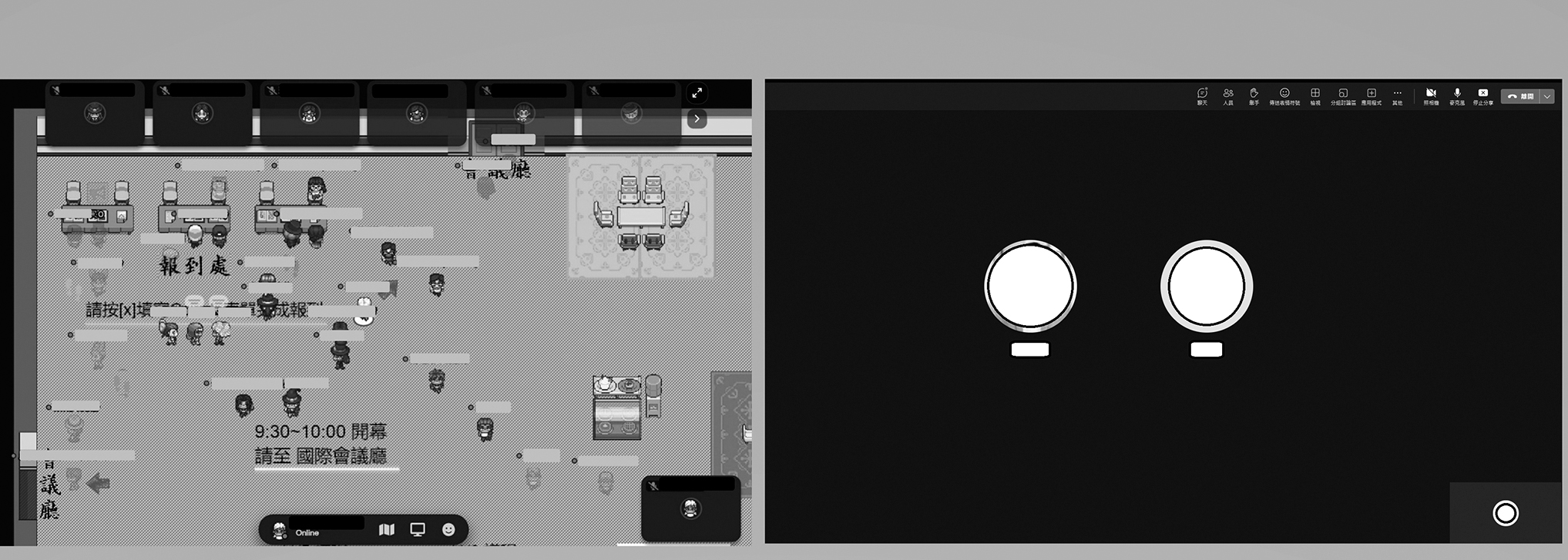
A comparison between avatar-based (left) and static videoconferencing (right) platforms.
Among all the current Metaverse-like platforms, such as Second Life, Roblox, and Minecraft,
Social presence
In a digital context, an enhanced sense of presence is closely related to social presence, originally discussed as concepts of immediacy and intimacy in a physical context. 28 Immediacy and intimacy are generated through eye contact, body movements, and other nonverbal aspects of communication.29,30 Social presence was now discussed largely in the digital context to explore ways of boosting human–human interactions in a computer-mediated environment.
Literature has emphasized the significance of social presence as a vital component in understanding factors that drive the creation of online learning communities.31,32 Social presence is crucial to increasing online connection in the digital/virtual world although virtual communications continue. 33 As social presence exhibits the potential to connect and maintain the engagement of participants in interactions through the sense of being there and being there with others in the virtual world. 34 Furthermore, social presence is also strongly correlated with learning satisfaction in an online environment.35–37
Being authentic is the foundation of activating social presence and a crucial element in forging bonds with others, fostering a sense of community, and creating a secure and welcoming atmosphere that invites perspective-sharing in an online community. 38 Although the concept of social presence in online learning among students has been extensively studied, there is a noticeable scarcity of research examining social presence specifically within the context of scholars participating in online academic events within the Metaverse. Thus, this research aims to explore how scholars' satisfaction and perceived academic interactions and exchanges are affected by social presence in the Metaverse.
Technology self-efficacy
Self-efficacy is described as believing in one's capacity to undertake and implement the steps necessary to achieve specific goals. 39 Motivating factors, emotions, thoughts, and behaviors may all be influenced by self-efficacy. 40 Thus, positivity is highly associated with self-efficacy, which is itself linked to perseverance, commitment, satisfaction, and engagement. 41
In a technological context, an enhanced self-efficacy with a certain technology is frequently linked to higher possibilities in taking risks of trying something unfamiliar and willingness to adopt. 42 Individuals with technology self-efficacy believe they have the necessary and appropriate skills and abilities to succeed when dealing with technology-related challenges. 43 Therefore, the researchers propose that participants' satisfaction and academic engagement (here refers to academic interactions and exchanges) in this research will positively correlate with their perception of technology self-efficacy.
Hypothetical model of this research
In accordance with the aforementioned associations among social presence, technology self-efficacy, satisfaction, and interactions in a digital context, this research proposes that social presence and technology self-efficacy to be antecedent variables that may positively influence satisfaction and academic interactions and exchanges during a Metaverse-like academic event. The hypotheses are proposed as follows and serve as the foundation for the proposed conceptual model of this research, as shown in Figure 2:

A hypothetical model of this research.
Methods
Participants
Higher education scholars with competence or interest in e-learning and information and communications technology (ICT) in education participated in an academic event titled “Annual Presentation Seminar for Research Projects in the Discipline of Information and Computer Education” advised and approved by the Ministry of Science and Technology (previously MOST, now National Science and Technology Council [NSTC]). The event has been held annually to share research status and insights from principal investigators of research projects funded by the MOST/NSTC in Taiwan.
All the participants were invited to fill out an online survey (which will be described later) anonymously and well informed in advance of the purpose of the event in an online format; among them, 93 respondents took part in fulfilling the survey. For anonymous and noninterventional research (e.g., surveys) that is not for vulnerable populations/subjects, an ethical approval is not required in Taiwan. Before the event, the event organizer offered a manual and two rehearsal sessions with trained staff members available online to help familiarize presenters with the virtual setting.
Virtual space in Gather.Town
The annual seminar was held virtually for the first time in the year 2021 by a university in central Taiwan for 2 days in a customized virtual environment in
Participants could freely navigate or walk around the virtual campus through their own customized avatars to explore and mingle with others. Natural verbal chats could be achieved with people nearby without being heard by all in the same virtual space. In simulating an authentic context, the closer a person stands to their interlocutor, the louder the voice can be heard. There were also some private sitting lounge areas designed for participants to socialize and engage in small group chats. In each room, there were one to three spotlights designed for speakers, session chairs, and staff to broadcast speeches to all in the same room. The keynote speech, the panel discussion, and the Kahoot contest were carried out in a customized international conference hall mimicking the one in the host university in
The hall in the virtual space is the largest one that can accommodate all the attendees (Fig. 3). Parallel sessions of individual presentations were conducted in 12 individual virtual classrooms. Each room was named after an outdoor sculpture on campus to add some taste to the host university. Pictures and introduction of the sculptures were also displayed upon entering each room. A campus tour and a concurrent digital exhibition of the university's Museum of Modern Art were also included in the video format for attendees to enjoy a feast of art as if they were to be on-site. All these features attribute to enhancing realness, sense of presence, and interactivity.

The virtual environment for the annual seminar in
Measures
This research adapted a survey designed by Wu et al. 9 for a virtual academic conference. Items of the survey were also in reference to the literature review of social presence and self-efficacy. There were two sections to the survey. Section 1 comprised demographic data on the respondents, including their academic rank, whether or not they participated in the previous annual seminar, and whether or not they were principal investigators who were required to make presentations. Section 2 consisted of 18 questions related to four constructs: seminar satisfaction (four questions), perceived social presence (four questions), technology self-efficacy (six questions), and academic interactions and exchanges (four questions).
On a 5-point Likert scale, responses were rated from 1 for strongly disagree to 5 for strongly agree. Sample items included “My overall impression of this virtual seminar has been positive” (seminar satisfaction), “Compared with a physical event, I was also able to socialize with my academic peer in
Data collection and analysis
The participants were invited to complete an online survey at the end of the seminar on a voluntary basis to collect perceptions and feedback. The goal of the survey was explicitly stated at the outset to guarantee participants' willingness to submit feedback. A total of 93 responses were received. Confirmatory factor analysis (CFA) was first applied to evaluate the construct validity of the scales, which were based on the survey developed by Wu et al. 9 The same constructs and question items were adopted for this study. Cronbach's alpha was calculated to ensure the internal consistency of the items in the scale; reliability coefficients ranged from 0.93 to 0.95, and as such were all >0.9.
Items having a loading factor and weight of at least 0.5 were maintained. The means and standard deviations (SDs) for the four constructs were then determined using descriptive statistical analysis. Partial least squares structural equation modeling (PLS-SEM) was then performed to identify associations among the constructs. PLS-SEM consisted of two phases—first, the measurement model was built to assess the reliability and validity of the measurements, whereas second, a structural model was estimated to test the hypotheses and the relationships between constructs.
Results
Descriptive results
Among all the 93 survey respondents, 33 were male and 60 were female; 61.3 percent had attended previous annual seminars conducted physically and 38.7 percent had no such experience; 55.9 percent were principal investigators and 44.1 percent were nonprincipal investigators; and 67.7 percent had a faculty position and 32.3 percent had a nonfaculty position (e.g., postdoctoral researcher, PhD student, or master's student). The Kaiser–Meyer–Olkin (KMO) measure of sample adequacy was 0.90, which was higher than the generally advised threshold of 0.6, indicating a satisfactory factor analysis.
Bartlett's test of sphericity that tests the significant correlation of the items was significant, χ 2 (153) = 1,826.56, p < 0.001. For each variable, the outcome of the descriptive analysis was as follows. The results revealed four main constructs, later defined by the researchers: overall satisfaction (M = 4.76; SD = 0.49) being the highest, technology self-efficacy (M = 4.49; SD = 0.71), social presence (M = 4.30; SD = 0.82), and academic interactions and exchanges (M = 3.99; SD = 0.91).
Measurement model assessment
In this research, the measurement model was evaluated in terms of item loadings, convergent validity, measurement reliability, and discriminant validity. 44 If an item's loading is >0.7, it would be considered reliable. Convergent validity (average variance extracted [AVE] >0.50) was employed to assess construct validity in accordance with the proposed criteria by Hair et al., 45 and construct reliability was assessed using Cronbach's alpha (>0.7) and composite reliability (>0.7). The square root of AVE and latent variable correlations were adopted to evaluate the discriminant validity. Tables 1–3 demonstrate that all the aforementioned values satisfied the necessary criteria, implying that the results provided by the measurement model were significant and acceptable.
The Item Loadings of the Measurement Model
AI, academic interactions and exchanges; SA, satisfaction; SP, social presence; TS, technology self-efficacy.
The Convergent Validity and Reliability of Measures of the Measurement Model
AVE, average variance extracted.
The Discriminant Validity of the Measurement Model
Note: Diagonals represent the square root of the average variance extracted (AVE), whereas the other matrix entries represent the correlations. The bold values indicate that the square root of each construct's AVE which exceeded its respective correlation coefficients.
Structural model assessment
PLS-SEM was employed to analyze the structural model and hypotheses. The analysis indicated that the proposed model explained 57.1 percent of the variance. The results of PLS-SEM (Fig. 4 and Table 4) confirmed that social presence (β = 0.615, p < 0.001) and technology self-efficacy (β = 0.242, p < 0.05) have strong effects on academic interactions and exchanges, which supports H2 and H4. Technology self-efficacy also significantly affected overall satisfaction (β = 0.453, p < 0.001), thus supporting H3. H1 (β = 0.163) and H5 (β = 0.091) are rejected.

The results of the structure model. *p < 0.05; **p < 0.01; ***p < 0.001.
Hypotheses and Results of the Structural Model
p < 0.05; ***p < 0.001.
Discussion and Conclusion
This research aims to better understand the impact of social presence and technology self-efficacy, as well as to validate the relationships between satisfaction and academic interactions and exchanges in the Metaverse setting. The findings indicate that a higher sense of social presence and technology self-efficacy in a Metaverse-like academic event exhibit great potential in enhancing the online meeting experience as well as academic interactions and exchanges. Furthermore, the findings also suggest that social presence in the Metaverse-like academic event serves as a robust predictor of increased academic interactions and exchanges.
The
However, social presence showed no direct effect on academic event satisfaction in this study, in contrast to numerous studies that claim a positive benefit of social presence on satisfaction.19,37,49 A potential reason for the result might be of the great desire of this specific group specializing in e-learning and ICT in education to make the event itself enjoyable whether with or without the sense of being with others in the Metaverse. Furthermore, the high motivation of achieving a deeper academic exchange may be the major reason why those scholars engaged in this short-term professional academic conference, resulting in an insignificant relation between social presence and satisfaction.
In terms of the perceived technology self-efficacy, the results delineate that it has positive effect on both satisfaction and academic interactions and exchanges. The results correspond to many works of the previous literature, which posit that self-efficacy can enhance outcomes, including satisfaction, engagement, and other mental states, through positive influence on emotions, thoughts, and behaviors.40,41 This finding also emphasizes how one's technology self-efficacy affects their satisfaction and academic interactions/exchanges in a Metaverse-like conferencing environment.
After all, as the current Metaverse is mainly a computer-mediated environment, social connectivity is heavily dependent on technology. An additional finding of this study indicates that perceived satisfaction does not positively enhance academic interactions. No significant relationship was identified between satisfaction and academic interactions/exchanges, maybe owing to this group's strong internal motivation over a short period of time, as well as that the Metaverse event participants were targeted in a specific field, thus having higher internal motivation to participate in this academic event involving academic interactions and exchanges.
The overall results of the survey also exhibit a positive level of satisfaction across all four constructs. Overall satisfaction received the highest score of 4.76, indicating a high level of acceptance for the Metaverse-like platform. Academic interaction and exchanges, although lower in comparison, still attained an average of 3.99. These findings suggest that the platform is well-received for scholarly events, offering a decent level of social presence and technology self-efficacy. However, there is potential for improvement in fostering a stronger sense of academic interactions.
In conclusion, the results suggest that a greater sense of social presence and technology self-efficacy in an academic event resembling the Metaverse have a great deal of promise to improve online meetings and academic interactions and exchanges. Although the phenomenon of videoconference fatigue 50 is found to be a negative consequence resulting from endless online meetings, awareness of varying the online conference format should be fostered. Therefore, to enhance future Metaverse event experiences and achieve quality academic interactions and exchanges, organizers should create an environment that invites formal and informal engagement to heighten perceived social presence, as well as to offer training or a manual to increase the technology self-efficacy of participants.
Limitations of this research lie in the limited number of its participants and the short duration of the event due to the constraints of the nature of the academic seminar. In addition, to enhance the readability of the survey and ensure clarity for all participants,
Informed Consent to Participate
This study was conducted after informed consent of the participants.
Data Availability Statement
The data that support the findings of this study are available from the corresponding author upon reasonable request.
Footnotes
Acknowledgments
The authors express their gratitude to the committee members and participants of the 2021 Annual Presentation Seminar for Research Projects in the Discipline of Information and Computer Education. Special thanks to Chair Professor Chen-Chung Liu for his leadership in realizing this metaverse academic event, and to Dr. Hsieh-Jun Chen and the Gather setup team at Asia University for their contributions to designing the virtual environment.
Authors' Contributions
Conceptualization, investigation, methodology, writing—original draft, and writing—review and editing by F.-y.L. Formal analysis, methodology, and writing—review and editing by C.-Y.S. Conceptualization, investigation, formal analysis, methodology, writing—review and editing, and supervision by C.-H.C.
Author Disclosure Statement
No competing financial interests exist.
Funding Information
This research was partially supported by the National Science and Technology Council, Taiwan under Grant No. MOST 108-2517-H-008-001-MY3.