




Abstract
This article provides an overview of the mental health challenges faced by pilots and air traffic controllers (ATCs), whose stressful professional lives may negatively impact global flight safety and security. The adverse effects of mental health disorders on their flight performance pose a particular safety risk, especially in sudden unexpected startle situations. Therefore, the early detection, prediction and prevention of mental health deterioration in pilots and ATCs, particularly among those at high risk, are crucial to minimize potential air crash incidents caused by human factors. Recent research in artificial intelligence (AI) demonstrates the potential of machine and deep learning, edge and cloud computing, virtual reality and wearable multimodal physiological sensors for monitoring and predicting mental health disorders. Longitudinal monitoring and analysis of pilots’ and ATCs physiological, cognitive and behavioral states could help predict individuals at risk of undisclosed or emerging mental health disorders. Utilizing AI tools and methodologies to identify and select these individuals for preventive mental health training and interventions could be a promising and effective approach to preventing potential air crash accidents attributed to human factors and related mental health problems. Based on these insights, the article advocates for the design of a multidisciplinary mental healthcare ecosystem in modern aviation using AI tools and technologies, to foster more efficient and effective mental health management, thereby enhancing flight safety and security standards. This proposed ecosystem requires the collaboration of multidisciplinary experts, including psychologists, neuroscientists, physiologists, psychiatrists, etc. to address these challenges in modern aviation.
Introduction
It is widely recognized that human factors account for approximately 80 percent of all accidents in modern civil and military aviation.1–4 Within this context, the issue of human mental health is often not sufficiently addressed as a significant risk factor for safety, with the bulk of responsibility for managing mental health falling on the shoulders of the pilots themselves. 5 A 2023 study published in the Journal of Occupational and Environmental Medicine revealed that 72 percent of pilots admitted to avoiding health care for fear of jeopardizing their employment. 6 Such barriers and stigma around mental health, combined with the inherently stressful lifestyles of pilots and air traffic controllers (ATCs) pose significant challenges to the safety and security of global aviation. This concern has motivated entities such as the United States National Transportation Safety Board and the Federal Aviation Administration (FAA) to address these issues in the recent “Navigating Mental Health in Aviation” summit. 7
The unregulated use of certain psychopharmacological medications to manage anxiety or depression can lead to undesirable mental health conditions, posing additional risks to flight safety and security. Acknowledging the undeniable importance of evidence-based pharmacotherapy and psychotherapy for treating conditions such as depression and anxiety,8–10 it is critical to consider that certain medications can impair cognitive functions11,12 such as attention, situational awareness and decision-making abilities, potentially leading to catastrophic outcomes. These medications are often incompatible with the duties of the pilots and ATCs or require careful monitoring by healthcare professionals to mitigate flight safety risks.13–15 According to official reports, the unreported use of psychopharmacological and psychoactive medications has been causally linked to 4–5 percent of fatal aviation accidents in the official accident reports. 16
Thus, a thorough and cutting-edge assessment of the mental health and readiness of pilots and ATCs in their high-stress professional environments is imperative. The introduction of an overloaded, stressful professional lifestyle, jet lag, and inadequate rest can disrupt circadian rhythms, leading to fatigue, burnout, anxiety, depression, chronic stress and potentially posttraumatic stress disorder (PTSD), culminating in poor collaboration both with systems and fellow humans. Numerous issues related to these conditions have been explored within the Human Factors Analysis and Classification System 4 framework. Mental health disorders among pilots and ATCs can significantly impact their functional performance, manifesting as decreased situational awareness, reduced workload capacity, diminished attention focus, slower visuomotor responses, and mind wandering, among others. The long-term consequences of such states can adversely affect overall performance, behavior, and decision-making processes, potentially leading to tragic accidents and loss of life. The early identification and timely intervention for these vulnerable individuals are therefore of paramount importance.
Mental Health Disorders as Security Challenges in Civil Aviation
In 2015, following the tragic Germanwings Flight 9525 incident where a co-pilot deliberately crashed a passenger plane into the French Alps, killing all 150 people on board, the FAA established the Pilot Fitness Aviation Rulemaking Committee. 17 This committee was tasked with evaluating pilot mental health to address such catastrophic incidents head-on. In addition, suicidal tendencies and actions by pilots or co-pilots have been implicated in the mysterious disappearance of Malaysia Flight 370, which resulted in the loss of all 239 passengers. Despite these high-profile cases, research and development aimed at predicting and preventing mental health deterioration among civil aviation pilots and ATCs is still in its infancy.
Research shows that the prevalence of mental health disorders within the pilot population is between 6.7 percent and 12 percent, with pilots under higher workloads experiencing an increased prevalence of 23.7 percent. 18 Rates of depression and suicidal ideation, standing at 12–13 percent and 4 percent, respectively, pose significant safety risks. 19 These rates, largely in line with the general population, 19 suggest that the pilot population is more resilient, considering the pressures of their profession. However, the negative impact of acute and chronic mental health disorders, such as anxiety, depression, burnout, PTSD etc. on pilots’ and ATCs’ functional performance represents a unique safety risk, as shown in Figure 1, especially in the face of sudden unexpected startle situations, which are well-known precursors20,21 to various commercial aviation accidents.

Adverse impact of mental health disorders on pilots’/ATCs’ functional performance. ATC, air traffic controllers.
Mental health disorders are one of the most common reasons, after cardiovascular diseases, for the revocation of an aviation license, 22 leading pilots to conceal symptoms and medication usage from aviation authorities due to fear of job loss. Pilots are also reluctant to seek mental health support from aeromedical professionals, who are tasked by regulatory authorities to conduct regular aeromedical assessments, 23 or from mental health professionals, who may lack familiarity with aviation treatment protocols 24 and are viewed with skepticism by pilots. 22 The challenge of mitigating mental health related flight safety risks through personality questionnaires during the selection process is further complicated by the pressure on individuals to provide socially desirable answers due to stigma.25,26
Safety management programs mandated by the aviation regulators have a limited focus on pilot mental health and wellbeing,23,27 overlooking several relevant mental health-related safety risks. As a result, the comprehensive monitoring of mental health, though critical, is viewed as both expensive and sensitive by airlines and is unlikely to be undertaken without specific governmental guidelines. 26
Potential of Digital Psychiatry and Cyberpsychology in Prediction and Prevention of Mental Health Disorders
The application of advanced tools for the prevention and treatment of stress-related disorders28–35 holds significant promise to improve the mental health and readiness of pilots and ATCs in the future. A preventive approach, translatable to their selection, training and education, and based on cutting-edge artificial intelligence (AI) tools and processes using multimodal adaptive stimulation and multimodal real-time neuro-psycho-physiological feedback, has been explored in research. This includes virtual reality-enhanced cognitive behavioral exposure therapy, stress inoculation training, and similar stress management techniques.29,30,34–45 Psychological interventions adapted from clinical settings to resilience programs for professionals in high-stress jobs have been grounded in cognitive-behavioral exposure therapy, 46 stress inoculation training, 47 stress exposure training, 48 mental readiness training, 49 emotion regulation frameworks,50,51 cognitive restructuring, 52 and mindfulness training.53,54 There are several research studies related to the application of these approaches in the aviation domain.55–60
Research integrating these approaches with digital technologies such as virtual and mixed reality, physiological monitoring and AI in contexts such as astronaut training, stress, burnout and PTSD prevention, and treatment of phobias and anxiety disorders shows their potential.28–30,34,35,38,61–71 These technologies could provide valuable longitudinal data on the pilots’ and ATCs’ states throughout their professional life cycle,72–80 helping to predict those at risk of acute and chronic mental health disorders. The use of AI and machine learning (ML) is critical for efficient and effective mental health management in the increasingly stressful aviation industry. Predictive AI-based methods81–94 can identify patterns of potential chronic psychopathology early enough to prevent severe mental illnesses among highly stressed employees and improve their mental health with appropriate training techniques. Evaluation of ML model performance in detecting broad stress-related responses in aviation (e.g., levels of workload, mental fatigue, etc.) has been done in a variety of studies, with accuracies ranging from 0.61 to 0.94, 95 up to maximum 0.97. 96 Similar evaluations of ML models are also discussed in the context of detection of mental health problems in different populations, using metrics such as accuracy, precision, recall and/or F1 score, with results up to 0.96. 97 Table 1 illustrates a fraction of research literature evaluating ML model performance in the detection and prediction of various mental health disorders.
Performance of Selected ML Models in the Detection and Prediction of Various Mental Health Disorders
AUC, area under receiver operating characteristic (ROC) curve; ML, machine learning; PTSD, posttraumatic stress disorder.
However, there are significant challenges in the clinical use of ML for predicting, preventing, diagnosing, and treating mental health disorders,99,100 especially concerning the prediction of rare events such as suicides, which could lead to a high number of false positives.98,101–103 Despite these challenges, the potential of predictive technologies warrants further AI-based research to enhance the safety and security of the modern aviation industry. Moreover, explainable AI could serve as a self-explanatory digital assistant to flight management personnel, identifying specific patterns and hidden warning signs of mental deterioration, enabling timely prevention and intervention.
A variety of multimodal neuro-psycho-physiological response features obtained by longitudinal tracking and monitoring may be valuable discriminators and predictors of pilot’s/ATCs’ stress resilience, mental health disorders, and functional performance under stress, as different cognitive, emotional and behavioral conditions relevant for flight safety and security:80,104–108
resting heart rate variability and respiratory sinus arrhythmia; features of psychophysiological allostasis, for example, heart rate reaction to stress and poststress heart rate recovery; features of phasic and tonic components of skin conductance signal; electromyogram and electrodermal activity (EDA) based acoustic startle response features, such as startle habituation, fear-potentiated startle response, and prepulse inhibited startle response; electroencephalography (EEG) and functional near-infrared spectroscopy (fNIRS) features computed from the brain activity; oculometric features, for example, eye blinking patterns, saccadic velocity, saccade length, fixation duration, movement dynamics, and pupil dilation and constriction; prosodic features of the voice, for example, fundamental frequency, energy, jitter, shimmer, formants, zero-crossing rate, and cepstral coefficients.
In previous studies, we have successfully proven that fusing multiple dynamic physiological signals can determine the unique physiology of an individual under stress versus that same individual while not under stress. 109 This could allow for earlier, more personalized interventions.
Multimodal sensing of the pilot’s physiological, cognitive, and behavioral states during operational flights and their after-action review may help to predict individuals with potential acute or chronic mental health disorders (Figure 2). Comprehensive post-flight analysis of their multimodal features based on AI and ML tools and means can assist in early identification of individuals with potential or emerging mental health problems and select them for preventive mental health training or early treatments.111–114 This might be a valuable contribution to existing methods of preventing potential unexplainable air crash accidents caused by human factors and related mental health problems. Continuous tracking, monitoring, and gathering of pilots’ vital multimodal physiological features and preventive computerized cognitive behavioral therapy, stress inoculation training, mindfulness training, etc. should be the key components of mental health preventive strategies to avoid previously mysterious and unexplainable air crash accidents. Therefore, in the near future, we can expect newly designed aircraft capabilities related to the extension of existing flight data and cockpit voice recorders merged with a pilot’s multimodal physiological flight recorder. Early detection of individuals who may have chronic stress or are at higher risk of stress vulnerability may enable proactive mental health management strategies, including psychological assessment and timely preventive cognitive-behavioral interventions, if necessary. This proposal is in line with similar initiatives for prediction and prevention of mental health disorders,81,115 as well as with comprehensive proposals for the mental health management of commercial pilots. 27

Integration of multimodal sensors with AI tools and methods opens up new possibilities in pilot and ATC selection, training and operational monitoring, including improved detection, prediction, and prevention of mental health disorders (right photo, by NASA, is in the public domain 110 ). AI, artificial intelligence; ATC, air traffic controllers.
Developing AI-Based Mental Healthcare Ecosystem in Civil Aviation
A new organizational culture related to mental healthcare management in the modern aviation industry is essential to prevent further degradation of human functional performance due to ever-increasing task overload, which significantly impacts the mental health of pilots and ATCs. In this context, the design, development, and establishment of a multidisciplinary digital mental healthcare ecosystem in civil aviation, focused on the prediction and prevention of mental health disorders, warrants heightened attention. Timely and appropriate preventive interventions among high-risk individuals before the onset of serious psychopathology are of paramount interest. The proposed AI-based predictive and preventive approach should be viewed as part of a comprehensive array of measures focusing on the protection of individual mental health among stressful aviation occupations. Early prediction, prevention, and treatment of mental health disorders in individuals at increased risk as soon as possible is extremely important81,115 because delayed care of chronic mental health disorders is often less efficient and effective. New wearable disruptive technologies available today offer a tremendous opportunity to improve mental healthcare ecosystems in modern aviation, creating breakthrough solutions, which will improve mental healthcare and well-being outcomes on a greater scale than ever before. However, these new tools and means require clinical validation and trust to meet these challenges effectively. AI-based tools of unsupervised ML methods, such as multivariate correlation analyses, clustering, and principal component analysis, as well as a range of traditional supervised ML methods, such as artificial neural networks, support vector machines, and contemporary deep learning-supervised approaches, can significantly improve the prediction reliability and accuracy of potential mental health degradation within these stressful occupations.
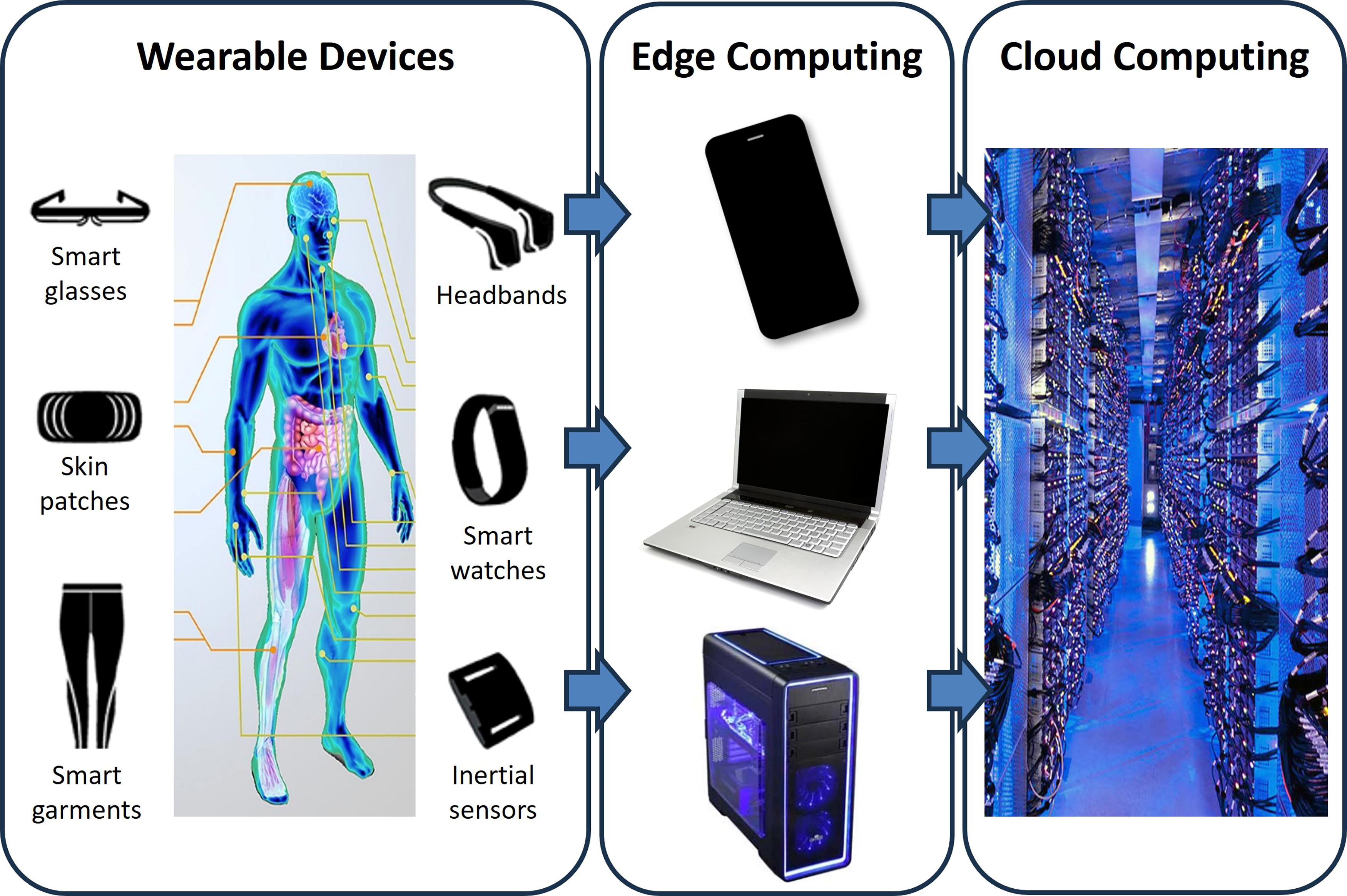
Disruptive technology based on wearable digital sensors, digital therapeutic apps, and new AI and ML tools may provide tremendous opportunities to improve a continuum of mental health and well-being in our modern aviation industry, encompassing stress inoculation training, prediction, prevention and treatment. A variety of wearable devices, such as smart watches, wristwatches, armbands, wristbands, chest straps, shoes, helmets, glasses, lenses, rings, textiles, and hearing aids can collect huge amounts of data which might be used by a variety of ML methods, such as deep neural networks for training and predictive modeling of human mental states. The complexity of these applications may require high computational power, particularly with an increased number of customized multisensory inputs and modalities, numerous neuro-psycho-physiological features, and sophisticated ML training algorithms. Therefore, these applications will necessitate sufficient distributed processing power, an adequate amount of memory, high-speed interfaces capable of moving large amounts of data, multisensory and multimodal input-output interaction devices, etc. Such applications require immediate analysis and processing of large datasets, timely decisions, and accurate decision-making.
Usage of distributed architectures and cloud computing related to analysis of big data sets on multiple hierarchical levels, as along with advanced ML algorithms and advanced analytics, may provide accurate and insightful identification of individuals with compromised mental health. While cloud computing offers the flexibility of storage and computational resources on-demand, it comes with compromises in higher costs, power consumption, latency, and challenges for preserving the privacy of both the data and ML model. If the sensor data are stored on centralized servers with personally identifiable information about an individual’s mental health, and if that information is hacked, the individual’s privacy might be compromised. Therefore, acquiring and processing sensory data on local devices keeps the data private and decreases the latency for the prediction/classification, because there is no need to transmit large amounts of data from edge devices to the cloud outside of the user’s control. However, this cloud-edge computing architecture (Figure 3) depends on specific applications, the size of the data streams, and ML models to be used in training and testing.
The proposed new AI-based ecosystem for mental health monitoring and management of aviation staff might include, for example, an AI assistant for recommendations of mental-health checkups and mental health screening and evaluation in specialized clinics, when necessary. However, a well-balanced organizational approach to design and building this ecosystem requires a multidisciplinary team of psychologists, neuroscientists, physiologists, psychiatrists, sociologists, aeromedical personnel, policy and legal experts, aviation industry regulators, governmental authorities, as well as representatives of airline companies and aviation professionals’ associations. Additional expertise related to ethical considerations, 122 data protection and privacy, 123 trustworthiness, 124 explainable AI,125,126 as well as cost-efficiency and scalability, 127 is also important. Therefore, leaders of proposed changes related to an AI-based mental healthcare ecosystem in the modern aviation industry require additional education and training to avoid any potential misuse of uncontrollable technological changes related to machine and deep learning, big data, wearable and wireless sensors, edge and cloud computing, virtual and augmented reality etc., because of their potential immaturity in transitional times. Furthermore, building the culture of more transparency and tolerance regarding mental health challenges is critically important, as well as avoiding any hasty premature technology deployment that might have unintended adverse consequences, as witnessed in the past. 128 All these multidisciplinary and multidimensional issues should be also put in the broader context of Safety I, II, and III. 129 Such a holistic and more balanced integrative approach has potential to provide higher levels of flight safety and security.
Conclusions
An April 2024 article by the Royal Aeronautical Society on “Psychosocial Risk Management and Mental Health” 130 emphasizes the importance of managing psychosocial risks within the aviation industry to enhance safety and operational efficiency. Overall, it calls for the aviation industry to acknowledge and address these risks with the same rigor as physical safety risks, recognizing the profound impact they may have on overall safety and efficiency. Building on this foundational understanding, the advancement of AI-based research in predicting, preventing, and treating serious mental health disorders among aviation employees may play an important role in maintaining the safety and security of the modern aviation industry.
Continuous and comprehensive monitoring of complex human physiological parameters using a wide range of wearable sensors enables the early identification of compromised physiological and cognitive states. This approach has the potential to offer several advantages, such as improved safety and security, better healthcare management in aviation, and an enhancement in performance quality, life satisfaction, and overall well-being.
Enhancements of mental health care and safety management in aviation proposed in the recent literature,27,131 augmented by new AI-based tools and methodologies, should be a cornerstone of an improved prevention strategy aimed at circumventing the dire consequences of mental health deterioration within aviation organizations. The ability to make reliable predictions more quickly and accurately is essential for preventing the transition from acute stress to more severe chronic mental health disorders, such as PTSD or burnout. This is particularly crucial for individuals at high risk due to their stressful job conditions and constant cognitive overload. Timely predictive modeling might therefore be lifesaving, especially for employees facing severe mental health challenges.
Relatively lower classification or prediction accuracy in some published articles89–92,98 can be significantly improved by multimodal measurements, based on data fusion of EEG, fNIRS, ECG, EDA, and electromyography (EMG) features, as well as with comprehensive oculometric and speech/acoustic features. Such state-of-the-art multimodal approach enhanced with new deep learning algorithms can substantially improve classification or prediction accuracy, in general. Such tools and means as new assistive technology in modern mental health management can help in early identification and prevention of serious mental health disorders in modern overburdened civil aviation today.
By monitoring vital physiological signs and managing stress levels while adhering to ethical guidelines and data privacy,131,132 proactive stress management can significantly enhance safety and security within the aviation industry. As technology continues to advance, bringing more processing power, larger data storage capacities, a wider range of sensors, more sophisticated AI and ML algorithms, and improved prediction accuracy, we have the opportunity to design, develop, and validate more advanced multi-purpose, cost-effective capabilities. These capabilities can facilitate immediate alerting, stress detection, and stress management in modern aviation, positively impacting the lives of millions worldwide.
Footnotes
Author Disclosure Statement
No competing financial interests exist.
Funding Information
No funding was received for this article.
