




Abstract
During the last 10 years many new telematic systems aiming at support of diabetes treatment have been designed and developed. Most systems that were applied in clinical randomized trials used the classical approach, with data transfers from patients performed usually once every few days. In the few available meta-analyses of these trials, a significant improvement of the mean hemoglobin A1c was demonstrated in patients using telematic systems. However, the magnitude of this improvement in comparison with the control groups was lower than expected. This conclusion was confirmed by results of the IDEATel study involving more than 1,600 patients over a period of 5 years. It might by hypothesized that in some groups of patients continuous telecare with frequent contacts between patients and the care provider during each day should be required. This hypothesis is confirmed by the results of the clinical trials applying real-time diabetes monitoring systems. However, the increased frequency of the data transfers and checkups requires a new model for technology-supported care. The new model should connect together the ubiquitous data transfer with an automatically selected optimal frequency, the automatic assessment of the data coupled with quicker feedback from the decision support system or from the provider, and selection of the optimal time for the patient's face-to-face visit in the clinic. All this new future implementations together with already confirmed advantages of the telematic support, such as the increase of self-confidence of the patient, will hopefully give real benefits for the patients.
Introduction
• the number of assays and testing times • a transparent way of recording, transferring, and presenting data in order to facilitate the physician's evaluation of the dataset • an efficient analysis of data based on the algorithms and methods adopted in the proceedings leading to the selection of the optimal drug dose and recommendations for diet and lifestyle of the patient • the high accuracy of timing and the way of drug administration.
1
In the 1990s a new technology devoted to data transfer and data assessment was developed and preliminarily tested. At that time an application of telemedicine in diabetes treatment started to be recognized as a very promising and modern information technology tool.
In 2001 we published an article entitled “What We Can Really Expect from Telemedicine in Intensive Diabetes Treatment,”
2
which concluded as follows: The telematic system, applied during long-term intensive insulin treatment of type 1 pregnant diabetic patients, improved the effectiveness of diabetes therapy, as evidenced by the following: 1. Better glycemic control during 24 weeks of monitoring in the study group indicated by a statistically significant difference (calculated by the paired t test) between the study group and the control group resulting from comparison, every week, glycemic control described by mean ΔMBG [change in mean blood glucose] and ΔJ [change in J] values. 2. Lower variability in glycemic control within the study group as indicated by statistically significant differences between the study and the control groups regarding coefficients of variance (CV) of the MBG [mean blood glucose] and J indices. However, our results surprisingly indicated that mean value of hemoglobin HbA1c was slightly higher in study group in comparison with control one (6.8±0.9% vs. 6.7±0.9%) and mean drop in HbA1c in comparison to the “Usual Care” was ΔHbA1c=−0.24%.
Summing up results from the reported randomized study, it was stated that the telematic support automatically provides a diabetologist with daily and reliable patient data and allows the patient to achieve the target glycemic level chosen by a diabetologist with higher accuracy than during the standard therapy. It was found that the possibility of daily control of the patient's state by the diabetologist seems to be favorable, especially for those ambulatory patients who are not sure about the correctness of intensive therapy and who prefer to have additional support. We concluded that the telematic system can be simple to use as indicated, by good glycemic control for patients with intelligence in the range of 85<IQ<100, and can be inexpensive.
What is the state of art in the implementation of the telematic support for an intensive diabetes treatment 10 years later, that is, in 2012? An answer to this question is the main objective of this review.
During the last 10 years many new telematic systems have been designed, developed, and tested with patients. All these approaches could be divided into three groups. The first one refers to long-term (3 months up to 5 years) applications of the classical telematic systems devoted to monitoring of the patients' glycemic control, as well as other physiological parameters like blood pressure. The second one refers to systems that can monitor the patients' metabolic state in real time during short-term and long-term applications. The third one refers to systems that are supporting treatment of late macro- and microvascular complications of diabetes.
With regard to the last-mentioned group of systems, chronic heart failure is the most common application in telemonitoring of late macrovascular diabetes complications. 3,4 The telematic support for the recognition and treatment of such late diabetes microvascular complications refers mainly to retinopathy and the diabetic foot syndrome. Both cases are very different in their character.
An automatic transfer of the retina images from the medical care unit to an expert center in which they are assessed plays a crucial role at the very early stage of the recognition of retinopathy. 5 –7 Telematic applications in ophthalmology can lead to prediction of the future development of micro- and macrovascular late complications.
On the other hand, a telematic system devoted to the monitoring of diabetic foot treatment can improve the quality of applied wound treatment. This is due to continuous assessment of treatment efficiency made by the automatic calculation of the wound area or volume and signaling the necessity of change of the applied treatment. 8 –10
Because the above-mentioned third group of telematic systems is very different from classical and real-time telemonitoring of diabetes treatment, telesupport of late diabetes complications will not be analyzed further in this article.
Classical Long-Term Monitoring Systems
Many reports devoted to the assessment of technical and/or clinical efficacy of telecare in diabetes have been published, but only a few of them were based on the randomized control trials with hemoglobin A1c (HbA1c) being an end-point parameter. The first assessment of the applications of the telematic support during long-term treatment using meta-analysis was performed in 2001, 11 followed by meta-analyses in 2004, 12 2005, 13 2009, 14 and 2010. 15 The first mentioned one, in which the mean difference of HbA1c between “usual care” patients and “telematic support” patients was found to be 0.59%, involved data that was collected many years ago, in 1989–1996. At that time the quality of HbA1c measurement was relatively low, and because of this the presented result could not be presumed to be so accurate. Moreover, in two open arm studies performed by Albisser et al., 16 which were included in this meta-analysis, patients received immediate advice with respect to medication dosing changes and other pertinent feedback. This type of system operation characterizes “real-time” monitoring systems. The last four systematic reviews were carried out on the substantial amount of the data collected during the last 10 years, analyzing only results of randomized clinical trials. In all cases the improvement of HbA1c level was very small. In the analysis done by Montori et al., 12 the mean difference between the usual care and study group of patients was a ΔHbA1c of 0.24% (95% confidence interval [CI] 0.01%, 0.50%). In this case seven studies with 129 persons in the study groups were analyzed. In the work of Farmer et al., 13 the obtained result was a mean ΔHbA1c of 0.11% (95% CI −0.04%, 0.27%). This meta-analysis covered nine studies performed on 322 patients accepted to the study groups. In the analysis performed by the group of Polisena et al., 14 in total, 26 studies with 5,069 patients was selected for inclusion in a systemic review. However, only 20 studies were related to home telemonitoring; the others concerned just telephone support. For 12 home telemonitoring studies included in the meta-analysis (n=1,325), the weighted mean difference was a mean ΔHbA1c of 0.22% (95% CI 0.08%, 0.35%). In this assessment five studies were performed for diabetes type 1 patients, and the remaining ones examined type 2 diabetes patients or mostly type 2. Unfortunately, no subgroup meta-analysis was performed for these two groups of patients.
For this reason we decided to make such a comparison using the random effect meta-analysis of DerSimonian and Laird. 17 The obtained results indicated the mean ΔHbA1c for type 1 equals 0.033% (95% CI −0.379%, 0.446%) and that for type 2 equals 0.356% (95% CI 0.068% 0.644%). Because 95% CIs overlap we cannot reject the hypothesis that in both cases the real mean ΔHbA1c is the same. This result demonstrated that in the analyzed group of studies the type of diabetes had no influence on the effectiveness of the applied telesupport systems. In both groups the results obtained suggest that the structure of the telecare operation has the most important influence on the treatment efficiency, namely, the too low frequency of the data transfer and too late feedback information for the patients.
Finally, in the work of Shulman et al., 15 performed only for type 1 youths (<19 years old), 10 studies involving 287 persons in the telematic group fulfilled the diabetes inclusion criteria. In this case data transmission was realized at a minimum frequency of every 2 weeks during a minimum of 3 and up to 12 months of duration. There was no statistically different effect of telematic support on HbA1c level. The mean difference in HbA1c was 0.12% (95% CI−0.11%, 0.35%).
In the last two meta-analyses the mean ΔHbA1c referred to the difference calculated based on HbA1c concentrations at the end of the studies, in contrast to the reports of Montori et al. 12 and Farmer et al. 13 in which differences in change of the HbA1c level between the start and the end of the studies were calculated.
Based on the presented results, it seems that the conclusion drawn by Farmer et al.
13
is valid for all cases: Telemedicine solutions for diabetes care are feasible and acceptable, but evidence for their effectiveness improving HbA1c or reducing costs while maintaining HbA1c levels, or improving other aspects of diabetes management is not strong. Further research should seek to understand how telemedicine might enhance educational and self-management interventions and RCTs [randomized controlled trials] are required to examine cost-effectiveness.
The conclusion presented above, which was written in 2005, has been also almost repeated in the biggest project terminated just recently in 2009, lasting 5 years, aimed at the assessment of the recent telematic support efficiency. This project is named “Informatics for Diabetes Education and Telemedicine (IDEATel).”
18
Basic information on this project is as follows: • The budget is equal to 28 million USD during the first 4 years of its realization. • The number of patients from the state of New York at the start of the study was 1,655 patients. • The aim was assessment of the usefulness, acceptance, clinical, and economic effectiveness of the telecare system in diabetes treatment. • Participants randomized to the intervention group received a home telemedicine unit (American Telecare Inc., Eden Prairie, MN) with four main functions: synchronous videoconferencing, self-monitoring of finger-stick glucose and blood pressure, messaging, and Web access. The device is a Web-enabled computer with modem connection to an existing telephone line. • Data transmission was by the Internet and telephone networks. • The nurse case managers are trained in diabetes management and in the use of computer-based case management tools that facilitate interactions through videoconferencing with patients.
In this project it was assumed that videotelephone contact may be more effective than voice-only contact (visible contact with a healthcare provider is important to most of the patients). Closer monitoring will be connected with much faster feedback from the provider. In this way, better and more rapid glucose and blood pressure control may be achieved and maintained.
It was decided that for each 200 diabetes patients one full-time telemedicine case manager will be available allowing for one contact every 2 weeks, but with higher intensity during selected periods when needed.
An additional feature of this project was related to education of the patients. Education and information were in this case provided in small pieces, related in time to patient-specific information needs. These materials were available in this way from the case managers and from the project Web site.
The most important results of this project are displayed in Table 1. 18 As it is seen after the second, third, and fourth years of the study, improvement in the metabolic control expressed by drop of the HbA1c level, in comparison with the “usual care” patients, was on the same level as in the last mentioned meta-analysis. 15 It is also noteworthy that year 5 showed further improvement up to 0.29%, which is almost identical with the result of the second mentioned meta-analysis 12 (ΔHbA1c=0.26%). However, this last data point resulted from worsening of the metabolic control in the control group and no improvement in the study group. In summary, application of telematic support led to improvement of the metabolic control after the first year of the project realization and then allowed for the stabilization of the results obtained during the next 4 years.
CI, confidence interval; HbA1c, hemoglobin A1c.
It should be stressed that for the entire duration of the study the target HbA1c level was <7%. This therapeutic target was reached only after the first year of the study.
It seems that the final results of the metabolic control represented by drop of the HbA1c in comparison with the usual care groups can be influenced by the initial value of the HbA1c. To check whether this is true we compare the final results of the IDEATel study 18 in which the mean initial HbA1c level was 7.4% with the meta-analysis of Shulman et al. 15 performed on nine studies with mean weighted initial value of the HbA1c level equal to 9.13% in the telecare and 9.16% in the usual care groups. It is surprising that the mean drop of the HbA1c level was higher in the case of the IDEATel study 18 (0.29%) than in the meta-analysis of Shulman et al. 15 (0.12%).
The extreme example on the other side of the HbA1c scale we have found in the study of Billiard et al., 19 in which the starting HbA1c level was 6.7%, and the drop after 3 months of the telesupport was found to be 0.7%, whereas for the control group the difference was equal to 0.0%.
The main conclusions from all performed studies utilizing classical long-term monitoring systems are as follows: • An improvement in the metabolic control was significant in the telematic groups as well as in the control groups. • Benefits of the telematic support in terms of the improvement of the metabolic control were not as remarkable as could be expected.
What is the reason for such a small improvement in the patient metabolic state? It may be that the main reason for such a result is related to the low number of the data analyses by medical staff and their utilization in improvement of the patient's metabolic control. 20 In most clinical trials the frequency of the data assessment mimicked checkups in the care provider's office even though the data could be (and in some studies were) readily available every day.
Our analysis indicated that the type of diabetes, as well as the initial value of the HbA1c level, has negligible influence on the effectiveness of the telecare in comparison with the usual care groups of patients.
Would increased frequency of the data transmission and data analysis by the medical staff be beneficial in terms of the treatment outcome? It seems that in some groups of patients the continuous telecare with frequent contacts between the patients and the care provider within the day should be required. It means that in some cases an intermittent home telecare cannot be sufficient.
Real-Time Monitoring Systems
Mobile telephone networks and other wireless solutions have started to emerge, making the development of mobile systems possible. Using such systems patients have been able to transfer the data many times a day, just after it became available. Yet, during evaluation of the clinical efficacy of such systems that has been reported so far, the data transmitted were evaluated by a nurse or by a physician only once every few weeks. Therefore, the use of these systems could be considered “a real-time application” in terms of telemonitoring but not in terms of telecare. The TeleMed system 21 is one of just a few exceptions to this rule.
The TeleMed system has been designed and developed in the Nalecz Institute of Biocybernetics and Biomedical Engineering of the Polish Academy of Sciences (Warsaw, Poland) in 2002. In this system, patient-collected data related to the intensive insulin treatment are stored in the patient's mobile unit. The data are automatically and wirelessly transmitted to the physician's mobile unit and to the clinical server many times a day. Thus, the physician is able to control the data and to adjust the treatment on a semicontinuous basis. The mobile units are based on cellular phones, and they can be used during normal daily activity of both the patient and the physician.
In 2003 a clinical verification of the TeleMed system was performed on a study group consisting of 13 patients newly diagnosed with type 1 diabetes. Intensive insulin treatment using the multi-injection technique was initiated during a short-term hospitalization including one-day intensive educational program. Then the patients were released home, and the treatment was controlled remotely using the TeleMed system for another 3 weeks.
Results of this study are presented in an article by Ładyżyński et al. 21 The most interesting achievements are related to a very fast education of the newly diagnosed patients. This kind of education resulted in the decrease of the number of medical provider-initiated teleconsultations, which started with 6.5±5.6 per patient in the first week, then dropped to 2.2±1.9 during the second week, and reached 1.2±1.2 during the third week of the project. The number of patient-initiated teleconsultations during the first week was 2.9±3.5, during the second week was 0.8±1.7, and during the third week was 1.6±1.9.
The mean blood glucose level dropped from 7.2±1.7 mmol/L before the study to 6.1±1.0 mmol/L in the third week of the study (P=0.02), and the J-index dropped from 30.2±19.2 to 19.7±7.7 (P=0.04). The HbA1c level decreased from 11.8±3.3% to 8.6±1.2% (P=0.0002) in 1 month. The total daily insulin dose declined from 39.9±8.5 U to 20.0±9.6 U (P=0.000006). The number of hypoglycemia episodes per patient per day decreased by 66% (P=0.08), and the number of hyperglycemia episodes was reduced by 47% (P<0.0001).
In conclusion, short-term applications of the TeleMed system facilitated efficient realization of the intensive insulin treatment as well as successful remote patient training and education due to the availability of real-time teleconsultation. The last-mentioned feature is extremely important for patients with newly diagnosed diabetes.
Significant improvement of the metabolic control was obtained with no visits in the care provider's office. A high level of acceptance of the system by the patients was noted (improved comfort of living, increased self-confidence, and increased sense of safety). The system has been found to be easy to use and inexpensive. Shortening of a hospitalization period was possible.
Based on the results obtained, it can be stated that mobile telecare systems, such as TeleMed, should become valuable tools supporting treatment of not only newly diagnosed diabetes patients but also other groups of patients during occurrence of unstable glycemia courses or so-called “difficult diabetes.”
Recently a new version of the patient module has been prepared, based on the newest mobile phone technology 22 (Fig. 1).
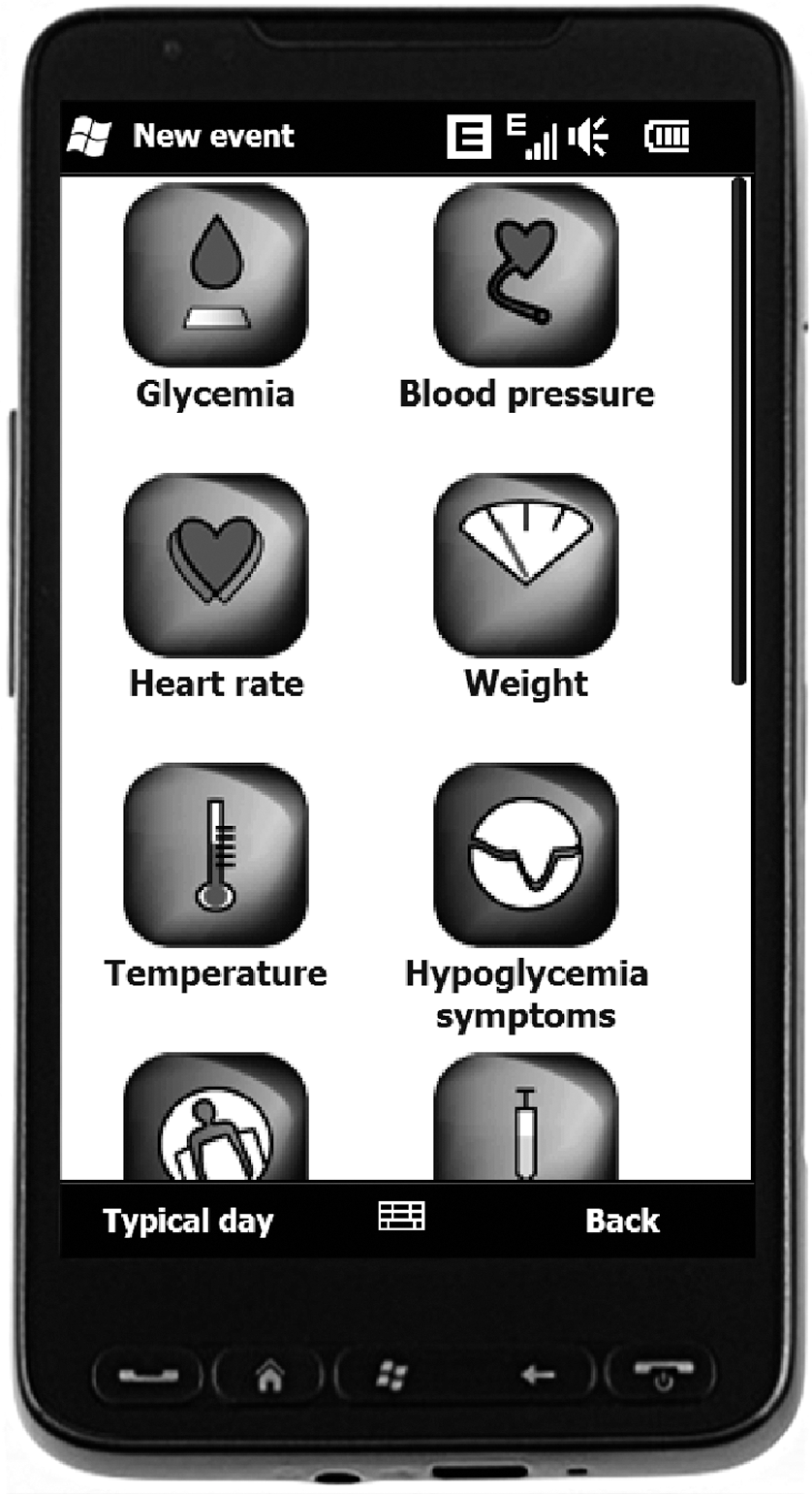
The newest version of the mobile patient module of the TeleMed system.
In the TeleMed system feedback was realized by the physician (data analysis and phone call to the patient). Feedback to the patient could be also provided by an automatic system. The first example of such a solution was designed and implemented in 1996 by Albisser et al. 16 In this case an automatic dosing subsystem was interactively preprogrammed for each particular patient and supplemented medical care assistance. An open arm 1-year study performed on type 1 and type 2 diabetes patients indicated improvement of the HbA1c level in comparison with the reference group (nonusers of the system) of 1.4%.
Recently, the results of the 1-year utilization of the Automated Diabetes Management System (ADMS) consisting of the data collection and the automated trend-monitoring GlucoDYNAMIX systems have been presented. 23 Combination of both systems allows for generation of notifications by the real-time alert in text messages to cell phones and generation of the glycemic trend analysis reports transmitted daily by e-mails to parents.
A randomized trial was performed on small groups of children younger than 12 years old with type 1 diabetes. This trial indicated significant improvement of the metabolic control in the study group (n=24, one to three transmissions of data per week) in comparison with the “usual care” group (n=24), illustrated by mean difference of the drop in HbA1c level equal to a mean ΔHbA1c of 0.87%. The analysis performed indicated also a significant influence on the mean drop of the HbA1c frequency in the data transmitted and analyzed by the medical team.
The data analysis and real-time decision support for patients could be performed directly in mobile systems used by the patients. The most successful example of such a real-time monitoring of diabetes is related to the WellDoc system (
WellDoc consists of an intervention patient-coaching system and provider clinical decision support. The first-mentioned part includes a mobile diabetes management software application and a Web portal. The mobile software allowed patients to check self-measured data on a mobile phone and receive automated, real-time educational, behavioral, and motivational messaging specific to the data entered. The patient Web portal consisted of a secure messaging center (for patient–provider communication), a personal health record with additional diabetes information (e.g., laboratory values, eye examinations, foot screenings), a learning library, and a logbook to review historical data.
The 163 study type 2 diabetes patients had mean baseline HbA1c of 9.4% (range, 7.5–15.5%). All of the accepted study group consists of individuals who used the Internet routinely. The patients were divided into four groups: usual care (n=56), coach only (n=23), coach primary care provider portal (n=22), and coach primary care provider portal with decision support (n=62).
The mobile diabetes management software incorporated over 1,000 automated self-management messages into a feedback algorithm. The algorithm displayed educational and motivational messages to patients after patients self-reported data into the mobile phone application. Diabetes educators were “virtual” case managers who intermittently reviewed patient data. Educators could supplement automated messages with electronic messages sent to the patient portal. Educator messages were based on longitudinal data trends.
Patients in all the three treatment groups were allowed to make telephone calls to educators but were encouraged to communicate electronically. On average, <50% of active patients made or received live phone calls, with an average of one phone call per month. Lastly, patients received an electronic action plan every 2.5 months in order to support improved diabetes self-management and to serve as pre-visit summaries for physician office visits. Providers were not informed of the level of communication to patients but knew whether patients were assigned to an intervention group or to the usual care group.
The WellDoc system led to a significant improvement of metabolic control as indicated by the drop of the HbA1c level by 1.35% for type 2 diabetes patients during a 3-month study and 1.2% during a 12-month study.
Another example of a system that uses decision support is the Diabeo system, 26 which consists of two components: the first one is a real-time device for calculation of the insulin dose, and the second is a data transmission facility allowing telemonitoring and interactive short-term teleconsultations. A 6-month randomized TeleDiab 1 Study was performed on chronically poor glycemic control type 1 diabetes patients (n=59). The final results indicated a significant improvement of the metabolic control for patients utilizing Diabeo software in real time and every 2 weeks receiving a teleconsultation with a diabetologist. The decrease of the HbA1c level in comparison with the usual care group of patients was 0.91%.
Summary and Conclusions
Home and mobile telecare applications supporting diabetes treatment have been under development since the late 1980s. After many years of experimental usage of the telematic support it has been proven that an application of the telecare systems led to significant improvement in the quality of the diabetes treatment in terms of patients' self-confidence and comfort of living and could be also efficient in terms of treatment outcomes. However, this last conclusion depends on the optimal usage of the telecare systems. It seems to be obvious that the crucial factors in effective applications of telecare technology are an optimal selection of the frequency of data transfer, a proper analysis of the data and its usage by the patient, and an optimal selection of time for the patient's face-to-face visit in the clinic.
Reviewing all meta-analysis studies above discussed, summaries of which are presented in Tables 2 and 3, it is seen that the newest available technology is not fully used in technical support systems of the diabetes treatment.
The meta-analysis by Montani et al. 11 included two studies by Albisser et al. that should be classified as a real-time data monitoring in which Δ glycosylated hemoglobin (HbA1c)=1.4%.
The study of Wojcicki et al. had daily data transfer with an average 1-week feedback discussion between the diabetologist and the patients.
In the study of Kwon et al., the data transfer was performed every second day, and the feedback was provided a few days later. In the study of Tsang et al. data transfer was limited only to diet (no glucose concentration and insulin doses were transmitted).
CI, confidence interval.
ADMS, Automated Diabetes Management System; HbA1c, glycosylated hemoglobin.
Taking into account the following: • the comparison of results from the ADMS,
23
the Diabeo system,
26
and the WellDoc studies
24,25
• applications of the pioneering system of Albisser et al.
16
and the implementation of the TeleMed system
21
• the results from the classical way of teletransmitting data, which are characterized by a not-so-frequent assessment of the available patient data and which bring one closer to the usual care systems
it is possible to draw the conclusion that the real-time monitoring of the patient's state connected with an automatic feedback messages sent to the patient can give a much better improvement than the classical telematic support.
However, can we afford increasing frequency without changing the established model of diabetes treatment? We have to remember that every year the number of diabetes population is growing and that the number of medical care providers is always very limited. This fact led to a conclusion that improvement of the quality of clinical intervention is actually not possible. The only solution is to build new systems whose operation is based on the use of information technology and to support activity of medical providers in this way.
Based on the above-mentioned facts it seems that we need to create a new scheme of operation of the future telecare systems, which indicates the equal importance of the telematic technology-supported diabetes patients and software systems gathering all intelligent algorithms that ensure efficient transmission of the remote control feedback alert messages.
According to a recent survey done by Vitera Healthcare Solutions (
Based on the above-presented facts, it could be stated that from the healthcare providers' point of view that an optimal structure of the telematic support systems should allow for an automatic assessment of the daily glycemic measurements, which are transferred from the patients' homes with an automatic selection of the bad results. These results should be available to medical experts who will react with feedback messages to the patients as well as to the systems structure that, based on analysis of the retrospective and prospective personalized data, can in an automatic way select the optimal date of the face-to-face patients' visits. This last feature can really improve the quality of the routine approach to the primary care diabetes treatment.
From a diabetes patient's point of view important information refers to the newest available technology. Today we have first two wireless blood glucose meters approved by the Food and Drug Administration: the Telcare® (Bethesda, MD) BGM® and the iBGStar® (designed by AgaMatrix [Salem, NH] and marketed by Sanofi-Aventis [Paris, France]). This fact indicates that technology is changing very quickly, and its efficiency has to be used in new and better ways by patients who can accept usage of the technical systems supporting diabetes treatment. However, the most important of the key conditions for the fast improvement in applications of telemedicine is the optimal use of such a technology in terms of data transfer frequency and, what is really critical for success of telematic systems, a full acceptance for its usage by patients. Because of this we have to remember that any exploitation of the newest technology should not influence the established activities of patients' daily living. This means that in some cases we have to have on the market a universal system, which should be configured in a personalized way.
In conclusion, this is the main challenge over the next years to implement telematic systems designed accordingly with new schemes of their operation. All this new future implementations together with already confirmed advantages of the telematic support, such as the increase of self-confidence of the patient, will hopefully give real benefits for the patients and maintain such a result of treatment during a long-term period of time.
In the report published in 2001,
2
answering the question of what we can expect from telemedicine in intensive diabetes treatment, five statements were made: 1. The first one stated that “the telematic intensive care system is able to provide a diabetologist, automatically, with daily and reliable patient data.” This statement is currently even more valid than 10 years ago. Moreover, development of wireless digital communication technologies and widespread use of mobile phones allow for within-the-day data transfer from patients to the physician. Currently, there are systems available that can automatically send each glucose test result to the physician or other recipient just after it becomes available. The blood pressure and the body weight data can be transmitted in a similar way. We can expect that in the near future also other parameters describing the patient's state and the course of treatment will be automatically monitored and transmitted to the hospital servers or the healthcare provider's personal communication devices. 2. The next statement claimed that “the telematic system allows the patient to achieve the target glycemic level chosen by a diabetologist with a higher accuracy than during the standard therapy.” Based on the meta-analyses summarized in the current article it can be noted that a similar result was observed in other randomized control trials, in which the average improvement of metabolic control was similar in both groups studied. In contrast, in trials showing more significant difference of the average decrease of HbA1c in favor of the telematic support, the intersubject variability was usually higher in the supported group. Hence, either the same target glycemic level as in the control groups is reached in the telematic groups but in a more repeatable way, or the better improvement of HbA1c is noted in the telematic group but at the expense of higher variability of the individual results. 3. In the third statement it was noted that “the possibility of daily control of the patient's state by the diabetologist seems to be favorable, especially for those ambulatory patients who are not sure about the correctness of intensive therapy and who prefer to have additional support.” Currently, a further increase in the frequency of data transmission is easily achievable because of the rapid development of the mobile communication technologies. However, this higher frequency of data transfers can result in better treatment results only if timely feedback is provided to the patient. It can be realized directly by the healthcare provider or by the automatic data analysis and decision support advisory systems. It was demonstrated in the Albisser et al.,
16
TeleMed,
21
ADMS,
23
Diabeo,
26
and WellDoc
24,25
systems that both these solutions can be effective. In future, the automated systems should prevail in within-the-day applications because the direct interaction with the healthcare provider is more expensive. 4. It was also shown that “the telematic system can be simple to use as indicated by good glycemic control for patients with intelligence in the range of 85<IQ<100.” There have been no other available studies that monitored differences related to the effectiveness of telematic support in patients with different intellectual capabilities. Personal information management and communication devices like mobile phones are in common use today. They are user-friendly, and they are able to retrieve the data directly from the measurement devices without any assistance from the user. Taking these into consideration, it can be concluded that the above statement is still valid today. 5. In the last statement it was pointed out that “the telematic system can be inexpensive.” This statement concerned only the telematic system and the data transmission costs with no formal analysis related to direct and indirect costs of case management personnel, the underlying communications, and data management infrastructures, as well as benefits of an application of telemedicine. Currently, the components of the telematic systems and the costs of the data transfer are even more affordable than 10 years ago. Thus, the telematic systems still can be inexpensive while offering mobility. Costs of the operation of the whole health telecare system will depend on many factors, which can make the system very expensive, as in the case of the IDEATel study (total cost increase per patient per year from $6,183 to $9,778; cost of the technical equipment per patient was equal to $3,425)
27
or cheaper than “usual care” (total cost reduction per patient per year of 910 Euros as calculated by a medical insurance company).
28
Only a few articles addressing cost-effectiveness of telecare in diabetes are available. In addition to the two above-mentioned reports,
27,28
information on costs and savings are presented by Chase et al.,
29
Biermann et al.,
30
and Cherry et al.
31
Chase et al.
29
demonstrated $284/year savings of the telecare group over the control group, and Biermann et al.
30
calculated savings of 648 Euros/year. In both studies the cost difference resulted from reduced travel time and work interruption. However, Klonoff,
32
analyzing the conclusions of Chase et al.,
29
pointed out that they could not be extended automatically beyond the time frame of the study, which equaled 6 months. He also questioned the estimates by Chase et al.
29
of the personnel costs and indicated that they should be higher by 65%. Cherry et al.
31
analyzed the cost benefit of using a home telemedicine system to reduce emergency room visits, demonstrating a significant reduction in the number of visits and also a $747 charge decrease per patient per year in comparison with the previous year's usual care group.
We need results clearly identifying conditions under which telematic support of diabetes treatment can be more beneficial than the usual care from the economic standpoint because available data, as mentioned, are scarce and conflicting.
Over the last 10 years, at the Institute of Biocybernetics and Biomedical Engineering of the Polish Academy of Sciences several telematic support systems have been designed, developed, and clinically implemented. In particular, these are a system for monitoring of the treatment of pregnant women with diabetes (TeleDiaPreT 2 ), a system for monitoring of patients newly diagnosed with diabetes (TeleMed 18 ), a system for screening and monitoring of diabetic retinopathy (DRWeb 6 ), and a system for monitoring of the treatment of the diabetic foot syndrome (TeleDiaFoS 9,10 ). Based on experiences gained, the idea of design of the Model Center of Diabetes Treatment (MCDT) for patients with unstable diabetes was born. 22
The structure of the MCDT is based on four specialized modules, the central educational unit, and the screening unit that are interconnected within the central module. Particular specialized modules are devoted to (1) cardiodiabetological complications, (2) treatment of the diabetic foot syndrome, (3) treatment of diabetes during pregnancy (type 1 diabetes and gestational diabetes), and (4) treatment of patients with “difficult diabetes” (i.e., long-term unstable metabolic control). The idea of MCDT is to provide a specialized ambulatory care to patients with diabetes and its late complications. Thus, there will be two groups of patients treated in the MCDT. The first one will consist of low-risk patients whose condition is stable and who will be treated in a routine way (i.e., one control visit in the MCDT once every few weeks/months). The second group will consist of patients who will be qualified as high risk (e.g., because of their unstable metabolic state, cardiologic condition, foot ulceration related to the diabetic foot syndrome, or requiring glycemia stabilization due to pregnancy planning). These patients will be directed to the specialized modules of the MCDT and will be equipped with mobile/home telecare units. Using these units, patient data will be sent to the server in the MCDT, they will be analyzed, and feedback will be provided to the patient. 33
The patients will be moved from the high-risk group to the low-risk group after their condition is stabilized. Of course, it will be possible for a patient to stay in the telecare group by request if she or he decides to cover the costs of such a service.
MCDT has been not yet implemented as a whole structure, and because of this it is very difficult to discuss in this review the cost-effectiveness of this new type of healthcare unit.
However, in the authors' opinion, the universal model center for diabetes treatment would provide original, integrated, high-quality, low-cost healthcare services for the most challenging group of diabetes patients, while using modern information and communications technology infrastructure that would work accordingly with the above-discussed conditions related to the frequency of the data transmission and the real-time feedback alerts.
Footnotes
Author Disclosure Statement
No competing financial interests exist.