




Abstract
Toddlers with type 1 diabetes have distinctive combination of challenges to their families and healthcare providers. A major factor is the difficulty in achieving metabolic control without risking hypoglycemia. The rising incidence of type 1 diabetes in toddlers increases the magnitude of the problem and creates a greater need for providing specialized service to cater for this age group's unique need. Type 1 has a specific disease nature in younger children and its clinical presentation mimics common childhood diseases. Symptoms and signs in the newly presented toddler with diabetes might be unspecific causing diagnosis to be missed or delayed. With the low cognitive ability and immature communication, toddlers might not be able to express their ill-feeling resulting from hypoglycemia or hyperglycemia. Hypoglycemia fear is common, which aggravates stress and reduces adherence to strict metabolic control. Nocturnal hypoglycemia is more common in toddlers and can be undiagnosed unless continuous glucose monitoring is used. Insulin administration and adjustment can be challenging due to pain, fear, refusal, and frequent intercurrent illness. Glucose monitoring is crucial. However, it can be distressing to the child and difficult to adhere to due to commitment or financial reasons. Insulin pump therapy is proven to be an effective and a safe method of treatment for toddlers, but it requires intensive training, resources, and long-term support. Provision of multidisciplinary team with special expertise in managing toddlers with diabetes is essential. Providing more physiological insulin regimes and customized technology is required to improve treatment compliance and diabetes control.
Introduction
M
Rising Incidence and Magnitude of Diabetes in Toddlers
Epidemiological data show evidence of a significant trend toward diagnosis of type 1 diabetes at a younger age most pronounced in the preschool age group. 1 The estimated rise in incidence rates is between 3% and 5% per year. 2 The incidence has dramatically increased in the pediatric population worldwide with ∼4% of children with type 1 diabetes being less than 2 years of age at diagnosis. 3 Data confirmed that the rising incidence in childhood diabetes is highest between the age of 0 and 4 years in many countries around the world. 4 In the United Kingdom, an overall increase in type 1 diabetes in children has been seen at an annual rate of 3.4%. This rate is shown to have doubled to 6.3% in children younger than 5 years. 5
Special Issues on Growth and Development in Relation to Diabetes Care
Growth and development affect many aspects of diabetes care and influence its management. As children grow, their development matures. Interpretation or expectation of their ability of diabetes management tasks contributes to the challenge of management. Childhood, and particularly infancy, is a time of rapid growth and development. This process of increasing body size results in the need for continual changes in insulin dosage. Various developmental changes and possible impact on diabetes management are summarized in Table 1.
Clinical Presentation and Disease Nature; Unique Features in Toddlers
Unique disease nature
At the initial presentation, risk of diabetic ketoacidosis and cerebral edema is higher in toddlers compared to older children. It was reported that 53% and 85% of patients diagnosed with diabetes at less than 2 years of age presented with diabetic ketoacidosis. 6 More aggressive autoimmune insult, indicated by higher titer of autoantibodies, has been reported in the very young compared to older children. 2 In addition, a more potent disease nature and rapid loss of beta cell function are postulated in the very young children with diabetes. This was based on the reduced duration of the honeymoon phase and the higher insulin requirement in the first 6 months after diagnosis. 7
Recognition of symptoms/signs and difficulty in diagnosis
Diagnosis of diabetes in toddlers can be challenging as diabetes presentation might mimic other more common illnesses with unspecific symptoms and signs. Toddlers are susceptible to febrile illnesses and they present frequently with vomiting and diarrhea on intercurrent diseases. They get dehydrated rapidly during these febrile illnesses, and dehydration due to acute diabetes presentation might be missed. Common childhood diseases like upper respiratory infection, otitis media, or urinary tract infection might be diagnosed in an acute presentation with diabetes, and it is common that children at the initial diabetes diagnosis receive courses of antibiotics without response to treatment. 8 Although uncommon, initial presentation with type 1 diabetes in the very young can be in the form of hyperglycemic hyperosmolar syndrome without diabetic ketoacidosis, which makes the diagnosis trickier. 9 Accordingly, it is recommended that toddlers presenting an illness without a clear diagnosis to have a simple urinalysis to look for glycosuria and ketonuria. 10
Classic signals attributable to abnormal blood glucose might not be exhibited in children and diagnosis of either hypoglycemia or hyperglycemia might be missed. Erratic behavior, including temper tantrum, is typical in this age group and it might be confused with genuine presentation of hypoglycemia or hyperglycemia, which requires treatment. The very young child may not have a mature adrenergic response to hypoglycemia and is unable to effectively communicate its symptoms. 11 With further cognitive development, toddlers progress in their verbal communication and might express their ill-feelings.
Special forms of diabetes in younger children
Diabetes diagnosed in the first 6 months of life can be of monogenic etiology in which genetic mutation is seen in over 80% of patients. 12,13 Heterozygous mutations in the KATP channel genes (KCNJ11 and ABCC8), constitute a substantial proportion of these mutations in outbred populations. 12 Most patients with these mutations have achieved better glycemic control when treated with oral sulfonylurea rather than insulin. 14 Hence, awareness of the possible diagnosis of monogenic diabetes and its specific forms of treatment in infants is crucial to avoid missing the opportunity of switching insulin to oral medications.
Metabolic Control Target; Difficulty in Ensuring a Good Metabolic Control Without Risking Hypoglycemia
The rising incidence of type 1 diabetes has been paralleled by the increasing recommendations for intensive management. This stems from results of the Diabetes Control and Complications Trial (DCCT) study group, which demonstrated reductions of microvascular complications on strict glycemic control. 15 However, intensive diabetes management is associated with a potential increased risk of severe hypoglycemia. 16
Setting up a treatment regime and target for a newly diagnosed toddler with diabetes can be challenging. The difficulty is creating a balance between achieving an acceptable metabolic control target that is realistic for the child's naturally erratic eating and exercise patterns. Very tight metabolic control may expose toddlers to episodes of severe hypoglycemia, which may lead to subtle cognitive impairments later in life. Hypoglycemia and possible neuropsychologic impairment are of far greater concern for the very young child than for older children and adolescents. Even mild hypoglycemia can result in an altered cognitive function manifested by dissociative learning and mental inflexibility. 17 It is reported that children under 5 years of age are at a higher risk of developing cognitive dysfunction if they have experienced severe hypoglycemia 18 and hypoglycemia is particularly detrimental to the developing brain of young children. 11 Individualizing glucose targets might be helpful and setting it at a range of 6 to 12 mmol/L allows a balance. 19
Targets for glycemic control have been another area for debate and research. Target values for children vary between countries and centers within the same countries. Recent data confirmed that targeted level for glycemic control plays a key role in type 1 diabetes in children with the “6.5% approach” resulting in better outcomes. 20
Hypoglycemia
The definition of hypoglycemia in terms of glucose level is controversial. However, the effect of cognitive impairment can be detected at blood glucose concentration 60 mg/dL. 21 Plasma glucose threshold for autonomic activation is lowered after a single episode of hypoglycemia, which results in an increased risk for further acute events. 22
Achieving normoglycemia is a challenge for which hypoglycemia fear is a contributor. Both children and parents fear hypoglycemia, particularly if there was a history of hypoglycemic convulsion. 23 Concerns about hypoglycemia can be expressed by mothers early on at the adjustment stage following diabetes diagnosis. 24 Hypoglycemia is more frequent in younger children, particularly those with lower A1C levels and those with higher insulin doses, and a previous history of severe hypoglycemia. 25 Treatment of hypoglycemia might be difficult in a symptomatic uncooperative child. Furthermore, treatment of severe hypoglycemia with conventional doses of glucagon might result in nausea and vomiting, while reduced glucagon dose might only result in a small glycemic response. 26
Nocturnal hypoglycemia is common in children with diabetes. Its reported incidence ranges between 14% and 47%. Its high occurrence might be attributed to the impaired counter regulatory response to hypoglycemia during sleep. 27 It can also be undiagnosed in young children as it can be asymptomatic or present with unspecific symptoms such as nightmares or restless sleep. A further challenging factor is that bedtime glucose has been shown to be a poor predictor to nocturnal hypoglycemia. 28
Studies using continuous glucose monitoring (CGM) have documented that nocturnal hypoglycemia is more frequent than has been recognized based on capillary glucose measurement. 29 Another study utilizing CGM in a group of very young children revealed periods of nocturnal hypoglycemia with an average of an hour duration varying from 10 to 480 min. 30
Hyperglycemia and Glucose Variability
While hypoglycemia is a major complication of diabetes treatment, hyperglycemia and glucose variability are, equally, significant issues of concern in young children. The National Institute of Clinical Excellence (NICE) has updated the guidelines in relation to the target of glycemic control in children. Like the recommended target in adults, the glycemic target in children is recommended to be at or below 6.5% (48 mmol/mol). 31
The main aim of tightening glycemic control is to prevent microvascular complications. A position statement of the American Diabetes Association (ADA) indicated that microvascular complication is a serious issue and is reported in prepubertal children and those who have diabetes for only 1–2 years. 32 In addition, glucose variability was reported to predict retinopathy and early nephropathy in children with type 1 diabetes. 33 Accordingly, it is highly recommended that management is aimed to minimize long-term fluctuation in glycemia to provide protection against the development of microvascular complications.
Treatment Regime
The main aim of treating diabetes in young children is to obtain the best glycemic control without hypoglycemia and avoidance of fluctuation in the glucose profile. Introducing a treatment regime to obtain this aim can be difficult. Insulin regime needs to be adapted to the child changing growth and development. As infants grow into toddlers, they develop a desire for greater autonomy. They might start refusing essential daily tasks of glucose checking and insulin injection. 34 On the contrary, toddlers and preschoolers might demand participating in their care. While this might be a positive initiative, it might impose difficulty when a child insists on certain injection sites, opposing rotation, or choosing the same finger for blood glucose monitoring (personal observation). Overall, children maturity and development are variable. Some are able to perform self-care tasks at an early age, while others are not. Regardless, parents or caregivers need to provide continuous supervision for performing diabetes management tasks of insulin administration and glucose monitoring. 34,35
There are multiple insulin types and regimes for diabetes treatment. Insulin used can be rapid, short, intermediate, or long acting. Regimes can be of fixed insulin dosing or based on carbohydrate counting and insulin estimation. Many children require multiple daily injection of insulin administration to achieve and maintain good glycemic control. In addition to the prandial insulin for the main meals, extra insulin might be required for snacks consumed between meals, particularly if snacks were large and containing carbohydrate.
The basal bolus insulin regime is commonly used. It is a combination of rapid-acting insulin analog given before meals and snacks and a long-acting insulin given pre-bed or at another time of the day. This regime has been documented to result in better glycemic control and less hypoglycemia compared to others utilizing mixed insulin or intermediate short insulin regimes. 36
Insulin Administration and Adjustment
A major challenge in treating toddlers with diabetes is administration and adjustment of insulin. Considering their small size, they may require very small doses, need fractions of units, and require dilution of insulin. Minimizing pain and fear of injection and finger pricking is a major issue. Furthermore, this age group is very sensitive to small doses of insulin and can have an extremely variable blood sugar control with unpredictable fluctuations. 37 It was suggested that insulin dripping and leakage can be a contributing factor to glycemic variability in this age group. Authors recommended using Deci-pens to minimize insulin drops loss on injection, which are shown to improve dose accuracy and precision without prolonging injection time. 38
Insulin Pump Treatment
While insulin pump therapy can be an ideal therapy for toddlers with no apparent lower age boundary, it has a multitude of requirements to be fulfilled. Supportive education tailored to toddlers' special need is required. Appropriate individualization of pump therapy is essential to obtain optimum results. 39
As in other treatment regimens and modalities, there are advantages and disadvantages to insulin pump therapy in toddlers. The plan to commence pump therapy in a child should be a combined decision between the family and the guiding diabetes team. 40
Toddlers require small dosages for basal rates that can be unobtainable by injections and might necessitate insulin dilution. This is a major technical advantage for pump therapy. However, the small rate of infusion of insulin in these children might delay detection of cannula occlusion, which depends on accumulation of certain amount of insulin in the cannula before alarming. 41 There are multiple technical difficulties using insulin pump in small children, including the need of provision of the right size of the subcutaneous cannulae and the right length of the catheters and tubing. Considering that insulin pump therapy utilizes short-acting insulin only, the risk of diabetes ketoacidosis might be higher. In a study by Mac-Fogg et al., diabetic ketoacidosis (DKA) was seen at a higher frequency in pump users compared to controls. 42 However, the risk of DKA is dramatically reduced by improving the technology of insulin pump therapy over the years.
Timing of insulin pump use is important in relation to the diagnosis. It has been shown that initiation of insulin pump therapy at diagnosis of diabetes in children resulted in consistently lower HbA1c with no increase in frequency of hypoglycemia or DKA. In addition, there was no deterioration in quality of life or treatment satisfaction. 43
Some studies showed that insulin pump therapy in toddler results in an improved glycemic control with no increase in adverse effects of hypoglycemia. 42,44 The study by Mack-Fogg et al. supports that insulin pump therapy is a safe and effective modality to manage type 1 diabetes, with no increase in hypoglycemia and a trend to improve control, even in the youngest patients. 42 Recent studies showed that use of the sensor-augmented pump with the predictive low glucose suspension management system reduces the risk of hypoglycemia without significantly affecting metabolic control or causing diabetic ketoacidosis. 45 Other studies did not find any significant improvement in the same parameters compared to multiple-injection therapy. 46
Insulin pump therapy is proven to provide an effective alternative to selected toddlers and preschoolers with type 1 diabetes. In addition to improving glycemic control and reducing the risk of hypoglycemia, it was shown to increase parental confidence and build independence in diabetes care. 47 Use of insulin pump was found useful in reducing the fear of hypoglycemia in young children, particularly those who have unpredictable feeding habits. 48
Behavior therapy to stick to essential pump function is crucial for the success of the pump therapy. While parents showed adherence to insulin bolusing using the bolus wizard, they did not adhere sufficiently to hyperglycemia correction. Targeting the pump behavior in young children is required to optimize glycemic control. 36
In our personal experience, choice of treatment regime between multiple daily insulin injection and insulin pump therapy is based, to a large extent, on the parents'/carers' ability to master the treatment modality. While we encourage the use of insulin pump therapy for this age group, families' acceptance of such a therapy is not always guaranteed.
Glucose Monitoring
Glucose monitoring is a cornerstone in the management of diabetes. A good correlation is found between the frequency of monitoring and glycemic control. The ADA recommends around four checks of blood glucose per day. 36 In toddlers, repeated glucose testing can be challenging. Choosing sites for testing, checking overnight, selecting the right meter that utilizes a small sample size, and the need to include child in care can all be confounding factors in this challenge. CGM is an ideal way to track glucose profile. In toddlers, it is proven to improve treatment satisfaction by parent. However, it does not always result in improving glycemic control. Constant use of CGM on a daily basis is not always feasible in this age group. A study by Tsalikian et al., showed that less than half of the toddlers studied used CGMS at a frequency of 6 days/week. 49
Difficulties might arise from inserting sensors in toddlers' thin, fragile skin. Various forms of skin complications are commonly seen. These include skin nodules and hyperpigmentation at the sites of pump infusion set insertion (Fig. 1) and allergy to adhesives (Fig. 2).
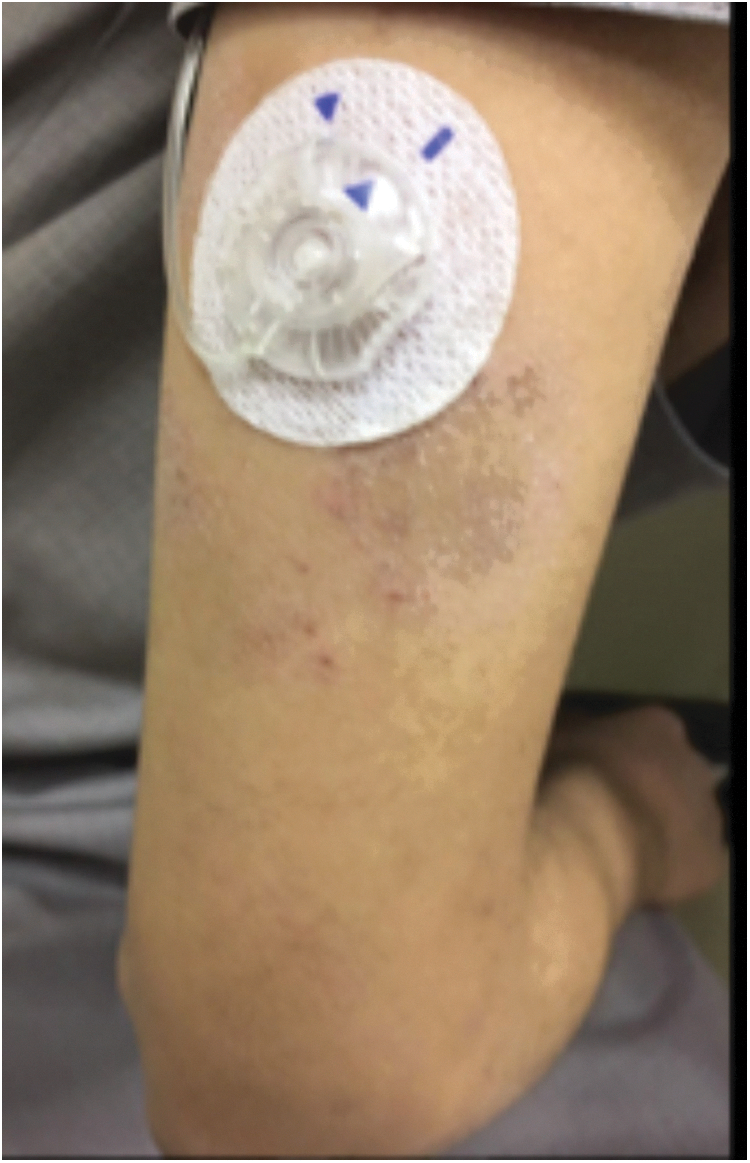
Skin nodules and hyperpigmentation at the sites of pump infusion set insertion.
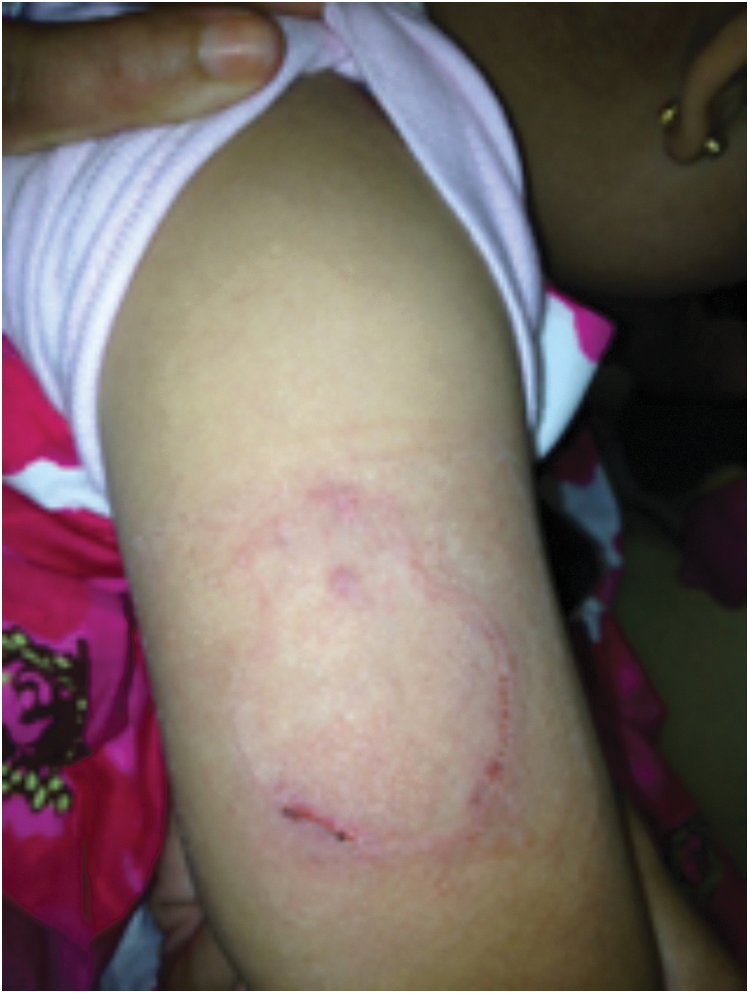
Allergic reaction on skin from contact with a continuous glucose monitoring device in a 3-year-old toddler.
Family Issues in Type 1 Diagnosis and Management
Diagnosing a child with diabetes is a stressful time for parents. This is particularly the case for parents of toddlers. 50 A heightened sense of grief and possibly guilt may be reported at diagnosis, particularly if the child is critically ill. 51 Following the initial stage of diagnosis, adjustment can be difficult. A qualitative analysis on the adjustment issue in mothers and their preschool children showed that the children acquire internalizing features manifested by anxiety and withdrawal, while mothers perceive greater family disruption following diabetes diagnosis. 24 Hatton described three phases in terms of coping with diabetes in the very young, including initial grief, guilt, and anger at diagnosis. These phases are followed by the stage of caring for the child at home. The latter is described as a time of survival and the final stage is adaptation as parents learn to trust others and build support systems. 52
An educated and well-functioning family is crucial for provision of successful management of toddlers with diabetes. However, families need the availability and support from experienced diabetes multidisciplinary team. In addition to the immediate family, involvement of the extended family and childcare teams are of paramount importance.
Families need to adapt to the changing developmental stage of the child. The milestones of psychological development have a direct clinical implication of diabetes care and require a great deal of understanding by the family and the healthcare providers. 51
Financial burden in providing the necessary medications and equipment can be a source of stress to the family. There are lots of controversies and issues in the diabetes management of this age group. A combination of methodologies and disciplines is often required. 50
Diet and Food Habits
Diet is a major challenge in toddlers with diabetes. It is common for young children to have erratic eating and sleeping pattern. Their rapid physical growth and the change in nutritive requirement need to be considered when planning dietary regimes. Breastfeeding makes assessment of intake and insulin dosages difficult. Weaning into solid food can be equally difficult. Food refusal is a major source of concern for parents as they fear hypoglycemia if the child refuses to eat after having an insulin dose. Studies of mealtime behavior in toddlers with type 1 diabetes showed that they have unique problems related to a strict feeding schedule. 53 Various approaches are followed to deal with food refusal. A family-centered approach of meal time with avoidance of distractions can be helpful. Regular meal pattern and provision of low-index carbohydrate-based meals can reduce the risk of hypoglycemia. Some centers encourage consumption of multiple small meals throughout the day to prevent hypoglycemia. 54 Another approach to avoid hypoglycemia due to food refusal is to administer insulin immediately after meal using rapid-acting insulin analogs. 55
Conventional preprandial glucose readings might not be genuine preprandial in young children. This is due to their frequent eating schedules. Accordingly, many assumed preprandial readings are in fact postprandial, which impacts adversely the dose of insulin to be given. High postprandial peaks of glucose corrected by rapid insulin might result in a pattern of high/low fluctuation, which is known to be injurious to the vascular epithelia. 56
Healthcare Provision and Challenges
Transition of a toddler from home to child care setting is challenging. It requires effective collaboration and provision of trained staff to cater for these children's requirements. Challenges in the child care setting include staff turnover, language barriers, variation in ethnic and cultural practices, limited resources and support, rural versus urban settings, and health literacy and education level. Special provisions are required for children with diabetes in nursery and preschool facilities. This raises a risk that these children might be discriminated against for admission. Antidiscrimination laws are enforced in many countries around the world where discrimination against various disabilities (including chronic diseases) is forbidden. 57
Future Perspective of Diabetes Treatment in Toddlers
Immune therapy, cell transplant, and further advancement in technology are the ways currently awaited to provide cure for type 1 diabetes. The currently available data on the long-term success rate of islet cell transplantation are still discouraging. Stem cell transplant is possibly holding more hope for diabetes cure. 58 However, lack of long-term data and high-dose immunosuppression requirement impose less optimistic views, particularly in the younger age group. This view is primarily a reflection of lack of approval of immune interventions based on a larger population data. The closed-loop system and the clinical use of artificial pancreas still face challenges. CGM performance, lack of ultrashort-acting insulins, and the imperfection of communication between various system components in algorithms remain behind the delay in commercializing the artificial pancreas. 59
The Medtronic MiniMed®670G system was recently approved by the Food and Drug Administration. It automatically increases, decreases, and suspends insulin delivery in response to CGM. The use of this system in-home by adolescents and adults has shown an increased time in target and reduction in HBA1C, hyperglycemia, and hypoglycemia compared to baseline. 60 Further studies utilizing this system in younger children are required to confirm its use feasibility in the younger age group. Overall, clinical trials both in stem cell transplantation and artificial pancreas use are sparse, particularly in infants and toddlers compared to older children and adolescents.
Conclusion
Toddlers have various age- and development-related characteristics that are distinct from other age groups. The rising incidence of type 1 diabetes in toddlers imposes high implications on families and healthcare professionals. Achieving an optimal glycemic control needs to be balanced by reducing the risk of hypoglycemia and minimizing family stress. Provision of multidisciplinary team with special expertise in managing toddlers with diabetes is essential.
Providing more physiological insulin regimes and customized technology devices, for this age group, are essential requirements to improve treatment compliance and diabetes control. The younger age of this population makes research advances slower compared to other older age groups.
Footnotes
Author Disclosure Statement
No competing financial interests exist.