




Abstract
Bacterial cells communicate with one another using chemical signaling molecules. This phenomenon is termed quorum sensing (QS). QS in Klebsiella pneumoniae is mediated by the synthesis of interspecies autoinducer 2 (AI-2), a furanosyl borate diester molecule. The response of Type 2 QS to environmental cues such as carbon sources, the initial pH of the medium, and boracic acid was investigated in the present study using a Vibrio harveyi BB170 reporter assay and quantitative reverse transcription–polymerase chain reaction (qRT-PCR) analysis. The results show that glucose can affect AI-2 synthesis to the greatest extent, and 3.0% glucose can stimulate K. pneumoniae to produce more AI-2, with a four times increase in activity compared with that of the control culture. According to our previous research, Type 2 QS in K. pneumoniae is luxS dependent. Therefore, the close relationship between glucose concentration and luxS transcription level was confirmed with qRT-PCR technology. The results show that the response of QS to a fluctuating glucose concentration was observed as a change in the amount of luxS RNA transcripts. A maximum of luxS transcription appeared during the exponential growth phase when the glucose concentration was 30.0 g/L. At the same time, AI-2 production was also slightly impacted by the low initial pH. It is noteworthy that the addition of boracic acid at microdosage (0.1 g/L) can also induce AI-2 synthesis. Presumably, in K. pneumoniae, the 4,5-dihydroxy-2,3-pentanedione cyclizes by the addition of borate and loss of water, is hydrated, and is converted to the final AI-2 signaling molecule.
Introduction
Klebsiella pneumoniae is a Gram-negative anaerobic bacterium and an opportunist pathogen responsible for nosocomial infections. The bacterium contains AHL-lactonase, which is a quorum-quenching enzyme. Therefore, the luxS-dependent QS system (Type II) has been referred to as a communication system in K. pneumoniae. Previous studies on QS in K. pneumoniae established the characterization of Type 2 system and its regulation role in biofilm formation (Balestrino et al., 2005). Currently, there are few papers reporting the effect of environmental cues on the Type II QS. Therefore, in this study, the influence of carbon sources, low pH, and boracic acid on QS in K. pneumoniae was investigated. Results show that glucose can affect the synthesis of AI-2.
Materials and Methods
Bacterial strains and growth conditions
Vibrio harveyi BB170 (ΔluxN, AI-1+, AI-2−) (Zhu et al., 2008) was grown at 30°C with shaking at 200 rpm in an autoinducer bioassay (AB) medium containing 0.5% (w/v) casamino acids. K. pneumoniae (Guangdong Culture Collection Center, GIMT1.102) and E. coli DH5α (F−, ø80dlacZΔM15, Δ(lacZYA-argF)U169, deoR, recA1, endA1, hsdR17(rK−, mK+), phoA, supE44, λ−, thi-1, gyrA96, relA1) from Clontech Company were grown in Luria-Bertani (LB) growth medium at 37°C.
Influence of environmental cues on AI-2 production
Effect of carbon source on AI-2 production was studied by adjusting different carbon sources (glucose, sucrose, and glycerol) in LB medium. Effect of glucose on AI-2 production was studied by adjusting the concentration at 0.1%, 0.5%, and 3.0%. Similarly, effect of boracic acid was studied by adding different boracic acid concentrations (0.1‰, 0.5‰, and 1.0‰) to LB medium. The synergistic effect of glucose and pH value on AI-2 production was studied by adjusting the production medium pH to 5.0 and 7.0.
Preparation of cell-free culture supernatant and AI-2 bioassay
Cell-free conditioned culture supernatant (CFS) was prepared by centrifuging K. pneumoniae cultures at 10,000 g and passing the supernatant through a Millipore membrane filter (pore size, 0.22 μm). The detection of AI-2 in culture supernatants using V. harveyi BB170 (sensor 1−, sensor 2+) was performed as previously reported (Zhu et al., 2008). Briefly, the V. harveyi reporter strain was grown for ∼16 h at 30°C at 200 rpm in AB medium. Cells were diluted 1:5,000 in fresh AB medium, which reduced the level of endogenous AI-2 below the threshold required for luminescence, and CFS samples were assayed at 10% (vol/vol) with the V. harveyi reporter strain BB170 (ΔluxN) at a final volume of 100 μL. The plates were then incubated with shaking at 30°C. Luminescence values were measured every 4 h in a SpectraMax M2 e (Molecular Devices) and reported as the fold induction of luminescence by the reporter strain above the negative medium control.
Quantitative reverse transcription–polymerase chain reaction
Analysis of qRT-PCR was carried out to confirm the changes in luxS transcription level during growth in LB medium with or without glucose. First, the luxS gene was cloned from genomic DNA of K. pneumoniae by PCR using primer pairs FluxS1 (5′ CG
Results
Effect of different carbon sources on AI-2 production
The effect of carbon source on AI-2 production was characterized using three different carbon sources at 10.0 g/L concentration during growth in LB medium. The following carbohydrates were tested: monosaccharides (glucose), disaccharides (sucrose), and glycerol. As illustrated in Figure 1, the growth of K. pneumoniae was not affected and AI-2 production profiles were significantly different when carbon supplements were used in LB medium. AI-2 production reached its maximum at the mid-exponential phase of growth in the presence of glucose as a carbon source. Compared with glucose, for cultivation using sucrose as a carbon source, there is a lag time before AI-2 production reached maximum, which presumably is due to the time required for sucrose hydrolysis. AI-2 production is maximal after 4 h of growth using glycerol as a carbon source. This may be due to the different metabolic pathways that utilize glucose and glycerol. In all cases, AI-2 quorum signal degradation appears after entry stationary phase or after the carbohydrates are used up.
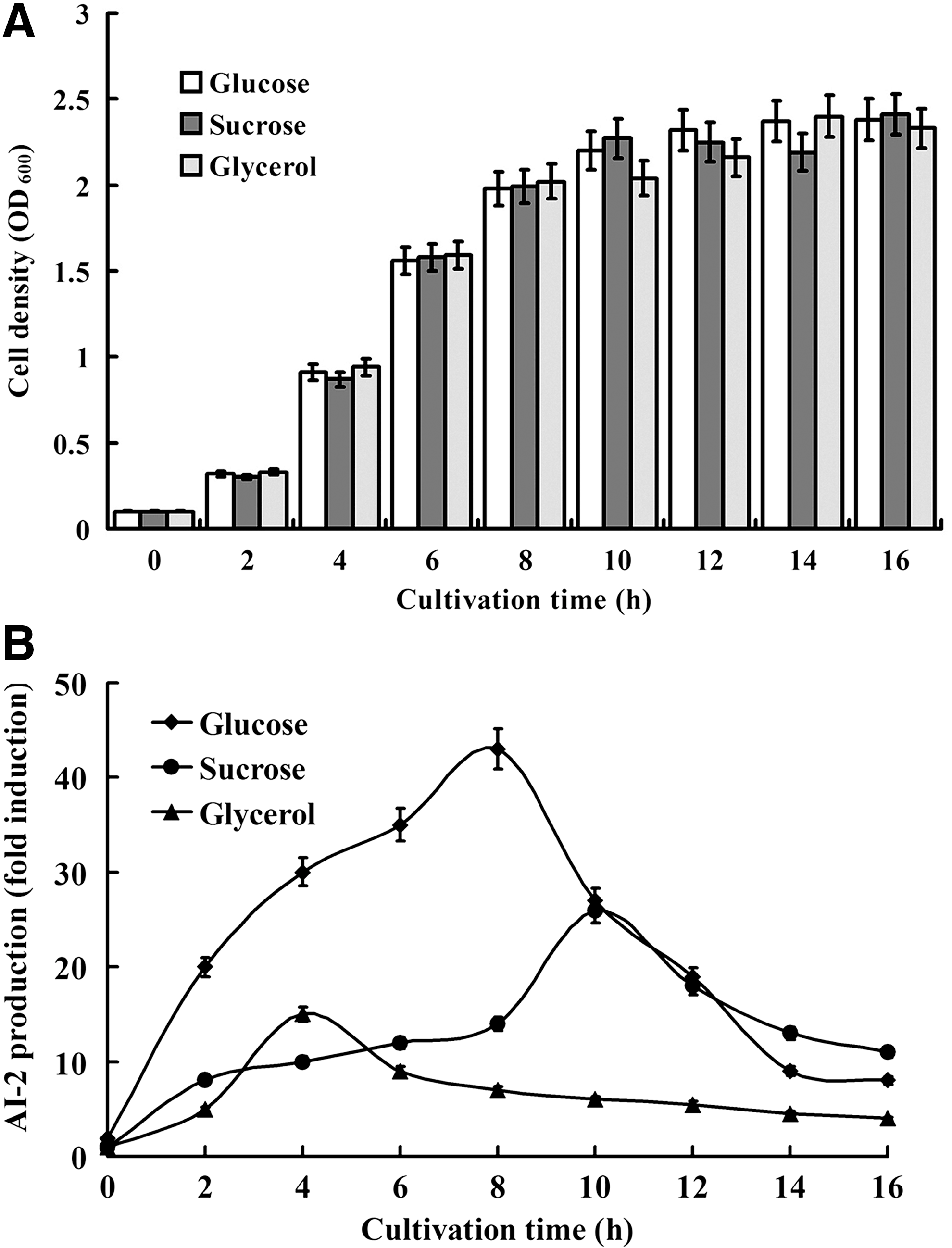
Effect of different carbon sources on cell growth and AI-2 production by Klebsiella pneumoniae. The growth conditions were LB medium plus a 1.0% concentration of one of the following carbohydrates: glucose, sucrose, and glycerol.
Effect of glucose concentration and pH value on AI-2 production
As shown in Figure 2, the levels of AI-2 activity are dramatically affected by growth in changing glucose concentrations, and at 3.0% glucose concentration, AI-2 production is maximal, with four times increased activity compared with that of the control culture. As the glucose concentration is decreased, there is a gradual decrease in AI-2 production by K. pneumoniae. Bacterial growth is not affected by glucose over the range used. Further, AI-2 activity increases when cell density increases during the exponential growth phase. However, the effect of glucose on AI-2 activity is greater than that of cell density when entering stationary phase. In fermentation of K. pneumoniae, glucose is oxidized to small molecule organic acids, which leads to a fall in pH. Therefore, the synergy of glucose and pH on AI-2 production was further investigated. As illustrated in Figure 3, both glucose and low pH can improve AI-2 activity. The response of QS in K. pneumoniae to glucose is more obvious, which is consistent with the above result.
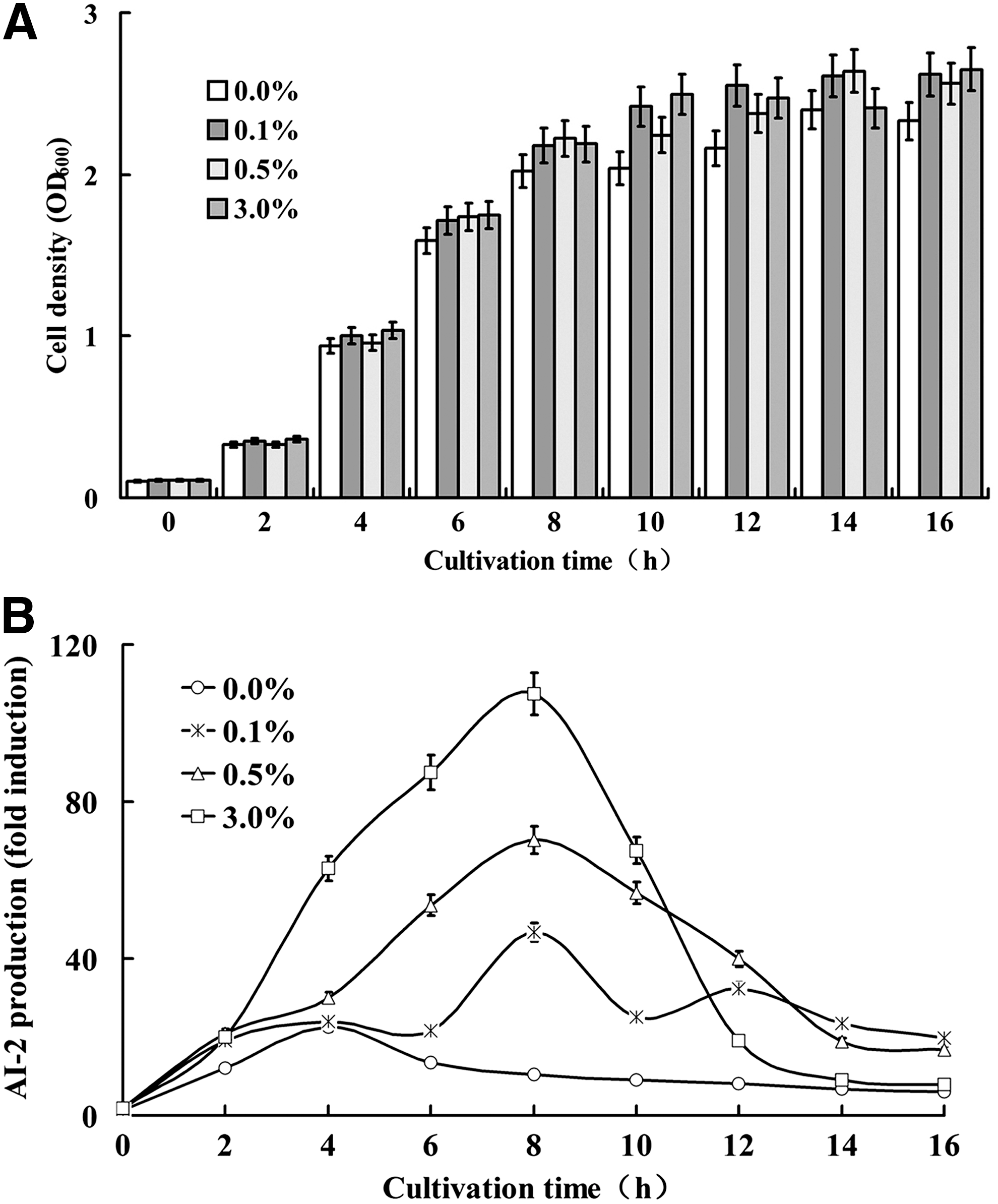
Effect of different glucose concentrations on cell growth and AI-2 production by K. pneumoniae, which was grown in LB medium supplemented with 0.1%, 0.5%, and 3.0% glucose.
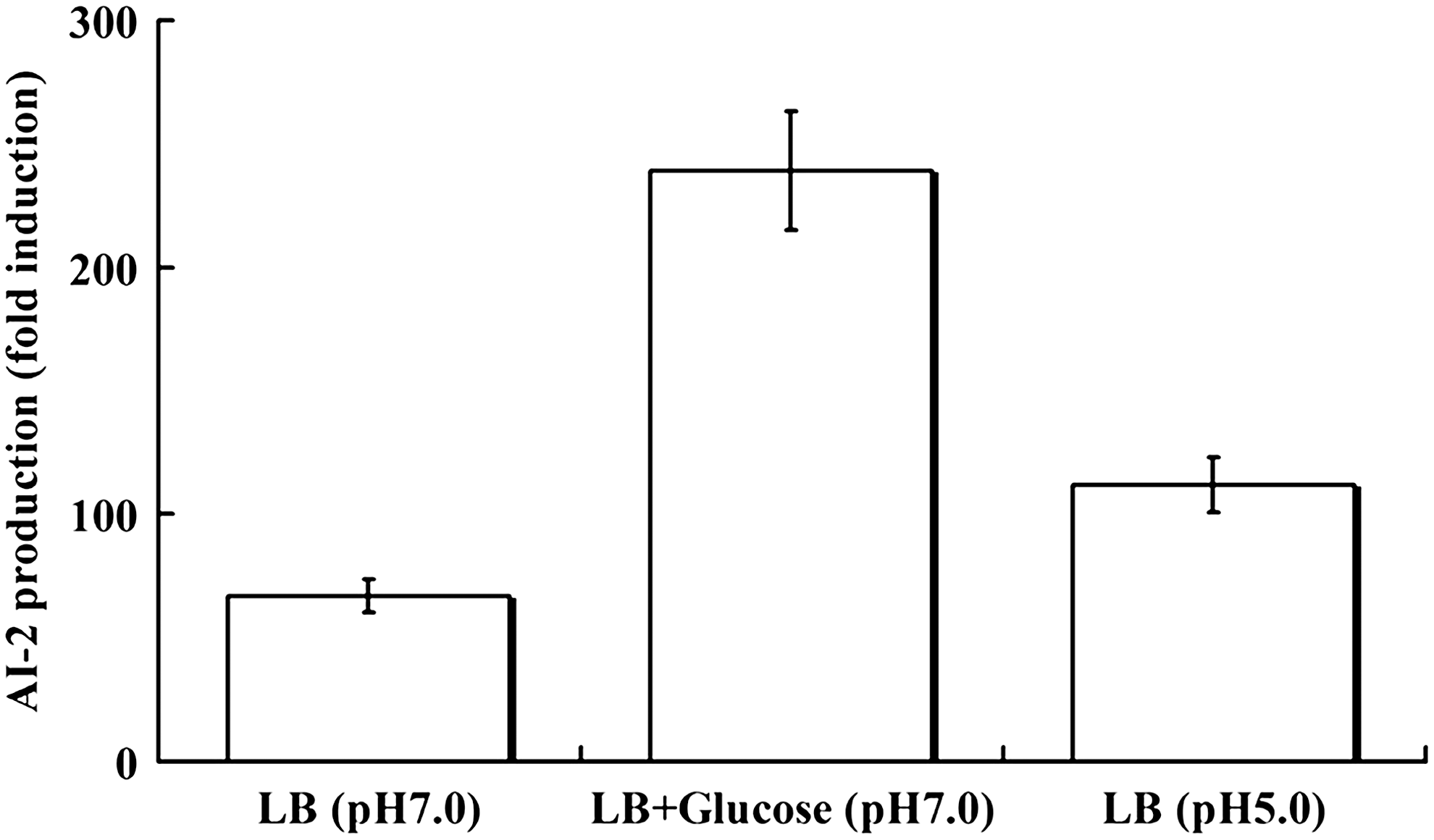
Synergy of glucose and pH value on AI-2 production. K. pneumoniae was grown in LB medium without added glucose (pH 5.0 and 7.0) and with added glucose at concentrations of 10.0 g/L (pH 7.0). Experiments were performed three times.
Analysis of response of QS in K. pneumoniae to glucose by qRT-PCR
According to our previous research, the Type 2 QS system in K. pneumoniae is luxS dependent. Therefore, changes in luxS transcription were analyzed by qRT-PCR when the glucose concentration was changing during growth. RNA from K. pneumoniae was isolated every 4 h during growth in LB medium with or without glucose and then subjected to qRT-PCR. As shown in Figure 4B, the amount of luxS RNA transcripts observed is dependent on the availability of glucose in the growth medium. Further, luxS expression profiles are qualitatively similar. Maximum luxS transcription was detected during the exponential growth phase when the glucose concentration is 30.0 g/L.
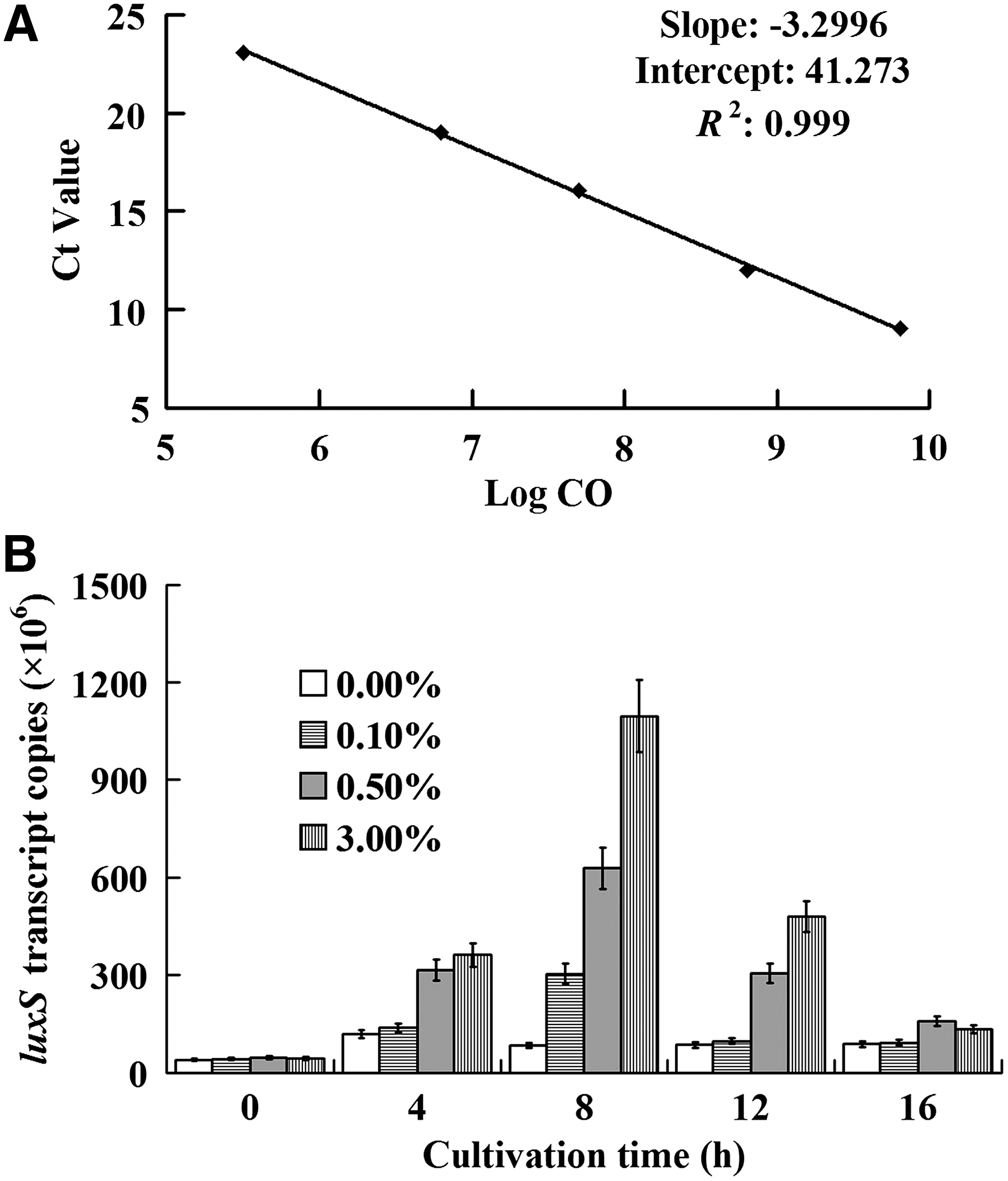
Determination of luxS transcription in K. pneumoniae grown with glucose by qRT-PCR. The experiment was performed in triplicate. Copy numbers were calculated from the equation of the straight line in
Effect of boracic acid on AI-2 production
Production of AI-2 by K. pneumoniae was studied in the presence of various concentrations of boracic acid. As shown in Figure 5, the addition of boracic acid at a microdosage (0.1 g/L) could also induce the synthesis of AI-2. Therefore, according to this result and published reports, we presume that in K. pneumoniae, DPD, which is the core molecule from which all AI-2s are derived, cyclizes by the addition of borate and loss of water, is hydrated, and is converted to the final AI-2 signaling molecule. However, the growth of K. pneumoniae was suppressed by the addition of too much boracic acid, wherein AI-2 activity was lower than that of the negative control.
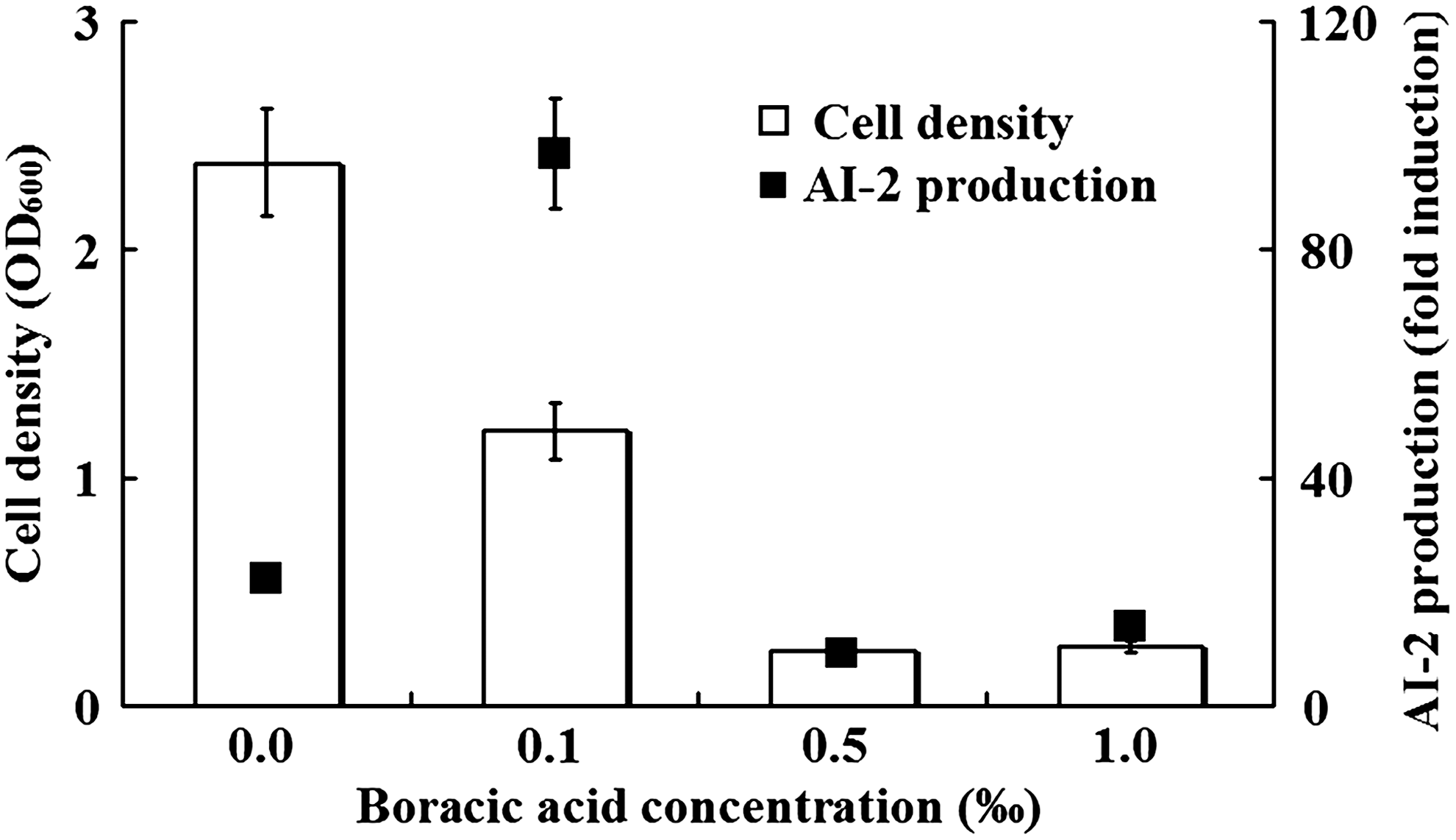
Effect of different concentrations of boric acid on cell growth and AI-2 production by K. pneumoniae. The maximal AI-2 activity is depicted as the fold induction of luminescence by V. harveyi BB170 above the negative control.
Discussion
QS is the regulation of gene expression in response to fluctuations in cell population density. QS bacteria produce and release chemical signaling molecules called autoinducers that increase in concentration as a function of cell density. K. pneumoniae, a Gram-negative anaerobic bacterium, produces a nonhomoserine lactone autoinducer AI-2 during the growth period. AI-2 is a furanosyl borate diester and its formation is catalyzed by LuxS, which converts SRH to DPD. CFS from K. pneumoniae strain GIMT1.102 can induce luminescence in V. harveyi BB170. BB170 can only exhibit bioluminescence in response to AI-2 or an AI-2-like molecule due to deficiency in the luxN-encoded AI-1 sensor. Environmental cues, such as different carbon resources, low pH value, and boracic acid, were found to influence AI-2 production (Figs. 1, 3, and 5). Glucose affects AI-2 synthesis to the greatest extent, and 3.0% glucose can stimulate K. pneumoniae to produce four times more AI-2 activity compared with that of the control culture (Fig. 2). The concentration of signaling molecule decreased gradually, which may be attributed to a fall in pH due to cell metabolism. An extremely low pH value may lead to opening of the five-membered ring when cell density is high.
According to our previous research, the Type II QS system in K. pneumoniae is luxS dependent. Therefore, on the basis of the above experimental results, study on the response of luxS transcription in K. pneumoniae to glucose was carried out using qRT-PCR. Results showed that, in the presence of glucose, intracellular luxS mRNA increased sharply during the exponential growth and decreased abruptly after the late exponential phase (Fig. 4B). The large drop in luxS transcription began before the glucose supply to cells decreased or the growth rate declined. Probably, AI-2 activity in K. pneumoniae acts as a signal for adjusting cell physiology and metabolism in response to environmental conditions. Apart from glucose, the addition of boracic acid at 0.1 g/L could also induce the synthesis of AI-2 (Fig. 5). In many bacteria, DPD, which is the core molecule from which all AI-2s are derived, cyclizes by the addition of borate and loss of water, is hydrated, and then converted to the final AI-2 signaling molecule (Galloway et al., 2011). In conclusion, the present study shows a response of Type 2 QS to environmental changes by transcriptional regulation of luxS.
Footnotes
Acknowledgments
This work was supported by the Research Fund for the Doctoral Program of Higher Education of China (No. 200804251510), Shandong Provincial Natural Science Foundation of China (No. ZR2010CL006), and the Fundamental Research Funds for the Central Universities (No. 27R0904083A).
Disclosure Statement
No competing financial interests exist.