




Abstract
Hepatocellular carcinoma (HCC) is one of the most common human malignancies around the world. The poor prognosis and high recurrence rate of HCC are largely the result of the high frequencies of intrahepatic and extrahepatic metastases. However, the treatment of metastasis is very limited. Ultrasound-targeted microbubble destruction (UTMD) technology has been recognized as a promising technology for drug and gene delivery in vivo and in vitro. Long noncoding RNA activated by transforming growth factor-β (TGF-β; lncRNA-ATB) was recently identified, which was upregulated in HCC metastases and associated with poor prognosis of HCC patients. In this study, we used microbubbles for UTMD-mediated siRNA transfection to silence lncRNA-ATB expression. We found that UTMD-mediated siRNA transfection significantly inhibited lncRNA-ATB expression and ZEB1 and ZEB2 expression and suppressed cell migration and invasion. We also demonstrated that transfecting siRNA against lncRNA-ATB by using UTMD was more efficient than that by using lipidosome. UTMD-mediated siRNA transfection against lncRNA-ATB may be a promising therapy for HCC metastasis.
Introduction
H
Ultrasound-targeted microbubble destruction (UTMD) technology has been recognized as a promising technology for drug and gene delivery in vivo and in vitro (Chen et al., 2013a, 2013b; Liao et al., 2014). UTMB open transient pores in cell membranes promote cell membrane permeabilization and generate microstreams that significantly increase the gene transfection efficiency (Xie et al., 2010; Suzuki et al., 2011; Chang et al., 2015). UTMD has been reported to be an efficient tool for siRNA delivery (Florinas et al., 2014; Shi et al., 2014). Therefore, UTMD delivering siRNA will be a promising therapy.
Long noncoding RNA activated by transforming growth factor-β (TGF-β; lncRNA-ATB) was recently identified, which was upregulated in HCC metastases and associated with poor prognosis of HCC patients. lncRNA-ATB upregulated ZEB1 and ZEB2 by competitively binding the miR-200 family and then induced epithelial–mesenchymal transition and invasion (Yuan et al., 2014). It provides a novel target for antimetastatic therapies. In this study, we evaluated the effect of UTMD-mediated delivery of siRNA against lncRNA-ATB (siATB) in HCC cells. Our results demonstrated that UTMD enhances the siATB silence efficiency in HCC cells and markedly suppresses HCC cell migration and invasion. To the best of our knowledge, it is the first report to use UTMD to deliver siRNA against lncRNA to HCC cells.
Materials and Methods
Cell cultures
SMMC-7721 and MHCC-97h cells were obtained from Cell Bank of Chinese Academy of Sciences cultured at 37°C in an atmosphere containing 5% CO2 and in RPMI-1640 medium (Hyclone) supplemented with 10% fetal bovine serum.
RNA extraction and real-time PCR
Total RNA was isolated using Trizol reagent (Invitrogen) according to its manual. First-strand cDNA was generated by using the One-Step Easy Reverse Transcriptase (Takara). Real-time PCR was performed in the Step-One Plus Real-Time PCR System (Applied Biosystems) using SYBR Green (Thermo). The gene-specific primers were shown as follows: LncRNA-ATB-F: TCTGGCTGAGGCTGGTTGAC, LncRNA-ATB-R: ATCTCTGGGTGCTGGTGAAGG; ZEB1-F: CCCAGGACAGCACAGTAAAT, ZEB1-R: GATGGTGTACTACTTCTGGAACC; ZEB2-F: CGCCACGAGAAGAATGAAGA, ZEB2-R: GATTACCTGCTCCTTGGGTTAG; GAPDH-F: GGTGTGAACCATGAGAAGTATGA, GPDH-R: GAGTCCTTCCACGATACCAAAG. GAPDH was employed as an endogenous control. The relative expression of RNA was calculated using the comparative Ct method.
UTMD exposure
A therapeutic ultrasound machine (PHYSIOSON Basic) was used to generate ultrasound at the frequency of 1 MHz. The microbubbles were added to the adherent cell culture and incubated up-side-down. The ultrasound transducer was placed at the bottom of dishes with coupling medium on the surface of the transducer. Microbubbles (SonoVue) were lipid-shelled ultrasound contrast agents containing sulfur hexafluoride gas (diameter 3–6.0 μm) and used at a concentration of 1 × 10⁸ bubbles/mL. UTMD parameters were as follows: ultrasound intensity, 0.8 W/cm2; exposure time, 70 s; pulse frequency, 100 Hz; duty cycle, 20%; volumetric ratio of microbubbles:medium, 1:6.
siRNA transfection
siRNA against lncRNA-ATB (siATB) was purchased from Riborio Company. Target sequence for lncRNA-ATB is as follows: TCCCTGACTCCTCTATGGCAT. A total of 100 nM siRNAs were transfected to cells by using Hiperfect (Qiagen). The siRNAs were added to the adherent cell culture and incubated up-side-down. All experiments were performed 48 h after transfection.
Transwell assay
The transwell assays (Corning) were performed as previously described (Tong et al., 2012). In brief, 1 × 10⁵ cells were seeded in the upper chamber of transwell and incubated for 24 h. The cells migrating to the lower chamber were stained.
Statistical analysis
All statistical analyses were performed using the SPSS 19.0 software. All data were represented as mean ± standard deviation and analyzed by Student's t-test (two-tailed). p Value less than 0.05 was considered significant.
Results
Decrease of lncRNA-ATB expression by UTMD-mediated siATB transfection
UTMD-mediated lncRNA-ATB knockdown was tested by real-time PCR in SMMC-7721 and MHCC-97h cells. As shown in Figure 1, the expression of lncRNA-ATB was decreased by using siRNA against lncRNA-ATB, and siATB+UTMD group showed more effective knockdown than siATB group. The results indicated that UTMD-mediated delivery of siATB significantly inhibited the expression of lncRNA-ATB in HCC cells and was more effective than using siATB alone.
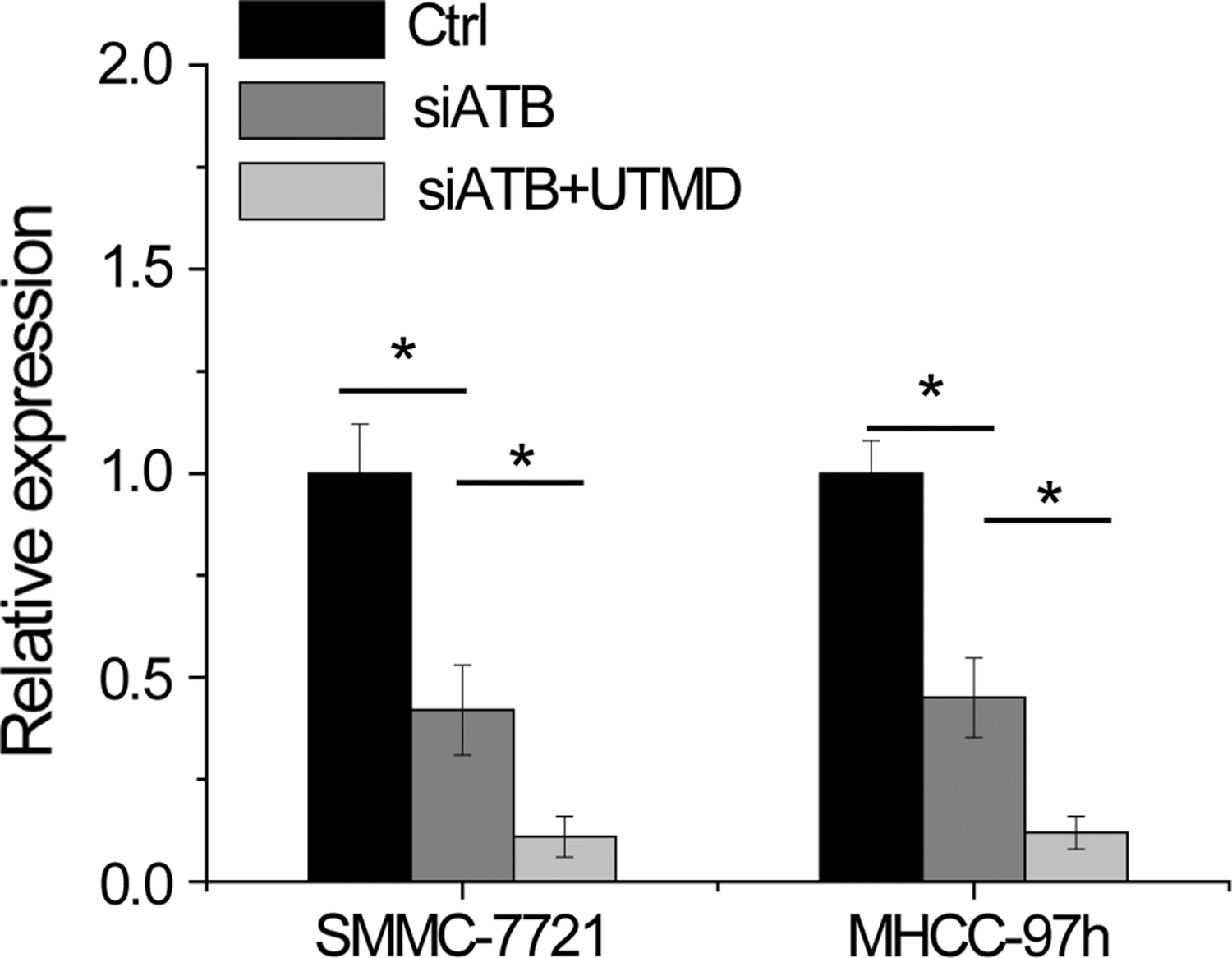
Decrease of lncRNA-ATB expression by UTMD-mediated siATB transfection. Relative expression of lncRNA-ATB was detected by qRT-PCR in SMMC-7721 and MHCC-97h cell treated with siRNA against lncRNA-ATB (siATB) or UTMD-mediated siRNA against lncRNA-ATB (siATB+UTMD) transfection. Data are shown as mean ± SD. *p < 0.05. qRT-PCR, quantified real-time PCR; SD, standard deviation; UTMD, ultrasound-targeted microbubble destruction.
Suppression of ZEB1 and ZEB2 expression induced by UTMD-mediated siATB transfection
We next detected the ZEB1 and ZEB2 expression, which is regulated by lncRNA-ATB (Yuan et al., 2014). Both mRNA and protein levels of ZEB1 and ZEB2 were suppressed by siATB in both SMMC-7721 and MHCC-97h (Fig. 2A–C). Compared with siATB group, siATB+UTMD group has lower levels of ZEB1 and ZEB2. The results indicated that UTMD-mediated delivery of siATB significantly inhibited the expression of ZEB1 and ZEB2, which were the main target genes of lncRNA-ATB in HCC cells.
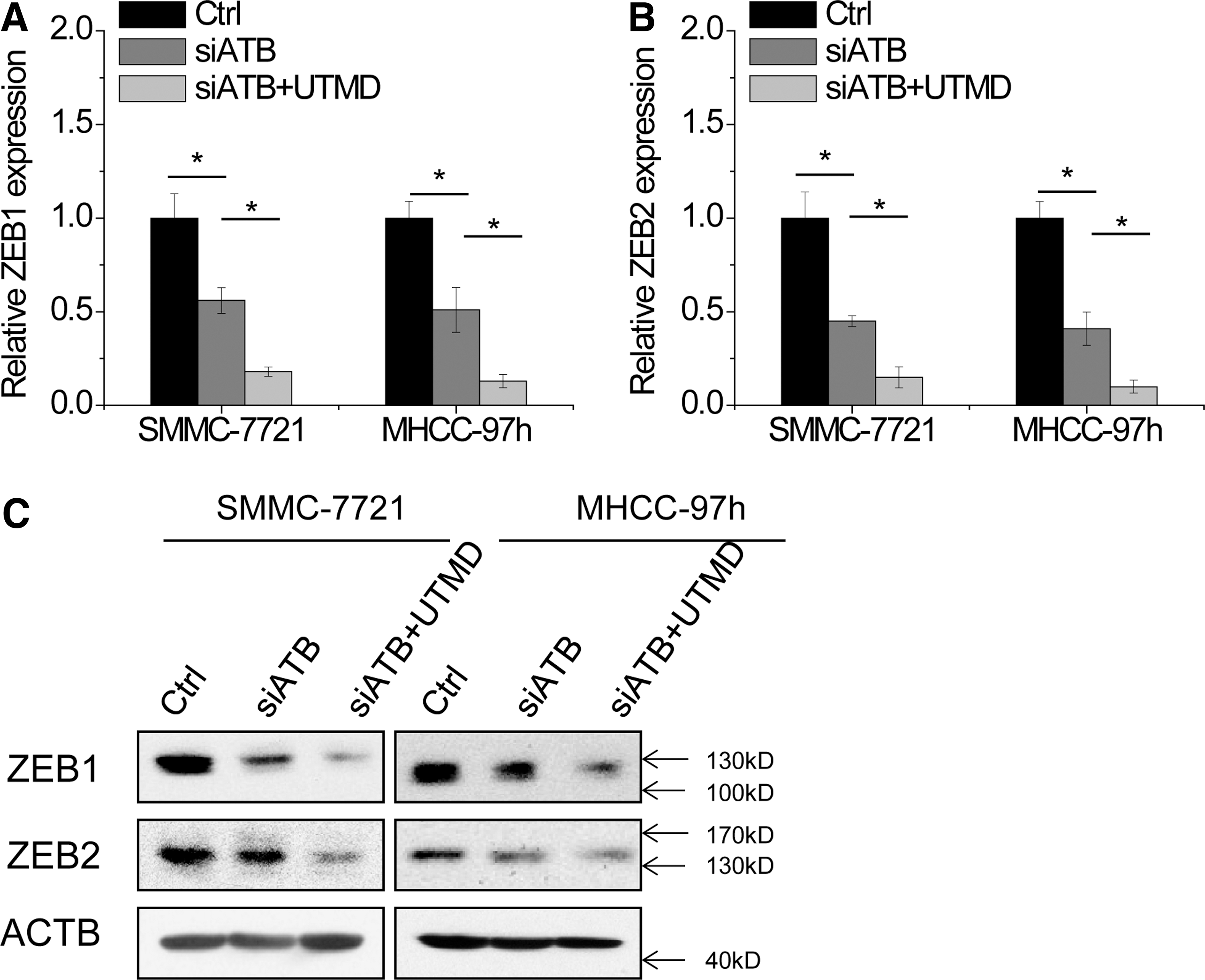
Suppression of ZEB1 and ZEB2 expression induced by UTMD-mediated siATB transfection.
UTMD-mediated siATB transfection inhibits cell migration and invasion
Finally, we performed transwell assays to assess the cell migration and invasion change induced by siATB alone or UTMD-mediated delivery of the siATB. We found that the cell migration and invasion were significantly reduced after siATB transfection in SMMC-7721 and MHCC-97h cells (Fig. 3A, B). In comparison with siATB group, siATB+UTMD group results in marked suppression of migration and invasion. Those results indicated that UTMD-mediated delivery of siATB significantly inhibited the migration and invasion of HCC cells and had better suppressive effect than using siATB.
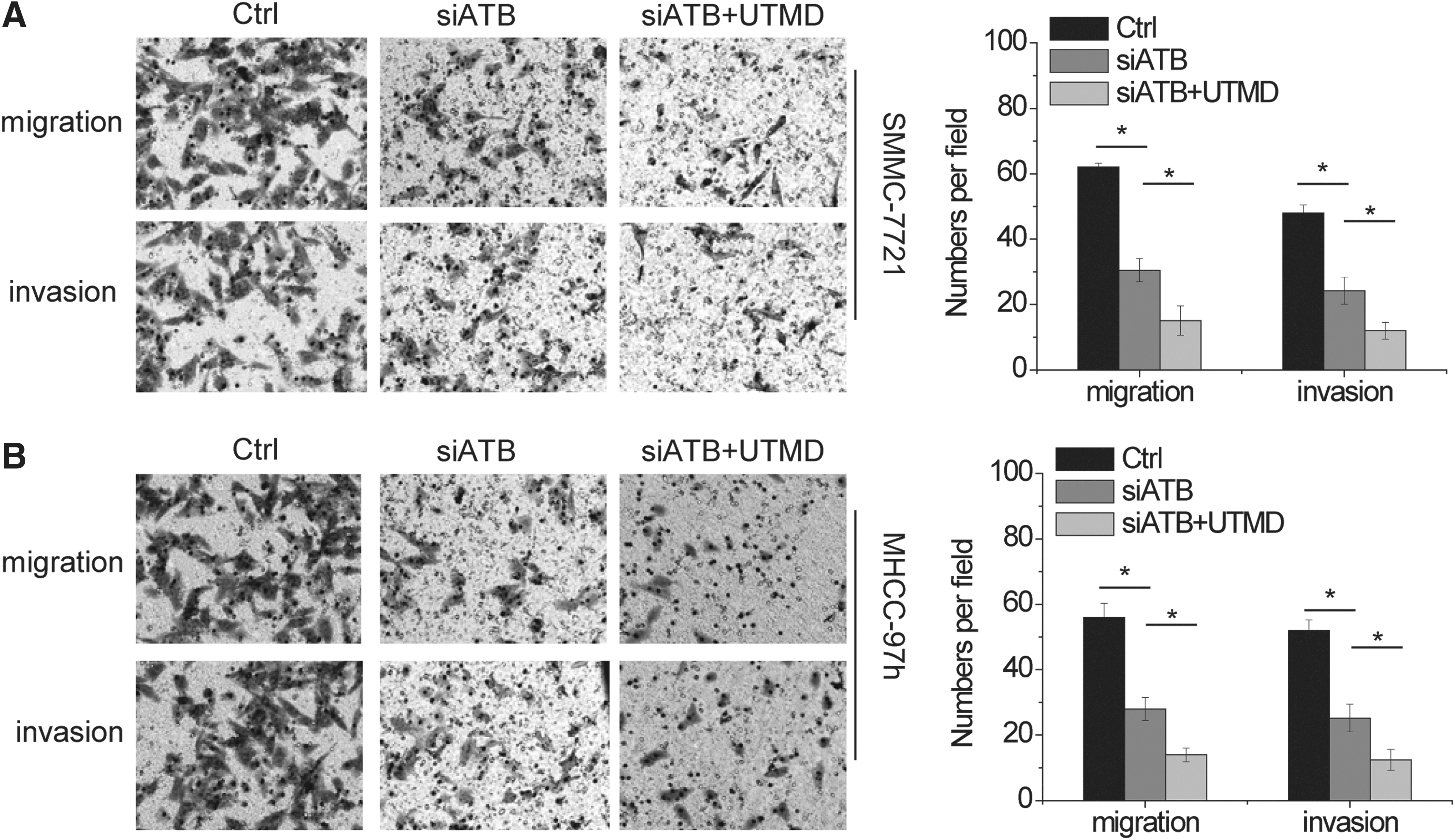
UTMD-mediated siATB transfection inhibits cell migration and invasion.
Discussion
RNAi technique is a promising approach for cancer therapy because of its low off-target effect (Wang et al., 2014). To generate therapeutic effects by siRNA, siRNA needs to be delivered through the cell membrane, leading to knockdown of specific gene and protein expression. Clinical applications of siRNA largely depend on delivery technology. However, efficient delivery of siRNA into tumor cells remains a critical obstacle. Even though the viral vectors have high gene silence efficiency through integrating to genome, potential risk interference response is the major problem (Schambach et al., 2013). Nonviral delivery systems suffer from low silence efficiency (Jafari et al., 2012). Therefore, a targeted and high-efficiency siRNA delivery system is helpful for development of cancer therapy.
UTMD has recently been used for siRNA or shRNA delivery both in vitro and in vivo (Wang et al., 2014; Park et al., 2015; Zhang et al., 2015). UTMD is able to stimulate sonoporation and change in the permeability of the cell membrane, which makes the delivery of siRNA or DNA into cells more efficient (Yin et al., 2013). In contrast, combination of UTMD with siRNA leads to enriching in the tumor sites and avoids its distribution to irrelevant normal tissues, which likely reduces the dose required for antitumor activity. In this study, we used microbubbles for UTMD-mediated lncRNA-ATB silence to suppress HCC cells migration and invasion. UTMD promotes the efficient delivery of siRNA. We demonstrated that transfecting siRNA against lncRNA-ATB by using UTMD was significantly more efficient than by using Hyperfect transfection reagent, which is a kind of lipidosome. lncRNA-ATB acts as a key regulator of TGF-β signaling pathways. As direct targets of lncRNA-ATB, miR-200-ZEB and IL-11 mediated the role of lncRNA-ATB in local invasion and distant colonization (Yuan et al., 2014), suggesting that lncRNA-ATB could be a promising target for antimetastasis therapies. For this reason, we chose lncRNA-ATB as the target of UTMD-mediated oncogene silence. To the best of our knowledge, to date, it is the first report that targeting lncRNA mediated by UTMD significantly suppresses HCC cell migration and invasion. It is possible that the combination of UTMD with siRNA targeting other key HCC-related lncRNA may be developed as a potential therapeutic approach.
In conclusion, our study showed the efficacy and therapeutic potential of combination of UTMD with lncRNA-ATB siRNA for the suppression of HCC migration and invasion in vitro. Our work supports the potential role for lncRNA-ATB as a biomarker for inhibiting metastasis in HCC. Further in vivo studies will be performed to elucidate the outcome of the UTMD-mediated lncRNA-ATB silence.
Footnotes
Acknowledgment
This study was supported by the grant of Science and Technology Agency of Liaoning Province (No. 2014022013).
Disclosure Statement
No competing financial interests exist.