




Abstract
Temozolomide (TMZ) is a standard agent used in the treatment of various types of cancers, including lung carcinoma, but TMZ resistance is common and accounts for many treatment failures. We investigated miRNA-487b-5p (miR-487b-5p) was highly expressed in A549 and H1299 cells which acquired TMZ resistance. Suppression of miR-487b-5p had overt effects on cellular proliferation and migration in the presence of TMZ. On the other hand, knockdown of miR-487b-5p resulted in increased survival and moderate tumor growth in vivo. In addition, the decreased cellular proliferation following miR-487b-5p suppression was linked to enhanced autophagy, evident by drastically increased levels of LC3-II, BECLIN1, and LAMP2 when miR-487b-5p was knocked down. Further analysis revealed that LAMP2 might be the target gene of miR-487b-5p. In conclusion, our study suggested that miR-487b-5p may be a potential biomarker of acquired TMZ resistance in lung cancer cells, and miR-487b-5p inhibition can be further explored as a chemotherapy target in the treatment of TMZ-resistant lung carcinoma.
Introduction
L
Autophagy is believed to have a critical role in tumor development, and decreased levels of autophagy were shown to be a closely linked to carcinogenesis (Otsuka and Moskowitz, 1978; Schwarze and Seglen, 1985). Other studies also demonstrated that autophagic degradation in cancer cells was less than in their normal counterparts (Gunn et al., 1977; Kisen et al., 1993; Kirkegaard et al., 2004). According to these characteristics, anticancer treatments, including TMZ and γ-irradiation, are wildly used to induce autophagy in malignant glioma, breast cancer, prostate cancer, and colon cancer (Paglin et al., 2001; Kanzawa et al., 2004; Ito et al., 2005). However, the above therapies are sometimes ineffective, and the autophagy is difficult to induce when the cancer cells become resistant to TMZ. Thus, it is important to identify the key factors influencing the induction of autophagy in TMZ-resistant (TMZ-R) cancer cells.
MicroRNAs (miRNAs), a class of nonprotein-coding RNA highly conserved across species, are transcripts about 19–25 nucleotides in length and participate in the endogenous regulation of gene expressions through binding to their target mRNAs (Smalheiser et al., 2011). Alterations in miRNA expressions are reported in various kinds of human cancers, such as chronic lymphocytic leukemia, prostate cancer, and pituitary adenoma (Calin et al., 2002; Bottoni et al., 2005; Bonci et al., 2008), where miRNAs function both as tumor suppressors and oncogenes in cancer development (Nicoloso et al., 2009; Moore and Zhang, 2010). Among all the oncogenic miRNAs, few were found to be consistently overexpressed in lung cancer cells. In this study, we investigated the effects of miR-487b-5p inhibition on TMZ-R lung cancer cells. Our hypothesis was that miR-487b-5p inhibition would resensitize chemoresistant lung cancer cells to TMZ.
Material and Methods
Establishment of TMZ-R cells
A549 and H1299 lung cancer cell lines were plated on 96-well plates (3 × 10³ cells/well) and treated with 1000 μM TMZ (with fresh medium). The cells were analyzed for cell proliferation and migration after 3 weeks after the treatment. A549 and H1299 lung cancer cell lines remained permanently cultured in the presence of 1000 μM TMZ for the experiments performed in this study.
Establishment of miRNA-487b-5p-off cells
Cell lines (1 × 10³ cells in 15-cm plates) were transfected with control nontarget miRNA, miRNA-487b-5p oligonucleotide (Qiagen), at a final concentration of 10 nM using the lipofectamine 2000 (Invitrogen) as per the manufacturer's guidelines. The relative test was performed 24 h after the last transfection.
Cell proliferation assay
Cells were seeded into 96-well plates at 3 × 10³ cells/well and transfected with either control or miR-487b-5p target sequences. Then the cells were detected at five time points (day 1, 3, 5, and 7) by the CCK-8 kit. The absorbance of the plate was measured in a microplate reader at a wavelength of 450 nm. Each group was carried out in triplicate.
Cell migration assays
Cell migration assays were performed by the Cell Migration Assay Kit (Cell Biolabs) according to manufacturer's instructions. For Figure 2, TMZ-R or nonresistant cells (normal cells) were transfected with control or miR-487b-5p target sequences and the cell migration assay was performed 24 h after the transfection. For Figure 5, TMZ-R cells were transfected with control or LAMP2 plasmids (Addgene #71292) and the cell migration assay was performed 24 h after the transfection.
miRNA isolation
Cells were washed in phosphate-buffered saline, and then miRNA was isolated using the mirVana™ miRNA Isolation Kit (AM1560). To isolate RNA that is highly enriched for small RNA species, 100% ethanol was added to bring the samples to 25% ethanol. When this lysate/ethanol mixture was passed through a glass fiber filter, large RNAs were immobilized, and the small RNA species were collected in the filtrate. The ethanol concentration of the filtrate was then increased to 55% and passed through a second glass fiber filter where the small RNAs became immobilized. This RNA was washed a few times, and eluted in a low ionic strength solution.
miRNA expression profiling
The OpenArray reverse transcription reaction was performed according to the manufacturer's protocol using 3 μL of total RNA in a 4.5 μL mix of 0.75 μL Megaplex RT primer pools from Applied Biosystem, 1.5 Mm dNTPs with dTTPs, 75 U Multiscribe Reverse Transcriptase, 1× RT Buffer, 1.5 μM MgCl2, and 1.8 U RNAase inhibitor (Applied Biosystems). Reverse transcription reaction was performed in an Applied Biosystems thermal cycler. PreAmp product was first diluted with 0.1× TE to a ratio of 1:40 and 22.5 μL of diluted PreAmp product were then added to the same volume of 2× TaqMan OpenArray Real-time PCR Master Mix (Applied Biosystems) in the 384-well OpenArray sample loading plate. The manufacturer's protocol was followed and the OpenArray panels were automatically loaded by the OpenArray AccuFill System. Each panel enables the quantification of miRNA expression in three samples and up to four panels can be cycled simultaneously, allowing for the analysis of 12 samples on a QuantStudio12K Flex Real-Time PCR system. MiRNAs were amplified in each sample together with 16 replicates, each of four internal controls.
Cell transfection
TMZ-R-A549 and TMZ-R-H1299 cells were transfected with 3 μg of the LAMP2 or control plasmid DNA and different vectors using Lipofectamine 2000 reagent (Invitrogen).
Western blot analysis
To examine the effects of miR-487b-5p on autophagy, the expression of LC3-II, LC3-I, BECLIN1, p62, LAMP2, and GAPDH were tested. Total cell lysates were prepared after transfection for the experiments. Antibodies used were rabbit polyclonal antibodies against LC3-II, LC3-I, BECLIN1, p62, LAMP2, and GAPDH. All antibodies were purchased from Abcam. Blots were incubated with the indicated antibodies and 1:10,000 horseradish peroxidase-conjugated goat antimouse or antirabbit secondary antibodies. All the primary antibodies were used at the final concentration of 1 mg/mL. Blots were then visualized with a chemiluminescent detection system as described by the manufacturer.
Statistical analysis
Data were expressed as mean ± standard error. Differences in cell proliferation, migration, and the levels of miRNA under study were analyzed by the one-way ANOVA followed by a post hoc test. Statistical significance was determined with the two-tailed unpaired Student's t-test. Differences were considered to be statistically significant when p < 0.05. *p < 0.05, **p < 0.005.
Results
miRNA-487b-5p was highly expressed in TMZ-R lung cancer cells
To identify miRNAs involved in the acquisition of TMZ resistance in lung cancer cells, we first established TMZ-R cells from two lung cancer cell lines, A549 and H1299, by exposing them to 1000 μM TMZ for 3 weeks. The majority of the cells died, but a small population survived and propagated. We then selected the surviving colonies and established A549 and H1299 TMZ-R cells. Compared to nonresistant normal cells, the cell proliferation rates were dramatically increased in both TMZ-R cells (Fig. 1A). Consistently, migration rates of TMZ-R cells were also significantly faster than nonresistant normal cells (Fig. 1B). These results suggested that the cells acquired TMZ resistance and displayed more malignancy.
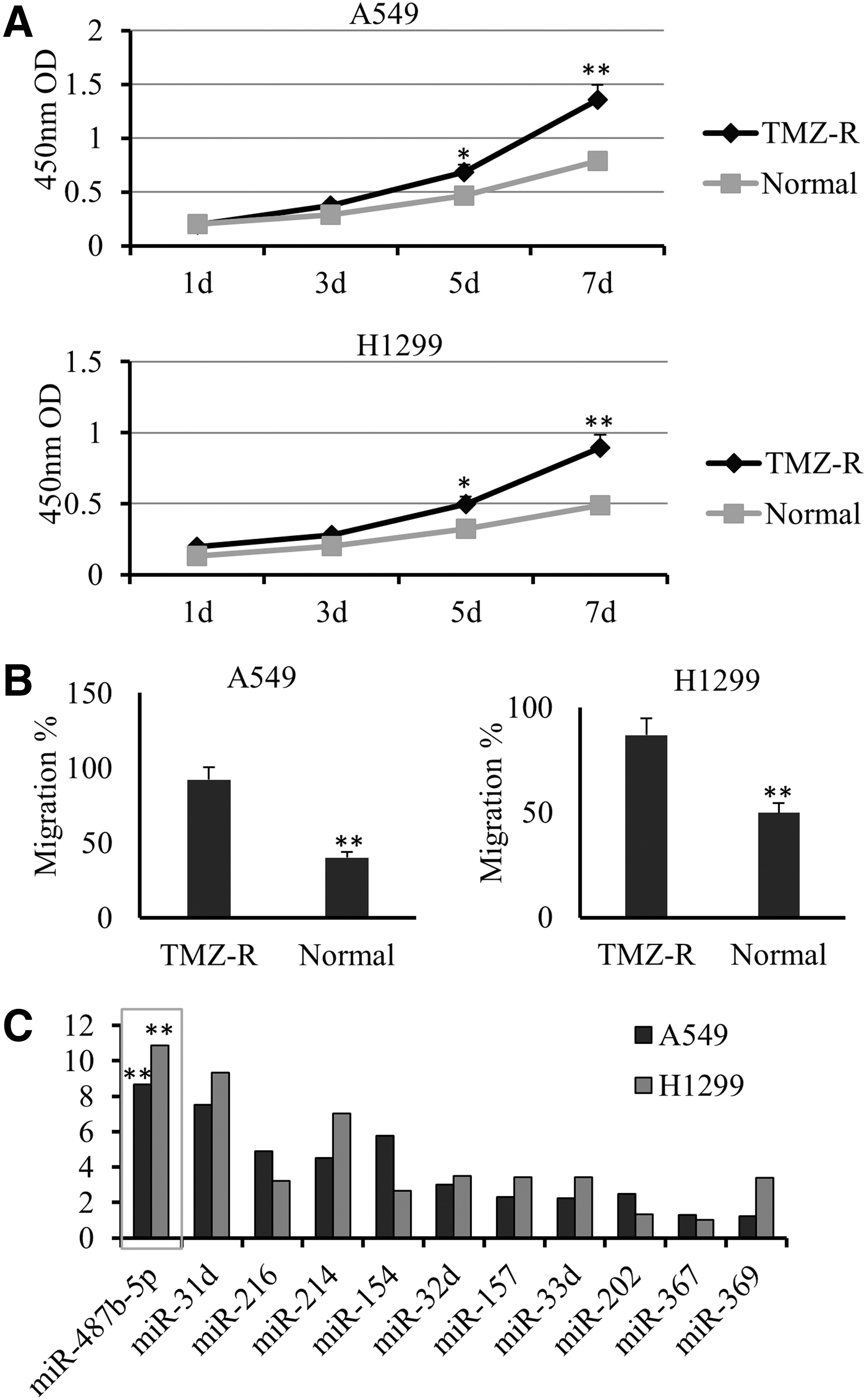
miR-487b-5p is upregulated in TMZ-resistant A549 and H1299 cells.
We next examined the miRNA expression profiles in A549 and H1299 cells, and identified 11 miRNAs that were highly expressed in TMZ-R cells. To validate the expressions of these candidate miRNAs, we utilized real-time RT-PCR assay for the 11 upregulated miRNAs. Among these selected miRNAs, miR-487b-5p was found to be one of the most abundantly expressed miRNAs in TMZ-R cells (Fig. 1C), suggesting that upregulation of miR-487b-5p might be involved in the acquisition of TMZ resistance in lung cancer cell lines A549 and H1299.
Knock down of miRNA-487b-5p inhibited cell proliferation and migration
To investigate the effects of miRNA-487b-5p in the resistance to TMZ, expression of miRNA-487b-5p was knocked down in A549 and H1299 cell lines. RT-PCR results showed that miRNA-487b-5p was effectively downregulated in both A549 and H1299 cell lines (Fig. 2A), with the relative levels of miR-487b-5p shown in Supplementary Figure S1 (Supplementary Data are available online at
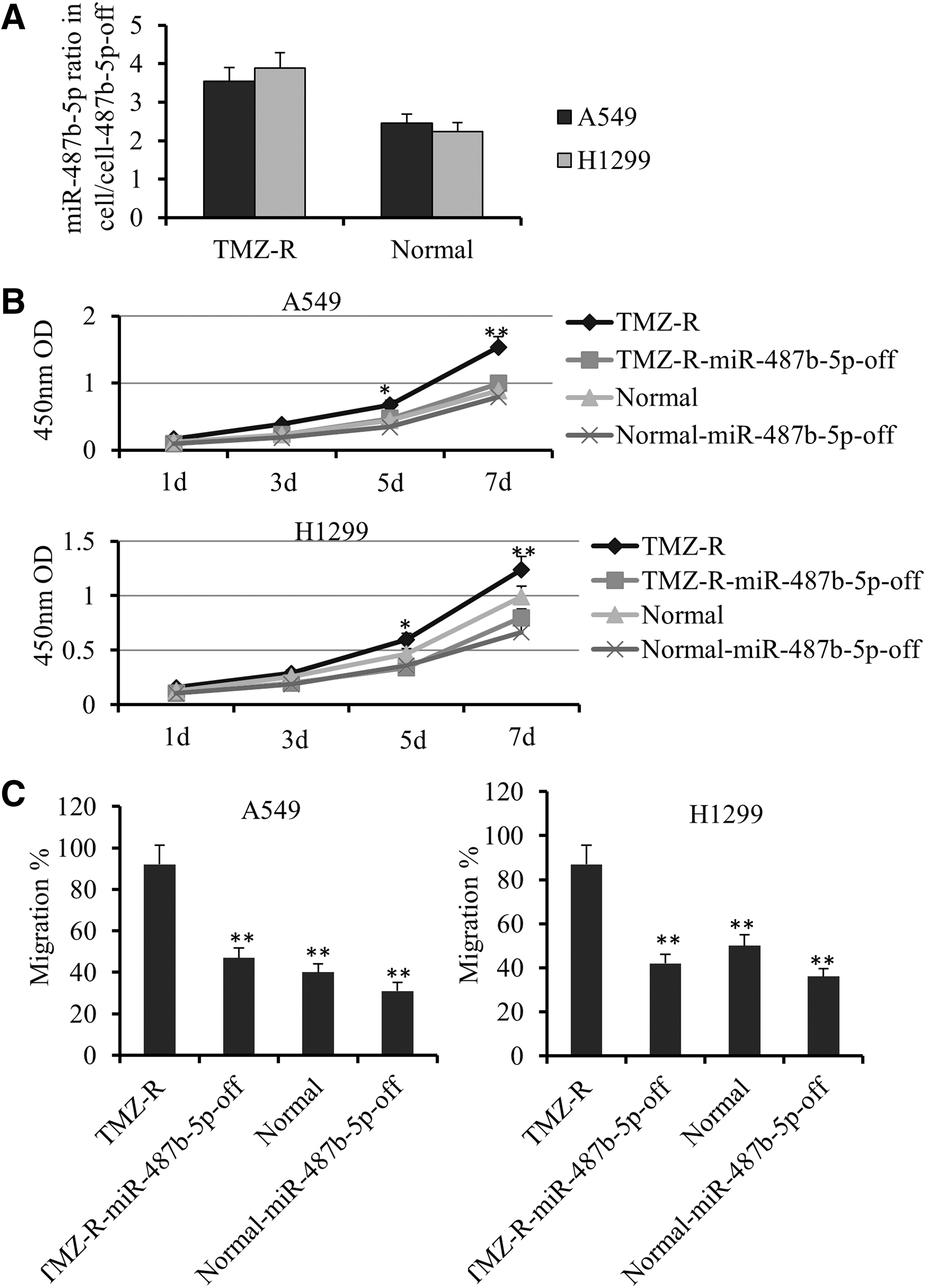
miR-487b-5p downregulation reduces proliferation and migration of A549 and H1299 cells to TMZ resistance.
Knockdown of miRNA-487b-5p elevated autophagy levels in TMZ-R cells
Autophagy, or cellular self-digestion, is a pathway crucial for the differentiation, survival, and homeostasis of cells. Recent data showed that autophagy is involved in many human diseases, including cancer (Zhou et al., 2015). Therefore, we tested whether miR-487b-5p might promote tumor growth through regulating TMZ-R cell autophagy. In this notion, we examined the expression levels of autophagic marker proteins, including LC3-II, BECLIN1, p62, and LAMP2, by Western blotting. The results showed that the protein levels of LC3-II, BECLIN1, and LAMP2 were overtly increased upon knockdown of miR-487b-5p in both A549-TMZ-R and H1299-TMZ-R cells (Fig. 3A). The immunostaining results also confirmed that the expressions of LC3-II and LAMP2 were increased in miR-487b-5p-off cells (Supplementary Fig. S4). Simultaneously, the expression of p62 was downregulated after miR-487b-5p knockdown (Fig. 3A), suggesting that miR-487b-5p inhibited autophagy in TMZ-R cells. Changes in the mRNA levels of LC3-II, BECLIN1, p62, and LAMP2 further confirmed the role of miR-487b-5p in regulating autophagy. RT-PCR results showed that the relative mRNA levels of LC3-II, BECLIN1, and LAMP2 were significantly increased in TMZ-R-miR-487b-5p-off cells, whereas the mRNA level of p62 displayed an opposite trend (Fig. 3B–E). The above results clearly demonstrated that miR-487b-5p exerted its tumor-promoting functions by inhibiting TMZ-R cell autophagy.

Downregulated miR-487b-5p expression exhibit heightened level of autophagy in TMZ-resistant A549 and H1299 cells with in vitro.
Knockdown of miRNA-487b-5p inhibited tumor growth in vivo
The observations that the knockdown of miR-487b-5p significantly decreased the TMZ-R cell proliferation and migration suggested a positive regulatory role of miR-487b-5p in lung cancer cells. To further analyze the effect of miR-487b-5p on lung tumor growth in vivo, we injected mice with TMZ-R or TMZ-R-miR-487b-5p-off cells and examined their survival rates. A significantly higher survival rate was observed in the mice injected with TMZ-R-miR-487b-5p-off cells than those injected with TMZ-R or normal lung cancer cells (Fig. 4A). For all injected mice, tissues were collected to examine the expressions of autophagic marker proteins. The results showed that relative expressions of LC3-II, BECLIN1, and LAMP2 were greatly enhanced in the tissues of mice injected with TMZ-R-miR-487b-5p-off cells (Fig. 4B, C, and E). Simultaneously, the mRNA level of p62 was reduced in the miR-487b-5p-off group (Fig. 4D), consistent with our earlier results in vitro. Furthermore, compared with normal A549 and H1299 cell injection, mice injected with TMZ-R-miR-487b-5p-off cells generated significantly smaller tumors in size, and the invasive capacity of the tumors was also dramatically decreased (Fig. 4F). Taken together the significantly enhanced cell autophagy, increased survival rate, and decreased tumor size upon miR-487b-5p downregulation, miR-487b-5p is very likely to play a role in promoting TMZ-R lung cancer cell growth through blocking cell autophagy in vivo.
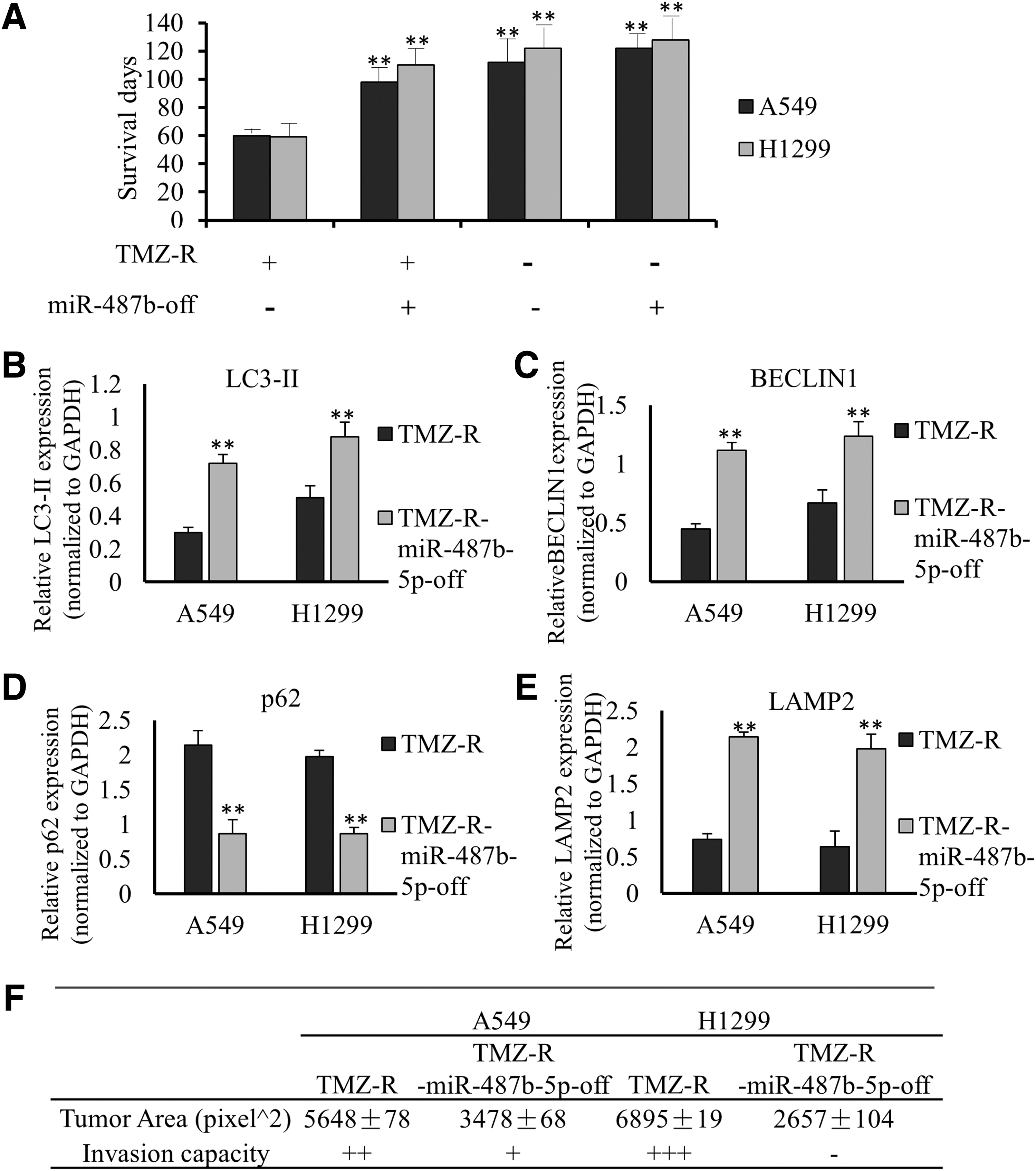
TMZ-resistant lung cancer animal model exhibits reduction of tumor growth and increased autophagy level with downregulated miR-487b-5p expression in vivo.
miR-487b-5p regulated the TMZ-R cell proliferation and migration by targeting LAMP2
To gain an insight into the underlying mechanisms of miR-487b-5p in regulating the tumor cell proliferation and migration, we used the miRanda algorithm (Enright et al., 2003) based
To determine whether LAMP2 was targeted by miR-487b-5p in TMZ-R cells, the A549-TMZ-R and H1299-TMZ-R cells were transfected with a plasmid overexpressing LAMP2 by more than 50% (Fig. 5A), and the empty vector did not affect the expression of LAMP2 or cell migration (Supplementary Fig. S5). As a result, overexpression of LAMP2 considerably reduced both the proliferation and migration of TMZ-R cells (Fig. 5B, C). Our data therefore suggested that LAMP2 might mediate the tumor-activating function of miR-487b-5p in TMZ-R cells.
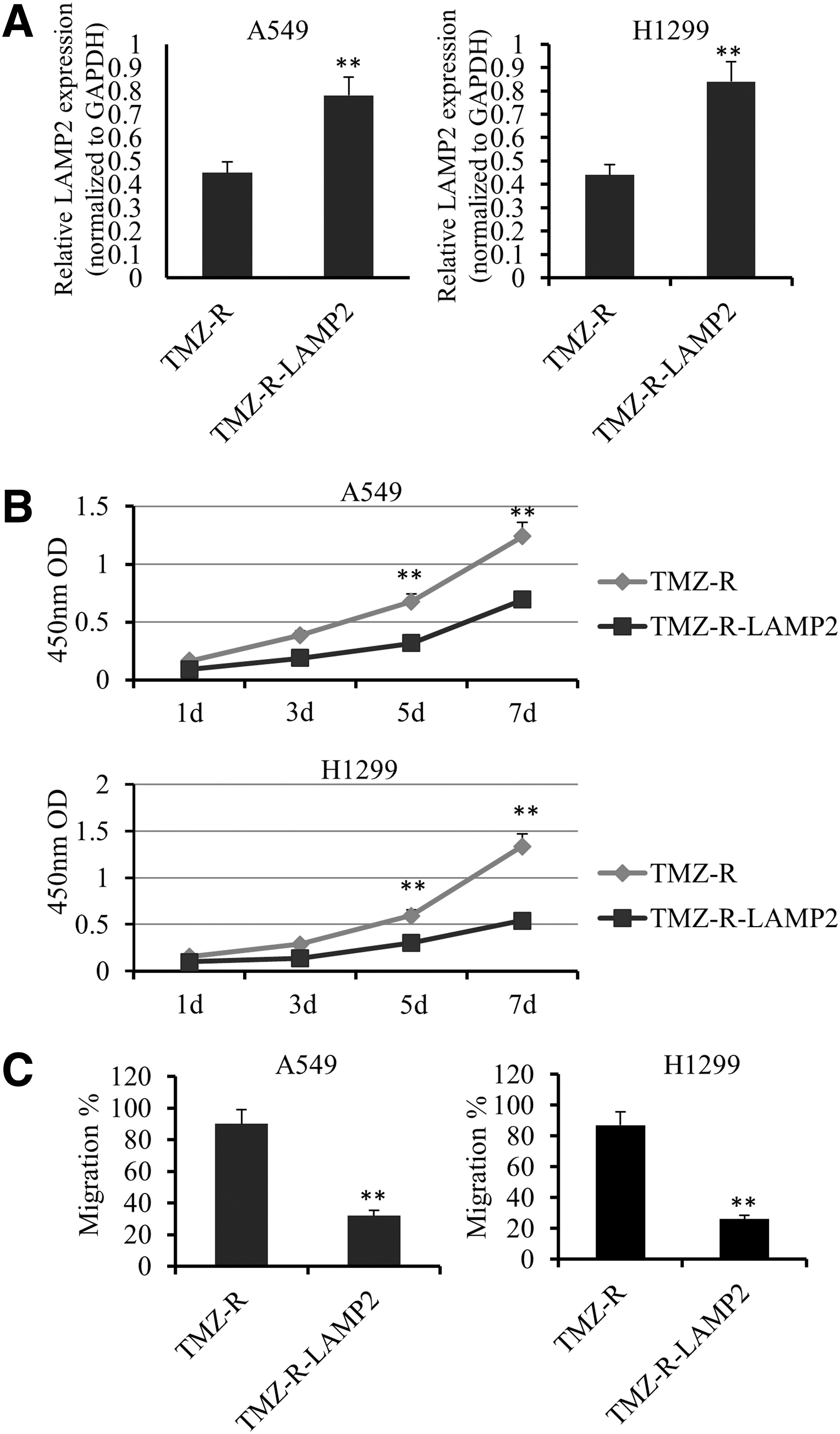
LAMP2 is a direct target gene of miR-487b-5p.
Discussion
Lung cancer remains the leading cause of cancer death worldwide, even though several chemotherapy and molecular therapies are used to induce cancer cell autophagy or apoptosis (Walton et al., 2013), mainly because tumors frequently develop resistance during treatment (Zhang et al., 2006). TMZ, an alkylating agent in monotherapy, has been employed as a common treatment in patients with lung carcinoma. Although TMZ is currently the most promising chemotherapy for lung carcinoma, it is still often ineffective due to the intrinsic or acquired chemoresistance in lung cancer cells. In this study, we found that inhibition of miR-487b-5p could dramatically decrease TMZ-R lung cancer cell proliferation and migration, suggesting miR-487b-5p as a potential target for TMZ-resistant lung carcinoma therapy.
TMZ was previously found to initiate autophagy in lung cancer cells (Gomez-Gutierrez et al., 2016). There have been studies suggesting that combination of oncolytic adenovirus with TMZ increases autophagy. For examples, Jorge et al. previously reported that TMZ enhanced virotherapy by increasing virus replication in lung cancer cells, but not in noncancerous lung cells (Gomez-Gutierrez et al., 2016). Rodriguez et al. suggested that autophagy may play a critical role in enhancing lung cancer cell death by using combined therapies (Rodriguez-Rocha et al., 2011). TMZ-induced autophagy may also have a cytoprotective role because TMZ was found to promote autophagy through the accumulation of reactive oxygen species, leading to damages in the mitochondria (Lin et al., 2012). However, the precise mechanism by which TMZ enhances autophagy in lung cancer cells is not completely understood. In this study, we investigated the potential involvement of miR-487b-5p in influencing autophagy in lung cancer cells. The results showed that the knockdown of miR-487b-5p in TMZ-R lung cancer cells resulted in an increased level of autophagy, prompting us to speculate that the reason TMZ failed to induce autophagy in TMZ-R lung cancer cells may be attributed to the upregulated expression of miR-487b-5p in these cells.
Pioneering work has yielded insightful discoveries into the relationship between the function of miRNAs and cancers, where miRNAs could function both as tumor suppressors and oncogenes. Dysregulated miRNAs have been reported in various tumors, including lung cancer. For example, Johnson and colleagues recently revealed that the let-7 miRNA family was expressed in normal human lung tissue, (Johnson et al., 2005) but was poorly expressed in lung cancer cells and tissues (Takamizawa et al., 2004). In addition, overexpression of let-7 resulted in the inhibition of lung cancer cell growth in vitro (Takamizawa et al., 2004). In our study, we found that miR-487b-5p was upregulated in TMZ-R lung cancer cells, suggesting that miR-487b-5p may function as a tumor activator in lung cancer tissues, especially in TMZ-R lung cancer tissues. Data from this study and others consistently showed the dual characters of miRNAs, and personalized therapies should be taken into consideration as a potential strategy for treating lung cancer in humans.
Furthermore, we have identified LAMP2 as a miR-487b-5p regulated protein. LAMP2 was characterized to be involved in tumor cell metastasis, which may be potentially used in designing new imaging diagnostic or theragnostic markers for TMZ-R tumor cells. Our results also indicated that the overexpression of LAMP2 significantly inhibited the TMZ-R lung cell proliferation and migration, exhibiting a similar effect as miR-487b-5p knockdown. The discovery of LAMP2 as a miR-487b-5p-regulated gene also led us to propose a new mechanism for TMZ resistance in lung carcinoma; the downregulation of LAMP2 in the tumor cells increased their resistance to TMZ. However, the exact molecular mechanism underlying this process is still elusive, which remains as the future direction of our study.
In summary, this study provided the first evidence supporting the role of miR-487b-5p as a key role in TMZ resistance, by downregulating the LAMP2 protein in lung cancer cells, and our data suggested that miR-487b-5p can be used to predict patients' response to TMZ therapy as well as serve as a novel maker for lung carcinoma therapies.
Footnotes
Disclosure Statement
No competing financial interests exist.
References
Supplementary Material
Please find the following supplemental material available below.
For Open Access articles published under a Creative Commons License, all supplemental material carries the same license as the article it is associated with.
For non-Open Access articles published, all supplemental material carries a non-exclusive license, and permission requests for re-use of supplemental material or any part of supplemental material shall be sent directly to the copyright owner as specified in the copyright notice associated with the article.
