




Abstract

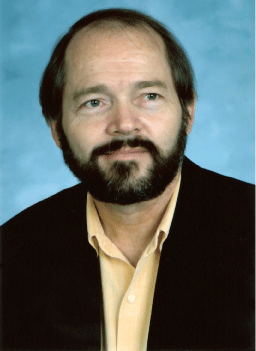
Joseph Reser is a social and environmental psychologist at Griffith University in Australia. American born, Dr. Reser has had an international career and been instrumental in developing environmental psychology in Canada and Australia. This interview focused on topics including Dr. Reser’s background, his thoughts on ecopsychology, including the context of his seminal 1995 review of ecopsychology “Whither Environmental Psychology: The Transpersonal Ecopsychology Crossroads,” and his views on opportunities for ecopsychology today. Dr. Reser also described his recent involvement with the severe bushfires in Southern Australia and shared his thoughts on coping with global climate change. The text was adapted from e-mail correspondence and a phone conversation between Ecopsychology editor Thomas Joseph Doherty and Dr. Reser, speaking from his home in Tallai, Queensland.
As you would have seen from the media coverage, the fires were dramatic, unbelievably intense, and in many ways powerfully symbolic, almost apocalyptic following a 7-year drought, a heightened public awareness of global climate change, and Australia’s substantial exposure to unfolding climate change impacts. There is a popular image and stereotype of Australia as otherworldly in some ways and as being a very harsh, unforgiving, and mysterious continent. All of that has become caught up in the popular imagination along with very genuine public risk perceptions and concerns about what’s happening to the environment here. The fires triggered existing anxieties in a very revealing way in terms of media coverage and the kinds of concerns that people were expressing. And also these fires were really unprecedented in terms of human history in Australia.
Climate change has just thrown the world into a different and rather precarious situation with respect to natural disasters such as we’ve just experienced over the past few years. We’re seeing now the convergent consequences of the increase in world temperatures, the bone dryness of the soil, and all of those precipitating human settlement and climate factors that relate to serious bush fires here. Even experts in the field are saying, “Wow, we just have to rewrite the book on bush fire preparedness and what our response should be.” So the larger context has all of us who are involved with disaster preparedness and response here seriously thinking about what our advice to the public should be.
“The environment” in environmental psychology, while typically making reference to the physical environment, both natural and human altered, importantly encompasses the social and cultural environment, and human perceptions, constructions, and appraisals of and responses to environments. Lastly, the ecological perspective of environmental psychology acknowledges that we are, of course, an integral part of this encompassing natural environment and all that that implies.
I was very interested from early on in natural history writing; in the early human ecology writings of Paul Shepard, Aldo Leopold, and others; and with the living history of the environmental movement in North America and Europe. As an adolescent of the 60s, I guess I was caught up in all of the energy and consciousness raising of what was a critical turning point in North America. I was also very interested in the nature-based poetry and writings of people like Gary Snyder, Thomas Berry, Barry Lopez, Denise Levertov, and Peter Matthiessen–all of those people who were writing about their experience in the natural world. It really resonated with me and I was hugely appreciative of their keen sensibilities and their connection with and concern for what’s happening in and with the natural world.
Academically, I have a Bachelor of Science with a major in English literature as I started out in marine biology, but then for a variety of reasons decided to complete my degree in English literature. So, I have, I think, a nice grounding in the natural sciences and the humanities, and also because I went to Loyola University and had that kind of background, I feel I have a strong grounding in philosophy and particularly environmental philosophy.
And then later on, after a sojourn in South America, I came back and did a master’s and a PhD, initially in experimental psychology and then in social psychology—but with minors in psycholinguistics and evolutionary psychology. So I continued my postgraduate education with a real interest in people and environments, whether it was the social, or cultural, or physical environment and their myriad interdependencies.
As you would know, I did my PhD in social psychology, and most early environmental psychologists were actually social psychologists who were doing field research. They realized that in many instances the variables that were much more important than what they had started out investigating were the setting variables. They were accounting for much more of the variance with respect to whatever was being studied, with bystander nonintervention and defensible space among the first of many new research fronts. All of us sort of became co-opted into environmental psychology because some very interesting things were happening in these real-world settings in which we were working. So I was one of many really who were drawn away from the social into the environmental area.
I know you have described to me in a previous conversation your personal experiences interacting with individuals that were identifying themselves as ecopsychologists in various professional settings. Can we go back in time to the 1990s and some of the thinking and events that informed your writing?
I had also read Theodore Roszak’s books and was extremely impressed by them. I had a real interest in the history of the environmental movement and where that was going. I have also had a long-term interest in Buddhist approaches generally and other Asian perspectives relating to environmental philosophy. I was also steeped in Deep Ecology and contrasting cultural assumptions and perspectives concerning the nature of human consciousness and being in the world. I had lived and worked with a very traditionally oriented Aboriginal community in the Northern Territory for 3 years in the mid-1970s and was deeply appreciative of the relativity of cultural assumptions, values, and understandings of human–ecosystem relationships. So if anything, I was very receptive to some of what was being discussed in the context of ecopsychology.
Also at that time, I was supervising Elizabeth Bragg, a PhD student who was doing some wonderful and challenging work on the extent to which people incorporated the natural world in their self-constructions. Most ecopsychologists would say, “Yes, Liz is one of us.” And undoubtedly she is. So we had various discussions about ecopsychology, and self and the natural environment, at the time. Also, in my own applied work as an environmental and social psychologist, I was very aware that people in the natural sciences and environmental management were very unclear about what psychology was, much less environmental psychology. But many of them had had some exposure to popular articles on ecopsychology, often thinking that that’s what environmental psychology was. And so there were a number of language matters and misconceptions that I wanted to address, along with a number of questions and issues that were neither being asked nor raised by ecopsychology proponents.
An important objective of that article was really to both communicate and showcase, I guess, some areas of psychology that ecopsychologists did not seem to be aware of. You know, the earlier ecological psychology approaches that were present in psychology from the time of William James, and the extensive place identity and attachment and meaning literature, which is highly relevant to ecopsychology.
There is a rich and diverse and highly relevant psychological literature out there. I think I was nonplussed, really, that the literature that people seem to be grasping onto in terms of ecopsychology was much more of a selective psychiatric, clinical, and counseling literature without the appreciation that there was a much broader convergent intellectual legacy here. I felt personally that it was important to be familiar with this academic and philosophical and intellectual and literary legacy if one wanted to develop an ecopsychology or indeed an environmental psychology.
There was a confusion of psychology with psychiatry. You know, there was a very strong antipsychiatry movement in the United States in the 60s and 70s, and maybe justifiably so. There were some brilliant people on both sides of that debate–I used to use some of [R. D.] Laing’s work in my teaching of psychology, for example. I have always been very interested in critical reflective processes within psychology.
I’m thinking of [Kenneth] Gergen, [John] Shotter, and other critics of psychology. But the problem was that some “ecopsychology” proponents were confusing and conflating very different histories, issues, and arguments in what came across as a frontal attack on a psychology, which was not only aloof and removed from human/nature but which was somehow responsible for alienation in the modern world and imminent ecocollapse. I certainly had no problem with people being critical of psychology. But to confuse psychology with psychiatry and 20 years later to be reiterating this antipsychiatry discourse as a cogent argument for ecopsychology didn’t seem to me to be entirely sensible.
This was, I guess, not so much insulting to psychologists, as it was reflective of a very limited appreciation of the breadth and depth of psychology. Such a message and challenge wasn’t going to go down well among conventional psychologists who would say, “Well, where are you people coming from with this almost vitriolic”—as it seemed to me in reading some of the literature—“… attack on psychology?” Particularly when there were actually many psychologists who were really doing “good work” (in Gary Snyder’s terms), working passionately in their own ways for the environment, and who had been doing this as individuals and professionals for a very long time. I’m thinking here of Stuart Oskamp, Stephen and Rachel Kaplan, Paul Stern, Carol Werner, Debra Winter, George Howard, and many others. There was also no reference to environmental psychology–based natural resource management and conservation work that had been ongoing since the late 1960s or to other areas of psychology that seemed particular relevant, such as restoration, humanistic psychology, environmental education, etc. So I felt saddened. I felt that a more informed and less hostile perspective from this minority, but very public group, of ecopsychology spokespersons would have found a very different reception from psychologists.
And having said that, it is also the case that in psychology some of the too aloof, distant, and positivist stereotype was and remains true. Psychology was so experimental and evidence based in orientation, so behaviorally oriented in some respects, so professionally focused in terms of individuals being credentialed in a particular way that it was, as a discipline, reasonably siloed and precious. It was certainly not very interdisciplinary, at least with respect to other social sciences and cultural studies, nor was it, as a discipline and profession, as critically reflective as it should and could have been.
So to the extent that ecopsychologists were reacting against that, I was sympathetic because that much was to some extent the case. I have strong views about psychologists becoming more literate with respect to ecological and other environmental perspectives. This is prerequisite for a discipline and profession in which the natural environment is formally acknowledged as an integral part of our behavior, our experience, the human condition, and of course who and what we are. And, as well, ecopsychologists in their own way were much more interdisciplinary, were much more aware of and in touch with currents in cultural studies and other areas of the humanities and environmental studies, and much more in touch with popular culture and where people generally were at.
So, in all those respects, I understood where many of those espousing ecopsychology were coming from. But I thought that there were some unfortunate aspects of how ecopsychology was being presented that were going to alienate many psychologists and be also very confusing for the general public.
The very nature of academic programs in psychology in many universities is very experimental, traditional, and suspicious of what might be seen as popular culture notions of psychology. So even to express an interest in something like ecopsychology was difficult for a student to do and equally difficult for many staff members to broach or respond to in an even-handed and informed way. While environmental psychology has achieved reasonable respectability and status in those quarters where it is now a known field of psychology, this only came about when environmental psychology was also being seen as a science and as undertaking good, credible experimental research. Initial environmental psychology books had no reference to ecopsychology, as such, or to these other perspectives. So there were impediments in terms of how psychology was presented to students and the professional psychological discourse itself.
I think an openness to different perspectives is driven by the urgency of environmental issues, particularly climate change. I wonder if you could speak to how you see the terrain as different now; what are the opportunities that we did not have back in the early 1990s?
I think a collective concern around the world is making people revisit and pay more attention to many things that weren’t talked about some time ago. People are probably discovering or rereading Roszak and thinking, “Wow, we really should have paid more attention here,” or “We really needed to embrace some aspects of this, such as the psychological impact of the dread factor that’s out there in terms of what’s going to happen to the planet.”
Think of Robert Lifton’s and Joanna Macy’s work with respect to the nuclear threat—well, what we have in front of us with global climate change is something similar to the nuclear threat in that it has galvanized everybody’s attention and concern because we are clearly in a time of particular peril. And also I think psychology has matured a little bit. It is more open in many aspects. Many clinical psychologists and counseling psychologists in their own way have brought ecopsychology to their colleagues and better explained the real value of that perspective to them.
Maybe everybody is a bit more ecologically literate and environmentally aware. That’s why I’m very hopeful about this initiative with this new journal and with the rationale that you’re providing for it—because the time is right. If we don’t do this now and if we’re not successful, we’ve lost a critical opportunity at a crucial point in time to change how we think about, feel about, and understand our connection to the natural world. Let’s not lose the opportunity again that was there maybe a decade or a decade and a half ago.
I think the idiom of distress of the person on the street with respect to anxieties and concerns with what’s happening to the planet are much more in ecopsychology terms. We have to be attuned to that. We have to be aware of it. And for the average client coming in, what is more meaningful to them, a conventional psychoanalytic description and perspective of their problem, or some type of social learning or cognitive behavioral therapy (CBT) analysis, or an analysis in terms of their connection to and relationship with the natural and social world in which they live?
Well, my intuition tells me it’s probably the latter and that our formal, theoretical models in psychology are in many ways out of touch with the vernacular that’s out there. That’s not just a language thing, of course, because we are really talking about how people are experiencing themselves in the world and their disconnection with it. I think that we need to pay attention to that, and I think ecopsychology-oriented psychologists and counselors working with clients perhaps have been much more on the mark than conventional psychologists have.
Basically, I see that we are building this cultural picture of what’s happening to the world and why and who is responsible and what we can do about it. All of that is immensely important—and very social psychological—not just in turning things around in terms of greenhouse gas emissions but also in offering people some assistance in terms of how they might better understand and come to terms with these seemingly apocalyptic threats that are now facing the world, how they might better manage how they’re feeling about these myriad threats and uncertainties, their daily exposure to this media litany of environmental catastrophes that seem to be taking place.
Climate change is a complex phenomenon. Literally, climate change in terms of changes in atmospheric climate patterns, planet Earth, is not what people mean when they talk about climate change. They’re talking about the socially constructed threat and devastation that’s on the horizon and they are asking, “Well, what does this mean for myself, for humanity?”
In terms of psychological adaptation, we need to get our heads—and hearts—around this problem. We need to be able to monitor and manage our emotional response to it so that self-protective responses do not get in the way of our doing useful things in our own life and making a constructive, personally meaningful contribution to addressing this very complex problem.
I think part of my involvement with the issue of climate change is because I really am very concerned that we as psychologists be more interdisciplinary and more open to collaborative engagement with communities and other professions. Just as an example, and this is something you’ve heard me go on about, there is a view among some environmental psychologists that what is really important is to foster environmentally significant behaviors (ESBs), that is, behavior that contributes directly to reducing humanity’s net carbon footprint on the world. Everything else is far less relevant and consequential. We really have to focus on the ESBs to turn things around. Everything else is sort of window dressing really, or a self-serving kind of pseudo-therapeutic response, which allows people to feel good about what they’re doing, but it’s not really addressing or solving the problem.
I don’t accept this view. I think that it’s very important that people are able to take action, to do meaningful things in their own life, to counter what they see as this problem, to be part of the solution and not just part of the problem. And so there are multiple psychological benefits to taking action with respect to climate change. Even if at the end of the day the positive contribution made to a community’s net carbon footprint was immeasurably modest, that is still a quite acceptable and worthwhile outcome. If we shift attention from climate change mitigation to climate change—and psychological—adaptation, people have been very usefully and adaptively engaged in personally relevant and consequential environmental and human problem solving.
It is not the case that I am not very concerned about our carbon footprint. That’s absolutely critical as well. But I think what all of the psychological research tells us is that if people feel more self-efficacious, if they feel more in control of their life, if they feel that they’re doing something meaningful about the problems they see and experience, if they’re taking some personal responsibility, then all of that is going to lead to being much more receptive to behavior change in terms of ESB. If we ignore the psychological in addressing the environmental, we are not going to achieve much by way of ESB because we have really ignored so much of the human dimension of this very profound collective transaction between the human species and the natural environment.
May 12, 2009
Selected Writings of Joseph Reser
Morrissey, S. A., & Reser, J. P. (2007). Natural disasters, climate change, and mental health considerations for rural Australia. Australian Journal of Rural Health, 15, 120–125.
Reser, J. P. (1995). Whether environmental psychology? The transpersonal ecopsychology crossroads. Journal of Environmental Psychology, 15, 235–257.
Reser, J. P. (2007). “Ecological Psychology in Context” by Harry Heft. Revisiting Gibson, Barker, and James’ radical empiricism—And rethinking environmental and environmental experience. Journal of Environmental Psychology, 27, 1–13.
Reser, J. P. (2009). “Climate change” is far more than climate change: Perspectives on climate change from social and environmental psychology and social science. Manuscript submitted for publication.
Reser, J. P., & Scherl, L. M. (1988). Clear and unambiguous feedback: A transactional and motivational analysis of environmental challenge and self-encounter. Journal of Environmental Psychology, 8, 269–286.
Reser, J. P., & Smithson, M. J. (1988). When ignorance is adaptive: Not knowing about the nuclear threat. Knowledge in Society, 1(4), 7–27.