




Abstract
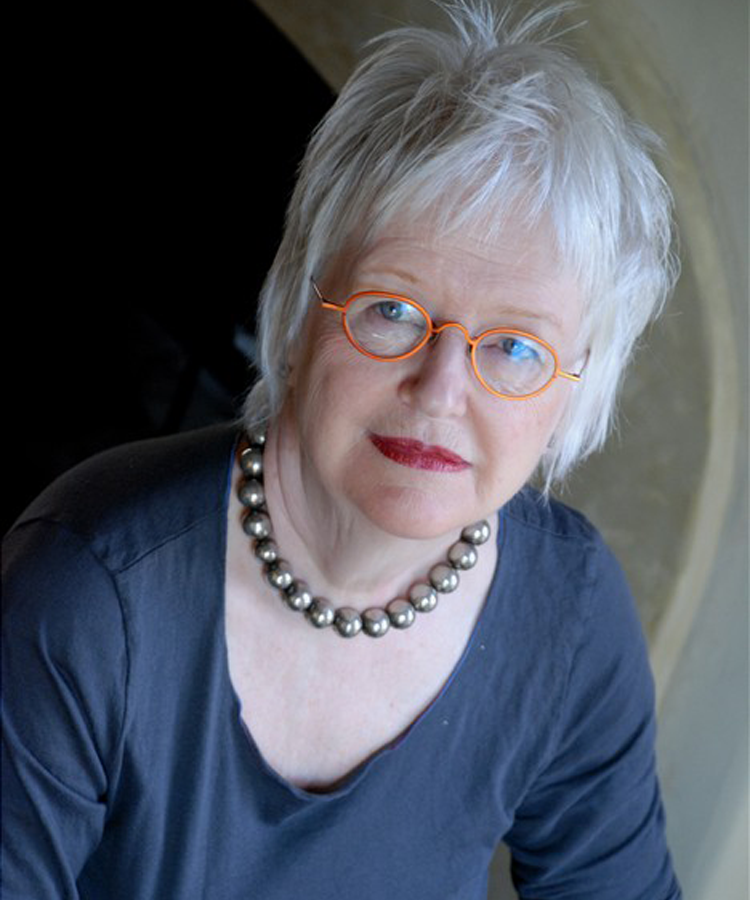
In this interview, Susan Griffin discusses the history of her ground-breaking insights expressed in her early work in eco-feminism, particularly her book, Woman and Nature: The Roaring Inside Her, which was published in 1978. Susan also discusses her reaction to the tragic oil spill in the Gulf and her latest ideas and writing about housewifery. She also talks about the value of beauty and poetry in our daily lives and the importance of reclaiming wisdom from other cultures. They conclude their conversation with a discussion about Susan's new book on terrorism and the role of terrorism in our lives. The text of this interview was adapted from a phone conversation with guest co-editor Lisa Lynch.
Your book, Woman and Nature: The Roaring Inside Her, which was published in 1978, remains a resonant and powerful treatise of eco-feminism. I know it opened the minds and hearts of many of us in our early phases of eco-feminism, of feminism, of ecology, of ecopsychology. Can you share with me some of your life experiences that led you to write, Woman and Nature?
Thank you for your words about the book. Well, you know, it came at a time when my daughter was under 2, and I was married. I was watching a conference on PBS with Jerry Mander, Stephanie Mills, about how terrifying the situation was at that point. These people knew basically what was happening in the degrading environment, it was not called global warming then, but there was the degradation of the ozone layer, and they knew that a disaster was on the horizon already then. My daughter is now 41, so that was 40 years ago.
I had this feeling, “Oh, my God, that this issue can really bring us all together, and maybe we can bridge all of the divisions we have nationally and economically and in terms of cultures.” But that is, of course, not what happened.
Later, I became a very ardent feminist, and I was teaching a class in women's literature and noticing the difference, say, in a relationship with nature between Dickinson and Wordsworth. I loved Wordsworth. This is not to be critical of Wordsworth so much, but just to notice that there was an interesting difference, which was that Dickinson was much more intimate with nature. Her relationship with nature was more like a relationship with another human being; Wordsworth was slightly more distant and philosophical. You know, they both loved nature and were touched and in awe and all of that. But that sense of identification, immediate intimacy with nature was something that I began to notice belonged more to women in literature.
Then I was asked to give a lecture at the University of California, Berkeley in the Agricultural Department. It was actually a course on ecology, and they did not have a department of ecology then, so it was offered in that department. They wanted me, and I was one of the few feminist writers they could think of in the area who thought philosophically and could give such a lecture. But I said, “I feel passionately about the ecology movement.” I mean, ever since I was very young, I used to camp in the Sierras and swim in the Pacific, and body surf. I am a second-generation Californian, I grew up a lot outdoors, and I have always had a very, very intense, I would say, spiritual relationship with nature. I came to realize at one point my primary form of spirituality is the communion I have. I experience it, and I have experienced it since I was quite young, since I was maybe 6 or 7 years old.
So I said, “Well, I can work from my feelings. I can work from my experience as a housewife” I said, “And I can speak philosophically, because I am a feminist theorist and I think philosophically, so I can do that.” So they said, “That is fine. You do not have to speak as an activist.”
What year did you give that lecture?
That was probably around 1971 or 1972. Or it could have even been 1973. I do not know. It was right somewhere between probably 1971 and 1973.
I was inquiring into the basis of choosing to put the whole weight of ecological disaster on the backs of housewives, not only asking housewives to recycle, which is fine, but also acting like presenting it as the greater amount of ecological damage came from houses. This is going to be relevant when we get around to talking about the Gulf. In fact, that is not the truth. We know that the far greater amount of pollution and ecological damage comes from industry.
I was inquiring into “why would the whole weight of this fall on housewives?” I connected it in this lecture that I gave about the myth of Adam and Eve and the tradition that eventually got put into place, especially in the Christian tradition, that Eve had brought evil into the world. In those days, feminism was very, very alive intellectually. I think less so now, not because of feminists, but because the media only pays attention to hard issues. The media does not pay attention to deeper psychological, philosophical issues in general, which I think is part of the crisis we are facing in America right now comes from that lack of attention, lack of growth and transformation.
I wrote an article on rape before I ever published Women and Nature. The article points to rape and violence against women as evidence of a society based on domination, and that the men who raped had more of a problem with needing to dominate and feeling weak. Also, the other key factor is misogyny. What happens with racism and sexism is that any trouble that you have in your psyche gets structured—it will get structured by these mental structures so that you blame certain groups. You blame women. You blame African-American people, people out of jobs. It is classic through American history.
So I really began to think about this. I gave a lecture about it and I began to think about this in relation to not only the recycling program, which has changed and is very different now, but also the whole kind of strange paradoxical thinking by which the society associates woman with nature and then makes woman be the one who is responsible to clean up any problems with nature. It is all kind of unconscious, although of course if you have read Woman and Nature, you know that the first 40 odd pages of that I rephrase, paraphrase, and parody countless statements all through several centuries, which say almost directly that women are to blame for all our troubles, and at the same time connect women with nature, that is, women are more like nature, more emotional.
When you talk about this construct, that women are associated with nature and, therefore, responsible for nature and what is happening with nature, where is the source in our history of this construct? I am asking more about the first section of your book called The Roaring Inside Her, and the historical consequences of that construct, like the witch burnings and other horrible tragedies.
Well, let us talk about the Catholic Church that will not—I mean, women cannot be priests, and certainly gay people cannot be priests, and they have this stance against abortion. The stance against abortion, I feel, has a subconscious subtext, which is that there is this fear of women having so much control, and there is also the idea that at one point the fetus and the women are one body. They are not a distinguishable organism. It is one body.
That is terrifying to a society that needs to believe that we have utter independence from nature. One of the problems that we have now, one of the sources of the trouble, problems we are having ecologically now, which includes the BP oil disaster and everything else, is that we have the myth that we are independent from nature. We are not. We are part of nature. We belong to nature. We cannot breathe without nature. So there are various degrees in which interdependence manifests itself, and one would be in a kind of slime mold that is really considered one organism that spreads—can spread for miles underground. The other would be in a forest in which everything there is dependent on everything else to thrive. That was a principle of Darwin's, by the way, that is really more important than survival of the fittest, that diversity is important for the health of an ecological system.
Then you have literally the way human beings are born, or conceived and born. The way we develop in utero is that the woman and her uterus and the organism within the uterus are one in the same way that mitochondria are part of the human body. You know? They can have an independent life, but it is part of the body. So I think that the claim that women should have control over our own bodies is quite literal. You know, the whole idea of being separate from nature I think is tied to this kind of stark individualism that we are living out the consequences of now, the failure to understand that we are economically interdependent all over the world, and communities thrive better. But when you look at an ecological system, everything is dependent on everything else. That kind of label is associated with women and independence and individualism is associated with men. So this construct underlies a huge amount of what we do in the world today.
What are the implications of the identification of Western culture of nature as feminine? Do you think that as one aspect of the “revolution of consciousness?”—I took that from one of your books—would be to dis-identify nature as female?
Oh, that is a good question. No, I would not do that. I would just identify nature as male—as masculine also, as many, many early cultures did. I have a colleague, Howard Teich, who has developed something he calls a psychology of light. He points to these early cultures that gave the qualities that we call masculine and feminine to the sun and the moon, and they had lunar gods and solar gods, but the solar gods were not all male. There were also lots of females. The same with lunar goddesses, there were lunar gods also. So, I think it is very important to reconfigure what we think of as masculine and feminine. There are even two different sexes, in fact, involved in propagating fruits, so it is absurd to think of nature as having only one gender.
I have been so overwhelmed by the disastrous oil spill in the Gulf. I see in the media and I see around us so much attention being paid to whose fault it is, which seems to me a very kind of masculine—it is like the pointing fingers. I was wondering, what is your sense of how we as a society, we as a culture, and we as individuals can respond to this crisis?
Well, I have two responses to that. On one level, I think it is terribly important, actually, for us to name the perpetrators. Let us make it analogous to understanding rape, if you understand that a rape culture gives birth to rape. So we have to understand, a rape culture is a culture that aggrandizes domination and belittles cooperation and belittles dependence and aggrandizes a false idea of independence. Then that lays the groundwork and creates hatred of women as a symbol for all your woes and identifies women with nature, and then that sets up men to rape. But that does not mean that you do not take the individual rapist to court. You do and you must, and you must name it as a crime.
I think naming the perpetrator is just extremely important and also bringing them to justice. Justice is very important, always has been, and it is a cornerstone of democracy, particularly now when we have got these corporations that have such enormous power over our lives. Justice is critically important.
It is also important to psychological healing. You know that when victims of violent crimes—and this is, in a way, a violent crime—have posttraumatic stress disorder, one of the things that really helps is when the perpetrator is brought to justice—because there is a public acknowledgment. There is a book that Lawrence Weschler (1998) wrote. It is called A Miracle, a Universe; Settling Accounts with Torturers. In the beginning he quotes a cleric who, when they are talking about the reason for naming the perpetrators of torture in Brazil, says that bringing them to justice—naming the crimes—is a public sacrament, and it is something that we need to do for our souls. We need to do this for our souls, the soul of a society. Our society is way out of balance right now on that score.
But then the other answer to your question is “we must go deeper.” We must look first, of course—and some people are bringing this up, and it is very important, and even the President brought this up—“Let us get off oil. Let us end our addiction to oil.” That is terribly important. Underneath that, let us look at the way we conceive of ourselves in relation to nature, our construct of nature. The foolhardiness of BP—and I do not know which executive was really responsible. I mean, they have got this one guy being the fall guy, but who knows all the folks that really were. But underneath there is this construct, which is that somehow we can conquer nature, and we are above it, and we do not have to worry about the consequences of what we do.
Yes, and it is a rape culture, is it not, all the way through to BP? Let us hope none of them would ever harm a woman that way, but they do not think twice about being reckless with nature in that way, and nature is part of us. We are an extension of nature, and nature is an extension of us.
Yes, and in the same way, too, when you use the language about BP, I know there are people responsible, but I also see the power that has been given to corporations, and the power they have been given to dominate and control, which is very much what your work is about. This incident in the Gulf illustrates how harmful that is, and this has all happened on the heels of the Supreme Court decision to grant even more power, control, and autonomy to the corporations. It is just such a painful illustration of that, and how we need to really look at how we function economically, how we function socially, and how we function as a culture.
I keep going back to Woman and Nature: The Roaring Inside Her. I love all of your books, and I wish I could talk to you about all of them, but I am sensitive to the fact that there is a theme to this journal edition of women and nature, and I want to stay as close to that as I can. In the early part of Woman and Nature, you say that the witch burnings and other forms of terror being inflicted on women is a product of Western culture.
Yes, I was not trying to imply that Western culture is the only place it happens. I did not want to do that sort of Western thing, really, of claiming to be an expert on every culture in the world. I mean I just could not. This point, is still true, European, Western, American culture, is the most powerful economic and political body on the earth, so …
Right. So what we try and do in ecopsychology is to somehow reclaim to reach back into our ancestral wisdom about who we are as human beings and who we are as part of this global family rather than identifying solely with Western culture. I see your work as the bearing wisdom that can help us remember who we are.
Thank you.
So as a bearer of this cultural wisdom, what can you say to those of us who are working and thinking in ecopsychology, which can help us better understand what I call a landscape of cultural transformation or reclamation of ancestral wisdom?
I can say what everybody would say, which is there is enormous wisdom in first people's culture, in Native American, or in other cultures that have various names around the world. And these cultures hold tremendous wisdom.
I am going to be repeating myself, but basically we know that these cultures were for many years repudiated, and they were diminished by people even who studied them, by sort of saying, “Oh, well, it is superstition,” and all of that. It is not hard science, but in fact, these cultures have sciences, a different methodology, and a lot of Western scientists have been stealing some of the scientific knowledge from original cultures. But I also think we have in Europe a number of cultures that—Celtic culture, for one—had a different original knowledge.
In a way, I think that is a metaphor of what we need to do, is to find this capacity to relate and to see, relate to existence and to each other and to see in ourselves, refind it, redevelop it. It does not mean that is all we should be doing, because we should be taking a lot of political action right now. We should be doing these two things at once. They go together. They are not apart. That will help us survive better, too. This is a time to rediscover poetry. I am so glad that I am a poet and a writer, because that is what keeps me sane. You know, we need to keep going back, and traditional cultures use poetry to survive. It is part of the spine of their culture.
So we have to restore that kind of knowledge to the center of how we do things. It cannot be just a little decoration, something, a little sidebar, every once in a while we will look at a poem and we go “ooh” and “aah.” It cannot be that. It has to be at the center of how we know and how we proceed.
Right now we would look at something like that as frivolous or superstitious or antiscience. No, this is not antiscience. It goes along with science. A lot of scientific discovery, by the way, was made in such ways. Einstein would sit around fantasizing about various metaphors. That is how he came to relativity, a metaphor of an elevator, a metaphor of a train. This is very important, because we are nature. You know? Nature is really very beautiful.
Barbara McClintock is a great example, because McClintock was fascinated with Tibetan Buddhism, and she was fascinated with certain abilities of empathic seeing. It is a way you could just be very still and look into something and be it and see much more than you think you can. So she would look at these grains of corn, something like that, and she could see genetic patterns happening without even a microscope, or with just a simple microscope, and also just directly looking with her eyes.
I believe so deeply that that is such an important kind of missing component to how we relate to each other and convey our ideas. Not that poetry and beauty are missing, but the value of it is missing. Do you know what I am saying?
Exactly.
The value of poetry, the value of the metaphor, the power in the dream …
Right. Beauty will require certain things of you. So when you are creating that beauty, you are taught, you are being taught by the universe, because beauty is aligned with the principles of the universe. So you are learning profound lessons and you are learning them not just cognitively, but with your whole being when you create beauty, or when you respond to it. Both.
I want to ask you a question about the book on housewifery. I know about my experience, being a mom and a feminist and wondering why the work I do at home is not valued more, you know, among my feminist friends I felt like, “Wait a minute. This is the coolest thing I have ever done, raising a kid!”
Yeah, that is good. Well, you know, maybe I should collect letters from folks like you and present them. In this book I am addressing the fact that in the days when Christian Roman culture was taking over Europe, St. Martha came to… You know who St. Martha was? The legend was that she was the sister of one of the Mary's, and she was a prophet, who went to Provence and slayed the dragon at Tarascon. Well, the dragon was a symbol of the old Celtic religion, and more what we would call matriarchal values, but I would say more human ecological communitarian values.
So she became the patron saint of housekeeping, and she appealed to the people in that area because she had a lot of the virtues of agrarian and pastoral society, you know, more in harmony with nature and more driven by community relations between people.
So what I think happened is that the values of those early societies did not go away, they just went into the home. It got preserved in the private life. Of course, some people's private lives have been… Life at home has been a nightmare. But the basic sort of ideas behind housewifery all have to do with sharing and nurturance and celebrating nature and working in harmony with the seasons and preserving and respecting resources. So it is a much older value system, and it is there in the home. Refining sensual pleasure, refining aesthetic pleasure, refining emotional intelligence. All of this goes on in the home.
And there is a relationship with what we do in the house. Children are taught in the household. They fight with each other, but they are told, “Cooperate.” You know? In other words, it is learning. They compete, but they are told, “No, be kind to …” It is not that competition and jealously and envy are not in us as humans and it goes on. But, there is this other balancing. You know, we have to live together and help each other. So there is an ethic that is there. We do not all grab the food off of the plate at the table and get as much as we possibly can, and well, if you did not grab fast enough, “Too bad. You are going to go hungry tonight.” We do not do that. But that is how we live in public society.
That is right.
The most aggressive people pile up a lot of money in their investments and accounts, and the rest of us are sort of left by the roadside, not being able to pay our bills. That does not happen in households, nobody's household. You go into the house of a very wealthy mogul, who has behaved that way in the public sphere, but you go into his household, and you are not going to catch him grabbing the biggest piece of meat off the platter. You know, it is not going to happen, right? So that is what I am trying to write about.
But we also do other things, like create beauty in our households. We are constantly arranging little still lives in households, playing with color, and in the fall we bring in fall leaves. It is basically nature worship in the house.
It is so important. I think that the issue for me is that we have—I might have said this already—we kind of lost the value of that in our society. Our capitalist society does depend very much on competition and accomplishment and jealousy and greed and all those qualities that you just mentioned. The whole idea of the household and the value of how we care for our children, how we give birth to our children, how we take care of the ground, the place where we live, and how we take care of our internal space. It is just that there has been no good talk about that. It is just like it is almost, I do not know, in my point of view it is trivialized in academic circles and the study of what we can do in our ecological thinking. Ecology does mean home.
Yes.
And ecopsychology means the study of the soul of our home.
Yes.
It is like that value has not been created at the most fundamental level of our society.
Yes. That is right. We have also this kind of split consciousness in this culture where things that we tolerate in the public sphere we would never tolerate in the private sphere. It does go on there, but then it is considered abusive. It is considered a crime. It is punishable. There is this sort of almost split personality that many of us have, there is hospitality in the home, but not outside of it. That is what I am trying to investigate, the household as the realm of meaning. Not just comfort, although comfort itself is a meaning, too.
Right. I really like your use of the word hospitality. It just struck me as, “Right. Why are we not more like that?” Do you know what I mean?
Right.
There is a book that I co-edited for the University of California Press called Transforming Terror: Remembering the Soul of the World. It is about terrorism and the war against terror from a larger perspective. It is coming out in 2011.
Can you say a little bit about what that book is going to be about?
Well, first, we define terror as any attack on an unarmed civilian; it does not matter by whom. So terror is not just something that Islamic fundamentalists do, but fundamentalists of all kinds actually and the United States at certain times, too, when it has attacked unarmed civilians, and NATO and everybody.
We talk about terror itself, and what it does psychologically. My co-editor is a psychologist, and we talk about what trauma does to the soul, and then we take you through kind of a process of transformation. Then we talk about denial and how denial is hooked into these mental structures, the whole myth of the hero and the idea of empire.
Then we talk about the importance of being able to embrace the dark, to accept that life is not always perfect, and that tragedy is just built into life. So we all die, and accepting that as sort of part of recovering from this cycle, this cycle of terrorism.
That sounds like a great, amazing project, because it is so true that we sometimes do not want to look at the dark, or walk into the dark, and that is certainly important to be able to do.
Yes, right. We accept the illusion that it is possible to have just absolute control of your fate, and it is not. That idea creates terror, terrorism, as well as the BP disaster in the Gulf.
Unfortunately our talk has come to an end. I wish we could keep going! Thank you so much for taking the time to talk with me today, Susan. This has been a great conversation!
I loved talking with you too!