




Abstract
Turfgrass lawns are a central component of urban ecosystems around the world. Whether public or private, lawns provide a place for human recreation and relaxation along with ecological benefits such as water filtration and urban heat mitigation. However, lawns are critiqued for their use of inputs (e.g., water and fertilizer), as well as the perceived lack of biodiversity. Although some have called for the replacement of turfgrass lawns with lower-input more diverse landscapes, residents generally like lawns, and in some cases want more of it. Therefore, there is an opportunity to view urban lawns as spaces for new nature-based learning approaches to re-engage individuals with nature near them. This study presents a brief review of how we can think of urban lawns as social-ecological systems alongside opportunities for nature-based learning centered on the urban lawn. Formal and informal educational opportunities can help expand individual knowledge of and connection to lawns as well as potentially impact how individuals manage lawns in the future more sustainably. Vegetation and policy interventions need to accompany educational opportunities to afford space for changes to occur without being constrained by existing systems.
Introduction
Cities are quickly becoming the central space in which many individuals around the world live, work, rest, and recreate. During the course of the COVID-19 pandemic starting in early 2020, individuals unable or unwilling to travel found themselves even more embedded in the cities they resided in. Globally, individuals sought out various forms of green space in which to socialize, exercise, and relax more safely both alone and with others, with usage rates in some places even exceeding prepandemic levels (Hamidi & Zandiatashbar, 2021; Lu, Zhao, Wu, & Lo 2021; Ugolini, Massetti, Pearlmutter, & Sanesi, 2021; Venter, Barton, Gundersen, Figari, & Nowell, 2021). The COVID-19 pandemic then has, at least temporarily, re-engaged individuals with nature near them, importantly although this has also included individuals noticing nature itself (Lemmey, 2020; Roll et al., 2021; Rose, Suri, Brooks, & Ryan, 2020), from birds singing to flowers blooming.
These types of experiences can be thought of as informal instances of nature-based learning. The concept of nature-based learning encompasses broad definitions of both nature and learning and emphasizes the multitude of ways people–nature connections can occur across ages, locations, and contexts (Jordan & Chawla, 2019). Nature-based learning can be informal such as individuals noticing nature while out for a walk in a park or watching from their window. Informal experiences often are unintentional and occur fluidly with a related experience such as walk. Nature-based learning can also be formal with some type of instructor or leader and with a variety of activities and outcomes in mind for the experience.
These experiences are generally planned and have some form of structure or framework (Kuo, Barnes, & Jordan, 2019). Nature-based learning can have significant impacts on individuals ranging from acute improvements in attention and memory to the development of lasting skills such as communication and critical thinking (Becker, Lauterbach, Spengler, Dettweiler, & Mess, 2017; Dadvand et al., 2015; Flouri, Papachristou, & Midouhas, 2019; Gray & Pigott, 2018; Pilotti, Abdulhadi, Al Sabbagh, Aldabbag, & Al Kuhayli, 2019).
In addition, these experiences help to improve the well-being of individuals across ages and contexts through several pathways (e.g., increased resilience and stress reduction) (Beightol, Jevertson, Gray, Carter, & Gass, 2012; Gray & Pigott, 2018; Wiens, Kyngäs, Pölkki, 2016; Wolsko, Lindberg, Reese, 2019). Critically, nature-based learning can encourage the growth and development of an emotional attachment to nature above and beyond conservation knowledge and stimulate lasting values centered on interconnection with nature (Cudworth, 2020; Otto & Pensini, 2017; Savolainen, 2021). Finally, nature-based learning might have an equigenic effect, in other words, providing a level playing field for students of diverse backgrounds, including socioeconomic status, neurodiversity, and ability level (Kuo et al., 2019), which would be critical in places where inequality in opportunities lead to significantly diverging outcomes for students.
At the heart of urban green spaces are turfgrass lawns, which are a central component of urban ecosystems across much of the world (Ignatieva & Hedblom, 2018; Ignatieva, Haase, Dushkova, & Haase, 2020b; Wheeler et al., 2017). Turfgrass lawns are a foundational form of urban vegetation and are often the most interacted with form of nature for many residents (Ignatieva, Eriksson, Eriksson, Berg, & Hedbloom, 2017), but are also highly scrutinized for their input use, environmental impacts, and social legacy (Bartlett & James, 2011; Feagan & Ripmeester, 1999; Robbins, Polderman, & Birkenholtz, 2001).
This has led to an ongoing reassessment of the role that lawns should play in urban areas from both ecological and social perspectives by managing environmental impacts while balancing human needs. Traditional turfgrass lawns have a complex history and can symbolize “discipline, prosperity, community, and citizenship” (Brooks & Francis, 2019), enforced informally through social norms and formally through policies and ordinances (Larson et al., 2015; Nassauer, Wang, & Dayrell, 2009; Sisser et al., 2016). Lawns are conceptualized in modern times as legacy landscapes emerging from historical trends (Harris, Martin, Polsky, Denhardt, & Nehring, 2013), although their dominance of urban landscapes started in the 20th century (Jenkins, 1994).
The rise to prominence of lawns has been enacted through multiple policies and practices tied to colonialism and imperialism establishing an accepted and privileged form of urban green space (Cane, 2019; Harris et al., 2013; Lebowitz & Trudeau, 2017). Although there are valid critiques of urban lawns, the definition of acceptable urban nature in some ways has been defined through a colonial settler lens and still is. Lebowitz and Trudeau (2017) argue that in some ways the adoption of “lawn alternatives is revealed as another way to mark belonging in an eco-conscious bourgeois class coded as white,” suggesting that alternatives to lawns could be a form of shifting standards for “acceptable” forms of urban nature. Understanding urban lawns from an alternative perspective could assist in decoupling standard conceptualizations of lawns and assist in decolonizing these foundational green spaces (Jones & Segal, 2018).
This complex history has led to an ongoing reassessment of the role that lawns should play in urban areas through both ecological and social perspectives. However, the question becomes how can we reconceptualize urban lawns beyond traditional formulations of ecological and social into transformational nature-based learning spaces that enhance our connection with nature?
Urban Lawns and Social-Ecological Systems
Turfgrass can be defined as any low-growing species of grasses that create a dense ground cover that can tolerate traffic and be mowed. Most turfgrass lawns globally consist of traditional turfgrass species such as tall fescue [Schedonorus arundinaceus (Schreb.)], Kentucky bluegrass (Poa pratensis L.), fine leaf fescues (Festuca spp.), zoysiagrass (Zoysia spp.), and bermudagrass (Cynodon dactylon L.), among others (Braun et al., 2020; Ignatieva et al., 2020b). Turfgrass lawns are inherently a nested social-ecological system reflecting interconnectedness between person and environment that impact an individual's psychological state and being (Kanner, 2014) due to aspects of care, specific management behaviors, and social influences on behaviors and landscape composition (Barnes, Nelson, & Dahmus, 2020a; Nassauer et al., 2009).
When properly managed, lawns provide a significant number of ecological and social co-benefits (Monteiro, 2017); however, lawns can also present substantial challenges for cities in both management and environmental impact. For example, the presence of turfgrass in urban areas can help to reduce the impact of urban heat island effects on humans and wildlife (Heaviside, Macintyre, & Vardoulakis, 2017; Soltani & Sharifi, 2017; Wang et al., 2016; Wu et al., 2007). The presence of green space including lawns can help to alleviate heat stress and its associated health impacts in urban areas (Murage et al., 2020) alongside the co-benefit of providing individuals a space in which to be outdoors during heatwave events that can be especially important for individuals lacking access to air conditioning.
Although the presence of turfgrass might help alleviate the outcomes of urban heat island effects, traditional turfgrass lawns can be carbon-intensive to manage. Frequent mowing of fast-growing turfgrass species (e.g., Kentucky bluegrass) along with the transportation of people and equipment to maintain lawns can lead to significant fossil fuel consumption and subsequent CO2 emissions (Kowalewski, Schwartz, Grimshaw, McCrimmon, & Layton, 2014; Law, Bigelow, & Patton, 2016; Townsend-Small & Czimczik, 2010). Lawns can facilitate social interactions not only by providing a meeting place for preplanned engagements among families and friends, but also through coincidental interactions with neighbors and strangers for recreation, sports, and exercise (Barnes et al., 2020a; Dahmus & Nelson, 2014).
However, through a combination of aesthetic preferences, use driven requirements, and species selection, maintaining turfgrass spaces to provide a consistent, comfortable, and acceptable ground cover can be input intensive (e.g., watering, fertilizer, herbicides) (Bertoncini, Machon, Pavoine, & Muratet, 2012; Carey et al., 2012; Larson & Brumand, 2014; Tidåker, Wesström, & Kätterer, 2017). With the significant environmental concerns of turfgrass lawns and resident and manager demands for less maintenance, there has been an interest in alternatives to the traditional urban lawn. These conversations and ideas can vary from complete removal of turfgrass-based lawns for alternative horticultural options (Smith & Fellowes, 2014; Smith et al., 2014) to transitioning traditional monocultural lawns to more biodiverse spaces that support pollinators, and even the installation of artificial lawns.
Removal of the traditional urban lawn is based on improving overall ecological health around biodiversity and reduction of inputs (Smith & Fellowes, 2014). Although replacement of the urban lawn with alternatives can indeed be beneficial for broader biodiversity and other ecosystem services (Francouer et al., 2021; Smith et al., 2014; Wang et al., 2016), individuals in urban spaces generally like and, in some cases, desire more turfgrass (Ignatieva et al., 2017, 2020a; Wheeler et al., 2020). Transitioning traditional urban lawns to more sustainable alternatives seem to be more palatable. These transitions can be accomplished through simple changes in management techniques such as less frequent mowing (Lerman, Contosta, Milam, & Bang, 2018), to the introduction of additional species (e.g., low growing flowers) to enhance biodiversity in lawns (Wolfin et al., 2021).
In addition, low input turfgrasses, those that require less maintenance and inputs (Braun et al., 2020; Kowalewski et al., 2014; Watkins et al., 2014), have been supported by public land managers along with residents (Barnes et al., 2018; Barnes, Nelson, Kowalewski, Patton, & Watkins, 2020b; Yue, Hugie, & Watkins, 2012; Yue et al., 2017). Aesthetic expectations combined with a desire for less maintenance has even driven some individuals to what could be considered the logical endpoint technologically, replacing natural turfgrass lawns with artificial lawns (Brooks & Francis, 2019). However, the adoption of artificial lawns represents a form of decision-making related to the selective incorporation of a limited range of ecological goals (e.g., water use) at the expense of others (e.g., urban heat island effects) (Fig. 1).

An example of a highly utilized urban lawn with individuals participating in recreational activities, relaxation, and socializing (Photo by M.R. Barnes).
Urban Lawns as Nature-Based Learning Spaces
The ubiquitous nature of lawns globally presents the opportunity to view these foundational urban green spaces as partners in facilitating deeper human–nature relationships by being spaces for nature-based learning.
Urban lawns are located nearly everywhere people can be found around the world especially as urbanization continues to dominate human migration patterns. The ubiquity of lawns affords a unique opportunity for individuals to share human–nature experiences across geographic, cultural, and socioeconomic divides. Although urban lawns at their broadest composition are similar, individual spaces and places containing urban lawns in addition to the lawn itself are locally situated and highly contextual. These contrasts between a ubiquitous feature with acute complexities can lead to rich nature-based learning experiences with urban lawns.
Nature-based learning can be leveraged to enhance these complexities through the development of formal learning opportunities across a wide range of ages and topics. Individuals can learn about a variety of topics that cut across traditional geographic and disciplinary boundaries in the urban lawn and have been proposed previously to integrate ecological concepts into psychology (Gibson, 2012). An example of the boundary-crossing nature of urban lawns could include an ecology course that addresses the concepts of biodiversity and disturbances, which would include conversations of human interactions through the processes of fertilizing and mowing.
Already established curricula and exercises could be used or easily modified to incorporate urban lawns involving soils, insects, and climate (Dormody et al., 2021; Kleinschmidt, 2011; Mason et al., 2013). The exercises and activities aforementioned exemplify the inherently experiential form of learning that takes place within nature-centered lessons. The urban lawn affords opportunities for individuals to be engaged with nature through creativity and observation by varying management techniques such as mowing frequency and heights and watering frequency and amount. Individuals can replicate previous findings of insect abundance, or the connections between the height of cut and the presence of weeds. These natural “experiments” can help actively engage with nearby nature in the form of urban lawns.
These concepts apply to most areas of managed lawns illustrating the commonality of these spaces, whereas the exact issues involving human interactions, soils, and climate with the lawn would vary depending on local conditions and context. These opportunities would not only directly involve knowledge acquisition but also help to enhance broader eco-literacy to develop the foundational understanding of interconnectedness through seeing urban lawns as social-ecological systems. Such curricula and formal learning opportunities could be delivered through existing mechanisms and organizations such as the North American Association for Environmental Education that maintains standards for environmental education and promotes environmental literacy or PROGRESS in the European Union that works to create sustainable schools through environmental knowledge and practical skills.
Nature-based learning in urban lawns can also be informal. Informal educational opportunities for both children and adults could include active learning activities (e.g., nature walks), alongside passive learning through signage. Urban lawns can serve as one of the informal outdoor learning spaces called for by Johns and Pontes (2019) to increase environmental literacy. Specifically, such experiences can be effective for parents and children as well as adults more broadly (Hobbs, 2015; McClain & Zimmerman, 2014; Walter & Earl, 2017). Informal education in urban lawns could take a variety of forms and be delivered by existing institutions where lawns are not a focal point (e.g., museums and botanical gardens), but where lawns are accessible, and visitors are already open to learning experiences (Walter, 2019).
For example, individuals could learn about the benefits of a properly managed lawn as they explore a sculpture garden where stormwater runoff is managed by turfgrass compared with an impervious surface. These types of experiences can also be aided by passive educational signage that can deliver a simple message or also encourage individuals to learn more through the inclusion of quick response codes or links (Fig. 2). A public park might introduce signs or alternatively, artwork containing a message about how a slope covered in a low-input type of turfgrass that is not mowed frequently helps to control erosion. Combing artwork with environmental information could be effective in improving eco-literacy and reconnecting individuals to nature (Celedonia & Rosenthal, 2011).
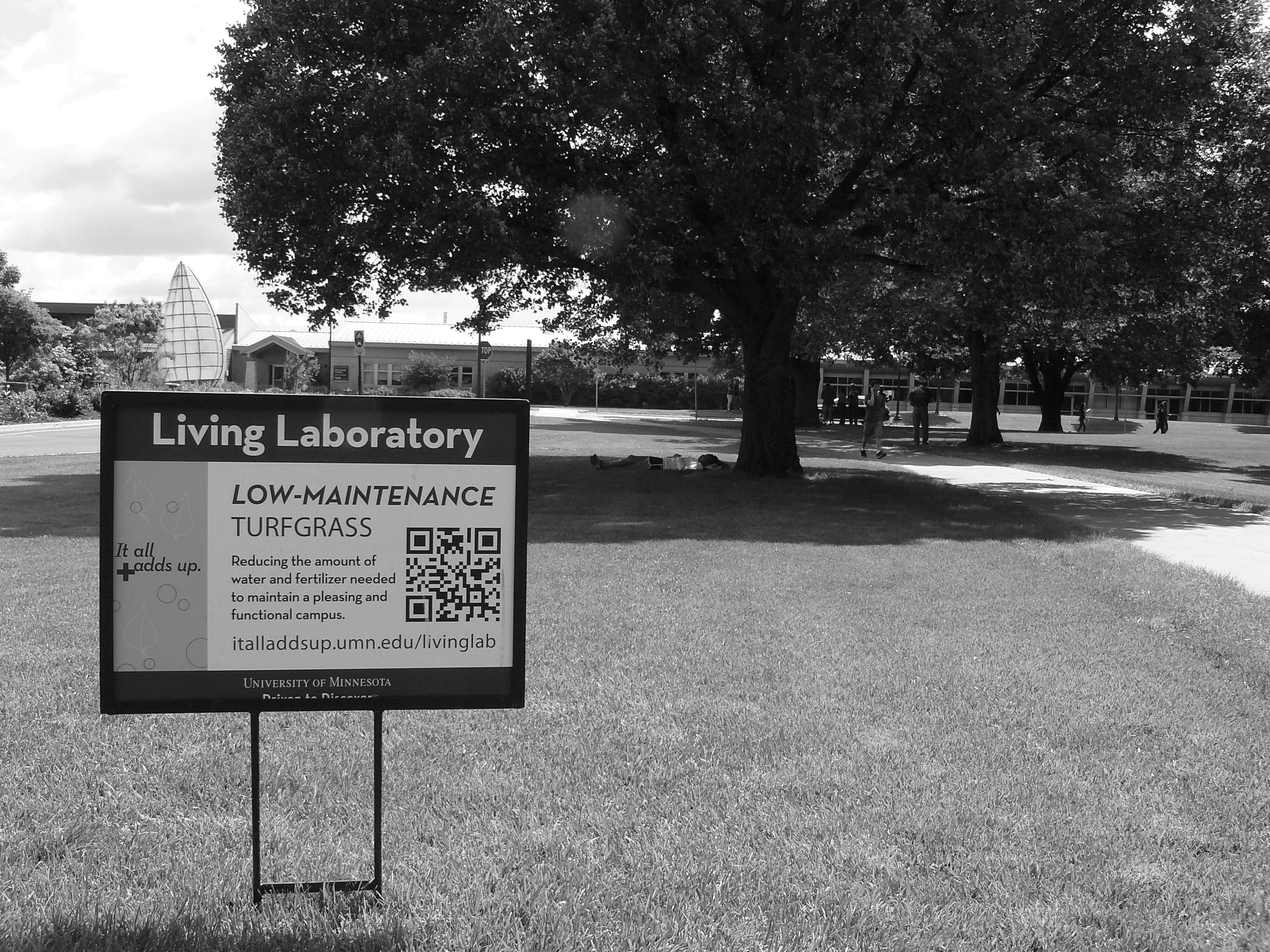
Signage on a university campus that includes concise information about a low-maintenance turfgrass installation, including a QR code for individuals to access additional information (Photo by S. Bauer). QR, quick response.
Informational signage can be especially useful when individuals encounter urban landscapes that are outside of normative expectations or only subtly different (Ramer et al., 2019; Shwartz et al., 2014). Finally, urban lawns can afford a platform from which other nature-based learning activities can take place not directly involving the lawn itself. Lawns provide a consistent ground cover from which individuals can observe, interact, and engage with other forms of nature as well as interact socially. Nature-based learning here could include observational activities such as bird watching or star gazing, as well as simply a space in which an outdoor music lesson could take place, or a place for students to gather between classes on a university campus. All these opportunities not only develop an individual's understanding of urban lawns but also assist in cultivating a relationship with a form of nature they encounter every day: a reconnection with nature near them.
Formal and informal nature-based learning opportunities could be enhanced through coordinated interventions related to vegetational shifts in conjunction with policy changes. Vegetative interventions can be both directly related to the lawns themselves through transitions as well as indirectly through conversions. Transitions in urban lawns aim to preserve the majority of uses (e.g., picnics and play areas) while enhancing social and ecological co-benefits. The most straightforward transitions involve moving from traditional turfgrass species to lower input species (e.g., fine fescues), as well as the introduction of non-turf species such as low-growing flowers (e.g., white clover) (Fig. 3) that can provide better forage resources for bees than a traditional lawn and can lead to a greater diversity of bee species on a lawn (Wolfin et al., 2021). Bee lawns have the potential to sustain and increase bee populations in urban areas at a critical time for the health of bee populations (Davis et al., 2017).
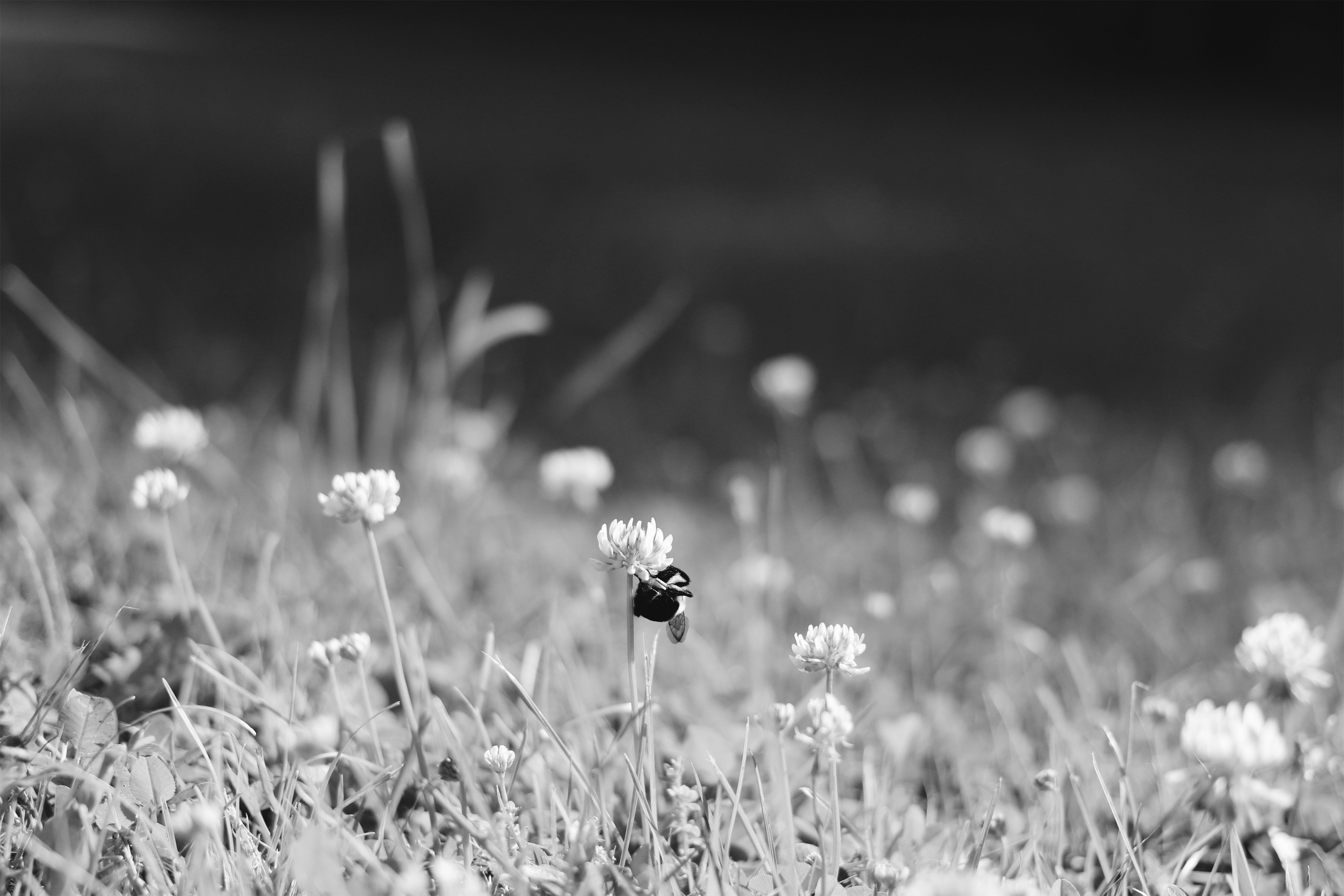
A common bee lawn containing low-growing white clover that can help provide additional habitat for pollinators (Photo by J. Delp).
Conversion interventions suggest the replacement of lawn with an alternate vegetation type to enhance social and ecological co-benefits. Conversions of urban lawns should be considered when an area of lawn is unutilized, difficult, and costly to maintain, and the added co-benefits are substantially higher than what a transition could provide. Numerous examples of conversion interventions exist, specific examples include pollinator and rain gardens, cultivated food gardens, native plant gardens, and flower gardens. Policies can have a significant impact on the form that urban lawns can take, and the resulting labor and inputs required to maintain a socially acceptable lawn.
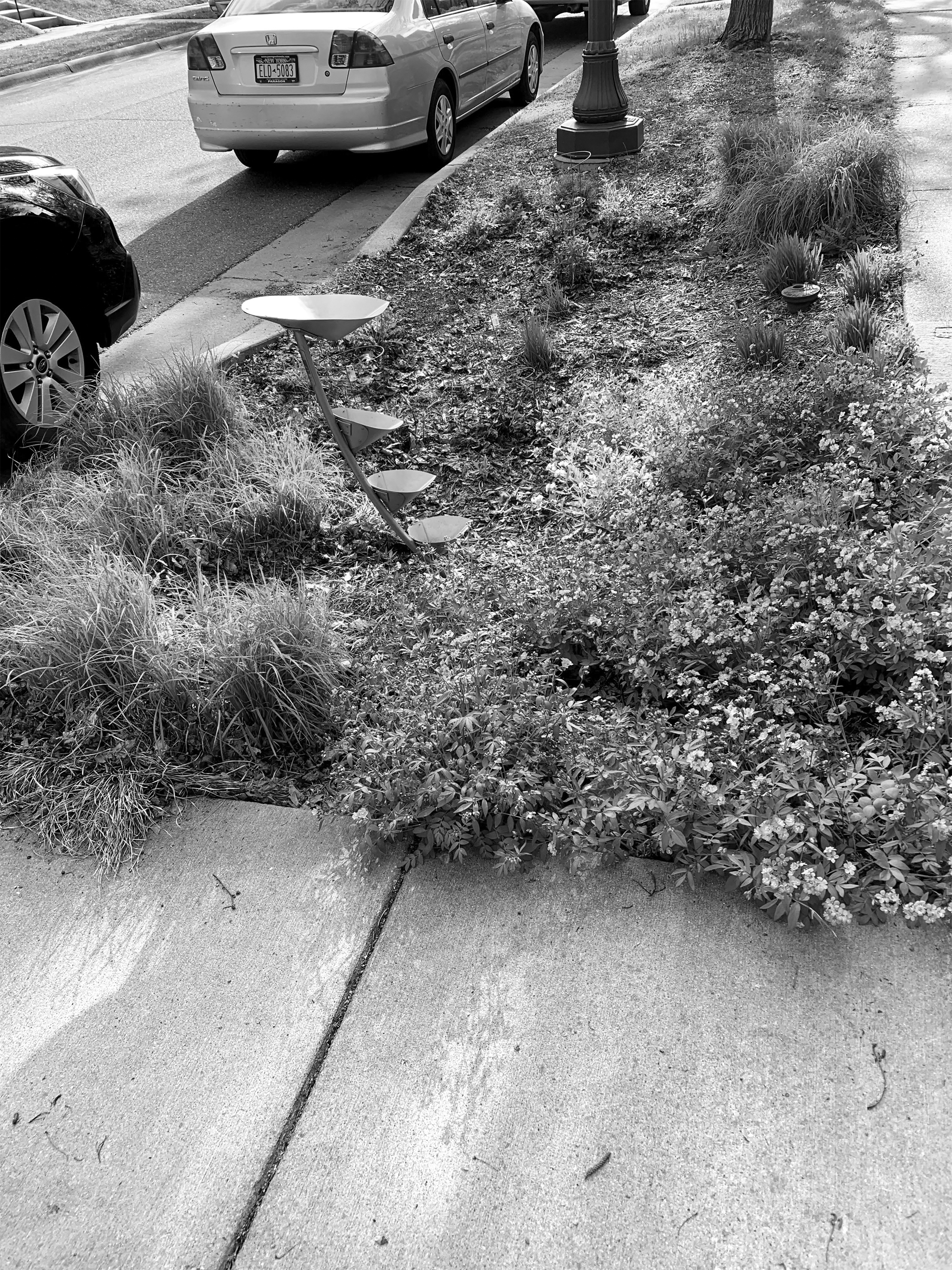
A former boulevard lawn area converted into a rain garden, including a curb cut for stormwater management (Photo by M.R. Barnes).
This is illustrated on a national level in the United States with broader regulations at state or federal levels that promote co-benefits and the enhancement of ecosystem services being contradicted by municipal policies that focus on maintaining aesthetically acceptable lawns through multiple targeted ordinances (Larson et al., 2020). Municipal policies and ordinances can focus on vegetation restrictions, mowing heights, and watering that enforce strict lawn aesthetics and limit the co-benefits of a lawn or yard (Sisser et al., 2016). Modification of these ordinances is critical in allowing for bordering transitions and conversions to happen in urban lawns to enhance sustainability (Fig 4. ).
The ubiquitous nature and accessibility of urban lawns would provide a wide range of students, including traditionally disadvantaged students, the opportunity to participate in nature-based learning. Lawns afford students a high level of access to a form of nature that can provide benefits. Accessibility to lawns could be critical for students who might not be able to access other forms of green space due to socioeconomic, mobility, or disability barriers given the importance of nature-based learning to diverse groups of learners (Camasso & Jagannathan, 2018; Kuo et al., 2019; Newman, 2020).
The accessibility afforded by the lawn also relates to being in a space that is comfortable, familiar, and less threatening than other forms of nature (Davis, 2019; Lekies, Yost, & Rode, 2015; Loft, Choi, Tagg, & Loo, 2016). Viewing urban lawns as spaces for nature-based learning could significantly help residents reconnect with nature near them, while simultaneously providing a deep shared human–nature experience with countless others in their neighborhood and around the world.
Author's Contributions
M.R.B. conceptualized, wrote, and edited the article.
Footnotes
Author Disclosure Statement
The author declares no conflict of interest in any form.
Funding Information
No funding was received for this article.