




Abstract
Urban agriculture (UA) is deeply ingrained in Istanbul's sociocultural history with Bostans (historical urban vegetable gardens) serving as archetypal structures in the urban landscape. Despite the growing importance of these settings and their recognition by the United Nations Educational, Scientific, and Cultural Organization (UNESCO), planning and management of bostans has been hampered by rapid urbanization and a lack of integrative policies. This study explores the socio-ecological potential of UA practices in 10 family-related projects. Data collected through semistructured interviews, observations, and field work points to the importance of kinship in the acquisition, transmission, and modification of knowledge and practices. Farmers structure their activities based on past–present affordances and expectations for the future. This view of memory integrates social-ecological dimensions and past–present practices that offer both a forward- and backward-connecting strategy to management: backward toward greater traditional ecological knowledge and forward in terms of greater ecological and cultural resilience.
Introduction
Urban agriculture (UA) in Istanbul has a long-standing tradition dating back to Roman times. In 1985, the United Nations Educational, Scientific, and Cultural Organization (UNESCO, 2022) recognized the Historical Peninsula of Istanbul as a world heritage site, which included the Yedikule Bostan gardens.
These vegetable gardens (called bostans in Turkish) are located along the Theodosian Walls and are considered the last living remnants of 16th century UA. Even though the cultural value of bostans has been recognized internationally, local level environmental and economic pressures have led to the replacement of gardens with gated communities, such as the Yedikule Konaklar built in 2010 (Mougeot, 2005).
Despite the emphasis on their cultural relevance as World Heritage Sites, there is scant information about UA in Istanbul, including urban gardens' tangible features (physical spaces, ecosystem services, food security, and biodiversity characteristics) as well as their intangible features (sociocultural memory, health-related values, and technical solutions practiced through intergenerational links) and how they are managed at a local level (White, Shopov, & Casson, 2015). Sustainable conservation of cultural and natural heritage remains a major task for local authorities in Istanbul, who lack an understanding of UA as a set of practices involving collective memory that has enhanced the city's resilience across history.
In addition to the historical Yedikule Bostans, there are numerous UA projects that have been operating in Istanbul for years (Bașer & Tunçay, 2010; Kaldjian, 2000). UA can be defined as all types of food and nonfood agricultural production that takes place in or around cities (Wagstaff & Wortman, 2015). This study focuses on these peri-UA projects, particularly those located on the Asian side of Istanbul. UA in this community focuses on growing plants and crops in family-related projects that serve as a main source of livelihood. Through a socio-ecological framework, drawing both from the notion of affordances (Gibson, 1986) and social-ecological memory (Barthel, Folke, & Colding, 2010), we analyze everyday UA practices and how they are sustained by intergenerational links while still considering Istanbul's complex urban pressures.
As an important nature-based solution (Artmann & Sartison, 2018; Colding & Barthel, 2013), UA links socio-ecological factors and heritage, indicating a retrospective and prospective character of memory. A complex set of nonmaterial practices and material features can be meaningful both retrospectively through cross-generational linkages and prospectively as they offer affordances or possibilities for future action.
UA in Istanbul: Past and present
The agricultural archetypes of modern-day Turkey dates back thousands of years to the fertile crescent of central civilizations from which farming culture was born and developed (Quataert, 2008). Urban agricultural tradition has been a part of the city since Byzantine and Ottoman periods (Bașer & Tunçay, 2010; Keyder, 1999). Ottoman Istanbul was surrounded by agricultural “rings,” including vegetable–fruit gardens called bostans (Shopov, 2021; see Fig. 1). Eremya Çelebi Kömürciyan (1637–1695), a well-known author renowned for his descriptions of Istanbul's daily life in the 15th century AD, detailed how bostans were well integrated into daily life, clustered around reliable sources of water such as creeks, artesian springs, or wells (Andreasyan, 1988). This allowed bostans to exist as a functional part of the smallest subdivision of the urban settlement of Istanbul called “mahalle” (Kaldjian, 2004). Historically, the deep-rooted gardening system contributed to urban resilience through its tangible and intangible benefits to the local community.
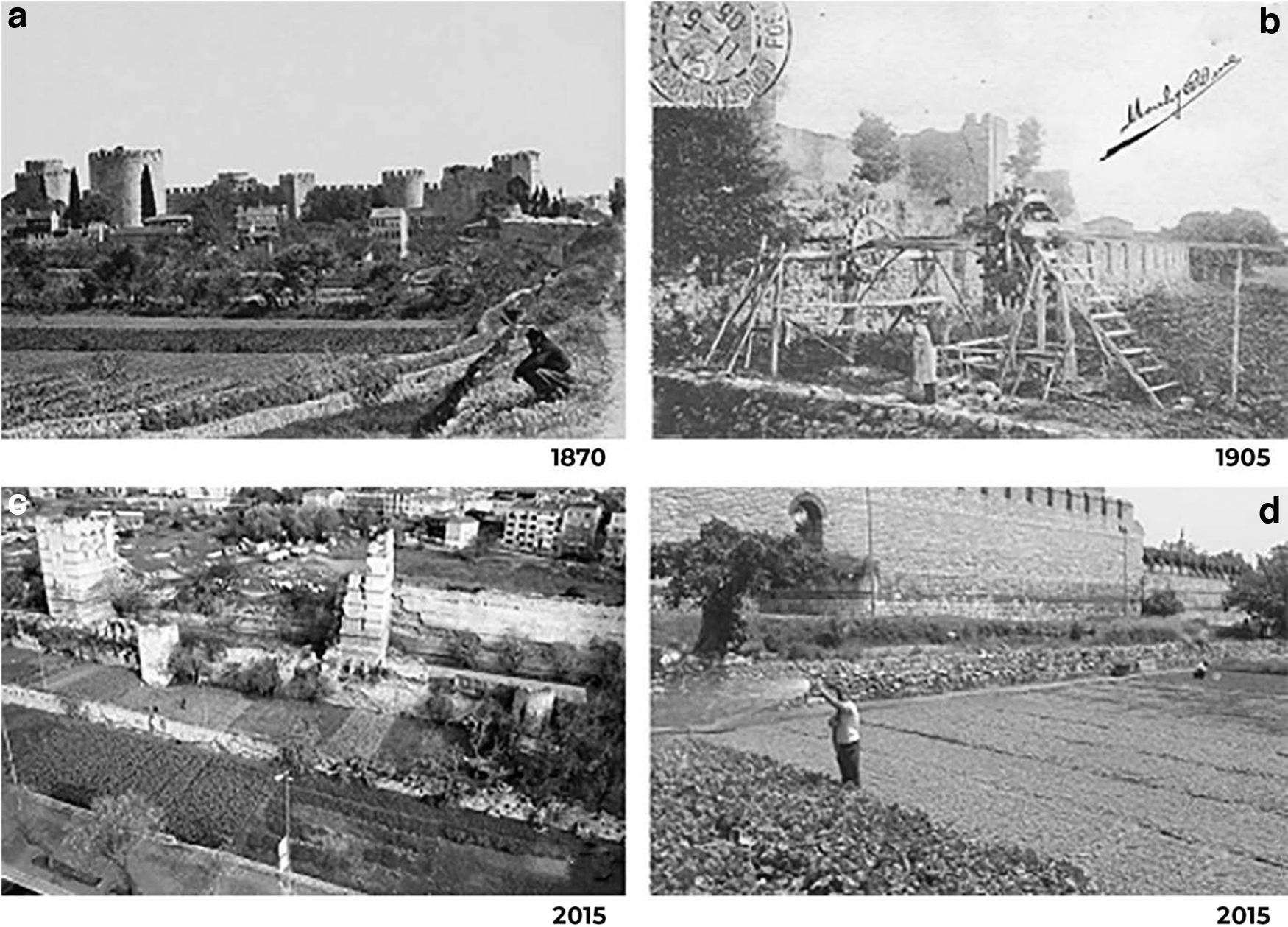
Past and current situation in the Yedikule Bostans of Istanbul.
The influx of migrants to Istanbul in the 1970s further promoted UA as they brought their agricultural culture to the city. Bostans functioned as a crucial feature in the landscape up until the early 1980s, when modernization increased. The rebuilding process of the late 1980s and the urban renewal movements of the 2000s led to the expansion of market economies and development projects at the expense of UA (Keyder, 1999; Kuban, 1996). Today, the agricultural spaces in and around Istanbul are threatened by the continued construction of new residential areas and large-scale infrastructure projects or land profits. Between 1997 and 2017, agricultural areas have been reduced by 32% as croplands, vegetable gardens, and orchards are transformed into industrial or urban-built areas.
Vegetable garden land use alone has been reduced by 57% according to the Türkiye İstatistik Kurumu (TUIK, 2015). Despite these changes, UA in the form of traditional bostans of the historical core (i.e., those of the areas protected by UNESCO) and peri-urban projects are major assets to food security. Although they represent a supportive infrastructure amidst economic crisis and climate change (Lin, Philpott, Jha, & Liere, 2017), UA projects have continually been excluded from formal land use policies. As a form of collective memory, UA can strengthen partnerships between residents, government, and private sectors (Certomà & Notteboom, 2017; Kaldjian, 2003; Nikolaidou, Klöti, Tappert, & Drilling, 2016).
UA: Benefits and related motivations
The diverse benefits of UA can be broken down into several distinct categories, including health and well-being, economic opportunities, social cohesion, and education (Dubová & Macháč, 2019). UA affords human well-being by bearing cultural, social, and economic values. It provides diverse ecosystem services (Camps-Calvet, Langemeyer, Calvet-Mir, & Gómez-Baggethun, 2016) and high levels of biodiversity that enhances food security in times of famine, depression, and war (Barthel & Isendahl, 2013; Barthel, Sörlin, & Ljungkvist, 2011). UA provides a direct link with ecology, as it fosters knowledge about food cycles, ensuring learning opportunities for future generations (Shimpo, 2021).
Despite the fact that both UA and urban gardening promote ecosystem health, and human health, there are differences in terms of motives and social impacts across the various types of UA. Benefits are associated with people's motivations and willingness to engage in projects. Motives range from a personal desire for high-quality food to health reasons, such as mitigating stress and mental fatigue in urban gardening initiatives (e.g., Ilieva, Lelièvre, Poniży, Schoen, & Blythe, 2021). There may also be a need to produce food for economic reasons, as running a profitable farming enterprise can be financially beneficial.
As meeting places, UA projects are key resources for building resilience and helping communities cope with climate change and environmental risk (Barthel & Isendahl, 2013). They foster food justice, community pride, and social interactions (Schram-Bijkerk, Otte, Dirven, & Breure, 2018). Furthermore, daily contact with UA and gardening activities may satisfy the inherent human need to affiliate with nature (Kellert & Wilson, 1995) and support topophilia—the affective connection people form with places through individual and collective actions (Beery, Jönsson, & Elmberg, 2015; Tuan, 1974).
Social-ecological memory and the affordances that support it
UA is both a way of reclaiming cultural traditions related to food production and a specific type of urban green space. Through an ecological view of perception (i.e., Gibson, 1986), we consider UA as a set of affordances that support sustainable communities and inquire about cross-generational linkages and past–present–future interconnections in UA practices.
Social-ecological memory can be used to conceptualize and understand the material and nonmaterial contributions of UA (Barthel et al., 2010, 2013). Social-ecological memory refers to the accumulated experiences and history of ecosystem management done collectively in a community, which involves three interrelated processes: acquisition, transmission, and modification (Barthel et al., 2010). Acquisition refers to sharing and learning with family members, such as elderly people and master gardeners. Transmission taps into still-in-use-practices and know-how that are maintained through dialogue with other farmers and the use of old rituals, stories, and rules. Modification involves changing habits and updating inherited knowledge with existing technology to adapt to current needs and pressures.
Social-ecological memory evolves over time, pointing to the dynamics of cultural heritage. This temporal element is key to revitalizing UA as an emergent human–nature relationship. Defined as co-becoming, UA provides possibilities for action (i.e., affordances; Gibson, 1986) that are intertwined with people's socioeconomic needs and environmental pressures. With this framework in mind, this study aims to:
Describe the socio-spatial characteristics of UA projects (i.e., size, ownership, and types of production) as well as the sociodemographic characteristics of farmers; Explore UA practices, perceptions, and motivations through the lens of socio-ecological memory.
Methods
Our research represents work in 10 family-related gardens in Istanbul. Data collection began after approval by the Institutional Review Board (IRB) and once informed consent was received from participants. Due to limited resources and time, further projects could not be included. A case study approach (Yin, 1994) was chosen to facilitate an in-depth analysis of real-life gardening situations (e.g., activities, types of crops, and the spatial features of the gardens). Field work and semistructured interviews were conducted with 10 urban gardeners in 2014: 6 migrants and 4 nonmigrants. The majority of participants were male (8), with ages ranging from 27 to 70 years. Most of the gardens were primarily managed by men who, at the time, made themselves available to be interviewed.
Five farmers had migrated from Kastamonu (northern region of Turkey) and one from Tunceli (eastern region of country). Most gardeners had lived in Istanbul for >25 years and only had an elementary school education.
The interviews lasted between 1 and 2 h, and took place either in their residences or in the garden. In all interviews, researchers visited the gardens with farmers to better understand their practices within the socio-physical context (Singleton & Straits, 2009). Farmers were asked to describe their gardening practices and the extent to which they reflected past knowledge and practices transmitted and retained from past generations. Interviews also addressed the main motivations for gardening and its benefits (e.g., health-related), barriers (e.g., management problems and institutional support), and the social role of women and older and younger individuals (see Appendix A1).
Based on an inductive approach to data analysis (Thomas, 2006) and following past qualitative works on urban gardens (i.e., McFarland, Waliczek, Etheredge, & Lillard, 2018), two independent researchers read the interview articles to identify and agree upon themes. Themes were conceptualized and operationalized as affordances—the possibilities and constraints for urban farmers in relation to acquisition, transmission, and modification of knowledge. We discuss “possibilities and constraints” in relation to farmers' past linkage, present situation, and expectations for the future.
Next, we describe social, spatial, and ecological features of the gardens and present the discovered main themes.
Results and Discussion
Socio-spatial and ecological characteristics of gardens
The 10 gardens were located in different development zones, holding a strong relationship with the urbanization infrastructure around them, such as roads, new housing areas, and urban renovation sites. They can be described as plots of fragmented land between buildings (Fig. 2). The size of the gardens varied from 1000 to 25,000 m2 depending on land availability and gardeners' financial resources. The location of the gardens was also related to ecological factors, such as the presence of surface and groundwater as well as urban pressures, such as land availability (Table 1). As expected, agricultural land availability in the city was one of the major problems for gardeners, who complained about high land prices and rent costs.
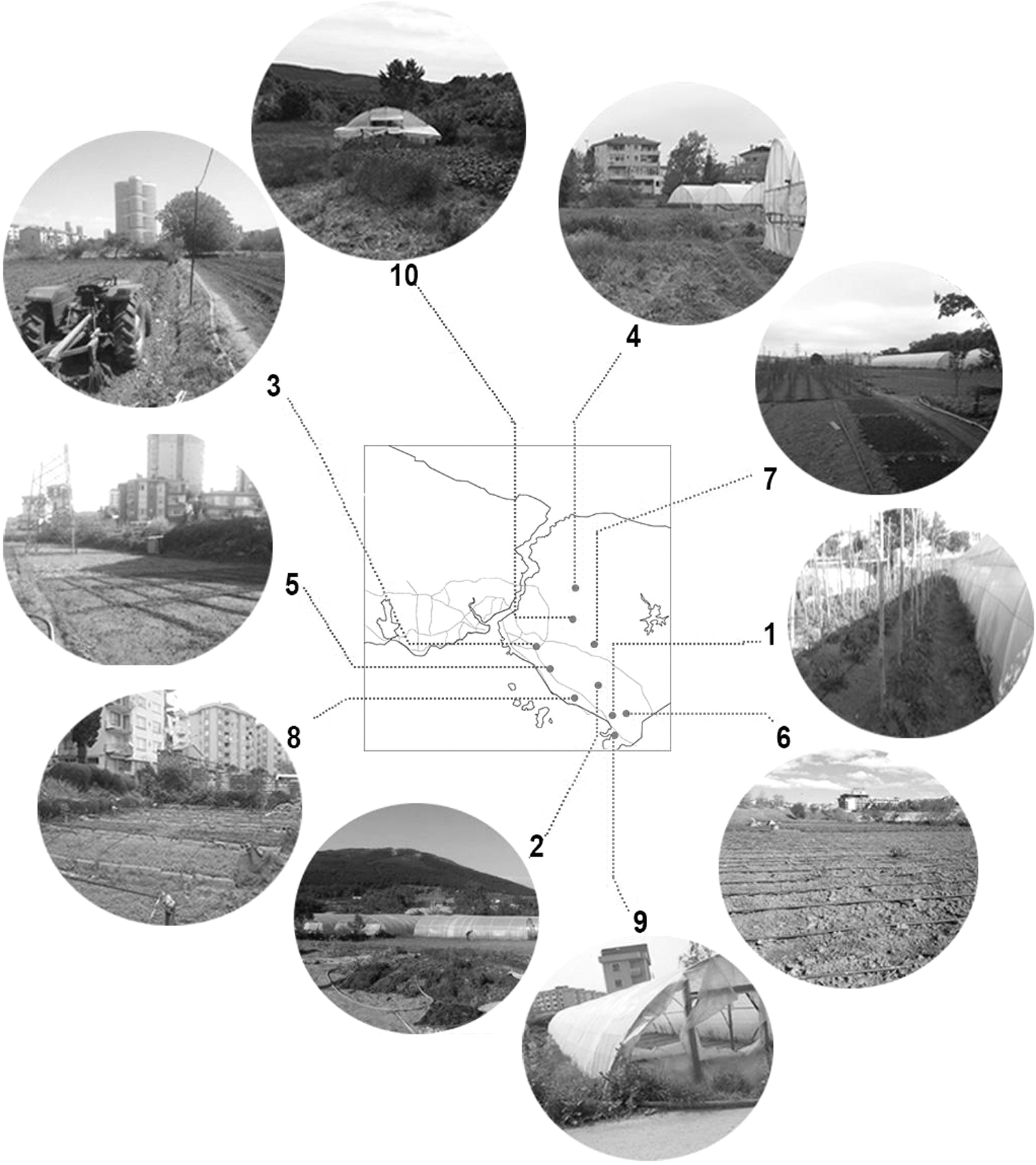
Description of urban gardens located on the Asian side of Istanbul. The numbers indicated for each photograph correspond with the garden codes listed in Table 1.
Socio-Spatial Characteristics of Studied Urban Gardens
Overall, gardeners cultivated vegetables with production and management activities involving both permanent and seasonal workers, in addition to family members. The production age of the gardens varied, but most had existed for at least 25 years. Most gardens had a well, a greenhouse for winter use, and a shelter for equipment storage. Five of the gardens were rented, four were owned, and one had a mixed-type ownership.
UA affordances: Possibilities and constraints for urban farmers
Our interviews revealed that farmers' practices and perceptions of UA were closely related to their affordances, which are the opportunities and constraints to acquire, transmit, and modify knowledge in relation to time past, present, and future.
Past links
As members of families who migrated to Istanbul, our participants had a history of farming encompassing diverse generations. Six farmers reported they migrated to Istanbul as adults, whereas the others were children of migrant families. Most families had migrated from Kastamonu, a province in the northern Black Sea region of Turkey. As such, their farming experience dates back anywhere from 20 to 60 years (Table 1).
In terms of acquisition and transmission, our results point to the role of elderly members in the process of migration and the establishment of UA projects. For example, the oldest farmer (73) in our sample reported that he learned farming practices in the 1950s as a child of an Albanian farmer family. Our oldest farmer's life history revealed the depth of knowledge acquisition and transmission of UA both in the form of oral tradition as well as in terms of practices.
Overall, our interviewees revealed the role of older adults to be sources of social learning, knowledge, and experience. Younger farmers mostly organize work on the farming site according to seasonal requirements and instructions from others. Except for the oldest farming site (eighth site), all other farmers reported no relationship with Turkish institutions. Knowledge is gathered and shared through family links and exchanged with neighboring farmers, demonstrating that the mechanisms for intergenerational transmission of knowledge are embedded in social systems (Berkes, Colding, & Folke, 2000).
Older people also sustain the familial system and enable the close link among communities. They facilitate knowledge transfer, even though the practices passed along are not necessarily the best for sustaining ecosystem services, such as the use of water, which may bring about a decrease in environmental sustainability when not properly utilized for irrigation purposes.
In terms of knowledge modification and how it has been incorporated into current UA practices, all respondents stated that they continued the methods they learned from their relatives, such as using natural fertilizers and natural irrigation techniques or cultivating the land using traditional seedling techniques and procedures. Among the farmers interviewed, Mr. Galip (Fig. 3) stated that he has been a farmer since his grandfather's time:

Mr. Galip's vegetable garden in Kartal (coded 8; Table 1) located in a high-density development area
I like every aspect of farming and cultivation. This garden is where the first seeds of Istanbul are grown. It is inherited from my grandfather, that's why I have a strong bond with my garden. I learned a lot from my grandfather, for example, I have beehives in the garden. These are not for honey, but for more pollination, without pollination you cannot get yield. I've never seen this in other gardens around, it's a key point I learned from my grandfather.
Mr. Galip, representing three generations of farming, has been active for >50 years, illustrating how UA's social-ecological memory involves the selection of key knowledge and skills that continue to affect current practices.
Present situation
Overall, a strong sense of connection was observed among gardeners, family members, and neighbors in the face of current pressures. Our findings illustrate that interpersonal interaction between younger and older individuals is key to acquisition–transmission of knowledge, with women playing a crucial role in sharing traditional ecological knowledge. This is particularly favored in communally farmed types of UA as compared with individual plots.
Even though the leader of each farming site is usually the oldest man in the family, in practice, a large proportion of urban farmers are women who work in soil and seedling preparation, weeding, harvesting, and selling activities. As Mrs. Fatma (Fig. 4. on the left) explains:
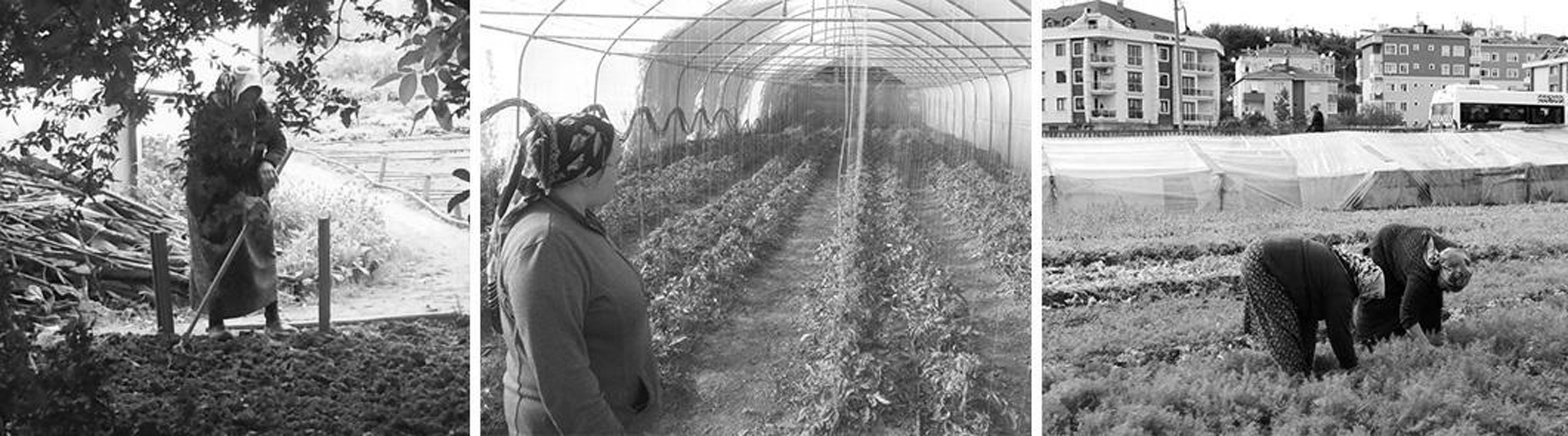
Women working on urban farming. From left to right, gardens coded 7, 2, and 7 according to classification depicted in Table 1.
Heavy work in the garden is done by men, women are engaged in light work such as germination, seedling, separating seedlings, planting and harvesting, but the continuity of the crop depends on the activities women do.
Women compare UA activities with raising a family, demonstrating that UA accrues diverse meanings. For instance, Mrs. Summe (Fig. 4 in the middle, second farming site) emphasized that:
Raising crops is like raising children. I care for all my crops as I care for my children. I closely follow all processes of crops such as planting, maintenance, irrigation, fertilization, maturing, and collecting.
These statements highlight that social interaction and division of labor is filtered through gender. Women figure as key actors in developing current UA activities and, in a few cases, they own their farming sites and gardens (see garden coded 7 in Table 1). In most cases, when men are both the owners and the leaders of the sites, women typically have less authority over farming practices.
Patterns of gender-biased interaction shape UA practices in Istanbul. Mrs. Fatma's interview illustrates how women's labor is often labeled as “light work” despite the fact that they are engaged in different phases of the work, from seedling to selling produce in the market. Overall, we can affirm that farming permeates the familial and social roles of women, as they are expected to maintain and ensure the continuity of their gardens and families (Hovorka, de Zeeuw, & Njenga, 2009).
Younger people are also a driving force in farming activities, especially in the preparation phases of spring and harvest season. Extra staff are only hired when the family is unable to handle the workload, to reduce overall costs and increase profit. In our sample, we observed that UA allowed people to carry out many activities on the same piece of land (e.g., farming, family meetings, and selling produce), thereby maximizing the value of the farming site.
In addition to social aspects and familial ties, all farmers indicated they were strongly connected to their activities and believed that working outdoors and having contact with soil and nature benefited their health. They emphasized growing and consuming fresh food and vegetables for themselves and others as a positive aspect of their practices. Working in close contact with nature was mentioned as the most fulfilling part of farming. For example, the Idealtepe farmer (garden #5) mentioned: “I wanted to be a gardener. My favorite activity as a gardener is working with the soil. It is a positive experience to grow up healthy food and pass it around. It is good.”
In line with past studies, the human–plant interaction that UA provides reveals the visceral connections between people and their farms and gardens (Jordan, 2015). Farmers were asked about their memories and the symbolic aspects of farming (i.e., rituals and celebrations). Most participants responded that they did not engage in any rituals, but some mentioned praying before work and in periods of drought, they prayed for rain. One gardener said: “I begin the day with ‘BİSMİLLAH’ (i.e., phrase in Arabic meaning “in the name of Allah”) and pray.”
Prior research indicates there is a relationship between UA, environmental conditions, and the health of the urban population (Hale et al., 2011; Schirmer, Berry, & O'Brien, 2013). Both monetary and social capital are provided through a system of bottom-up community practices linking farmers and their families (Barthel & Isendahl, 2013). As expected, farmers who owned their land had more positive perceptions of farming than nonowners. This finding is consistent with previous studies showing that owners report positive and higher indices of health and well-being than nonowners (de Bell et al., 2020; Kirby et al., 2021).
Expectations for the future
In general, our interviews demonstrated that farmers feel very ambivalent about their future. Even though past knowledge still structures current activities, the practices passed along are not necessarily the best for sustaining ecosystem services in the present situation or in the future. In general, farmers pointed to changes in irrigation methods as a main priority for the future. Drip irrigation is preferred to manual irrigation by canals as it is easier and less expensive. Despite still using ancient techniques for soil preparation, farmers prefer machinery for soil preparation and cultivation. The use of greenhouses, energy, and irrigation methods are ranked as key modifications for the future. Mrs. Summe, owner of the second farming site, illustrates this point:
I want to expand my greenhouses for better fertility, I also want to use techniques such as solar energy and automatic irrigation in greenhouses. I started planning about it and attending courses held by the National Agriculture Association.
Despite overall positive perceptions, farmers also expressed health-related concerns regarding the physical demands of the work and the chance of injury. Our 5th farmer, Mr. Latif mentioned:
I love my job. I have never thought of any other profession other than gardening because this is the only job I know. My favorite part of my job is dealing with the soil, making food for people, passing my knowledge to my workers, and producing healthy food. The hardest part is that our job is tiring and backbreaking. While doing this job, my arm was broken two times. I had an operation, but my arm is still injured. Even so, I love my job.
Besides their great dissatisfaction with limited profits and work hardships, another frequent concern and constraint was landownership. Participants also expressed concerns about the inefficiency of Turkish institutions in terms of pollution, irrigation, disease control, and damage caused by drought and frost. A main constraint for farmers is the use of nonsustainable procedures, such as pesticides to combat natural pests and diseases. Although they are aware that soil contamination may ensue in the long run, farmers mentioned feeling obliged to use unsustainable methods, as there is a lack of support for innovative technologies.
Conclusion, Recommendations, and Limitations
Our findings illustrate the multifaceted nature and importance of UA in Istanbul. A key result is that cultural meanings are reconfigured in the practices of UA, pointing to the importance of time, familial networks, and intergenerational linkages (Barthel et al., 2010) to respond to current urban, economic, and institutional pressures. Based on an exploratory analysis of 10 familial UA projects, this study points to a view of memory that integrates social-ecological dimensions and past–present UA practices. This is expressed in various forms of interrelationship: between individuals (older/younger, male/female) and families; between social benefits and material dimensions; and between human and nonhuman actors (people–plant relationship).
UA practices represent overlapping processes of remembered and experiential knowledge (Barthel et al., 2010; Halbwachs, 1950) that are connected to the way people acquire, transmit, and modify their practices. Social-ecological memory provides greater appreciation of the link between social, cultural, and ecological dimensions. Through the concept of social-ecological memory, we place farmers in the story of their spaces. Memory does not lead necessarily to the action of preservation in cultural heritage but instead expresses a transient quality that requires the understanding of the past and its constant re-evaluation in the face of everyday life and present experiences (Marot, 2003). Taken together, UA and memory define one another: urban farms are settings that store and evoke memories while memories revise and shape landscapes (Bridges & Osterhoudt, 2021).
As landscapes of memory, UA represents a place of social-ecological memory as well as a source of attachment and strong affective bonds for farming families (Mazumdar & Mazumdar, 2012). Similar to Cabannes and Raposo (2013), our findings show that nonregulated low-income families have strong social networks that help them maintain UA practices in the face of urban development pressures. Through its ecological, physical, and symbolic links, UA offers an alive view of the past that allows present-day farmers to connect with farmers of long ago. UA is key to heritage as it connects people to nature and thereby helps safeguard biodiversity in social, cultural, and ecological ways.
As in other developing countries, urban farming in Istanbul relies on low-income groups who do not own their properties, which makes it difficult to ensure compliance with economic and social dynamics that improve food and income security (Ashebir, Pasquini, & Bihon, 2007). UA represents a dynamic socio-ecological system in need of public–private partnerships (e.g., city councils, state enterprises, and urban gardeners) for its continuity. Thus, a main takeaway from this study is the need for “place-based governance” that considers urban farmers' values and perceptions, their unique skills, and cultural heritage.
In Istanbul, social networks have been established for many generations, giving policy makers a great resource to work with toward linking different urban farming projects in the city. Established social networks thus represent a significant source of social capital based on agro-ecological and experiential knowledge (Barthel et al., 2010; Kaldjian, 2003). Social networks act as a “library of information” (Berkes et al., 2000), which greatly contributes to urban resilience. However, this infrastructure has been disregarded to a great extent in Istanbul, as farmers emphasized a deep history of inequality.
The role of kinship in UA is an important factor to be considered by policy makers to implement sound management practices (Colding & Barthel, 2013; Dunlap, Harmon, & Kyle, 2013). There is a need to revisit the relationships of the past in the face of current urban, ecological, and social pressures to retain traditional knowledge and strong social networks. Urban planning proposals should be adapted to the cultural landscape by creating a multifunctional strategy with different UA stakeholders (Akin, 2011; Türkyılmaz, Pellitero, Türkyılmaz, & Eliziario, 2013). Lack of membership in UA organizations shows the urgent need for sustainable planning, regulation, and organization in Istanbul (Langemeyer, Madrid-Lopez, Beltran, & Mendez, 2021).
It was not possible to delve deeper into issues of gender inequality, power relations, migration, and youth work due to a limited number of interviews with fragmented and sparse responses. Future studies should take these factors into account, as well as whether membership in Turkish institutions allows for practices such as the use of technology and means for irrigation.
By taking a social-ecological approach to memory, this study shows the complex temporalities between past–present instead of a “fixed past” idea. Affordances offer fruitful insights for analyzing UA processes, especially those related to selection, which involves using past knowledge to inform practices in the face of current pressures and expectations for the future. Acquisition, transmission, and modification of knowledge thus enable, promote, and may help actualize UA affordances.
Footnotes
Acknowledgments
We thank all the gardeners for their interviews and support for this study. We also thank our Okan University students for their help in conducting interviews and site visits. Special thanks to the anonymous reviewers for their insightful and constructive criticism.
Authors' Contributions
S.A. contributed to conceptualization and writing, data collection and analysis, theoretical development, and revision of the final draft of the article. B.B.K. contributed to data collection and analysis, writing, and the preparation of images. Both authors read and approved the submitted version of the article.
Author Disclosure Statement
No competing financial interests exist.
Funding Information
No funding was received for this article.