




Abstract
Past findings suggest that spending time outdoors facilitates recovery from mental fatigue and reduces stress. Indoor nature contact, or bringing elements of the outdoors inside, has also been shown to reduce stress and promote health in the workplace and clinical settings. This experimental study examined an understudied form of indoor nature contact—flowers—in a priority environment, the home. A sample of 170 women (ages 18–65) completed stress and mood surveys for 12 consecutive days. The participants were randomized into one of the following three groups: nature contact delivery (flowers) group (n = 58), comparison gift delivery (luxury candle) group (n = 55), and no gift delivery control group (n = 57). The participants were blinded to the purpose of the study. The participants randomized in the two gift delivery conditions (nature contact and luxury candle) received a surprise “thank you gift” in the middle of the study. There were no significant differences in baseline stress among the three groups. Stress reduction was greatest among the women randomized in the flower delivery group. The nature contact flower group had significantly greater stress reduction after the delivery than the comparison gift group. Women in the nature contact flower group reported statistically better mood and enjoyment compared with the comparison gift group. These findings are consistent with past research on nature contact and suggest that even limited exposure to natural elements indoors results in a measurable impact on stress and health.
Introduction
Health by design is an emerging focus in public health and One Health that aims to understand, create, and promote healthy environments for healthy people (Frumkin et al., 2017; Gallagher, Keehner, Hervé-Claude, & Stephen, 2021; Largo-Wight, 2011; Maller, Townsend, Pryor, Brown, & St Leger, 2006). The health impacts of indoor environments have been a central area of focus across several disciplines because Americans spend upwards of 90% of time indoors (Aydogan & Cerone, 2021; Klepeis et al., 2001; Niza, de Souza, da Luz, & Broday, 2024; Samet & Spengler, 2003; Yeo et al., 2020). From a biological perspective, researchers have explored “Sick Building Syndrome,” which is the study of health issues related to indoor exposures to air pollutants, surface toxins, and microbes (Ghaffarianhoseini et al., 2018). It is estimated that the concentration of pollutants is at least two-fold higher in indoor spaces compared with typical outdoor environments (Niza et al., 2024). From a psychological perspective, indoor spaces depicted with crowding, noise, and other environmental stressors, along with low environmental control, have been associated with stress-related sickness and disease (Sander, Caza, & Jordan, 2019).
Indoor spaces free of these toxic exposures and environmental stressors coupled with health-promoting nature contact have been shown to reduce stress and mental fatigue and foster health and well-being (Frumkin, 2001; Frumkin et al., 2017b; Hartig, Mitchell, Vries, de, & Frumkin, 2014). Increasing nature contact exposures and opportunities is one for public health practitioners to promote healthy environments and thus health outcomes and health behaviors.
Home environments are receiving more attention as a priority health setting because there is a trend of people spending more time indoors at home. Scholars believe that this shift to the home is, in part, a result of the COVID-19 pandemic and subsequent changes in many workplace sectors shifting to more time in the home. Today, Americans spend more time in the home and report working from home in greater numbers; this trend is expected to continue both to mitigate risks, reduce costs, and because of the recent success of working from home in many sectors (Béland, Brodeur, & Wright, 2020; Birimoglu Okuyan & Begen, 2022; Brynjolfsson et al., 2020). This study explored the impact of nature in the home.
Nature and health theoretical framework
Nature contact has been operationalized broadly as exposure to natural elements or environments. Within public health, nature contact is viewed as purposeful and planned exposures designed to promote health or facilitate health behavior. There are three broad categories of nature contact environments and or exposures that are widely studied as follows: outdoor, indoor, and indirect or artificial representations (Largo-Wight, 2011).
The theoretical framework to understand how nature contact improves health has been the focus of research inquiry across multiple disciplines. The fundamental question of why nature is health-promoting has been addressed related to human evolution. The biophilia hypothesis suggests that natural elements are calming because humans are innately connected with other living things throughout existence (Buss, 1995; Wilson, 1984). Based on the psychoevolutionary framework, contact with natural environments and elements is essentially biologically familiar, and even brief and small exposures to natural elements appear to provide a respite from modern-day stressors because of our relationship to these positive resources and survival in the past.
Building from this assumption, researchers have attempted to measure how nature contact is health-promoting. The mechanism between nature and health has been explored through the lens of the stress response. Attention Restoration Theory contends that exposure to natural elements appears to enhance or restore cognitive coping resources—either through bolstering coping resources to deal with mental fatigue or through a shift of cognitive focus from perceived demands to a focus on nature (Kaplan, 1995; Ulrich, 1991). In short, nature appears to provide a much-needed mental break that soothes our biology and reduces stress and mental fatigue (Bratman et al., 2019; Largo-Wight et al., 2018; Largo-Wight, Wlyudka, Merten, & Cuvelier, 2017).
Indoor nature contact
The focus of this study was on understanding the impact of indoor nature contact exposure in the home on health and well-being. The impact of indoor nature contact, or natural elements inside a space to replicate an outdoor exposure, is an emerging focus in public health and environmental fields. Bringing natural elements indoors has been associated with marked stress reduction, better attention and cognitive outcomes, quicker recovery and healing after medical procedures, and enhanced health and well-being among many populations, including children, adult, employees, and patients (Bratman et al., 2019; Frumkin, 2001; Perrins et al., 2021; White et al., 2019).
It appears that even very brief and passive exposures to nature indoors may result in meaningful stress reduction, restoration, and or well-being. There is a large body of research focused on the positive health outcomes associated with both indoor plants and a view from windows, but other forms of indoor nature such as indoor nature sounds and nature photography and representations have been explored too. In one study, for example, researchers compared listening to 15 min of nature sounds in a waiting room on self-reported and physiological measures of stress compared with listening to classical music or nothing and found that nature sounds reduced self-reported stress, pulse, and muscle tension and that significant reduction occurred by 7 min of the intervention (Largo-Wight, O’Hara, & Chen, 2016). In another study focused on indoor plants in the classroom, researchers compared classrooms in two newly built elementary schools in South Korea and found that students with plants in their classroom over 4-month study had less self-reported ocular and physical discomfort complaints and greater comfort than those in the no plant classrooms (Kim et al., 2016). In another study focused on college campuses, over 700 students were exposed to photos of indoor spaces with and without nature contact and outdoor spaces with more and less greenery (Tanja-Dijkstra et al., 2017). Students ranked indoor spaces with nature (indoor plants) and outdoor spaces with more greenery as more restorative and preferred (van den Bogerd, Dijkstra, Seidell, & Maas, 2018). In a clinical setting, researchers found that virtual reality (VR) of the ocean resulted in reduced pain perception in both laboratory pain task (cold pressor) and in a randomized trial of patients undergoing dental treatment compared with patients exposed to VR of urban environments and the standard of care (Tanja-Dijkstra et al., 2017).
These findings are consistent with the growing data that highlight how indoor nature contact or natural elements brought indoors promote well-being and reduce stress (Han & Ruan, 2019; Kaplan, 2001; Wendelboe-Nelson, Kelly, Kennedy, & Cherrie, 2019; Yeo et al., 2020). Simply adding natural elements to indoor spaces is a promising intervention because it is an easy and practical approach that requires very little discipline or effort from individuals compared with other stress-reduction and well-being interventions. Passive nature exposure indoors is an important area of study.
Despite growing evidence, there are many questions left remaining about the home environment and also on nature contact forms and doses needed for health outcomes. First, most of the previous experimental research on indoor nature contact has taken place in workplace and health care settings (Bratman, Daily, Levy, & Gross, 2015; Bratman et al., 2019; Dravigne et al., 2008; Huisman, Morales, van Hoof, & Kort, 2012; Largo-Wight, William Chen, Dodd, & Weiler, 2011a, Largo-Wight et al., 2016; Perrins 2021; Shanahan et al., 2015; Soga et al., 2021; Trau, Keenan, Goforth, & Large, 2016). Although workplaces and clinical settings are important places, there are other high exposure settings that call for attention such as the home. With increasing trends of remote work and learning from home (Bick, Blandin, & Mertens, 2023; Garrote Sanchez et al., 2021), the home represents a growing priority setting (Birimoglu Okuyan & Begen, 2022). There is also growing research exploring the impact of nature inside the home. Research to date in the home environment has focused on views from the window and indoor plants in the home. Findings on nature in the home are consistent with the larger literature in other settings and suggest that the view from the window and indoor plants in the home are associated with health-related outcomes (Bianchi et al., 2023; Dzhambov et al., 2021; Garrido-Cumbrera et al., 2022; Pérez-Urrestarazu et al., 2021; Zhang et al., 2023). The home environment is an important setting that calls for more nature and health study. Second, past studies have not explored all of the common forms of nature contact. Indoor nature contact has been operationalized and measured as the after exposures as follows: plants, view, sunlight, flowers, airflow and sound, and animals indoors (Largo-Wight, William Chen, Dodd, & Weiler, 2011b). There are mounting studies focused on select indoor nature exposures, including window view, nature sounds, natural light, plants, and animals. Yet, flowers are common form of nature regularly brought indoors that are less studied. In addition to being labeled a form of nature contact in the Nature Contact Questionnaire and representing a common indoor exposure, there is support that passive exposure to cut flower arrangements indoors improved emotional states and some cognitive functions such as memory (Haviland-Jones, Rosario, Wilson, & McGuire, 2005). These findings are consistent with other forms of nature contact and strengthen the rationale to study flowers as a form of indoor nature contact. Experimental studies are needed to learn about the holes in scientific understanding on indoor nature contact.
Thus, this study focused on a less studied form or type of indoor nature contact (flowers) in an increasingly significant setting (home). This experimental study was designed to examine the effect of a cut flower arrangement in the home on self-reported stress among women. To best inform practice, and to better understand what forms, doses, and characteristics of indoor nature contact meaningfully affect well-being (White et al., 2019), this study was designed to measure the impact of flowers on perceived stress and stress-related outcomes.
Methodology
The purpose of this study was to explore the impact of an emerging form of nature contact, flowers, on stress and mood among women. Women’s health, especially stress reduction, is a priority public health focus (Hankivsky, 2022). It is well established that stress is related to both mental and physical well-being, and stress reduction is protective against a wide range of negative health outcomes, especially among women. Intersectionality research approaches that recognize that sex or gender is a critical determinant of health outcomes and focus more research on women’s health may be an important method for supporting women’s health needs (Hankivsky et al., 2010). In addition, there are important historical cultural norms related to women and flowers dating back centuries that supported the research focus on women as well (Seaton, 2012).
University Institutional Review Board approval (IRB#1170079-3) was obtained, and participants electronically gave informed consent before any data were collected. Using the Florida Division of Elections voter file, a selection of women aged 18–65 was invited to participate in this experimental study. We selected all Duval County women aged 18–65 with an email address listed in the voter file and invited them to participate in the study. The potential sample was emailed information about the study and a pre-enrollment survey to be considered for the study. The email explained that the “research study involves completing brief online confidential stress surveys for 12 consecutive days” that will help researchers “better understand stress and health among women.” They were also informed that they would receive the $70 gift card for their time after the study. People who completed the pre-enrollment survey were considered for the study. People who indicated that they lived outside of Duval County were not available for the full 2-week study period, were not available during the delivery time period, did not grant us approval for telephone or text contact, only had internet access through a smartphone, were nonfemale, had Post Traumatic Stress Disorder (PTSD or depression, or were younger than 18 or older than 65 were removed from the sample. Ultimately, a total of 170 women participated in the study and were randomized into one of three study conditions. An incentive of up to $70 in Target eGiftcards was provided to participants that completed all online surveys, and partial payment was issued for partial completion. All surveys were collected using Qualtrics.
This study used an experimental design with pretests and post-tests and randomization into conditions. Participants were blinded to the purpose of the study beyond that it was about stress and at the time of invitation were randomized into one of the after groups, including treatment group that received flowers (n = 58), comparison group that received another non-nature gift (n = 55), and a control group that received no gift (n = 57). Although there were some minor imbalances within the groups, such as marital history and employment status, these differences were minimal and resulted in no differences across groups during the pretest assessments.
The women randomized to the control group did not receive a gift delivered to their home. The women randomized to the comparison group received a non-nature gift delivered to their home. The comparison gift was a lightly scented luxury candle valued at $45 (the reduced cost for study was $36). The women randomized to the treatment group received a nature gift delivered to their home. The nature gift was a small arrangement of cultivated flowers valued at $50. All deliveries—flowers and candles—took place on day 5 or 6 of the study. All deliveries were a surprise to the participants (participants were blinded to the true purpose of the study) and sent with identical notes that read “thank you for participating in this study from the research team”. Both the flower arrangement and luxury candle were prepared and delivered by a local florist, and both gifts were of a similar value, size, and scent (see Figure 1).
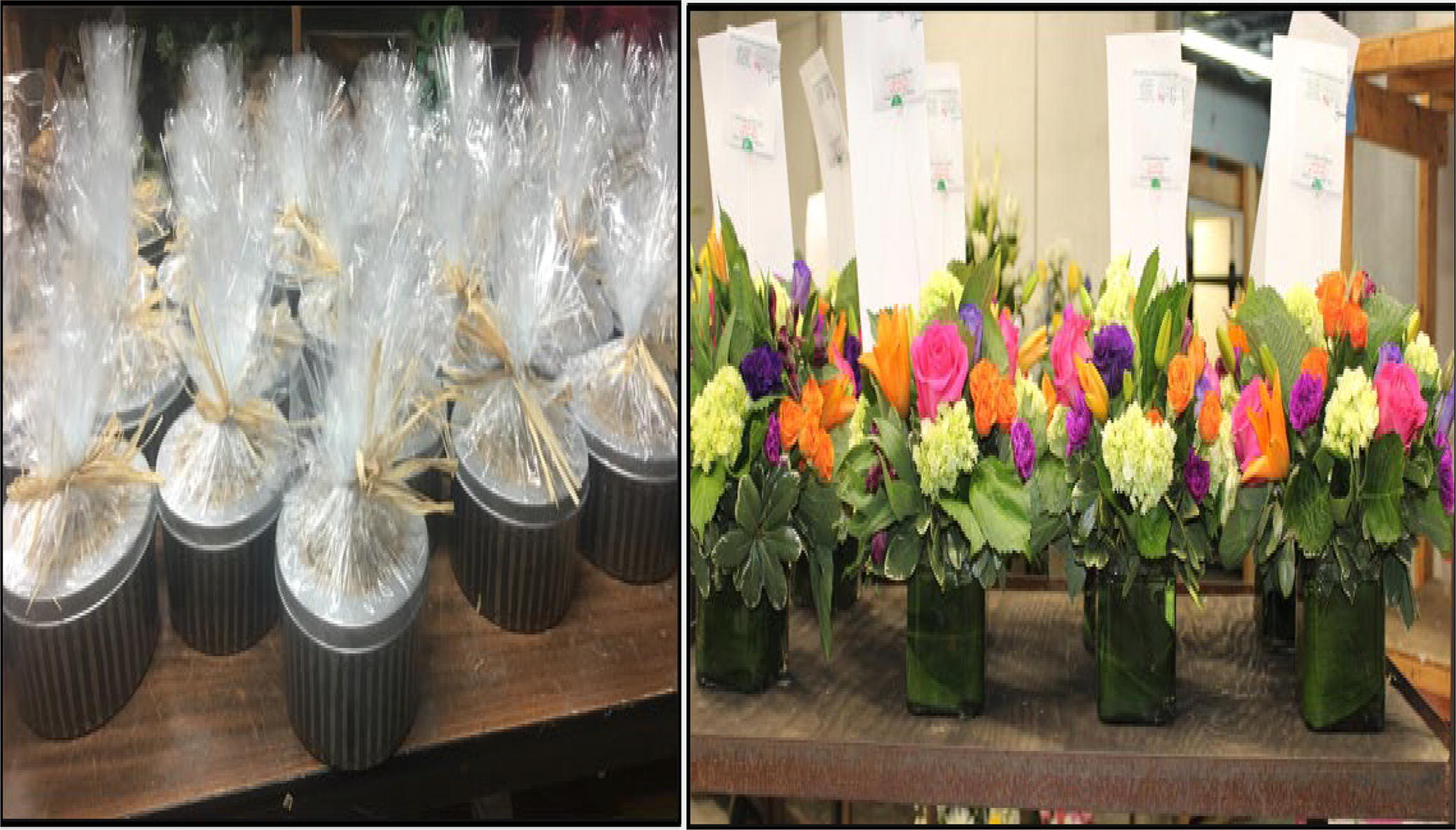
Prepared and delivered gifts—flower arrangement (right) and luxury candle (left).
Participants in all three conditions completed Qualtrics emailed surveys for 12 consecutive days. The pretest or baseline measures were completed on day 1. Deliveries for the treatment group (flowers) and comparison group (candles) were made on day 5 or 6 of the study. The post-test was completed on day 8 of the study. The pre- and post-test focused on the dependent variable in this study, perceived stress. The post-test also included a measure of the impact of the gift for the comparison and treatment conditions. On the other 10 days of the study, participants completed brief daily online surveys focused on mood.
Stress measurement
Based on environmental and attentional restoration theories and past nature contact findings, nature exposures are hypothesized to impact health by reducing perceived stress and, thus, stress-related disease and sickness. Stress was measured at the pretest on day 1 of the study and at the post-test on day 8 of the study with the Perceived Stress Questionnaire (PSQ) (Levenstein et al., 1993). The PSQ asks participants to consider how often they have felt a certain way within the past month from a list of 30 items such as “you feel mentally exhausted,” “your problems seem to be piling up,” “you feel discouraged,” and “you have trouble relaxing.” Response options are on a four-point Likert scale ranging from almost never to usually. The PSQ is commonly used self-reported stress measure with high internal consistency (alpha = .92) and high test–retest reliability (R = .82), as well as established validity (Levenstein et al., 1993). In this study, the PSQ was modified from perceived stress “over the past month,” to measure perceived stress over the “last few days” with an overall Cronbach alpha equal to 0.932 (Control 0.913, Candle 0.948, Flowers 0.928). Higher PSQ scores represent higher perceived stress. We compared pretest perceived stress to post-test perceived stress among the three groups.
Daily mood measurement
In addition to perceived stress at the pre- and post-test, we measured momentary indicators of mood each day. Each day, for 10 consecutive days, participants completed a brief 10-min survey comprising three mood instruments. Of the 10 daily mood surveys completed, four of them were completed for 4 consecutive days before the gift was received and were considered the mood pretest; four of the daily mood surveys were completed for 4 consecutive days after the gift was received and were considered the mood post-test; and two of daily mood surveys were completed for 2 consecutive days which overlapped with the deliveries to participants in the gift conditions and were therefore excluded from analyses. The daily mood surveys were composed of the after instruments as follows: Spielberger State-Trait Anxiety Inventory (STAI) (Marteau & Bekker, 1992), Profile of Mood States 2nd Edition (POMS) (Heuchert & McNair, 2012), and Positive and Negative Affect Schedule (PANAS) (Watson, Clark, & Tellegen, 1988). These surveys measure anxiety, mood, and well-being at that instant only, by asking participants to reflect on how they felt “at the present moment.”
The short form of the STAI is composed of six items that are ranked in terms of perceived frequency as a measure of perceived anxiety. Response options are on a four-point Likert scale ranging from not at all to very much. Scores can range from 20 to 80. According to Spielberger’s Manuals to interpret scores, the “normal” score ranges from 34 to 36, and higher scores indicate greater perceived stress (Marteau & Bekker, 1992). The POMS is a 40-question self-report assessment of participant mood, emotion, and affective traits. Response options are on a five-point Likert scale ranging from not at all to extremely. It contains six subscales that measure a Total Mood Disturbance score. A constant (100) was added to the raw score to make numbers positive (Heuchert & McNair, 2012). The PANAS is a 20-question self-report measure of positive and negative affect. Response options are on a five-point Likert scale ranging from very slightly to extremely, resulting in two distinct scores ranging from 10 to 50 points. The sum of the 10 positive items is subtracted from the sum of the negative items, where a high score indicates a more positive affect and less of a negative affect (Watson et al., 1988).
Impact of gift measurement
We also measured the reported impact of the “thank you for participating” gift on the last day of the study for those in the comparison and treatment groups (flower and candle). Survey items focused on how the gift impacted their stress, mood, well-being, and enjoyment. Each item consisted of five-point Likert response options from not at all to very much.
Data analyses
Survey data were analyzed with SAS 9.4 with some results and graphics created using JMP PRO 18 (an SAS product). A change variable was calculated for each of the instruments by calculating change from pre to post. Pre–post tests were conducted and analyzed. We compared baseline to post-test for perceived stress and daily mood trends among the treatment (flower), comparison (candle), and control groups. Stress pretest was measured on day 1 of the study, and the post-test was measured on day 8. Daily mood pretest was measured on days 1 through 4, and the post-test was measured on days 7 through 10. The intervention (delivery of the treatment and comparison) occurred on day 5 or 6 of the study.
The trends, comparative trends, and group comparisons for the daily scores for each of the instruments were made using multivariate repeated measures analysis of variance (ANOVA), where missing values in the PSQ were replaced using data imputation based on a regression tree. Eighteen values were imputed, increasing n from 152 to 170, using the fitted regression tree. The imputation method used employs a regression tree to predict the missing PSQ change values based on demographic characteristics. This approach may be preferable for its continuity, especially when there are limited predictor variables in the model (Loh, 2020) as in this analysis focused on PSQ stress outcome. Regression trees also allowed for missing values in demographic variables to be included in the prediction equation.
Paired t-test was used to assess the change from pre to post within groups.
We also compared the impact of the gift (post-only) between the comparison and treatment conditions using a Pearson’s chi-squared test for the following four items: enjoyment, mood, stress reduction, and well-being.
Results
There were no differences in baseline scores taken in the pretest phase among the three groups. See Table 1 for demographic summary of each group. Table 2 summarizes the results of the post–pre change scores for the imputed PSQ stress survey and the daily mood surveys. ANOVA analyses revealed that none of the F-test comparing the mean values of the control, comparison, and treatment groups was statistically significant. However, the post–pre change scores were the largest for the flowers group.
Demographics of Women by Group Percentage (%) and Counts (n)
Average Change = Post–Pre for Selected Instruments
PANAS, Positive and Negative Affect Schedule; POMS, Profile of Mood States 2nd Edition; PSQ, Perceived Stress Questionnaire; STAI, Spielberger State-Trait Anxiety Inventory.
Daily mood
The trends, comparative trends, and group comparisons for the daily scores for each of the instruments were made using multivariate repeated measures ANOVA (SAS 9.4). There were no statistically significant trends (day effect) except for POMS Adjusted (p = 0.005), which shows a downward drift for mood during the second week for the control group and flower group. There were no statistically significant differences in trend between the groups or differences between groups. Comparisons of weekly pre- and post-averages for STAI (p = 0.11), PANAS (p = 0.52), and POMS Adjusted (p = 0.63) were not statistically different.
PSQ stress
The PSQ stress post–pre test change scores represent the focal stress outcome in this study. The p value for the F-test comparing PSQ stress reduction among groups was p = 0.083. See Table 2. Three dependent sample t-tests revealed that the change between post-test and pretest stress scores was statistically significant at the rigorous p < 0.001 level among the flowers group. The control group also experienced a reduction in stress that was significant at the p < 0.05 level. The comparison candle group did not experience a significant reduction in stress. See Table 3 for the mean PSQ stress post–pre change scores and 95% confidence interval of stress scores for women in each group.
Pair t-Test Results for Perceived Stress Questionnaire for Each Group
p < 0.001.
p < 0.01.
p < 0.05.
The central focus of this study was to explore the impact of nature contact (flowers) by comparing the change in stress among women after receiving the nature contact delivery (flowers) and comparison delivery (candle). The least significant difference in the stress reduction between the treatment group (flowers) and comparison group (candles) was significant (p = 0.046; 95% confidence interval for the difference 0.06–6.3). That is, the reduction in stress score was significantly greater for women receiving the flowers than for those receiving a candle (p < 0.05).
Some demographic effects were evident with respect to PSQ stress scores change from pre to post. Specifically, the difference between the stress reduction response to candle and flowers was much greater for non-White women (p = 0.027) for interaction between race and treatment group. For non-White women in the candle group, PSQ stress increased slightly from pre to post (+2.875) but decreased notably in the flowers group (−9.667). In addition, there appears to be an education effect. For those with high school or GED (n = 15), the average PSQ reduction was 10.1 compared to those with more education (n = 139) where the reduction was 3.0. Of those with more education, the flowers group had an average reduction of 5.1 in PSQ compared with only 1.9 for those in candle or control groups. These results suggest that non-White women, White women with low income and low education, and White women with the highest levels of education had significantly greater reduction in stress associated with flowers than their counterparts.
Impact of gift
The four questions regarding the thank you gift were analyzed using descriptive statistics, including a Mosaic plot and a contingency table. Pearson chi-squared test for enjoyment, mood, stress reduction, and well-being indicated that women in the treatment group (flower) reported more of a positive mean response for each of the four items compared with the comparison group (candle). Enjoyment and mood were statistically more positive among the flower group compared with the candle group (p < 0.001, p < 0.05).
Enjoyment
For the item “Over the last week, did you enjoy your gift?” the mosaic plot (Fig. 2) indicated that the flowers were associated with a much more positive response. For the candle group, 28.0% responded “very much”, whereas for the Flowers group 58.7% responded “very much”. The p value for the chi-squared test was 0.009 (chi-squared = 13.55), demonstrating a strong, statistically significant association between those that received flowers and enjoyment.

Mosaic plot for self-reported enjoyment between the treatment (flowers) and comparison (candles) groups. Response to question: “Over the last week, did you enjoy your gift?”
Mood
For the item “Over the last week, did your thank you gift improve your mood?” The mosaic plot (Fig. 3) indicated that the flower group was associated with a much more positive response. For the candle group, 4.00% responded “very much,” whereas for the Flowers Group 19.57% responded “very much.” The p value for the chi-squared test was 0.033 (chi-squared = 10.45), demonstrating a strong, statistically significant association between those that received flowers and enjoyment.
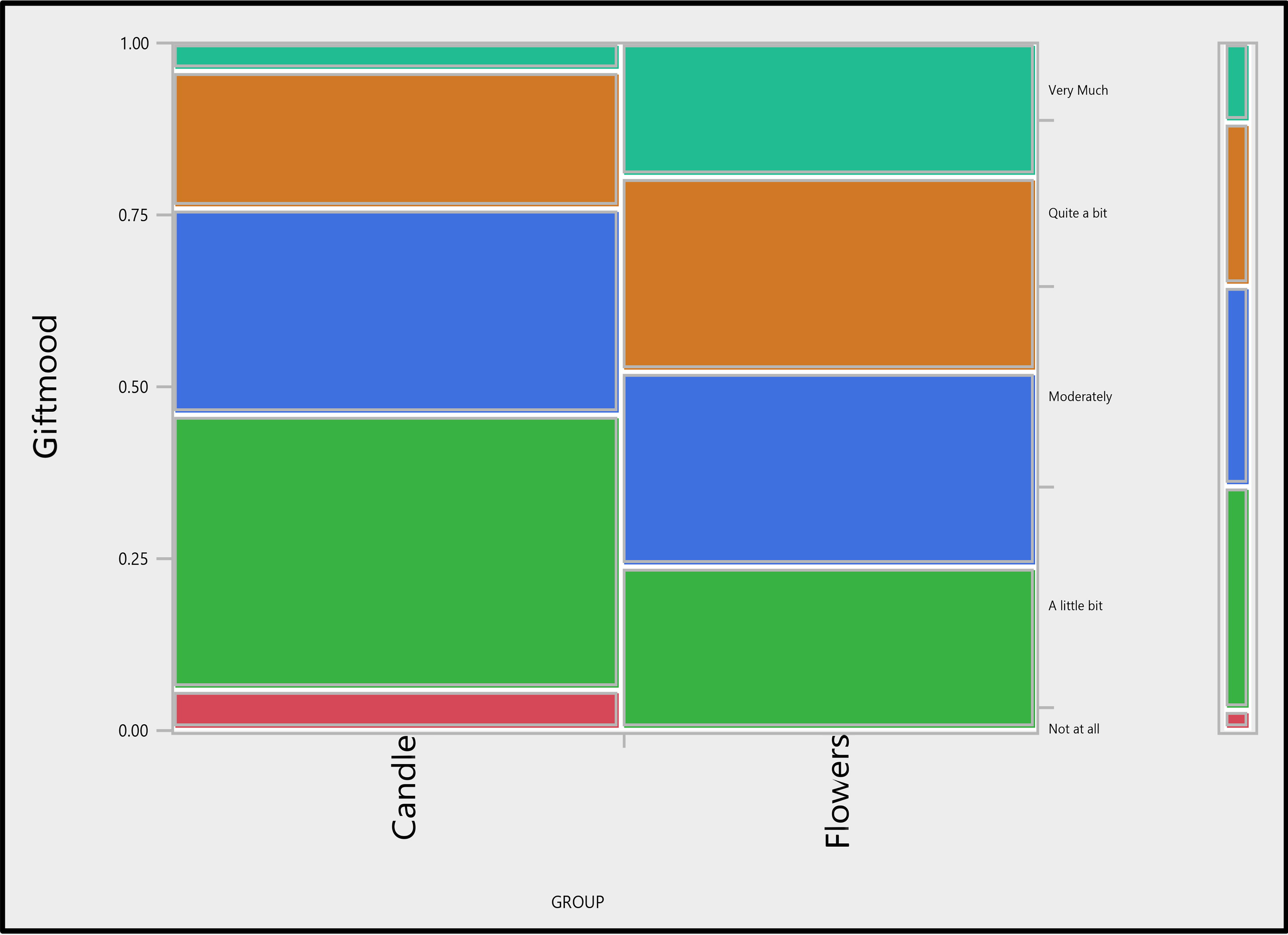
Mosaic plot for self-reported mood between the treatment (flowers) and comparison (candles) groups. Response to question: “Over the last week, did your gift improve your mood?”
Well-being
For the item “Over the last week, did your thank you gift improve your well-being” the mosaic plot (Fig. 4) indicated that the flowers were associated with a more positive response. For the candle group, 12.00% responded “very much” or “quite a bit”, whereas for the flowers group 21.74% responded “very much” or “quite a bit”. The p value for the chi-squared test was 0.070 (chi-squared = 8.668). This suggests that there was higher reported well-being among those that received flowers, but that the association was not statistically significant.

Mosaic plot for self-reported well-being between the treatment (flowers) and comparison (candles) groups. Response to question: “Over the last week, did your gift improve your well-being?”
Stress
Finally, for the item, “Over the last week, did your thank you gift reduce your stress” the mosaic plot (Fig. 5) suggests that women in the flower group reported more stress reduction than the women in the candle group. Despite the trends toward flowers and stress reduction, the p value for the chi-squared test was not statistically significant (p = 0.337; chi-squared = 4.55).
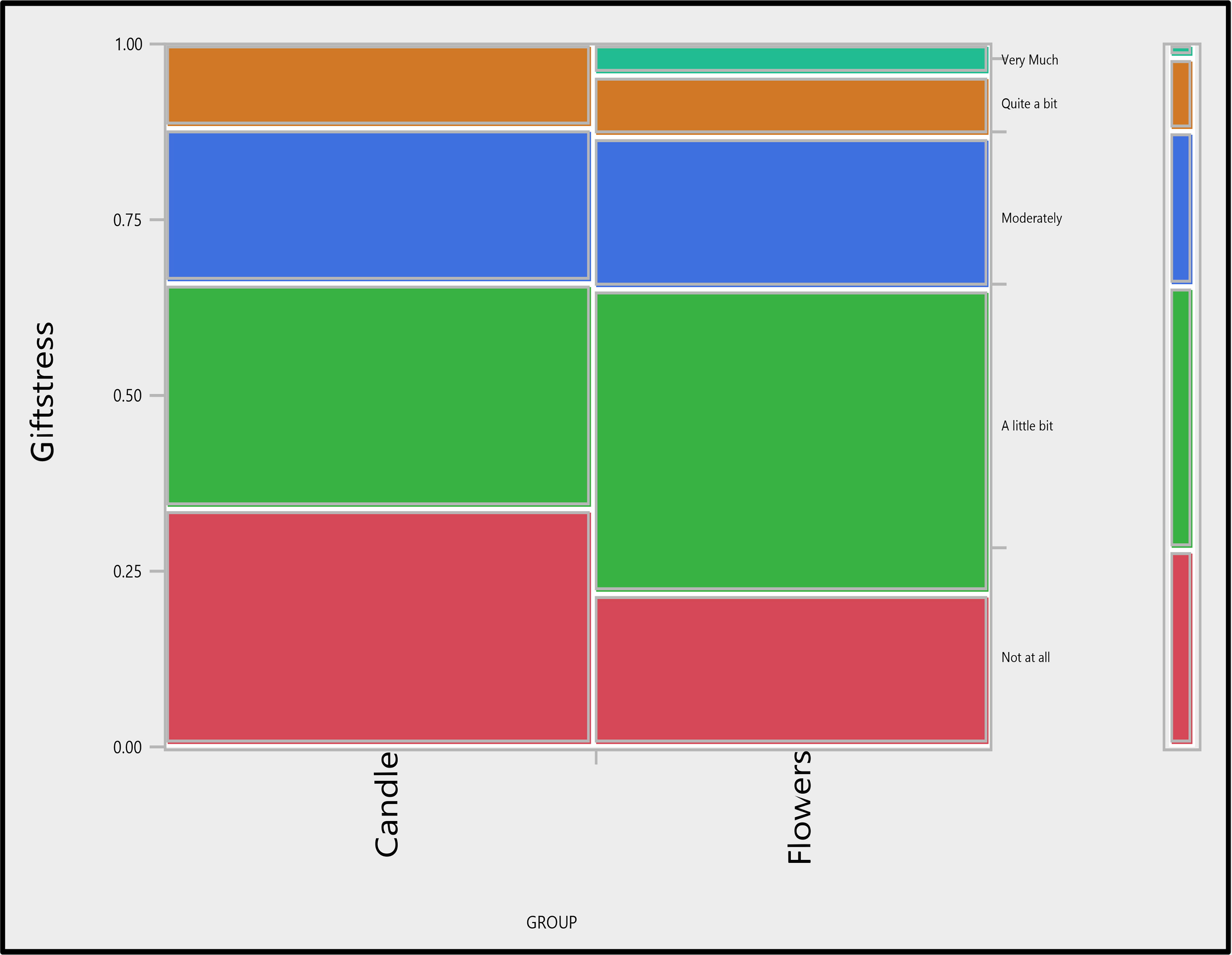
Mosaic plot for self-reported stress between the treatment (flowers) and comparison (candles) groups. Response to question: “Over the last week, did your gift reduce your stress?”
Discussion
The overall results of the study suggest that flowers had a positive effect on mental health indicators among the women in the study. All three groups (flowers, candles, and control) had lower PSQ stress scores at the end of the study (post-test) compared with the start of the study, but the women in the flowers group had the greatest mean stress reduction compared with the control and candles groups. The results of a series of paired t-tests revealed that the PSQ stress score was significantly lower after the flower delivery (at post-test) compared with before the flowers were delivered (pretest). The average reduction in stress among the women in the flowers group was −5.5 points on the PSQ, which demonstrated statistical significance (p < 0.001). The comparison (candle) group showed a mean decrease in stress, but the findings were not significant. The control (no delivery) group, however, did have a significant decrease in stress. The reduction in stress in the control group was small and represented approximately two-unit decrease in PSQ stress score. The reduction in stress among the control group from pre to post-test was an unexpected finding because the control group did not receive any gift or intervention.
When exploring the treatment and comparison groups (gift conditions), the flower group had significantly greater stress reduction (p = 0.046; 95% confidence interval for the difference 0.06 to 6.3) than the candle group. The reduction in stress score was significantly greater for women receiving the flowers than for those receiving a candle. This is important because both the candles and the flowers were a gift of similar value that were prepared and delivered by the same florist. The difference in the stress reduction scores suggests that receiving a surprise, thank you, delivery, and or a gift does not significantly reduce stress. These findings support previous nature contact findings (Bratman et al., 2015; Largo-Wight et al., 2011a, 2016; Shanahan et al., 2015; Trau et al., 2016; Yeo et al., 2020) and suggest that nature contact, in this study flowers, represents a healthy exposure in the residential environment.
The impact of flowers to reduce stress also appears to be associated with demographic variables in this study. It appears that some women were impacted more by flowers than others. In this study, non-White women, White women with low income and low education, and White women with the highest levels of education had the greatest reduction in stress associated with flowers. This calls for more research. Differences in nature exposure and nature response are important environmental justice issues that warrant more research. It is important to better understand the complicated role of nature benefits, beyond simply nature exposure, for varying populations of people to promote equity and reduce any nature divide (e.g., Sykes, 2022).
The preliminary analyses of the daily mood findings in this study did not show any clear patterns for any group. The impact of nature exposure on mood states is less studied, but researchers have reported a positive relationship between nature and daily mood over the course of 7 days in a past study (Kondo et al., 2020). If mood measurements are included in future studies, we believe that they should be considered in well-controlled experimental studies rather than applied quasi-experimental or correlational studies. Future studies should continue to refine and monitor changes in daily or short-term stress as a result of flowers or nature contact. Physiological measures such as cortisol samples or heart rate monitors should be considered, in addition to self-reported established valid and reliable survey methods (Largo-Wight et al., 2016).
Finally, the findings on women’s perception of the gift further support the notion that nature contact (flowers) was perceived most positively than the comparison (candles). Participants reported that they enjoyed the flower arrangement more than comparison gift and they believed that the flowers improved their mood more in comparison with the candle. In addition, the women also reported higher rates of agreement that flower arrangement reduced stress and improved well-being compared to the candle gift.
Conclusions
Indoor nature contact or “bringing the outdoors in” is a healthy indoor exposure. Natural light, the quality of the view from the window, and indoor plants, for example, have been shown to reduce stress and promote well-being (e.g., Frumkin et al., 2017). The findings of this study suggest that flower arrangements behave like other well-studied indoor nature contact exposures to reduce stress and promote well-being.
Health by design is an emerging concept within the One Health approach that highlights the need for environmental and contextual considerations to promote health and reduce stress (Destoumieux-Garzón et al., 2018; Frumkin et al., 2017; Gallagher et al., 2021; Largo-Wight, 2011; Maller et al., 2006; Zinsstag, Schelling, Waltner-Toews, & Tanner, 2011). In this study, simply having flowers in the home resulted in a reduction in stress and showed mean increases in other emotional health-related variables such as enjoyment and mood.
Importantly, bringing nature inside one’s home is relatively simple and requires very little commitment. Compared with other stress-reduction approaches, adding nature contact indoors for health is a simple strategy that does not require significant effort, commitment, or discipline. Nature exposure and biophilic design is an innovative and practical public health solution.
Limitations
This study has several important limitations. First, the participants’ perceived or actual exposure of the flowers (and comparison condition) was not measured in this study. Future research should seek to measure the placement of nature and exposure in applied research studies. Second, because the focus of this study was women’s health, men and children were not included in this study. It is not known if men and children would have similar positive stress reduction outcomes and enjoyment to flowers and nature in the home. This calls for future research. The comparison of the stress reduction, the PSQ stress change scores (post–pre), among the three groups was not statistically significant (p = 0.083). The lack of significance in stress reduction change scores at the standard alpha of p < 0.05 among groups may reflect the relative small unit of change in the PSQ stress measurement. This is another limitation of this study. Future studies should include other measures of stress and health, including physiological and qualitative measures. Finally, within-group analyses showed that the flowers group experienced the greatest reduction of stress among the three groups and reached the highly statistically significant alpha of p < 0.001. However, all three groups showed a mean decrease in stress over the study, and the control group’s decrease also reached significance, albeit at the standard alpha of p < 0.05. This was an unexpected finding that could be a result of the applied nature of the study, relatively small units of change, and or bias. Future researchers should include other measures of stress-related variables, such as qualitative measures of stress and or physiological measures of physical stress and tension (Crosswell & Lockwood, 2020).
In addition, future research should measure the impact of other indoor nature exposures in the home, which is a priority indoor setting. Future studies may also explore the impact of flowers on stress in other settings such as workplaces and clinical settings. Schools are also an important setting for nature contact interventions. Past findings have shown that nature contact at school has positively affected both teachers and students (Guardino, Hall, Largo-Wight, & Hubbuch, 2019; Largo-Wight et al., 2018). Future researchers may explore flowers in a classroom on the impact on student and teacher stress and productivity. Future research should also use experimental designed studies, which control for exposure, as well as additional measures of stress and well-being such as physiological measures of stress (Corazon, Sidenius, Poulsen, Gramkow, & Stigsdotter, 2019; Largo-Wight et al., 2016; Park, Tsunetsugu, Kasetani, Kagawa, & Miyazaki, 2010).
Footnotes
Authors’ Contributions
E.L-W.: Conceptualization, methodology, funding acquisition, and writing—original draft. H.K.: Data curation and methodology. M.B.: Investigation and formal analysis. P.W.: Formal analysis and data curation. S.H.: Methodology and writing—reviewing and editing.
Data Availability
The data that support the findings of this study are available from the corresponding author (E.L.W.) upon reasonable request.
Author Disclosure Statement
No author disclosures were reported by the authors of this article.
Funding Information
Funding source is a professional association for florist professionals. Previous internal funding from the University of North Florida’s Institute of Environmental Research and Education supported the development of this nature contact research.