




Abstract
Integrative Eco Art Therapy (IEAT) is a humanistic and eco-centric approach to restoring and cultivating healthy attachments between humans and the natural world. IEAT employs the frameworks of art therapy, eco art therapy, integrative trauma-informed psychology, and the sciences, to provide individually centered healing that is informed by the principles of Interbeing, reciprocity, and cooperation. This article presents both a theoretical framework for IEAT and an in-depth case study of IEAT with a young adult with complex trauma and maladaptive daydreaming disorder. A distinct link was observed between the creation of art in or with Nature within an IEAT framework, and the improvement of this individual’s executive functioning, integration of traumatic experience, and establishment of more secure attachments. Through integrative didactic engagement, experientially gained insight, artmaking in which Nature serves as metaphor, material, or setting, IEAT can restore and repair some of the fractured attachments humans have to themselves, other people, and the natural world.
Introduction
As humanity continues to sever its attachment to the natural world, operating as “other” rather than an integral thread within a vast tapestry of life, human despair manifested as sadness, loneliness, addicted consumption, and acute numbness has ascended to unprecedented levels. Our collective exile from our Indigenous, ‘Ecological’ selves, has enabled us to perpetuate seemingly endless traumas on one another and our planet. The fractured attachment between humans and the natural world requires an attuned response that is reflective of the interconnected nature of life and the innate complexities of human existence.
The Anthropocene, or the current geological age of the planet, relates to the period during which human activity has become a dominant force on the climate and the environment. Some scientists assert that this impact was initiated approximately 11,000 years ago when human subsistence shifted from hunting and gathering to agriculture, but most recognize the Anthropocene as beginning with the industrial revolution in the 1780’s (Gabrielli, 2015). Through varied and highly impactful activities which are predicated on the view that our Earth home is an endless resource intended for human extraction, consumption and pollution, we have effectively produced the conditions for a serious extinction crisis and ecological collapse (Pievani, 2014). Living through an anthropocentric lens has enabled humans to not only separate themselves from the natural world, but also to perceive themselves as superior to it. Fueled by a capitalistic orientation to domination, financial success and power, humans have come to interact with the natural world much as a sociopath does with their victim. Sociopaths are described as “arrogant and self-centered and feel privileged and entitled. They have a grandiose, exaggerated sense of self-importance, and they are primarily motivated by self-serving goals,” (Miles, 2023, p. 224).
In other words, humans continue to be actively engrossed by what Joanna Macy and Johnstone (2012) termed, “business as usual.” This model centers economic growth as the primary goal with Nature as the key commodity awaiting human consumption, with little to no regard for how this impacts other people, nations, or species (Macy & Johnstone, 2012). This sociopathic relationship between the human psyche to the natural world not only leaves us susceptible to moral and social degradation, but also as Derber (2013) argues, a society that is organized around antisocial values is one that is headed toward societal and planetary self-destruction. Our society has been physically manifesting in its totality what the Anishinaabe People termed “the Windigo,” or a “human being who has become a cannibal monster,” (Kimmerer, 2013, p. 304). On both an individual and systems level, the more the Windigo desires, the more the Windigo takes, ultimately leading to detached, psychotic consumption with little to no regard for consequence.
From an attachment perspective, we are in a relational crisis with our Earth home.
Attachment theory tells us that beginning in the “first moments of life, an infant’s sense of self begins to take shape within a matrix of relationships that create a unique set of experiences,” (Blaustein et al., 2021, p. 62). Object relations or the burgeoning and delicate understanding of self in relation to others and the world has primarily been focused on the formation of a secure attachment between the infant and their caregivers or primary objects (St. Clair, 2000). We now understand that this “matrix of relationships” extends far beyond the infant’s caregivers and that “people relate to the environment similarly to how they relate to people with whom they have meaningful attachment relationships … and that ecosystems, particularly those experienced as children, function as object relationships,” (Bodnar, et al., 2023, p. 110). Humans as collective caregivers have disrupted the sacred attachment between people and the natural world by shifting our stance from one of mutual, reciprocal respect, and allyship to a relationship based on chronic abuse, traumatization, and annihilation. As the human to natural world object relationship becomes increasingly fractured, humans both have reduced capacity to restore and repair the relationship and suffer tremendously as a result of its brokenness.
Our psychic numbing, detachment, and ultimate destruction of the natural world not only devastates life communities, but also our psyches are left depleted and less apt to attach to ourselves and others with authenticity, care, and safety. Earnest though we are to separate ourselves from the natural world, we fail to see that this severing has left us on a fateful journey upon which we may lose all sense of what it means to be alive. In his seminal book, The Great Work: The Way into the Future, Thomas Berry (1999) notes that “this psychic world of no attachment, no intimacy, is also the world of no fulfillment,” (p. 94). We have yet to collectively unlearn conditioned beliefs about what brings fulfillment and relearn primordial ways of being in which connection and self-actualization are inextricably woven into the vast tapestry of life.
The Gaia hypothesis proposes that living organisms interact with their inorganic surroundings on Earth to form a synergistic and self-regulating, complex system that helps to maintain and perpetuate the conditions for life on the planet (Lovelock & Margulis, 1974). This theory “refers to the Earth as having the capacity for homeostasis,” an innate ability to comprehensively self-regulate “in response to changes in the outer world,” (Berry, 1999, p. 90). We have effectively disrupted Earth’s ability to self-regulate and are in-turn chronically dysregulated ourselves. “Deaths of despair,” due to drugs, alcohol, and suicide have contributed to rising mid-life mortality in the United States, and other nations (Dowd et al., 2023). The trend of suffering continues to pervade the individual and collective unconscious.
In their co-authored book chapter, The Ethics of Gaia: Geoethics from an Evolutionary Perspective, Belardinelli and Pievani (2023) posit that in this age of the Anthropocene, “a global ethical framework is most needed to support the rapid transformation of current development models, to ensure the protection of human and non-human nature,” (p. 55). The authors go on to note that “humanistic, eco-centric geoethics can support the necessary transition toward a new conceptual framework in which humans are not separate from, but part of the biosphere,” (Belardinelli & Pievani, 2023, p. 55).
Theoretical Framework
Integrative Eco Art Therapy (IEAT) is a humanistic, eco-centric framework in which the ruptures and disruptions in attachment between humans and the natural world are restored and vitalized through a person-centered approach that is framed within a larger context of deep interconnectedness. This multidisciplinary model is based on years of application of Integrative Creative Arts Therapy—a multimodal approach to healing trauma, transmitted through the essential lens of ecology. Within IEAT, there is a mutual reverence for the sovereign experience of the individual as well as the collective health of the planet and all who reside here. The health and well-being of the individual becomes both reflective and dependent upon the health and well-being of the natural world. Ecotherapy, also referred to as Nature Therapy, is an “eco-centered, relational, embodied, and mindful approach” in which “Nature and more-than human species become the co-therapist interacting with the client and therapist and promoting opportunities for healing and recovery,” (Fisher, 2023, p. 216). Informed by the ruptured attachment between humans and the natural world, ecopsychologists, and therapists are encouraged to “turn the psyche inside out,” through an inquisitive journey to the deepest recesses of the psyche (Kahn and Hasbach, 2012, p. 82).
IEAT further expands upon this field of vision, adding to the already luscious “pond ecosystem” with much needed diversity, perspective, ideas, philosophy, and practice (Hasbach, 2013, p. 229). With its emphasis on the individual’s singular creative manifestative process as it relates to and is defined by the collective, IEAT answers Hasbach’s (2013) question of ‘how deep we can go’ in discovering the “wildness we carry within,” (p. 229). Living in and with the broader Earth community, we come to understand that all natural beings have a “wild component, a creative spontaneity” that is our deepest reality (Berry, 1999, p. 48). The directives and applications of IEAT provide direct access to the person’s ‘wildest,’ primordial ways of being, seeing, and experiencing the world. Sublimating this deep subconscious material into physically manifested symbolic creations—art—provide the individual and the practitioner with a direct view of said ‘wildness.’ Once this creation is contextualized and integrated into the greater milieu of the individual’s life, the meaning of the gained insights is effectively bridged between procedural knowledge with deep states of intuition and understanding. For the Art Therapist, the process of fostering externalized attachments is known and highly evolved and is particularly well suited to extend another layer of depth to the relational dynamic found in the expansive forces of Nature. The art object lends itself to be both a symbol of the mind as well as an externalized relational object through which the individual is able to better understand and integrate newly formed attachments to self and other(s).
The foundational focus on Interbeing, a term gifted to the collective unconscious by prolific Buddhist monk, Thich Nhat Hanh (2003) is the “identity stance in which all beings are conceptualized to be changing patterns of a universal system, undivided by separate selves,” (Frymann, 2023, p. 2). Interbeing allows for the individual to begin to actualize the formation of a secure Ecological Self where one redefines the “boundaries of the self beyond the body, [and] an identification of human nature with the natural world,” takes place (Regala, 2016, p. 69). IEAT extends beyond the application of Eco-Art Therapy, “a holistic, integrative mental health practice in which clients, facilitated by the therapist, use natural art materials and settings, the creative process, and the resulting artwork to improve mental, physical, and emotional health,” through its focus on Interbeing, interconnection, and the establishment of a secure, Ecological Self in restoring fractured and broken attachments (Pike, 2021, p. 3).
In IEAT, Nature lends itself as metaphor, material, setting or ideally all three conjunctively, providing participants with the integral opportunity of intentional creation-making that is both introspective and generative, exercising what Henshilwood and Marean (2003) have termed “the symbolic mind of our species.” Employing this singular human quality within an IEAT framework, effectively and safely fosters an internal readiness for change. The kinesthetic, neurobiological, psychic, and emotive benefits of art or symbolic generation through an IEAT orientation, creates a proverbial bridge, to the generalized patterns of the individual’s life and ways of being. The ensuing art object serves as a transitional object for the individual from which they may garner positive emotions and feedback, connecting the individual internally to the experience with the natural world. The art object effectively creates a new feedback loop that when processed, contextualized, and deepened through the IEAT orientation, restores and cultivates a new, corrected attachment to self, others, and Nature. The unique relational stance within IEAT encourages people to utilize the verbal exchange and the creative process as catalysts to move beyond the limiting binary as therapist as primary relational object to Nature as the primary object. This interconnected, universally oriented attachment allows for greater resourcefulness, altruism to self, others and planet, as well as greater hedonic and eudaimonic well-being, with higher levels of self-reported personal growth (Pritchard, et al., 2020). Here, IEAT leans into the science of awe, or “the feeling of being in the presence of something vast that transcends your current understanding of the world,” (Keltner, 2023, p. 7). The study of awe has established that immersive experiences in Nature, the creation of art, and the experience of collective effervescence are all primary means for experiencing the wellness enhancing feeling of awe (Keltner, 2023). In IEAT, we create and process art about embodied awe-inspiring experiences, and this helps humans achieve what may be the “highest purpose of human presence on the Earth,” of individuals experiencing both higher levels of wonder as well as more intimate relationships with “various life communities,” (Berry, 1999, p. 87).
IEAT is further illuminated by trauma-informed psychology that incorporates four interwoven components of relationship, regulation, parts-work, and narrative or integrated meaning-making (van der Kolk, 2019). “Nature therapy is a relational embodied bottom-up approach to trauma-informed treatment (Fisher, 2023, p. 219). By engaging with Nature as co-creator and therapist, “the practitioner helps to nurture a biochemical exchange that promotes a calm limbic system, a more present state, and enhanced prefrontal cortex engagement,” which allows for safely “working with attachment issues beyond traumatic narratives,” (Fisher, 2023, p. 219). The integration of these varied modalities and disciplines allows IEAT to operate as a biomimicry-inspired response (Jamei & Vrcelj, 2021), to restoring the fractured attachment between humans and the natural world, where Nature is both the mentor and the model for creating lasting and sustainable solutions. The intentional creation of art within this framework appears to effectively improve individual’s executive function, integration of traumatic experience and fragmented parts, and capacity for restoring and cultivating secure attachments with self, others, and the natural world.
Practice Description
Over the course of the last four years and a half, I embarked on a contemplative journey of discovery and allyship forged with both people and sentient beings from the natural world. Trained in humanistically centered Art Therapy at The School of Visual Arts, I earned my master’s in professional studies in 2005. Throughout my clinical career, I focused on offering trauma informed, person-centered art therapy to individuals, families, and communities affected by overwhelming experiences. From chronic homelessness to sex trafficking and domestic violence, to insidious psychological abuse, I worked in various organizational settings both in New York and Israel servicing a wide variety of people from a rich gradient of backgrounds, cultures, and ways of being. I also accrued years of professional experience in the non-profit sector working in strategic partnership and organizational development. Having implemented models for growth and change on both the persons, micro (and multinational organizational), macro levels, I conceived of a practice that would center itself on the dynamism of integrative and systemic approaches to healing.
During the COVID-19 shutdown, working primarily with adolescents and adults who experienced complex and acute trauma, I observed several key clinical presentations in both new and existing clients: increased rates and intensity of depression, increased dissociation, and what can only be described as deprived senses of self. Torn from the identity-feeding spheres of work and school, people found themselves either directly or subconsciously contending with existential uncertainty regarding identity and meaning. The implementation of IEAT began as an intuitive response to this felt and perceived listlessness. IEAT was initially solely provided through individual psychotherapy which largely informed the evolution of workshops and professional development trainings.
My practice is based in Huntington, New York, a vibrant and diverse suburb on the north shore of Long Island. Long Island as a region, although surrounded by water and having a rich history of Indigenous stewardship of land, has been adversely affected by a hyper-fixation on material excess and consumption. What Kahn (2002) termed “environmental generational amnesia” is markedly pronounced in the general population of Long Island as walks in the mall are far more commonplace than walks in the woods. The Windigo is ever present.
The establishment of an eco-centric, pluralistic, and egalitarian practice in such a region feels ever more urgent and necessary. In 2023, I joined the Climate Psychology Alliance—North America and became the Regional Coordinator for Long Island. I am also a faculty member of the Climate Emotional Resilience Institute.
I have been applying IEAT over the last four and a half years with all my private practice clients to varying degrees depending on individual’s presenting problem, sense of inner resourcefulness, and interest. Individual application of IEAT has taken place both within the office setting, virtually, in local town parks as well as local Nature preserves. My current office and studio are on 4 acres of serene gardens in what was once the Lenape land known as Setauket (Strong, 1997). I am fortunate to have direct access to magnificent gardens, creatures of all kinds, as well as the waters of Huntington Harbor outside my door. This has significantly deepened my ability to facilitate and share the practices of IEAT.
Method
The following case analysis will illustrate key thematic elements of IEAT and will later elucidate key components that have informed the application of IEAT within group and workshop milieus. Participant data in the case study has been anonymized and in no way distorts the scholarly meaning.
Informed Consent: The participant of this case study provided written informed consent for the use of their experiences in this study, was actively involved in the development of the article, and has explicitly granted permission for their information to be shared and analyzed in this context.
Case study
Kevyn found me online in the summer of 2020. An immediate synergy was felt and the sense of possibility for an allyship was profound. I set aside the constricting financial considerations of private practice to make weekly therapy sessions accessible and so it was from the commencement of therapy that Kevyn and I began to break down the hierarchies dominant not only between man and Nature but also between clinician and patient. We were and remain, interconnected allies. In fact, Kevyn has reviewed this article, and we have discussed the meaning of the work. His feedback has directly deepened my understanding of the impacts that IEAT has had on his life. Kevyn, a black, gay 21-year-old man, identified as “post-gender” and was seeking trauma-informed art therapy in response to years of chronic poverty, homelessness, racism, bullying, and homophobia. Kevyn was highly sophisticated and expressive and although he portrayed vibrancy in character and aesthetic, he was acutely depressed and suffering from maladaptive daydreaming disorder. Kevyn was engaged in daydreaming between 7 and 8 hours a day and scored as severe on the Maladaptive Daydreaming Scale (Somer, et al., 2017). “Maladaptive daydreaming is a distinct clinical condition entailing an extensive addictive-compulsive immersion in vivid fantasy featuring complex scenarios, which causes distress or interference with daily functioning,” (Soffer-Dudek & Somer, 2022, p. 22). It has been established as a dissociative response to overwhelming, traumatic experience.
Kevyn and I discussed his exceptional imagination and how it had been long employed to protect him from overwhelming experience, and he agreed that the intense and prolonged states of dissociation were causing him distress and shame. Throughout our time working together, daydreaming was framed as a gift that can and should be sublimated so that Kevyn could feel greater agency and control. Leaning into his natural ways of being, I suggested adding structure and support by way of designating daily time for daydreaming. By honoring Kevyn’s sacred nature, he was able to begin to move to a place of greater self-acceptance and love.
Kevyn was collecting unemployment and was sleeping poorly on a couch in a cramped, urban apartment with his mother, her paramour, and three siblings. When not daydreaming, Kevyn was suspended in a state of limerence, replacing his disorganized attachments to his mother and his nonexistent attachment to his father, with fantasies about straight, unavailable men he barely knew. Kevyn’s life was riddled with acute traumatic experiences, likely beginning in utero. His mother was rushed to the hospital to deliver him after being badly beaten by his father.
Despite his disorganized attachment style, and this being his first experience with trauma-informed psychotherapy, Kevyn and I were quick to develop a rapport. Apart from two in-person sessions, the entirety of our weekly sessions from June 2020 through what is now September 2024, took place virtually as Kevyn lives two hours away from the practice office. The early clinical focus was on the establishment of a safe and containing therapeutic alliance, increased capacity for self-regulation with initial glances at parts and personal narrative. Our didactic exchange was rooted in psychoeducation with a focus on the indelible and internalized effects of intergenerational trauma, racism, and homophobia. Discussion regarding art history with an emphasis on artists of color, symbolic archetypes, tarot, and spirituality as it pertained to Kevyn’s experience were also prominent. Sessions typically began and were interspersed with mindfulness and breathwork prompts and Kevyn worked to expand his window of tolerance as he and I processed his art. He became increasingly aware of how his “timeline of trauma” had affected his sense of place both within himself, his family, the queer and black communities, and with people in general. The acute trauma and the deep enmeshment of his family of origin left Kevyn going through life with no sense of self, identity, or belonging to place or people. As someone who identifies as “post-gender,” Kevyn has also felt shunned within the queer community itself. He was psychically and physically depleted, unable to attach to his own sense of self let alone experience secure attachments with others.(Fig. 1)
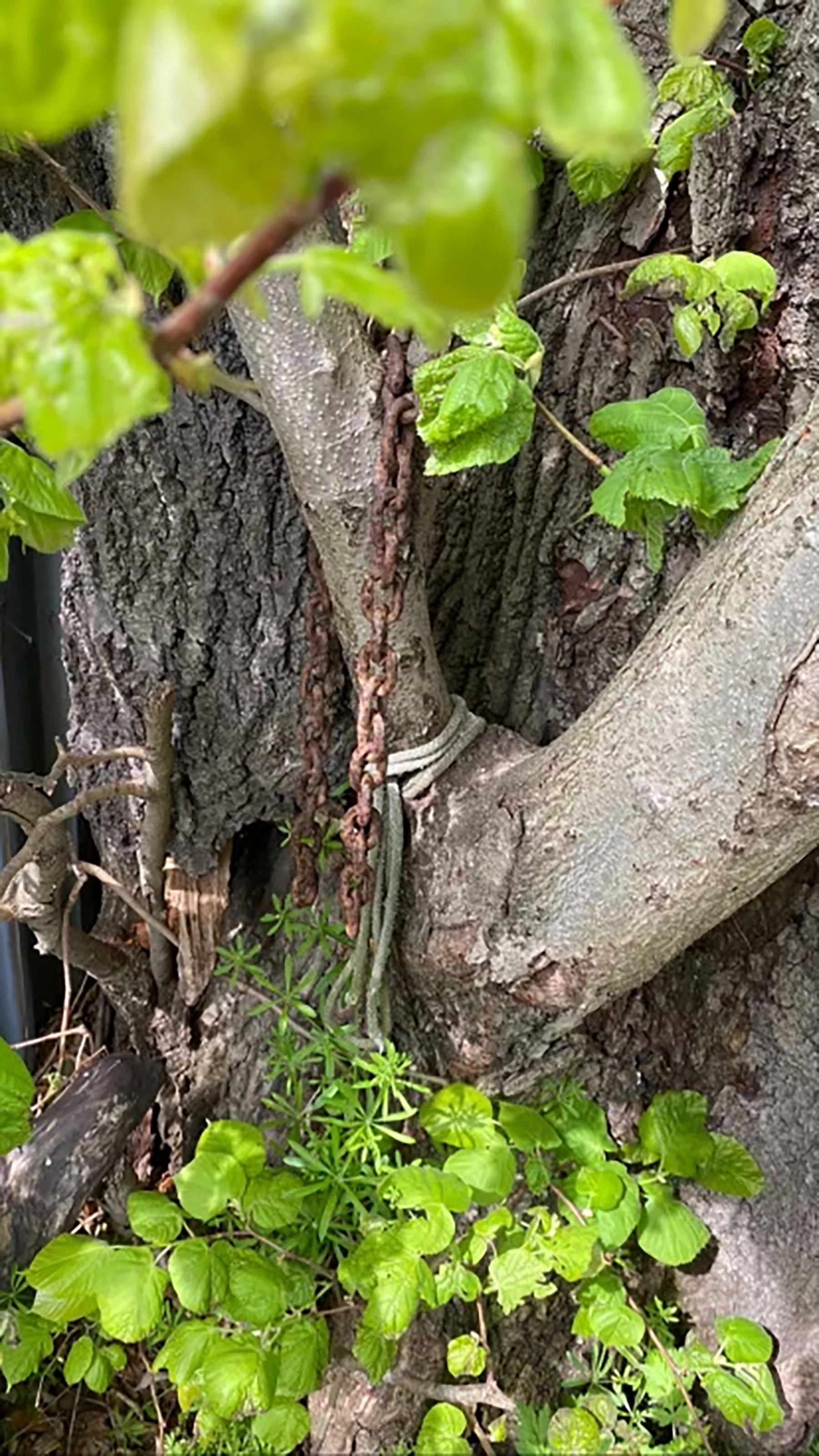
Gilda, July 2020.
Night and day and in all weather, Kevyn met with me weekly while sitting underneath his beloved Tree, whom he came to call Gilda. Kevyn would diligently set up his tripod under Gilda’s protective canopy, intuitively turning every session into a work of art. Kevyn took notice of Gilda’s foliage, her textures, and the way she swayed in the breeze. Gilda came to be Kevyn’s first Nature Ally—a consistent and stable presence in what was otherwise a tenuous and chaotic existence. It is important to note that Kevyn’s Tree of choice has branches that have been eroded by a rusty chain. The chain as symbol for confinement and later for self-generated liberation, has been prominent in Kevyn’s artwork as he has contended with themes of intergenerational racism and oppression. It is poignant to note that Kevyn’s awareness to this parallel process has been significant—both he and his human family have been subject to the same systems of oppression that Gilda and the natural world have been subjected to in the rapid onset of the Anthropocene.
In response to this fractured attachment orientation, I contextualized Nature as metaphor, subject, and setting both in the verbal exchange as well as the art directives. Kevyn was quick to make art to which he formed healthy attachments, allowing both the art and I to lend him ego strength and containment. He worked with various materials outside of session, providing a much-needed proverbial bridge for him between the therapy space and the general milieu of his life. Materials included acrylic paint, pencils, pens, markers, polaroids, video montage or “cinematics,” collage, found and natural materials. Kevyn, however, continued to experience acute depressive symptoms as his homelife remained constraining and stressful. He was unable to obtain psychiatric care due to overwhelming need in the community, and in late summer of 2020, he was hospitalized for 2 weeks. Kevyn noted the retreat-like qualities of his psychiatric hospitalization and became increasingly stable after his discharge.
Kevyn resumed meeting with me from underneath Gilda and other Nature Allies soon emerged including a family of stray cats as well as a resident cardinal. Kevyn began to orient himself to the narratives of the cats and the cardinal, finding meaning and wonder in their presence during our sessions. It is during this time that we began to speak about Universal interconnection, and how trauma can leave us with a restrictive understanding of who we are and what our place in the world is. We discussed the expansiveness of existence and how Kevyn’s extended far beyond the constricting binaries of family, trauma, or any human construct. Forming awareness around this interconnection is what allowed for his exploration and formation of new, secure attachments to the more-than-human world. The emergence of nurturing attachments empowered Kevyn to begin releasing old ways of being with himself and others. Kevyn began to unearth and listen to authentic parts of himself that had been buried by shame, familial, and societal conditioning. The potent metaphor of seeds residing within oneself was prominent and Kevyn created a series of reflective art pieces. (Fig. 2)

Seed #1, September 2020.
This first image (Fig. 2. Seed #1) is illustrative of an IEAT prompt which asks that the artist borrow from Nature as metaphor. The seed, with four distinct parts, surrounded by primal and saturated reddish soil, was a self-representation for Kevyn who often felt split and oversaturated by deeply embodied trauma and the vividness of his imagination. Kevyn and I were able to note the readiness for emergence with the seed’s proximity to the surface. We discussed the environmental factors every seed needs to thrive and how we too rely on environments to bloom. Kevyn went on to explore the process of germination and how this reflected on his ability to separate and individuate himself both from trauma and the cyclical patterns of family. The art object, externalized from Kevyn’s psyche, became the relational object embodying Universal themes of latent potential waiting to be realized, through which Kevyn was able to integrate that this applied to him as well. Kevyn created a bird’s nest employing some of Gilda’s fallen branches as material. The “The Bird’s Nest Drawing (BND) was conceived as an art-based assessment that would provide information about an individual’s attachment security as depicted in a drawing,” (Kaiser and Deaver, 2099, p. 26). Utilizing materials from, Gilda, a nature ally, within the IEAT framework promoted deeper introspection and integration of potent attachment themes. While handling his bird’s nest, Kevyn noted that he understood his dissonant need and deprivation of a foundation. He noted that working with Gilda’s branches gave him strength which empowered him to consider the quality of his friendships and life goals. Gilda lent Kevyn ego strength, both as a transitional object in and of herself, and as material for his externalized art object, helping Kevyn gain insight and much needed integration regarding his nonexistent sense of belonging and his capacity to generate it anew.
In the summer of 2021, Kevyn was able to successfully move out of his mother’s apartment for 3 months. He had obtained several jobs with large chain stores and was contending with his innate need and right to experience freedom. It was during this time that Kevyn created the next image in which he had transformed into the fully emerged seed turned powerful figure, actively engaging with and within a purely natural landscape, aspiring to touch Nature and be surrounded by it. (Fig. 3)

Self-portrait, June 2021.
Kevyn, however, continued to be challenged by impulsive spending, rumination, and limerence and returned to his mother’s apartment after 3 months. He felt demoralized and the next year was challenging for Kevyn, as he struggled to save money with the goal of living independently.
In the summer of 2022, Kevyn began working on a ferry and things began to shift. Kevyn subconsciously transferred and reexperienced many of the same disorganized attachment styles with coworkers as he did with his family. We discussed how unintegrated parts within him were triggered by being seen in ways that felt misaligned with his core self; an experience he knew all too well from his childhood and adolescence. In another IEAT directive, I asked that Kevyn create imagery about his coworkers represented as animals coexisting in and around the ferry. He was able to draw potent parallels both about relational projections he was experiencing and about how he could better navigate “the waters” of being in relationship with peers and colleagues.
We began to address the horizon as a metaphor, as I encouraged Kevyn to expand limiting beliefs of self and one’s place in the world. I taught Kevyn space-time bridging to help him better achieve personal goals while contending with his peripersonal space as it related to his external world (Huberman, 2022). Themes of interconnection and Interbeing continued to surface, and we discussed awe and the daily pursuit of it. Kevyn developed an interest in birds, plants, and herbs. He also began taking a keen interest in herbalism and I introduced Kevyn to a book which proved to be pivotal: Circe by Madeline Miller (2018). Kevyn identified with Circe’s mystic knowledge as well as her excommunication to an island. He felt his life had largely been lived on proverbial islands and that now, he too, was left to immerse himself in the overlooked magic of the island to which he helped ferry passengers to and from daily.
It was at this time that Kevyn’s most profound nature allies began to emerge. Kevyn began feeding the Sparrows which flocked near his boat peanuts. He would share how with each passing day, the Sparrows became increasingly comfortable with him, coming nearer, as he began to identify individuals in the flock. Kevyn also began to engage in deeper spiritual work, exploring his shadow self through a prism of mythology, in Cyndi Brannen’s (2023) Entering Hekate’s Cave: The Journey Through Darkness to Wholeness. He engaged in various creative pursuits, collaborating with artists and photographers. Throughout this time, Kevyn continued to struggle with dysregulation and depressive symptoms; however, his orientation became more expansive as did his relationship with the Sparrows. Themes of interconnection and Interbeing were discussed often, especially when Kevyn would become overwhelmed by his human relationships. It was with the Sparrows that Kevyn began to find a sense of belonging, companionship, and safety, which he had so longed for. Within a short timeframe, the Sparrows ate directly from Kevyn’s hands, and he began to refer to them as his children, and his friends. He was touched by their sense of trust in him, and his ability to attune himself to their needs as individuals.
Kevyn created the following painting which was clear to be both a self-representation and an honoring of the sacred alliance he was forging with the Sparrows. (Fig. 4)

Portrait of Sparrow, July 2023.
Showing far greater resourcefulness in its detail, intentionality, and focus, his painting depicts a powerful Sparrow standing atop a rock awaiting emergence from the mystical cave. As Kevyn was working to integrate his various parts, he was inching closer to his authentic, Ecological Self who experiences moments of self-actualization and transcendence when creating, reading, and connecting with the more than human world. Kevyn and I were able to note that the green colored shapes likely represented difficult memories and experiences, but that the exit into the bright night was clear and accessible. This painting also served as another dynamic relational object from which Kevyn was able to extrapolate and integrate insights about his place in the world. The painting as transitional object lent Kevyn considerable strength as he was able to reflect upon his growth, seeing depicted in his artwork the clear progression from the beginning of IEAT to the present. We were able to note the increased capacity for abstraction, focus, and attention to potent intrapsychic material which ultimately left Kevyn more resourced and with enhanced executive function.
Kevyn has been able to further separate and individuate himself as he continues to live independently. This has helped improve his family dynamics considerably. In a recent session, Kevyn shared how within the same day, he was able to both engage in a creative project intended for both personal and professional growth and visit his family. During this visit, Kevyn was able to lend ego strength and executive functioning to his mother whom he helped organize crucial financial documents to create more stability for her and his siblings. This suggests far greater capacity for a secure attachment to self in addition to his ability to attach to his mother with whom he is feeling far less enmeshed and triggered by. (Fig. 5)
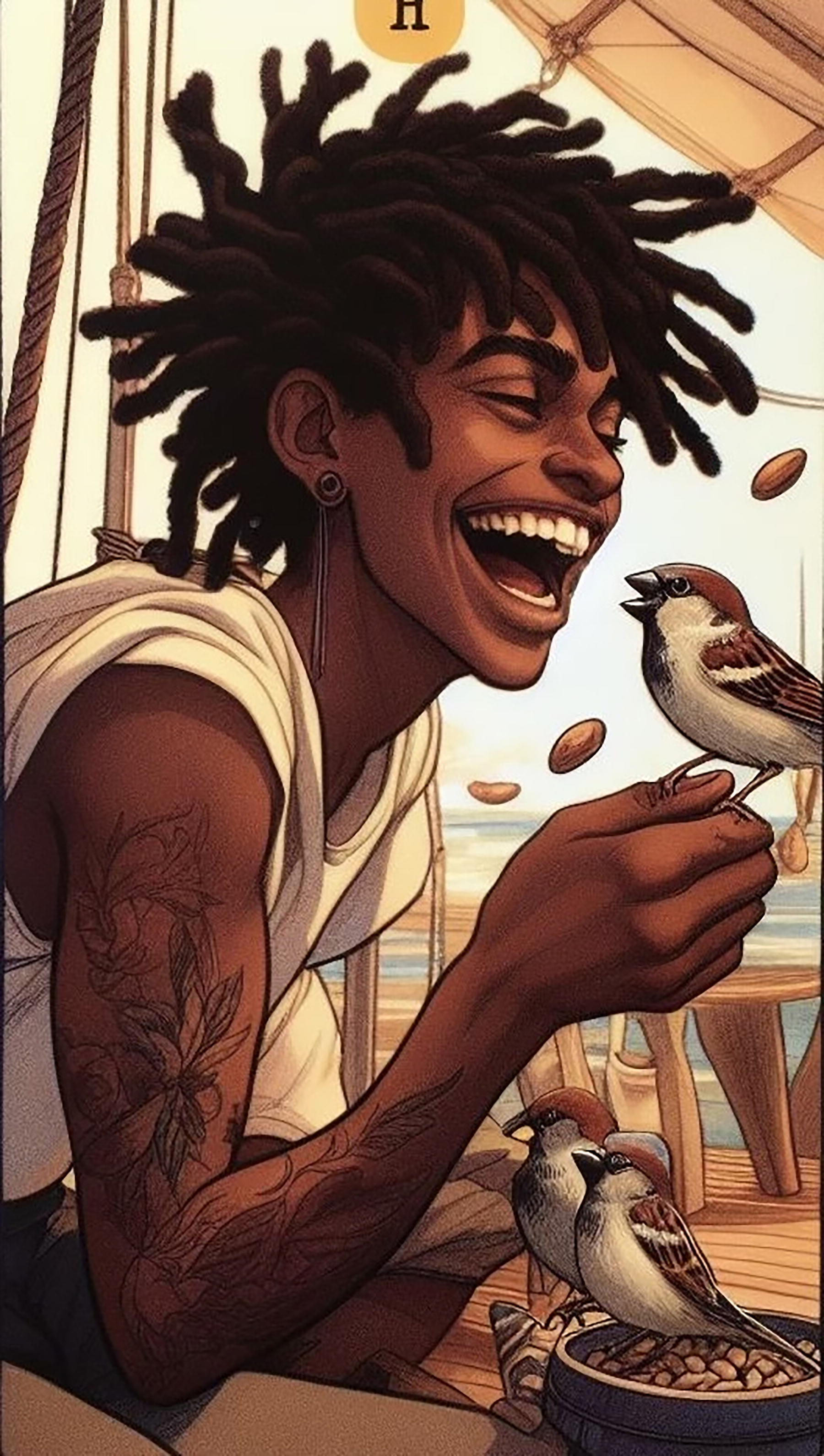
AI self-portrait, March 2024.
Kevyn has come to understand, largely through his magical relationship with the Sparrows and Pigeons whom he has now seen grow in numbers from year to year, which stemmed from his consistent engagement with IEAT, IEAT experiences, and subsequent “self-work,” that his core, Ecological Self is dynamic, worthy, and valuable. He has come to understand his inherent ability to connect with himself, the natural world, and fellow humans, reporting greater felt intimacy with friends and family, and a newly embodied sense of warmth in his chest when in the company of some people. He has maintained successful employment and is currently working to self-actualize as an artist and creator. He has greater resourcefulness, psychiatric stability, and a strong desire to gain more financial security. Kevyn recently shared that over the last 3 months, he has been too busy to daydream consistently. He also noted that he feels more embodied and that he now realizes that daydreaming is a special gift that replenishes his spirit. He said the following about the Sparrows as well as Pigeons, Geese, and Seagulls he now considers to be friends and Nature Allies: “OMG, they make me laugh! They represent intelligence, they are diligent, hard workers. I see them as friends. I have no control or ownership over what they do or when they choose to go. I feel it in my soul that they are trying to talk to me. Their chirp is like a call now. They are my allies. They’ve been keeping me afloat. They have kept me alive; my spirit alive. They’re intuitive, they know I won’t hurt them. I follow the path that they’re going. I feel a lot more present, and that’s a lot about the birds, too. I have been so grateful for these birds, even when there is nothing else to be grateful for. They just make me smile and beam. I feel a greater significance; I feel like they have taught me that freedom is my birthright, not just as a black person, but as a person.” Honoring the birds as sovereign individuals whom he has no control over is a milestone for Kevyn. As a person who has experienced relationships as largely transactional, objectifying and anxiety inducing, respecting their autonomy has lent him strength in respecting his own. Moreover, the gained sense of awe that has been intentionally contextualized and integrated into the larger milieu of his life through IEAT, has provided Kevyn with a profound appreciation for being a part of the natural world which continues to nurture him and his core Ecological Self, allowing for greater intimacy with self and other life communities.
The AI-generated self-portrait of Kevyn illustrates his gained joy, resonance, and sense of reciprocity with his sacred Nature Allies. The abundance and vitality of his experience is clear in the image. Through an IEAT approach, Kevyn has been able to transcend the limiting and fractured attachments he experienced with humans and has found considerable meaning, solace, and place within the seemingly limitless world of the Birds. Finding safety and belonging in Nature and then creating intentional art about his experiences has bolstered Kevyn’s capacity to feel greater safety and belonging within himself and with other humans. There is a direct and established link between Kevyn’s ongoing experience with IEAT and his improved executive functioning, integration of traumatic experience, and capacity to create and sustain more secure attachments with self and others.
IEAT workshops and presentations
Working and connecting with people through an IEAT lens has helped me identify how the intentional act of creating symbolic art with Nature as mentor, model, and ally moves people to creating indelible shifts in the patterns of their lives. It is this principle that has guided me as I have facilitated IEAT professional development trainings for mental health professionals and IEAT groups and workshops for the public. Working at the intersection of climate change and mental health has also afforded me the opportunity to bring this framework to numerous experiential presentations, workshops, and climate cafes that are intended to help participants better understand and cope with their climate-related emotions. It is within the climate psychology space that I have come to develop an IEAT directive known as the “Climate Emotions Mandala Project.” Inspired by the Climate Emotions Wheel (Kamenetz, et al., 2023), the Climate Emotions Mandala is an integrative directive that allows participants to embody and express a full and cohesive expression of the self as it pertains to climate change. What are often overwhelming emotions are held together in cohesion through the sacred mandala, enabling individuals to better understand and integrate their emotions. (Fig. 6)
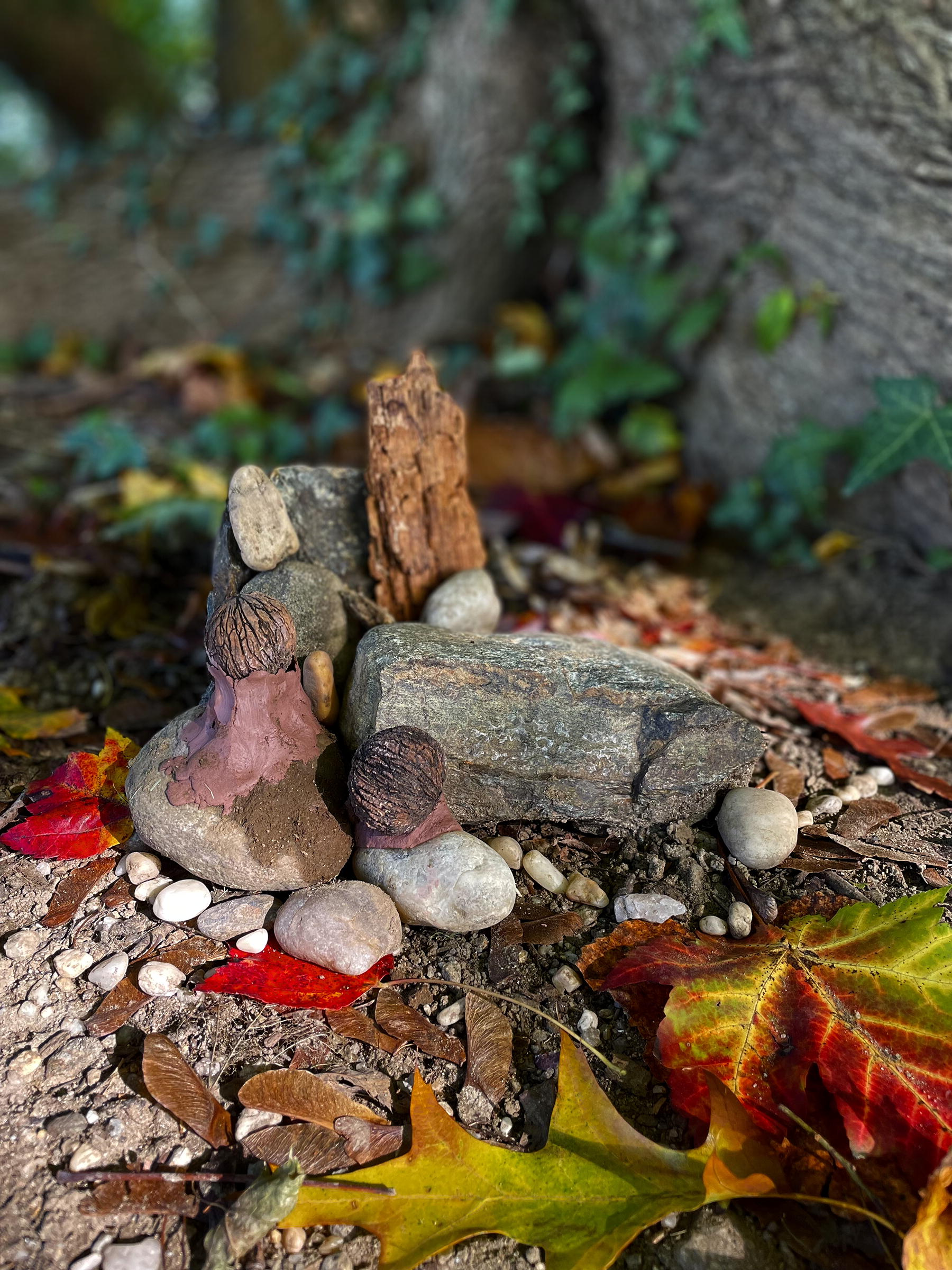
Professional development workshop participant, Vivien Abrams, October 27, 2023.
Attendance for groups has ranged from 6 to 35 individuals and has been for adults aged 21+. Workshops have taken place at local Nature conservancies, a private beach, the grounds of my Art Therapy studio, schools, online, and in public spaces. Materials have included terracotta clay, found natural materials, round canvas, paper, markers, pencils, inks, watercolor, gauche, oil pastels, and digital photography. All IEAT workshops (not including climate cafes) have incorporated the elements as in the format below; however, the didactic discussion differs depending on the thematic goals of the workshop.
A formal Land Acknowledgement and history of place.
Didactic discussion including information about:
Neurobiological benefits of time spent in Nature. The neuroscience of awe and how it helps induce a state of well-being. Themes of interconnection and Interbeing The physiological, psychological, and spiritual benefits of IEAT How IEAT may be applied in various practices and mental health settings.
Brief breathwork/grounding exercise
35–45 min of forest bathing with advance guidance on how to best engage in this process (Devos and Kilpi, 2020).
30–40 min of art creation using both terra cotta clay, found natural objects, and other aforementioned materials.
Group processing with emphasis on how individual experience may inform individual practice as well as their sense of interconnection and desire to spend more time in Nature.
IEAT workshops and trainings have been well received by participants. Surveys completed immediately prior and after, 1 week and 1 month after workshop participation have shown decreased fatigue and sadness, with an improved sense of focus and an orientation to awe. Sasha, an Art Therapist shared the after about her experience in the professional development training: “I felt more attached to the natural world, as though my sense of self were expanding beyond the borders of my own body. Hearing other people’s reflections validated that need in myself that’s so easily repressed and helped clarify a vision of a better world that maybe I can help create.” Silvia Asherian, a Clinical Psychologist noted, “Creating art from nature initially felt a little weird because I don’t consider myself an artistic person but after a few minutes of taking in my surroundings and tuning in to how I felt sitting on the grass I just let myself pick up pieces around me and create something without much thought, and it felt freeing. And seeing how the whole group was sitting around me doing the same but creating different pieces showed how alike we are, yet each with our own views and feelings.” A Full Moon Rise workshop participant named Aimee noted, “The experience has had a lasting effect on my need to be close to Nature, art and others, including people and pets. To focus on the present and take moments to connect with Nature.” (Fig. 7)
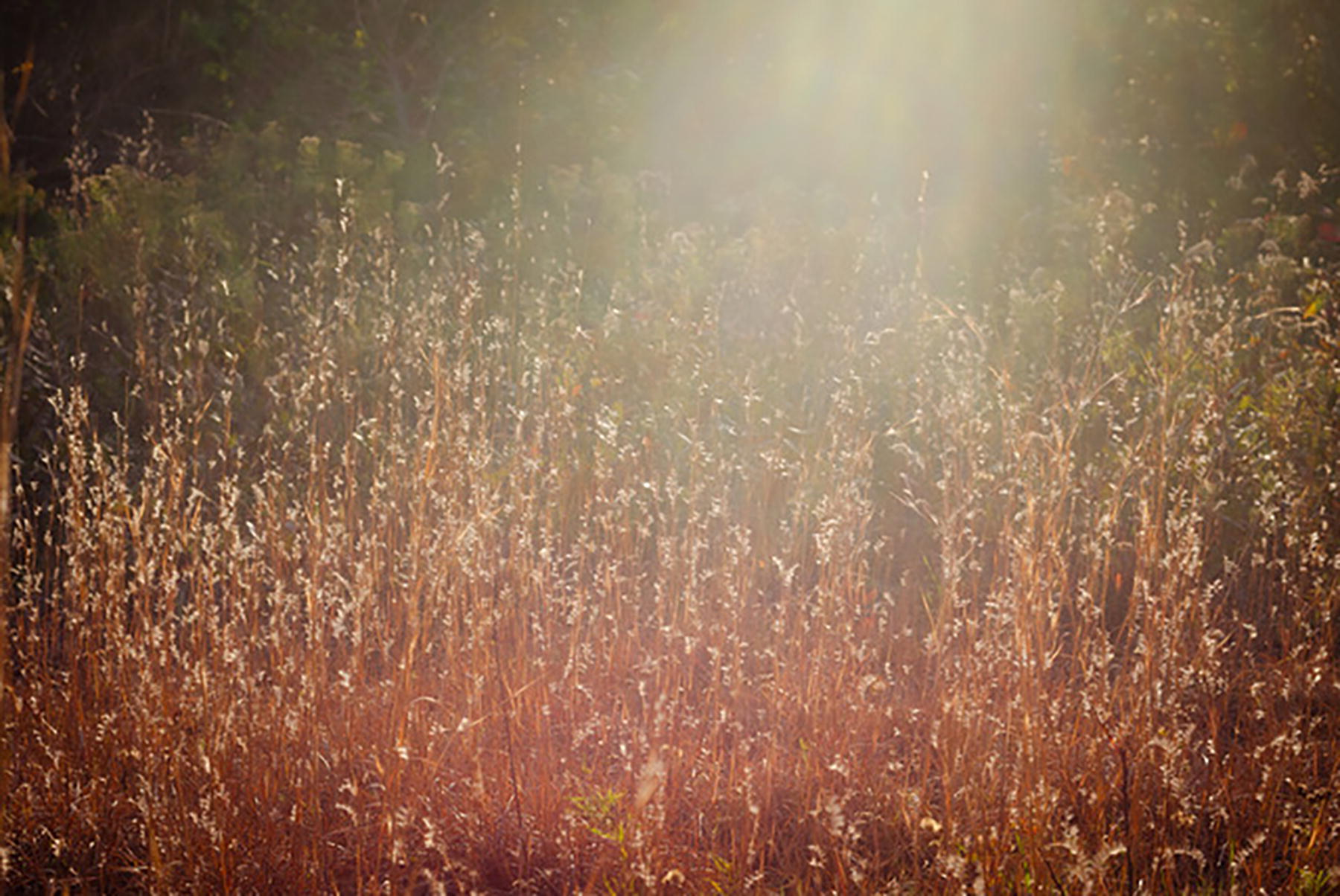
Nature Conservancy Workshop participant, Paul Cousins.
IEAT offered in 1:1 therapy and through workshops appears to offer people profound connecting experiences in which the meaning found and created facilitates the recognition and embodiment of an authentic, more securely attached Ecological Self. The case study and brief synopsis of workshops and experiential presentations suggests that IEAT can serve as a salve for our consciousness and the troubling times in which we live.
Implications for research
IEAT as an eco-centric, humanistic, biomimicry-inspired model to restoring humanity’s fractured attachment to Nature should be further investigated in its implementation between individuals, in groups, schools, private, and public organizations. IEAT’s efficacy in improving holistic human health and our capacity to care for ourselves and our Earth home is becoming clear. Further inquiry about how IEAT benefits the human body neurobiologically as well as its long-term impacts on the quality of human relationships and human stewardship of the Land should also be studied. IEAT’s multifaceted applications and outcomes should be funded and assessed in diverse settings and communities and further research about IEAT’s ability to remedy many of the psychosocial and existential challenges facing our world should take place.
Conclusion
This article is a testament to what is possible when humans cooperate with one another under the guiding principles of reciprocity and Interbeing. It is a testament to the wisdom that is inherent to all the sapient and sentient beings of our Earth home, and how we as Human People, may grow and heal when we embrace the Nature that resides within us all. IEAT appears to support prolific expansions in individuals’ consciousness, awareness, and holistic well-being. This unique, integrative relational stance moves beyond the limiting binary as therapist as the primary relational object to Nature as primary object offering people an expansive opportunity to connect to the vastness of existence and time and their singular place within it. The benefits of an IEAT approach appear to also supersede time and place as application via telehealth continues to be highly efficacious. The art created in IEAT acts as the physical manifestation of the integrative process. The physicality of the created symbol bridges the lessons and vitality of the IEAT experience into consciousness and the patterns of the person’s life making tangible steps toward integration, improved executive functioning and more secure attachments to self, others, and Nature far more tenable and lasting.
Footnotes
Acknowledgments
The author thanks Eileen McGann for her excellent editorial and supervisory support and her husband Lior Levi for his broad and generous intellect. The author also thanks her climate psychology colleagues whose knowledge and kindness supported her in this work. The author thanks Peter Kahn and his editorial team at Ecopsychology for their fine and helpful feedback in refining this article. The author also thanks Kevyn for teaching her about trust, beauty, and cosmic interconnection.
Author Disclosure Statement
No competing financial interests exist.
Funding Information
No funding was received for this article.