




Abstract
Mobile phone wallpapers, despite their seemingly small presence, may have significant psychological consequences due to the pervasive and recurrent exposure experienced by millions of people during their phone usage. We conducted two-field experiments, each spanning a duration of 2 weeks (Study 1: n = 81; Study 2: n = 166), to evaluate the influence of phone wallpaper image on individuals’ implicit connectedness with nature. Results consistently showed that urban wallpapers lacking natural elements resulted in lower connectedness with nature compared with nature wallpapers. Our findings identify one pathway through which screen time can adversely impact human-nature relations and highlight the psychological impacts of often overlooked background images on display interfaces.
Introduction
The adoption and use of mobile phones are increasingly frequent and pervasive in today’s digital age (Foerster et al., 2019; Zhang et al., 2022). Many people have developed habitual phone-checking behaviors that occur repeatedly and automatically, often without conscious deliberation (Oulasvirta et al., 2012). Habitual checking can lead to compulsive usage and increase the chances of developing problematic and addictive phone behavior (van Deursen et al., 2015; Park, 2019). A study based on 11,000 users in the U.S. found that people check their phones 58 times a day on average (MacKay, 2019), which amounts to interacting with one’s phone approximately every 15 min in a typical 16-hour day and reflects how embedded mobile phones are in everyday routines. Even for users who do not exhibit problematic reliance on their phones, phone usage is likely to be frequent, though varied, involving tasks such as checking notifications or browsing applications. Given that each instance of phone usage exposes users to their chosen wallpaper, it is plausible that, despite residing unassumingly in the background, these wallpapers can have profound effects on users. Yet, surprisingly little research has examined the psychological impacts of such subtle yet recurrent exposure.
A substantial body of research has warned about the consequences of excessive screen time including poorer psychological and physical well-being (Domingues-Montanari, 2017; Panda and Jain, 2018), smartphone addiction (Wu-Ouyang, 2022), and cognitive decline (Neophytou et al., 2021). An area that has been gaining research momentum in recent years is the negative impact of screen time on human-nature relations. Throughout this paper, we use the term “nature” to refer broadly to nonhuman dimensions of life, including ecological systems and processes. For the purposes of this research, we adopt a heuristic and practical distinction between natural outdoor environments characterized by prominent natural elements (e.g., greenery, water bodies) and urban environments which are dominated by built infrastructure. While this distinction is commonly used in environmental psychology research (e.g., Hartig et al., 2014; Frumkin et al., 2017), we acknowledge that it reflects a binary view of nature and society, which has been critiqued for positioning humans as separate from the natural world (Castree, 2005). Such binaries might reinforce dualisms that oversimplify the dynamic and entangled relationships between human and nonhuman systems (Lorimer, 2012) and risk privileging certain environments—and even beings, animate or inanimate—as “natural” while deeming others as “unnatural” or “less than” (Cronon, 1996). While we recognize these critiques and their significance, they do not diminish the importance of studying outcomes related to living in natural versus artificial environments as well as the growing psychological alienation and disconnectedness from nature (Soga and Gaston, 2016).
Excessive screen time contributes to a growing disconnectedness from nature (Richardson et al., 2018), and one reason for this trend is that screen time displaces time that could be spent outdoors in nature (Larson et al., 2019). Pergams and Zaradic (2006) found that the rise in electronic media use was associated with a drop in national park visitor rates. They proposed that biophilia—humans’ innate desire to affiliate with the natural world (Wilson, 1984, 1993)—is being replaced with videophilia—the relatively novel human tendency to focus on sedentary activities involving electronic media. However, there is another pathway that could cause disconnectedness from nature. Past studies have shown that connectedness with nature changes as a result of exposure to different images, namely nature versus urban scenes (Mayer et al., 2009; Weinstein et al., 2009). Thus, it is possible that exposure to non-nature-related images on mobile phones might also negatively impact connectedness with nature.
In this research, we investigate how wallpaper images influence connectedness with nature. Connectedness with nature is vital for both human and planetary health, as it promotes psychological well-being and life satisfaction (Capaldi et al., 2014; Pritchard et al., 2020) while fostering pro-environmental attitudes and behaviors (Davis et al., 2009; Geng et al., 2015). The topic is particularly timely given the ubiquity of mobile phones today, where screen time increasingly shapes how individuals engage with their socio-physical surroundings and mediates human-nature interactions in ways that remain underexplored. Any effects found, even if small, can potentially have a huge impact given the sheer number of people who own mobile phones as well as the amount of time each person spends on them (Funder and Ozer, 2019). To facilitate this investigation, we conducted two-field experiments to gain insights that are grounded in a real-world context and shed light on how digital interfaces and exposure to background images may subtly but nevertheless meaningfully influence psychological functioning and human-nature relations.
Related Work
Psychological impacts of phone wallpapers
Past research on the psychological impacts of phone wallpapers have largely focused on persuasive phone-based interventions. For example, a dynamic wallpaper that changed in accordance with users’ level of physical activity was found to promote greater fitness behaviors (Consolvo, Klasnja, et al., 2008; Consolvo, McDonald, et al., 2008). Another study found that participants who used a mobile application that monitored various dimensions of well-being (e.g., physical activity, sleep patterns, social interactions) and provided feedback via a dynamic wallpaper reported greater motivation to adopt healthier behaviors (Lane et al., 2014). In addition, a phone wallpaper that displayed sleep recommendations was found to improve participants’ awareness and mindfulness of their sleeping habits (Bauer et al., 2012).
These studies suggest that phone wallpapers can be a powerful tool to encourage desired attitudinal change. However, they either utilized wallpapers that changed according to participants’ actions (Consolvo, Klasnja, et al., 2008; Lane et al., 2014) or provided textual information that explicitly indicated specific objectives (Bauer et al., 2012). In contrast, the current research focuses on static images resembling the type of phone wallpaper that a typical phone user would have. Exposure to such wallpapers takes place in the background and is often overlaid with more salient foreground objects (e.g., clock, notifications, application icons). Thus, both visual and cognitive attention paid to the wallpaper image tend to be minimal, making it possible that wallpapers will not have any psychological impact. At the same time, users are repeatedly exposed to their wallpaper image, especially when they unlock their phones and close their applications. Research has shown that implicit attitudes can be influenced by repeated exposure to stimuli (Olson and Fazio, 2001; Kurdi and Banaji, 2017), even or especially when exposure is subliminal (Smith et al., 2008). Thus, it is possible that the contents of a background wallpaper image can impact one’s implicit attitudes and emotions.
Connectedness with nature
Connectedness with nature refers to the perception of being a part of nature—that is, the cognitive evaluation of how much nature is included in one’s self-concept (Schultz, 2002; Tam, 2013). The biophilia hypothesis (Wilson, 1984; Kellert & Wilson, 1993) posits that humans are genetically predisposed, through evolutionary processes, to have an innate affinity for “life and life-like processes” and to feel connected with nature. A strong connectedness with nature contributes to meeting psychological needs for affiliation, which improves one’s well-being (Mayer et al., 2009). Supporting this, research shows that connectedness with nature predicts a wide range of outcomes associated with psychological well-being, such as higher life satisfaction, vitality, meaning in life, self-acceptance, and mindfulness, as well as lower depression and anxiety (Howell et al., 2011; Capaldi et al., 2014; Martyn and Brymer, 2016; Pritchard et al., 2020; Oh et al., 2021). Further, a strong connectedness with nature establishes a foundation for wanting to protect nature (Nisbet et al., 2009). Accordingly, connectedness with nature has been found to predict numerous pro-environmental outcomes including willingness to sacrifice for the environment, climate activism, environmental concern, sustainable behaviors, and biospheric values (Schultz, 2001; Davis et al., 2009; Martin and Czellar, 2017; Schmitt et al., 2019; Whitburn et al., 2020).
Connectedness with nature has been assessed with both explicit and implicit measures. Several scales have been developed as explicit measures of connectedness with nature (e.g., connectedness to nature scale, Mayer and Frantz, 2004; nature-relatedness scale, Nisbet et al., 2009; inclusion of nature in the self, Schultz, 2001), and they have been found to converge on measuring the same underlying construct (Tam, 2013). While explicit measures rely on self-reports and participants’ conscious and intentional responses, implicit measures assess connectedness with nature through indirect indicators (e.g., response latencies) which capture responses that cannot be consciously controlled and may not always be readily available via introspection (Greenwald and Banaji, 1995; Rydell and McConnell, 2006). Thus, key advantages of implicit measures include their ability to avoid the social desirability bias inherent in explicit measures (Vesely and Klöckner, 2020) and capture attitudes that may be obscured by participants’ lack of awareness of their connectedness with nature (Schultz et al., 2004).
In this research, we operationalize connectedness with nature as a cognitive representation of the closeness between “self” and “nature,” and measured it using the nature version of the implicit association test (IAT; Greenwald et al., 2003), which is the most widely used measure of implicit attitudes. In the nature IAT (Schultz et al., 2004; Schultz and Tabanico, 2007), stronger connectedness with nature is reflected by faster response latencies when pairing “self” and “nature” concepts compared with when pairing “self” and “built” concepts. Scores on the nature IAT are understood in relative terms, reflecting the degree to which an individual more strongly associates themselves with nature or built (i.e., non-nature) elements. Such implicit associations have been shown to reliably predict real-world behaviors (Kurdi et al., 2019). For instance, one study showed that participants who scored higher on the nature IAT were more likely to decline a plastic bag in an ostensibly unrelated post-experiment task (Geng et al., 2015). While this suggests that implicit connectedness with nature captures meaningful cognitive and behavioral tendencies, it is important to acknowledge that it does not encompass the full breadth of what it means to be connected with nature and the diverse ways individuals can cultivate this connection. Connectedness with nature extends beyond cognitive representations to include material, experiential, spiritual, emotional, and philosophical dimensions (Mayer et al., 2009; Trigwell et al., 2014; Nisbet et al., 2019; Beery et al., 2023). Despite these limitations, the nature IAT remains a robust and relatively objective tool for examining implicit connectedness with nature. Moreover, its focus on cognitive associations aligns well with the influence of visual wallpapers—a cognitive and perceptual stimuli—as investigated in our study.
Impacts of screen time on connectedness with nature
Screen time refers to the time spent on screen-based electronic devices including television, computers, and increasingly so, smartphones and tablets (LeBlanc et al., 2017). Screen time on mobile devices has become omnipresent across all life stages. A study conducted among adolescents aged 13–19 in Bosnia and Herzegovina found that average daily screen time was close to 4 h and that it exceeded 5.5 h for a quarter of the sample (Tomczyk and Selmanagic Lizde, 2023). Another study on more than 7,000 adults aged 18–81 years old in China found that close to 50% used their mobile device for 3 h or more daily (Zhang et al., 2022). Among U.S. children aged 0–8 years old, average screen time spent on mobile devices increased almost ten-fold from 5 min in 2011 to 48 min in 2017 (Common Sense Media, 2017).
Increasing screen time is often cited as a cause of the growing divide between humans and nature (Louv, 2005; Soga and Gaston, 2016; Fletcher, 2017), which is supported by cross-sectional evidence that excessive screen time is related to less time spent in nature (Wang et al., 2023) and weaker connectedness with nature (Bruni and Schultz, 2010; Richardson et al., 2018). A common explanation for this negative association is that screen time takes up time that could be spent in nature, leading to the loss of opportunities to learn more about and engage with the natural environment (Larson et al., 2019; Edwards and Larson, 2020). Screen time is inextricably linked to digital technologies and the consumption of digital media (Dillon Thomas et al., 2021; Marciano et al., 2021), and distinguishing between them is beyond the scope of the current research. It is important to note that screen time does not inherently distance people from nature. Emerging research in the field of digital ecologies (Turnbull et al., 2023) emphasizes that the digital mediation of complex human-nature interactions offers new avenues for ecological engagement and awareness. Smartphones can reconnect people with nature through digital games, livestreams of wildlife, and online communities that inspire collective climate action (Sandbrook et al., 2015; von Essen et al., 2023; Adams et al., 2024). Smartphones are also increasingly used as tools to enhance experiences while being out in nature, such as through navigation or species-identification applications, though this is not without its drawbacks such as constraining how nature is experienced by limiting spontaneous encounters or promoting a prescribed manner of understanding and interacting with nature (Altrudi, 2021; Arts et al., 2021a). Research on the consumption of nature content through digital media (e.g., nature documentaries, social media) on connectedness with nature has produced mixed evidence. Based on a nationwide survey in England, watching nature programs was found to be positively related to connectedness with nature (Martin et al., 2020). In an experimental study, however, no differences in connectedness with nature were found between participants who watched a nature documentary and those who watched a documentary on the theory of relativity, the latter operationalized as the non-nature experimental treatment in the study (Arendt and Matthes, 2016). On social media, a cross-sectional survey showed that engaging with nature content on Instagram was positively related with connectedness with nature (Flynn et al., 2022). However, in qualitative interviews, participants reported that sharing images of nature experiences on social media increased connection to social others (e.g., family and friends) but decreased connection with the natural environment that they were actively participating in (Arts et al., 2021b). These findings underscore the dual role that technology can play in distancing and connecting people with nature and emphasize the need for more research to understand the various ways that screen time impacts connectedness with nature.
In this research, we argue that one possible way that screen time influences connectedness with nature is through the type of image content that people are exposed to while using their mobile devices. Studies on the impacts of image content on connectedness with nature have been largely confined to laboratory experiments. For example, participants who viewed images of urban scenes reported lower connectedness with nature compared with those who viewed images of nature scenes (Weinstein et al., 2009). In another study, participants reported similar levels of connectedness with nature after viewing images of natural and quasi-natural environments but reported significantly lower connectedness with nature after viewing images of urban environments (Pasca et al., 2022). As mentioned earlier, the one image that users are consistently exposed to is the wallpaper on their phones. Therefore, to move beyond controlled laboratory settings and build on previous studies which have mostly focused on active engagement with nature through technology or deliberate consumption of nature content, the current research investigated the impact of passive and largely unconscious exposure to nature imagery through phone wallpapers using field experiments.
Present Research
This research sought to examine the effects of phone wallpaper image on connectedness with nature. Two-field experiments were conducted spanning a period of 2 weeks each. Both studies employed a between-subjects design where the phone wallpaper image was manipulated. Following past studies (Weinstein et al., 2009; Pasca et al., 2022), a nature scene was compared with an urban scene. In Study 1, participants were assigned to either the nature or urban condition, which involved changing their personal wallpapers to either a nature or urban image respectively. Study 2 expanded on this to include a third condition where participants were instructed to keep their personal wallpapers. We hypothesized that having an urban wallpaper would reduce connectedness with nature compared with having a nature wallpaper.
Study 1
In Study 1, participants were randomly assigned to use a nature or urban wallpaper. After a prescreening, participants were selected based on the criteria that they had a non-nature wallpaper prior to the experiment.
Method
All materials and data for this study are available at: https://osf.io/sm7ej/. This project and its analysis were not preregistered.
Participants and procedure
Participants were recruited from a large university in Singapore. As a prescreen, students were invited to submit a screenshot of their lock screen and home screen. A total of 263 students submitted their screenshots. Next, two trained coders independently coded the wallpaper in each screenshot as 1 = nature (the main theme of the image is nature) or 0 = non-nature (the main theme of the image is unrelated to nature). Coders were instructed to code a wallpaper as nature if the image contained natural environments (e.g., beach, forest, mountain), animals (e.g., wildlife, pets), or natural elements (e.g., flower, plant, rocks, earth); or as non-nature if the image contained urban environments (e.g., buildings, street, architecture), people (e.g., celebrities, family), art (e.g., cartoons, drawings, anime, paintings, patterns), or texts (e.g., quotes, school timetable, notes). Coders were also provided the option to leave the coding blank for images that did not neatly fall into nature or non-nature, such as people within a natural environment, artistic representations of nature, and nature within urban environments. We applied such a conservative coding policy with the aim of identifying non-nature wallpapers because of the subjectivity and fuzziness surrounding what truly constitutes nature. In the event of disagreement (7% of images), a third coder coded the wallpaper, and a final decision was made based on the majority. After this, only students who had a non-nature wallpaper for both the lock and home screens (n = 128; 49%) were invited to participate in a 2-week experimental study. A total of 81 participants took part in the study (female = 56; age M = 21.12, SD = 1.67) and were either granted course credits or received SGD $10. Upon signing the online consent form, participants were randomly assigned to either the nature (n = 41) or urban (n = 40) conditions and received an image via WhatsApp that corresponded with their assigned condition, which they had to use as their lock and home wallpapers for the next 2 weeks. They were required to send screenshots of their lock and home screens upon changing them. After 2 weeks, participants were sent a link to an online survey which they completed on a personal computer or laptop (i.e., not on their mobile phones). At the end of the survey, they were debriefed and informed that the study had concluded and that they were free to change their wallpapers. All study protocols were approved by the University ethics committee.
Wallpaper stimuli
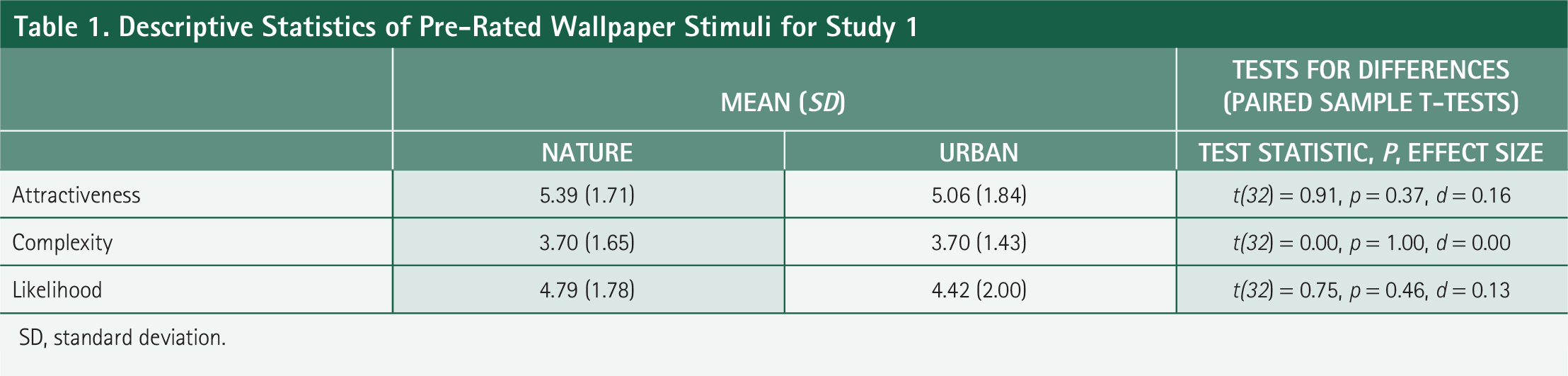
The images used for the nature and urban conditions are shown in Figure 1. The images were selected from a pool of 25 images that were rated in a pilot test by 33 research assistants (RAs). RAs rated each image using a 7-point likert scale on attractiveness (1 = extremely unattractive, 7 = extremely attractive), complexity (1 = extremely simple, 7 = extremely complex), and likelihood of using the image as a wallpaper on their mobile phone (1 = extremely unlikely, 7 = extremely likely). The nature and urban images were rated to be comparable on all these variables as reported in Table 1.

Images used as wallpaper for nature (left) and urban (right) conditions in Study 1.
Descriptive Statistics of Pre-Rated Wallpaper Stimuli for Study 1
SD, standard deviation.
Measure
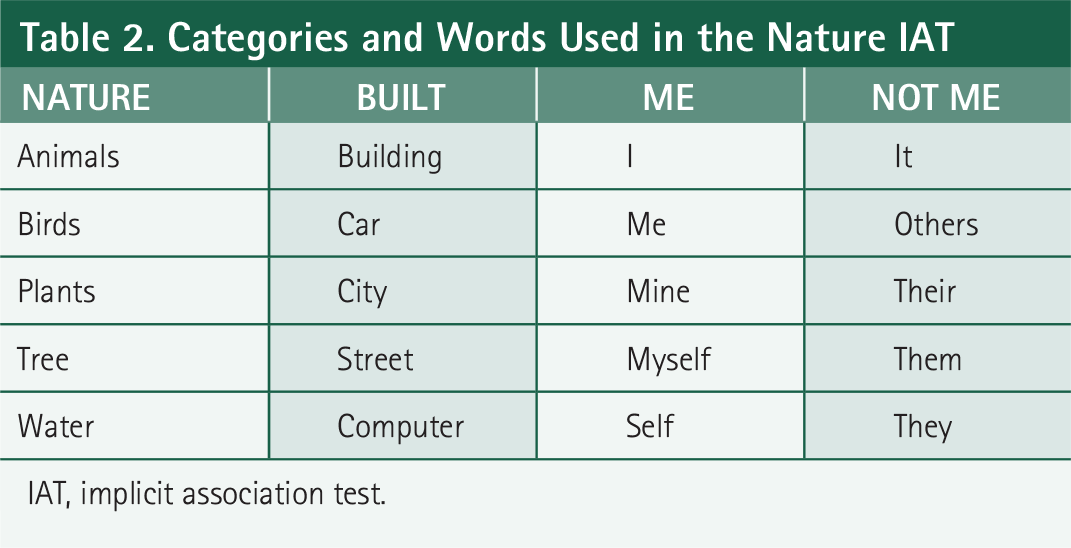
Connectedness with nature was measured with the nature IAT (Schultz et al., 2004; Schultz and Tabanico, 2007) which is a modified version of the widely used IAT (Greenwald et al., 2003). The nature IAT measures reaction times to assess the strength of the association between nature and the self. A survey version of the nature IAT was administered through Qualtrics (Carpenter et al., 2019). Participants were instructed to sort words that appear in the middle of the screen into category labels that appear on the top left and right of the screen as quickly as they can by pressing the ‘E’ and ‘I’ keys, respectively, on their personal computer or laptop. The words and categories are listed in Table 2. We followed the IAT procedures and improved the scoring algorithm recommended by Greenwald et al. (2003) and Nosek et al. (2005), which differs from those used by Schultz et al. (2004) who based their original nature IAT on previous recommendations by Greenwald et al. (Greenwald et al., 1998). The updated scoring was shown to strongly outperform its predecessor (Greenwald et al., 2003). Differences in procedures have been specified in the footnotes where relevant.
Categories and Words Used in the Nature IAT
IAT, implicit association test.
The nature IAT consists of seven blocks of 20 trials (blocks 1–3, 5–6) or 40 trials (blocks 4 and 7) 1 . Blocks 1, 2, and 5 are practice blocks, while blocks 3, 4, 6, and 7 are experimental blocks. The experimental blocks are divided into compatible pairings (blocks 3 and 4: nature/me—built/not me; depicted in the left panel of Fig. 2) and incompatible pairings (blocks 6 and 7: built/me—nature/not me; depicted in the right panel of Fig. 2). The starting positions of categories (right-left) and order of rotation (compatible-incompatible) were counterbalanced such that participants were randomly assigned to one of four versions 2 . Data cleaning involved eliminating trials with latencies >10,000 ms (scored as missing for the participant) and excluding participants with >10% of trials with latencies <300 ms 3 . Difference in latencies between the compatible and incompatible blocks were then computed based on mean block scores (one difference score for block 6 minus block 3; one difference score for block 7 minus block 4) divided by their respective pooled standard deviation (SD of blocks 3 and 6; SD of blocks 4 and 7). This resulted in two scores per participant which was averaged to produce the “D-score” (i.e., nature IAT score) 4 . Positive nature IAT scores indicate stronger implicit associations between the self and nature items, suggesting a higher connectedness with nature, whereas negative scores indicate stronger implicit associations between the self and built items, suggesting lower connectedness with nature. Scores near zero indicate no strong implicit bias in either direction. There is no universally agreed-upon threshold for interpreting nature IAT scores, and our study instead focused on relative connectedness—both in terms of relative strengths of association with nature versus built concepts and in relative comparison to other participants’ scores.
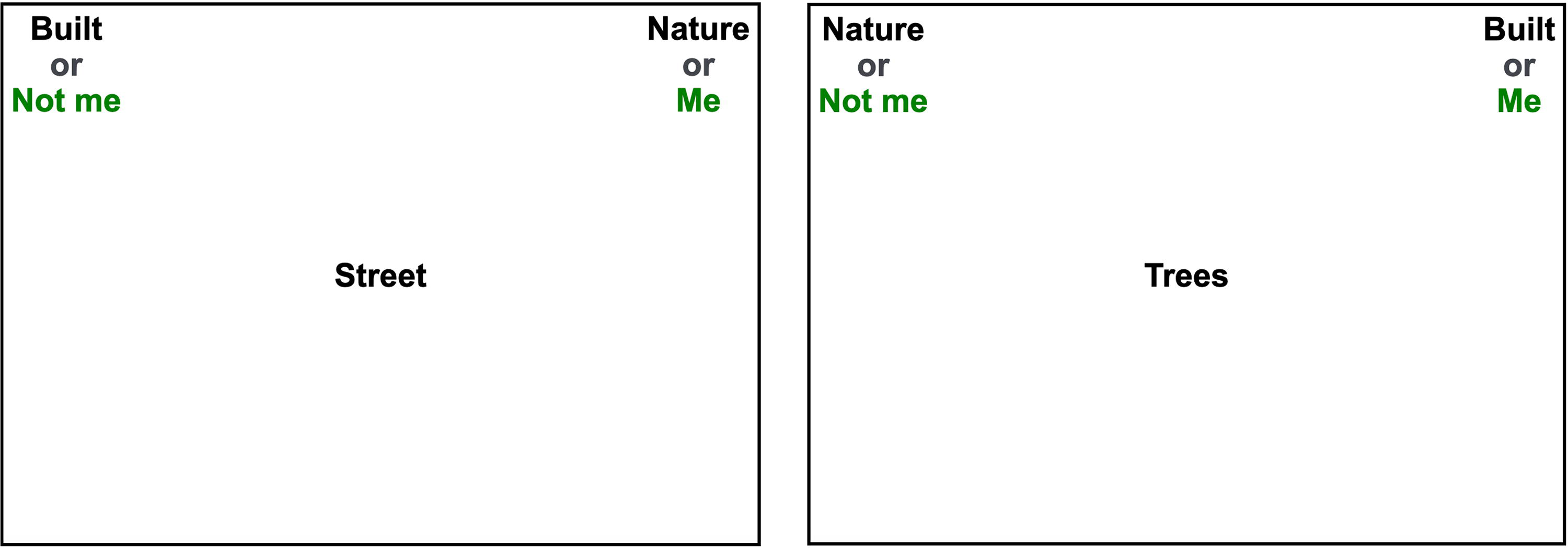
Illustration of compatible (left) and incompatible (right) blocks of the nature IAT.
Results
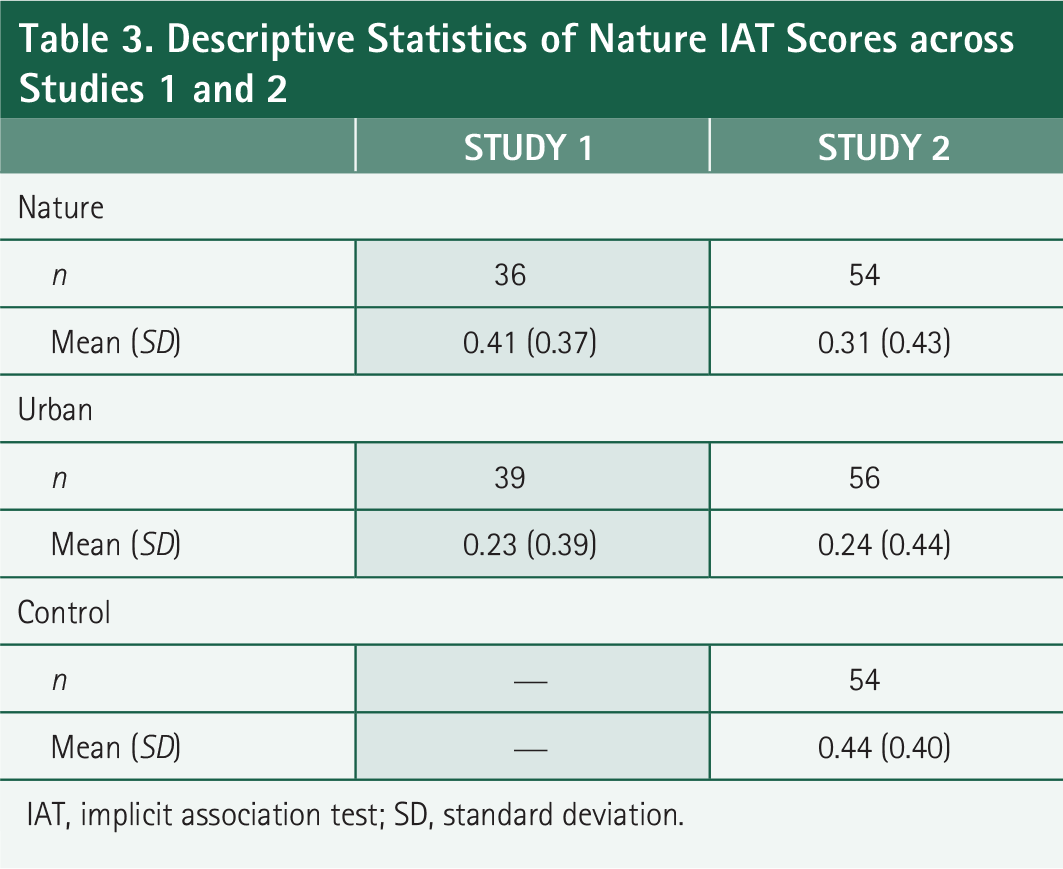
IAT trials were excluded if responses exceeded 10,000 ms (0.6% of trials). Six participants were dropped due to excessively fast responses (>10% of trials <300 ms). The error rate (i.e., trials with erroneous responses) was 9%. Supporting our hypothesis, an independent samples t-test showed that those in the urban condition had significantly lower connectedness with nature than those in the nature condition, t(73) = 2.10, p = 0.04, d = 0.49. Descriptive statistics are reported in Table 3, and the results are depicted in Figure 3.
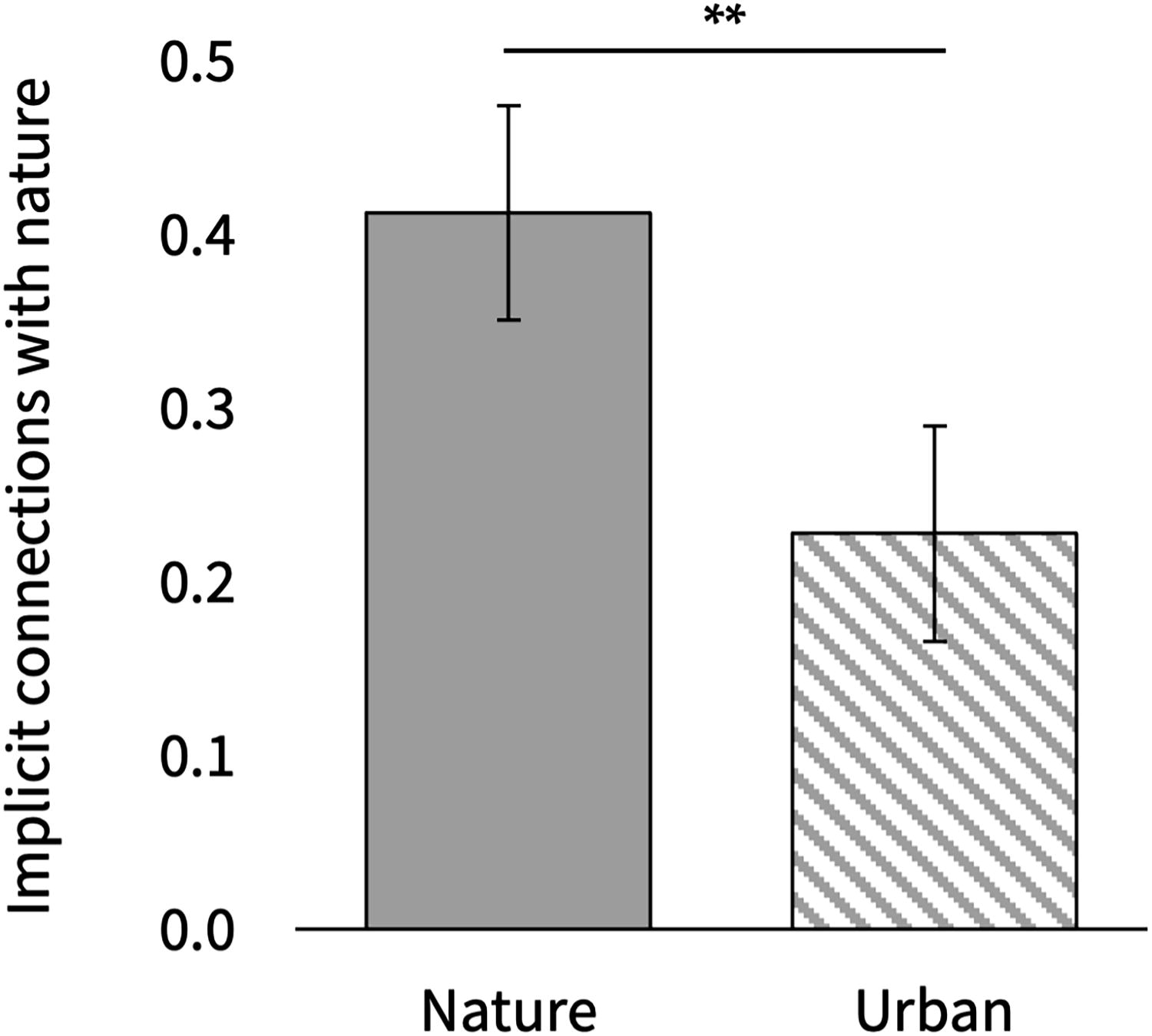
Connectedness with nature as a function of condition in Study 1.
Descriptive Statistics of Nature IAT Scores across Studies 1 and 2
IAT, implicit association test; SD, standard deviation.
Study 2
Study 1 found that the urban condition was associated with lower connectedness with nature compared with the nature condition. However, it cannot be determined if it was the urban wallpaper that reduced connectedness with nature, the nature wallpaper that increased it, or a combination of both. To address this, Study 2 included an additional control condition where participants were instructed to keep their personal wallpapers. From Study 1’s prescreening, we found that 51% of potential participants had an existing wallpaper featuring nature. Therefore, we did not require participants in Study 2 to have a non-nature wallpaper to begin with, so that we could capture a more representative pattern of real-world wallpaper usage. As a further extension, we sampled a wider variety of images. A total of 4 nature wallpapers and 4 urban wallpapers were used in Study 2.
Method
Participants and procedure
Based on an effect size of d = .49 from Study 1, a power analysis performed with G*Power 3.1 (Faul et al., 2009) for alpha = 0.05 and power = 0.80 indicated a sample size estimate of n = 165 for a one-way ANOVA with three groups. A total of 166 participants (female = 121; age M = 21.87, SD = 2.01) were recruited from a large university in Singapore in exchange for course credits. Upon signing the online consent form, participants were randomly assigned to the nature (n = 56), urban (n = 56), or control (n = 54) conditions, after which they were sent instructions and materials via WhatsApp. Those in the nature condition received one of four nature images, while those in the urban condition received one of four urban images. Participants in these two conditions were sent the following instructions: “Please change both your lock screen and home screen wallpapers to the image that has been sent to you. Please keep this image as your wallpaper until the end of the study in 2 weeks’ time”. Those in the control condition were sent the following instructions: “Please do not make any changes to your current lock screen and home screen wallpapers. Please keep the current wallpapers until the end of the study in 2 weeks’ time.” After 2 weeks, participants were sent a link to an online survey which they completed on a personal computer or laptop. At the end of the survey, they were debriefed and informed that the study had concluded and that they could change their wallpapers, as they pleased. All study protocols were approved by the University ethics committee.
Wallpaper stimuli
The images used for the nature and urban conditions are shown in Figure 4. The images were selected from a pool of 100 images that were rated in a pilot test by 17 RAs. RAs rated each image using a 7-point Likert scale on attractiveness (1 = extremely unattractive, 7 = extremely attractive), complexity (1 = extremely simple, 7 = extremely complex), degree of naturalness (1 = completely man-made, 7 = completely natural), and likelihood of using the image as a wallpaper on their mobile phone (1 = extremely unlikely, 7 = extremely likely). The mean of the 4 nature images did not significantly differ from the mean of the 4 urban images on attractiveness, complexity, and likelihood, while the nature images were rated as significantly more natural than the urban images (descriptives reported in Table 4).
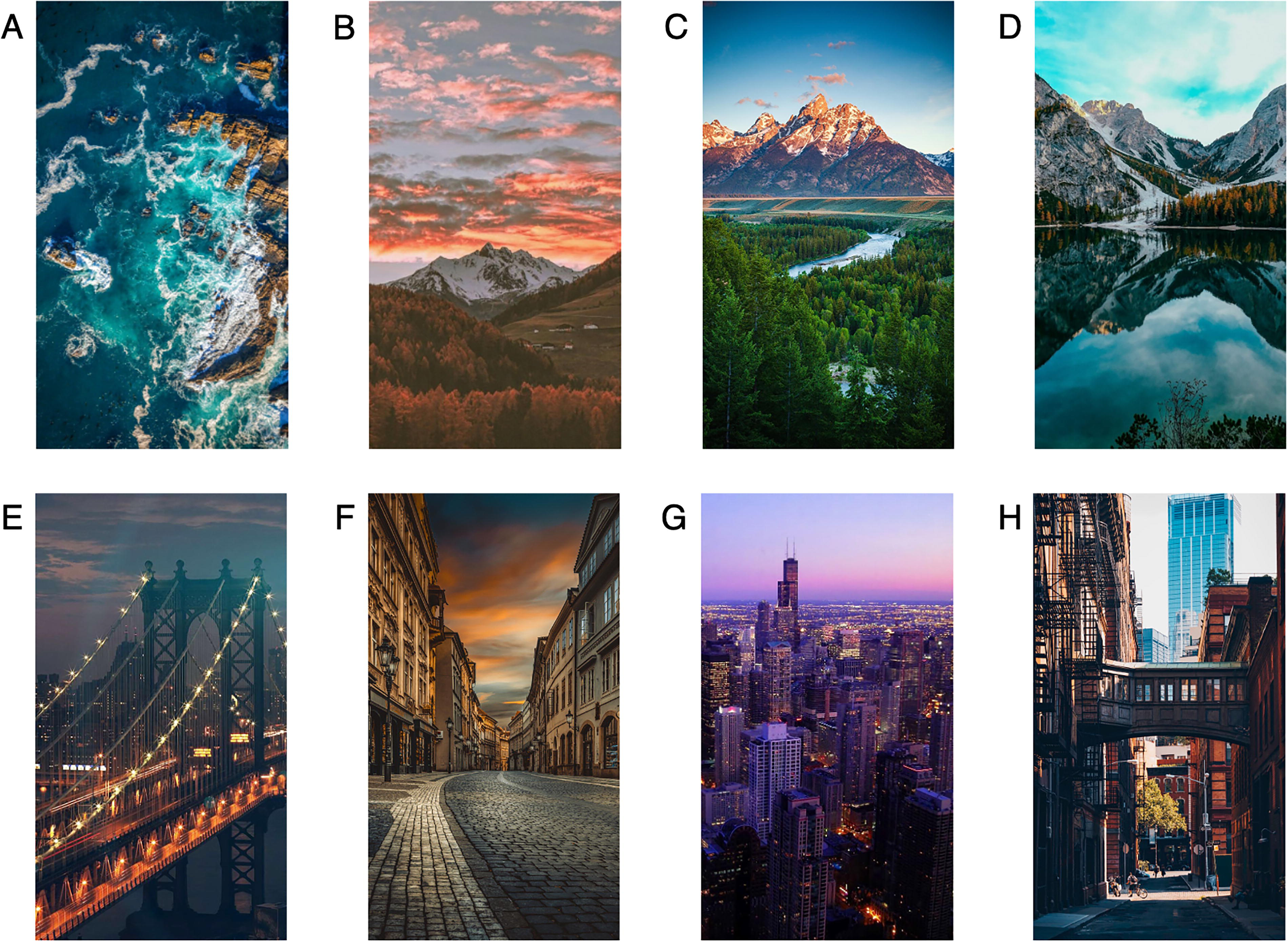
Images used as wallpaper for nature (top;
Descriptive Statistics of Pre-Rated Wallpaper Stimuli for Study 2

SD, standard deviation.
Measure
The same nature IAT measure from Study 1 was used to assess connectedness with nature.
Results
IAT trials were excluded if responses exceeded 10,000 ms (0.5% of trials). Two participants were dropped due to excessively fast responses (>10% of trials <300ms), and the error rate was 8%. A one-way ANOVA revealed a statistically significant effect of condition on connectedness with nature, F(2,161) = 3.09, p = 0.048, ηp2 = .04. Post hoc comparisons using Tukey’s HSD test found that the nature condition did not significantly differ from the urban condition (p = 0.67, 95% CI: −0.12, 0.26). The nature condition also did not significantly differ from the control condition (p = 0.25, 95% CI: −0.06, 0.32). However, the urban condition had significantly lower connectedness with nature than the control condition (p = 0.04, 95% CI: 0.01, 0.39). Descriptive statistics are reported in Table 3, and the results are depicted in Figure 5. These findings provide partial support for our hypothesis by showing that an urban wallpaper reduced connectedness with nature, whereas a nature wallpaper maintained it.
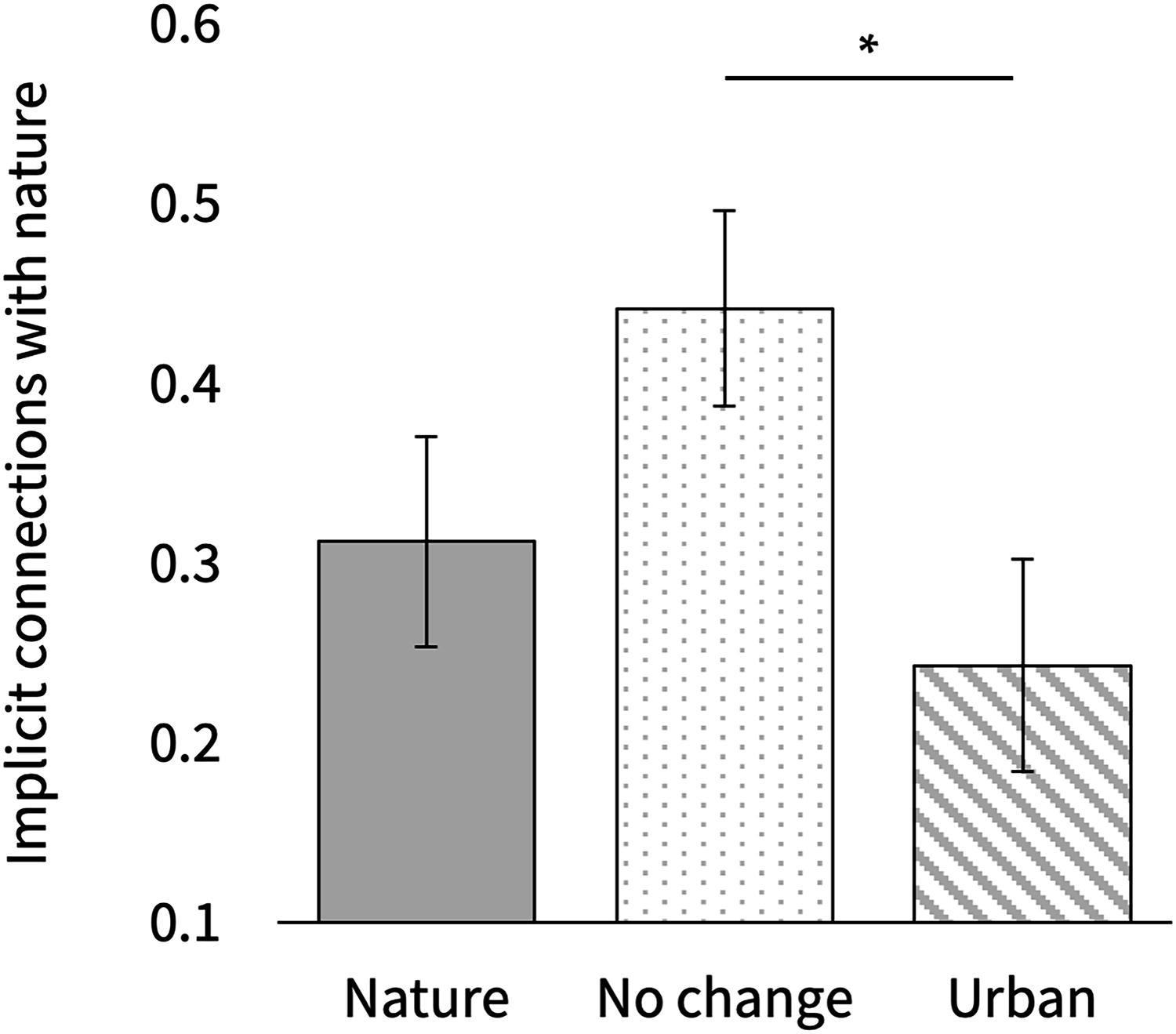
Connectedness with nature as a function of condition in Study 2.
General Discussion
Results from two-field studies showed that the image content of phone wallpapers could influence connectedness with nature. In Study 1, participants who were assigned an urban wallpaper showed significantly lower connectedness with nature compared with those assigned a nature wallpaper. In Study 2, participants who were assigned an urban wallpaper showed significantly lower connectedness with nature compared with those who were instructed to continue using their personal wallpapers. Our studies show how an extremely simple digital exposure can influence the cognitive representation of one’s self in relation to the natural world and brings to fore the potential impacts of often overlooked background display images.
These findings extend past research showing that exposure to nature or urban images elicits changes in connectedness with nature (Weinstein et al., 2009; Richardson and Sheffield, 2015) by testing the novel yet pervasive medium of phone wallpapers. While Study 1 participants in the urban condition had significantly lower connectedness with nature compared with those in the nature condition, the average nature IAT scores for the urban condition remained positive (M = 0.23), indicating that participants still showed a stronger association between themselves and nature rather than with built elements. This may indicate a general trend in which individuals tend to exhibit a positive implicit association between themselves and nature. Studies consistently find that the majority of participants show positive scores on the nature IAT (Schultz et al., 2004; Schultz and Tabanico, 2007; Bruni et al., 2018). This baseline positivity aligns with the propositions of the biophilia hypothesis and may also reflect cultural norms and societal perceptions where nature is often favorably framed.
Study 2 found that participants in the nature condition did not show significant differences in connectedness with nature compared with either the urban or control conditions. Instead, it was participants in the urban condition who showed significantly lower connectedness with nature than those in the control condition. One key difference between the two studies is that Study 1 recruited participants with non-nature wallpapers only, while Study 2 included participants regardless of their existing wallpaper content. It is possible that participants in the nature condition of Study 2 had preexisting nature-themed wallpapers, which may have limited the impact of switching to a new nature wallpaper on their connectedness with nature. Likewise, the relatively high nature IAT scores in the control condition of Study 2 (M = 0.44, SD = 0.40) may also be due to preexisting nature-themed wallpapers, which potentially inflated their baseline connectedness with nature. These explanations are admittedly highly speculative. Nevertheless, Study 2’s findings suggest that rather than nature wallpapers increasing connectedness with nature, it is urban wallpapers that are decreasing connectedness with nature. At the same time, this also implies that nature wallpapers may serve to maintain existing levels of connectedness with nature. A future research direction is to examine the impact of changes in wallpaper content—that is, from existing non-nature to nature or from nature to urban—on connectedness with nature. This will help to clarify whether it is the change in exposure that influences connectedness, rather than simply the nature of the content itself.
This research stands at the intersection of human-planetary health and the digital era, deepening our understanding of the role that screen-based media and smartphones play in shaping our connection to nature. There is mounting evidence that people around the world are becoming increasingly disconnected from nature (Soga and Gaston, 2016), a phenomenon that extends far beyond the cognitive dimension explored in this study to also include material, experiential, cognitive, emotional, and philosophical dimensions (Beery et al., 2023). Disconnectedness from nature is deeply troubling, not least because it may exacerbate the environmental crisis by eroding pro-environmental attitudes (Davis et al., 2009; Geng et al., 2015), but it can also worsen the mental health crisis by limiting opportunities for personal growth and meaning in life, both of which are supported by strong human-nature relations (Capaldi et al., 2014; Pritchard et al., 2020). As demonstrated by meta-analytic findings reviewed by Barragan-Jason et al. (2023), connectedness from nature is beneficial not only for environmental sustainability but also for human well-being, underscoring the mutual reciprocity between human health and the health of our planet.
Research has often highlighted excessive screen time as a key driver of the growing disconnectedness from nature in modern society because it reduces the time available for people to interact with the natural environment (Soga and Gaston, 2016; Larson et al., 2019). Our study suggests that exposure to non-nature images on mobile devices is another mechanism through which screen time can negatively impact connectedness with nature. This has wide implications given the vast amount of digital media that users are constantly exposed to. Social media algorithms feed users with curated online experiences based on past consumption behaviors and preexisting beliefs (Spohr, 2017)—sometimes referred to as “filter bubbles” (Pariser, 2011) or “echo chambers” (Sunstein, 2001)—which pull regular consumers of non-nature content into a vicious cycle where low levels of connectedness with nature are maintained through constant exposure to non-nature imagery. This worsens the broader consequences of screen time on mental well-being and cognitive functioning (Twenge, 2019; Small et al., 2020), which is already a major concern in today’s hyperconnected world where digital media is central to everyday life.
The current research builds on the scant literature on background images within digital interfaces and provides the first empirical evidence that wallpaper images can impact implicit connectedness with nature. The current findings corroborate past studies showing that implicit attitudes can be influenced by repeated exposure to stimuli (Olson and Fazio, 2001; Kurdi and Banaji, 2017). As changes in implicit attitudes are a result of changes in associative knowledge structures (Gawronski and Bodenhausen, 2006), repeated exposure to background images on digital interfaces can have lasting consequences on information processing which has implications for the default images used by mobile devices. A well-established finding from decision-making research is that people tend to stick to default settings (Samuelson and Zeckhauser, 1988; Weinmann et al., 2016). Providing users with a default nature wallpaper may thus be a simple and subtle behavioral nudge to prevent further erosion in connectedness with nature. Beyond mobile devices, the findings also highlight the potential impact of subtle exposure to the background images of digital (e.g., advertising screens in shopping malls and subways) and non-digital displays (e.g., billboards, posters) on implicit attitudes. In modern societies, people are spending increasing amounts of time indoors. One study found that people have lower connectedness with nature during winter months and on rainy days, when they are mostly staying indoors (Duffy and Verges, 2010). Displaying non-nature images in indoor spaces (e.g., city landscape posters in offices) may thus further worsen inhabitants’ disconnectedness from nature.
Despite the relative simplicity of the current research, the use of a field study design highlights the real-world implications of the findings. Both studies found a medium effect size (d = 0.49 in Study 1, d = 0.47 between the urban and control conditions in Study 2), suggesting that phone wallpapers can exert substantial influence on associative processes, which contributes towards the scant research on phone wallpapers. Past studies have found associations between wallpapers and personality traits (Lee, 2015). For example, people who score high in extraversion tend to change their phone wallpapers more frequently (Butt and Phillips, 2008). A possible area for future research is to examine if users with high connectedness with nature are more likely to have a nature image as their personal wallpaper in the first place. Beyond connectedness with nature, it will also be important to examine the effects of wallpapers on other constructs. For example, exposure to idealized beauty standards in mass media has been associated with low self-esteem, body dissatisfaction, and eating disorder tendencies (Kim and Lennon, 2007; Yong et al., 2017). Further, females who hold implicit positive associations of underweight models reported a stronger drive for thinness (Ahern et al., 2008). Among Study 1’s prescreening participants, many used a wallpaper depicting attractive celebrities. Future research should thus examine how repeated exposure to such wallpapers influences implicit concepts of beauty ideals and how this in turn may influence users’ esteem and body image.
Limitations
There are several limitations to this research. First, as both studies employed a fixed period of 2 weeks, we cannot determine if shorter or longer periods would lead to different results or whether habituation would occur in the long run. It is also possible that our findings were due to the mere exposure effect, whereby repeated exposure to a stimulus increases liking for it (Zajonc, 1968; Bornstein, 1989). The relationship between exposure and liking, however, has been shown to be an inverted U-shaped curve (Montoya et al., 2017), suggesting that the duration of exposure plays an important role. Future research may employ longitudinal designs to examine how the effects we found shift over time. Second, the nature and urban wallpapers used in our study were selected on the criteria that they were comparably attractive and equally likely to be chosen as wallpapers as shown in the pre-rating pilot study. While this helped to isolate the effect of content type on connectedness with nature, it also raises important questions about the broader implications of nature content and perceived aesthetics. Our nature stimuli represented archetypal, idealized landscapes (e.g., pristine forests, mountains, and coastlines) and do not capture the full diversity of nature encountered in daily life. Image rating studies have shown that perceived attractiveness, liking, and associated benefits can vary significantly within different natural environments (Twedt et al., 2016; Hoyle et al., 2017; Meidenbauer et al., 2020). Moreover, our selection of images might reinforce a problematic dichotomy between “natural” and “unnatural” in the representation of nature which risks oversimplifying the interactional dynamics that give rise to reality (Cronon, 1995). Future research should examine how exposure to more diverse and accessible representations of nature, particularly those that reflect people’s lived realities like gardens or urban wildlife, influences connectedness with nature. Finally, the samples in both studies consist of young adults. Prior research indicates that young people use their phones more and show greater attachment to their devices compared with older generations (Oksman, 2006; Anshari et al., 2016). An important area for future research is to examine if age and phone usage would moderate the effects found. For example, a follow-up study could include a measure of actual screen time. Since higher screen time entails greater exposure to the wallpaper, this may lead to stronger effects.
Conclusion
Every occasion that a user checks their phone presents an opportunity to be exposed to their phone wallpaper. The present research found that wallpaper images influenced participants’ connectedness with nature, highlighting one way that screen time can negatively impact human-nature relations while underscoring the psychological impact that exposure to subtle background images may have on users.
Authors’ Contributions
S.H.M.C.: Conceptualization, methodology, formal analysis, Investigation, writing—original draft; L.Q.: Conceptualization, methodology, writing—reviewing and editing, supervision; J.Y.: Validation, writing—original draft (supporting).
Footnotes
Acknowledgment
The authors would like to thank Chua Si Wen Alicia and Teo Jing Kai for their assistance in image coding.
Author Disclosure Statement
The authors declared no potential conflicts of interest with respect to the research, authorship, and/or publication of this article.
Funding Information
This research did not receive any specific grant from funding agencies in the public, commercial, or not-for-profit sectors.

Ethics Statement
All study protocols were approved by the University ethics committee at the first listed affiliation1.
1
Schultz et al. (2004): seven blocks of 10 trials each were used.
2
Schultz et al. (2004): Two versions were used for counterbalancing
3
Schultz et al. (2004): Latencies for incorrect trials were eliminated; latencies of more than 3 times SD above or below participants’ mean scores were removed; scores <300ms and >3,000ms were recoded to 300ms and 3,000ms respectively
4
Schultz et al. (2004): nature IAT score was computed as mean latency for incompatible (blocks 6 + 7) minus the mean latency for compatible (blocks 3 + 4) blocks.