




Abstract
Abstract
The redox property of catalysts in response to oxygen is one of the most important factors in selective catalytic reduction (SCR) reactions. In particular, the capacity to reoxidize V in V/TiO2 catalysts determines the reaction activity at low temperatures. Fast SCR reactions do not involve oxygen at an NO2/NOx = 0.5 but they show remarkable activity (near 100%). In a fast SCR reaction, the reoxidation of the catalyst is possible not only by oxygen but also by NO2. In this study, we showed that a catalyst reduced by ammonia was reoxidized and produced NO through a reaction with NO2 and was faster than reoxidation by O2 according to NO2 on/off experiments. X-ray photoelectron spectroscopy (XPS) analysis of the valence of the catalyst showed that the reoxidation of V+4-OH to V+5 = O by the SCR reaction varied. The present study demonstrated that NO2 was superior to O2 for low-temperature SCR reactions, though the approach was different from the existing reports.
Introduction
Equation (1) shows the standard SCR reaction. As the quantity of NO2 increases, the reaction shown in equation (2) occurs. When the mole ratio of NO to NO2 is 1:1, the reaction rate is much faster than the standard SCR reaction. This reaction is called the fast SCR reaction, and it does not involve oxygen (Inomata et al., 1978). If the NO2/NOx mole ratio is increased up to 0.5, the reaction follows equation (4) and its reaction rate is very slow. When the temperature of exhaust gas is below 175°C, ammonium nitrate salt is formed, as shown in equation (5), and the salt may deactivate the catalyst.
According to Koebel et al. (2001), the SCR reaction cannot be a complete reaction of NH3+NO+O2, and the reactions as seen in equation (3), because it also includes reactions that happen very slowly, without oxygen.
To artificially increase the mole ratio of NO2/NOx, Bradin et al. (1989) suggested the necessity of a hybrid process that treats part of the NO by oxidizing it into NO2.
The mechanism that was hypothesized to describe this process was the dual Eley-Rideal Langmuir-Hinshelwood, in which the surface of the catalyst is reduced through the reaction between NH3 and NO and the reduced surface of the catalyst is reoxidized by atmospheric oxygen (Topsoe, 1994; Topsoe et al., 1995; Topsoe et al., 1995). This model was validated by many researchers, such as Turco et al. (1994). Moreover, in the SCR reaction, oxygen performs the most important role; and the low-temperature activity of the catalyst is determined by the redox characteristics of the catalyst. In regard to this, some researchers have suggested that the reoxidation of V+4 and V+3 at low temperature is the rate-determining step of the SCR reaction (Lietti et al., 1996; Casagrande et al., 1999; Koebel et al., 2002). However, their reports only confirmed the reoxidation of V+4 and V+5 by transient methods. There is no one who had confirmed the valence of catalysts through step-by-step reaction in the investigation of SCR reaction mechanism.
Therefore, this study demonstrated fast SCR reactions by the approach of difference from the existing reports. XPS analysis was performed on a step-by-step reaction; we quantitatively described that valence of reoxidized catalysts by O2 and NO2. We also examined the redox characteristics of the catalyst by NO2 and O2 in the fast SCR reaction.
Materials and Methods
Catalyst preparation
The catalyst used in this study was V2O5/TiO2, which was prepared by impregnating vanadium with a commercial TiO2 support (Millenium Chemical Co.). The TiO2 support used consisted of an anatase structure with a surface area of 71 m2/g and average pore diameter of 15.3 Å. Table 1 shows the results of ion chromatography (IC) and inductive coupled plasma (ICP) analysis.
The V2O5/TiO2 catalyst can be prepared by the following methods: the use of a VOCl3 nonaqueous solution, dissolving NH3VO3 in a NH4OH aqueous solution or hydrochloric acid, or dissolving it in distilled water or oxalic acid. First, the vanadium content in TiO2 was calculated at 5 wt%. The calculated amount of ammonium meta vanadate (NH4VO3; Aldrich Chemical Co.) was dissolved in distilled water heated up to 60°C. Since the solubility of NH4VO3 is very low, small volumes of oxalic acid [(COOH)2; Aldrich Chemical Co.] was slowly added to the ammonium vanadate aqueous solution, while stirring, until the pH was 2.5. Then, when the color of the solution turned bright orange, the calculated amount of TiO2 was added to the solution. The mixture was agitated in the slurry state for over 1 h, and moisture was evaporated at 70°C using a rotary vacuum evaporator (Eyela Co. N-N series). After the evaporation of moisture, the specimen was dried for an additional 24 h in a 110°C drying oven, and then the sample was then heated in a tubular furnace up to 400°C at a heating rate of 10°C/min. Finally, the sample was calcinated at this temperature for 4 h in an air atmosphere.
Catalytic activity measurement
The catalytic reactor was composed of a gas feeding system, a reactor, and a gas analyzer. Gases were supplied to the reactor from the cylinders of NO, N2, O2, and NH3, and the flow rates were controlled using a Mass Flow Controller (MKS Co.). In addition, moisture was supplied by injecting N2 containing moisture using a bubbler to maintain a constant supply rate; water was circulated at a constant temperature (50°C) using a circulator located outside the bubbler in the form of a double jacket. The gas supply pipe was made of stainless steel and was kept at 180°C using a heating band, to prevent the production of salts such as NH4NO3 and NH4NO2, which may result from reactions between NO and NH3, and the condensation of moisture, in the reaction gas.
The reactor consisted of the continuous flow-type fixed-bed reaction equipment made of a quartz tube that was 8 mm in inner diameter and 60 cm in height, and the catalytic bed was fixed using quartz wool. The temperature of the reactor was controlled by a PID temperature controller using a K-type thermocouple fixed on the bottom of the fixed bed. To measure temperature at the gas inlet, a thermocouple of the same type was installed on the top of the catalytic bed, and the difference in temperature before and after the catalytic bed was measured.
The concentration of reactants and products was measured as follows. The concentration of NO was measured with a nondispersive infrared gas analyzer (Uras 10E; Hartman & Braun Co. and ZKJ-2; Fuji Electric Co.). In addition, the concentration of NO2 was measured with a detector tube (9L; Gas Tec. Co.) and that of ammonia was measured with a different detector tube (3M, 3La, 3L; Gas Tec. Co.). For all gases, moisture was removed using a moisture trap in the chiller, before the gases were supplied to the analyzers.
The reactivity of each catalyst was determined by measuring the NOx conversion rate using the following equation:
To analyze the effect of lattice oxygen in the catalysts on activity, we conducted an O2 on/off experiment. After the SCR reaction reached a study state while supplying NO+NH3+O2 at a constant temperature, the supply of O2 was stopped. After an hour, NO+NH3+O2 were once again supplied to the reactor, and the concentration of NO was monitored. The concentration of NO was measured with URAS 10E, and signals were collected through an 812PG A/D converter board. Table 2 shows the details of experimental conditions.
Characterizations
XPS analysis was conducted using an ESCALAB 210 from VG Scientific, and Al Kα monochromate (1486.6 eV) was used as an excitation source. Moisture contained in the catalysts was completely removed by drying at around 100°C for 24 h. The catalysts were then analyzed without surface sputtering and etching, to maintain a vacuum level in the XPS equipment of 10–12 mmHg. The binding energy and intensity of Ti, V, O, and C in the specimens were analyzed through a wide scanning spectrum.
The ICP-Atomic Emission Spectrometer was a Perkin-Elmer Optima 3000XL. RF power was 1,300 Watt, plasma flow was 15 L/min, coolant flow was 0.5 L/min, and the nebulizer flow was 0.8 L/min. In a Teflon bottle, 0.1 g of the specimen was decomposed with 2 mL of reagent (HF, HNO3, and HClO4 4:4:1 v/v), then diluted with distilled water, and finally analyzed through ICP analysis.
IC was analyzed using DIONEX-120 Automated Dual Column IC. The column was AS4A SC 4 mm, the flow rate was 1 mL/min, the eluent was 1.8 mM Na2CO3/1.7 mM NaHCO3, and the anion self-regenerating suppressor was ASRS-I 4 mm.
Results and Discussion
The SCR activity at various NO2/NOx mole ratios is presented in Fig. 1.
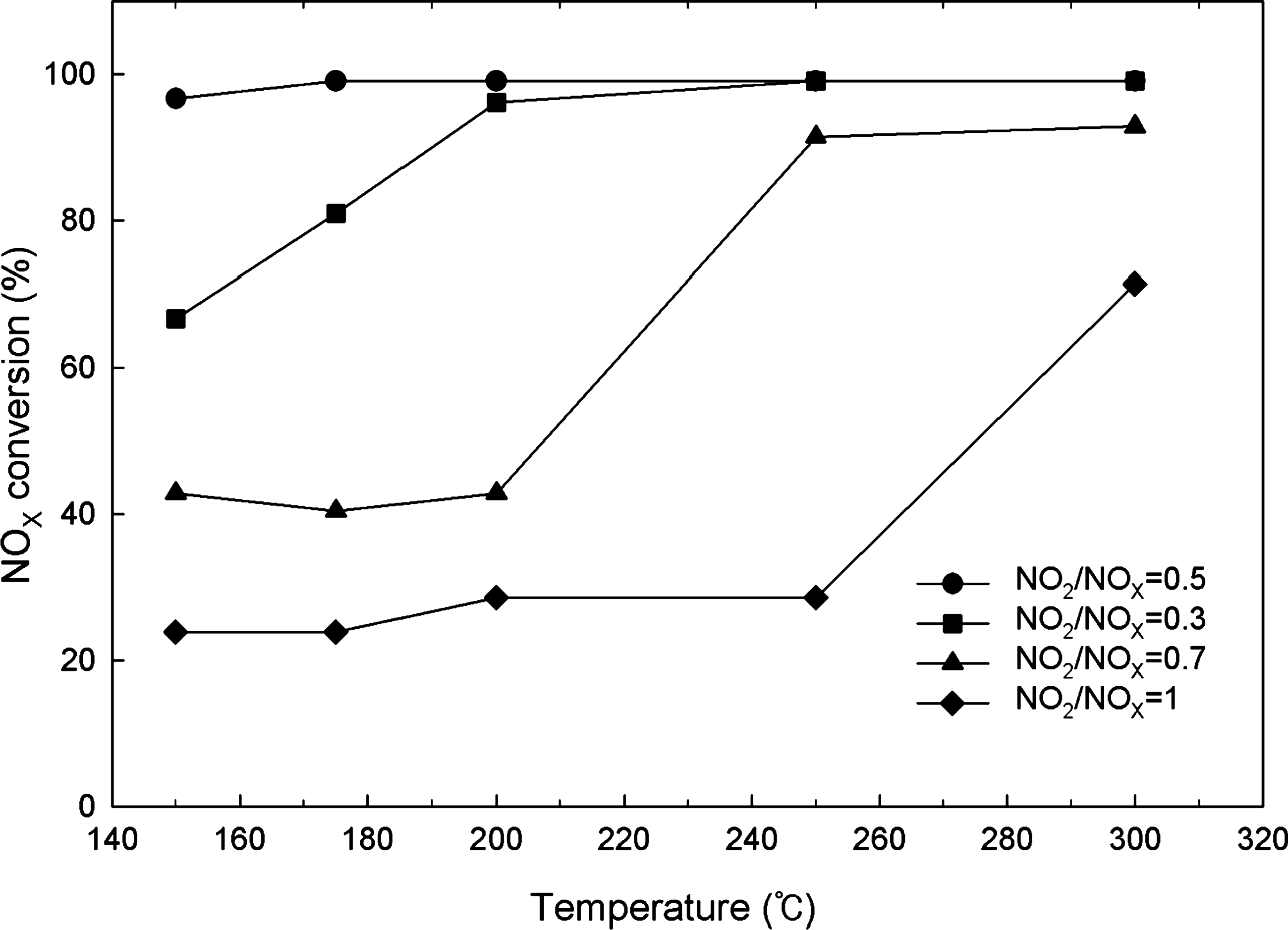
Effect of NO2/NOX mole ratio on NOX conversion over V/TiO2 (inlet NH3 = 210 ppm, O2 = 15%, H2O = 8%, space velocity (S.V.) = 60,000 h−1).
When the NO2/NOx mole ratio was 0.5, catalytic activity was over 95%, even in the low-temperature region. This is consistent with the previous report by Koebel et al. (2002). They found that the highest NOx removal rate was attained when the NO2/NOx mole ratio was 0.5 for a V-W/TiO2 monolith catalyst and the NOx removal rate decreased with an increase in the quantity of NO2. The reason for this was that the reactivity of NO2 with ammonia is very low in the SCR reaction. As shown in Figs. 2 and 3, the emission concentration of unreacted NO2 and ammonia significantly increased, due to this low reactivity, when the NO2/NOx mole ratio was higher than 0.5.
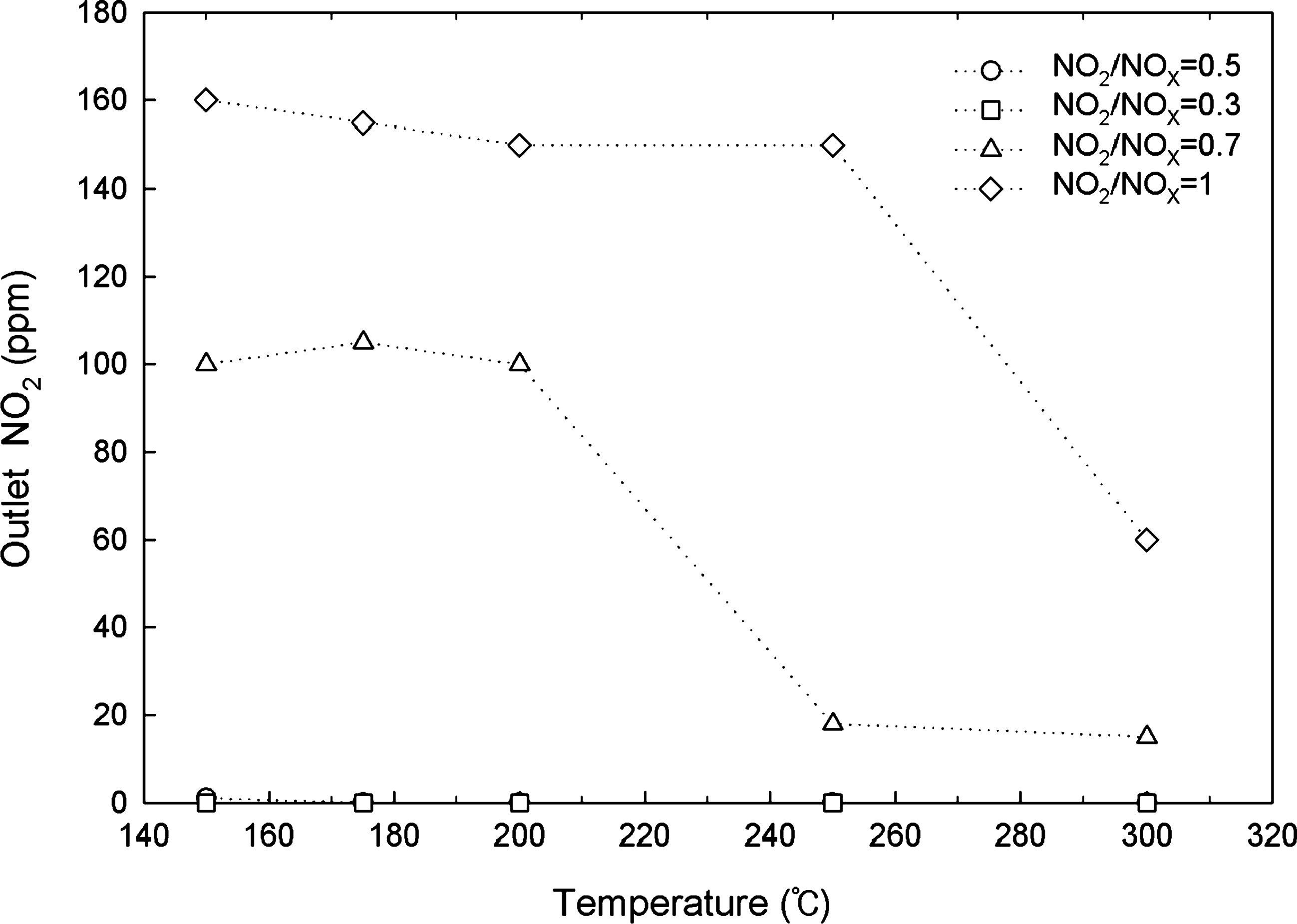
Effect of NO2/NOX mole ratio on outlet NO2 slip over V/TiO2 (inlet NH3 = 210 ppm, O2 = 15%, H2O = 8%, S.V. = 60,000 h−1).
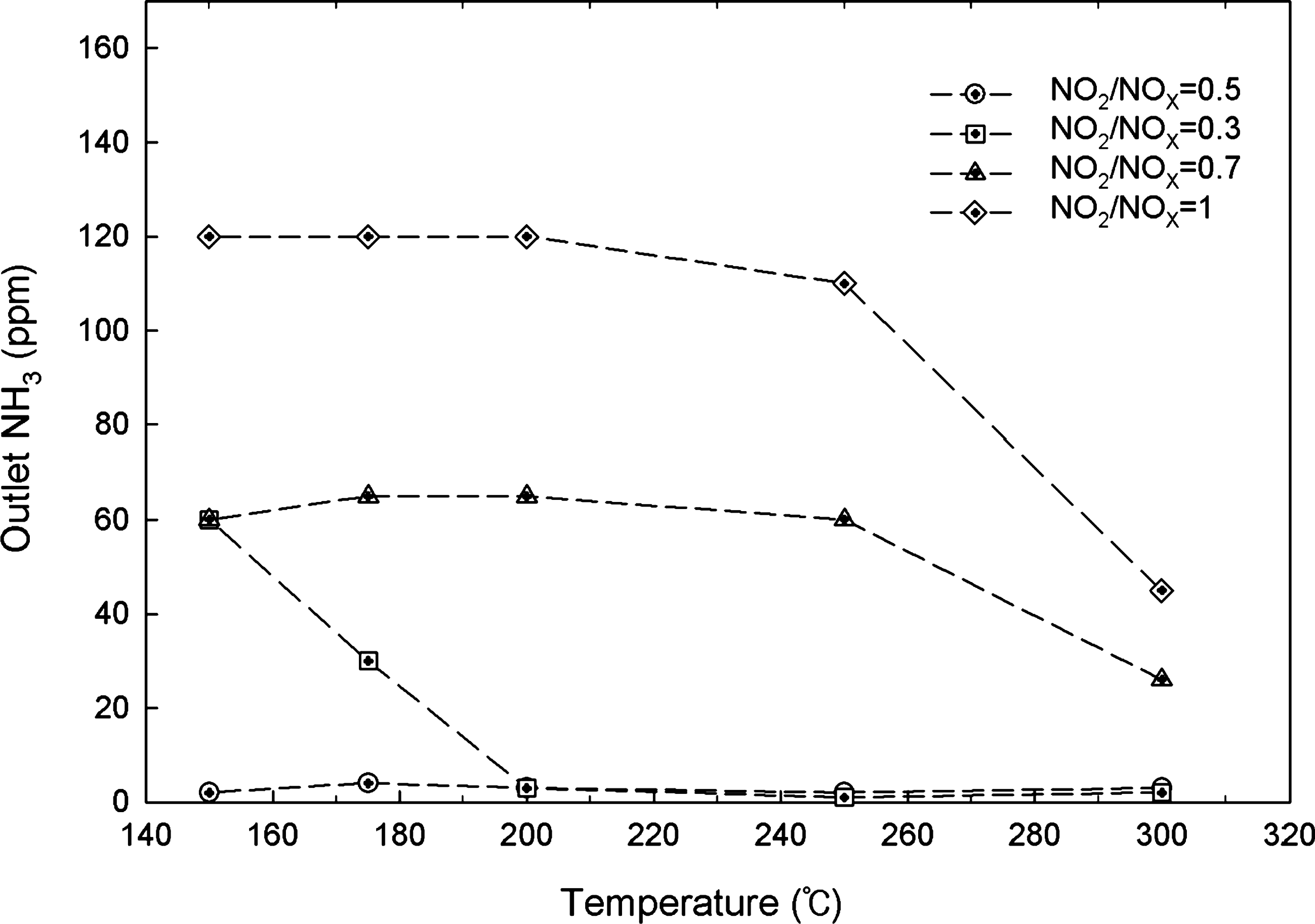
Effect of NO2/NOX mole ratio on outlet NH3 slip over V/TiO2 (inlet NH3 = 210 ppm, O2 = 15%, H2O = 8%, S.V. = 60,000 h−1).
In the SCR reaction, oxygen has the largest effect on the reaction rate. The activity of the catalyst at low temperature is determined by the redox characteristics of the catalyst (Amiridis et al., 1996; Busca et al., 1998; Lee et al., 2006; Sohrabi et al., 2007). In particular, the reoxidation of reduced vanadium oxides is very important in the low-temperature region (Topsoe et al., 1995b). Therefore, oxygen is essential for maintaining the redox cycle of the catalyst. However, the fast SCR reaction does not involve O2. Therefore, a number of indirect experiments were performed to examine the relationship between NO2 and O2.
Figure 4 shows the results of O2 on-off experiments in which NO2/NOx mole ratios of 0.1, 0.3, and 0.5 for V/TiO2 were supplied and the supply of oxygen was stopped once the reaction reached a steady state.
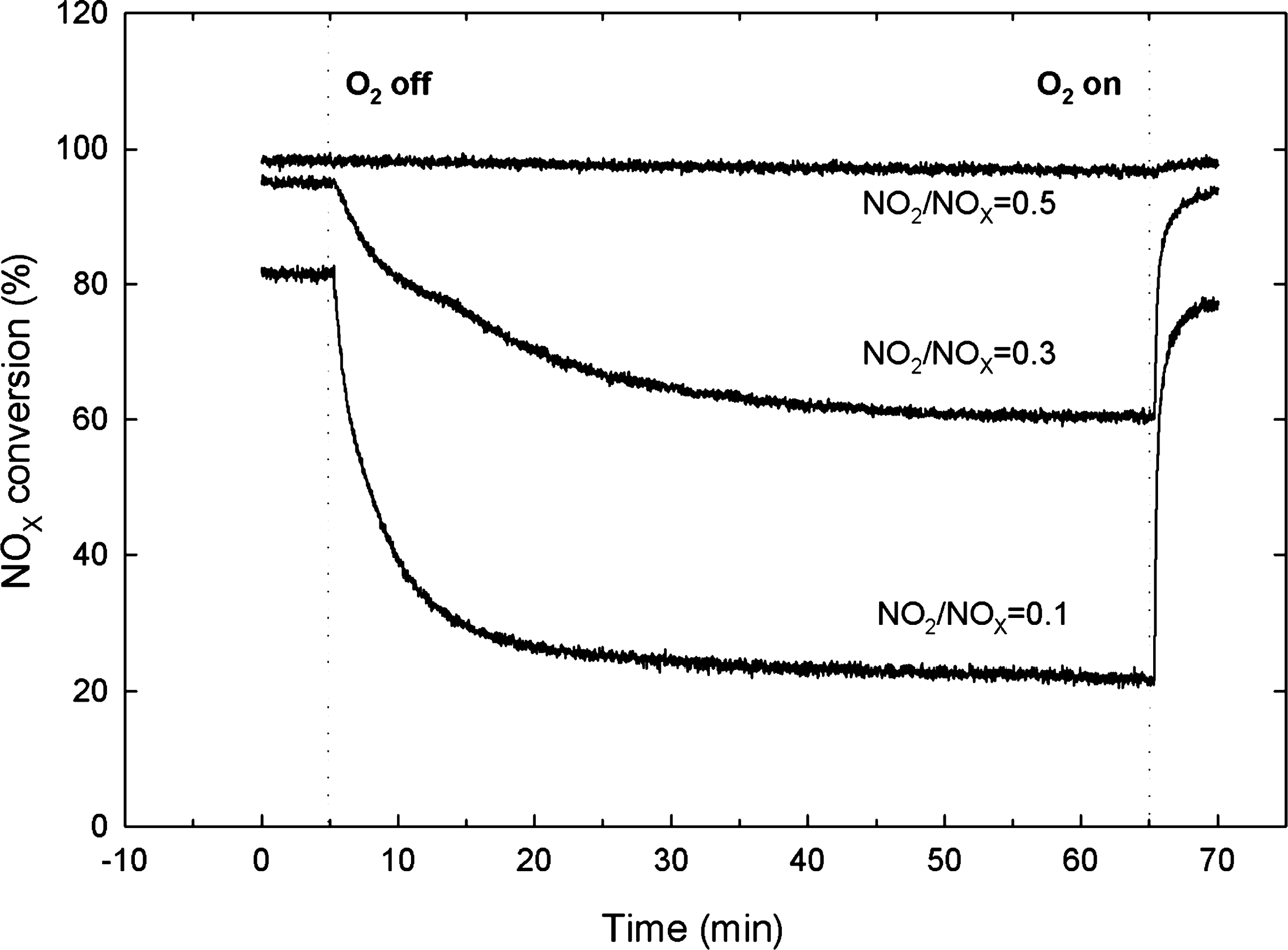
Decline of NOX conversion with time after shut-off O2 over V/TiO2 (inlet NH3 = 210 ppm, O2 = 15%, H2O = 8%, S.V. = 60,000 h−1 at 200°C).
In the O2 on-off experiment, we examined the NOx conversion rate over time, after stopping the supply of 15% oxygen when the SCR reaction had reached a steady state and then resupplying oxygen after a given time period.
At a steady state, even if the supply of oxygen was stopped, the activity was slightly lowered when the NO2/NOx mole ratio was 0.5, but it decreased further when the ratio was 0.3 or 0.1. However, around 50 min after the supply of oxygen was stopped, the activity was maintained at a constant level. This shows that the SCR reaction continued, even without oxygen, through the fast SCR reaction. When the NO2/NOx mole ratio was below 0.5, the NOx conversion rate gradually decreased after the supply of oxygen was stopped; however, after a specific time period, the NOx conversion rate was maintained as high as the composition of NO2/NOx. This probably occurred, because the NO and NO2 of the same mole ratio continued to react through the fast SCR in the absence of oxygen.
In general, the reaction activity of NH3-SCR at low temperature is known to be determined by the reoxidation of the catalyst, which is reduced to V+4 and V+3 (Jansen et al., 1887; Ramis et al., 1995, 1996; Busca et al., 1998). Thus, we performed XPS analysis on the raw V/TiO2 catalyst, the catalyst after the SCR reaction without oxygen, and the catalyst after the SCR reaction at an NO2/NOx mole ratio of 0.5, at which the activity of the reaction was not lowered, even without oxygen. Figure 5 shows the resulting Ti 2p peaks for the catalysts subjected to different conditions. The Ti 2p spectra have Ti 2p1/2 and Ti 2p3/2 peaks at 464.5 and 458.8 eV, respectively, through spin-obit interaction (Guimaraes et al., 2003); and the Ti+3 peak has a binding energy which is 1.8 eV lower than that of the Ti+4 peak (Biener et al., 2000). The vanadium peak appears adjacent to the O 1s peak, and for this reason, the satellite line, which is the secondary peak of O 1s, appears at 519.77 eV between the V 2p1/2 and V 2p3/2 peaks. The V 2p3/2 peak appears adjacent to the satellite line, and V+5, V+4, and V+3 appear between 516.4–517.0 eV, 515.7–516.2 eV, and 515.2–515.7 eV (Wang and Mardix, 2001). In this study, since the intensity of the V 2p1/2 peak was too low, the secondary peak of O 1s and the V 2p3/2 peak were presented.

Ti 2p spectra measured for V/TiO2 by XPS.
For the catalyst after the SCR reaction in the absence of oxygen (Fig. 5b), the quadrivalent Ti peak significantly decreased and the Ti peaks of Ti+3 and Ti+2 increased. This occurred, because TiO2 was reduced through the participation of lattice oxygen in the reaction. This result confirmed that lattice oxygen participated in the reaction.
Rodriguez et al. (2001) demonstrated, through XPS analysis of a catalyst that adsorbed NO2 to vacancy-rich TiO2 at 300 K, which reduced both Ti+3 and Ti+2 and restored Ti+4. In our experiment, when the Ti 2p peak of the catalyst impregnated with vanadium (Fig. 5c) that went through the SCR reaction at an NO2/NOx = 0.5 without oxygen was isolated, the composition of Ti+4 also increased compared with that in the initial raw catalyst. In addition, the Ti valence state was higher than that in Fig. 5b, which means that the SCR reaction continued although the valence state of the catalyst remained constant due to the presence of NO2.
For a catalyst prepared by reducing V2O5-TiO2 with ammonia, Koebel et al. (2002) confirmed, through in situ Raman analysis, that a part of V+5 = O was reduced to V+4-OH, which was demonstrated by the decrease in intensity at 850–1,030 cm−1. In addition, he reported that, when the reduced catalyst was reoxidized with NO2 and with oxygen, the rate of reoxidation from V+4-OH to V+5 = O was much faster by NO2 than by atmospheric oxygen. Moreover, he reported that NO2 participated in the reoxidation reaction and was reduced to NO, which, in turn, was reduced by the standard SCR reaction, as shown in the reaction below.
To test whether NO was produced from the reoxidation of the reduced catalyst by NO2, we analyzed NO produced when only NO2 was supplied at 200°C to the catalyst, which was prepared by reducing the V/TiO2 catalyst with ammonia at 300°C. The results of these experiments are presented in Fig. 6.
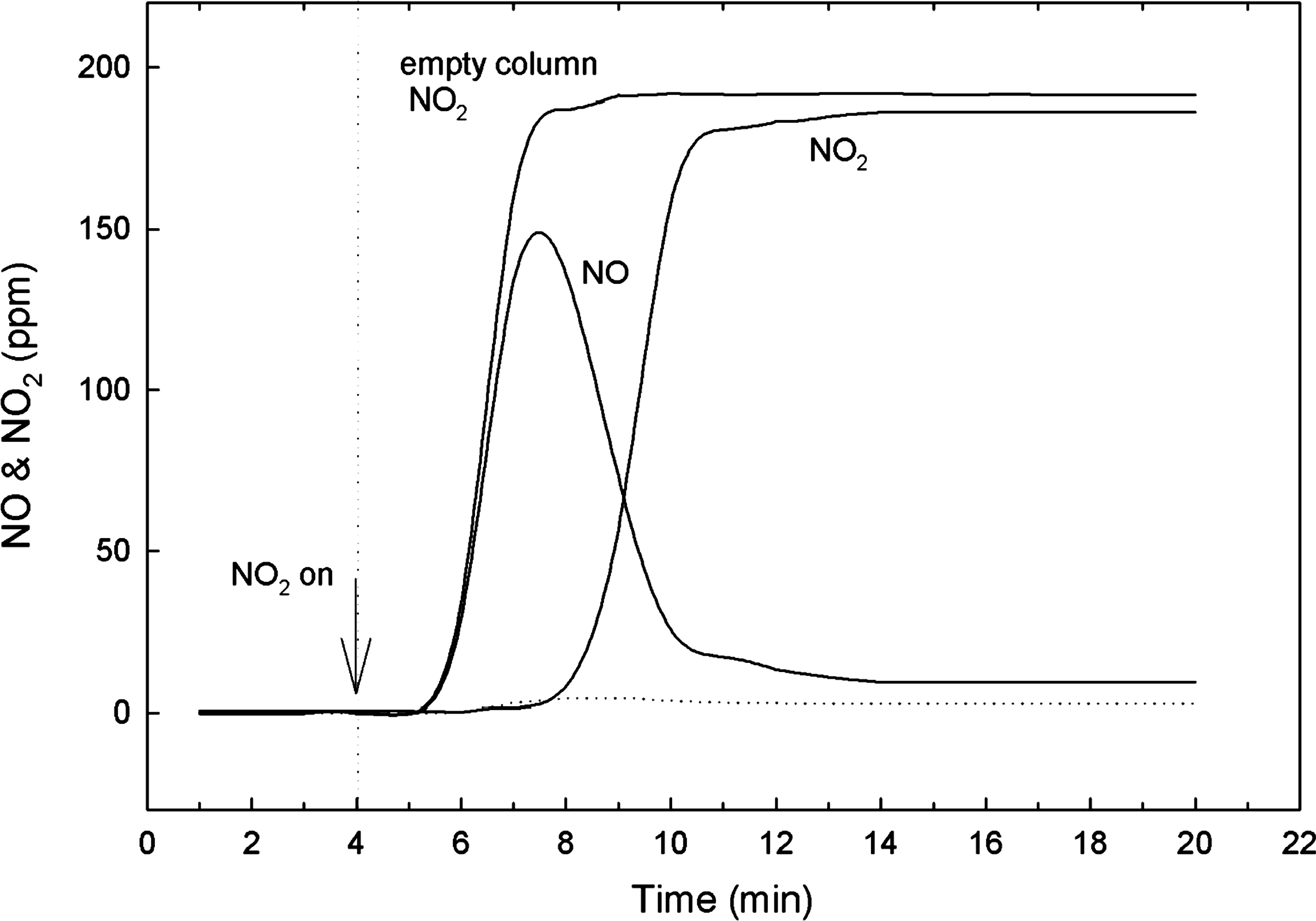
Generation of NO during reoxidation of reduced V/TiO2 by NO2 at 200°C.
We also performed a blank experiment, which was the same experiment conducted in an empty column. Comparison of these results confirmed that NO was produced when the reduced catalyst was used.
We also performed an O2 off-on-off experiment through the steady-state standard SCR reaction under the conditions of 3% O2 and another NO2 on-off experiment. The results of these experiments are presented in Fig. 7.
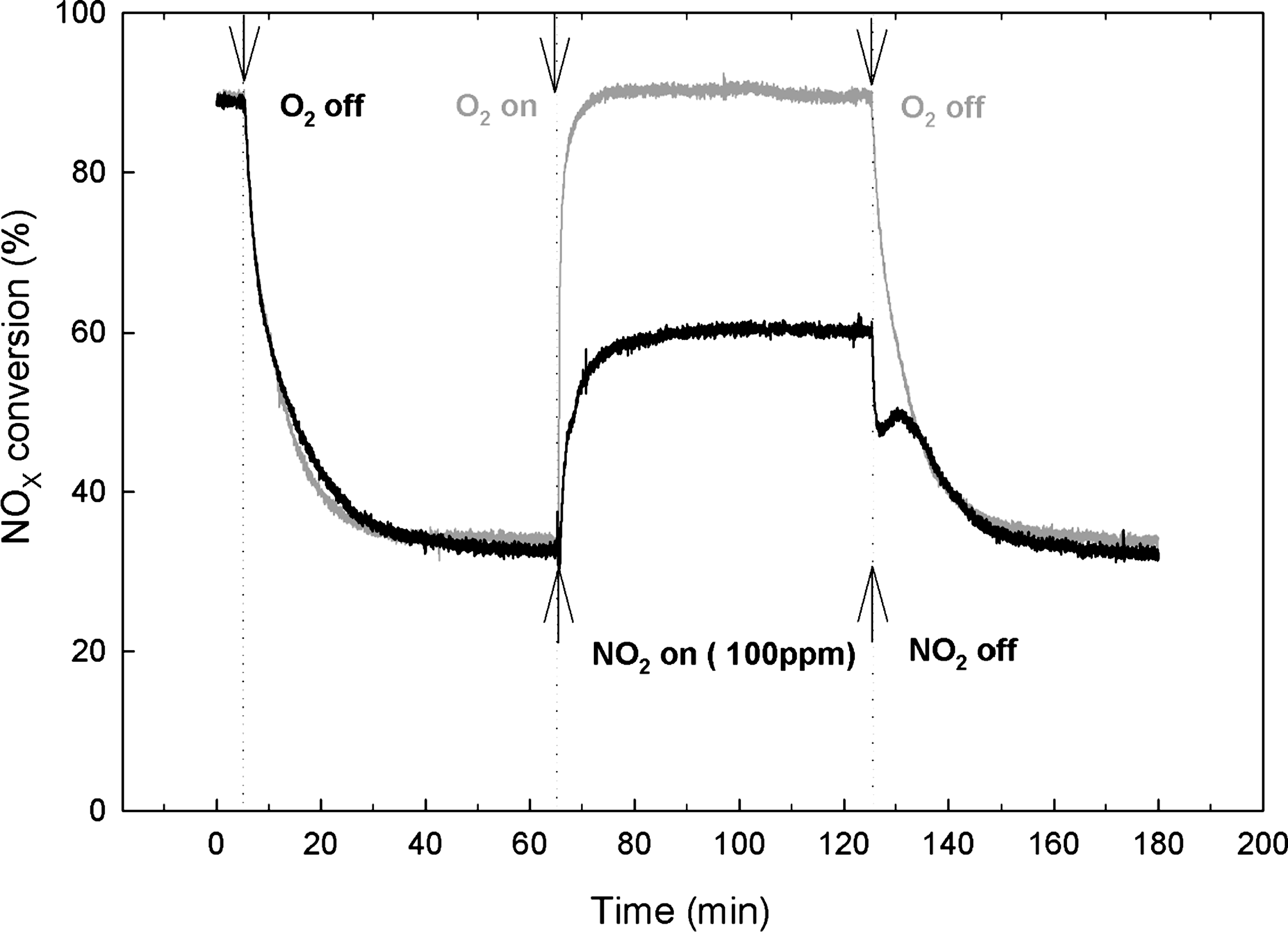
Decline of NOX conversion with time after shut-off O2 over V/TiO2 (inlet NO2/NOx = 0.1, NH3/NOx = 1.0, O2 = 3%, H2O = 8%, S.V. = 60,000 h−1 at 180°C).
The results of the O2 on-off experiment were not different from the results of other experiments. In contrast, when NO2 (100 ppm) was supplied, without the supply of oxygen, the NOx conversion rate increased and it was also maintained at 60%. The observation that activity was maintained at only 60% indicates that the amount of ammonia was insufficient, due to the additional supply of NO2 at 100 ppm. However, it is worth noting that when the NO2 supply was again stopped, the NOx conversion rate decreased, then increased for a given period of time, and finally decreased again.
Compared with the results that showed a continuous decrease in the rate of NOx when the oxygen supply was stopped, this fluctuation shows that the reoxidation rate of the surface of the catalyst by NO2 is higher than that in the presence of oxygen. Further, the reoxidation rate of the reduced surface of the catalyst by NO2 and the reoxidation rate by oxygen were also indirectly measured by XPS analysis of a catalyst reoxidized with O2 and NO2. These data are presented in Figs. 8 and 9.

V 2p spectra measured for reoxidized V/TiO2 by XPS.
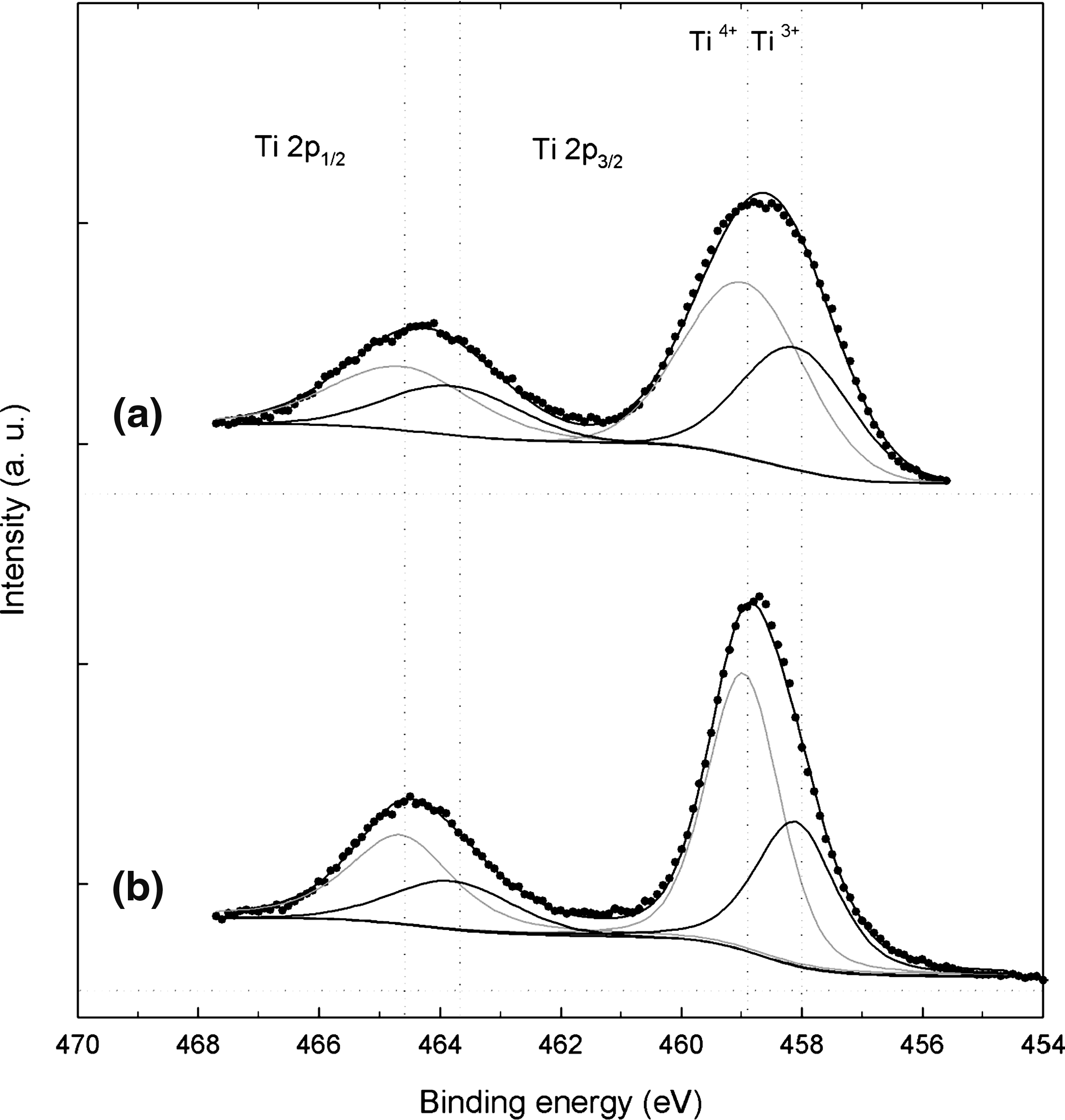
Ti 2p spectra measured for reoxidized V/TiO2 by XPS.
In addition, Table 3 shows the atomic numbers of V+5, V+4, V+3, Ti+4, and Ti+3 per unit volume obtained from XPS spectra.
Catalyst (a) was prepared by performing the SCR reaction at 180°C and, after reaching steady state, the supply of oxygen was stopped for an hour and then resumed (3% oxygen) and maintained for an hour. Catalyst (b) was prepared by supplying NO2 (100 ppm) for an hour, instead of oxygen, after the supply of oxygen was stopped. The results of these experiments confirmed that NO2 was superior to O2 in reoxidizing the reduced catalyst to V+5 and Ti+4.
Conclusion
In the fast SCR reaction, the DeNOx reaction occurred without oxygen; and when the NO2/NOx ratio was 0.5, the reaction activity was high, even in the absence of O2. The amount of Ti4+ in the catalyst that went through a fast SCR reaction at a NO2/NOx = 0.5 without O2 was higher compared with the amount present in the fresh catalyst and after the SCR reaction without O2. If NO2 was supplied to the catalyst reduced by ammonia, NO was produced and the catalyst was reoxidized by NO2. According to the results of the O2 and NO2 on-off experiments, the catalyst reoxidation rate by NO2 was higher than by O2.
The redox characteristics of the catalyst dictate the SCR activity in the low-temperature region. In the case of the fast SCR reaction, reoxidation of the catalyst by NO2 was fast and it resulted in a near perfect reaction activity even at low temperature (150°C). The valence state of the catalysts reoxidized by O2 and NO2 was analyzed by XPS analysis. The SCR activity was dictated by the reoxidation of reduced V+4-OH to V+5 = O through the SCR reaction. In addition, NO2 was superior to O2 in the reoxidation of the catalyst at low temperature and as a result, it was efficient even in low-temperature SCR reactions.
Footnotes
Acknowledgment
This research was supported by a grant (code#; M108KO01014-09K1501-01411) from “Center for Nanostructured Materials Technology” under “21st century R&D Programs” of the Ministry of Science and Technology, Korea.
Author Disclosure Statement
The authors declare that no conflicting financial interests exist.