




Abstract
Abstract
Many magnetic adsorbents reported in the literature, such as iron oxides, for Cr(VI) removal have been found effective only in low pH environments. Moreover, the application of polymeric hydrogels on heavy metal removal has been hindered by difficulties in separation by filtration. In this study, a magnetic cationic hydrogel was synthesized for Cr(VI) removal from contaminated water, making use of the advantages of magnetic adsorbents and polymeric hydrogels. The magnetic hydrogel was produced by imbedding 10-nm γ-Fe2O3 nanoparticles into the polymeric matrix via radical polymerization. Characterization of the hydrogel was undertaken with Fourier transform infrared and vibrating sample magnetometer; swelling properties were tested and anionic adsorption capacity was evaluated. The magnetic hydrogel showed a superior Cr(VI) removal capacity compared to commercial products such as MIEX®. Cr(VI) removal was independent of solution pH. Results show that Cr(VI) removal kinetics was improved drastically by grinding the bulk hydrogel into powder form. At relevant concentrations, common water anions (e.g., Cl−, SO42−, PO43−) and natural organic matter did not exhibit significant inhibition of Cr(VI) adsorption onto the hydrogel. Results of vibrating sample magnetometer indicate that the magnetic hydrogel can be easily separated from treatment systems. Regeneration of the magnetic hydrogel can be easily achieved by washing the Cr(VI)-loaded hydrogel with 0.5 M NaCl solution, with a recovery rate of about 90% of Cr(VI).
Introduction
Conventional methods for removing Cr(VI) from wastewater, such as chemical precipitation, involve Cr(VI) reduction under acidic conditions to Cr(III), a relatively environmentally benign form of chromium, followed by precipitation of Cr(III) at basic pHs. However, this process results in a massive production of waste sludge.
During the past decade, a lot of research attention has been directed to the removal of Cr(VI) from contaminated water via adsorption. In principle, adsorption cannot only remove contaminants but can also recover and recycle them into industrial processes (Singh and Tiwari, 1997). Various types of adsorbents have been explored for their effectiveness in this regard, including activated carbon (Selvi et al., 2001; Fang et al., 2007), biosorbents (Ansari and Fahim, 2007; Sen et al., 2007), metal oxides (Hu et al., 2005; Wang and Lo, 2009), and synthetic polymeric adsorbents (DeMarco et al., 2003; Mukhopadhyay et al., 2007; Barakat and Sahiner, 2008). The focus of synthetic polymeric adsorbents for Cr(VI) removal is mainly on anion-exchange resins so far (Rengaraj et al., 2001; Galán et al., 2005). The commonly used commercial resins in this regard are strong-base (i.e., polyacrylic) resins with a macroporous structure, which are typically used with chloride as the exchangeable ion. The advantages of the anion-exchange resins lies in their high Cr(VI) removal capacity and easy regeneration when compared with other adsorbents (Rivas et al., 2001; Kaşgöz, 2006).
Hydrogels, on the other hand, are another type of synthetic polymeric adsorbents, which have three-dimensional networks of hydrophilic polymers capable of imbibing large amount of water (Ozay et al., 2009). In essence, resins and hydrogels have a lot in common: both are polymer-based materials and remove contaminants via electrostatic attraction. However, unlike resins, which have rigid structures, hydrogels have flexible structures and can accommodate more water into their matrix than the resins (Barakat and Sahiner, 2008). With a proper design of a hydrogel, even higher Cr(VI) removal capacity can be achieved.
In the past few years, magnetic property of iron oxides has been utilized in the context of environmental remediation. They facilitate the separation of adsorbents from contaminated water (Hu et al., 2004, 2005; Wang and Lo, 2009), which is desirable because it overcomes many issues present in filtration, centrifugation, or gravitational separation, such as fouling problems and operation cost, and requires much less energy to achieve a given level of separation. However, adsorption onto iron oxides was found to be only effective in acidic environments, and their maximum Cr(VI) adsorption capacity was reported to be about 15–20 mg/g (Hu et al., 2004, 2005; Wang and Lo, 2009).
A combination of a synthetic polymeric resin and a magnetic property has been reported for a commercial product: magnetic ion exchange (MIEX®) resin, marketed by Orica Watercare of Victoria, Australia. MIEX was developed specifically for the removal of dissolved organic carbon from raw drinking water. The iron oxide provides the resin with magnetic characteristics that facilitates its separation. A similar idea has been recently proposed (Ozay et al., 2009) for the removal of cationic heavy metals, such as Cd(II), Co(II), and Cr(III), with magnetic application of the hydrogel. However, oxyanions [e.g., Cr(VI)] removal by magnetic hydrogels has not been reported to the best of the authors' knowledge.
In this study, the magnetic cationic hydrogel was synthesized by polymerization of (3-acrylamidopropyl)trimethylammonium chloride (APTMCl) in the presence of 10-nm γ-Fe2O3 nanoparticles to provide a magnetic property for fast separation, with ammonium groups providing positively charged sites for anion exchange. The magnetic hydrogel was characterized with Fourier transform infrared (FTIR), vibrating sample magnetometer (VSM), and swelling tests. The adsorption capability of the synthesized hydrogel for Cr(VI) was evaluated. The factors possibly affecting Cr(VI) removal performance, including solution pH and the presence of other anions and humic acids (HA), were examined. The regeneration and reusability of the magnetic cationic hydrogel were also investigated.
Materials and Approaches
Chemicals
Potassium dichromate (K2Cr2O7), APTMCl (75 wt% solution in water), N,N′-methylenebisacrylamide (MBA), N,N,N′,N′-tetramethylethylenediamine (TEMED), and potassium persulfate (KPS) were purchased from Aldrich and used as received. γ-Fe2O3 was laboratory made and evaluated as described by Wang and Lo (2009). Other chemicals such as NaCl, HCl, NaOH, FeCl3 · 6H2O, FeSO4 · 7H2O, Na2SO4, and Na3PO4 were of reagent grade and also obtained from Aldrich Chemical. Commercial Aldrich HA were used for the batch studies.
Synthesis of 10-nm γ-Fe2O3
In this study, 10 nm γ-Fe2O3 nanoparticles were synthesized and imbedded into the hydrogel to provide the hydrogel with magnetic properties. Ten-nanometer Fe3O4 nanoparticles were first synthesized using a method modified from Kang et al. (1996). Briefly, 6.1 g FeCl3 · 6H2O and 4.2 g FeSO4 · 7H2O were dissolved in 100 mL of ultrapure water. A total of 25 mL of 6.5 M NaOH was then slowly added and mixed with the above solution. The system was mixed for a further hour after the addition of NaOH was completed. The formed black precipitates were washed with ultrapure water several times with the assistance of an external magnetic field. This procedure leads to Fe3O4 nanoparticles with a size of around 10 nm. The 10-nm Fe3O4 nanoparticles were then oxidized in air in an oven at 150°C for 2 h to obtain the 10-nm γ-Fe2O3.
Synthesis of magnetic hydrogel
Bulk magnetic hydrogel was synthesized via radical polymerization in the presence of a redox initiator (Barakat and Sahiner, 2008). In the synthesis, APTMCl served as the polymeric monomer, MBA as the crosslinker, TEMED as the accelerator, and KPS as the redox initiator. A typical magnetic hydrogel synthesis is as follows: in a 20-mL clear glass vial, 0.05 g of MBA was dissolved in 0.8 g of ultrapure water containing 2.5 g of APTMCl monomer (75 wt% solution in water) in the presence of 0.02 mL TEMED. Then, 0.3 g of 10-nm γ-Fe2O3 was added to the above mixture and mixed well under magnetic stirring to obtain a homogenous mixture. About 0.6 mL of the KPS solution was then added. The hydrogel precursor had a monomer-to-water ratio of 57:43 by mass (not including the mass of the 10-nm γ-Fe2O3). Once the solution was well mixed (∼10 min), the 20-mL vial was then kept in a 60°C water bath. The polymerization reaction was allowed to proceed at 60°C under magnetic mixing for 10 min for the reaction to be completed. The vial containing the bulk magnetic hydrogel was then taken out of the water bath and allowed to cool down in air. The bulk magnetic hydrogel was then taken out of the vial and was subsequently immersed in 2.0 L of ultrapure water. The water was replaced six times every 12 h to get rid of initiators, unreacted monomers, crosslinkers, and accelerators. The dry bulk magnetic hydrogel was obtained by freeze-drying the water-rinsed hydrogel. The dry hydrogel was stored in a desiccator prior to use. The powder magnetic hydrogel was produced by grinding the as-prepared bulk magnetic hydrogel in a household blender (Philips Electronics; Fig. 1). For comparison, the nonmagnetic hydrogel was synthesized using the same procedure, except that no 10-nm γ-Fe2O3 was added during the synthesis.

Photographs of the synthesized magnetic hydrogel:
Characterization of magnetic hydrogel
The particle size of the powder magnetic hydrogel was measured using a laser diffraction particle size analyzer (Beckman Coulter LS13 320). The magnetic properties of the magnetic hydrogel were determined by VSM (LakeShore 7037/9509-P). FTIR (Bruker IFS-66 V) spectroscopy was used to examine the existence of organic groups in the prepared hydrogel samples. Infrared spectra of diluted samples in KBr were recorded between 4,000 and 500 cm−1.
The swelling testing for the magnetic hydrogels was carried out at room temperature in deionized (DI) water. Hydrogels in DI water were weighed after wiping with KimWipes to remove the excess water on the surface. Dry weights were determined by weighing samples after 48 h of freeze-drying.
Batch experiments
A chromium stock solution was prepared by dissolving a known quantity of K2Cr2O7 in ultrapure water. Batch Cr(VI) adsorption studies were performed by mixing 0.1 g of the bulk or powder magnetic hydrogel with 40 mL of Cr(VI) solution, at different concentrations, in 40-mL glass vials end-over-end. All the adsorption experiments were carried out at a room temperature of 22°C ± 2°C and were performed in duplicate. The adsorbent was separated at the end of each test by using a hand-held permanent magnet and the Cr(VI) concentration in the supernatant was measured using a flame atomic absorption spectrometer (Varian 220FS) in all tests. Sample dilution was conducted before atomic absorption spectrometer measurement, where necessary.
Kinetics of Cr(VI) adsorption onto the hydrogel
The kinetics of Cr(VI) adsorption onto both the bulk magnetic hydrogel and powder magnetic hydrogel were studied. Specifically, 0.1 g of the bulk or powder magnetic hydrogel was mixed with 40 mL Cr(VI) solution at a concentration of 200 mg/L. The aqueous Cr(VI) concentrations were measured at the end of 20, 40, 60, 120, 180, and 240 min to determine the Cr(VI) adsorption kinetics. In both cases, it took <2 min to magnetically separate all the bulk and powder hydrogels from the aqueous solution. However, as the kinetics of Cr(VI) adsorption by the powder magnetic hydrogel was much faster than the bulk one, the powder magnetic hydrogel was chosen thereafter for subsequent studies, unless otherwise specified.
Effect of pH on Cr(VI) adsorption onto the powder magnetic hydrogel
The Cr(VI) adsorption onto the magnetic hydrogel was studied at four different pH values (3.0, 5.0, 7.0, 9.0) to investigate the dependence of Cr(VI) adsorption on the solution pH. Standard acid (0.1 M HCl) and standard base (0.1 M NaOH) solutions were used for pH adjustment. Based on the findings of the pH independence on Cr(VI) adsorption, further Cr(VI) adsorption studies were conducted only at the pH of the initial Cr(VI) solution (around 4.2), unless otherwise specified.
Comparison of Cr(VI) adsorption onto the magnetic and nonmagnetic hydrogels
For the purpose of determining the contribution of the imbedded 10-nm γ-Fe2O3 to the total Cr(VI) adsorption by the magnetic hydrogel, Cr(VI) adsorption onto the magnetic hydrogel was compared with that onto the nonmagnetic sample under the same conditions. Three initial Cr(VI) concentrations (25, 50, and 100 mg/L) were tested.
Cr(VI) adsorption isotherm
Batch experiments were conducted to determine Cr(VI) adsorption by mixing 0.1 g of hydrogel with 40 mL of Cr(VI) solution with varying Cr(VI) concentrations (5–700 mg/L) to reach Cr(VI) adsorption equilibrium. No effort was made to adjust the solution pH as no significant change in the final pH was observed.
Effects of background electrolytes and natural organic matter on Cr(VI) adsorption by hydrogel
The competition for background electrolytes and natural organic matter in Cr(VI) equilibrium adsorption by the hydrogel was studied in the copresence of Cl−, SO42−, PO43−, and HA. The initial concentrations of each electrolyte anion were 0.5, 1.0, 1.5, and 2.0 mM, and two different initial concentrations of HA (10 and 20 mg dissolved organic carbon/L) were tested for their effects on Cr(VI) removal. In all cases, the initial Cr(VI) concentration of 100 mg/L (1.92 mM) was used.
Regeneration and reuse of the hydrogel
To study the regenerability and reusability of the magnetic hydrogel as an adsorbent for Cr(VI) removal, experiments pertaining to the magnetic hydrogel regeneration and Cr(VI) readsorption were carried out in three consecutive adsorption–desorption cycles. For each cycle, 40 mL of 100 mg/L Cr(VI) solution was adsorbed first by 0.1 g of magnetic hydrogel to reach the adsorption equilibrium. The supernatant was then decanted with the assistance of a permanent magnet. The adsorbed Cr(VI) on the magnetic hydrogel was then desorbed with 40 mL of 0.5 M NaCl. After each cycle of adsorption/desorption, the magnetic hydrogel was thoroughly washed with ultrapure water to neutrality and then used for adsorption in the succeeding cycle.
Results and Discussion
Characterization of the magnetic hydrogel
FTIR spectroscopy for the characterization of hydrogel with and without magnetic application was undertaken (Fig. 2). Both types of hydrogel exhibited similar characteristic peaks over the spectrum ranging from 500 to 4,000 cm−1, which indicates that the γ-Fe2O3 nanoparticle modification does not change the structure of the hydrogel. The expected peak at around 3,000 cm−1 (2,936 cm−1) was due to the asymmetric stretching of alkane groups (Mansur et al., 2004). Peaks absorbance at 1,647 and 1,546 cm−1 were assigned to an amide I (C = O) and II (C–N) stretch, respectively, from both the monomer (APTMCl) and the crosslinker (MBA) (Guiney et al., 2009). C–N stretching was characterized with the peaks occurring in the range of 900–1,350 cm−1. The peak at 966 cm−1, however, was attributed to the bending vibration of the trimethyl ammonium group [–N+(CH3)3], the characteristic group in the monomer used (APTMCl) (Chen et al., 2009).
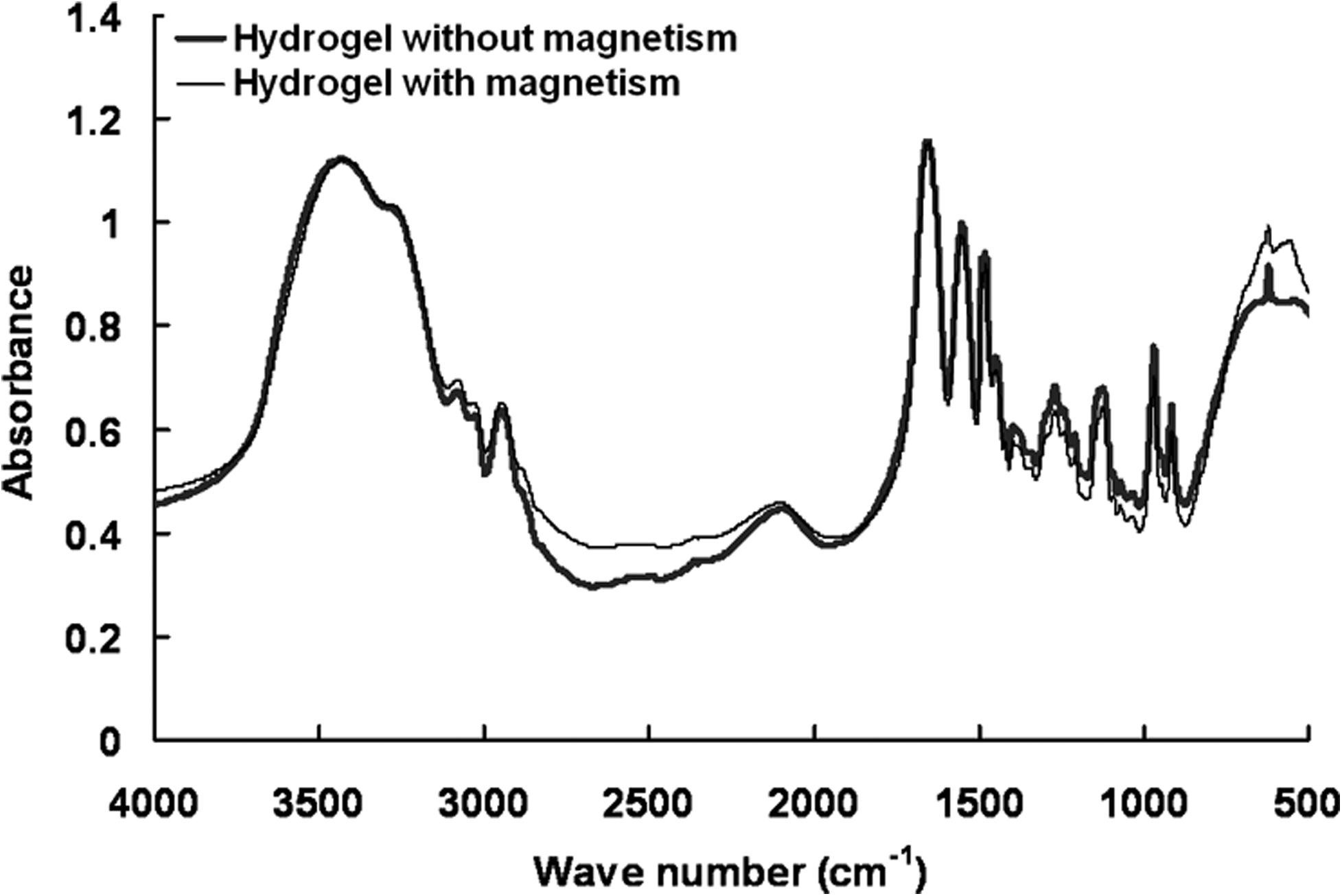
Fourier transform infrared characterization of the magnetic hydrogel with and without magnetism.
Cationic density/anion adsorption capacity (assuming the nitrogen atoms at the quaternary ammonium in the monomer are the sites for adsorption) was calculated based on the hydrogel recipe. As water content is excluded from the ingredients, the dry mass ratio between the monomer (APTMCl) and the total dry hydrogel was found to be 0.851 g monomer/g hydrogel. The cationic density was then calculated as 4.12 mmol/g hydrogel, where the charge density is only dependent on the molar mass of the monomer.
The synthesized bulk magnetic hydrogel took on the shape of its container (Fig. 1a), and because of the relatively high content of the crosslinker, the swelling ratio of magnetic hydrogels in water was around 12.5 ± 0.5 (calculated based on the mass ratio of the wet hydrogel weight in DI water to its original dry weight after freeze-drying), which is much less than the ratio of 25–40 reported in the literature (Barakat and Sahina, 2008; Ozay et al., 2009) (Fig. 1a and b). Figure 3 shows the hydrodynamic particle size distribution of the powder magnetic hydrogel, in which the average particle size was around 10 μm. The particle sizes followed a symmetrical normal distribution, which can be probably attributed to a consistent mechanical powderization.
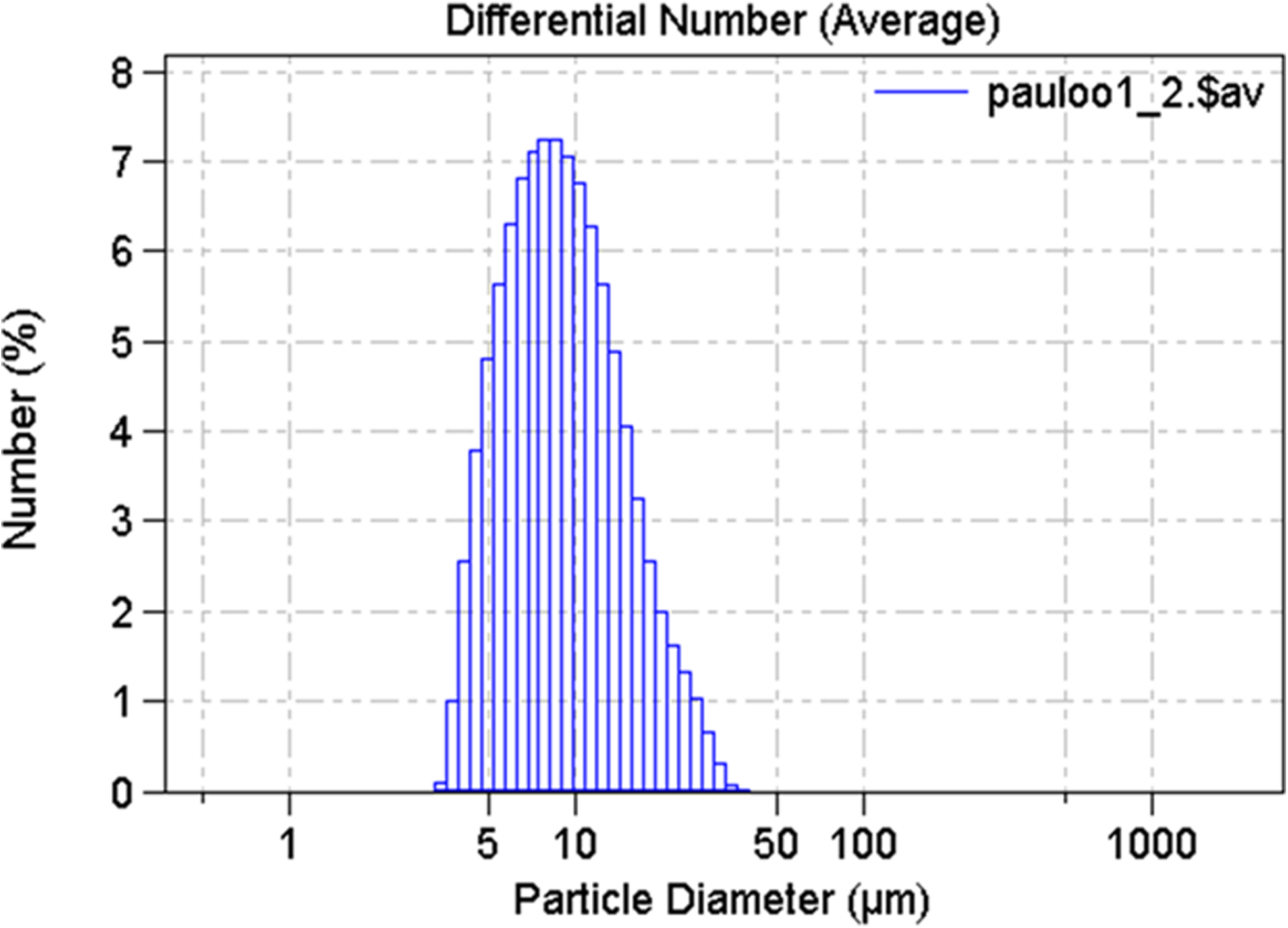
Particle size distribution of the powder magnetic hydrogel.
Magnetic separation
Detailed characterization of the synthesized 10-nm γ-Fe2O3 was reported by Wang and Lo (2009). The reason for using 10-nm γ-Fe2O3 instead of Fe3O4 is to avoid chemical adsorption. The highest iron valency (+3) in γ-Fe2O3 ensures that there is no redox reaction taking place to reduce Cr(VI) to Cr(III), which would otherwise render irreversible Cr(VI) adsorption. In the case with Fe3O4, where part of the iron is in an oxidation state of + 2, chemical adsorption of Cr(VI) has been reported, in that the formation of precipitated Cr(III) on the adsorbent surfaces led to irreversible adsorption (Hu et al., 2004).
The magnetic properties of the hydrogel were quantitatively determined by VSM measurement and were also compared with that of the pure nano γ-Fe2O3 (data not shown). The magnetic hydrogel is superparamagnetic (zero moment without magnetic field application) because its magnetic property is due to addition of the nano γ-Fe2O3 during polymerization, which is also superparamagnetic. The magnitude of the saturation magnetization of the hydrogel is around 6 emu/g, whereas it is 32 emu/g for the 10-nm γ-Fe2O3. As the γ-Fe2O3 accounts for only about 13.5% of the total weight of the magnetic hydrogel after freeze-drying, it is not surprising that much less saturation magnetic moment was found for the hydrogel. The VSM measurement was based on dry weight, but the magnetic hydrogel works in the aqueous phase. The weight of the magnetic hydrogel increased to more than one log magnitude of its dry weight, according to the swelling ratio of 12.5. Therefore, with the same magnetic composition and the same magnetic field application, the magnetic moment would be much less than its original one. To quantitatively verify the feasibility of the magnetic collection ability under wet conditions, a simple test was conducted by mixing 0.1 g of dry weight of the magnetic hydrogel with 40 mL DI water in a 40-mL vial, and the separation of the powder magnetic hydrogel by a household permanent magnet was demonstrated in Fig. 1b. A complete solid-aqueous separation can be achieved within 2 min. Thus, the magnetic property of the magnetic hydrogel is still applicable for rapid separation.
Cr(VI) adsorption onto the magnetic hydrogel
Cr(VI) adsorption onto bulk and powder magnetic hydrogels
The results of the kinetics of Cr(VI) adsorption on the bulk magnetic hydrogel are presented in Fig. 4a. As shown, it took 2 h to reach equilibrium for Cr(VI) adsorption onto the bulk magnetic hydrogel. Although the Cr(VI) adsorption onto the bulk hydrogel for Cr(VI) removal is high [98% of the Cr(VI) removal in this case], its slow kinetics makes it cost-ineffective for application in a large scale. It has been reported that slow kinetics is attributed to long diffusion paths of the contaminant molecules in reaching their adsorption sites within the hydrogel (Bajpai, 2001; Guilherme et al., 2009). Thus, it is expected that the hydrogel with a much smaller particle size would solve the problem of slow kinetics of pollutant removal.
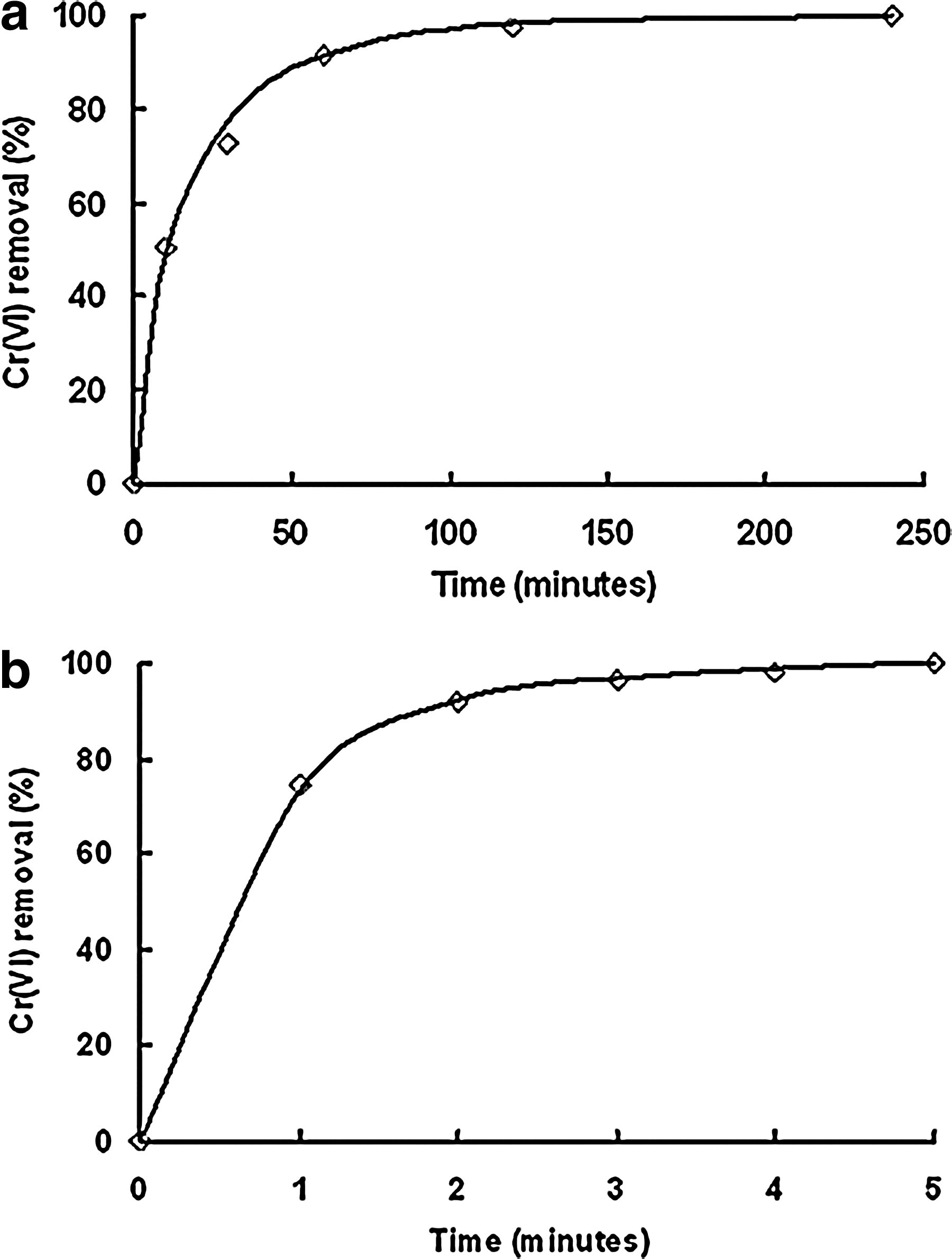
Kinetics of Cr(VI) removal by
To this end, the powder magnetic hydrogel was made by grinding the bulk magnetic hydrogel using a household blender. To test the Cr(VI) removal kinetics of the powder magnetic hydrogel, the same batch of adsorption experiments were conducted as for the bulk magnetic hydrogel, except that the powder magnetic hydrogel was used. It turned out that the grinding of the magnetic hydrogel dramatically shortened the Cr(VI) removal time and also maintained its Cr(VI) adsorption capacity. Figure 4b presents the Cr(VI) removal kinetics by the powder magnetic hydrogel. As can be seen, it took only a couple of minutes for reaching Cr(VI) adsorption equilibrium, when compared with 2 h for the bulk magnetic hydrogel. Based on a recycling point of view, only about 1/60 of the equivalent amount of hydrogel would be consumed for the powder magnetic hydrogel to achieve the same amount of Cr(VI) removal, in comparison to that for the bulk magnetic hydrogel. Considering the same treatment period, this would very much reduce the operation cost in the treatment processes. For this reason, the powder magnetic hydrogel was used for the rest of the study, unless otherwise specified.
Effect of pH on Cr(VI) removal by the magnetic hydrogel
To examine the effect of pH on Cr(VI) removal by the magnetic hydrogel, Cr(VI) adsorption was conducted at four different pH values (3, 5, 7, and 9). The results show that Cr(VI) removal by the magnetic hydrogel is nearly independent of the solution pH (Fig. 5), because the trimethyl ammonium group of the magnetic hydrogel provides positive surface charges. It is evidenced by the supplementary experiment on the zeta potential measurement of the magnetic hydrogel in a pH range of 3–12, which shows about +48 mV at pH 2 to about +30 mV at pH 12 (data not shown). The Cr(VI) removal mechanism is likely due to anion exchange, that is, Cr(VI) (oxyanion) exchanged with Cl−, which was originally present as the charge neutralizer in the magnetic hydrogel. The pH may affect the speciation of Cr(VI) to a certain extent (Bradl et al., 2005), but, apparently, the variation of Cr(VI) species within the pH range (3–9) does not significantly affect the overall Cr(VI) removal.
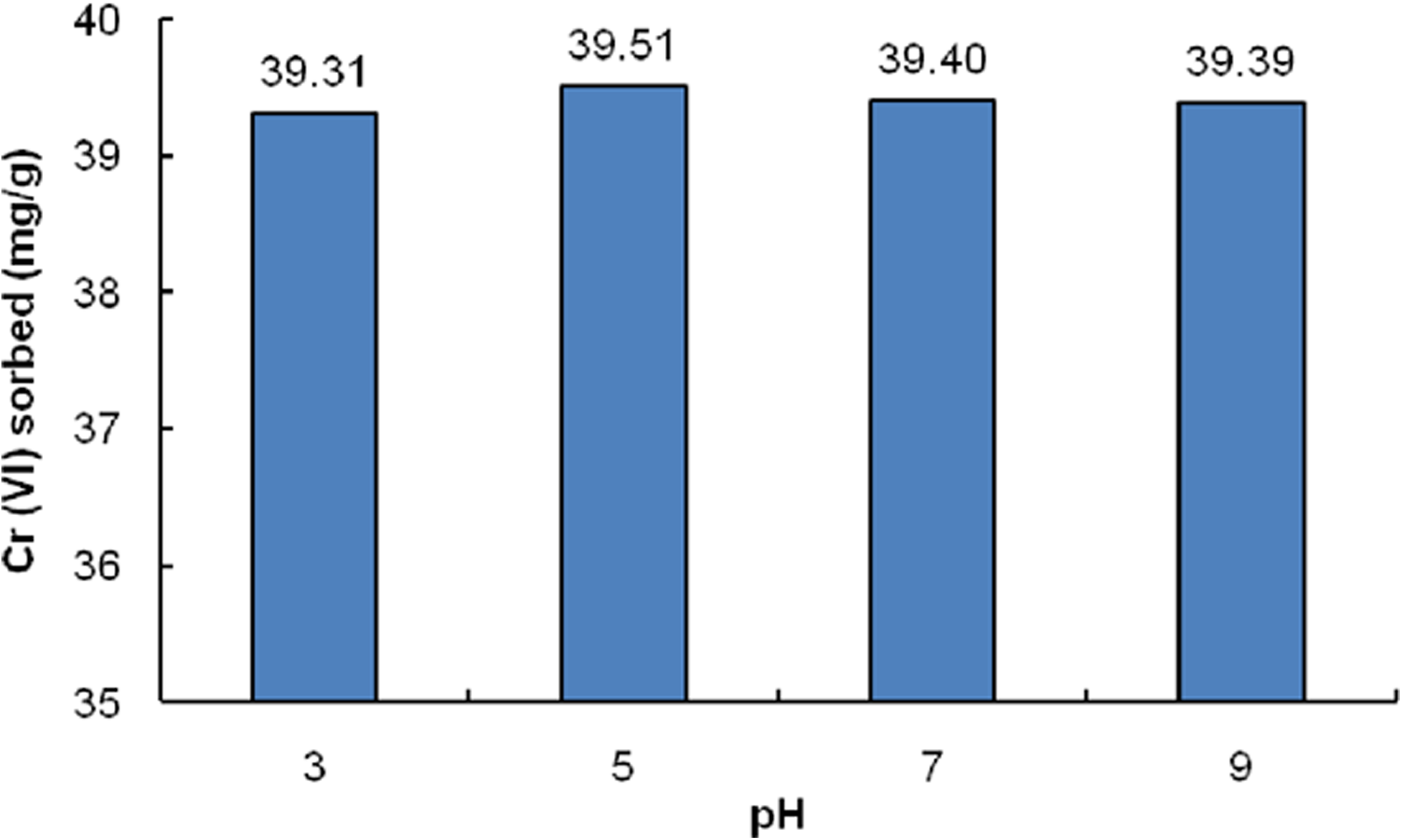
Cr(VI) removal capacity by the magnetic hydrogel under different solution pH.
Comparison of Cr(VI) adsorption onto the magnetic and nonmagnetic hydrogels
It has been reported that 10-nm γ-Fe2O3 is an effective adsorbent for Cr(VI), and the adsorption takes place via out-sphere complexation (Wang and Lo, 2009). Therefore, in this study, special efforts were taken to identify the contribution of 10-nm γ-Fe2O3, which was incorporated within the matrix of the hydrogel, to the total Cr(VI) removal by the magnetic hydrogel. To this end, the amounts of Cr(VI) adsorbed onto the magnetic and nonmagnetic hydrogels were compared. Figure 6 presents the results of Cr(VI) adsorption onto both the magnetic and nonmagnetic hydrogels and, as shown, no significant differences can be observed.

Comparison of Cr(VI) adsorption onto magnetic and nonmagnetic hydrogels at three different initial Cr(VI) concentrations.
Cr(VI) adsorption onto γ-Fe2O3 is highly pH dependent, as evidenced by a sharp decrease in Cr(VI) adsorption capacities with increasing solution pH (Illés and Tombácz, 2006; Wang and Lo, 2009). It has been reported by many researchers that the adsorption of Cr(VI) onto Fe2O3 is significant only at pH <3. In this study, the pH of the Cr(VI) solution was determined to be >4.2 in all cases. In the pH ranging from 4 to 6, where the adsorption of Cr(VI) by the hydrogel was studied, Wang and Lo (2009) found that the Cr(VI) saturation adsorption capacity onto the mesoporous γ-Fe2O3 was around 7.5 mg/g. The amount of Fe2O3 present within the hydrogel was very small (0.14 g γ-Fe2O3 per gram of magnetic hydrogel). In such a case, the maximum contribution of Cr(VI) adsorption by γ-Fe2O3 could only be 0.14 g/g hydrogel ×7.5 mg/g = 1.05 mg/g hydrogel, in comparison with the experimental hydrogel adsorption capacity of Cr(VI) of about 200 mg/g (Fig. 7). Thus, the contribution of γ-Fe2O3 to the total Cr(VI) removal by the magnetic hydrogel is negligible. The role of γ-Fe2O3 in the magnetic hydrogel is only to provide a magnetic property for magnetic separation.
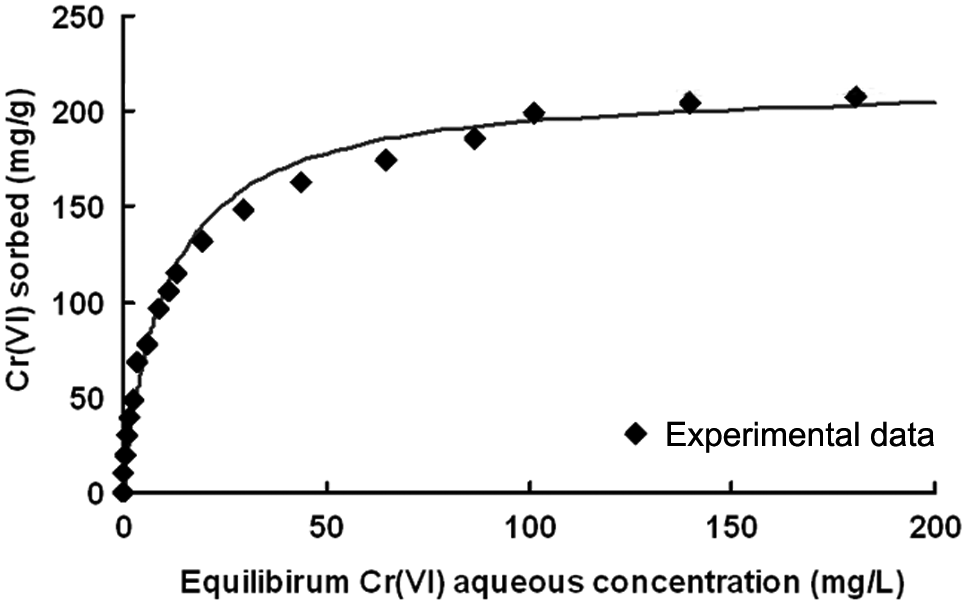
Isotherm of Cr(VI) adsorption onto the magnetic hydrogel fitting with Langmuir model.
Isotherm of Cr(VI) adsorption onto the magnetic hydrogel
Figure 7 shows the Cr(VI) adsorption isotherm of the magnetic hydrogel. The maximum Cr(VI) removal capacity was determined to be 205 mg/g by fitting an isotherm using the Langmuir model. Recalling that the calculated theoretical anion capacity of the hydrogel is 4.12 mmol/g hydrogel, and as the main Cr(VI) species is HCrO4− within the studied pH (4–6) and the concentration ranges (<100 mg/L), the Cr(VI) removal capacity of 205 mg/g was thus converted to be the same as 4.12 mmol/g, or 214 mg Cr(VI)/g hydrogel. It means that up to 96% of cationic sites in the hydrogel can be utilized for ion exchange in the Cr(VI) adsorption, which is highly efficient. The maximum Cr(VI) removal capacity of the magnetic hydrogel is more favorable than that of MIEX. According to Jha et al. (2006), the Cr(VI) saturation capacity at the same conditions was 93.3 mg/g. Therefore, the magnetic hydrogel is twice as effective as MIEX in terms of Cr(VI) removal.
Effects of common background electrolytes on Cr(VI) removal by the hydrogel
The effects of background electrolytes for Cr(VI) adsorption onto hydrogel was studied by the copresence of Cl−, SO42−, and PO43−, respectively. The results of adsorption experiments are presented in Fig. 8a. Even at the highest concentration of the anions used (2.0 mM), which was comparable with Cr(VI) concentration (1.92 mM) in solution, the reduction was statistically insignificant. Therefore, the inhibition from these anions for Cr(VI) adsorption onto the magnetic hydrogel is insignificant within the anion concentration range studied.
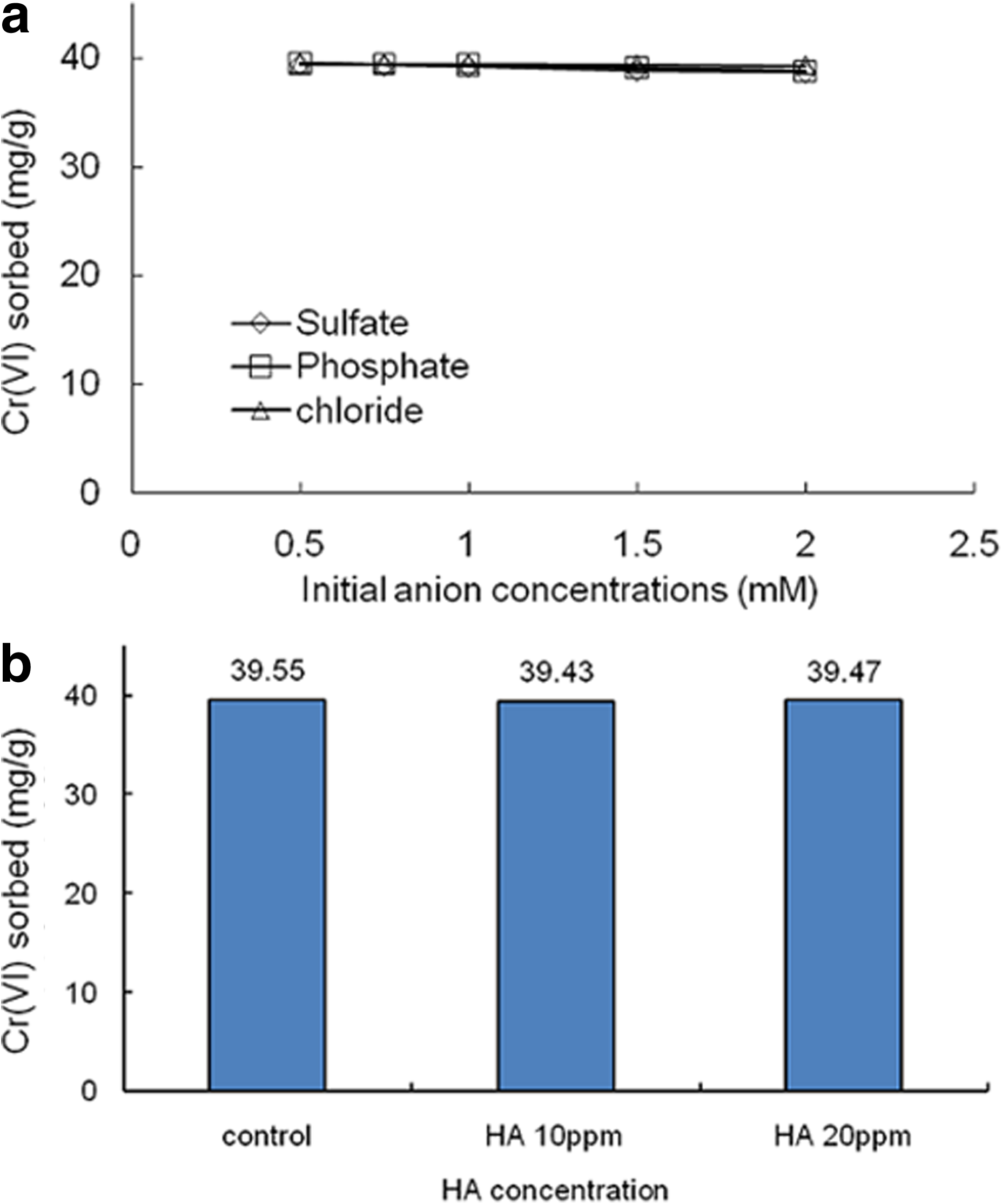
Effect of
In the presence of 10 and 20 mg/L of HA, the Cr(VI) adsorption was also not affected (Fig. 8b). This can be attributed to the high adsorption capacities of the magnetic hydrogel for both Cr(VI) and HA. Further studies are being conducted in investigating the effectiveness of magnetic hydrogel for HA removal.
Regeneration and reusability of the spent hydrogel
NaCl was used to regenerate the magnetic hydrogel. The selection of NaCl is based on the following reasons: first, treatment using NaCl returns the hydrogel to its original state (i.e., Cl− saturated) in one step. Other treatments would require more than one step to achieve the same results. Second, NaCl is a cheap salt and has almost no hazardous effects. Third, NaCl has a much higher solubility than Na2SO4 and Na3PO4, and higher concentrations of desorption solution ready for use can easily be obtained.
Figure 9a presents the results of the magnetic hydrogel regeneration during three consecutive Cr(VI) adsorption–desorption cycles using 0.5 M NaCl as the regeneration solution. For the first two cycles, about 90% of Cr(VI) was recovered, whereas it was slightly decreased to 85% in the third cycle, indicating that the majority of the adsorbed Cr(VI) could be easily recovered. It should be noted that the recovered Cr(VI) in the NaCl solution may need further treatment prior to recycling and reuse in industrial processes. The results of Fig. 9b show that even after three adsorption and desorption cycles, the magnetic hydrogel maintained almost the same Cr(VI) removal capacities, indicating its reusability.
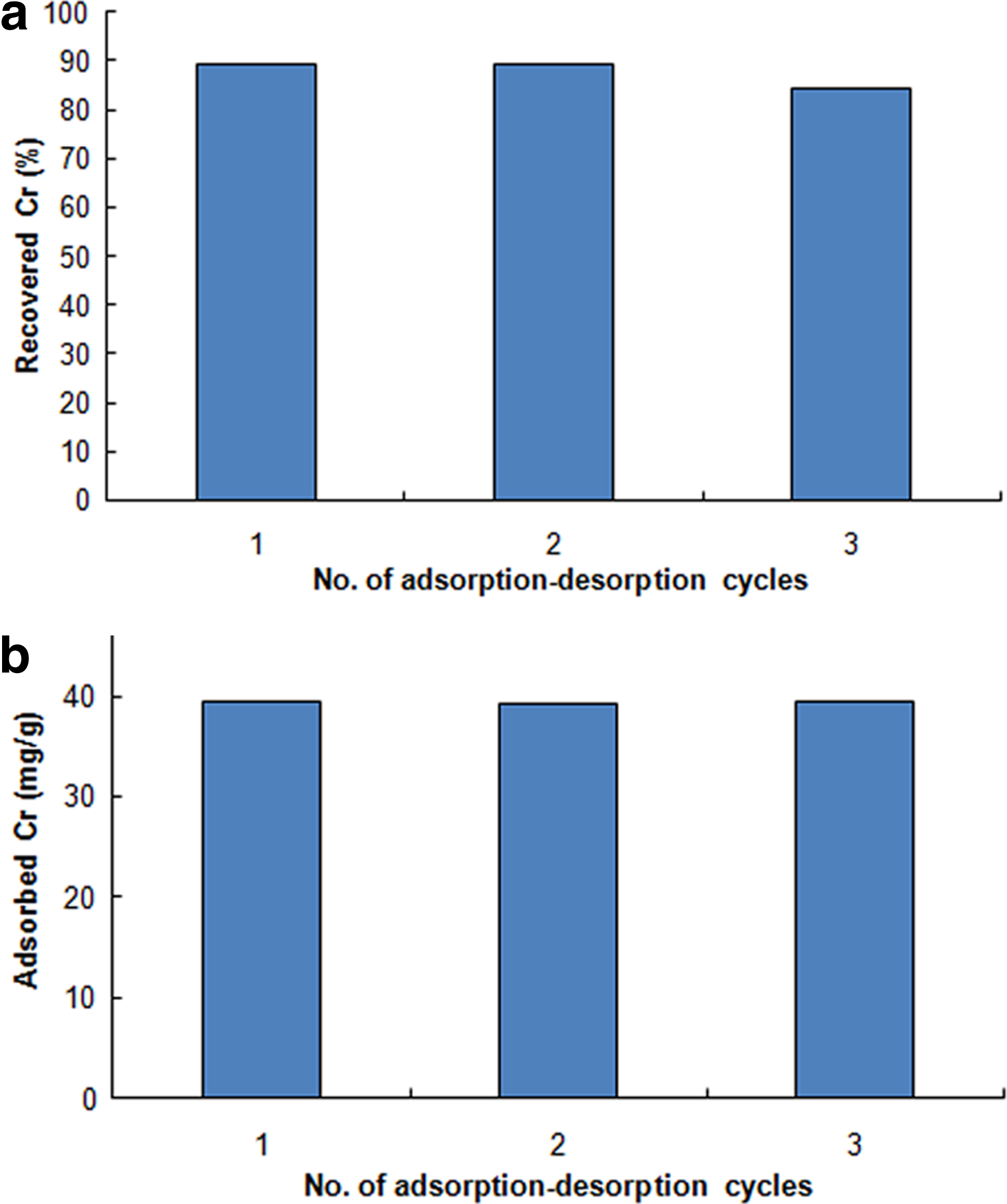
Regeneration and reusability of the magnetic hydrogel after three consecutive cycles of adsorption–desorption process:
Conclusion
In this study, the magnetic cationic hydrogel was synthesized and applied for the removal of Cr(VI) from contaminated water. The magnetic hydrogel exhibited a high Cr(VI) adsorption capacity. To achieve fast Cr(VI) adsorption kinetics, the bulk magnetic hydrogel was ground into powder form. Further, the magnetic hydrogel can be easily separated from the treatment system. The results show that the magnetic hydrogel can be regenerated while maintaining almost the same Cr(VI) adsorption capacity after three consecutive adsorption–desorption cycles. Therefore, the magnetic hydrogel synthesized in this study represents a reusable adsorbent for fast, convenient, and highly efficient removal of Cr(VI) from contaminated water.
Footnotes
Acknowledgment
This work was supported by the Hong Kong Research Grants Council under grant HKUST RGC 617309.
Author Disclosure Statement
The authors declare that no competing financial interests exist.