




Abstract
Abstract
The present study investigated treatment of anaerobic digester effluent with a membrane bioreactor (MBR). Nitrogen removal rates of 98% and remaining ammonium concentrations below 1 mg/L were obtained. The content of recalcitrant chemical oxygen demand (COD) represents an obstacle for direct discharge quality. Hence, particle removal via microfiltration or ultrafiltration for subsequent nanofiltration or reverse osmosis cannot be avoided. To maintain the activated sludge concentration at a constant level, ranging between 8 and 9 g/L, the amount of surplus sludge to be withdrawn from the MBR had to equate to the amount of influent into the reactor at a hydraulic retention time of 12 days. Therefore, the application of a classical MBR system with submerged membranes was not appropriate. A new approach consisted in using the surplus sludge and the supernatant after settling as a source material for filtration experiments. Although the settling properties of the surplus sludge were not excellent, the sludge was reduced to half of its volume after 24 h of settling. At the same time, however, increased ammonium concentrations of 5.1 mg/L were observed. Due to the low flux of 13 L/(m2 h) obtained with submerged membranes, the application of external ceramic microfiltration and ultrafiltration modules was investigated. This resulted in much higher flux rates, up to 170 L/(m2 h). In this context, the study showed that the cross flow velocity is the essential parameter to guarantee high flux rates, whereas the transmembrane pressure did not contribute to an increased permeate flux once the value exceeded 0.5 bar.
Introduction
Both the increased number of biogas plants and their higher capacity require new logistical efforts, not only as to the supply of substrate, but also with regard to the management of the anaerobic digestate generated. Since anaerobic digester effluents characteristically contain high concentrations of ammonium, phosphate, suspended solids, and persistent organic substrate, there is an increasing interest in using them as fertilizers for agricultural purposes (Salminen et al., 2001). However, the excessive application of digester effluent as a fertilizer may result in nitrogen pollution in agricultural areas (Woli et al., 2004). Therefore, the application of nitrogenous fertilizers has been limited to 210 kg nitrogen per hectare and year by the Commission of the European Communities (Bauer et al., 2009). Hence, the huge amount of digestate generated in biogas plants can often result in a disposal problem, which is especially true for operators of large biogas installations. While ambitious efforts were directed toward the optimization of the fermentation process itself (Graja and Wilderer, 2001), only little attention was paid to the post-treatment of anaerobic digestion residues (Verstraete et al., 2004). Nowadays, technologies aiming at nitrogen removal or recovery have become processes of concern. These technologies range from physicochemical technologies to biological processes. If nitrogen removal and direct discharge quality are aspired, a complex chain of different process steps becomes necessary since none of the technologies is able to provide this standard on its own. As a consequence the employment of membrane separation technology turns out to be inevitable. In general process variants particle removal is accomplished by the application of microfiltration (MF) or ultrafiltration (UF). In a subsequent filtration process, the remaining chemical oxygen demand (COD) can be removed by nanofiltration (NF) or reverse osmosis (RO). RO is even capable of removing monovalent ions like ammonium.
Particularly for NF and RO technologies, efficient particle removal is inevitable to ensure undisturbed operation. However, this very step might represent the bottleneck of the whole purification process since the anaerobic digester effluent has a large potential for membrane fouling. As a consequence, much lower flux rates and increased cleaning efforts compared to other waste waters can be observed.
The present study's purpose was to investigate the treatment of the separated liquor of anaerobic digester effluent using a membrane bioreactor (MBR). The emphasis was put on the effluent quality of the MBR as well as on filtration performance for particle removal. Therefore, the MBR was operated in two common ways: one with a submerged polymeric MF membrane and one with an external ceramic MF and UF membranes.
Materials and Methods
Anaerobic digester effluent
For all experiments the anaerobic digester effluent was collected at a biogas plant in Austria, which is fed with organic waste like kitchen garbage, spoilt food, lop, and material from grease separators. The liquid fraction of the effluent was taken from the screw press and stored at 4°C before using it as feed material for the MBR. Table 1 gives an overview of the composition of the anaerobic digestate (separated liquor).
TS, total solids; COD, chemical oxygen demand; BOD5, biochemical oxygen demand; TN, total nitrogen; TP, total phosphorus.
Membrane bioreactor
The MBR consisted of a 100 L basin; one-third of its content was separated from the rest and only stirred to provide anoxic conditions for denitrification. The remaining two-thirds were aerated with a membrane diffuser to guarantee proper nitrification. An additional tank with a total volume of 20 L containing the submerged hollow fibre membrane was connected to the 100 L basin. This setup was favored because it allows individual aeration of the membranes independent from the biological process. The activated sludge of this tank was returned to the denitrification basin using a peristaltic pump. The temperature in the MBR was kept constant at 30°C. In the aerated basin the pH value was controlled and the content of oxygen was monitored and kept constant at 1.0 mg/L to guarantee appropriate conditions for nitrification. To compensate the unfavorable C:N ratio of the digester effluent, an external carbon source in the form of acetic acid was added, at a concentration of 10% (g/g). At a C:N ratio of 4.5 adequate denitrification was accomplished. The entire process was controlled by a programmable logic controller and data were recorded on a standard PC. Figure 1 shows a scheme of the experimental setup.

Experimental setup for filtration experiments with submerged hollow fiber module and the external membranes.
Membranes
In the case of the experiments conducted with submerged membranes, hollow fiber MF membranes from Mitsubishi (SUR234L) with a surface of 420 cm2 were applied. The membranes were made of polyethylene and had a pore size of 0.45 μm. The membrane placed above a disk membrane diffuser with a diameter of 16 cm was submerged in the activated sludge. During the whole filtration experiments the aeration rate was kept constant at 17 L/min. The applied filtration cycle of 10 min included 8 min of filtration with a subsequent relaxation period of 2 min. The transmembrane pressure (TMP) was monitored by means of a pressure sensor provided by the company Wika (0 to 2 bar).
The experiments with external membranes were conducted with ceramic mono channel membranes from the German company Atech. These membranes were made of αAl2O3 with an active layer of TiO2. The external filtration experiments were carried out in a laboratory cross-flow filtration apparatus. To guarantee constant operation conditions the system was equipped with devices measuring pressure, temperature, and flow. While pressure and flow were varied to achieve optimal operation conditions, the temperature was kept constant at 30°C. Two membranes with different pore sizes were applied: one being a MF membrane with 0.2 μm and the other an UF membrane with a pore size of 50 nm. Both membranes had an effective filter area of 94.2 cm2.
Cleaning protocol
After each experiment the ceramic membranes were cleaned for 2 h through the circulation of a hypochlorite solution (1,000 ppm), which was adjusted to pH 12 by adding NaOH. A further cleaning with citric acid solution (0.5%) was subsequently carried out for another 2 h. During the cleaning, no permeate was drawn. Every 30 s the membrane was back-flushed with compressed air at a pressure of 3 bar for the duration of 2 s.
The submerged membrane was cleaned using the same cleaning solutions and the same intervals. The membranes were removed from the waste water treatment plant (WWTP) and submerged into the cleaning solutions. Using a peristaltic pump the cleaning solution was drawn into the membrane.
Analytical methods
The typical parameters for the characterization of the waste water streams were determined to assess the effectiveness of the biological performance and the filtration treatment. COD, total nitrogen (TN), ammonium nitrogen, nitrite, nitrate, and phosphate were analyzed with test kits and the digital photometer DR 2800 provided by Dr. Lange. The concentration of the total solids was determined with an electronic moisture analyzer, Sartorius MA35.
Particle size distribution
To define the particle size distribution a Beckman Coulter LS 13 320 with a detection range from 0.04 to 2,000 μm was applied. The LS 13 320 analyzes the particle size distribution by measuring the pattern of light scattered by the particles in the sample.
Results
Start-up of the MBR
To start up the reactor, excess sludge from a local WWTP was used as inoculum. Due to the composition of the anaerobic digester effluent and its particularly high content of TN and COD, in period I (Fig. 2) the effluent was fed in small portions and the hydraulic retention time (HRT) was diminished step by step. Because of the high pH value and the high buffer capacity of the anaerobic digester effluent it was expected that the MBR—after a certain period of time required for adaptation—could be operated at the natural pH value of the digester effluent. Hence, adjustment of the pH value was avoided to establish a biocenosis able to manage conditions with relatively high ammonia concentrations. Especially in the initial phase, foaming turned out to be a problem, a fact that had already been reported by Mayer et al. (2009). However, after 8 days these phenomena disappeared and foaming was not a problem any longer. During this time the pH exceeded values of 8.8 and was therefore adjusted to 8.0 by adding sulfuric acid. After 15 days the process was running at pH values ranging between 8.1 and 8.7 during the whole operating period and no further adjustment was required. Due to economic reasons biological nitrogen removal via nitrite was opted for as it requires 25% less energy for aeration and 40% less external carbon source (Hellinga et al., 1998; Notenboom et al., 2002).
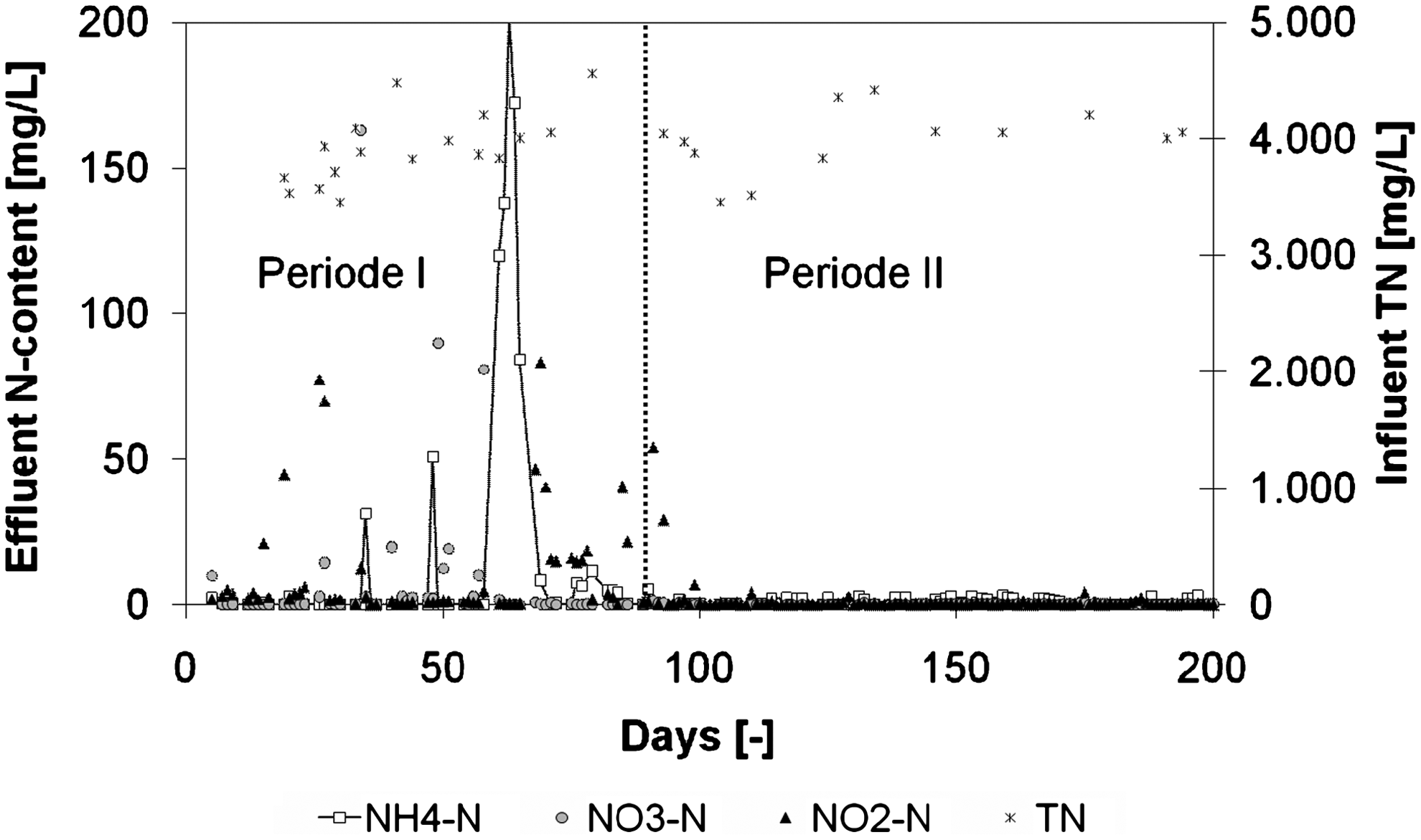
Concentration of N-compounds in effluent of membrane bioreactor and concentration of TN in influent (anerobic digestate, separated liquor). TN, total nitrogen.
Partial ammonia oxidation can be achieved by favoring the growth of ammonia oxidizing bacteria over nitrite-oxidizing bacteria. The main parameters involved are temperature, dissolved oxygen, and pH (Anthonisen et al., 1976; Barnes and Bliss, 1983; Wiesmann, 1994). Under controlled conditions of pH values above 8, temperatures higher than 30°C and limited dissolved oxygen concentrations, oxidation of nitrite to nitrate no longer takes place. Figure 2 shows the concentrations of the nitrogen compounds in the effluent of the MBR. Whereas the formation of nitrate could be observed during the first 2 months of operation, nitrite oxidation did no longer occur after 70 days of operation.
During the whole operating period the concentration of activated sludge was kept constant at between 8 and 9 g/L by periodic drawing of the surplus sludge. At an HRT of 12 days the amount of surplus sludge to be withdrawn from the reactor had equated to the amount of influent. Thus, the treatment of the anaerobic digester effluent by means of a classical MBR system was no longer practical. In period II (Fig. 2) it was therefore considered to use the surplus sludge as feed material for the filtration.
To provide particle free influent for a subsequent NF or RO filtration step, two possible treatment strategies were investigated, namely, the direct filtration of the surplus sludge and the treatment of the supernatant after sludge settlement.
Several authors (Chiang et al., 2001; Graja and Wilderer, 2001; Mayer et al., 2009) have already reported that with shorter retention time the settling characteristics of the sludge deteriorate. At an HRT of 12 days and a sludge concentration of 8–9 g/L, the settling characteristics were poor. After 24 h of settling, however, two phases developed: a yellowish-brownish supernatant and the settled sludge at the bottom. The settled sludge was reduced to half of its initial volume, and after a settlement of 48 and 72 h, respectively, it decreased even more.
In the course of sludge settlement without aeration, the composition of the supernatant changed. Particularly the development of the ammonium concentration was of special interest for the present study. During the whole period II the ammonium concentration in the effluent of the MBR averaged less than 3 mg/L, whereas its concentration in the supernatant increased during sludge settlement, exceeding 10 mg/L after 48 h of settlement (Fig. 3). Catabolic processes in the sludge can be an explanation for the increase of the ammonia content in the supernatant. However, ammonium concentration and COD are of crucial importance for direct discharge quality. To obtain such direct discharge quality, RO is often the method of choice, despite its disadvantage of high salt concentrations in the concentrate. One treatment option to solve this problem is the application of NF, a technology capable of removing the remaining COD content after a micro- or UF step while it does not retain monovalent ions like ammonium. To meet the direct discharge quality requirements by applying NF, the ammonium content in the supernatant has to be lower than the threshold values stipulated by national regulations. Taking into account the above considerations, the supernatant was taken for subsequent filtration experiments after 24 h of sludge settlement. The performance of the membrane was compared to the results obtained when surplus sludge had been filtrated.
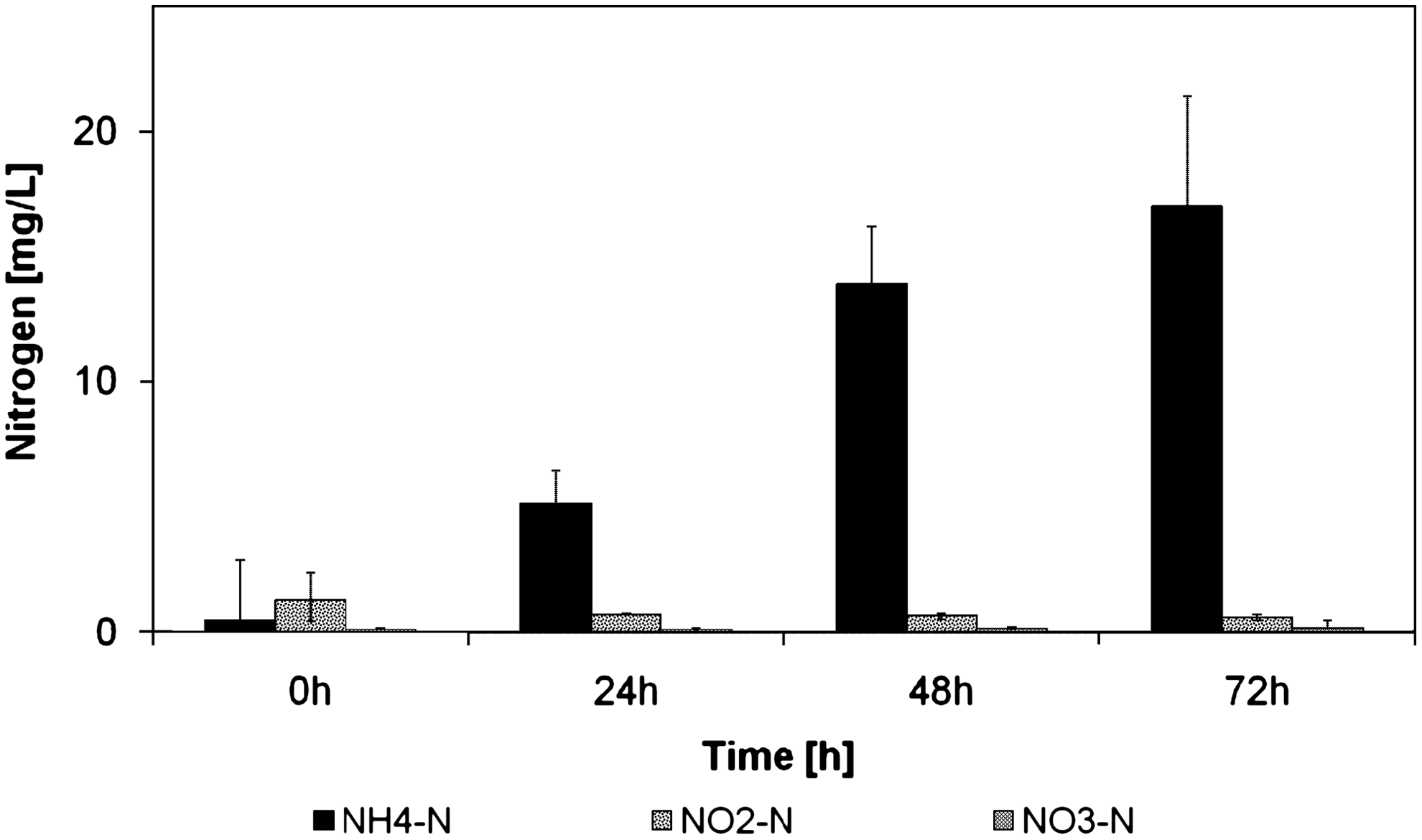
Concentration of nitrogen compounds in activated sludge (0 h) and the supernatant after 24, 48, and 72 h.
Filtration experiments
Submerged membrane
Initially, the WWTP plant was operated as a classical MBR. During the second period the surplus sludge and the supernatant, taken after 24 h of settlement, were used for filtration experiments. The composition of the supernatant is shown in Table 2. The filtration experiments were carried out with an initial flux rate of 13 L/(m2 h) and the membrane was changed when the minimum flux rate fell below 8 L/(m2 h). Comparing the filtration times for the surplus sludge with the supernatant, it turned out that the runtime of the supernatant was 75% longer until the flux fell below 8 L/(m2 h) (Fig. 4). Further information about the filtration performance can be drawn by relating flux to pressure, which leads to permeability. The filtration of the supernatant showed that during the whole filtration time the permeability was about 40–60 L/(m2 h bar) higher than the filtration of sludge with a concentration of 8–9 g/L (Fig. 5) Typical values for the permeability in applications for municipal waste water range from 150 to 200 L/(m2 h bar), and an intensive cleaning is required once the permeability falls below 100 L/(m2 h bar). The present study showed that in the case of supernatant an intensive cleaning was already required after 25 h of filtration. The filtration time in the case of surplus sludge was shorter still. After only 5 h membrane cleaning became necessary. Due to this poor performance the application of submerged membranes turned out to be impractical. Therefore, the use of external modules was investigated.

Evolution of flux rates obtained with submerged hollow fiber modules during the filtration of surplus sludge and supernatant.

Permeability of submerged hollow fiber modules with respect to surplus sludge and supernatant.
SV, sludge volume.
External modules
As the application of submerged membranes showed low flux rates, little permeability and short run time, two external ceramic membranes with different pore sizes were tested as an alternative. For this purpose, filtration experiments with the surplus sludge and the supernatant were conducted focusing on the two most essential operating parameters, namely, the TMP and the cross flow velocity (CFV).
Figure 6 shows the flux rates for the supernatant and the surplus sludge obtained after 15 min of filtration at a TMP of 0.3 bar and a CFV of 2, 4, and 6 m/s. Once more, the result shows a better filterability for the supernatant depending on the CFV applied (30%–70%). When the sludge was filtrated, the use of a UF membrane showed slightly higher flux rates were obtained with. However, when filtering the supernatant, both membranes were performed in the same way. The usual operation pressure with regard to MF is lower than 5 bar, with UF ranging between 2 and 8 bar (Benítez et al., 2009). In the present study, however, already at pressures higher than 0.5 bar no further increase of flux rates for both membranes was measured. This was already observed when untreated digester effluent was filtrated. The phenomenon was attributed to a compression and a deformation of the deposited particles at higher TMP values (Wäger et al., 2010). Particularly for the filtration conducted with an almost particle-free supernatant, an entirely different filtration behavior was expected, that is, a linear correlation of the flux rates until higher TMP values are reached. It is assumed that even a small number of particles in the supernatant forms a filtercake, which influences the performance of the filtration. In conclusion, the results show that the enhancement of the flux rate can mainly be achieved by an increase of the CFV instead of increasing the TMP.

Flux rates obtained after 15 min of filtration at a transmembrane pressure of 0.3 bar using external MF and UF ceramic membranes for treatment of surplus sludge and supernatant after 24 h of settlement. MF, microfiltration; UF, ultrafiltration.
Wäger et al. (2010) reported the considerable influence of the particle size distribution on the filtration performance. In the above-mentioned study the obtained flux rates were higher for digestate treated with FeCl3 as flocculent, compared to the untreated digestate. The addition of flocculent led to a shift toward bigger particles, which resulted in a less compact filter cake. Figure 7 shows the particle size distribution for the digestate, the surplus sludge, and the supernatant. It is evident that the particle size distribution is shifted toward bigger particles in the case of aerobic treatment. Furthermore, the study showed that the filtration of surplus sludge led to higher flux rates compared to the untreated digestate. However, the filtration of the supernatant showed the best results.
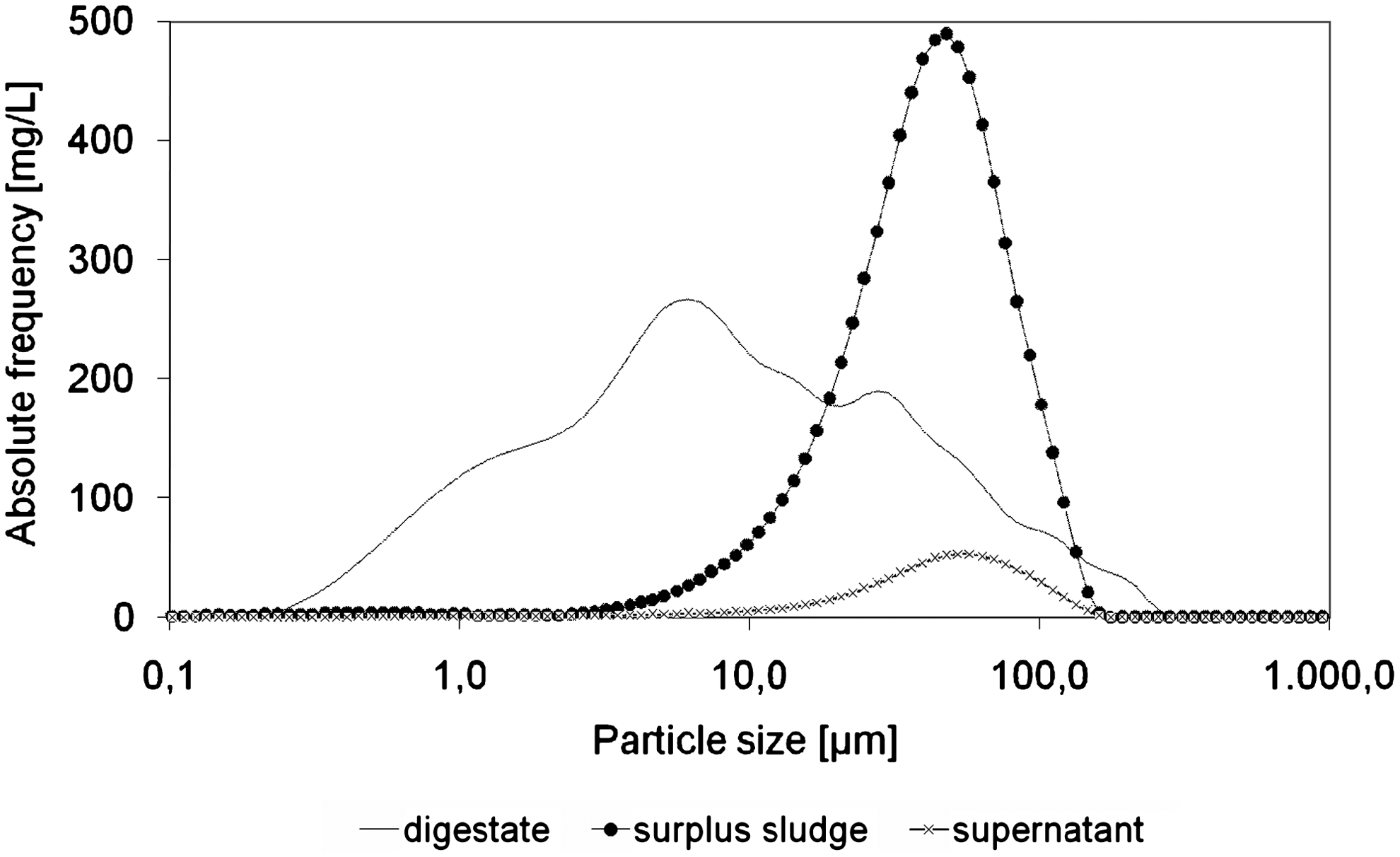
Particle size distribution of untreated digestate, the surplus sludge, and the supernatant.
Finally, long-term filtrations of 6 h with supernatant and the UF membrane were carried out to study the flux behavior in more depth. These tests showed that after 15 min the flux became stable and that after that time only a slight decrease was observable (Fig. 8).
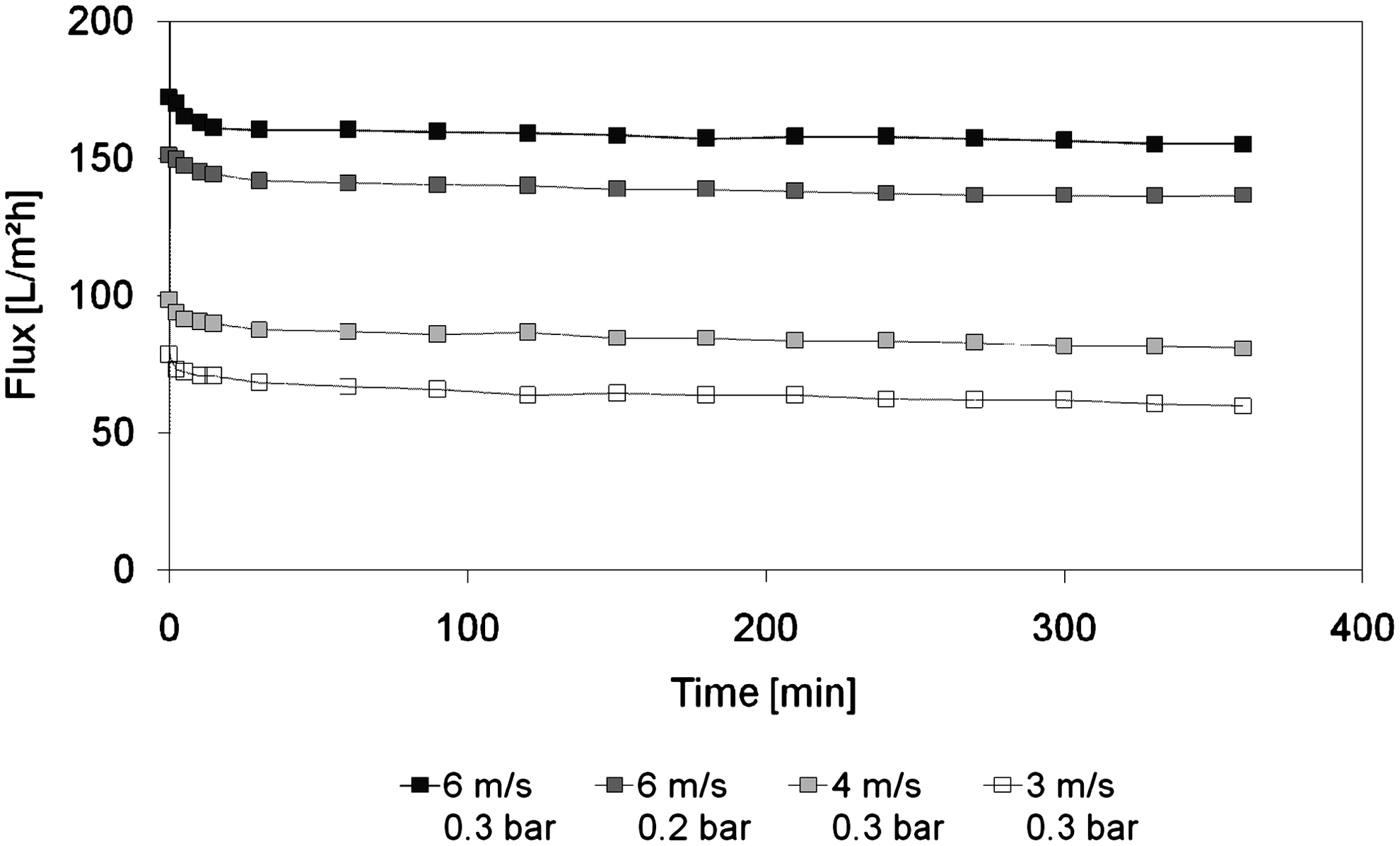
Long-term filtration of the supernatant using UF membrane.
Chemical parameters in the effluent
Table 3 shows the achieved effluent quality of all membranes used for the filtration of surplus sludge and supernatant. Even though the composition of the waste water is very complex, high removal rates were achieved. The removal of TN through nitrification/denitrifcation constituted 98%. Although the removal rates of COD and biochemical oxygen demand (BOD5)—87% and 90%, respectively—were relativley high, the remaining concentrations were still higher than the threshold values required by many national regulations. Even though a biological treatment with relatively high HRT was carried out and UF membranes of 50 nm pore size were applied, no direct discharge quality was obtained. To achieve direct discharge quality, a further filtration step with NF or even RO would be necessary. Compared to the filtration of surplus sludge, the filtration of supernatant showed lower remaining COD concentrations in the effluent, independent of the membranes applied.
Data are mean values.
MF, microfiltration; UF, ultrafiltration.
Phosphorus was not monitored as its removal can be easily achieved by adding FeCl3. In addition, NF and RO are able to retain phosphate.
Conclusions
The purpose of the present study was to investigate the treatment of anaerobic digester effluent with a classical MBR system.
It was found that 98% of the nitrogen from anaerobic digester effluent could be biologically removed via nitrite and denitrification. However, this removal rate could only be achieved by the addition of an external C-source.
A further result of the study is that persistent organic compounds represent a problem if direct discharge quality is to be obtained. Even if the COD removal rate of nearly 90% was very high, the remaining COD concentrations in the permeate stream after MF or UF were still ranging between 1,200 and 2,000 mg/L. Hence, direct discharge quality can only be obtained by applying a subsequent NF or RO step.
Classical MBR technology with submerged hollow fiber membranes turned out to be unviable as a large amount of surplus sludge was generated. A new approach to the problem consisted in using the following two materials for filtration: surplus sludge as well as supernatant after the settlement of the surplus sludge. Whereas the performance with submerged membranes showed low flux rates, little permeability, and short run time, the application of external modules resulted in much higher flux rates. This was especially true for the supernatant. In general, compared to common direct filtration of the digestate, biological treatment clearly improves the filtration performance. Moreover, as nitrogen is biologically removed, an NF step should be sufficient to obtain direct discharge quality. This is in clear contrast to commonly applied multi-stage RO in applications without biological effluent treatment.
The study shows that CFV is the essential parameter to guarantee high flux rates. In contrast, the TMP did not lead to an increased permeate flux once the value had exceeded 0.5 bar.
In conclusion, the filtration of supernatant allows the same effluent quality and also significantly higher flux rates than the ones obtained by means of a classical MBR system. Therefore, this process variant represents an interesting alternative.
Footnotes
Author Disclosure Statement
No competing financial interests exist.