




Abstract
Abstract
Both surface and groundwater systems can be contaminated by treated or untreated wastewater discharged from improper on-site wastewater treatment systems, nutrient-laden agricultural runoffs, landfill leachate disposal with high nutrient concentrations, and increasing use of fertilizer in residential communities. This elevated nutrient level in surface and groundwater systems burdens the operation and maintenance cost of water treatment plants when the contaminated source water is to be made available for drinking water use. Most of the nutrient removal techniques using sorption media are based on laboratory experiments and limited field applications. The objective of this article was to investigate the current design and application challenges of using sorption media for nutrient removal in this field based on the basic understanding gained through a critical and thorough review of all relevant laboratory work. Retention and detention pond techniques for stormwater treatment, permeable reactive barriers for groundwater treatment, and passive on-site wastewater treatment are among the few examples in this emerging area. It is notable that these field applications have demonstrated some success for nutrient removal. Even at its simplest, identifying the general design features specific to different applications is by no means an easy task, and critical comparison and evaluation of the potential use of sorption media is essential. In this article, relevant technologies with future research potential are systematically reviewed to illuminate the design and application challenges.
Introduction
High nutrient concentrations in water bodies can hamper the smooth functioning of the aquatic ecosystem and result in public health impacts. Laboratory-based experiments using sorption media for nutrient removal were normally conducted in small scale with controlled environmental factors such as temperature, pH, microorganism growth, carbon sources, and dissolved oxygen (DO) level. Those experiments were described, reviewed, and summarized in the article of Hossain et al. (2010). To improve the feasibility of sorption media usage for nutrient removal, the objective of this article was to investigate the current design and application challenges of using sorption media for nutrient removal.
The overall evaluation of sorption processes usually encompasses three main aspects: performance, capacity, and side effects. Performance, in terms of reaction kinetics, refers to the efficiency of the process and the effluent concentration. Sorption capacity refers to how much of the pollutant can be removed before the green sorption media must be replaced—this is related to the isotherm tests to identify the life expectancy of the material mixes. Side effects refer to additional environmental impacts arising from the treatment of nutrients. Hence, the following basic engineering design problems and application challenges are relevant to address: (1) Which are the effective treatment media for removing nutrients from these effluents? (2) What are the underlying processes of such treatment media and their associated function, effectiveness, and longevity? (3) What insights are available on how such systems have been designed, installed, maintained, controlled, and replaced that may be applicable to current and future systems? (4) What comparative basis can be used when different sorption media are used in these treatment processes to compare with other treatment trains? A few typical field practices will be discussed below to investigate and answer these questions.
Engineering Process Design
Stormwater treatment
In stormwater retention and detention ponds, nutrient removal treatment using sorption media normally occurs in natural or semibuilt environments. Ammonification and nitrification occur simultaneously in the filter media when stormwater containing ammonium and biodegradable carbon is applied to aerobic soil or media. In this case, denitrification is achieved by cycling between oxic and anoxic conditions. Either autotrophic denitrification or heterotrophic denitrification may occur depending on the type of sorption media and structure and function of microbial communities. The autotrophic denitrification systems that have received the most attention are elemental sulfur-based media filters (Zhang, 2002). Sulfur-based denitrification filters may include limestone or oyster shell as a solid-phase alkalinity source to buffer the alkalinity consumption during biochemical denitrification (Zhang, 2002). On the other hand, heterotrophic denitrification systems use solid-phase carbon sources including woodchips (Kim et al., 2003), sawdust (Kim et al., 2003), cardboard (Greenan et al., 2006), paper (Kim et al., 2003), and agricultural residues (Kim et al., 2003; Rocca et al., 2005; Greenan et al., 2006). Some proprietary media mixes containing woodchips and other materials have been developed (Hossain et al., 2009a, 2009b; Ryan et al., 2010). Cellulosic-based systems using wood chips or sawdust form the most common heterotrophic denitrification filter technology, although elemental sulfur (autotrophic denitrification) may also be used as an electron donor. In lignocellulosic materials such as wood chips and sawdust, the facultative heterotrophs may quickly degrade the organic carbon and deplete the oxygen. However, this simultaneous process may be sustainable for denitrification as it maintains the lower oxygen requirements. It also recycles the alkalinity needed for nitrification. During this stage, ammonia may be retained within the filter media depending on its cation exchange capacity because ammonium cannot be nitrified under anoxic conditions in most cases. The adsorbed ammonia will be nitrified when the next storm event raises DO levels, changing the anoxic to oxic or aerobic conditions in the soil or media. Ultimately, the amount of denitrification may be limited by the frequency and duration of the oxic/anoxic fluctuations within the filter with respect to the reaction rates or dosing conditions in the treatment during the intermittent storm events. In other words, there is no guarantee of the removal efficiency of nutrients and more field studies are needed.
Additionally, the proper deployment of the sorption media may be challenging in stormwater best management practices (O'Reilly et al., 2010a, 2010b). Figures 1 and 2 present two types of arrangements for detention ponds and retention ponds, respectively. According to Chapter 62-40 of the Florida Administration Code, a stormwater pond shall achieve an 80% average annual load reduction of pollutants from the influent stormwater.
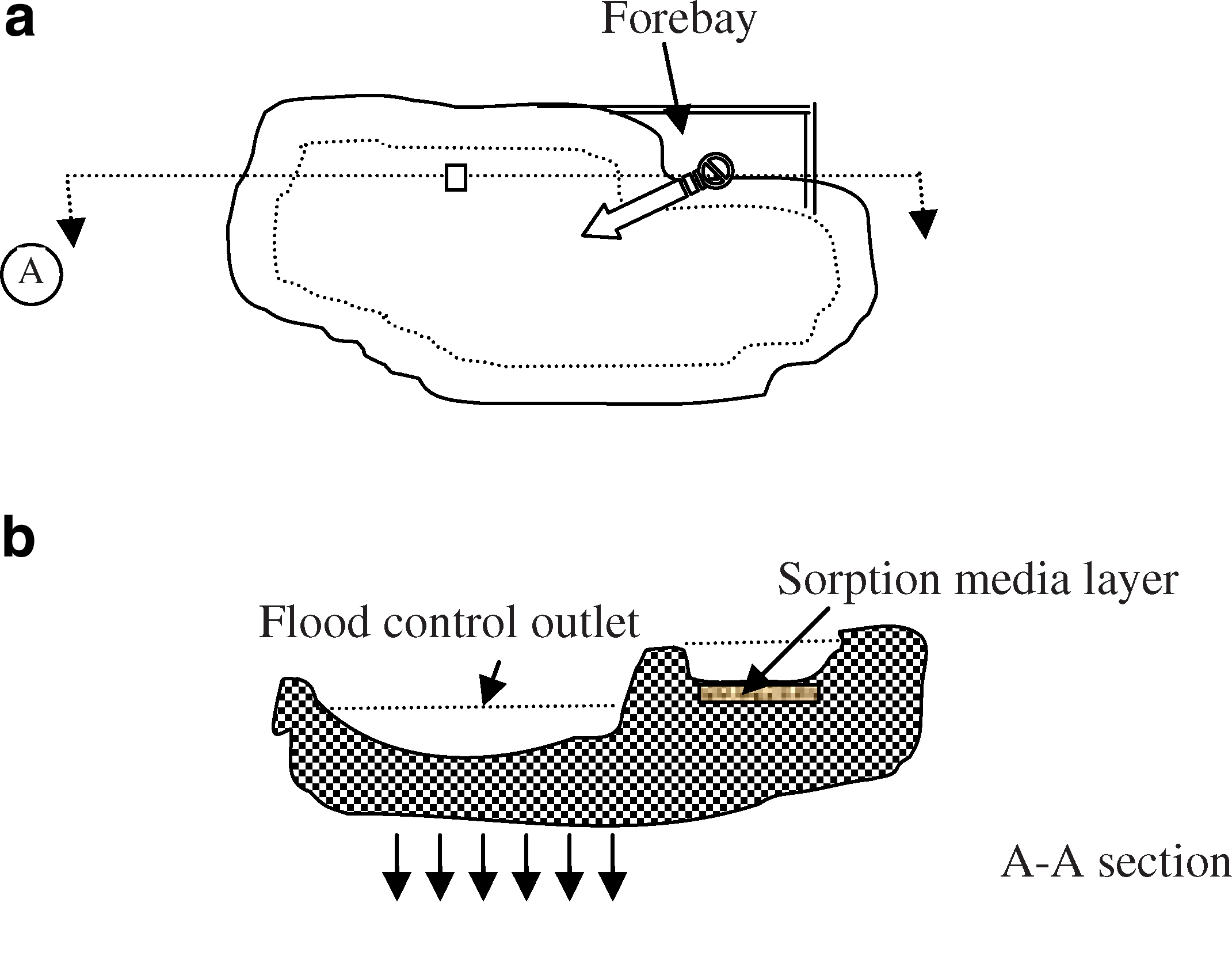
Detention pond (wet pond) with in situ treatment units and low infiltration. (
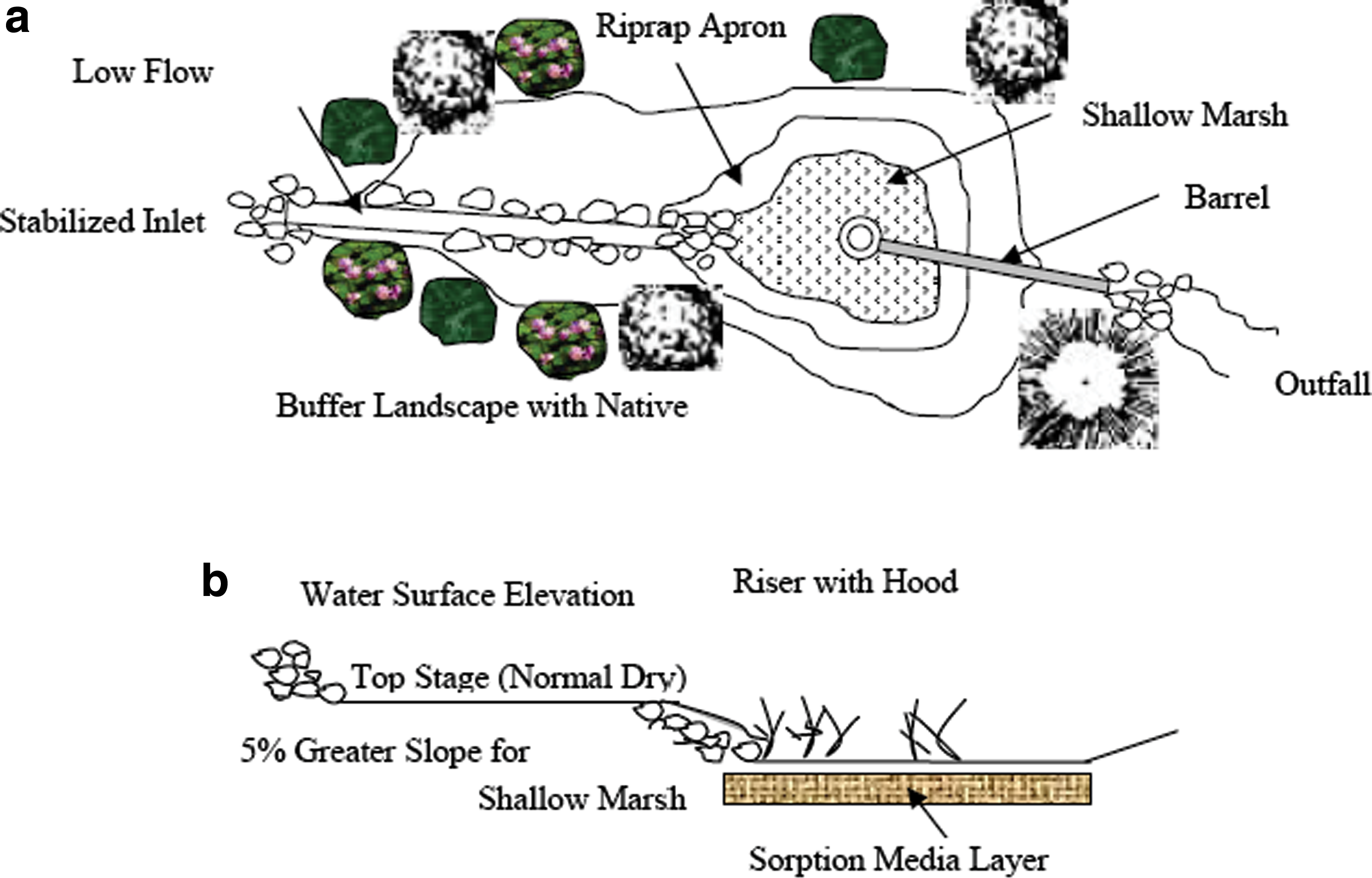
Retention pond (dry pond) with in situ treatment. (
Yet the current law refers to the removal of suspended solids only. The data compiled by Harper and Baker (2007a) suggest that detention ponds with no sorption media do not achieve this 80% goal for the nutrient pollutants of concern. The averages of the removal efficiencies from these studies show a 37% removal of total nitrogen (TN), 79% for orthophosphorus, and 69% for total phosphorus (TP). The filter media that operate as a four-phase system: solid media, water, gas phase, and attached biofilm, is an integral part of the system and is functionalized to remove nutrients and other pollutants, such as heavy metals, pesticides, and bacteria, when stormwater infiltrates into the vadose zone underground. An ongoing test bed installed in Ocala County, Florida, removed nutrient smoothly using sorption media deployed in the forebay (O'Reilly et al., 2010b). Periodical maintenance and replacement can be made based on the isotherm test of the filter media (Hossain et al., 2009b; Chang et al., 2010b). In the work by Hossain et al. (2009b), about 800.00 g filter media mixture was prepared using 50.00% sand, 20.00% limestone, 15.00% sawdust, and 15.00% tire crumb. The removal efficiency of nitrate was about 95.36%, 81.34%, and 65.68% after 5.00 h of hydraulic residence time (HRT) when the influent waste loads were 0.50, 2.50, and 5.00 mg/L, respectively. Findings indicated that the removal efficiency of nitrite was about 94.14% and 98.72% when the influent waste loads were 0.50 and 2.50 mg/L, respectively. But it went down to 65.40% when the influent waste load was as high as 5.00 mg/L. On the other hand, organic phosphorus (OP) is the main component of TP, which constitutes about 70.00%–90.00% of TP. The removal of OP was 79.50%, 94.39%, and 97.50% after 5.00 h HRT when the influent concentrations were 0.50, 2.50, and 5.00 mg/L, respectively. Isotherm test of this sorption media mixture for different nutrient species may generate the life expectancy information, which varies from 2 years of nitrate as nitrogen and 15 years of total dissolved phosphorus.
The use of sorption media, such as compost, to capture pollutants from storm water runoff started from late 1990s (Richman, 1997). Stormwater infiltration systems were then widely used to address the quality issue of stormwater runoff through the use of either infiltration (Birch et al., 2005; Hatt et al., 2007) or exfiltration (Sansalone and Teng, 2004). Engineered soil mix that provides stormwater treatment through filtration has been deemed as a sustainable source control option (Ellis, 2007), and various types of applications have been promoted recently in the context of green infrastructure systems (Sanz et al., 1996; Hsieh and Davis, 2005; Seelsaen et al., 2006). Khambhammettu et al. (2006) used an upflow filter to treat runoff from highly contaminated critical source areas before it mixed with runoff from less-contaminated areas. They studied a field application of the upflow filter inserted into a catch basin that achieved reductions of 70% for suspended solids, 65% for turbidity, and 18% for phosphorus (Khambhammettu et al., 2006).
An alternative method to modify existing stormwater ponds with the upflow filter for nutrient treatment was demonstrated by Ryan et al. (2010). A chamber upflow filter and skimmer (CUFS) was designed to direct stormwater from a stormwater retention pond through a green sorption medium (Fig. 3), which resulted in an increase in removal of nitrogen and phosphorus. The green medium used in the experiment consisted of recycled and natural materials. This mix consists of 45% expanded clay, 45% recycled tire crumb, and 10% saw dust. The CUFS was used in laboratory-, pilot-, and full-scale tests in Orlando, FL. A combination of detention pond and CUFS showed overall removal of 46% for TN, 48.4% for TP, and 90% for total suspended solids in the full-scale test. However, the CUFS alone contributed only 17% and 25% removal of TN and TP, respectively. The most likely limiting factors were oxygen content and short retention time (high flow rate). The short HRT in the green sorption media (CUFS) would be insufficient to effectively remove nutrients. It was previously unknown that the denitrification process might occur in such a short HRT. The limited oxygen content, however, may not support a complete nitrification.
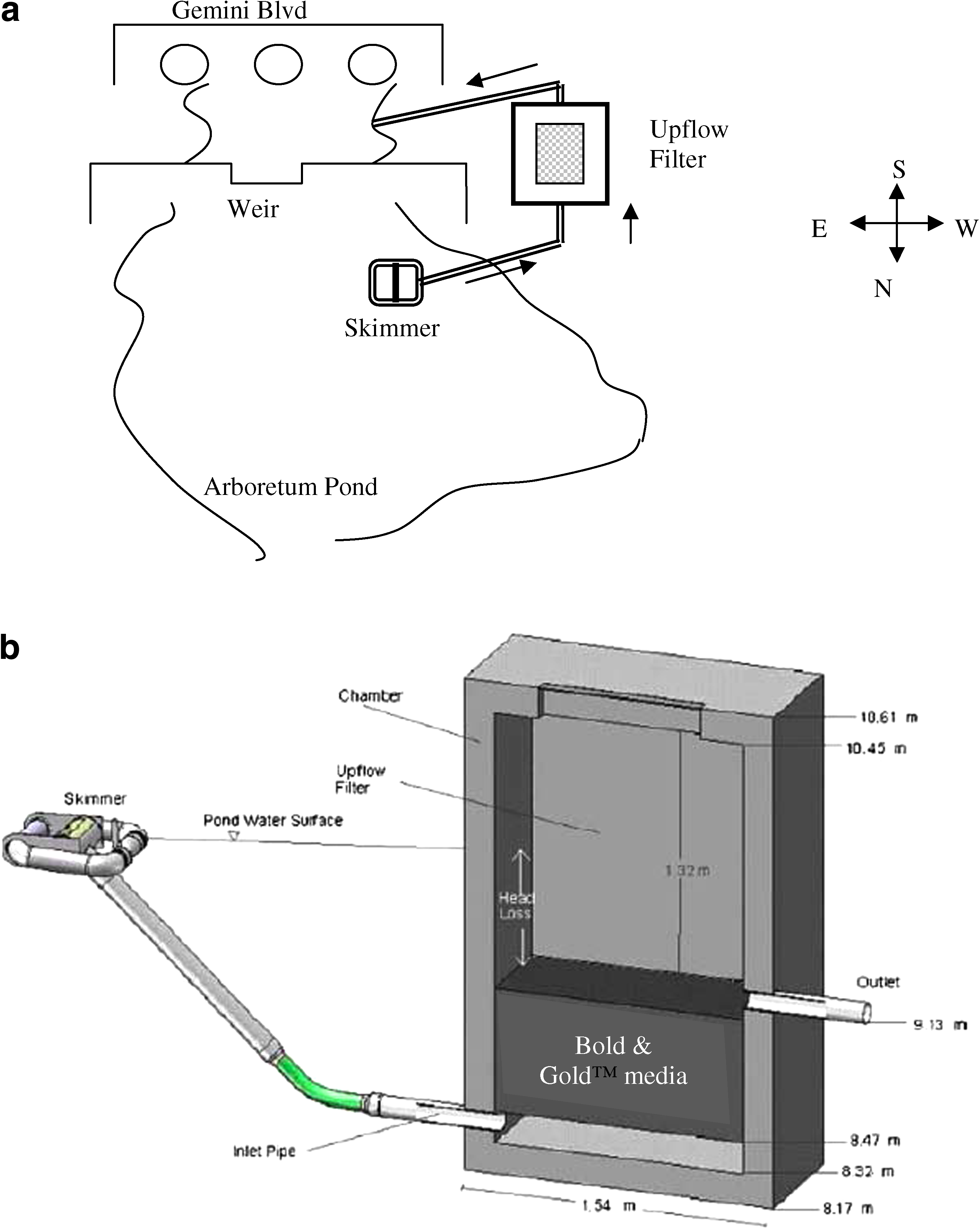
Chamber upflow filter and skimmer contain Bold&Gold (B&G) sorption media (60 cm thickness), which increases removal of nitrogen and phosphorus (Ryan et al., 2010). (
Groundwater treatment
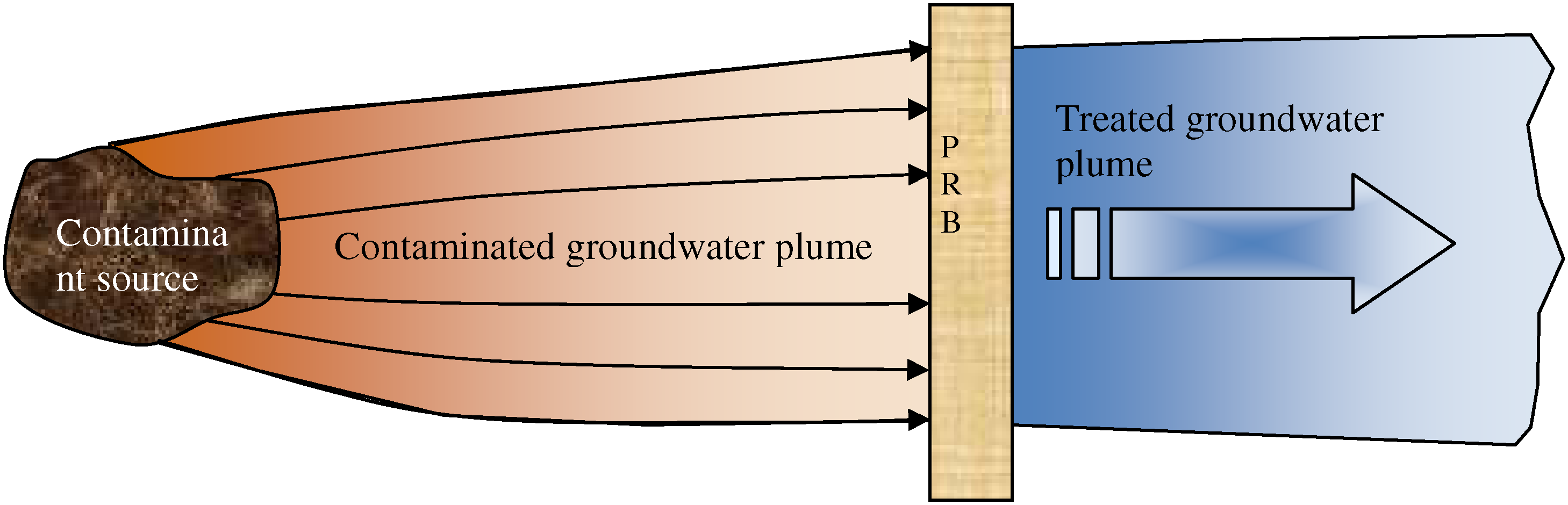
Figures 4–6 show the general process of permeable reactive barriers (PRBs) made of the sorption media for groundwater treatment. PRB technology is an innovative technology for groundwater treatment. It is one of the most widely used and passive in situ technologies for removing contaminants from polluted groundwater. It can save significant amounts of operational and maintenance costs. According to USEPA, a PRB is a placement of reactive materials in the subsurface by digging a trench perpendicularly to a flowing contaminant plume so that the plume will pass through the barriers and transfer the contaminant into the wall in an environmentally acceptable form to achieve a remediation goal downstream of the barrier (USEPA, 1998). For nutrient removal, this barrier can remove contaminant through physical (i.e., adsorption/absorption), chemical (i.e., precipitation), and/or biological (i.e., nitrification/denitrification) processes. As shown in Figs. 5 and 6, there are two types of barriers: in situ reaction curtain and the funnel-and-gate system (LaGrega et al., 2004). The in situ curtain is generally constructed as a trench downstream of the groundwater plume. The width of the barrier generally covers the width of the plume. A funnel-and-gate system is a combination of a permeable reactive treatment zone (or gate) and a low permeability cutoff “funnel” wall. The funnel directs the groundwater plume into the PRB. The gate should have higher permeability than the funnel and surrounding aquifer. The advantage of the funnel system over the reaction curtain technique is that the funnel method can decrease the treatment wall length. A multiple gate system may be used for a plume with higher contaminant concentrations or multiple contaminants.
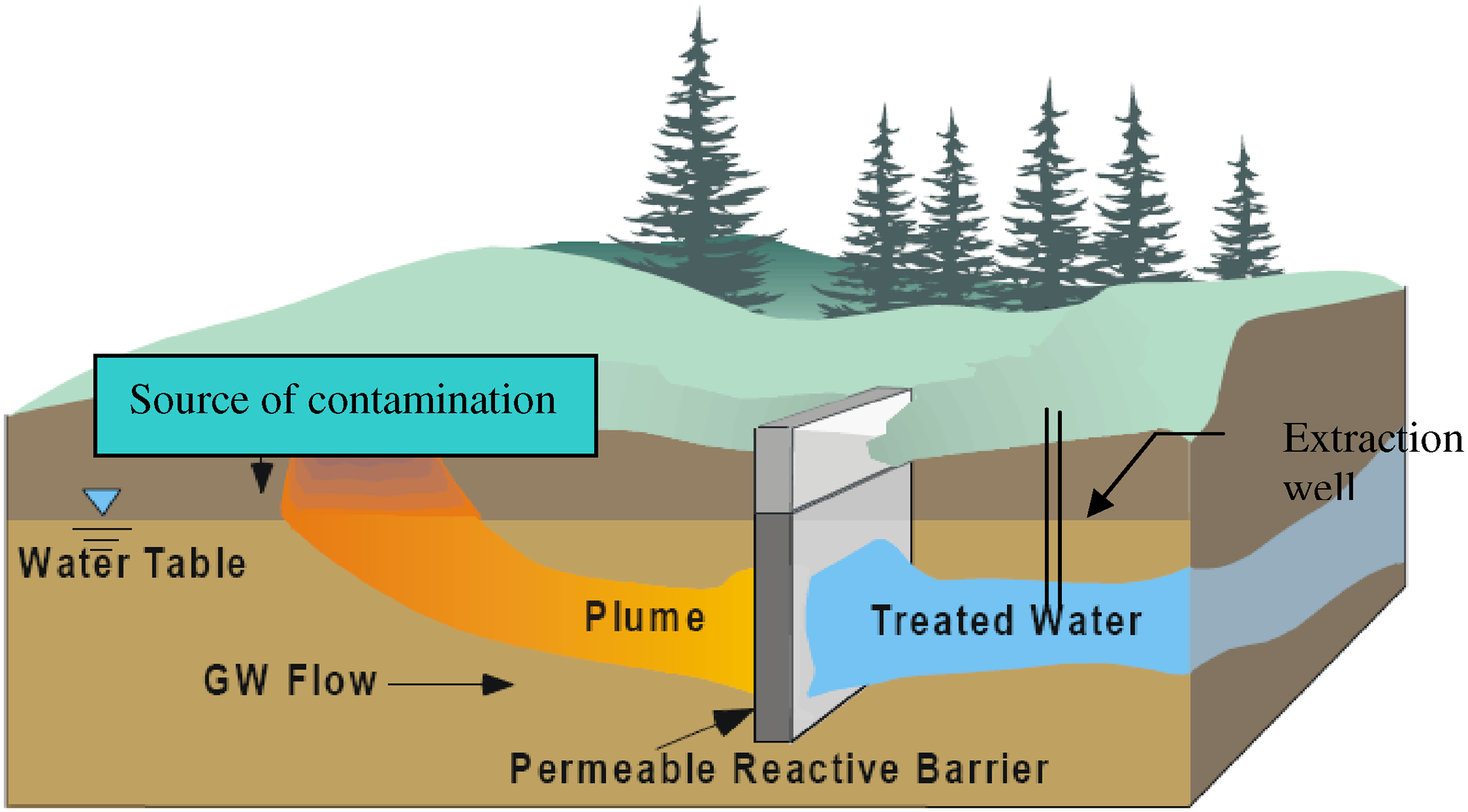
Configuration of a permeable reactive barrier (PRB) for water treatment (USEPA, 1998).
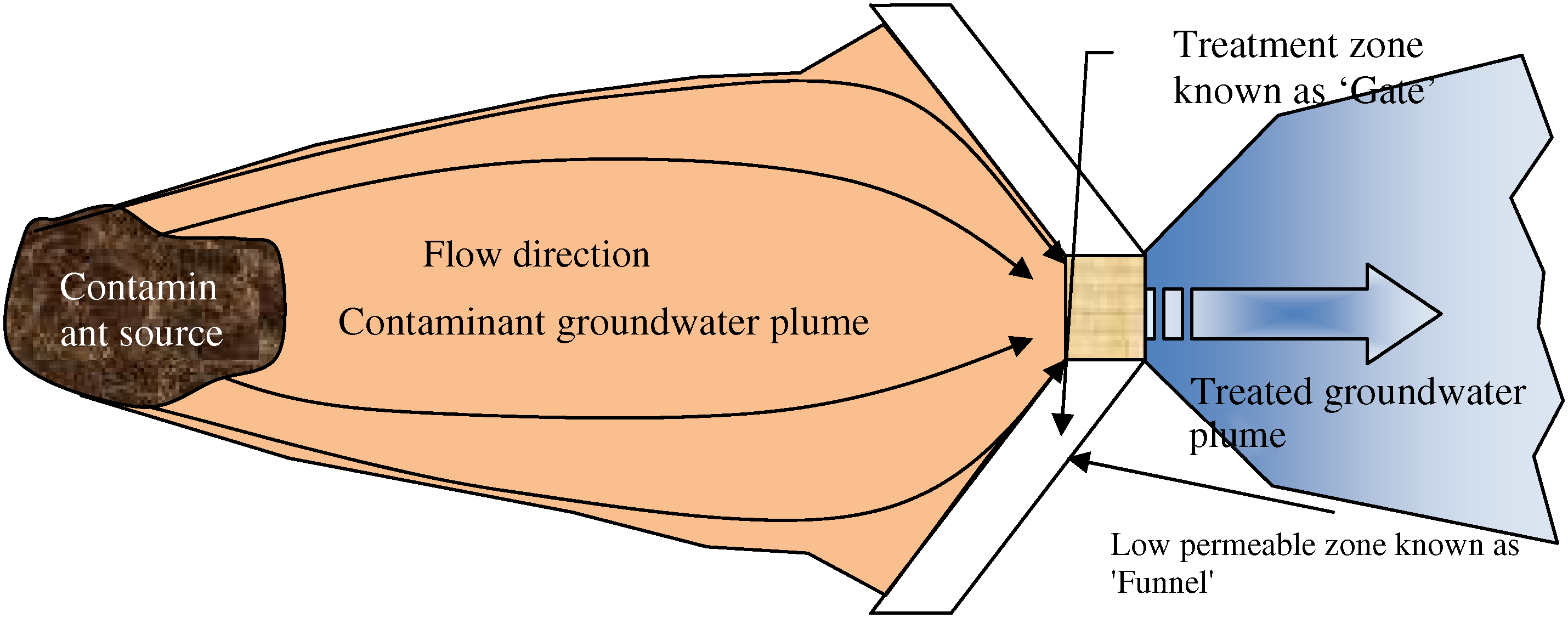
Funnel-and-gate system (LaGrega et al., 2004).
Previous work has tried to evaluate the potential of groundwater nitrate remediation using a PRB. Some in situ testing was performed for this purpose by adding natural organic carbon sources for denitrification. Robertson et al. (2000) tried to determine the long-term (i.e., about 6 years) performance of a PRB. They used sawdust, leaf compost, and grain seed as carbon source to support denitrification. The size of the experiment site was 9 m3 with 15% by volume of sawdust/leaf compost (∼22–190 kg). The initial nitrate concentration was varied 1.2–57 mg/L with a variable flow volume of 14,000–1.4 × 10⁶ L (i.e., 14–1,400 m3) and the effluent concentration varied from 0.2 to 11.6 mg/L. The loss of nitrate was about 0.5–4.2 kg. The denitrification rate was 0.7–2.6 mg N/(L day). The removal of nitrate was about 58%–91%.
Schipper and Vukovic (2000, 2001) carried out extensive research on the performance of PRBs to remove nitrate from groundwater. At first, a pilot test was conducted in the field for 10 months to observe the potential of the barrier to remove nitrate. Afterward, the actual test was conducted for a duration of 5 years to observe the long-term effect of the PRBs. The research was carried out in New Zealand by digging a trench 35 m long, 1.5 m deep, and 1.5 m wide for a pilot test study. The excavated soil was mixed with 40 m3 saw dust (i.e., about 50% sawdust, Monterey pine [Pinus radiata]) as a carbon source to support the denitrification process and then returned in the trench. Wells were constructed upstream, in the wall, and downstream to collect groundwater for chemical analysis. Water samples were collected in upstream locations to measure the initial nitrate concentration. The initial nitrate concentration was about 6.9–13.3 mg N/L before starting the experiment. When the experiment was started, the initial denitrification rate was maximum, 18,100 ng N/(L h) [i.e., 18.1 ng N/(cm3 h)], and carbon availability ranged from 1.8 to 3.12 μg C/(g h). The average denitrification rate and carbon availability throughout the experiment was about 5,830 ng N/(L h) and 2.44 μg C/(g h), respectively. The average denitrification rate was lower than the initial denitrification rate. On the other hand, carbon availability was almost the same. This suggests that there was continuous carbon release from the sawdust for the use of microorganisms. Another pathway of nitrate reduction is the dissimilatory nitrate reduction to ammonium. For this reason, groundwater ammonium concentration was also measured. However, there was no significant change in the ammonium concentration in groundwater to indicate the occurrence of a dissimilatory nitrate reduction to ammonium process in the PRB system. However, previous research has shown that seasonal variations of the groundwater flow field may highly disturb the effectiveness of PRB treatment so that its use as a substitute for a septic tank drainfield is not recommended (Robertson et al., 2008).
Figure 7 shows the flow chart of a new heterotrophic/autotrophic denitrification process. Here zero valent iron (ZVI) will act as an oxygen scavenger to cause an anoxic condition and H2 contributes to autotrophic denitrification. Generally, ZVI will not convert the nitrate to ammonium at pH >6.0 (typical pH range of groundwater). Anoxic conditions will help the heterotrophic microorganisms to consume nitrate as electron acceptor. An external carbon source is still needed as electron donor. On the other hand, autotrophic microorganisms will utilize the H2 produced by ZVI and CO2 by heterotrophic denitrification. The end product of both respiration systems will be N2. Although ZVI is cheap, a huge amount of ZVI is necessary for this process. This concept was applied in column experiments but field-scale experiments have not yet been carried out (Rocca et al., 2006).
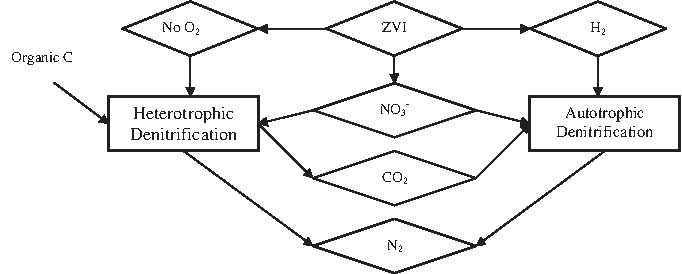
Flow chart of heterotrophic/autotrophic denitrification process (Rocca et al., 2006).
Constructing a large PRB might become costly and difficult, especially when the groundwater table is very deep. An alternative to PRB might be a green sorption field (GSF) method. A GSF consists of a series of well fields downstream of the source of contamination (Fig. 8). The series of well fields would include an aeration well field, a nitrification well field, followed by a denitrification well field. Different mixtures of green sorption media may be used in the well fields according to the specific goal. The aeration well field may be installed ahead of the treatment well fields to trigger favorable conditions, which would quickly increase DO in the contaminated groundwater. The nitrification well field should include alkaline material, such as limestone or seashell, mixed with porous media, such as tire crumb. The denitrification well field should include carbon material, such as saw dust and tire crumb. Advantages of using the GSF would be the case of very deep aquifers and the low operating and maintenance costs. The media inside the wells can be easily removed for the replacement using a vacuum pump. A portable solar-powered air pump is very cost-effective for use in the aeration well field. The treatment well fields can be applied to groundwater aquifer as deep as needed. Minimal disturbance to the ground level can be expected. Each well could occupy a foot print as small as 2 inches diameter. The wells can be flattened to the ground surface or be made invisible below the ground surface.
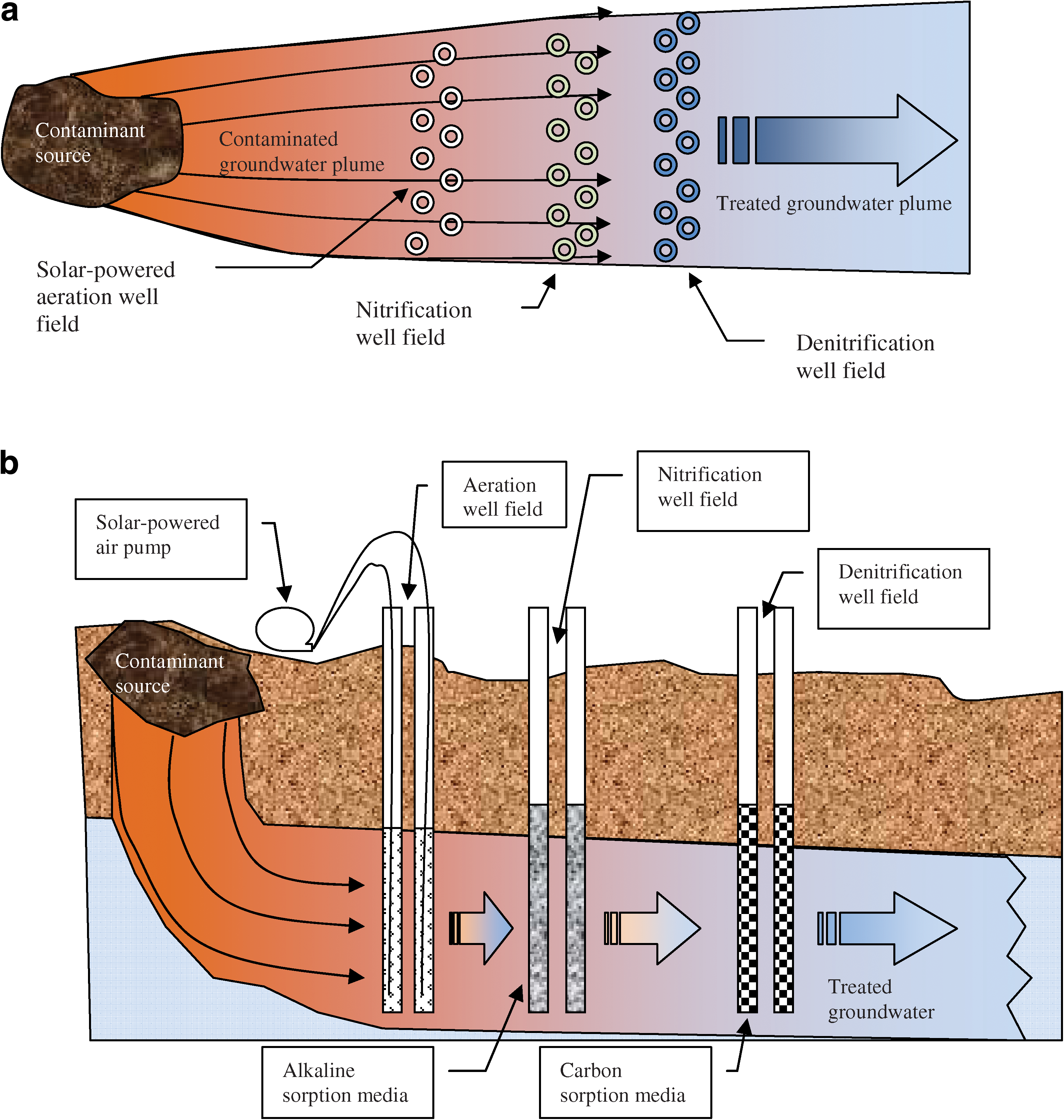
The green sorption field can be used to remediate contaminated groundwater (courtesy of Ammarin Daranpob). (
On-site wastewater treatment
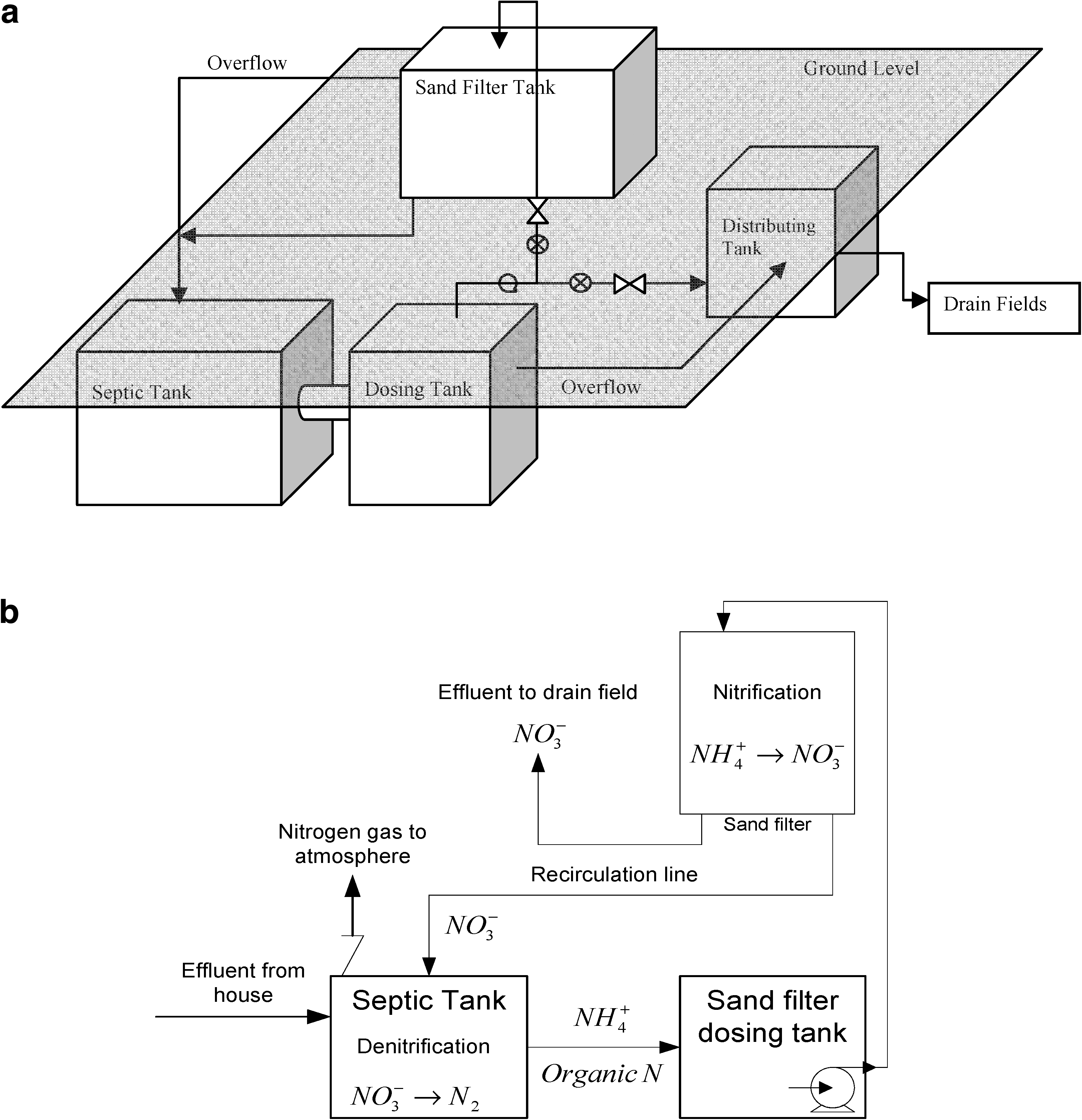
An OSTDS may be designed as a typical passive treatment system to include a septic tank followed by a drain field. The definition of a “passive” OSTDS system as proposed by FDOH precludes the use of aeration pumps within any system component, that is, the septic tank, dosing tank, or other treatment chambers (FDOH, 2009a, 2009b). Oxygen for biochemical oxygen demand (BOD) removal and nitrification must be supplied by unassisted aeration to an unsaturated media filter for promoting ammonification and nitrification to which wastewater is supplied at the top of the media and flows downward by trickle flow or percolation. This is a very common approach to OSTDS, which is typically applied via a recirculation sand filter (Fig. 9). The sorption media can be used directly as a substitute for sand in the sand filtration tank (i.e., the recirculation filter tank) of the OSTDS. In this case, if the hydraulic design allows the top layer of sorption media to maintain an aerobic (unsaturated) environment while the bottom layer maintains an anaerobic (saturated) environment, the influent can be sprayed on the top and the effluent removed from the bottom (i.e., outlet) of the tank after experiencing both nitrification and denitrification stages. As a consequence, either a recirculation mode or an intermittent mode can be applied as long as the target effluent levels of nutrients can be achieved. If the intermittent mode is favored, recirculation flow may be shut off by a valve. Nevertheless, primarily because of the limited nitrogen-removal treatment capabilities of conventional septic tank systems, their density of use in a watershed can produce adverse and undesired impact on aquatic resources through accelerated eutrophication (Anderson et al., 1998). When the sand in the recirculation filter tank can be replaced with sorption media (50% citrus grove sand, 20% limestone, 15% tire crumb, 10% sawdust, 5% expanded clay), this sorption media were placed in the top layer of the recirculating sand filter (Chang et al., 2010a). Table 1 summarizes the performance in which the use of sorption media was not advantageous because of insufficient hydraulic resident time (HRT) (e.g., 30 min or so).
N, nitrogen; P, phosphorus; RFT, recirculation filter tank; TKN, total kjeldahl nitrogen; TN, total nitrogen; TP, total phosphorus.
To increase the HRT, a two-stage denitrification system for household use may consist of a septic tank, recirculating media filter, anoxic denitrification reactor, and followed by a drain field (Smith et al., 2008). It is another variation of a recirculation system (Fig. 10). In this case, mineralization normally occurs in the septic tank, where proteins are hydrolyzed. Ammonification and reduction of BOD take place in the unsaturated aerobic media, reportedly up to 50% of the removal of TN. The effluent of the media filter must be partly returned to the recirculation tank because nitrification is probably not complete after a single pass through the media filter. A mechanical pump is normally necessary in the recycle process. As this type of system may lack the alkalinity for nitrification, additional sources of alkalinity, such as limestone or oyster shell, are mixed in the nitrification media filter. Another shortcoming is the use of reactive media in the anoxic stage (stage 2). Rapid dissolution would shorten the lifespan of the reactive media. On the other hand, a too slow dissolution would limit the denitrification process. Biological denitrification would be a better sustainable alternative than using reactive media.
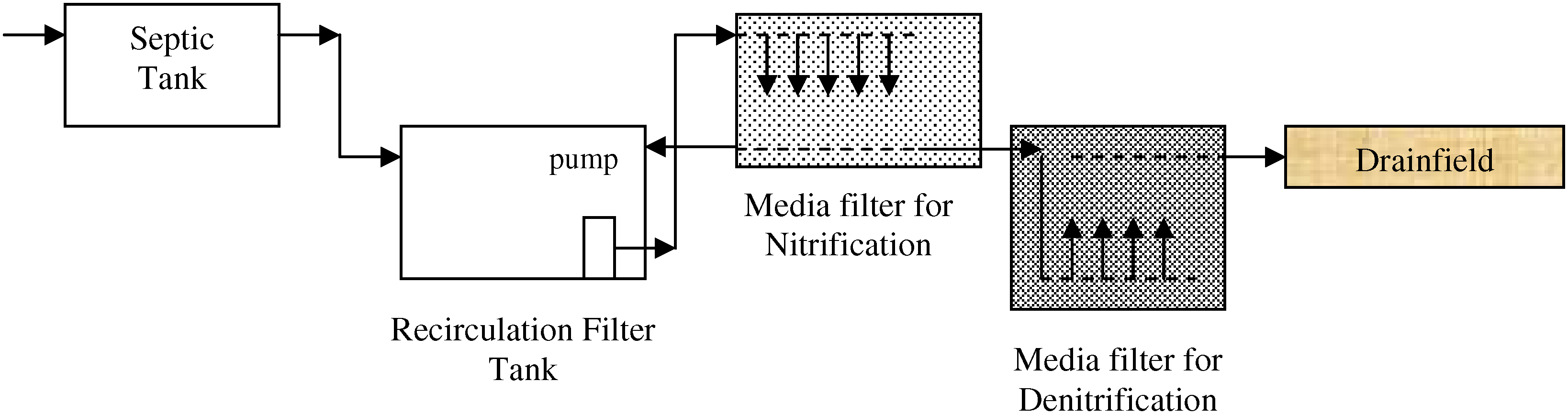
Passive two-stage denitrification system (Smith et al., 2008).
Figure 11 describes a subsurface upflow wetland system, including four parallel subsurface upflow wetlands (three planted vs. one unplanted) filled with an innovative sorption medium and constructed as a key component of the septic tank system receiving septic wastewater flow. As nitrification is considered to be the primary rate-limiting step for nitrogen removal unless the wastewaters are prenitrified or oxygen can be diffused more efficiently into the upper layer of the root zone via some specific growth medium (G medium), the expanded clay G medium is used to ensure vibrant plant growth and efficient oxygen diffusion, and the pollution control medium (PC medium) beneath the G medium is used for water quality benefits. All of the four treatment units (cells) in the subsurface wetland system were filled with both PC medium and expanded clay G medium. The 30.48-cm (12-inch) G medium layer (75% expanded clay, 10% vermiculite, and 15% peat moss) was used to support the root zone and a 30.48-cm (12-inch) PC medium layer (50% citrus grove sand, 15% tire crumbs, 15% sawdust, and 20% lime stone) was used to remove most of the nutrients, total suspended solid, and BOD, at the depth of 12 inches beneath the G medium layer. Same number of bunches of Common soft rush (Juncus effusus), Halifax maidencane (Panicum hemitomon), and Giant cutgrass (Zizaniopsis miliacea) were ultimately selected and evenly planted in wetland cells 1, 2, and 3, respectively, in terms of the biomass production and nutrient content. Wetland cell 4 is the control case without having any plant species. Initial test was carried out in early 2009 and Table 2 summarizes the performance selected from the best one across four cells in this campaign in early 2009.
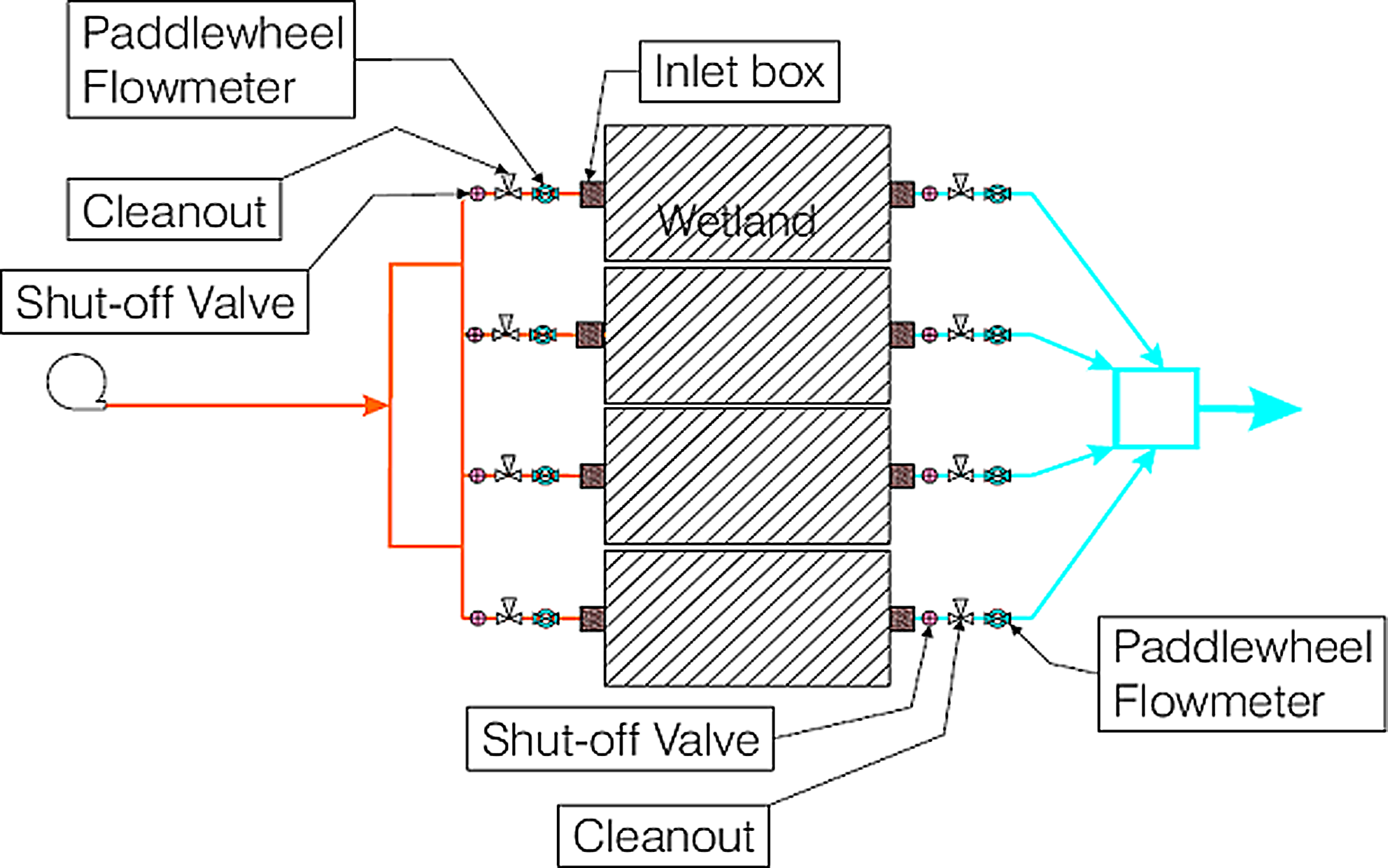
Configuration of septic tank followed by four-cell wetlands for treating 25% of septic effluent (Xuan et al., 2009).
Roman numerals I, II, III, and IV stand for wetland cells 1, 2, 3, and 4, respectively.
In the second field campaign, three kinds of native vegetation with the same volume and net price, Canna (Canna flaccida), Blue flag (Iris versicolor L.), and Bulrush (J. effusus L.), were selected to replace the earlier ones in the first three cells with no changes of sorption media. It proved effective in removing both nutrients and pathogens. During the 1-month test run, the planted wetlands achieved a removal efficiency of 84.2%, 97.3%, 98.93%, and 99.92% in TN, TP, fecal coli, and Escherichia coli, respectively (Chang et al., 2010d). Table 3 summarizes the performance selected from the best one across four cells in this campaign.
Roman numerals I, II, III, and IV stand for wetland cells 1, 2, 3, and 4, respectively.
Figure 12 shows a new type of drainfield—the Bold&Gold (B&G) media filter (Chang et al., 2010d). This media filter drainfield is filled with green sorption material mixture (i.e., 68% citrus grove sand, 27% tire crumb, and 7% sawdust) to provide an alternating cycle of aerobic and anoxic environments to remove nutrients and pathogens in wastewater. In one embodiment of the system, the hydraulic pattern is used in conjunction with a physical setting such as an alternating cycle of aerobic and anoxic environments to remove nutrient content from the influent, which echoes the reaction mechanism of nitrification and denitrification sequentially. Some vertical pipes (i.e., oxygenators) for venting in the beginning of the drainfields close to the header pipe may induce air into the initial portion of cell so that the aerobic environment can be promoted periodically when needed. In all circumstances, the B&G media filter drainfield has an impervious liner at the bottom to keep all nitrification and denitrification processes in an isolated environment. Figure 13 shows the concentrations of nitrogen, alkalinity, and DO at locations (steps 1–7), confirming the nitrification and denitrification processes. Table 4 lists the performance of this B&G media filter or drainfield, which was also compared against a control case—a septic tank followed by a recirculating sand filter, with effluent discharged to an unlined conventional gravity drainfield, both of which were filled with washed builder's sand (fine sand).

Schematic of the B&G media filter (Chang et al., 2010c).
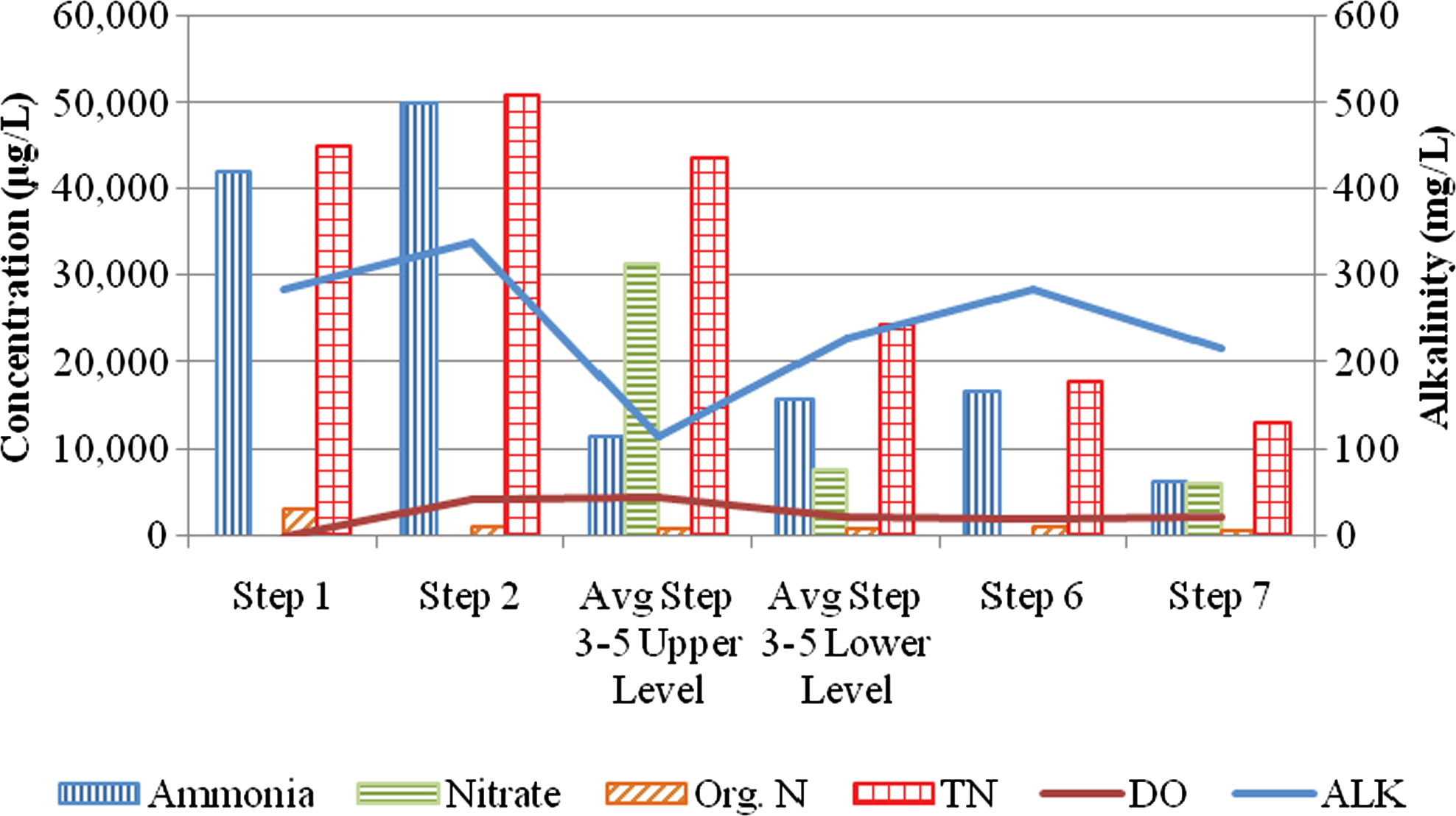
Tracking record of the nitrogen, alkalinity, and dissolved oxygen in the septic tank and B&G media filter that shows nitrification and denitrification processes in the aerobic (steps 3–5 upper level) and anoxic zones (steps 3–5 lower level), accordingly (Chang et al., 2010c).
B&G, Bold&Gold; SRP, soluble reactive phosphorus.
For landfill leachate and centralized domestic/industrial wastewater treatment, the technology described above may still be applicable. However, in wastewater and landfill leachate treatment, a two-stage process with separate nitrification and denitrification reactors filled with differing sorption media may be more suitable to remove nutrients. With sufficient carbon source present in the wastewater to sustain the denitrification process, TN removal will not be limited and removal of ammonia and organic nitrogen may be high. Such a two-stage treatment process fulfills the biochemical requirement for initial aerobic reactions (ammonification and nitrification) followed by anoxic denitrification, enhancing of the effectiveness treatment, albeit at the expense of operational complexity. It includes using a first-stage unsaturated media filter allowing air ingress without aeration pumps to achieve target effluent ammonia and organic nitrogen levels, and the second-stage saturated denitrification filter with a reactive solid phase electron donor and a possible alkalinity source to achieve the desired nitrogen levels in the effluent below target levels (Smith et al., 2008). The process may need an adequate hydraulic head for passive media filtration, which can be enabled by one effluent dosing pump between the first and the second stage similar to the arrangement in Fig. 10 (Smith et al., 2008).
Cross-linkage over treatment options
Constructed wetlands may be applied to treat landfill leachate, wastewaters, or stormwater effluents. As residential densities increase and resultant wastewaters or stormwater overload groundwater aquifers through the leach field, more energy- and space-saving methods may be pursued. Possibilities include two different types of constructed wetlands: surface and subsurface wetland systems. Subsurface flow is the most common for residential uses as it keeps sewage or stormwater effluent underground. Surface flow is sometimes more economical but is not allowed by current regulations in many regions. Discharge systems allow some water to flow out of the wetland or infiltrate into the groundwater aquifer, whereas nondischarge systems using a liner system can absorb all effluent through the growth and sorption media placed beneath the plant species. Different layouts include single cell, dual cells in series, or multiple cells (parallel or in series) filled with different sorption media. Subsurface dual-cell discharge is common for small residential applications. For wastewater treatment, an OSTDS should include a filtered, two-cell septic tank (or two plain tanks, or a stabilization pond), a retained cell(s) with an impermeable bottom liner, a gravel substrate, sorption media, G media, plants, and a gravel-filled gravity distribution system. The biochemical sequence requires ammonification and nitrification before denitrification. This requirement must guide the design philosophy. Within a subsurface-constructed wetland, the plant roots help provide an aerobic environment to break down contaminants for nitrification, whereas the anaerobic environment occurs in deep sorption media with an electron donor, supporting the denitrification process as usual. This is still a passive treatment system because no pump is required. Wastewater reuse may also be achieved in such a nondischarge system. However, the side effects from using wood-based materials or sulfur as the electron donor will be an increase of BOD5 and sulfate in the final effluents. Such a design philosophy explicitly addressing sustainability implications will become a norm in the next generation of civil engineering systems.
Regardless of the water to be treated (i.e., stormwater, wastewater, groundwater, landfill leachate, or drinking water), in a simultaneous aerobic/anaerobic system (i.e., a single system) nitrification may cause a decline in pH because of the consumption of alkalinity. When using a two-stage process, inefficient nitrification at lower pH could result in deterioration in ammonia removal, which can in turn affect the operation of the anoxic denitrification filter. Recirculation around the first stage can enhance nitrification in the initial treatment units by restoring alkalinity, increasing TN removal, and lowering the nitrate loading on subsequent denitrification filters in the second stage. Overall, the removal of nitrogen species will rely on the microbes, such as ammonia-oxidizing bacteria (AOB), nitrite-oxidizing bacteria (NOB), and denitrifiers.
Selection of Sorption Media
External factors that influence the performance of filter media may include, but are not limited to, the air temperature, options for recirculation, hydraulic loading rate, organic loading rate, nitrogen loading rate, average hydraulic retention time, pH of the influent, alkalinity, and the wastewater/stormwater characteristics. The hydraulic loading rate and loading rates of organics and nitrogen are especially important in the vadose zone and unsaturated aerobic media filters. Higher hydraulic loading rates lower the HRT, creating a greater potential for preferential flow in the pore space, and ultimately reducing the effectiveness of treatment. Higher organic and nitrogen loading rates increase the processing rate at which biofilms must assimilate organic matter, thereby also diminishing the treatment performance. Wastewater/stormwater characteristics, such as suspended solids, BOD5, DO, organic and ammonia nitrogen, and alkalinity, may also affect the removal efficiency as the system reliability is sensitive to some of the constituents.
Internal factors that influence the performance of filter media may include, but are not limited to, media characteristics, such as the particle size distribution, specific surface area of media, the permeability of media, the coefficient of uniformity, ion exchange capacity, and molecular diffusion potential. The internal pore spaces within the sorption media must be shared between the attached biofilm and percolating water and gas. Larger particle sizes may prevent clogging issues, whereas smaller particles will have greater surface area per volume for biofilm to grow. Adsorption takes place at high specific surface area and some media have special affinities for specific species of nitrogen, phosphorus, and heavy metals. Further, higher values of the specific surface area of media may provide more surface attachments for microorganisms to form the biofilms, allowing higher organic and nitrogen loading rates to be handled. A sorption medium with a high porosity will allow sufficient oxygen transfer throughout the filter bed, providing an aerobic environment more effectively. If the media size becomes too small, a larger fraction of the pores may remain saturated, thereby becoming inaccessible to oxygen transfer and fostering an anaerobic environment. This implies that sorption media with a high porosity should be arranged in the first stage of a two-stage treatment process to ensure aerobic condition, whereas a larger pore fraction may be allowed in the second stage. The coefficient of uniformity affects flow uniformity. Sorption media with a significant ion exchange capacity may provide a superior removal of ammonia nitrogen. Sorption also provides a buffer when loading rates are high. For example, sorption of ammonium ions onto sorption media can sequester ammonium ions from the water and provide better contact with attached biofilms (i.e., AOB and NOB). However, ammonia ion exchange adsorption onto sorption media is reversible in low flow conditions, making AOB and NOB to biologically regenerate the sorption capacity of the media and resulting in increased resiliency of the treatment process.
To remove P, media must have the ability to sorb it in the saturated and unsaturated zones. Phosphorus may be removed in either an aerobic or anaerobic environment through proper sorption onto soil media. However, as the sorption sites fill, phosphorus removal decreases. Diminished phosphorus removal occurs because the cation exchange capacity of the soil or media is exceeded (White and Dornbush, 1988). Filter media also have a propensity to remove heavy metals from water as an associated benefit, but this is strongly dependent on pH. Acidic pH may release the metals ions from the media surface rather than retaining them or may dissolve the precipitates. So a pH of >7.0 is good for metal removal by filter media.
Future Research
Sorption media with different recipes should be fully tested to address key issues, including design, operation, feasibility, longevity, and economics, which have direct implications to the long-term performance and life expectancy of the media. Special applications may be designed to accommodate the practical needs in differing disciplines. Some cases are described below.
Reaction mechanism
Absorption/adsorption capacity is limited in each medium. Are there competing considerations for N, P, and metal removal? Do they sorb onto the same sites? Do they prefer different, or even mutually exclusive conditions (e.g., pH, temperature)? The answers to these questions require more exhaustive studies. Besides, experimental investigations of the mechanisms and rates of energy/electron transfer across the microbe–mineral interface will be essential for exploring the biofilm dynamics in porous media coupled to extracellular geochemical reactions such as sorption, precipitation, and redox alterations. There is a need to develop the coupled biogeochemical models linked with pore-scale models for delineating hydrodynamic flow, transport, and geochemical reactions. During the treatment phase, however, noticeable amounts of solid particles and nutrients can be removed by the filter media. This dual effect of adsorption and biological processes can be expected. However, dual processes in a single system may not accelerate the removal process. For example, growth of microorganisms on filter media may reduce the surface area for adsorption. Again, if more particles are involved in adsorption, there are fewer particles to take part in the chemical reactions. As bacteria will need some time to grow fully in the media, it is worthwhile to examine the dual versus independent effects at the microscale. This might be even more phenomenal in the two-stage filter process, which should be examined under various conditions. Extended operation of these systems must be performed to provide longer-term operating experience, to operate the filter systems at higher loading rates, to employ recycling on stage 1 filters for predenitrification, and to more fully examine performance and design issues with the denitrification filters (Smith et al., 2008).
Besides, it is known that anaerobic ammonia oxidation may occur as long as ammonia-oxidizing archaea (AOA) may be apparent at various habitats, which can react directly with nitrate to form nitrogen gas and water (Francis et al., 2005). These habitats include hot/thermal springs, marine and fresh waters, soils, and wastewater treatment plants where AOA may outnumber AOB under certain conditions. Detailing the relative distribution of AOA versus AOB in relevant engineering processes and identifying the possible enzyme to manipulate the population of AOA becomes a key to the success of nitrate removal during the transitional phases from aerobic to anoxic and to anaerobic conditions. Further findings in this regard will certainly trigger more new philosophies of engineering process design and operation.
Monitoring and measurements
Denitrification is difficult to measure because of the analytical complexity of detecting small increases in N2 concentrations against the large background in the air. A number of recent advances in analytical approaches to quantify denitrification directly or indirectly have been made feasible. To confirm the degree of denitrification in the sorption media, a few denitrification analytical approaches, such as membrane inlet mass spectrometry, gas-flow soil cores with N2 chromatography, and isotope pairing, may be considered in the future. Multidisciplinary research is needed to determine the harmful effects of metal and bacteria if sorption media are used to treat drinking water. Measurements using atomic absorption spectrometry and quantitative real-time polymerase chain reaction to quantify the trace metals and microbes of interest, respectively, are needed. For example, microbiologically mediated denitrification processes due to activity of a single group of organisms are rare. They are the result of a diverse group of organisms that may reside as biofilms on the subsurface to generate NO, N2O, and N2 sequentially or simultaneously. Emissions of N2O, a potent greenhouse gas, tend to be underestimated in the area of agriculture and engineering activities. The global warming potential of N2O is ∼300 times that of carbon dioxide (Grady et al., 1999). The rate of N2O generation during the operation of filter media is thus of crucial interest at least in the new types of septic tank drainfields and stormwater ponds with or without the use of sorption media. In any circumstance, proper quantification of N2O emissions is critical in the context of sustainability.
Material characterization and species innovation
Currently, the subsurface wetland treatment process for wastewater treatment is a very promising tool. The possibility of growing native plant species on sorption media to enable the dual effects of nutrient removal by both sorption media and plant species should be examined. Besides, it may be worthwhile to develop and test new recipes of sorption media that take advantage of recycled materials. For example, cellulose-based sorption media are very good for the growth of microorganisms, and coconut coir or coconut palm tree may be crushed for use as part of media mixtures. It is known that filter media containing tire crumb, sawdust, compost, wood chips, newspaper, or cotton waste can act as electron donors and are excellent sources of carbon, contributing to the denitrification process. Thus, the use of filter media can save the cost of chemicals such as ethanol, methanol, and acetate, which are traditionally used as carbon sources in biological treatment processes. Surveys should be conducted to identify natural soil with abundant bioavailability of organic carbon for the same purpose. In addition, bacteria can grow very well in filter media because of its high surface area and porous structure. In traditional biological treatment processes, however, different types of plastic media are used for improving biological treatment, such as trickling filter and up-flow reactors with beads. Future research should determine if filter media can be used as a substitute for those plastic media. Overall, more advanced and adaptive materials, biomaterials, and enabling or multifunctional engineering materials with cotreatment capacities, such as nanosize particles, are needed to improve the treatment efficiency and effectiveness (Lin et al., 2008a, 2008b; Xuan et al., 2010). So far, ZVI nanoparticles and titanium oxide nanoparticles have been used for nitrate and ammonia removal from water/wastewater. As these particles are nanometer in size, there will be a need for an iron or titanium oxide removal system at the end. Sometimes, the ZVI nanoparticles are coated with noble metals such as gold, silver, or platinum, which are harmful for human health.
Economic and environmental impact assessment
Filter media can remove nutrients from different sources by adsorption, precipitation, and nitrification/denitrification, with various degrees of efficiency. However, information regarding cost-effectiveness is lacking across all environmental engineering disciplines and so a thorough study is required. Besides, biological nutrient removal processes have been used to treat wastewater for many years, but scientists are only now suggesting to apply these processes for potable water treatment. Care must be taken to avoid possible negative effects (if any) of nitrifiers, denitrifiers, and phosphorus-accumulating organisms on human health (Drabi et al., 2003). For this reason, research should be conducted to determine the possible harmful effect of these bacteria on human health. To avoid secondary pollution, appropriate practices for the disposal of spent media need to be adequately examined.
Conclusions
Nitrogen and phosphorus compounds are most frequently measured in both natural systems and built environments to indicate nutrient loadings. Removal of ammonia, nitrite, nitrate, and phosphorus by sawdust, tire crumb, sand, clay, and other organic media can be achieved using natural, functionalized, and/or engineered filters or filtration media. This literature review reveals that efforts to date have mostly addressed the treatment of a single water source with only a single pollutant of interest. Multiple pollutants with cotreatment strategies have not yet been fully developed. Design philosophy is currently evolving to fit into versatile application needs with the most cost-effective methods of ensuring environmental compliance. In the future, innovations will be required to span boundaries and achieve engineering sustainability. To improve urban sustainability, more advanced and adaptive materials, biomaterials, and enabling or multifunctional engineering materials with cotreatment capacities are needed for the design of sustainable neighborhoods. As part of the sustainability effort, these green infrastructure systems will have to be proved cost-effective and sustainable in many field applications to lessen the development of stormwater footprint and wastewater impact. When this situation results, it ought to provide the ecosystem with a more positive response to rainwater runoff and wastewater effluents as the design and application challenges are resolved.
Author Disclosure Statement
No competing financial interests exist. The authors are grateful for all the data and reports cited and used in this study. Conclusions and opinions presented in this paper are those of the authors, and do not necessarily represent the position of any funding agency. Mention of commercial products, trade names or services in the paper does not convey endorsement, or recommendation.