




Abstract
Abstract
Benzo[a]pyrene (BaP) is one of the persistent organic pollutants (POPs) existing widely in the environment and presenting great threats to ecosystems. Chlorine dioxide (ClO2) has been adopted as an effective alternative to chlorine for disinfection in potable water treatment. In this study, a series of experiments were conducted to investigate the feasibility of using ClO2 as an oxidant for BaP degradation. We examined degradation kinetics and effects of ClO2 dosage, reaction time, and pH on the BaP removal by ClO2. Results demonstrated that ClO2 could remove BaP effectively. ClO2 dosage and reaction time were found to have a significant impact on BaP removal, whereas pH only affected slightly in the range of 3.2–9.7. Under optimal reaction conditions, the removal efficiency could reach an extremely high level of 99.8% within 30 min at a ClO2 dosage of 5 mg/L, temperature of 20°C, and pH 7.2 for the BaP samples with initial concentration of 10 μg/L. The reaction between ClO2 and BaP followed a second-order kinetic, and the corresponding rate constant was determined to be 7.795 L/(mol·s). The predominant end products of BaP degradation by ClO2 were characterized as quinine derivatives. This study not only provides a feasible chemical method to efficiently degrade BaP in water treatment, but also suggests a new strategy to promote the development of technologies for POPs reduction in the environment.
Introduction
BaP has been arousing intensive concern for its inherent nature of wide distribution, high stability, and high toxicity. Trace BaP can be hardly removed by traditional water treatment facilities (Jiang et al., 2000). According to previous studies, the available methods for treating BaP include physical, chemical, and biological processes. For example, there have been a number of studies addressing biological removal of BaP by bacteria or fungi (Juhasz and Naidu, 2000; Su et al., 2007; Wang et al., 2008). Nevertheless, the formation of carcinogenic intermediate or end products remains a problem (Sutherland, 1992). Advanced oxidation processes (AOP) have been frequently reported to be able to mineralize majority of organic compounds unselectively. Depending on the AOP and oxidants used, the half-life of BaP in the reactions followed the elevated order of O3=O3/UV<O3/H2O2<O3/H2O2/UV (Trapido et al., 1995). Homem et al. (2009) have found that BaP could be well eliminated using Fenton reaction, and the efficiencies were positively correlated to temperatures and Fe2+ concentrations and adversely affected by excessive H2O2 dosage. Several investigations showed that improved removal efficiencies could be obtained through the combination of Fenton or Fenton-like system with microbes (Zanga et al., 2007; Rafin et al., 2009). However, it should be realized that there has been no previous report of chlorine dioxide (ClO2) for BaP removal in potable water treatment.
The principal possibility of using ClO2 to degrade BaP originates from the strong oxidizing capability of ClO2, as a result of decomposing a variety of nondegradable organic containments (Ganiev et al., 2004; Luca et al., 2008; Navalon et al., 2008). Particularly, ClO2-participating oxidation avoids the formation of toxic byproducts such as THMs. By virtue of these advantages, ClO2 has been drawing an increasing interest as alternative to chlorine for water disinfection in recent years (Hrudey, 2009; Huang, 2010).
This study aims to examine the feasibility and effectiveness of chemical removal of BaP by using ClO2 as oxidant. The effects of dosage, reaction time, and pH on the reaction between BaP and ClO2 were investigated, followed by quantitative characterization of kinetic behavior and the end products of the reactions.
Materials and Methods
Chemicals
BaP (AR 99%) was purchased from Sigma-Aldrich Company. ClO2 stock solution was prepared by the reaction of NaClO2 and H2SO4 (Ji et al., 2008) and calibrated before use by sequential idiomatic method. The buffer solution used was composed of KH2PO4 and NaH2PO4. Methanol was in chromatographic grade and obtained from Tianjin Kermel Chemical Reagent Co., Ltd. If not stated specifically, other chemical agents were of analytical grade. All the aqueous samples were prepared using twice-distilled water.
Analytics and measurements
All the experiments were conducted at 20°C and dark environment. BaP was placed in a 250-mL conical flask to give 10 μg/L standard solution. Then the pH buffer solution and ClO2 solution were added into BaP standard solution to start the reactions. After a certain reaction time, the reactions were terminated by adding excessive sodium thiosulfate. Thereafter, the reaction solution was transferred into separating funnels, and extracted triply with dichloromethane. The extract liquor was dehydrated and concentrated into 1 mL by purging the solvent with nitrogen, followed by analysis with high-performance liquid chromatography (HPLC) or gas chromatography–mass spectrometry (GC-MS). The experiments were carried out in triplicate.
The HPLC (Agilent Technologies) with a 1050 pump and a Rheodyne injector was used to quantify the BaP. The system was equipped with a G1321A fluorescence detector (λem=303 nm, λex=425 nm) for the investigation of the efficacy and the effect of parameters, and it was equipped with a G1314A variable wave detector (wavelength at 295 nm) for studying the kinetics of the reaction. A Hypersil ODS C18 column (200 mm×4.6 mm) was used as a mobile phase of 85:15 (v/v) methanol/water mixtures with a flow rate of 0.5 mL/min. Column temperature was set at 30°C by an AT-130 Column Heater and a TC-100 Temperature Controller. The injection volume was 20 mL and the retention time was controlled as 35.92 min.
To identify the end products of BaP degradation, 1 mL extracted and dehydrated sample was injected into a gas chromatograph (6890N; Agilent Technologies) with a mass spectrometer (5973N; Agilent Technologies). A film HP-5MS (30 m×0.25 mm×0.25 mm) linked to a 5% phenyl methyl silicone column was used. The oven temperature program was set at 50°C for 2 min and ramped up to 260°C at a rate of 8°C/min and then held for 5 min. Mass spectra were recorded at 1 scan/s under electron impact at 70 eV with a mass range of 35–400 m/z. The carrier gas was helium.
Results and Discussion
The effect of ClO2 on BaP removal
The performance of BaP degradation by ClO2 depends preliminarily on the amount of ClO2 used. First, the effect of ClO2 dosage on BaP removal was investigated on the basis of 10 μg/L BaP samples at pH 7.2 and 20°C. The concentrations of ClO2 applied to different samples were initiated over the range of 0–45 mg/L. The reactions were terminated at 120 min. As shown in Fig. 1, the removal efficiency of BaP increased from 59.43% to 87.22% as ClO2 dosage was increased from 1 to 2 mg/L, reaching its maximum of 99.75% at ClO2 dosage of 5 mg/L. This removal was in consistence with the finalized BaP concentration lower than 0.01 μg/L. It should be pointed out that 5 mg/L ClO2 may be much higher for disinfection process in usually drinking water plants. The residual chlorite in the treated effluent would exceed water quality standards. Thus, it appears more suitable to use ClO2 to control BaP in preoxidation process; otherwise, some measures should be taken into account to remove the superabundant chlorite.
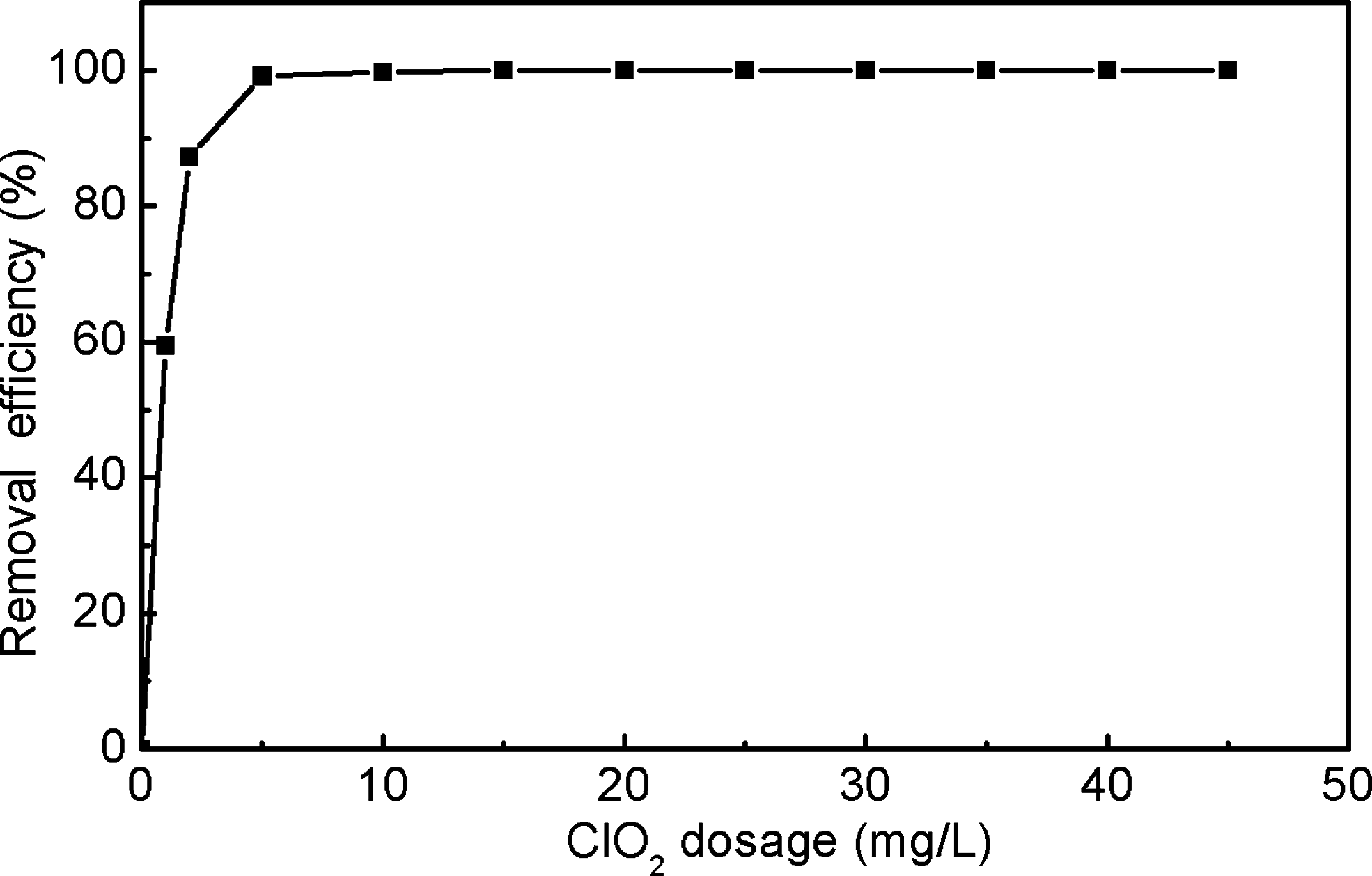
BaP removal efficiency as function of ClO2 dosage at pH 7.2, 20°C, and reaction time of 20 min. BaP, benzo[a]pyrene; ClO2, chlorine dioxide.
Thereafter, the dependence of BaP removal on the magnitude of reaction time was further studied at initial BaP concentration of 10 μg/L and ClO2 of 5 mg/L (pH 7.2 and 20°C). The reaction for each group was deactivated at a stepwise time of 5–240 min. It can be seen from Fig. 2 that BaP removal efficiency increased sharply to 90% at the first 10 min, followed by the plateaus of 99.7% at the end of 30 min. Judged from these results, the reaction of ClO2 and BaP proceeds rapidly, such that the attainment of equilibrium can be achieved within a short period.
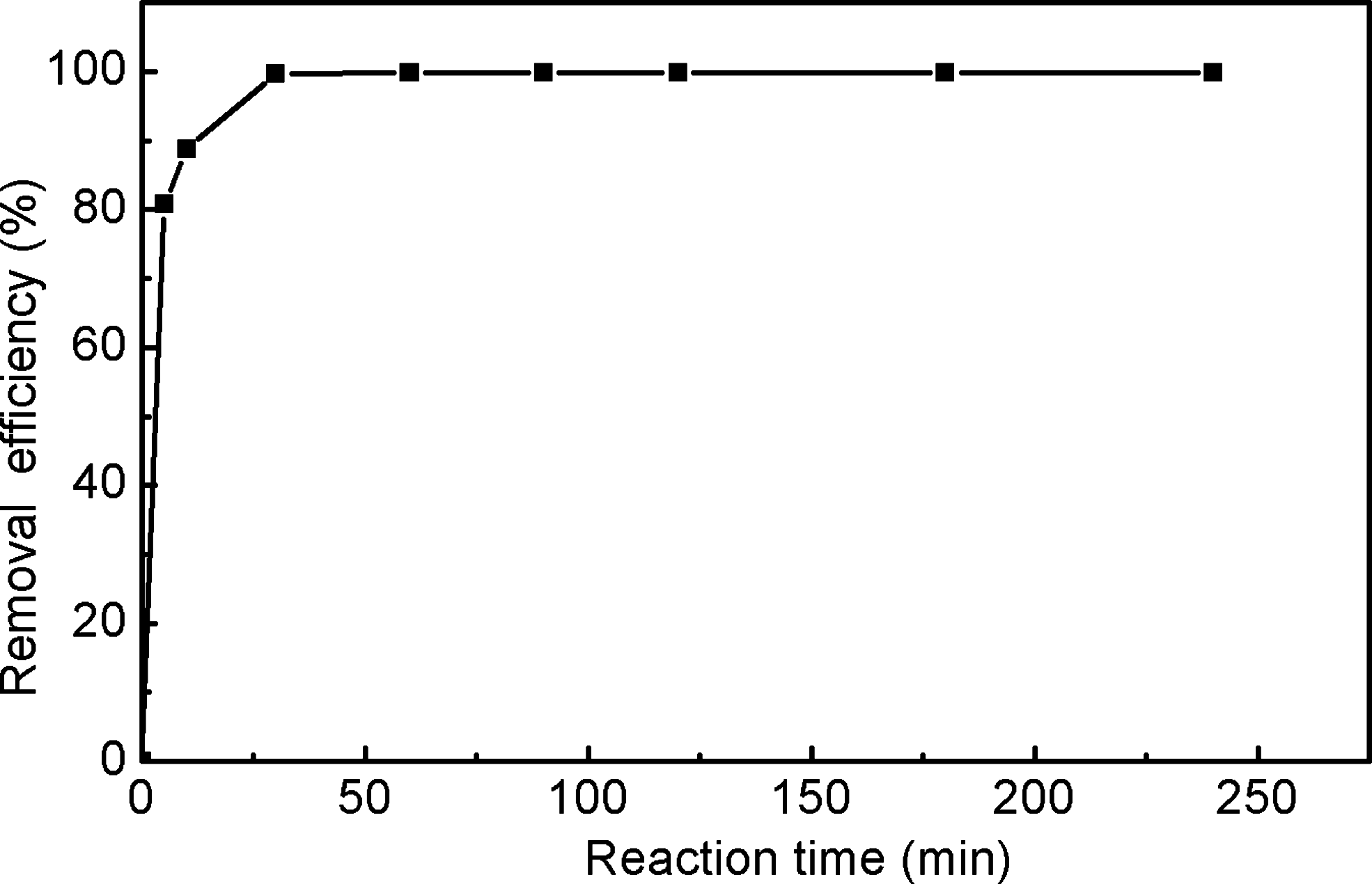
BaP removal as function of reaction time at pH 7.2, 20°C, and ClO2 dosage of 5 mg/L.
The effect of pH on the BaP removal was examined at 20°C. The pH values in aqueous reaction system having 10 μg/L BaP and 5 mg/L ClO2 were set as 3.2, 5.7, 7.2, 8.3, and 9.7, respectively. The reactions were then terminated at 30 min after being subject to chemical analyses. The results are given in Fig. 3, which shows that BaP removal efficiency was slightly higher (2%) at neutral pH (7.2) than that at acidic pH (3.2 and 5.7). Such inconspicuous improvement may result from the alteration of oxidability of ClO2 with respect to the transformation of ClO2 in water at different pH conditions (Huang, 2010). In the usual disinfection of water treatment facilities, ClO2 undergoes single electron transformation from ClO2 to ClO2−:

Effect of BaP removal at 20°C, ClO2 dosage of 5 mg/L, and reaction time of 120 min.
For pH≤2.0, ClO2 can be reduced to Cl− by gaining 5 mol electrons per mole of ClO2 as
For pH>9.0, ClO2 will proceed with a disproportionating reaction as
Overall, the effect of pH on BaP removal by ClO2 appears insignificant. Because BaP removal efficiency was higher than 95% for pH of 3.2–9.7, it can be concluded that ClO2 can degrade BaP effectively over a wide pH range.
Kinetics of BaP oxidation
This group of experiments was performed to determine the kinetics of ClO2 oxidation at the condition of 20°C and pH 7.2. The initial concentration of BaP in the samples was 0.2 μmol/L, whereas initial ClO2 dosages ([ClO2]0) were kept at 0.08, 0.12, 0.16, 0.20, and 0.24 mmol/L. Figure 4 reveals the BaP concentration time profiles at various initial ClO2 concentrations, suggesting that the reaction could attain equilibrium within 30 min.
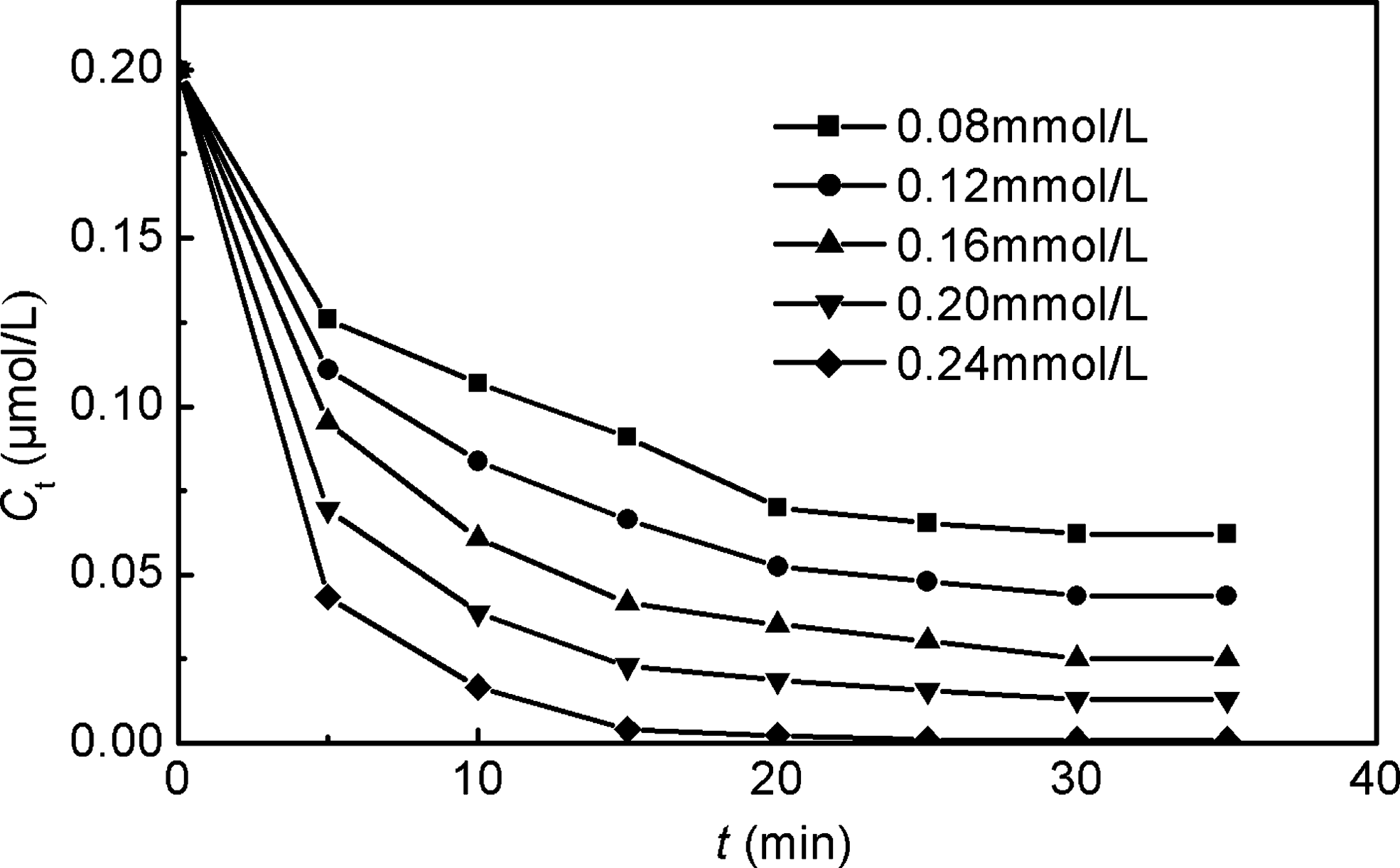
Variation of BaP concentration with time under different ClO2 dosages at pH 7.2, 20°C, and initial BaP concentration of 0.2 μmol/L.
By plotting the experimental data of −lnCt/C0 (Ct denotes the concentration of BaP at time t, and C0 denotes the initial concentration of BaP) versus reaction time (t), the linear correlation between the two variables can be identified, as indicated by correlation coefficients (r) above 0.97 (Fig. 5). Therefore, this reaction can be described with pseudo-first-order kinetics to BaP judged from the nature of first-order reaction.
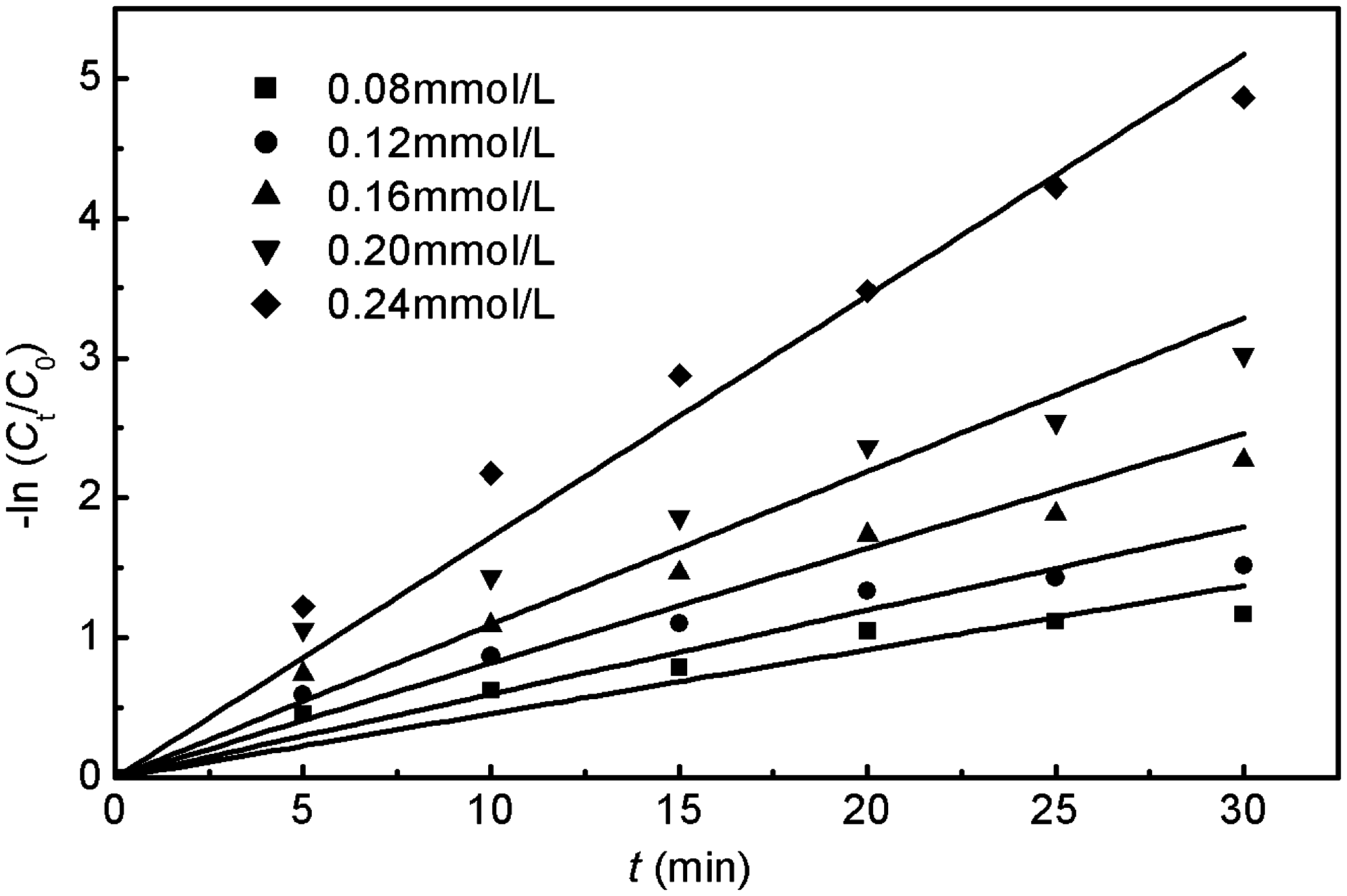
Determination of kinetic constants and reaction order for BaP degradation at different ClO2 dosages.
The slopes of the regressive lines shown in Fig. 5 demonstrate apparent first-order rate constants k′. As can be seen from k′ as function of [ClO2]0 (Fig. 6; y=−0.0029+0.48x, r2=0.9947), this reaction is also determined to be governed by a pseudo-first-order process for ClO2.

Determination of reaction order for ClO2 oxidation.
Taken together, the reaction is pseudo-first order to both ClO2 and BaP, and thus the overall reaction is the second order. The rate equation can be written as
where [ClO2] can be taken into account as a constant as [ClO2]0>> C0 in the experiment; hence,
Eq. 5 can thus be used to determine the second-order reaction rate constant k and the parameters are listed in Table 1. The average k is 7.795 L/(mol·s). All these results indicate that BaP removal can be accomplished in a short reaction time in normal water treatment condition.
[ClO2]0, initial chlorine dioxide dosage.
Identification of the products of BaP decomposition
In our previous study, the products of anthracene and benzo[a]-anthracene oxidized by ClO2 were characterized as 9,10-anthraquinone and benzo[a]-anthracene-5,7-quinone plus benzo[a]-anthracene-7,12-quinone, respectively (Liu et al., 2007). Using the GC-MS analysis, two types of intermediate species, that is, benzo[a]-pyrene-1,6-quinone and benzo[a]-pyrene-6,12-quinone, were detected (Fig. 7), which appears quite similar to the results previously reported. The net charges of each atom involved in BaP illustrated in Fig. 8 were calculated using Chemoffice software, and the results are listed in Table 2. During the formation of quinone derivatives, carbonyls occurred predominately at the carbon atoms with more negative charge; hence, we assume that the atoms with more negative charges provide electrons, and the reaction activity is higher when there is more negative charge. It has been reported that these quinone derivatives lead to slight mutagenicity and cytotoxicity (Wislocki et al., 1976).

Schematic representation of BaP degradation by ClO2.
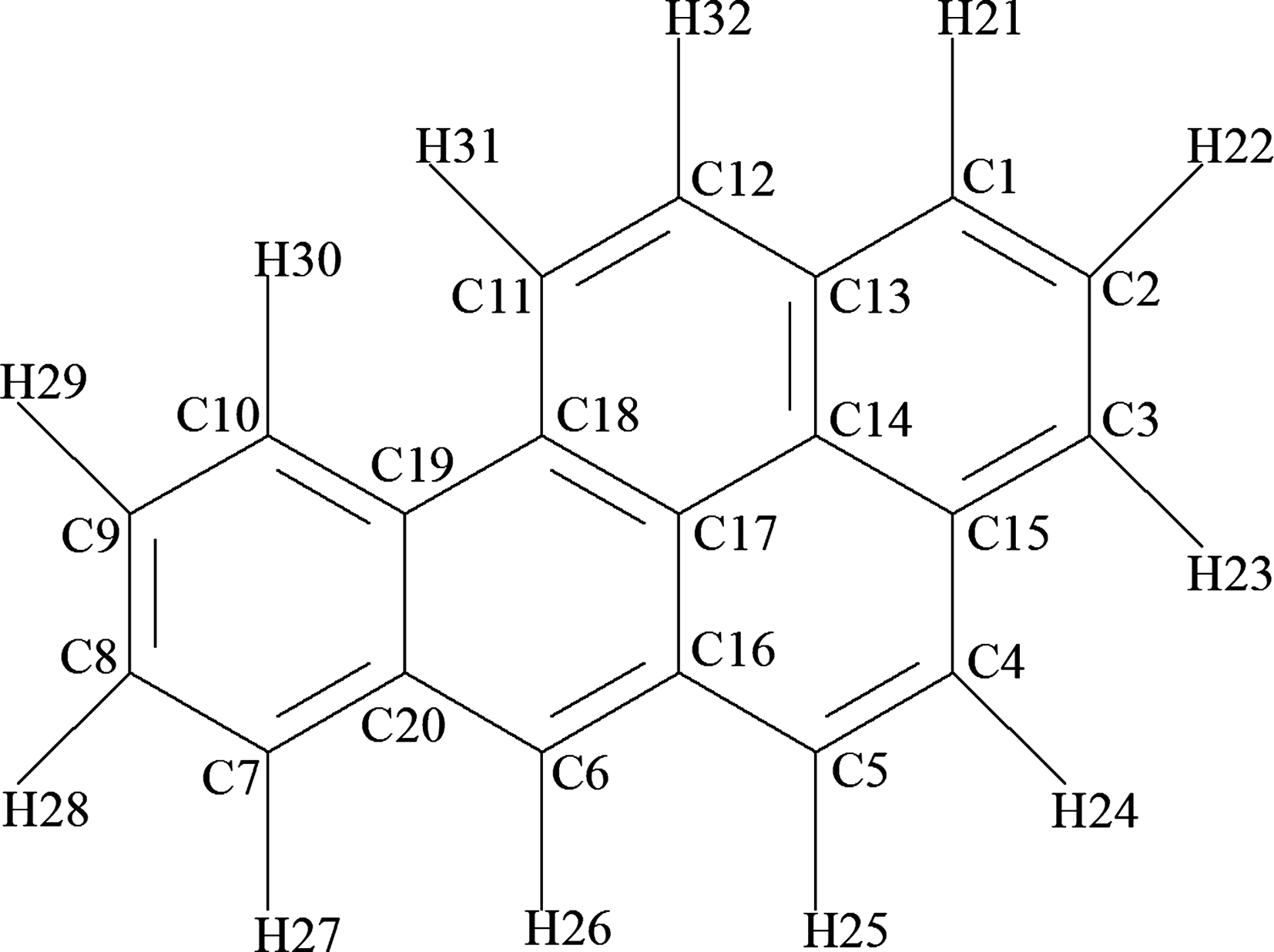
Chemical structure of BaP molecule, and carbon and hydrogen atom distribution.
Conclusion
Based on the experiments conducted on ClO2 for oxidizing BaP in water, the conclusion can be drawn as follows. ClO2 can remove BaP in water effectively under ordinary potable water treatment conditions. The main factors are ClO2 dosage and reaction time. The reaction between BaP and ClO2 is characterized as the second order with the reaction rate of 7.795 L/(mol·s). It can proceed so fast, such that above 90% BaP can be removed in 10 min. The end products of BaP-ClO2 reaction are nontoxic quinone derivatives. This study proposed ClO2 as an effective alternative to eliminate BaP for the general water treatment. Future work will focus on scaling up the system on BaP removal by ClO2 in potable water treatment processes.
Footnotes
Acknowledgments
This study was funded by the National Hi-Tech Research and Development Program of China (2006AA06Z309) and State Key Lab of Urban Water Resource and Environment (HIT) (No. ES200903).
Author Disclosure Statement
The authors declare that no competing financial conflicts exist.