




Abstract
Abstract
Degradation of the azo dye reactive brilliant red K-2BP (K-2BP) by ultrasound radiation combined with zero-valent iron (US-Fe0) was studied, and the mechanism of Fe0 enhancement for K-2BP degradation was investigated. By determining the of •OH radicals and Fe2+ in the US-Fe0 system, it was verified that the synergetic effect between sonication and Fe0 was mainly due to the increase in •OH radicals concentration resulting from Fenton's reaction. Degradation of K-2BP by the US-Fe0 process followed a pseudo-first-order kinetics, and the degradation rate constants were 3.04×10⁻³ min−1 and 3.88×10⁻² min−1 for US alone and US-Fe0 process, respectively. Degradation rate of K-2BP increased with increase in Fe0 dosage and decreased with increase in the medium pH, reaction temperature, and dye initial concentration. The UV-Vis spectra of K-2BP at different sonication times showed that both azo and aromatic groups were destroyed during degradation in the US-Fe0 system.
Introduction
Sonolysis was widely used to treat hazardous compounds in water, including ammonia (Xu et al., 2005), volatile organic compounds (Guivarch et al., 2003; Brik et al., 2004), herbicides (Vlyssides et al., 1999), and dyes (Novotny et al., 2004; Wang et al., 2008a) during the past two decades. Although most of the organic pollutants can be degraded by ultrasonic irradiation, the degradation rates are rather slow in practical applications. Many different ways have been suggested to increase the decomposition efficiency of the process, mainly by intensifying the cavitation phenomena. The use of simple additives such as ozone (Gültekin and Ince, 2006), titanium dioxide (Priya and Madras, 2006; Wang et al., 2008b), graphite (Li et al., 2007), and carbon tetrachloride (Gültekin and Ince, 2006; Gültekin et al., 2009; Merouani et al., 2010; Wang et al., 2007) in the sonolytic system to increase the energy efficiency of the process has also been widely studied.
During the last decade, zero-valent iron (Fe0) was used to destroy hazardous organic compounds in water. This method is cost-effective and was widely used to treat wastewaters containing chlorinated aliphatics (Shin et al., 2008), chlorinated aromatics (Hou et al., 2010), and organic dyes (Deng et al., 2000). As iron effectively degrades hazardous compounds, the combination of sonication and Fe0 (US-Fe0) should be a suitable method to increase the efficiency of degradation process. The sonolysis of hazardous compounds such as nitrobenzene (Hung et al., 2000), chlorophenols (Dai et al., 2005, 2006), and organic dyes (Liu et al., 2007; Lin et al., 2008) was found to substantially accelerate when enhanced with Fe0.
In an attempt to increase the degradation efficiency of the US-Fe0 process, the reaction kinetics and the effects of operating parameters on the degradation rates have been investigated in detail. However, there are only limited studies on the synergetic effect between sonication and iron for pollutants removal, as these reactions in the heterogeneous system are very complicated. In this work, we studied the degradation of reactive brilliant red K-2BP (K-2BP) in aqueous solution by the US-Fe0 process, and also investigated the effects of operating parameters on the degradation rates of K-2BP. We further assessed the role of •OH radicals in degradation, and determined the concentrations of •OH radicals and Fe2+ in the US-Fe0 system.
Materials and Methods
Reagents
Azo dye reactive brilliant red K-2BP (Fig. 1) was obtained from Jinhua Chemical Works (Zhejiang, China). Iron powder (200 mesh) was obtained from Tianjin Guangcheng Chemical Reagents Co. (Tianjin, China). Terephthalic acid (TA) and o-phenanthroline were purchased from Alfa Aesar Chemical Company (Tiabjin, China). Sodium hydroxide (NaOH) and hydrochloric acid (HCl) (purchased from Beijing Research Chemicals Ltd., Beijing, China) were of analytical grade and were used without further purification. Laboratory-grade water was prepared using a Milli-Q pure water system.
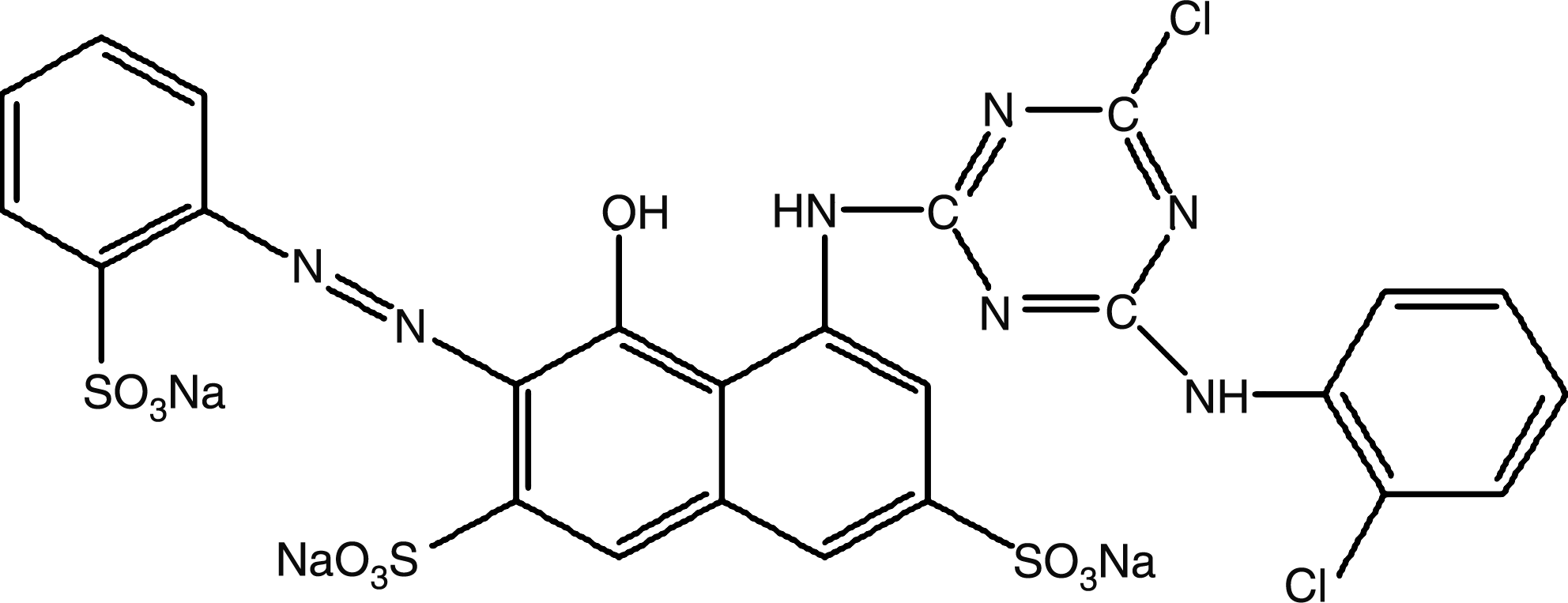
Molecular structure of reactive brilliant red K-2BP.
Experimental procedures
Sonication was performed under air atmosphere using a 20 kHz ultrasonic generator (Model GA 92-II DB, Ningbo Xinzhi Technology Co., Ningbo, China) equipped with a titanium probe (8 mm diameter). The ultrasonic generator was operated at 200 W. Experiments were conducted in a 100 mL cylindrical water-jacketed glass reactor. Typically, 50 mL of dye solution (concentration 20 mg/L) was added into the jacketed reactor. Prior to sonication, the pH values of the solution were adjusted to a desired level using diluted HCl or NaOH, and then the appropriate amount of iron power was added. The titanium probe was immersed into the solution to a depth of about 10 mm. Sonication was administered in pulses with a 50% duty cycle. A constant temperature of 20±1°C was maintained by circulating water. At different time intervals, 2 mL of sample was withdrawn from the reactor using a syringe and filtered through 0.45 μm membranes to determine the concentration of the remaining dye.
Analytical methods
To determine the concentration of the remaining dye, absorbance of the sample was measured at a wavelength of 536 nm on a UV-Vis spectrophotometer (UV-2450 UV-Vis spectrometer, Perkin Elmer, Shanghai, China). The absorption value was converted into concentration using the standard curve for K-2BP according to Beer-Lambert law. The degradation ratio of K-2BP was calculated as follows:
where R% is the degradation ratio of the dye, and C0 and Ct are the initial and remaining concentrations of K-2BP, respectively.
The concentrations of Fe2+ and Fe3+ were determined by phenanthroline spectrophotometry method (Liu et al., 2005). The concentration of •OH radicals was detected by the photoluminescence technique using TA as a probe molecule (Barreto et al., 1995; Millington and Kirschenbaum, 2002). Experimental procedure was similar to that for the measurement of dye degradation except that the dye aqueous solution was replaced with 5×10⁻⁴ M TA aqueous solution containing 2×10⁻³ M NaOH. The photoluminescence spectra of the generated 2-hydroxyterephthalic acid (HTA) were measured at 425 nm on a Hitachi F-7000 fluorescence spectrophotometer excited by 315 nm light.
Results and Discussion
Synergetic effect between sonication and Fe0
The degradation of K-2BP in aqueous solution by using the US-Fe0 process was investigated. The degradation experiments were carried out with (1) US only, (2) Fe0 (100 mg) only, and (3) US-Fe0 process (100 mg Fe0), at a solution temperature of 20°C and pH 3.0. The results are shown in Fig. 2. There is an obvious synergetic effect between sonication and Fe0 for the degradation of K-2BP. The sonolysis efficiency of K-2BP was significantly enhanced by Fe0. After 60 min of degradation with the US-Fe0 process, about 90.5% of K-2BP was removed, while the removal efficiency of K-2BP by Fe0 and US were only 38.3% and 17.0%, respectively.
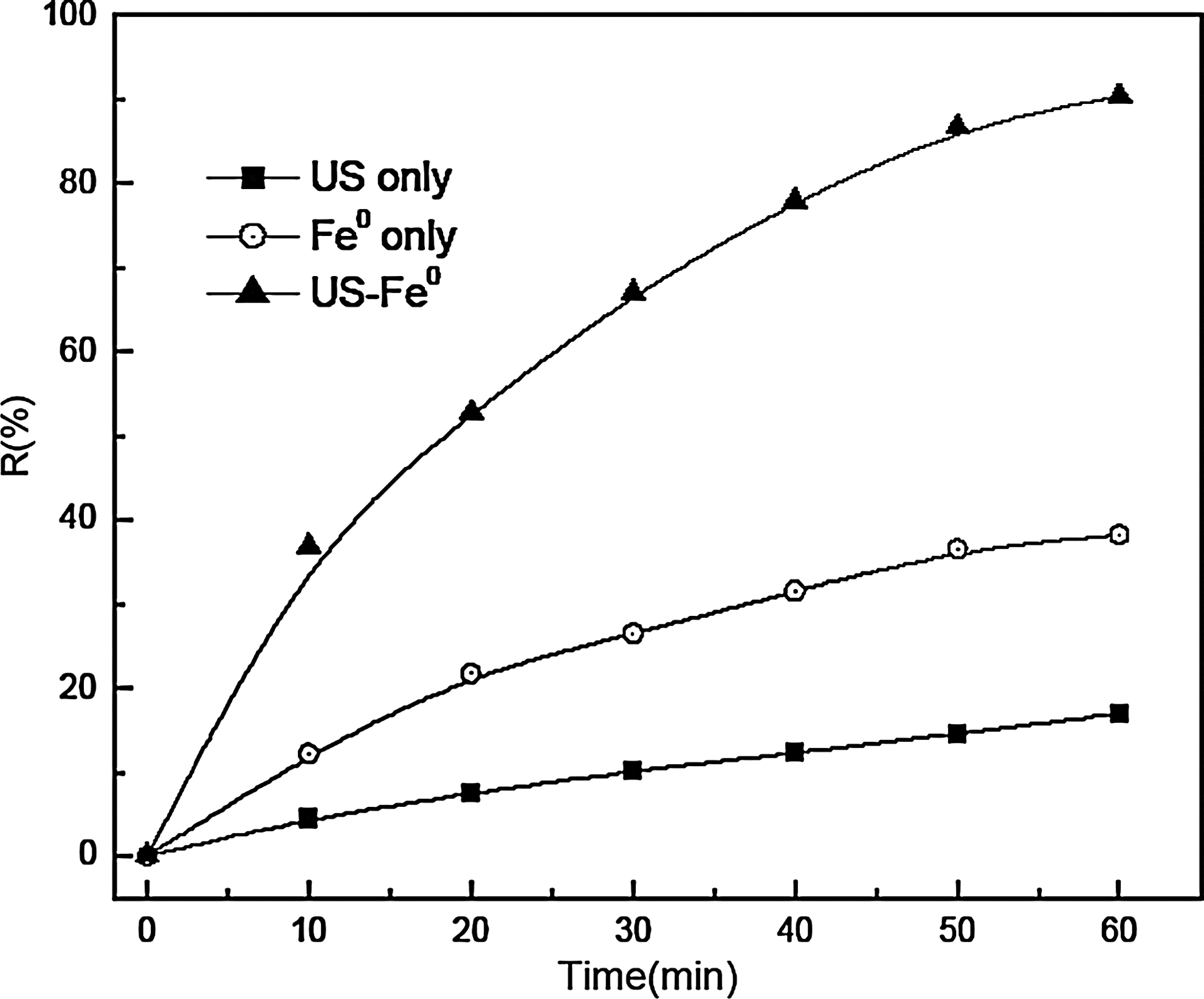
Degradation of brilliant red K-2BP under different conditions. Dye concentration 20 mg/L, Fe0 100 mg, US power 200 W, temperature 20°C, and pH 3.0.
The results also show that the concentration of K-2BP decreased exponentially with reaction time in all three processes. The degradation rates can be expressed by the following equation:
where C0 and Ct are the initial and remaining concentrations of K-2BP, respectively; k is the degradation rate constant; and t is the degradation time. Figure 3 indicates that the degradation of K-2BP follows a pseudo-first-order kinetics. The degradation rate constants were 3.04×10⁻³ min−1, 7.96×10⁻³ min−1, and 3.88×10⁻² min−1 with regression coefficients 0.9961, 0.9828, and 0.9948 for US only, Fe0 only, and US-Fe0 process, respectively (dye concentration 20 mg/L, temperature 20°C, and pH 3.0). The degradation rate constant for US-Fe0 process was 12.8 and 4.9 times higher compared to that for US and Fe0, respectively.
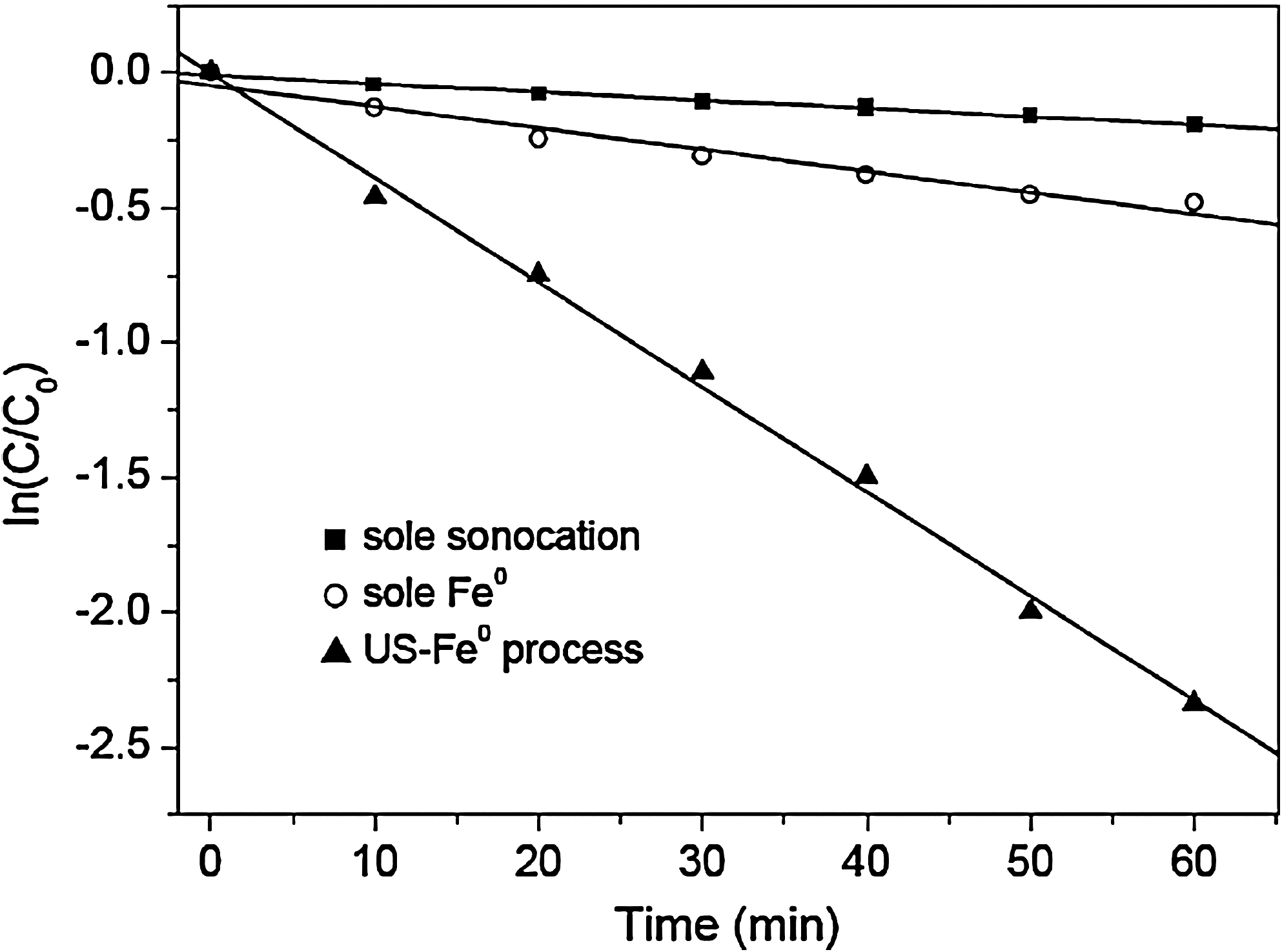
Degradation kinetics of brilliant red K-2BP with US only and US-Fe0. Dye concentration 20 mg/L, Fe0 100 mg, US power 200 W, temperature 20°C, and pH 3.0.
Mechanism of Fe0 enhancement
The synergetic effect between sonication and Fe0 is mainly due to Fenton's reaction (Lin et al., 2008; Pradhan and Gogate, 2010). Under the present experimental conditions, Fe0 was corroded and Fe (II) was generated under ultrasonic irradiation. The partial recombination of •OH radicals produced by sonolysis of water results in the formation of hydrogen peroxide (H2O2) in the US system. The mechanism can be described as follows:
The reactions above imply that the concentration of •OH radicals could remarkably increase in the US-Fe0 system compared to US alone. To verify the presence of Fenton's reaction in the US–Fe0 system, the concentrations of Fe2+, Fe3+, and •OH radicals were determined. The concentrations of Fe2+ and Fe3+ in US-Fe0 system increased with increase in Fe0 addition and prolongation of sonication time (Fig. 4).

Plot of concentrations of Fe2+ and Fe3+ versus time in US-Fe0 system. Dye concentration 20 mg/L, US power 200 W, temperature 20°C, and pH 3.0.
Figure 5 shows a comparison of the induced photoluminescence intensity at 425 nm under different conditions. TA with Fe0 without sonication is nonfluorescent. However, the fluorescence spectra were displayed under ultrasonic irradiation. The fluorescence intensities with Fe0 or without Fe0 are both proportional to the sonication time. This means that •OH radicals are generated continuously and the concentration of HTA increases over the experimental period. The fluorescence intensity of HTA with Fe0 is much higher than that without Fe0 throughout the experiment. This means that the presence of Fe0 can remarkably accelerate the production of •OH radicals. So the ultrasonic degradation of K-2BP can be enhanced significantly with Fe0.
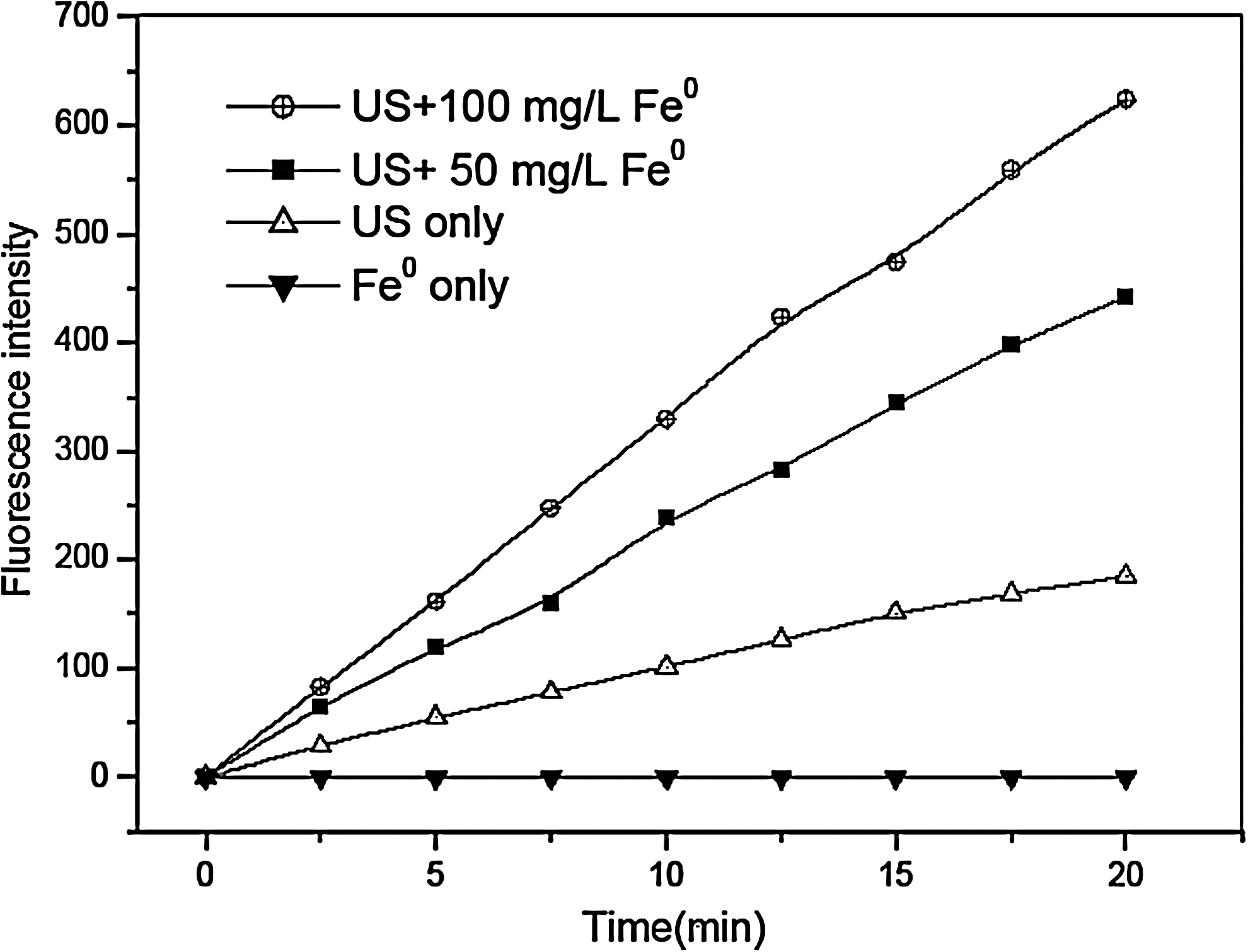
Plot of •OH radical yield versus time under different conditions. US power 200 W, temperature 20°C, and pH 3.0.
Effect of Fe0 addition
To investigate the effect of Fe0 addition on the ultrasonic degradation of K-2BP, a series of experiments were conducted with different concentrations of Fe0 (0 mg to 200 mg) in 50 mL dye aqueous solution at a concentration of 20 mg/L, temperature 20°C, power 200 W, and pH 3.0. The results show that the degradation rates of K-2BP in aqueous solution increased with increasing Fe0 addition (Fig. 6). The degradation rate constants were 2.14×10⁻² min−1, 3.88×10⁻² min−1, and 4.41×10⁻² min−1 with Fe0 additions of 50 mg, 100 mg, and 200 mg, respectively. This is because more Fe2+ and •OH radicals were produced with increasing Fe0 addition.
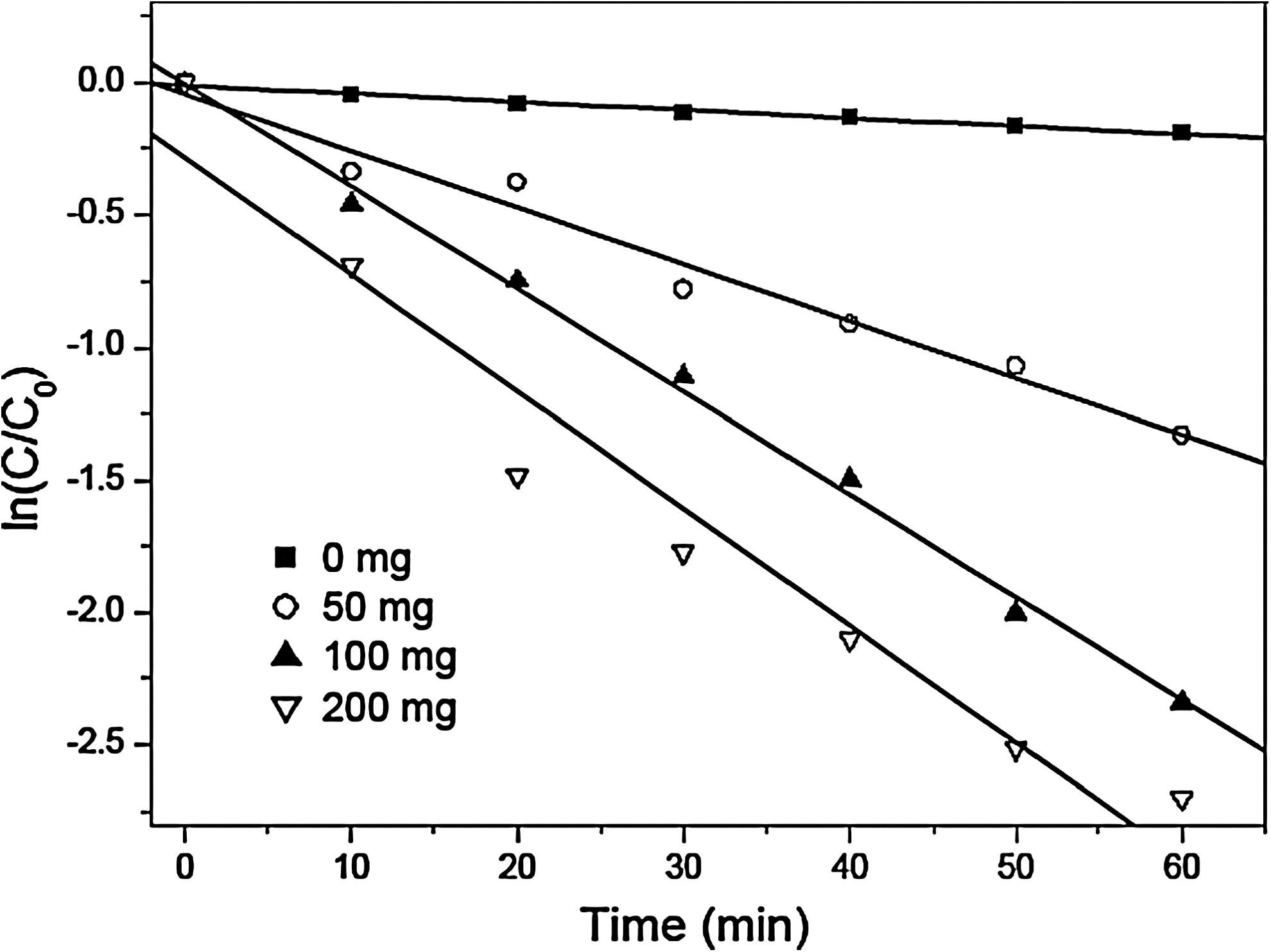
Effect of Fe0 addition on the degradation of reactive brilliant red K-2BP in US-Fe0 process. Dye concentration 20 mg/L, US power 200 W, temperature 20°C, and pH 3.0.
Effect of initial pH value
The pH value of the solution is an important parameter in the degradation of pollutants by the US-Fe0 process The pH value controls the concentration of Fe2+ and the production rate of •OH. The effect of initial pH value of the aqueous solution on the degradation of K-2BP was investigated at different pH in the range of 2.0–10.0 with dye initial concentration 20 mg/L, temperature 20°C, power 200 W, and 100 mg Fe0 addition. The results are shown in Fig. 7. Degradation rates of K-2BP were higher in acidic solution (pH value 2.0–3.0), and the rates decreased with increase in the initial pH values. These results are consistent with those from previous studies (Liu et al., 2007; Lin et al., 2008). These observations relate to three reasons: (1) the concentration of Fe2+ increases in acidic solution due to the reaction of Fe0 with H+, (2) the optimal pH value for Fenton's reaction is 2.0–3.0 (Kuo, 1992; Kiwi et al., 2000), and (3) the oxidization potential of •OH radicals is higher in acidic medium than in basic medium.

Effect of medium pH on the degradation of reactive brilliant red K-2BP in US-Fe0 process. Dye concentration 20 mg/L, Fe0 100 mg, US power 200 W, and temperature 20°C.
Effect of ultrasonic power
Figure 8 shows the effect of ultrasonic power on the degradation of K-2BP (dye initial concentration 20 mg/L, 100 mg Fe0 addition, pH 3.0, and temperature 20°C). Generally, high intensity of ultrasound would accelerate the sonochemical reactions. Increase in ultrasonic power from 100 W to 400 W led to an increase in degradation ratio, but further increase from 400 W to 500 W slightly reduced the degradation ratio. This result was consistent with previous studies (Lim et al., 2007; Guo et al., 2010). When ultrasonic power increases, more energy is provided to the reaction system to accelerate the cavitation effect. However, when ultrasonic intensity exceeds the optimal value, the scattering of sound waves by the large number of gas bubbles present in the solution causes less energy to focus on the dye solution. It is also possible that the large number of cavities present coalesce to form a large cavity, which collapses less violently. Thus, with increase in the operating intensity, the utilization efficiency of ultrasound decreases and the degradation rate of the dye also decreases.
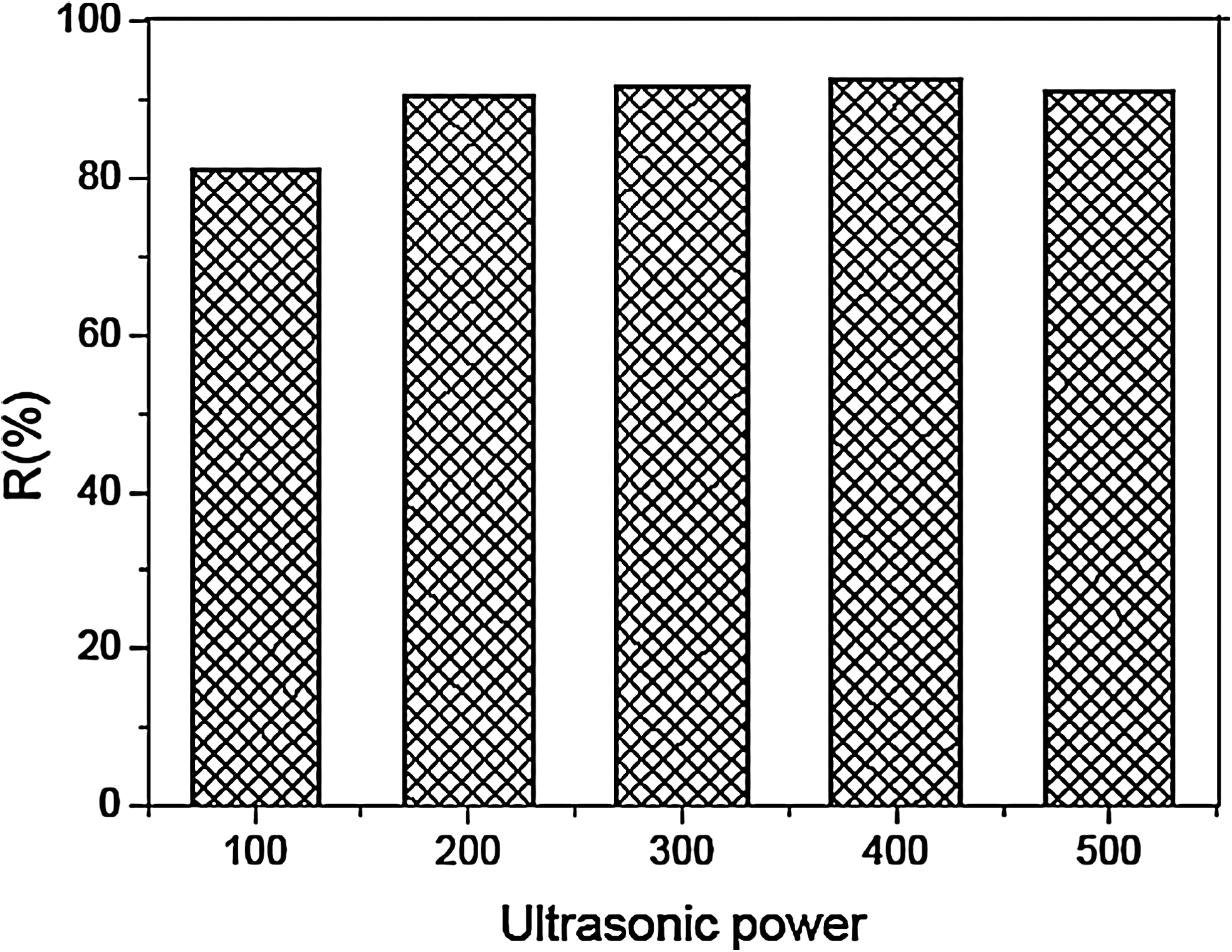
Effect of ultrasonic power on the degradation of reactive brilliant red K-2BP in US-Fe0 process. Dye concentration 20 mg/L, Fe0 100 mg, temperature 20°C, and pH 3.0.
Effect of dye initial concentration
Figure 9 shows the effect of dye initial concentration on the degradation ratio of K-2BP (Fe0 100 mg, temperature 20°C, power 200 W, and pH 3.0).

Effect of dye initial concentration on the degradation of reactive brilliant red K-2BP in US-Fe0 process. Fe0 100 mg, US power 200 W, temperature 20°C, and pH 3.0.
The degradation rates of K-2BP were 4.68×10⁻² min−1, 3.88×10⁻² min−1, 2.43×10⁻² min−1, and 1.95×10⁻² min−1, when the dye initial concentrations were 10, 20, 30, and 40 mg/L, respectively. This decrease in ultrasonic degradation rate with increasing initial concentration is a common observation (Kim and Huang, 2005; Priya and Madras, 2006). When the reaction conditions are kept constant, the amount of •OH radicals produced in the reaction system would be constant. However, the total amount of dye in aqueous solution increases with increasing dye initial concentration. So the degradation ratio must be reduced and, consequently, the degradation rate constants decrease. On the other hand, decreasing the dye concentration will provide an effect similar to relatively increasing the Fe0 addition. The increased Fe0/dye ratio favors the possibility of a dye molecule being attacked by the oxidizing species. Thus, decreasing the dye initial concentration can accelerate the sonolysis of K-2BP.
Effect of reaction temperature
Figure 10 shows the effect of reaction temperature on the degradation of K-2BP (dye concentration 20 mg/L, Fe0 100 mg, pH 3.0, and US power 200 W). The degradation rates of K-2BP decreased with increasing reaction temperature in the range of temperatures used in this study. One reason is that the formation of cavitation bubbles was retarded by steam with increasing temperature and, therefore, the number of bubbles decreased. Another reason is the weakening of cavitation in the cavitation bubbles by steam. Therefore, the degradation ratios of reactive brilliant red K-2BP decreased with increasing the solution temperature.
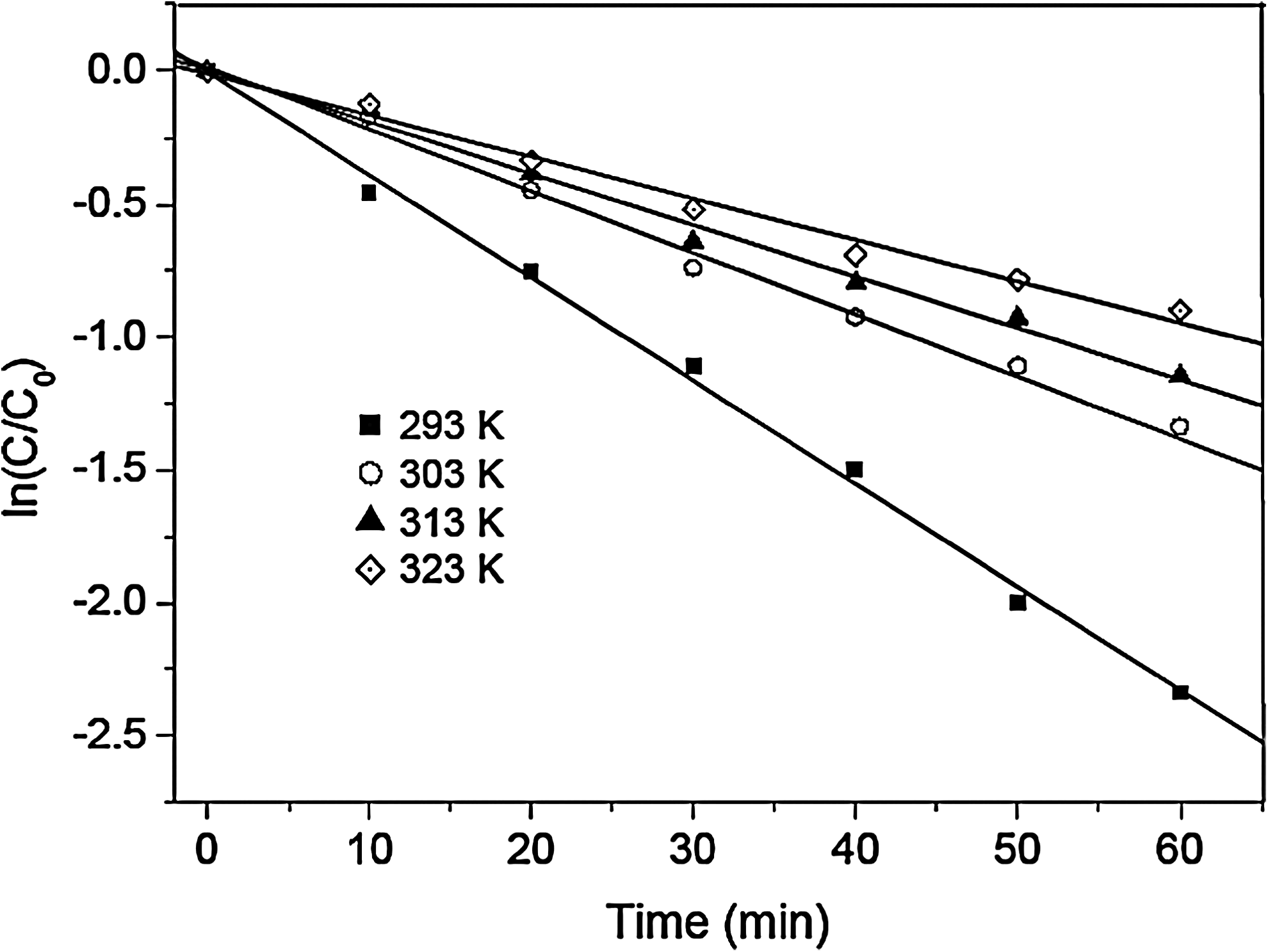
Effect of solution temperature on the degradation of reactive brilliant red K-2BP in US-Fe0 process. Dye concentration 20 mg/L, Fe0 100 mg, US power 200 W, and pH 3.0.
Degradation mechanism of K-2BP
The degradation mechanism of K-2BP in the US-Fe0 process was investigated by UV-Vis spectrum at different sonication times. The structures of K-2BP can be embodied on the UV-Vis absorption spectra. As shown in Fig. 11, K-2BP has four absorbance peaks, at 238 nm, 280 nm, 330 nm, and 536 nm. The band in the visible region is attributed to the chromophore-containing azo linkage of the dye molecules. The peaks in the ultraviolet (UV) region (at 238 nm, 280 nm, and 330 nm) are attributed to the superimposition of the absorption of phenyl, naphthyl, and triazin groups (Zheng, 2009). As seen from the figure, the characteristic absorption of K-2BP at 536 nm declined rapidly, but the absorbency in the UV region increased during the first 30 min and then decreased remarkably. This suggests that the conjugate structure of K-2BP was first destroyed and some intermediate products containing naphthalene and benzene rings were formed at the initial stage of the degradation reaction. So the color of the dye solution disappeared quickly, but the absorbency in the UV region increased. After 30 min, the intermediates were further degraded and the UV absorbency also decreased. The dramatic changes in UV spectra correspond to the disappearance of both azo and aromatic groups during degradation.
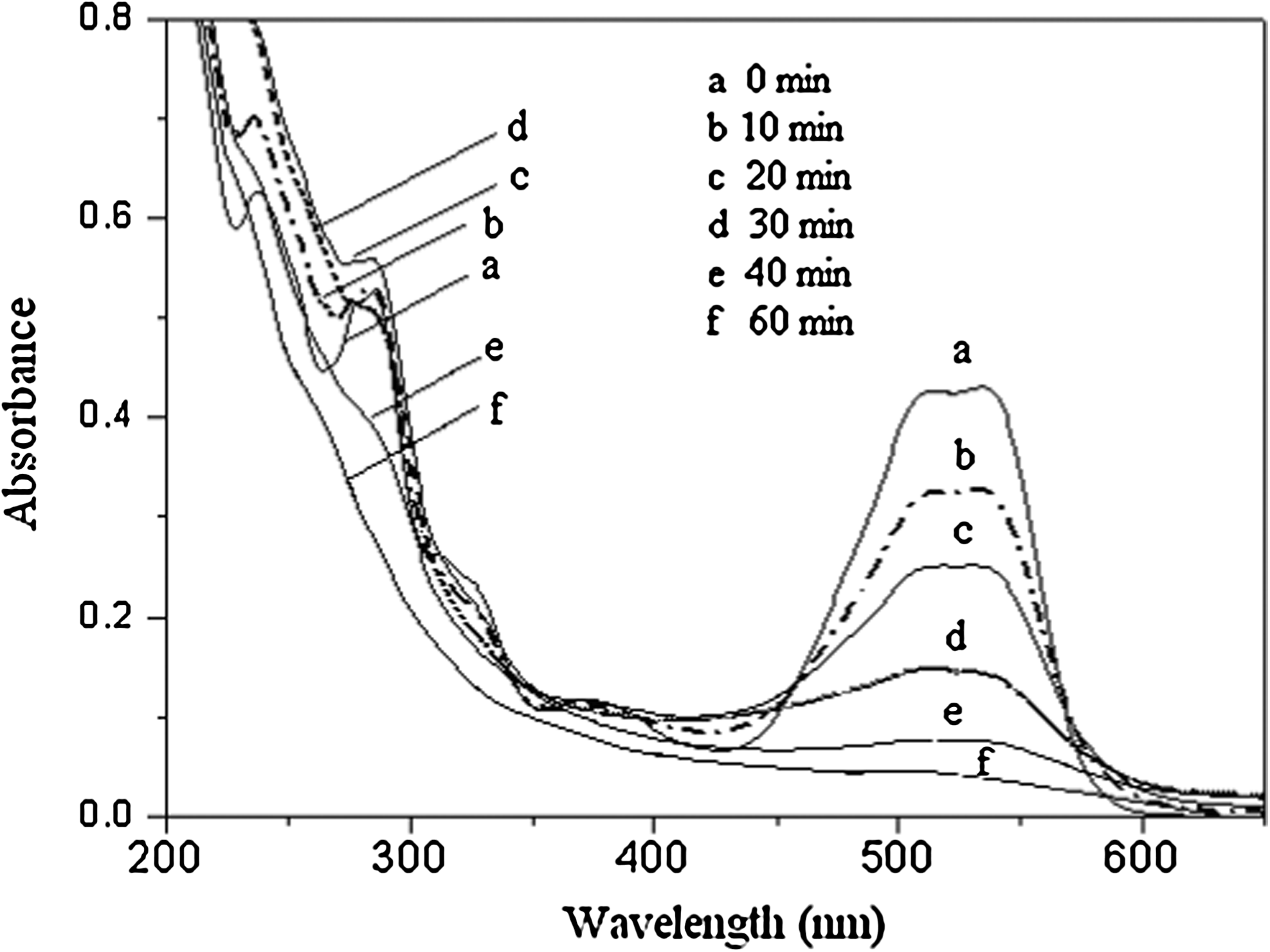
The UV-Vis spectra of reactive brilliant red K-2BP aqueous solution in US-Fe0 process at different sonication times.
Summary
This study shows that an obvious synergistic effect is achieved by combining ultrasound radiation with Fe0 for the degradation of K-2BP. The concentrations of •OH radicals in US and US-Fe0 were determined using TA as a fluorescent probe, and the concentration of Fe2+ was determined by phenanthroline spectrophotometry method. It was verified that the synergetic effect is mainly due to the increase in •OH radicals concentration from Fenton's reaction in the US-Fe0 process. The degradation of K-2BP followed a pseudo-first-order kinetics. The degradation rates increased with increase in Fe0 dosage and decreased with increase in the solution pH, reaction temperature, and dye initial concentrations. The UV-Vis spectra of K-2BP at different sonication times showed that the conjugate structure of K-2BP was first destroyed to produce some colorless intermediate products, and that the colorless intermediates were then further degraded. Significant mineralization of K-2BP was achieved in the US-Fe0 process.
Footnotes
Acknowledgments
We thank the Shandong Natural Science Foundation for their financial support (No. Y2008B14).
Author Disclosure Statement
No competing financial interests exist.