




Abstract
Abstract
This research aimed at improving the effectiveness of arsenic (As) (III,V) adsorption to iron-oxide-coated sand by first using a manganese sand carrier instead of a quartz sand carrier. Although both adsorbents had similar adsorption rates of As(III,V), the maximum adsorption capacities (qm) of As(III) (2.216 mg/g) and As(V) (5.452 mg/g) by iron-oxide-coated manganese sand (IOCMS) were nearly 3 and 10 times higher than those by iron-oxide-coated quartz sand (IOCQS), respectively. Based on the analysis of scanning electron microscope and total Brunauer-Emmett-Teller surface area, IOCMS exhibited a rougher surface and a larger surface area (9.18 m2/g) than IOCQS (1.03 m2/g). Coated Fe content in IOCMS and IOCQS were 48.7 and 10.2 mg/g, respectively. Larger Brunauer-Emmett-Teller value and Fe content may be responsible for the greater adsorption capacity of IOCMS. Results of X-ray diffraction and X-ray photoelectron spectroscopy analysis confirmed the existence of Fe2O3, MnO, MnO2 and FeOOH on the surface of IOCMS. In addition, IOCQS surfaces only contained SiO2 and FeOOH. X-ray photoelectron spectroscopy results indicated that the MnO2 in IOCMS did not oxidize As(III) in the adsorption process. Moreover, the optimum pH for As(III) removal by IOCMS was about pH 7. In contrast, the As(V) removal efficiency by IOCMS decreased with pH, increasing from pH 4 to 10. Further, the influences of anions on the removal of both As(III) and As(V) by IOCMS followed the same sequence of phosphate>silicate>carbonate. In conclusion, IOCMS showed a considerable potential to treat As-polluted water in engineering application.
Introduction
Iron-oxide-coated sand (IOCS) can be used as filter media in fixed bed reactors to achieve the simultaneous removal of hazardous materials and tiny particles during the filtration process (Lai and Chen, 2001). Due to the potential for engineering application, it has been used to remove arsenite [As(III)] and arsenate [As(V)]. Gupta et al. (2005) reported the maximum adsorption capacity of As(III) to be about 0.028 mg/g for IOCS. Hsu et al. (2008b) used IOCS to remove As(V), As(III), and mixed As at pH 5, and the corresponding maximum adsorption capacities were determined to be 0.012, 0.013, and 0.034 mg/g, respectively. Ramakrishna et al. (2006) reported the maximum adsorption capacities of IOCS toward As(V) and As(III) to be 0.099 and 0.271 mg/g. It was indicated that IOCS could remove As, but its engineering application was inhibited by the low adsorption capacity and the frequent regeneration requirement.
To improve the As adsorption capacity of IOCS, preparation methods should be optimized. First, the coating process could impact the adsorptive behaviors of As by IOCS. Khare et al. (2008) prepared several kinds of IOCS by different procedures, namely dry, wet, and reactive methods, demonstrating the reverse trends involved in As removal. Guo et al. (2007) reported the different removal behaviors of siderite-coated quartz sand (QS) and hematite-coated QS toward As. Ramakrishna et al. (2006) studied the effects of preparation conditions on the coated amount of iron oxide for IOCS and the corresponding As removal efficiency. Distinct surface characteristics of different carriers may also play an important role in the As adsorption capacity of IOCS, such as Brunauer-Emmett-Teller (BET) surface area, micro-porous surface structures, point-of-zero charge, and the affinity toward iron oxide. It may also be useful to enhance the As removal capacity of IOCS by the selection of a different filter media as the carrier material instead of QS. At present, very few studies have focused on this issue with regard to As removal by IOCS.
Manganese sand (MS) is made of natural manganese ores and processed by water polishing, grinding, drying, magnetically screening, sieving, and dedusting. It is also known to contain no substances classified as harmful to people or the environment. Due to its high mechanical strength, active surface property, large specific surface area, and porosity, it is widely used as water treatment filter media in China. Compared with other common filter media materials, MS offers several advantages such as a great amount of pollutant entrapment, less water head loss in the filter bed, lower consumption of backwash water, and a longer service life. Based on the above advantages and the wide application of MS, it was employed in this study for the preparation of iron-oxide-coated manganese sand (IOCMS) to (1) compare the surface characteristics of IOCMS and the reported iron-oxide-coated quartz sand (IOCQS); (2) compare the As [i.e., As(III) and As(V)] adsorption capabilities between IOCMS and IOCQS; (3) investigate the effects of pH and interfering anions on As removal efficiency by IOCMS to provide valuable parameters on its engineering application; and (4) illustrate the mechanism involved in the As(III) adsorption behaviors of IOCMS.
Experimental Protocols
Materials
All chemicals were analytical grade and purchased from Beijing Chemical Co. (Beijing, China), and all solutions were prepared with deionized water. Ferric chloride (FeCl3) was used in the coating process. The As(III) and As(V) stock solutions were prepared with sodium arsenite (NaAsO2) and sodium arsenate (Na3AsO4•12H2O). And, sodium nitrite (NaNO3) was used to maintain a constant ion strength (0.01 M NaNO3) in solutions. Additionally, sodium hydroxide (NaOH) and hydrochloric acid (HCl) were used to adjust pH of solutions.
Preparation of IOCQS and IOCMS
To prepare IOCQS and IOCMS, industrial-grade QS and MS were sieved with particle sizes from 0.3 to 0.5 mm. Before coating, both types of sand were washed and soaked in 0.1 M HCl solution for 12 h, and then subsequently rinsed with deionized water until the pH of the washing water was close to 7.0. After that, they were dried in an oven at 110°C to prepare for coating. The iron-oxide-coating method was similar to the optimum method described by Ramakrishna et al. (2006) for coating iron oxide onto QS. In the coating process, the treated sands were dipped in 1 M FeCl3 solution for 6 h, which had been fixed to pH 2 with 5 M NaOH solution. Then, the residual coating solution was poured, and the sands were air dried for 12 h followed by heating in the oven (110°C) for 3 h. The coated sands were rinsed with deionized water until the washing water became clear and placed in the oven (110°C) for 3 h drying again. Lastly, the dried IOCQS and IOCMS were sieved to a uniform size of 0.3–0.6 mm and stored in polyethylene bottles.
Batch adsorption experiments
All experiments were conducted at (25°C±0.1°C) on a mechanical orbit shaker at 130 rpm for 24 h. For kinetics analyses, 5 g IOCMS and IOCQS were added into 1,000 mL of 1 mg/L As(III) solution or 5 mg/L As(V), respectively. The solution contained an ionic strength of 0.01 M NaNO3 at pH 7. Samples of the solution were taken at different time intervals and filtered with 0.45 μm polycarbonate filter membrane.
In the sorption isotherm study, 0.5 g IOCMS and IOCQS were, respectively, added into 100 mL of As(III) solution or As(V) solution with different initial As concentrations [As(III): from 0.5 mg/L to 25 mg/L, and As(V): from 1 mg/L to 40 mg/L] and the same ionic strength of 0.01 M NaNO3 at pH 7. Samples were taken after 24 h of contact with membrane filtration.
In the pH effect experiment, 100 mL of 1 mg/L As(III) or 5 mg/L As(V) solutions with an ionic strength of 0.01 M NaNO3 at various initial pH (4.0–10.0) were prepared in 150 mL conical flasks. The solutions were measured and adjusted accordingly during the experiments by 0.1 M HCl and 0.1 M NaOH. To test the effects of interfering anions, 100 mL of 1 mg/L As(III) or 5 mg/L As(V) solutions with 3 different anions (carbonate, silicate, and phosphate) were prepared in conical flasks. The anion concentrations ranged from 1 to 10 mM, and the solution pH and ionic strength were controlled at pH 7 and 0.01 M NaNO3. Other procedures were the same as those in the above isotherm experiments.
Analytical methods and characterizations
Total As [As(tot)=As(III)+As(V)] and total iron (Fe(tot)) concentrations were determined using an ICP-OES (SCIEX Perkin Elmer Elan mode 5000). Before analysis, the aqueous samples were acidified with HNO3 in an amount of 1% and stored in acid-washed glassware vessels.
The surface area was measured by the BET method using the Micrometritics ASAP 2000 surface area analyzer. The samples were analyzed using a scanning electron microscope with an EDAX KEVEX level 4 (Hitachi S-3500N, Japan). Before the analysis, the samples were sputter coated (Quorum Polaron SC7620 Mini-sputter Coater) with gold/palladium (45 s) to reduce the charging effect in the microscope. An acid digestion method (Hseu et al., 2002) was applied to measure the amounts of iron oxide on IOCQS or IOCMS. X-ray diffraction (XRD) analysis was carried out on a D/Max-3A diffractometer (Japan) using Ni-filtered copper Kα1 radiation. The treated MS samples were ground into a fine powder using a mortar and pestle before analysis. The iron oxides needed for the XRD identification were prepared without sands (Stahl and James, 1991). X-ray photoelectron spectroscopy (XPS) data were collected on an ESCA-lab-220i-XL spectrometer (Shimadzu, Japan) with monochromatic Al Kα radiation (1,486.4 eV). Determination of the pH of zero point charge (pHPZC) followed the method reported by Bouzid et al. (2008) using a pH meter (HACH PHS-3B).
Theory
Kinetic model
To investigate the potential rate-controlling step of the As adsorption process by the two adsorbents, the kinetics data were fitted to the pseudo-first-order, pseudo-second-order, and intraparticle diffusion models, which are respectively presented as follows in equations (1)–(3):
where t is the contact time of adsorption experiments (h); qe (mg/g) and qt (mg/g) are, respectively, the adsorption capacities at equilibrium and at any time t; k1 (1/h), k2 (g/mg/h), and kid (mg/g/h0.5) are the rate constants for the pseudo-first-order, pseudo-second-order, and intraparticle diffusion model, respectively.
Equilibrium isotherm model
Adsorption isotherm provides insight into the adsorptive performances of different adsorbents toward As. To provide quantitative information, these data were respectively fitted by Langmuir and Freundlich isotherm models:
where Ce is the As concentration in the solution (mg/L), qe is the As concentration in the solid adsorbent (mg/g), qm is the maximum adsorption capacity (mg/g), KF is a constant related to the adsorption capacity (mg1-1/nL1/n/g), b is a constant related to the energy of adsorption (L/g), and n is a constant related to the energy of adsorption.
Results and Discussion
Characteristics of IOCQS and IOCMS
Particle morphology and surface charge
Figure 1 shows the scanning electron microscope images of uncoated QS, uncoated MS, IOCQS, and IOCMS. The uncoated QS showed relatively uniform surfaces with small cracks (Fig. 1a), and the iron oxide was not evenly coated onto the surface (Fig. 1c). Comparatively, the surfaces of MS showed an irregular morphology and a micro-porous structure (Fig. 1b), and the iron oxide coated on MS was more evenly distributed (Fig. 1d). The coating procedures increased the BET surface areas from 0.06 to 1.03 m2/g for IOCQS and from 2.36 to 9.18 m2/g for IOCMS. On the other hand, the iron content in MS was determined to be 25.9 mg/g, whereas QS contained no iron. The coating procedures increased the iron content from 0 to 10.2 mg/g for QS, and from 25.9 to 74.6 mg/g for MS, respectively. Based on all the above results, MS showed more favorable surface morphology for the coating of iron oxide than QS did. In addition, the pHPZC values of IOCQS and IOCMS were determined to be 5.6 and 7.5, respectively (Supplementary Fig. S1; Supplementary Data are available online at www.liebertonline.com/ees).
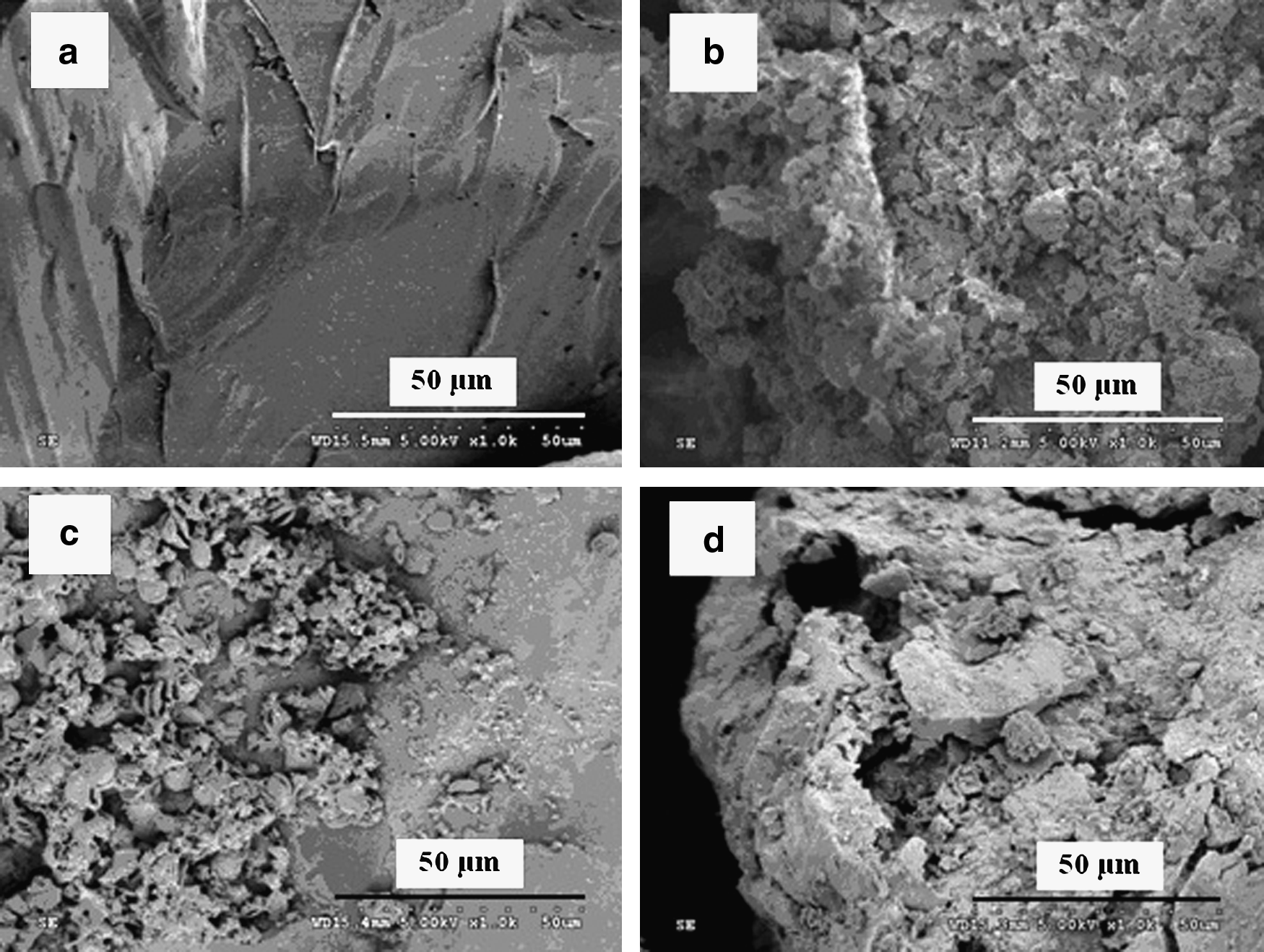
Scanning electron microscope of
XRD analysis
The XRD pattern of QS was reported to be identical and characteristic of quartz (SiO2) (Boujelben et al., 2009). Figure 2a indicates that MS powders exhibited a critically different XRD pattern, which contained main peaks of hematite (γ-Fe2O3), SiO2, and Mn2O3 (the mixture of MnO and MnO2). The iron oxide in this study was determined to be amorphous iron oxyhydroxide (FeOOH) (Fig. 2b). Different coating procedure resulted in different crystalline characteristics. Ramakrishna et al. (2006) indicated the presence of α-FeOOH within IOCQS at 110°C during coating process, whereas Lo et al. (1997) reported that ferrihydrite (Fe5HO8·4H2O) was the main species when preparing IOCQS at temperatures below 100°C.
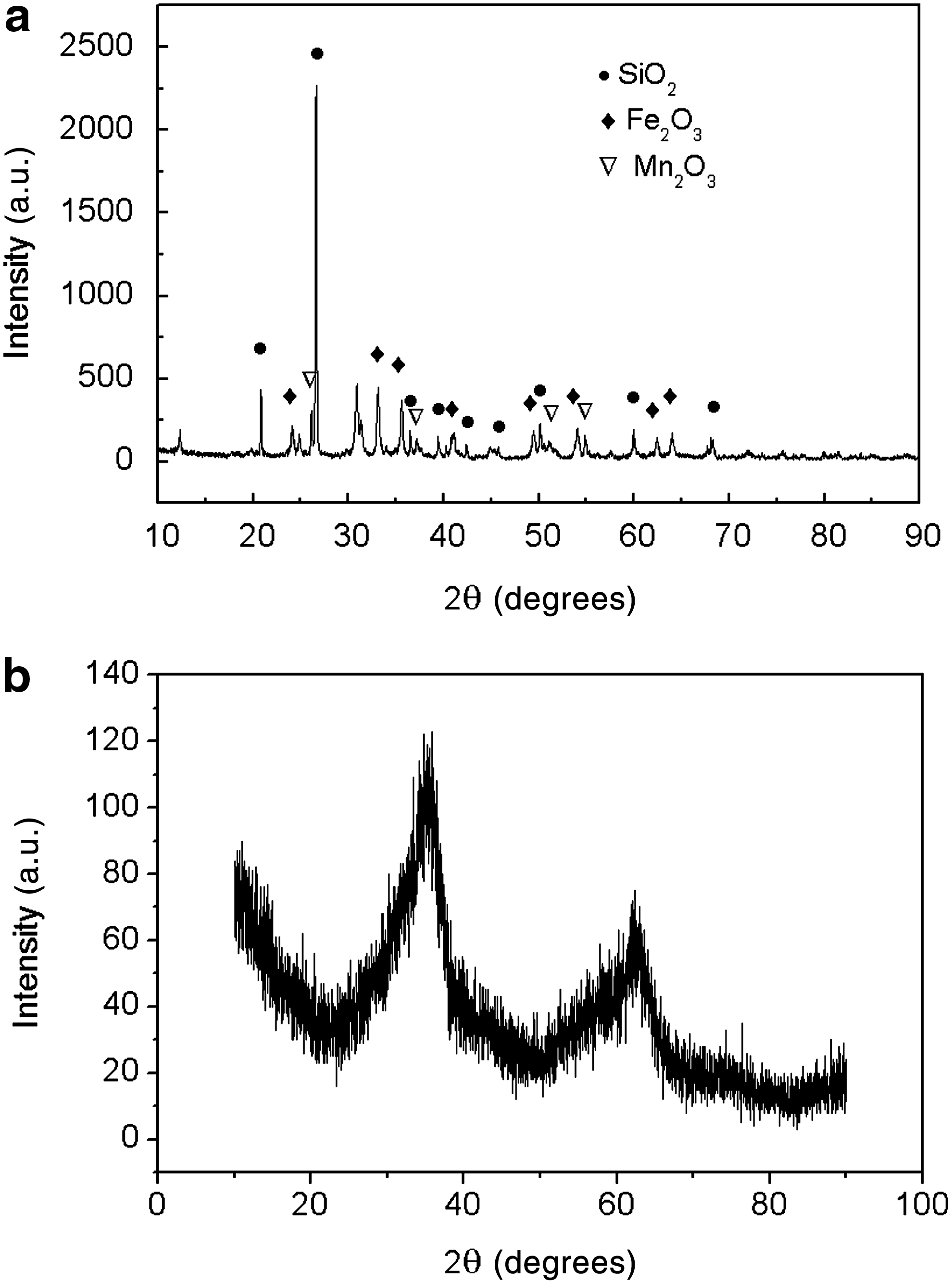
X-ray diffraction patterns for
Adsorption kinetics
Figure 3 illustrates the adsorption kinetics of As(III) and As(V) onto IOCQS and IOCMS, respectively. The contact time of 14 h was enough to achieve the adsorption equilibrium of As(III) and As(V) by IOCQS and IOCMS. This was in agreement with the results of reported IOCQS (Ramakrishna et al., 2006). The prolonged contact time of 24 h increased the adsorption capacity (qt) values of As(III) and As(V) by 4.2% and 2.5% for IOCMS, and by 10.4% and 3.4% for IOCQS. Wu et al. (2001) reported that the adsorption process includes three stages: instantaneous adsorption, gradual adsorption, and final equilibrium adsorption. In our study, the gradual adsorption stage ranged from about 1 h to 10 h in these four cases (Supplementary Fig. S2).
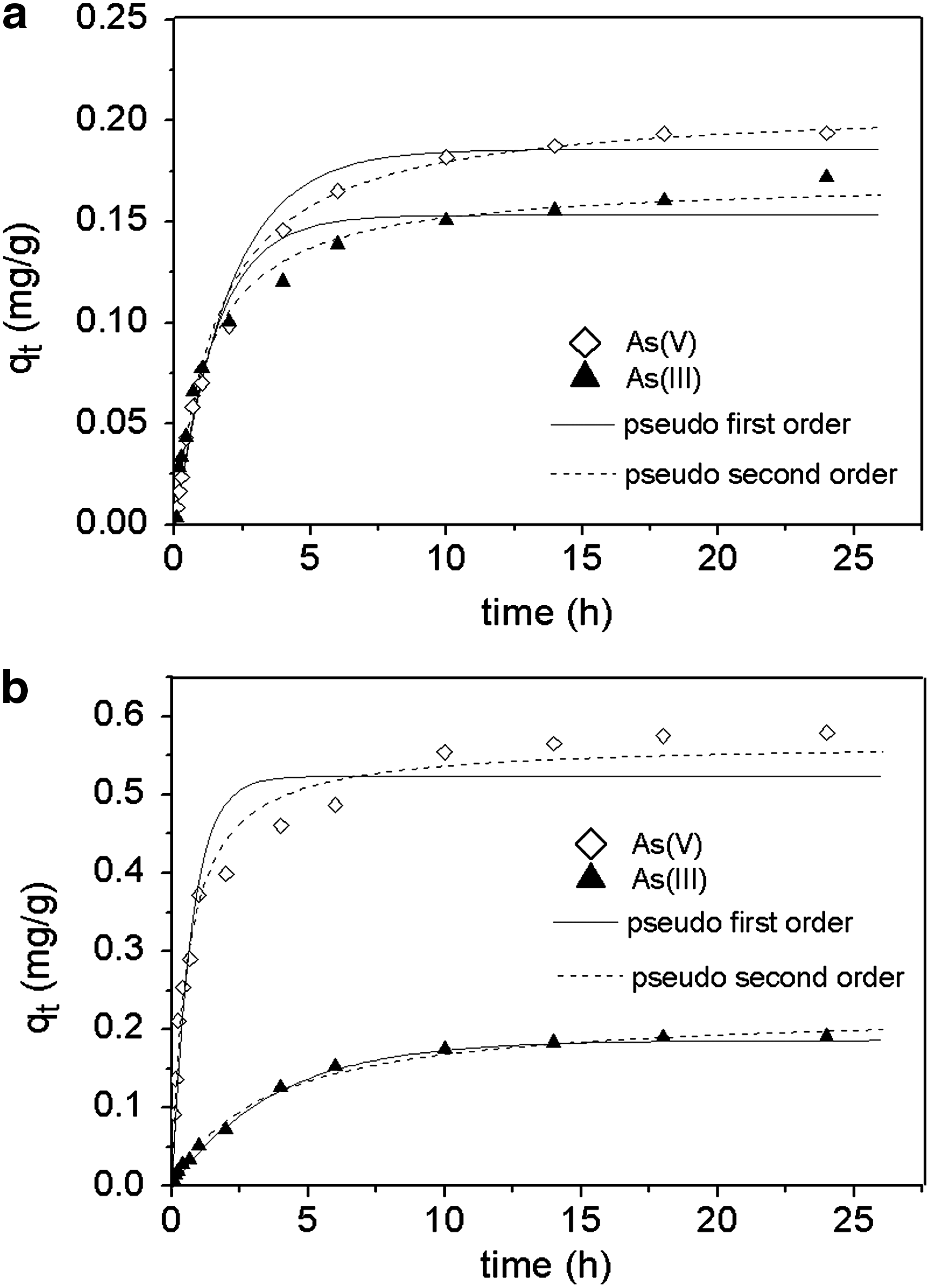
Kinetics of As(III) and As(V) adsorption by
Table 1 shows all the kinetics parameters for As(III) and As(V) adsorption by IOCQS and IOCMS. It can be seen that the qe values of IOCMS were larger than those of IOCQS, indicating that IOCMS exhibited a higher capacity for the removal of both As(III) and As(V) than IOCQS did. Additionally, the pseudo-second-order model provided a better fit to the kinetics data than the pseudo-first-order model did in all four cases. Kumar et al. (2005) proposed that most adsorption processes include three steps: (1) diffusion across the liquid film surrounding the solid particles; (2) intraparticle diffusion; and (3) physical or chemical adsorption at a site. The better application of pseudo-second-model to the kinetic data suggested the occurrence of chemisorption reaction and the existence of more than one rate-controlling step (Sen and Sarzali, 2008; Arias and Sen, 2009). Moreover, IOCMS showed a higher adsorption rate for As(V) but a slower rate for As(III) than IOCQS did, as indicated from the k1 and k2 values in Table 1.
R2, the square of the sample correlation coefficient.
IOCQS, iron-oxide-coated quartz sand; IOCMS, iron-oxide-coated manganese sand.
Adsorption isotherms
Figure 4 illustrates the adsorption isotherms for As(III) and As(V) adsorption onto IOCQS and IOCMS. It can be seen in Fig. 4a that the amount of As(III) adsorbed by IOCQS was 0.44 mg/g at an equilibrium As(III) concentration of 17.80 mg/L. In contrast, the adsorption capacity of As(III) by IOCMS could reach 1.97 mg/g at a lower equilibrium concentration of 15.17 mg/L. On the other side, Fig. 4b shows that the amount of As(V) adsorbed by IOCMS was 4.17 mg/g at an equilibrium As(V) concentration of 19.14 mg/L. Comparatively, the adsorption capacity of As(V) by IOCQS was only 0.52 mg/g at a higher equilibrium concentration of 22.39 mg/L. It was indicated that IOCMS showed greater adsorption capacities toward both As(III) and As(V) than IOCQS did.
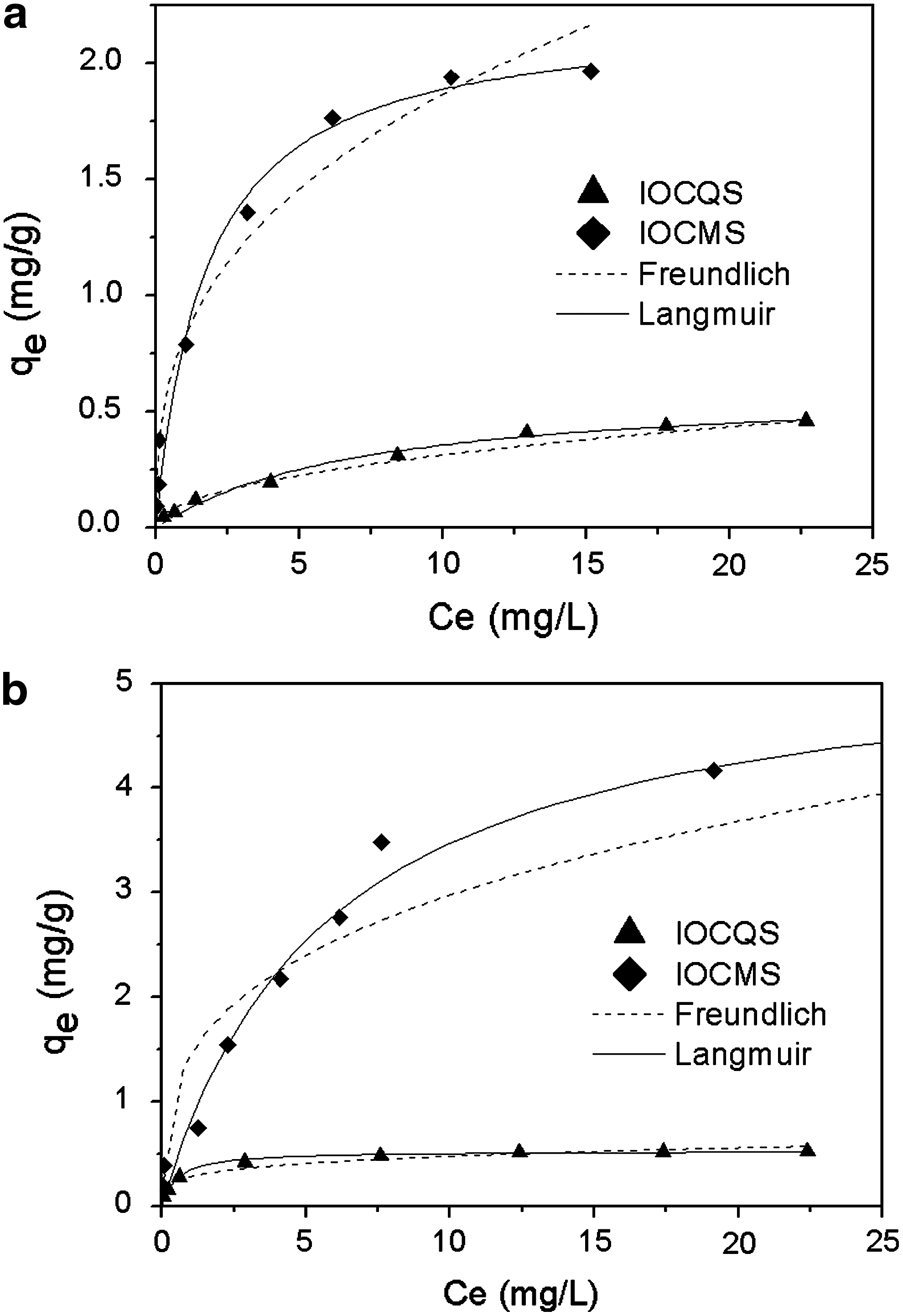
Adsorption isotherms of
Table 2 presents the Freundlich and Langmuir parameters obtained from the linearized versions of the four isotherms with their R2 results, which showed that the application of Langmuir isotherm model was better than the experimental data in all four cases. According to Langmuir isotherm model, the qm values of IOCMS towards As(III) and As(V) were calculated to be 2.216 mg/g and 5.452 mg/g, being respectively about 3 times and 10 times higher than those of IOCQS (qm, As(III)=0.612 mg/g, qm, As(V)=0.528 mg/g). On the other side, the constant n being more than 1 (Table 2) implied the favorable adsorption of As(III) and As(V) onto IOCMS. Additionally, the KF values (KF, IOCMS-As(V)>KF, IOCQS-As(V); KF, IOCMS-As(III)>KF, IOCQS-As(III)), which were proportional to the adsorption capacity, confirmed that IOCMS had greater As(III,V) adsorption capacities than IOCQS did. To provide more valuable information about its capacities of As(III,V) adsorption, we subsequently investigated the effects of pH and interfering anions on As(III,V) removal by IOCMS.
Effects of pH and interfering anions on the removal of As(III) and As(V) by IOCMS
pH effect
Figure 5 illustrates that the removal efficiencies of As(III) and As(V) by IOCMS in the pH range from 4 to 10. The removal efficiency of As(III) increased from 84.2% to 93.2% with pH increasing from 4 to 7, and then declined to 91.1% at pH 10. It was similar with the results of Gupta et al. (2005), who reported the gradual increase of As(III) adsorption onto IOCQS with pH increasing from 4.5 to 7.5, and no more significant increase was observed with elevated pH. In contrast, the removal efficiency of As(V) by IOCMS decreased steadily from 90.9% to 78.5% with pH increasing from 4 to 10, and this was ascribed to the transformation of As(V) species and the variation of surface charge of IOCMS in different pH ranges. H2AsO4−/HAsO42− are the predominant species for As(V) in the pH range from 4 to 7, and H2AsO42-/AsO43- dominate the As(V) anions in the pH range from 7 to 10 (Smedley and Kinniburgh, 2002). Since the pHPZC of IOCMS was pH 7.5, it exhibited a net positive charge at pH<7.5. The adsorption of As(V) was enhanced by electrostatic attraction between IOCMS surfaces and As(V) species at pH<7.5. At pH>7.5, the electrostatic repulsive forces inhibited the adsorption of negatively charged As(V) anions onto IOCMS.
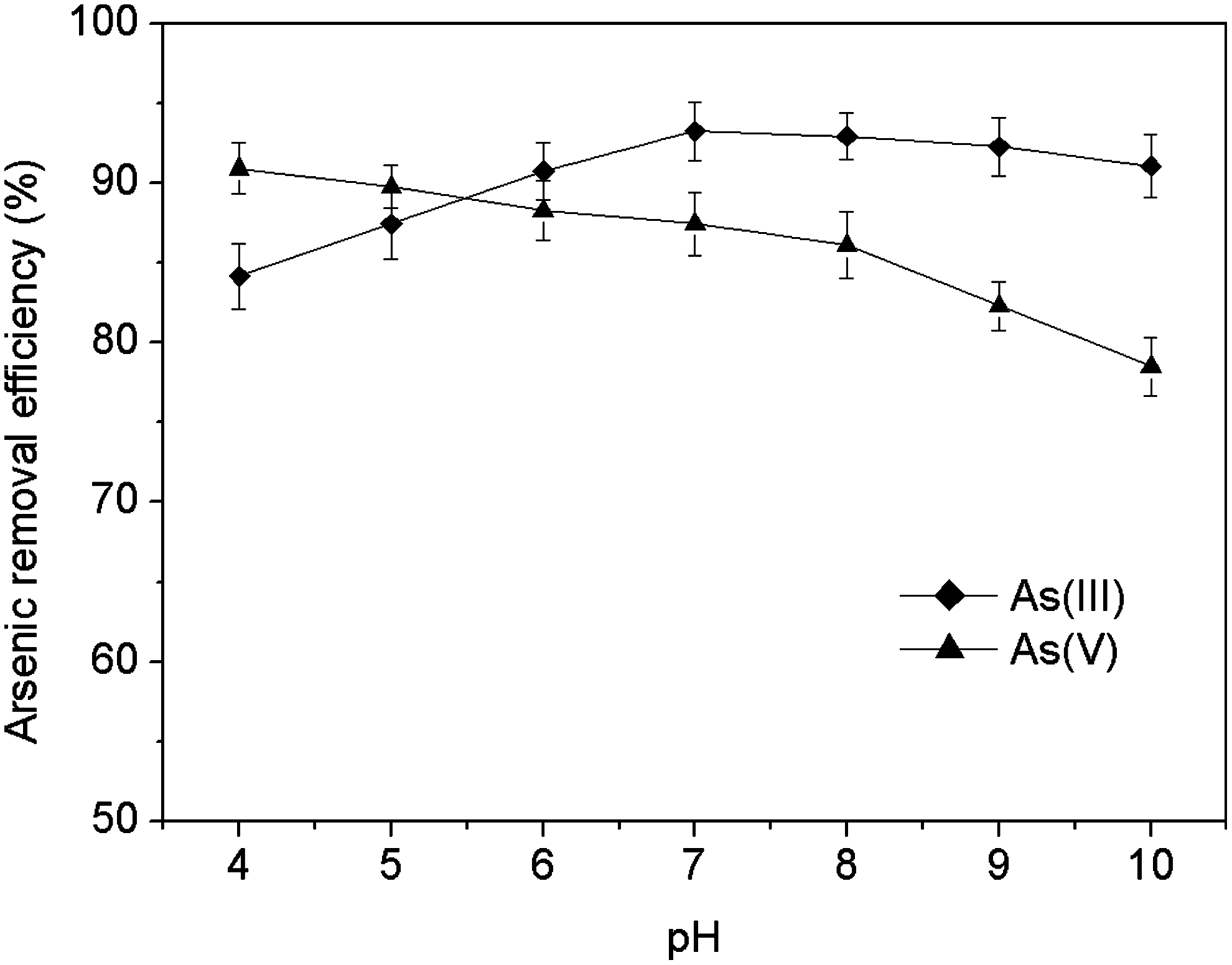
Effect of pH on the adsorption of As(III) and As(V) by IOCMS. [Experimental conditions: initial As(III)=1 mg/L, initial As(V)=5 mg/L, adsorbent dosage=5 g/L, reaction time=24 h.]
Effect of interfering anions
Figure 6 illustrates the effects of carbonate, silicate, and phosphate on the removal of As(V) and As(III) by IOCMS. With phosphate concentrations increasing from 0 to 1 and 10 mM, the As(V) removal efficiency decreased from 95.5% to 49.8% and 42.6%. As(V) removal efficiency was also obviously affected by silicate, decreasing from 95.5% to 78.0% and 48.0% with silicate concentrations increasing from 0 mM to 1 mM and 10 mM accordingly. Comparatively, carbonate showed the least effect on As(V) removal by IOCMS, with the lowest removal efficiency of 84.0% at 10 mM of carbonate. As for the removal of As(III) by IOCMS, the influencing extent also followed the order of: phosphate>silicate>carbonate. Compared to these three anions, nitrate (used as background ion) showed negligible effect on the removal of As(III) and As(V) by IOCMS (Supplementary Fig. 3).
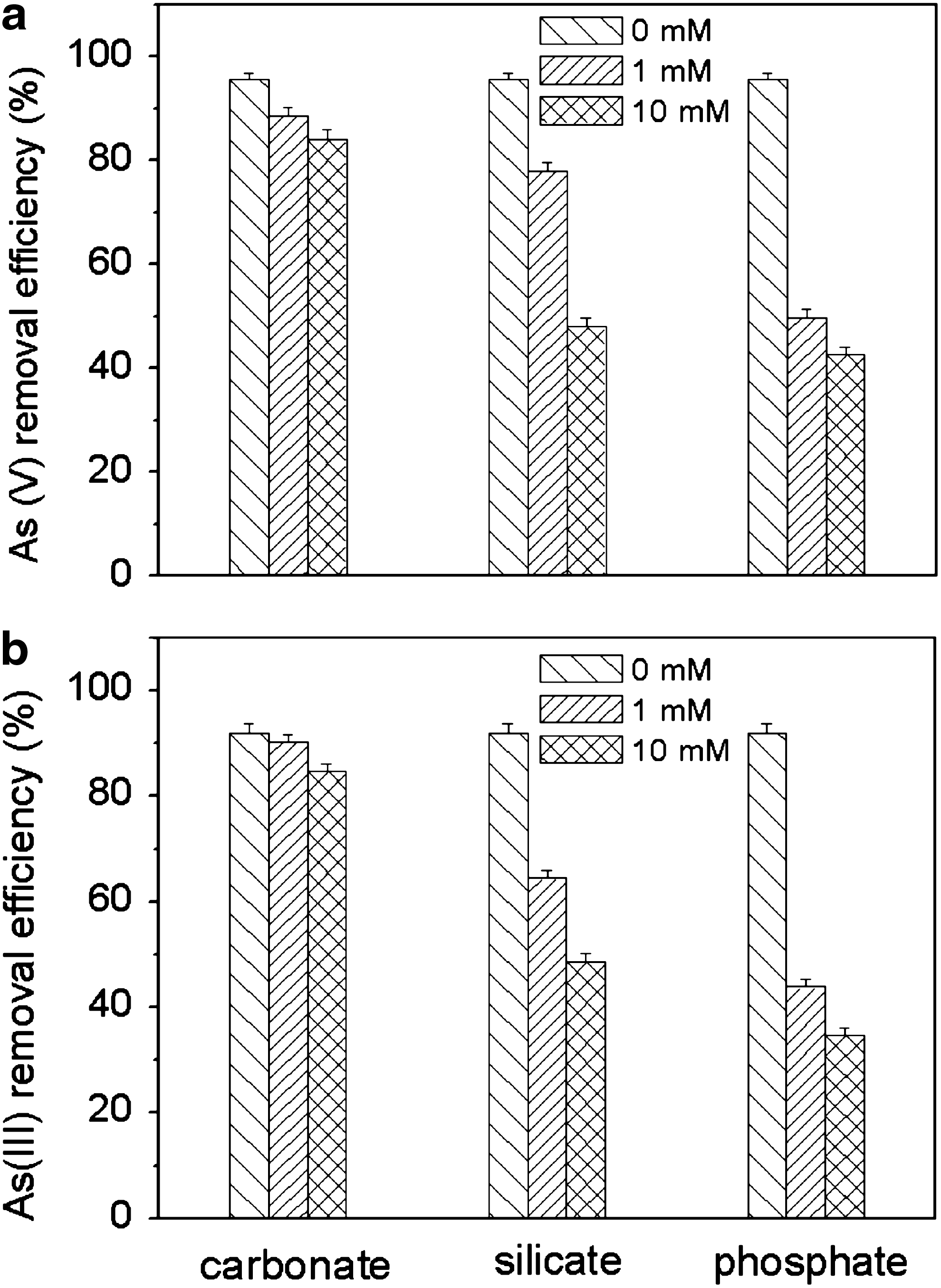
Effects of carbonate, phosphate, and silicate on the adsorption of As(V) and As(III) by IOCMS. [Experimental conditions: initial As(V)=5 mg/L, initial As(III)=1 mg/L, adsorbent dosage=5 g/L, pH=7, reaction time=24 h.]
These results were in accordance with previous studies (Hsu et al., 2008a). Martinson and Reddy (2009) investigated the removal of As(III) and As(V) by CuO nanoparticles and reported that 1 mM of phosphate decreased the removal efficiency of As(III) by 40.7% and that of As(V) by 38%. As for the removal of As(III) and As(V) by iron-chitosan, phosphate at 50 mg/L caused the most remarkable decrease of adsorption from 0.156 to 0.062 mg/g for As(III) and from 0.156 to 0.076 mg/g for As(V) (Gupta et al., 2009). Elemental phosphorus (P) and As are located in the same main group, and the molecular structure of phosphate is similar to As species. This character resulted in the significant adverse effect of phosphate on As adsorption through mechanisms such as competitive adsorption and charge diffusion (Goldberg, 2002).
Adsorption mechanism of As(III) and As(V) by IOCMS
To investigate the adsorption mechanism of As(III) by IOCMS, especially whether the MnO2 in IOCMS exhibited the same oxidation capacity for As(III) as the synthesized one (Scott and Morgan, 1995), several selected samples were determined by XPS analysis. Figure 7 compares the XPS spectra of Fe2p, Mn2p, and As3d between IOCQS and IOCMS. The XPS spectra of Fe 2p within IOCQS and IOCMS showed the binding energy of 711.5 and 711.3 eV (Fig. 7a, c). γ-FeOOH was reported to exhibit the binding energy of 711.5 eV (Moulder et al., 1992), inferring that it dominated the oxidation state of iron oxides within these two adsorbents. Additionally, the intensity of Fe2p core level of IOCMS was about 1.5 times higher than that of IOCQS, indicating the presence of more iron oxide on the surfaces of IOCMS. It is shown in Fig. 7b and 7d that the Fe binding energy of the two adsorbents were both not affected by the reaction with As(III). However, the content of Fe atom on the surface of IOCMS changed more greatly than IOCQS did after the reaction with As(III), implying the occurrence of stronger interactions between As(III) and Fe atoms on the surfaces of IOCMS than IOCQS (Zhang et al., 2005).

Core level photoelectron spectra of
Additionally, the Mn2p spectra of the IOCMS both before and after adsorbing As(III) showed binding energy of 641.4 eV (Fig. 7e, f). The negligible shift of Mn2p peak for IOCMS after adsorbing As(III) indicated that the MnO2 within IOCMS exhibited no oxidative effect on As(III). Furthermore, the XPS spectra of As3d core level showed the binding energy of 44.3 eV after being adsorbed onto IOCQS and IOCMS (Fig. 7g, h), which indicated the oxidation state of adsorbed As to be +3 and consolidated the negligible oxidative activity of IOCMS toward As(III) (Ding et al., 2000). This finding was different from our previous study in which ferric and binary oxide (FMBO) presented significant oxidative activity toward As(III) due to the MnO2 component (Zhang et al., 2007). Chakravatry et al. (2001) found that the pyrolusite in the ferruginous manganese ore does not have any hydroxy group attached to it even though it contains the chemical formula of MnO2. Since MS is made of manganese ores, the Mn oxides in the MS should be in the analogous with ferruginous manganese ore rather than with the synthesized MnOOH or MnO2. These characteristics may explain why the Mn oxides in the IOCMS exhibited no oxidation ability toward As(III). The results of N2-purge experiment indicated that the Mn oxides in the IOCMS didn't show the effect of catalytic oxidation on As(III), either (Supplementary Fig. 4).
Therefore, in this study, MS acted as a carrier rather than an oxidant or a catalyst in the adsorption of As(III) onto IOCMS. The coating procedure enlarged the As(III)/As(V) adsorption capacity of MS considerably (Supplementary Fig. 5). The γ-FeOOH on the surface of IOCMS should be responsible for the capture of As(V) and As(III) through the mechanism of surface complexion, including the following reactions (Jang and Dempsey, 2008):
for As(III),
for As(V),
Summaries
IOCMS exhibited greater adsorption capability toward both As(III) and As(V) than IOCQS did. The maximum adsorption capacities of IOCMS toward As(III) (2.216 mg/g) and As(V) (5.452 mg/g) were about 3 times and 10 times higher than those of IOCQS, respectively. These results may be ascribed to (1) the higher coating content of FeOOH on IOCMS (Fe=48.7 mg/g) than that on IOCQS (Fe=10.2 mg/g); (2) the larger BET surface area of IOCMS with a micro-porous surface structure (9.18 m2/g) than that of IOCQS (1.03 m2/g); and (3) the more uniform distribution of FeOOH on IOCMS surfaces. However, IOCMS did not show the oxidative activity toward As(III). In addition, IOCMS may be used as an adsorbent to remove As in natural pH ranges although the side effect of interfering anions should be considered in the presence of phosphate or silicate with high levels.
Footnotes
Acknowledgments
This work was supported by the Funds for the Creative Research Groups of China (50921064), the key project of National “863” High-tech R&D Program of China (2009AA062905), and the crucial project of National Water Pollution Control and Management Science (2009ZX07424-002-004).
Author Disclosure Statement
No competing financial interests exist.
References
Supplementary Material
Please find the following supplemental material available below.
For Open Access articles published under a Creative Commons License, all supplemental material carries the same license as the article it is associated with.
For non-Open Access articles published, all supplemental material carries a non-exclusive license, and permission requests for re-use of supplemental material or any part of supplemental material shall be sent directly to the copyright owner as specified in the copyright notice associated with the article.
