




Abstract
Abstract
Because the slag can be a major source of soil and groundwater pollution, understanding the release and leaching behavior of hexavalent chromium [Cr(VI)], from chromium-containing slag is critical. We report Cr(VI) behavior after static and dynamic leaching from chromium-containing slag deposited at a ferro-alloy manufacturing plant in Hunan province, China. Bench-scale experiments indicate that the main factors influencing the dissolution release of Cr(VI) include the solid-liquid ratio, soak time, agitation, acidity, particle size, and water dynamic flow. Based on the parameters obtained from the dynamic leaching experiment, a Cr(VI) release and leaching model was developed and applied to the study area. The model can quantitatively predict the extent of Cr(VI) pollution of soil and groundwater under atmospheric precipitation.
Introduction
China is one of the major chromate producing countries. The accumulated amount of chromium-containing slag discharged from chemical industries was more than 6 million tons over a span of more than 30 years. Of these 6 million tons, about 4 million tons were simply deposited (Wang et al., 2009). Moreover, it is estimated that 200,000 to 300,000 tons of chromium-containing slag are being discharged annually (SEPA, 2005) and have become a serious pollution problem in soil and groundwater. As a result, about 125,000 tons of soil are contaminated by Cr(VI), and that amount will increase because of the continuous leaching of Cr(VI) from slag (Huang et al., 2009).
Previous research focuses on Cr(VI) pollution in soil and groundwater (Bangalore et al., 2009; Shariatmadari et al., 2009; Wang et al., 2011). The release of inorganic contaminants from wastes is typically evaluated by tank leaching of continuously water-saturated material with periodic leachate renewal (Barna et al., 2004). However, chromium-containing slag is simply deposited in the open air. It is not continuously wet. Rather, the slag experiences cyclic wetting and drying under varied environmental conditions (e.g., relative humidity, temperature, atmospheric CO2) (van der Sloot et al., 1997). Thus, estimates of Cr(VI) release based on a continuously saturated matrix do not adequately simulate field conditions unless they are adjusted to account for cyclic leaching and nonleaching. Therefore, specific tests are needed to evaluate the effects of intermittent wetting on Cr(VI) release from slag.
In this research, static and dynamic leaching tests of chromium-containing slag were conducted to characterize Cr(VI) leaching and determine the effects of intermittent wetting by acid rain on its release. A model was developed and used to predict total Cr(VI) release from the slag into the ambient environment.
Materials and Methods
Site description and chromium-containing slag sampling
Samples were taken from a chromate-containing slag heap at an iron-alloy factory in Xiangxiang City, China. Since 1965, the factory has used chromium ore to produce chromate by calcination of the mixture of chromite, soda ash, limestone, and dolomite at 1100–1200°C. The slag sample was comprised of residue from chromate production. The slag sample was dried at 120°C and passed through 20, 60, and 100 mesh sieves after grinding with a vibrating grinder.
Soaking-leaching experiment
To study Cr(VI) soaking-leaching characteristics under water-slag interaction, soaking-leaching experiments were conducted, using 2,500 mL glass reagent bottles filled with dried chromium-containing slag and distilled water (pH 6). The bottles were set in a thermostat incubator for 13 days at 25°C. The ratios of solid to liquid (S/L) were 1:5, 1:10 and 1:20 (w/v), respectively. Variation in S/L ratio was obtained by changing the quantity of solids. The particle sizes were less than 150 μm, 150–250 μm and 250–850 μm, respectively. During the leaching procedure, supernatant was taken at every 24 hours. After sampling, the bottles were stirred intensively and the supernatant filtered with a filter paper (No. 202, Φ7 cm). The Cr(VI) concentration of the filtrate was determined by the diphenylcarbazide colorimetric method (MEP, 2011). In addition, a control treatment in which bottles were not stirred was included under the same conditions. Each experiment had three replications.
Dynamic leaching experiment
Typically, the release of inorganic contaminants from waste materials has been evaluated by tank leaching of continuously water-saturated material with periodic leachate renewal (Kosson et al., 1996). However, solid waste in many fields or management scenarios cannot be assumed to be continuously saturated. Therefore, dynamic leaching experiments were developed to evaluate the effects of intermittent wetting on Cr(VI) release from the slag.
For the purposes of study, acid rain can be simulated by a mixture of H2SO4 and HNO3 solution with a volumetric ratio of 9:1 (Zhang et al., 2003). To reflect the natural conditions, mean monthly rainfall of the study area for each month from 2000 to 2008 was obtained from the Xiangxiang Weather Bureau (Table 1), and simulated acid rain was prepared using the above ratio (Zhang et al., 2007). One liter of distilled water was used to flow through a column filled with 0.5 kg of chromium-containing slag before the dynamic leaching experiments to ensure that the slag was saturated. Then the simulated acid rain was allowed to flow through the column at a leaching rate of 50 mL/h controlled by a peristaltic pump (30% of runoff was deleted). The leachate of the dynamic leaching (12 cycles [12 half-day leaching and 12 half-day drying]) was collected daily from the column bottom, and the Cr(VI) concentration in leachate was determined by the diphenylcarbazide colorimetric method using a visible spectrophotometer.
Characteristics of chromium-containing slag
The surface structure and component of chromium-containing slag were determined by scanning electronic microscope (SEM; Nova NanoSEM 230) coupled with an energy dispersive X-ray analyzer (EDXA, Genesis 60S). The major mineral composition of chromium-containing slag was determined by X-ray diffraction (Rigaku-TTRIII).
Results and Discussion
Characteristics of chromium-containing slag
The original chromium-containing slag contained large grainy sand and had a rough surface with many micropores. After dynamic leaching, smaller slag particles with a finer grain, smoother surface, and compact structure were observed. The EDAX spectrum (Fig. 1) further revealed that the chromium-containing slag consisted of 65.76% oxygen, 14.28% magnesium, 2.43% aluminum, 5.50% aluminum, 10.06% calcium, 0.50% chromium and 1.49% of iron, respectively. According to the X-ray diffraction (XRD) patterns, the principal mineral composition of the original slag was calcium aluminoferrite (4CaO·Al2O3·Fe2O3), brucite (Mg(OH)2), calcite (CaCO3), coesite (SiO2) and a little calcium chromate (CaCrO4) (Fig. 2). Calcium aluminoferrite was the product of chromate production at high temperature (1100–1200°C). The calcite was the product of unreacted sodium carbonate and the double decomposition product of calcium chromate in the leaching process. When the chromium residue was weathered, the calcite was the product of calcium hydroxide originating from the hydration of calcium aluminoferrite and other substances that adsorb carbon dioxide in the atmosphere. As a result, there was a high proportion of calcite in the slag. As clinker cooling was too fast to crystallize, the chromium-containing slag also contained a small amount of coesite. Brucite in chromium-containing slag resulted from hydration of free magnesium oxide, which was the product of dolomite decomposition (Hillier et al., 2003).
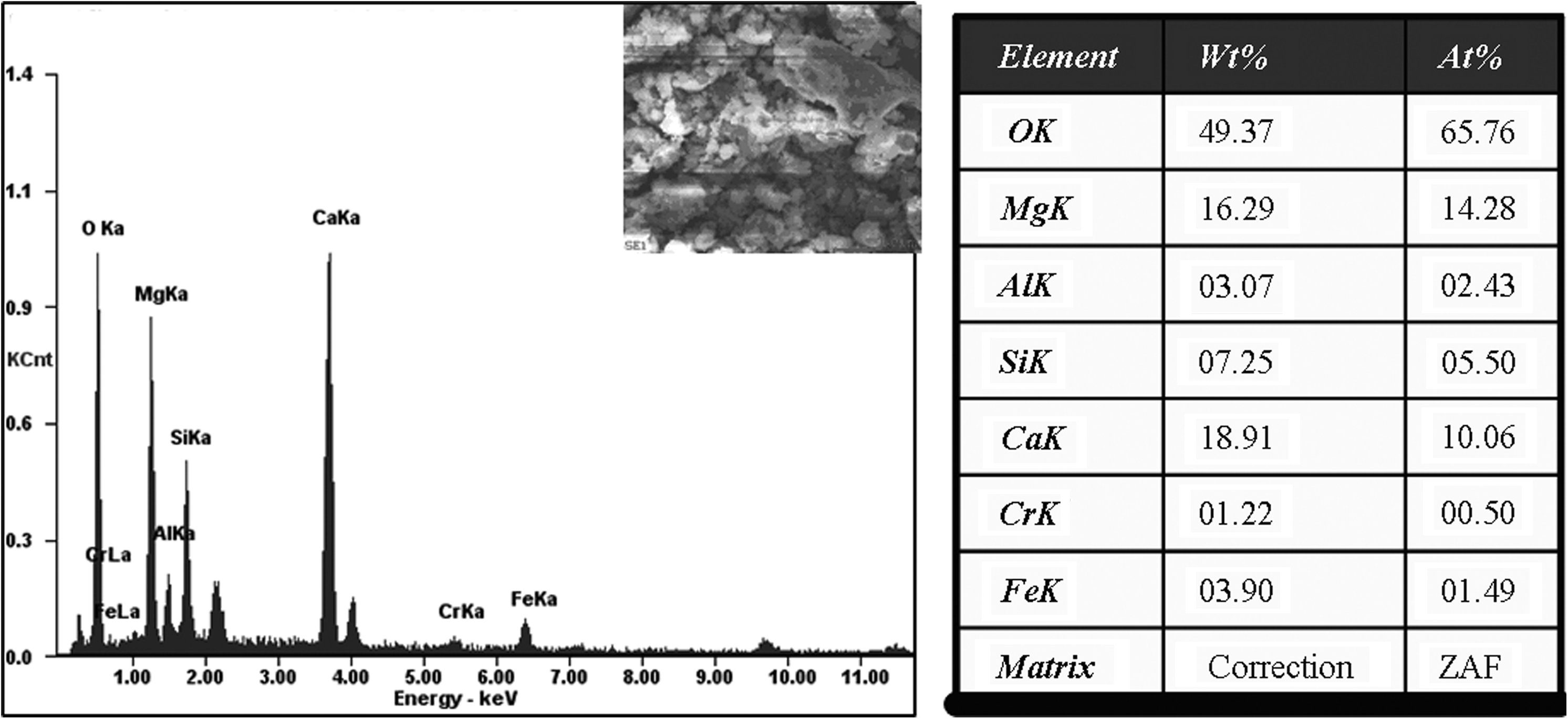
EDAX patterns for the original chromium-containing slag and the leached slag.

X-ray diffraction patterns for the original chromium-containing slag and the leached slag.
There were differences of XRD patterns between the original slag and slag leached with simulated acid rain. After leaching, the calcium chromate peak in the slag changed, suggesting that the calcium chromate content had decreased. In addition, a new coesite peak appeared and a previous calcite peak became more pronounced.
Soaking-leaching experiments
Effect of solid to liquid ratio on Cr(VI) release
The influence of solid to liquid ratio (S/L) on the dissolution-release of Cr(VI) from chromium-containing slag was investigated over a S/L range of 1:20 to 1:5 (Fig. 3A). A decreased S/L ratio resulted in a decrease in Cr(VI) concentration and dissolution-release velocity. However, the rate of dissolution-release of Cr(VI) per unit mass of chromium-containing slag for the small S/L ratio (e.g., 1:20) was faster than for the large S/L ratio (e.g., 1:5) (Fig. 3B). Thus, the amount of dissolution-release of Cr(VI) per unit mass of slag for the small S/L ratio was greater than that for the large S/L ratio. Under actual environmental conditions, the S/L (slag to acid rain ratio) gets smaller with increasing accumulative rainfall, which could lead to a large dissolution-release of Cr(VI).
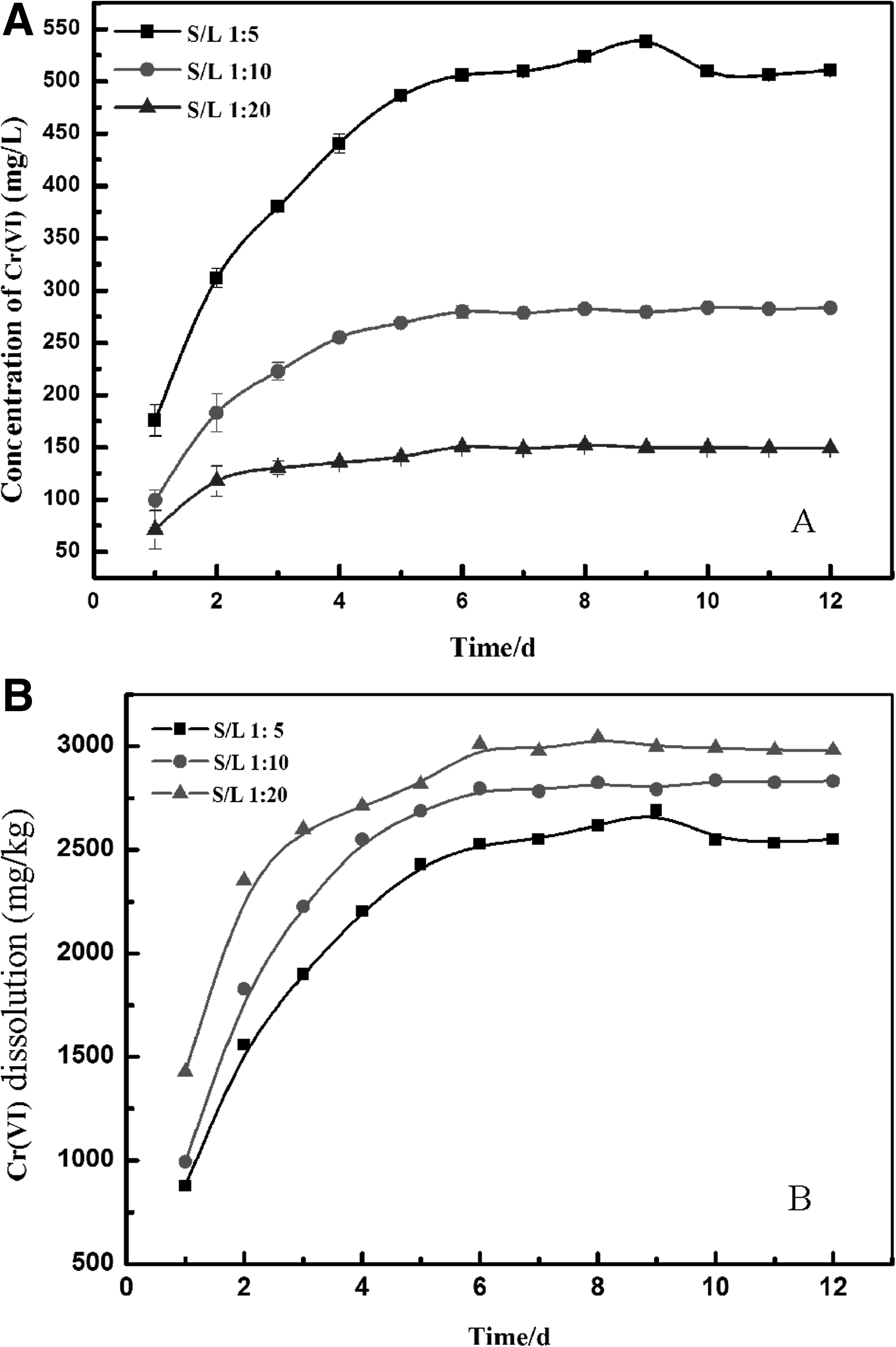
Cr(VI) concentration in leachate
Effect of particle size on Cr(VI) release
As chromium-containing slag was exposed to the ambient environment, the structure of the slag gradually became looser and particle size became smaller with weathering and human disturbances. Thus, it is necessary to study the effect of the particle size on the dissolution-release of Cr(VI).
The particle size of the chromium-containing slag had an obvious impact on the dissolution-release of Cr(VI) in the early soaking-leaching experiment (Fig. 4). Before 48 hours, the smaller the particle size was, the higher the Cr(VI) concentration in leachate and dissolution-release velocity. Thereafter, Cr(VI) concentrations in the leachate for the slag with particle sizes of ∼150–250 μm and particle sizes of ∼250–850 μm were higher than that for particle sizes less than 150 μm. Most Cr(VI) is on the exterior surface and exposed to air, leading to fast release within a short time for the small particle sizes of slag. Conversely, Cr(VI) release from the large particles of slag, such as ∼250–850 μm, require a certain diffusion resistance in the slag interior, which results in low Cr(VI) concentration in leachate with prolonging soaking period.
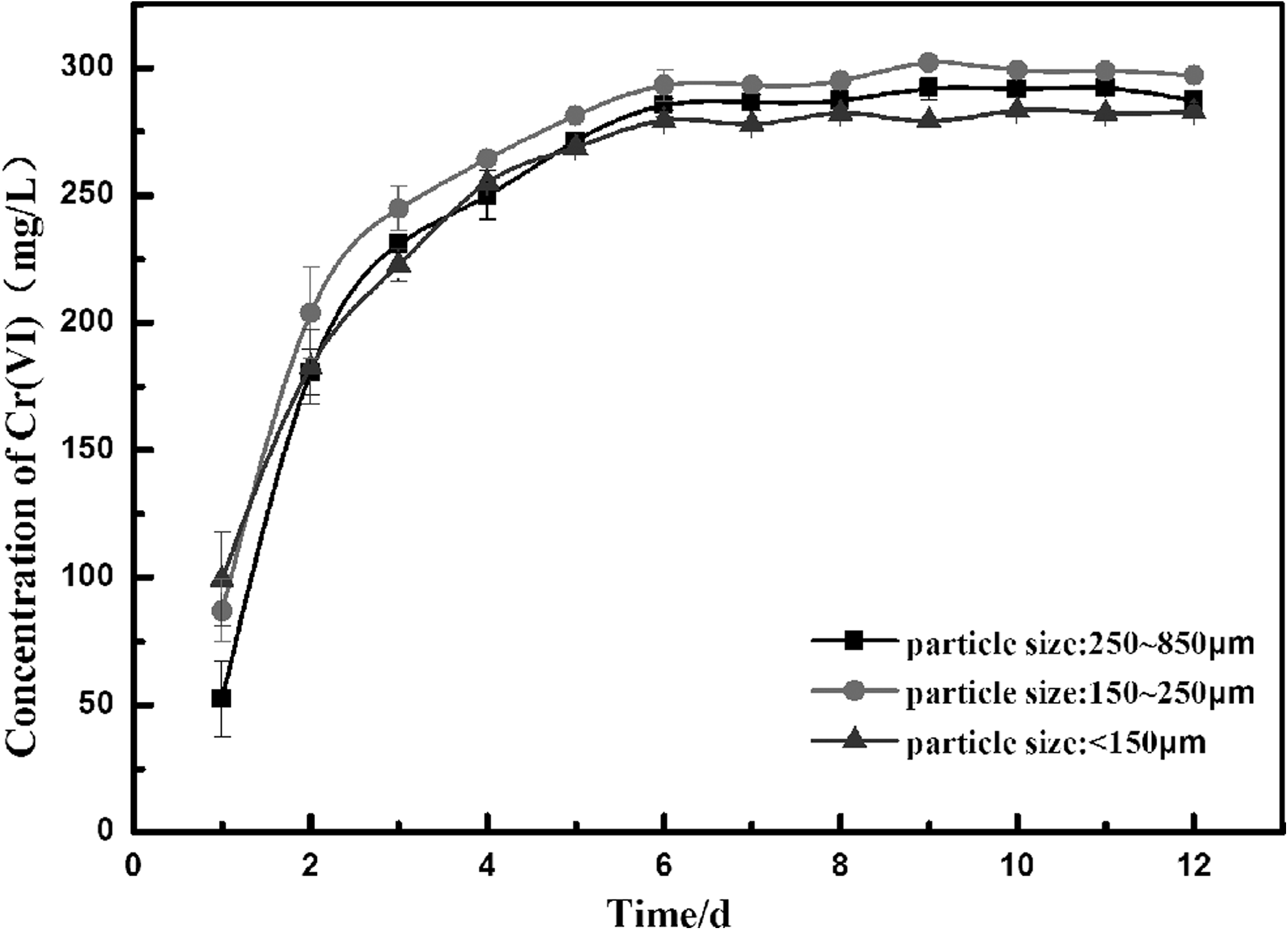
Cr(VI) concentration in leachate for different particle sizes of slag in soaking leaching procedure.
Effect of agitation on Cr(VI) release
Because a chromium-containing slag heap may be disturbed by human activity, it is necessary to investigate the effect of stirring on the dissolution-release of Cr(VI) from slag. As seen in Fig. 5, agitation had an important impact on the dissolution-release of Cr(VI) in the soaking-leaching experiment. The Cr(VI) concentration in leachate for nonagitation treatment was about half of that for agitation treatment. During the stirring procedure, the refresh rate of the solid-liquid interface was accelerated and the concentration gradient increased. Therefore, agitation accelerated the rate of the dissolution-release of Cr(VI).
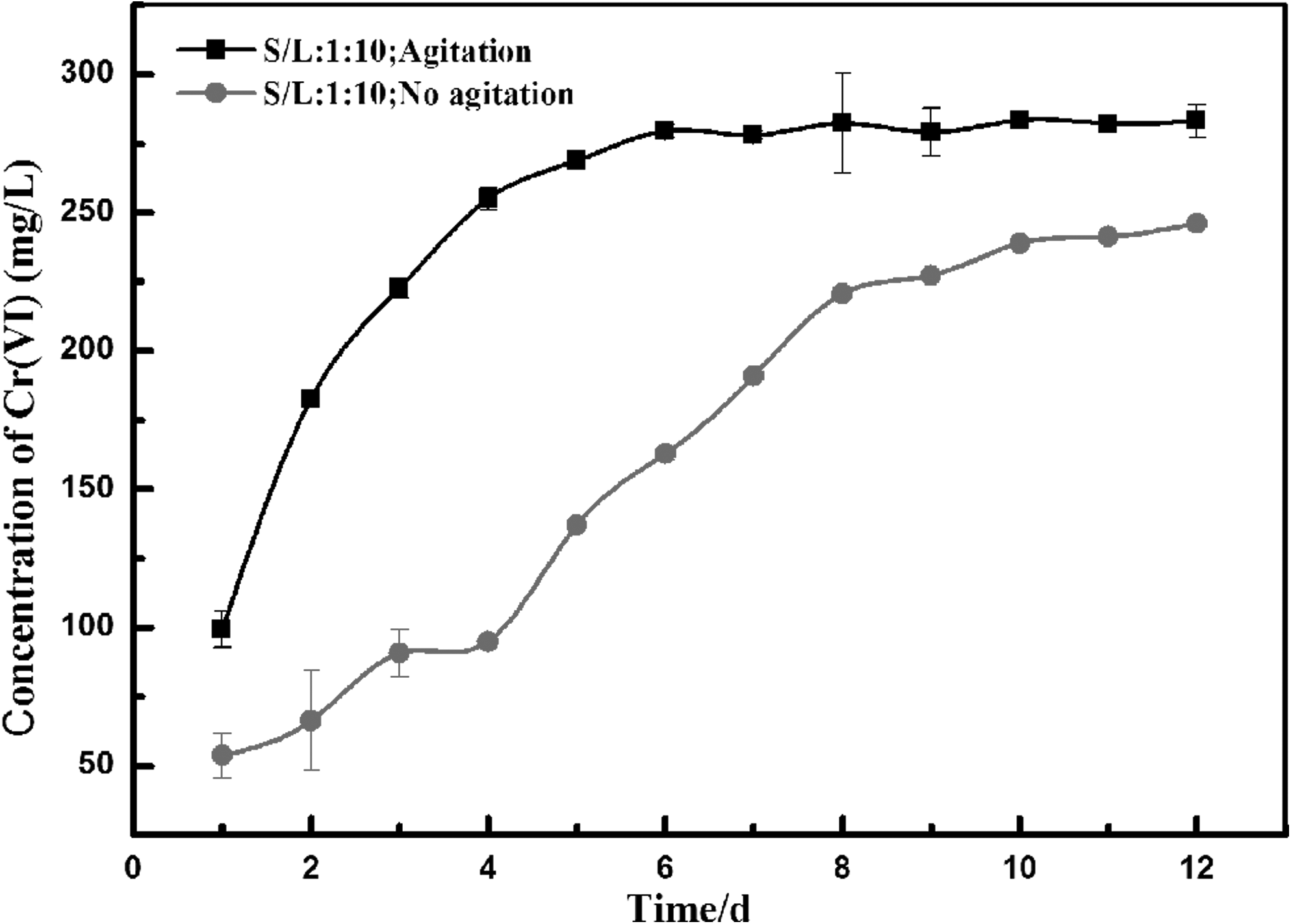
Cr(VI) concentration in leachate after agitation in soaking leaching procedure.
Dynamic leaching experiments
Effect of pH on Cr(VI) release
When the simulated acid rain was employed to leach the slag, Cr(VI) concentration in leachate increased with decreasing pH (Fig. 6). The lower pH exacerbated the damage of chromium-containing slag. With H+ concentration increasing, most of the H+ reacted with the slag and the cation exchange reaction between H+ and Cr6+ occurred, resulting in release of adsorbed Cr6+(Xu et al., 2002).
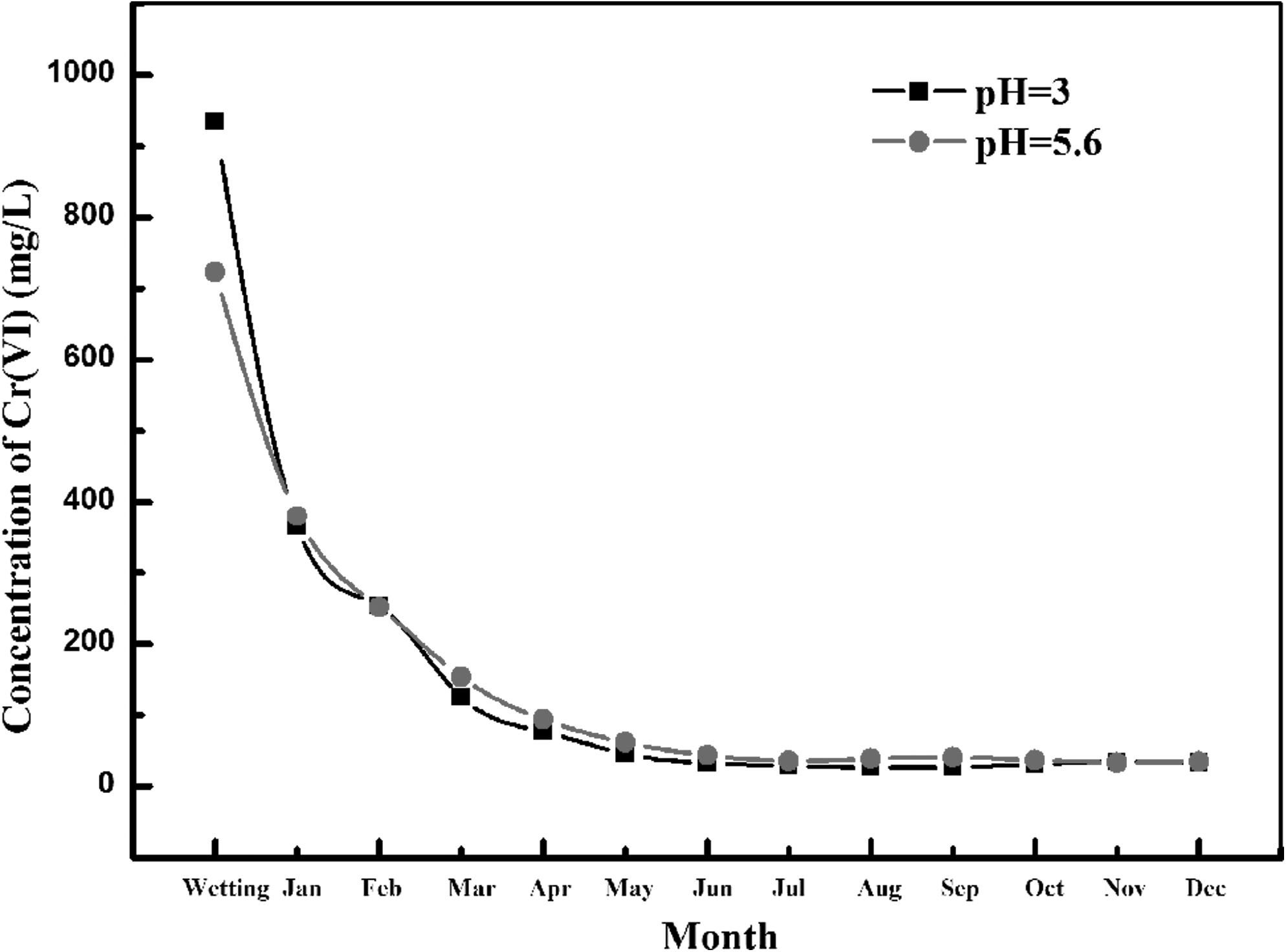
Cr(VI) concentration in leachate at different pH values in dynamic leaching procedure.
Effect of particle size on Cr(VI) release
The Cr(VI) concentration in leachate increased with decreasing particle sizes of chromium-containing slag under the same pH values (Fig. 7). As the weathering of chromium-containing slag continued, massive structure was gradually broken down to small particle sizes which increased the hazards of chromium-containing slag on the environment. As seen in Fig. 7, Cr(VI) concentration in leachate for particle sizes less than 150 μm was much higher than that for particle sizes of ∼150–250 μm and ∼250–850 μm during the initial period. However, as the leaching time prolonged, Cr(VI) concentration in leachate for ∼250–850 μm of particles was slightly higher than that for ∼150–250 μm and <150 μm of particles.

Cr(VI) concentration changes in leachate during the dynamic leaching procedure.
During the leaching process, the smaller the particle size, the greater the area of solid-liquid contact interface and the faster the Cr(VI) dissolution-release velocity, which led to greater dissolution and release of Cr(VI). As shown in Fig. 8, the cumulative Cr(VI) release amounts were, in the order of following particles sizes: <150 μm, 2132 mg; ∼150–250 μm, 1840 mg; ∼250–850 μm, 1600 mg. When 0.5 kg of chromium-containing slag with particle sizes of ∼250–850 μm experienced dynamic leaching for 13 days using the simulated acid rain, the cumulative amount of Cr(VI) dissolved and released from the slag at pH=3 was 1694 mg, which was higher than the amount leached at pH=5.6 (1597 mg).

Cumulative content of Cr(VI) for different particle sizes of slag and pH values in dynamic leaching procedure.
Release model and long-term leaching impact
The impact assessment of chromium-containing slag on the environment should consider the fact that leachate concentrations change over time. The experimental results of dynamic leaching given in Table 2 were analyzed by linear regression. The relationship between infiltrated water and Cr(VI) concentration in the leachate conformed to the power function law shown below:
CC, cumulative content of Cr(VI) (in mg); CL, Cr(VI) concentration in leachate (in mg L−1).
In Equation (2), the natural logarithm of Eq. (1) was obtained:
It shows that ln Cv is negatively related to ln(V+V0). Thus, Cr(VI) concentrations decreased with increasing rainfall, attributable to leaching of Cr(VI) from the slag to the surrounding environment. Cv is the Cr(VI) concentration (mg L−1), V and V0 the volume (L) of infiltrated water and simulated acid rain respectively. Co and n are slag specific constants (>0), which can describe the relative leaching ability of Cr(VI) from different slag materials. The results of linear regression for the estimation of parameters Cv and n and the leaching equation emanating are given in Table 3. This equation expresses the potential Cr(VI) concentration levels in leachate at the disposal site of chromium-containing slag
To determine if there is a significant hazard presented by Cr(VI) releases from slag, it is necessary to know the total amount of Cr(VI) leached from the disposal site within a given period. Thus, a similar model was developed for the case of the acid leaching of Cr(VI) from chromium-containing slag [Eq. (3)], which was obtained by integrating Equation (1):
where W is the total release amount of Cr(VI) (mg) from the precipitation of V0 (L), where the initial leachate occurred to the total precipitation vt (L).
The slag site in the study area was an enclosed 500 m×10 m. The volume of slag amounted to 90,000 m3 and the total amount was 117,000 tons. The slag was initially deposited on soil in 1960s without leaching protection. It was estimated that the V0 was 0.3 L for 0.5 kg slag. To estimate the total release amount of Cr(VI) from the slag from 1965 to 2010, the value of vt was given as 1441.7 million L when the total precipitation was calculated for the 45 years. In addition, the parameters of Co and n were 500.2 and 1.22, respectively. The calculated total amount of Cr(VI) released from the slag (117,000 tons slag) reached up to 685.372 tons from 1965 to 2010. Moreover, the retaining time of chromium in the slag is estimated to be 103 to 104 years. Thus, the chromium-containing slag heap in the study site is a long-term source for soil and groundwater pollution. It could exhibit a high toxic risk to the environment and consequently to human health.
Conclusions
The results of the static and dynamic leaching study indicate that the main factors influencing the dissolution- release of Cr(VI) are the solid-liquid ratio, soak time, agitation, acidity, particle size and water dynamic flow. Based on the parameters gained from leaching experiments, the releasing model and long-term leaching impact of Cr(VI) in chromium-containing slag was deduced. The total amount of the dissolution-release of Cr(VI) from the slag was predicted according to the model. It was calculated that the total amount of Cr(VI) released from slag in the study area during the period of 1965 to 2010 was about 685.372 tons,which suggests that Cr(VI) contamination in surrounding soils cannot be neglected.
Footnotes
Acknowledgement
This work was funded by the China National Funds for Distinguished Young Scientists (50925417) and the National Natural Science Foundation of China (51074191).
Disclosure Statement
No competing financial interests exist.