




Abstract
Abstract
This study focused on the development of an advanced municipal wastewater treatment process using a membrane-coupled anaerobic organic acid fermentor (MAOF) to remove dissolved organic matter from coagulated sludge. Intermittent ozone bubbling was effective in preventing increases in permeation resistance that were caused by particle accumulation on the membrane surface and in maintaining a high permeation flux. With regard to taxonomy, approximately 20 isolates were identified in the MAOF and are believed to represent the principal cell types in the fermentor. MAOF, coupled with intermittent ozone bubbling, is an effective system that can be implemented to recover organic matter that is used in biological denitrification or other basic materials.
Introduction
Based on these needs, we developed an advanced integrated municipal wastewater treatment system that removes organic matter and nutrients and performs disinfection thoroughly. The schematic of this wastewater and sludge treatment process is shown in Fig. 1. In this system, the removal of solids and colloidal components by precoagulation serves to reduce the organic load for biological treatment processes (Wiesner and Laîné, 1996; Gabelich et al., 2002). Eventually, the hydraulic retention time (HRT) can be reduced, and electricity for aeration can be saved. This treatment removes nitrogen, phosphorous, and organic materials completely at the same HRT as conventional activated sludge processes. Moreover, dissolved organic materials from raw coagulated sludge are retrieved by membrane filtration (<1 μm pore size). The recovered materials are nearly biodegradable matter and can be used as electron donors for denitrification and substrates for methanogens.
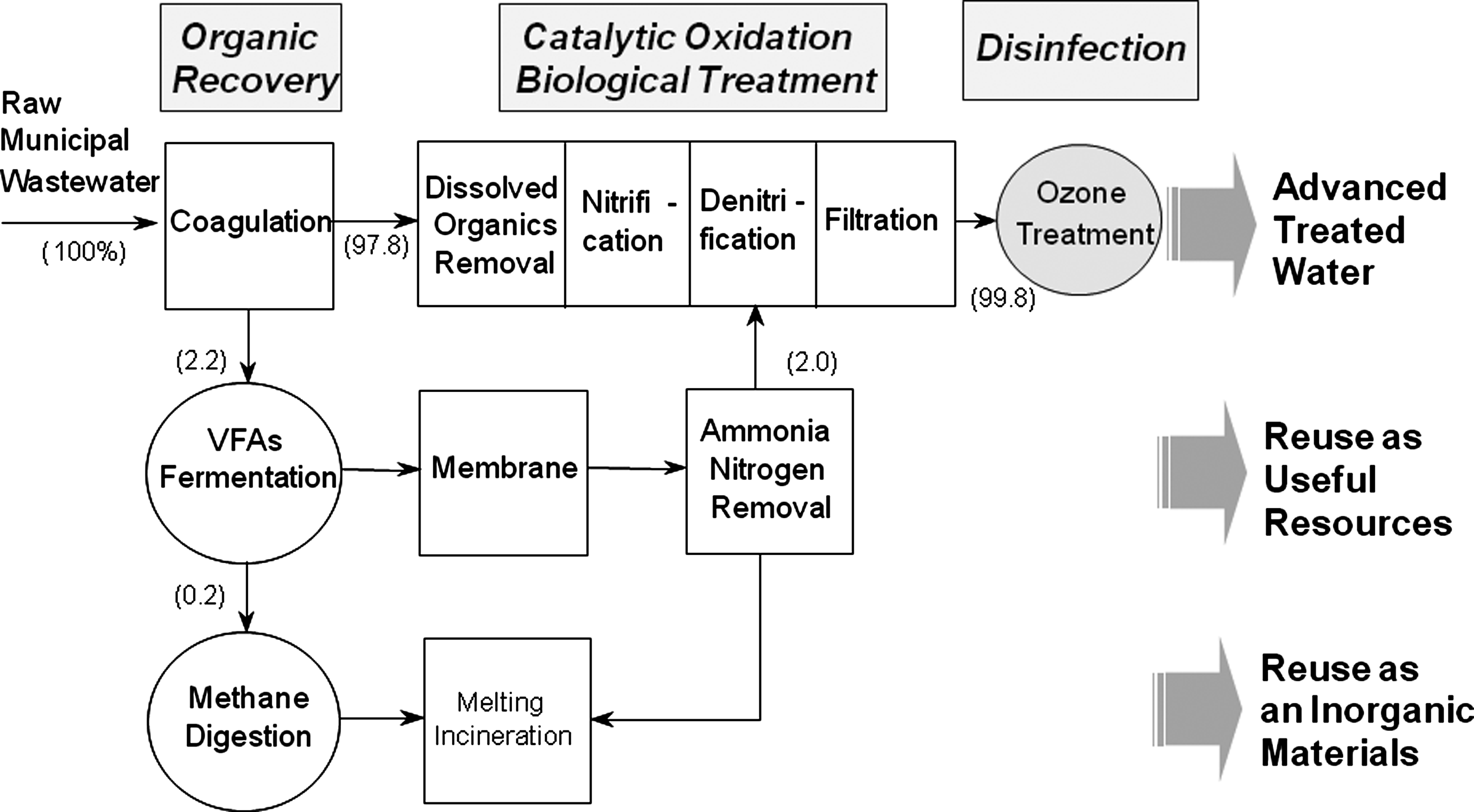
New advanced sewage treatment system: membrane-coupled anaerobic organic acid fermentor (MAOF) process (numbers in parentheses indicate flow rate mass balance).
While anaerobic processes are becoming recognized as an energy-saving means of treating wastewater, the growth rate of anaerobic microorganisms is so slow that their washout is likely to occur, causing the system to fail. The chief obstacle to this type of process, then, is its low reaction rate of digestion, which diminishes treatment efficiencies and requires a relatively long HRT. Given this, improved anaerobic bioreactors in which microorganisms can be immobilized, using, for example, upflow anaerobic sludge blankets (UASBs), fixed beds, and fluidized bed reactors, have appeared (Nel et al., 1985; Borja and Banks, 1994; Schmidt and Ahring, 1996). Even with these improvements, however, it is difficult to treat wastewater that contains high-strength particulate organic matter, lipids, and inhibitory substances (Lettinga et al., 1981; Chen et al., 1997; Ye et al., 2004).
The efficiency of an anaerobic process depends on maintaining high biomass concentrations in the reactor, which, in turn, relies on how well the solids are separated. By using a much more efficient separation method, such as membrane filtration, the performance of the anaerobic system can be improved. Certain types of membrane-coupled bioreactors are attractive options for the treatment of industrial and municipal wastewater (Kiriyama et al., 1993; Ross and Strohwald, 1994; Yanagi et al., 1994; Demirel and Yenigun, 2002; Kang et al., 2002). At the same time, the problems associated with cake formation and biofouling have limited the acceptance of membrane units for use as biological treatments (Choo and Lee, 1996; Chang et al., 2002; Le Clech et al., 2006; Liao et al., 2006). Because permeation flux is the chief determinant of the economic feasibility and practicality of membrane systems, specific applications of membrane-based processes require careful attention to the causes of membrane fouling (Chang et al., 1999; Lee et al., 2001; Bérubé and Lei, 2006). Membrane fouling is caused by the adsorption of organic species, the precipitation of less soluble inorganic species, and the adhesion of microbial cells on the membrane surface.
This study focused on characterizing the taxonomy of acidogenic bacteria in the fermentor and evaluating the performance of membrane-coupled anaerobic organic acid fermentors (MAOF) with intermittent ozone bubbling. We presented an overview of how the system would work, how it would integrate within an existing treatment process, and its potential advantages. With regard to the latter, our ultimate goal was to determine the acid-producing capacity of the identified bacteria.
Materials and Methods
System description
The complete setup of the system is shown in Fig 2. The monolith-type membrane was used in these experiments. The system, which had a total working volume of 76 L, consisted of a coagulated sludge container (5 L), an anaerobic acid fermentor (65 L), a ceramic microfiltration (MF) module (0.5 L), and a permeate container (5.5 L). A crossflow MF unit (supplied by Nihon Gaishi Co.) with a pore size of 1 μm was used. The crossflow velocity through the membrane module was adjusted by regulating the pump, and the suction pressure was controlled with an outer pump that was attached to the membrane module. Ozone bubbling was generated by an ozone generator (ZR series, Roki Techno) and was injected into the lower part of the membrane module. The exhausted ozone gas was separated in the upper part. The main operational conditions were as follows: ozone concentration 65 mg L−1, contact time 20 min, gas flow rate 1 L min−1 and suction pressure 35 kPa. The HRT and solid retention time (SRT) were controlled at 4 days and 20 days, respectively (see Table 1).
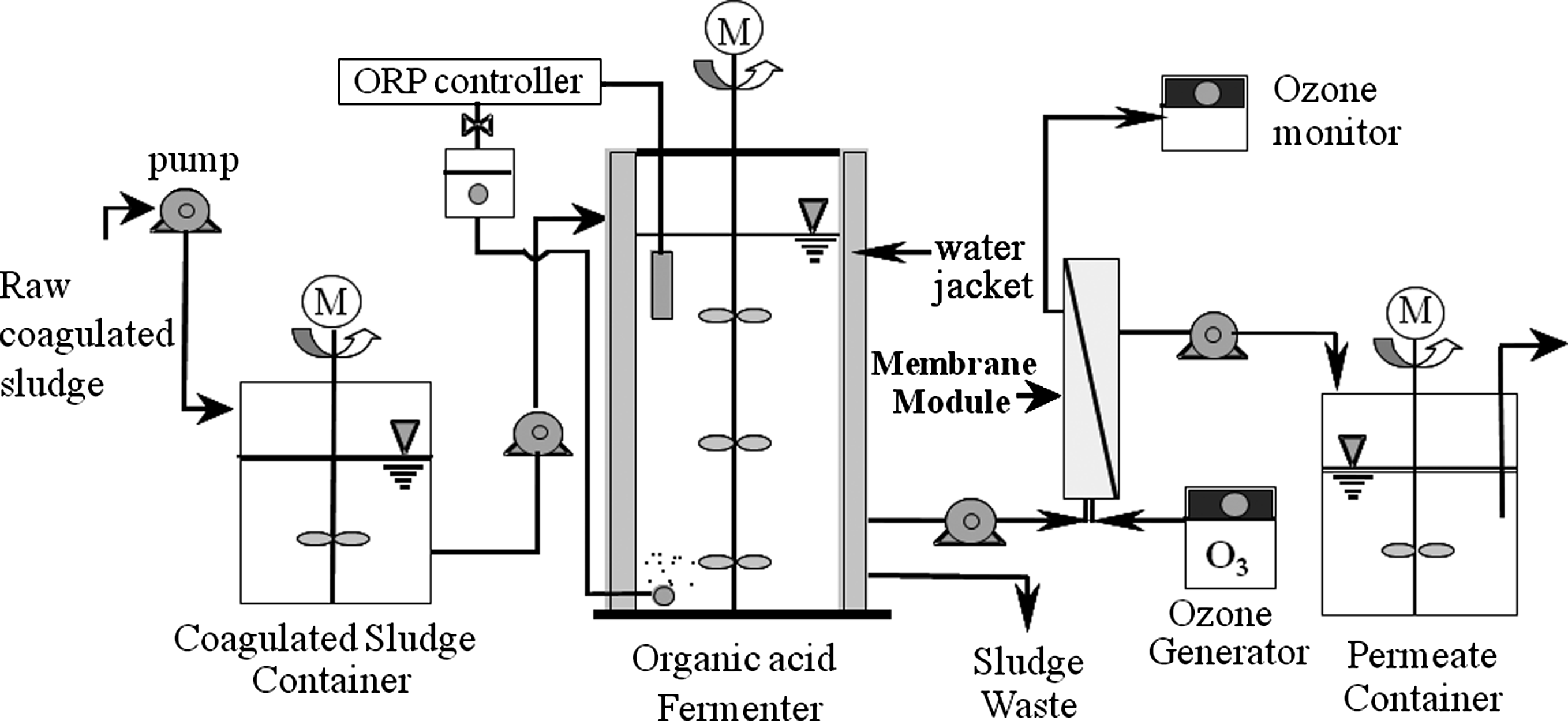
Schematic of MAOF process.
Total injected ozone dose (mg) = ozone concentration (mg L−1) × contact time (min) × gas flow rate (L min−1)
FRR = Jw2/Jw1 × 100%, where Jw1 (L m−2 h−1) was defined as water flux and divided the volume of permeated water into membrane area and the permeate time, and Jw2 was water flux of cleaned membrane.
SRT and HRT were the same during the ozonation and no ozonation periods.
HRT, hydraulic retention time; SRT, solid retention time; FRR, flux recovery ratio.
During the period without ozonation, the particle-packed layer on the membrane surface was wiped away with a sponge. During the 95-day intermittent ozonation period, the surface was not cleaned. Fiber components that were stuck were removed from the membrane module once a month when transmembrane pressure (TMP) increased over constant TMP values.
The properties of the raw coagulated sludge used in this study are listed in Table 2. As shown in the table, carbohydrates were the most predominant organic component. Fiber also constituted a significant proportion of the organic matter. As the ratio of volatile suspended solids (VSS) to volatile solids (VS), over 90%, indicates, the particle fraction of organic matter was high. To prevent the growth of methanogens in the fermentor, the oxidation reduction procedure (ORP) was maintained at about −300 mV by controlling the agitation speed and intermittent aeration (Shi et al., 2009; Wu and Zhou, 2011). Raw coagulated sludge with doses of polyaluminum chloride (PAC) (10 mg Al L−1) and ferric chloride (10 mg Fe L−1) was used to prepare the suspension and permeate.
Isolation of bacterial cultures and identification of isolates
The basal medium used for enumerating and culturing organisms from the MAOF contained (grams per liter): aluminum chloride (NH4Cl), 1.0; dipotassium phosphate (K2HPO4), 0.4; magnesium chloride hexahydrate (MgCl2·6H2O), 0.1; yeast extract (Difco Laboratories), 0.2; resazurin, 0.001; trace metal solution (Zeikus, 1977), 10 mL L−1. After the medium was boiled under nitrogen (N2) purging, neutralized cysteine-hydrochloride was added to a concentration of 0.5 g L−1, and the medium was boiled until the resazurin was reduced. After being dispensed in an anaerobic glove box (Coy Laboratory Products) and autoclaved, the following sterile anaerobic solutions were added: sodium bicarbonate (NaHCO3), 1 g L−1; calcium chloride dihydrate (CaCl2·2H2O), 0.1 g L−1; sodium sulfite nonahydride (Na2S·9H2O), 0.1 g L−1; autoclaved microbial sample from MAOF, 5%. The headspaces were flushed with 70% N2 to 30% carbon dioxide (CO2). The enrichment media were inoculated with microbial samples taken from activated sludge that was treated with intermittent ozonation and then incubated at 35°C. To confirm facultative bacteria, samples were enriched with the addition of 1 mL of the microbial sample from the MAOF to 20 mL of nutrient broth. The cultivation was repeated at least three times. After several consecutive passages, the enrichment culture was streaked onto a plate medium. The colonies that formed on the plates were picked and further purified by restreaking onto the plate medium several times. Pure cultures were confirmed through microscopic examination and Hucker's modification of the Gram stain. Other specific tests and basic classifications were performed as described in Bergey's Manual of Determinative and Systematic Bacteriology (John et al., 1994). The flowchart of the identification process is shown in Fig. 3. Moreover, a DNA fragment corresponding to the 16S ribosomal DNA region was polymerase chain reaction (PCR) amplified by using chromosomal DNA as the template, which was prepared by the method of Pitcher et al. (1989). The resulting amplified product was sequenced and compared with available sequences from the BLAST program of the National Center for Biotechnology Information. The sequences were aligned with the ClustalX software (Thompson et al., 1994).
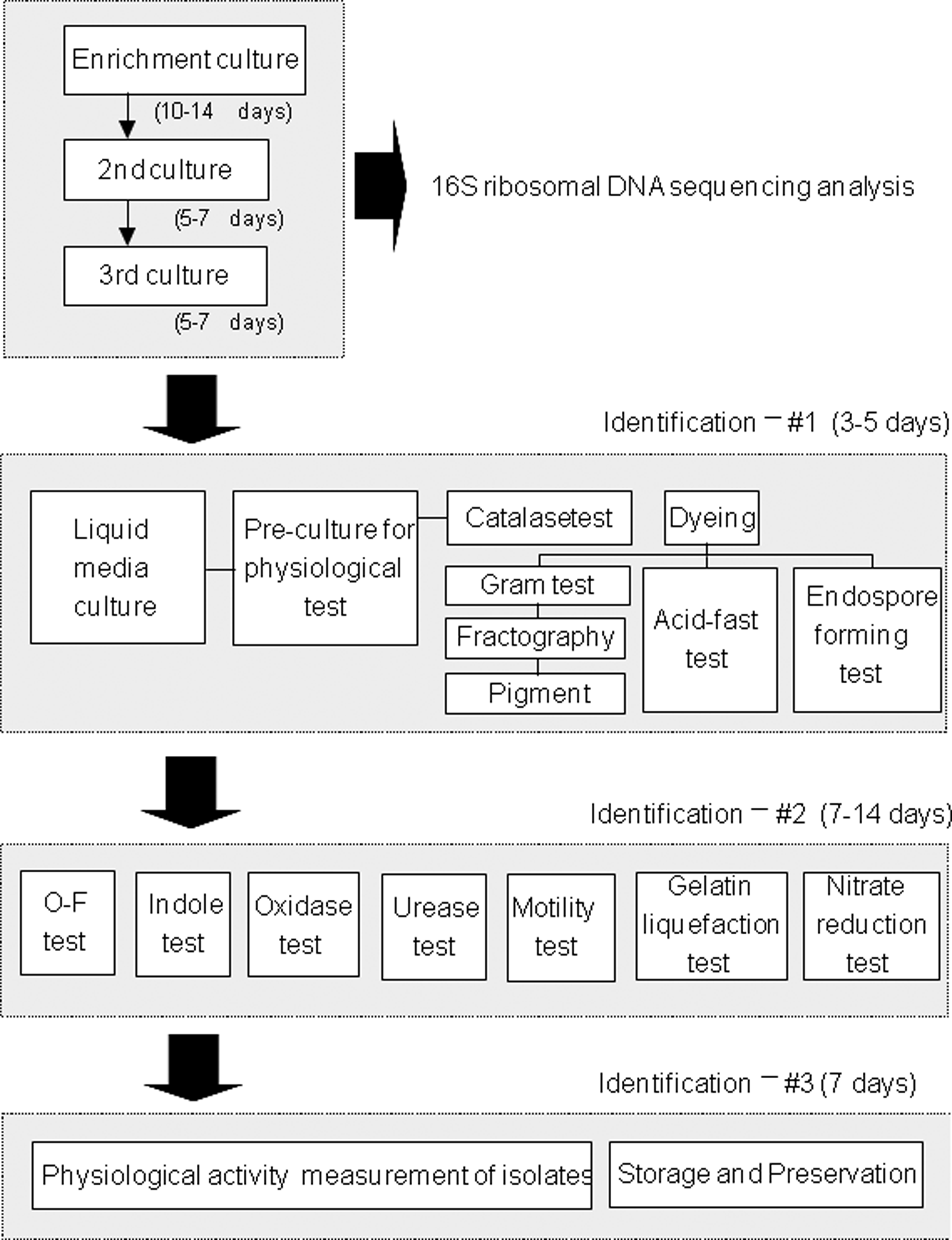
Flowchart of identification.
Analysis
Total organic carbon (TOC) concentrations were measured with a TOC analyzer (TOC-5000, Shimadzu) and liquid chromatography organic carbon detection (LC-OCD, DOC-LABOR) was developed to identify classes of organic compounds, such as dissolved organic carbon (DOC) and particulate organic carbon (POC), in natural water. LC-OCD gives quantitative information on natural organic matter (NOM) and qualitative results regarding the molecular size distribution of water impurities. Like TOC analysis, quantification is realized by carbon mass determination, performed with a special organic carbon detector. An oxidation-fermentation (OF) test was performed using a color reaction of bromthymol blue (BTB) during the incubation of cells under anaerobic conditions (Miyata, 1989; Nakamura et al., 2002) to count the total number of acid-producing bacteria. UV260 was measured on a UV-1600 ultraviolet-visible spectrophotometry (Shimadzu, Japan) with a silica tube that had a 1 cm optical path.
Permeation flux was monitored with regard to operation time. Volatile fatty acids (VFAs), such as acetate, propionate, butyrate, and lactate, were measured on a gas chromatograph that was equipped with a flame ionization detector (GC-14A, Shimadzu). Measurements of total solids (TS), volatile solids (VS), pH, ORP, and chemical oxygen demand (COD) were made using standard methods (APHA et al., 1998). The measurement of protein was determined according to the method of Lowry et al. (1951). Carbohydrates were measured using the anthrone method, originally introduced by Dreywood (1946), and lipids were measured using an infrared method modified from Standard Methods (APHA et al., 1998). Using the Cannon-Fenske viscometer (9721-B50 series, Cannon Instrument Co.), we measured the viscosities of water. Methane was measured using a gas chromatograph (Gow Mac series 580) that was equipped with a thermal conductivity detector and was connected to a 1-m stainless steel column, packed with Porapak T (60/80 mesh).
Results and Discussion
Removal of organic compounds by intermittent ozonation and membrane filtration
Determination of optimal ozone bubbling condition
Using the MAOF system under different ozone bubbling conditions, such as ozone concentration, contact time, and gas flow rate, the flux recovery ratio was measured to find the optimal ozone bubbling condition (see Table 2). All ozone bubbling conditions had the same injected ozone dose (mg) considered ozone concentration (mg L−1), contact time (min), and gas flow rate (L min−1). The objective of this experiment was to investigate the effect of different ozone bubbling conditions on the peameate flux when the same amounts of ozone were injected into the system.
The highest flux recovery ratio (91%) was achieved with 65 mg L−1 ozone concentration, 20 min contact time, and 1 L min−1 gas flow rate. A high ozone concentration (130 mg L−1) was not always effective for flux recovery. However, an increase in contact time from 5 min to 20 min resulted in an improvement in the flux recovery ratio (25%) under the same ozone concentration. As the rate of gas flow increased from 1 L min−1 to 2 L min−1, the flux recovery ratio decreased (14%). In other words, the flux recovery ratio increased with an increase of contact time, but at same ozone concentration, it decreased with the increase of gas flow rate. This supposes that an extended contact time is more favorable than an increased gas flow rate on parameter control for flux recovery. Based on these results, the optimal condition of ozone injection was determined.
Effect of ozone bubbling
Figure 4 shows the variation in permeation flux for continuous operation with intermittent ozone bubbling of the membrane module. The average permeation flux was 0.69 (m3 m−2 d−1) during the period without ozonation. After intermittent ozone bubbling for 95 days, the average permeation flux was maintained at 1.17 (m3 m−2 d−1)—1.7 times that without ozonation. This result proves that intermittent ozone bubbling is helpful in maintaining high permeation flux. Furthermore, when ozone bubbling is conducted before the cake layer thickens, high permeation flux can be sustained for a long period.
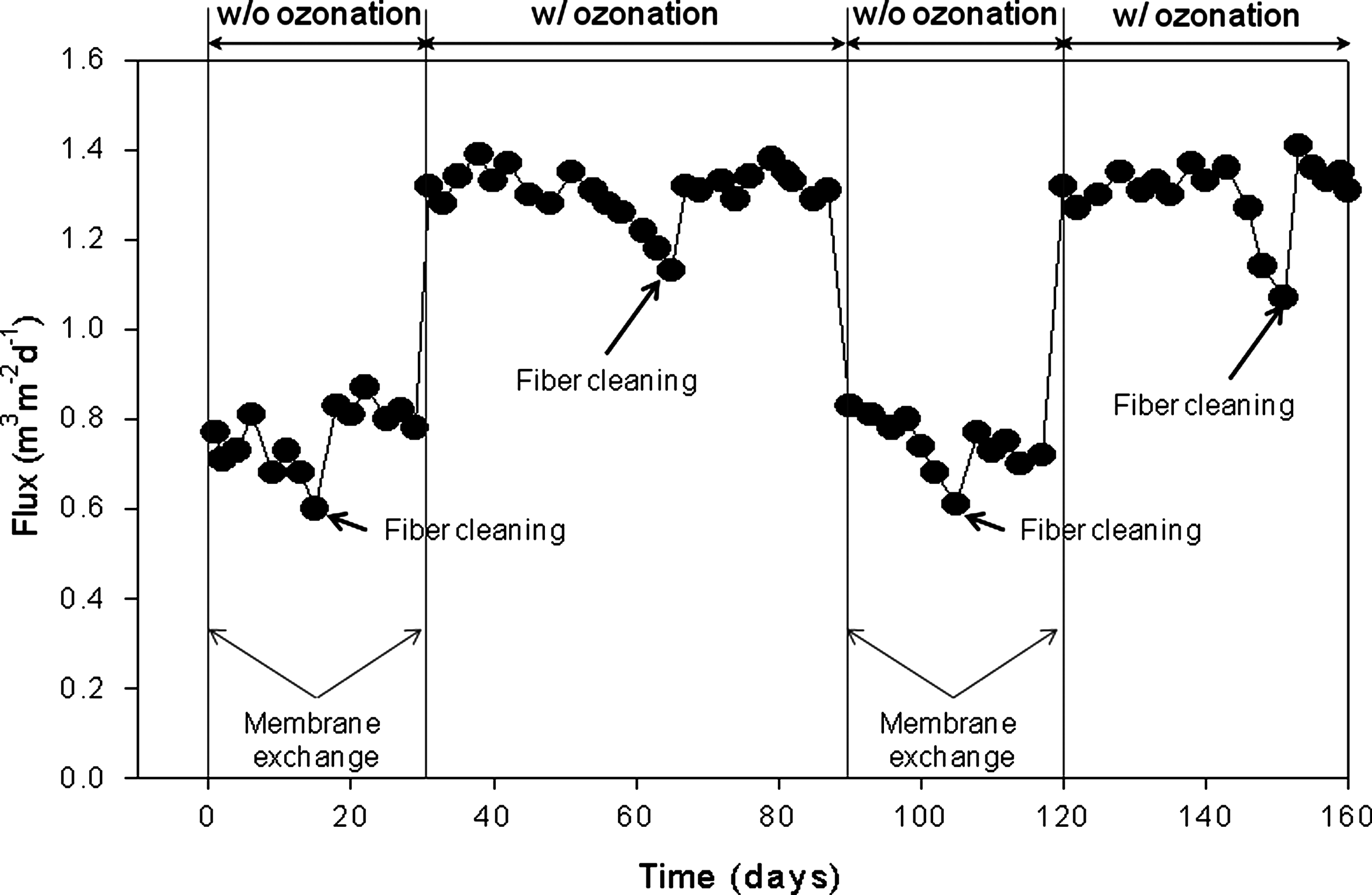
Permeation flux variation with respect to operation time.
Water quality in the fermentor
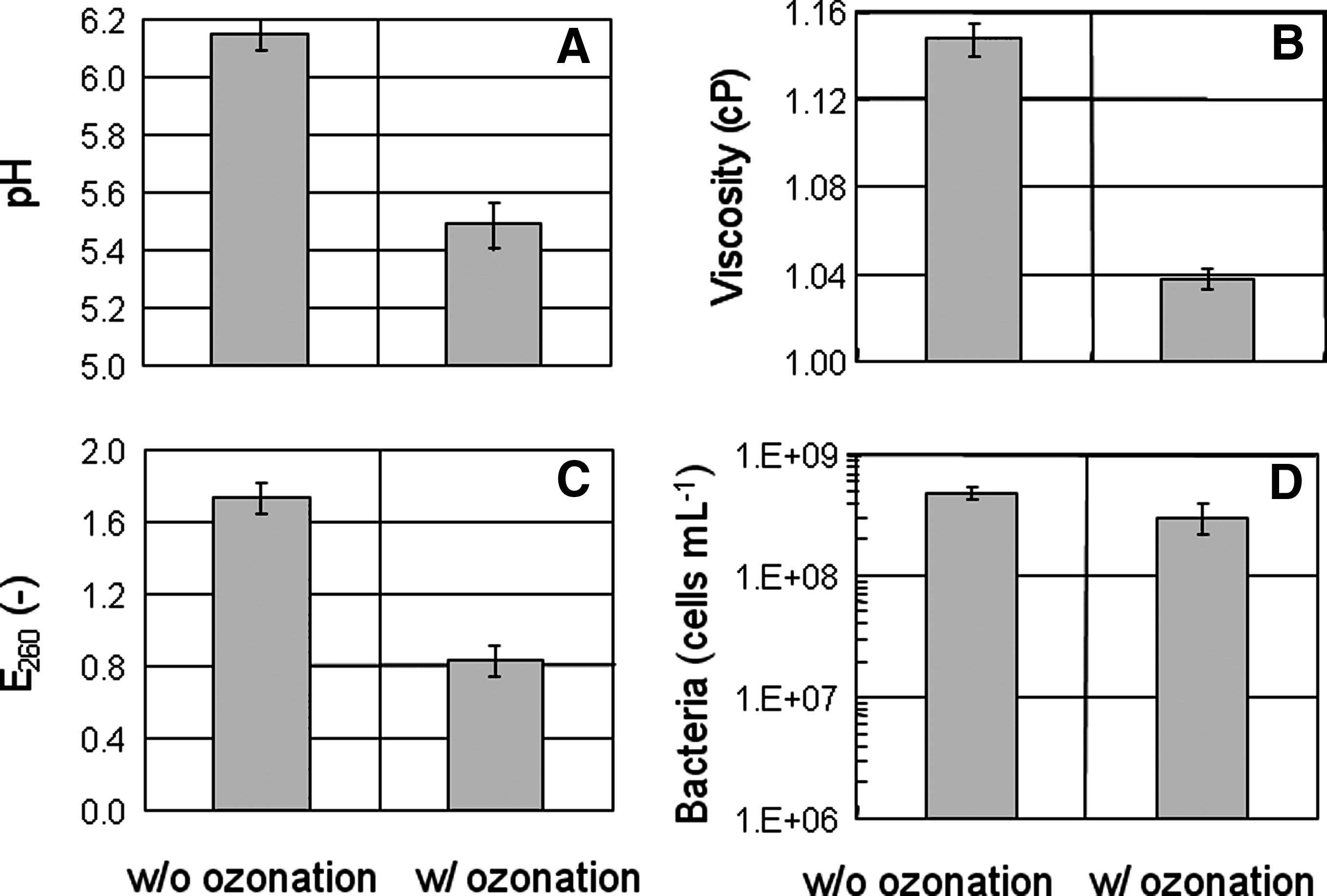
The effects of ozone bubbling on pH, viscosity, and decomposition of refractory substances are shown in Fig. 5. During the ozonation period, the pH in the anaerobic fermentor was maintained at approximately 5.3 without pH control. This can be attributed to the buffering by ozone and the increases in VFA (especially acetate and propionate) in the fermentor. Within a given detection limit (0.1 μg L−1), no production of methane in fermentor was detected during all experimental periods.
Variation in
The viscosity of the suspension increased to 1.2 (cP) during the no-ozonation period and fell to 1.0 (cP) during ozone bubbling. The viscosity decreased by approximately 10% on average after ozone was injected. This result implies that increases in suspended solids (SS) concentration due to the accumulation of solids in the reactor may cause an increase in the viscosity of the suspension and might cause declines in flux.
The ultraviolet absorption at 260 nm (E260) with respect to time was measured as an index of refractory substance variation in the fermentor. E260 decreased by approximately 52% through 95 days of intermittent ozonation. We noted that ozone bubbling was effective in decreasing the levels of refractory substances, demonstrating the validity of the ozone treatment. Although ozone bubbling was effective for permeation flux recovery, we suspected that it inhibited acid-forming bacteria due to its sterilization properties. As the primary purposes of this process are to collect a large quantity of dissolved organic matter to serve as electron donors for denitrification and to reuse substrates for other purposes, we investigated the influence of ozone bubbling on acid-forming bacteria. As shown in Fig. 5, considerable amounts of active acid-producing bacteria remained after ozone bubbling, demonstrating that there was no significant inhibition. Based on this result, we concluded that ozone can be applied in membrane-coupled anaerobic acid fermentors to recover organic materials without microbial inhibition.
Recovery of dissolved organic matter
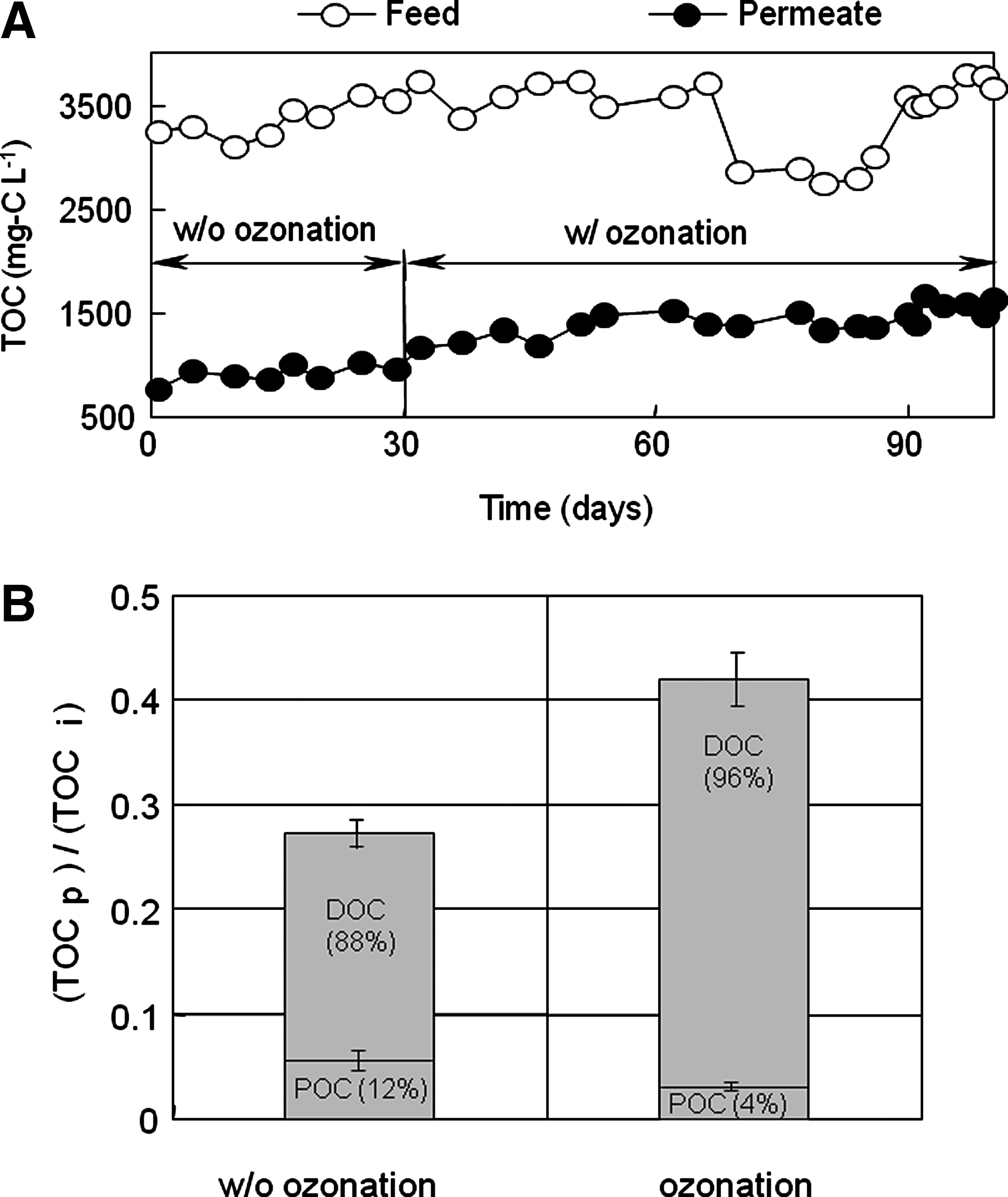
Variations in TOC concentration with respect to time, as well as the ratios of organic matter recovery with and without ozonation based on TOC concentration, are shown in Fig. 6. The recovery ratio of permeates with and without ozonation increased by 27% and 41%, respectively. Ozone bubbling improved the solubilization of solids, and ozonation was effective in turning POC into DOC. Also, the primary VFAs in DOC components in descending order of abundance, regardless of ozonation, were acetic, propionic, and butyric acids. The fraction of acetate, propionate, and butyrate were changed from 52.2%, 31.3%, and 16.5% to 65.7%, 27.6%, and 6.7% with ozonation, suggesting that the efficiency for acetate production is relatively improved by ozonation. Since the efficiency of lactate production is lower than that of acetate and propionate because of lower adenosine triphosphate (ATP) production (Jou and Llebot, 1990), no lactate was detected in all experimental results. Based on these results, we considered MAOF with intermittent ozonation to be a highly promising method of organic material recovery from coagulated sludge.
Taxonomic analysis of acidogenic bacteria
Twenty pure isolates were taxonomically identified using morphological and physiological analysis. Further determination of the nucleotide sequence (394 bp) of PCR-amplified partial 16S ribosomal DNA indicated that the sequence showed a high level of similarity (more than 96%) to all isolate 16S ribosomal DNA deposited in the database (data not shown). The identities of the isolates and the end products of the MAOF are shown in Table 3. By microscopy, rod-type bacteria (about 1 μm to 2 μm) were dominant. Some irregular rod shaped and spherically shaped bacteria were also present. Occasionally ovoid and cocci-type cells were observed. Crescent-shaped acetogenic bacteria, however, were not seen in any culture medium.
+, production; −, nonproduction.
As shown in Fig. 7, of the 20 pure cultures that were identified, most isolates were facultative or obligate anaerobic bacteria. Endospore-forming bacteria (No. 2) consituted less than 20% of the isolates. Endospore-forming cells have been isolated from anaerobic digesters (Toerien, 1967). Chen (1987) reported that 80% to 92% of bacterial populations in a mesophilic (35°C) fermentation reactor for municipal primary sludge were nonsporogenic bacteria. Hydrolysis of organic polymers is believed to be performed primarily by nonsporogenic bacteria (Akoh et al., 2004; Laksshmidevi and Muthukumar, 2009).
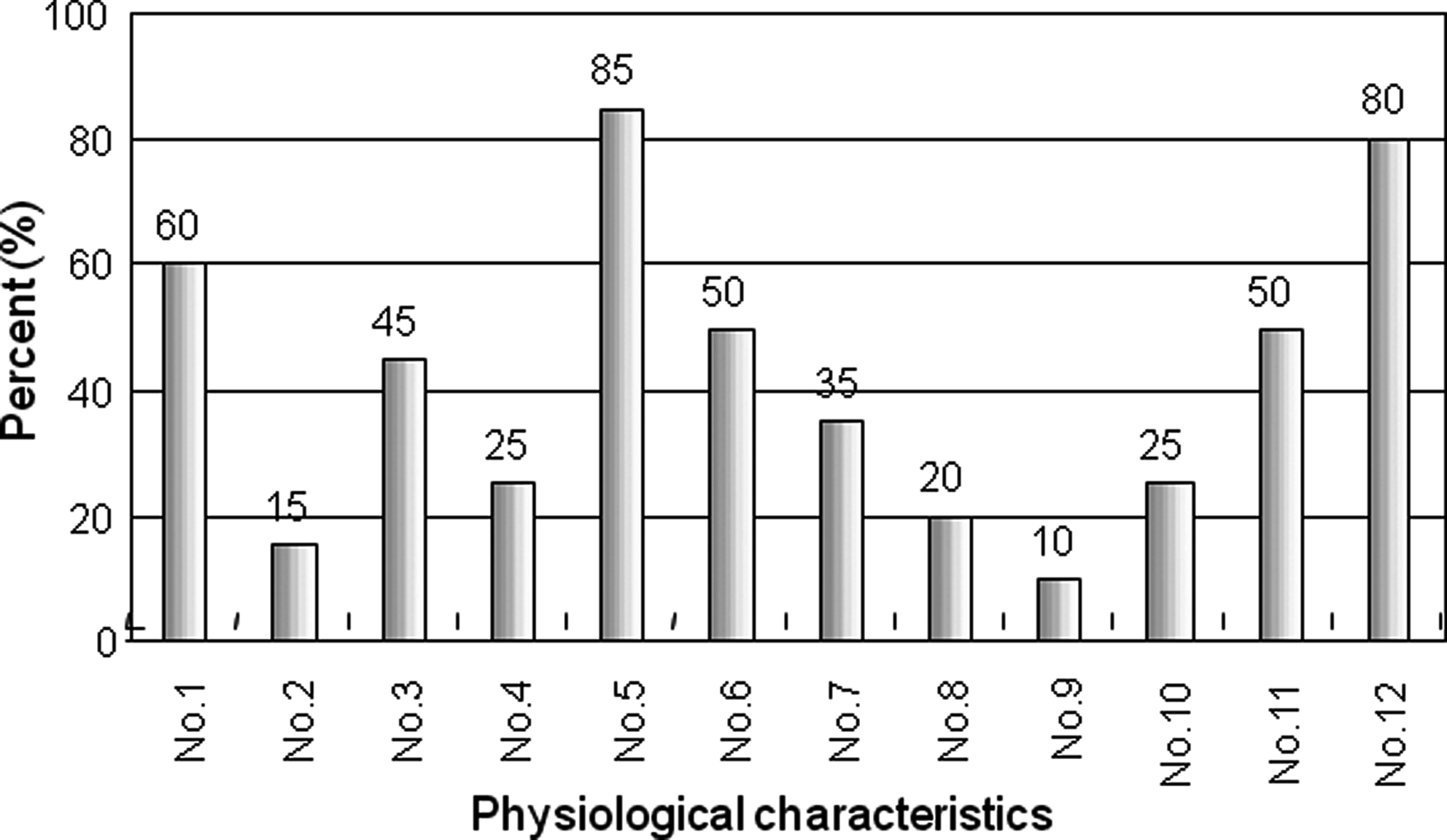
Physiological characteristics of the isolates. No. 1, gram positive; No. 2, endospore forming; No. 3, catalase positive; No. 4, ozidase positive; No. 5, fermentation of OF test; No. 6, nitrate reduction positive; No. 7, gelatin liquefaction positive; No. 8, indole production positive; No. 9, urease production positive; No. 10, pigment production positive; No. 11, motility positive; No. 12, acid production (exclude weak or no production) positive.
Urease production (No. 9), indole production (No. 8), and endospore formation (No. 2) occurred concurrently in only several isolates. All facultative anaerobic bacteria were catalase-positive (No. 3) except for one genus, Lactobacillus. Most catalase-negative reactions occurred in spherically shaped isolates (Espeel et al., 1993).
The three aerobic microbes that were identified in the MAOF performed oxidase-positive reactions. Using an OF test of the isolates, we determined that all facultative and obligate anaerobic bacteria harbored the fermentative characteristics of metabolism. Only one genus, Neisseria, produced acid from organic materials by oxidation. The obligate anaerobic cells were nitrate reduction-negative (Haverkamp et al., 1980).
Only several isolates possessed gelatin liquefaction (No. 7) properties, and no rod-shaped bacteria produced pigment. Half of the isolates were propelled by flagella. Eighty percent of the isolates produced VFA with actual sterilized precoagulated raw sludge. Clostridium and Neisseria isolates, however, experienced weak acid production when compared with other isolates.
Some researchers, in considering the predominance of nonmethanogens, have proposed that acid formers constitute the majority of facultative bacteria with a few strict anaerobes (Toerien and Hattingh, 1969; Pagga and Beimborn, 1983). However, many researchers have suggested that obligate anaerobic bacteria outnumber aerobic and facultative anaerobic bacteria considerably in anaerobic digesters (Noeth et al., 1988; Guyot et al., 1994).In contrast to previous findings, in our study, the numbers of facultative anaerobic bacteria that were isolated were relatively small. It is possible that this difference is because of our use of an open acid fermentor that was not operated under closed vacuum conditions and the maintenance of facultative fermentation conditions through control of the reactor's ORP.
Our results showed that the facultative anaerobic bacteria belonged to the genera Bacillus, Proteus, Serratia, Lactobacillus, Vibrio, Klebsiella, Aeromonas, and Escherichia. Obligate and facultative anaerobic acid-forming bacteria were isolated from the MAOF. Aerobic bacteria from the genera Pseudomonas, Micrococcus, and Neisseria were also identified in the MAOF. The existence of aerobic bacteria can be attributed to the intermittent aeration in controlling the ORP in the reactor. Some of the isolated Pseudomonas spp. were facultative anaerobes and might have been physiologically active in the anaerobic fermentation reactors.
Of the 20 identified isolates, there were 8 and 9 genera that constituted facultative acid-forming anaerobes and obligate acid-forming anaerobes, respectively. Therefore, both facultative and obligate anaerobic bacteria produce acid in the MAOF. The overall nature of the active microbial populations in the MAOF should be considered during the design of anaerobic fermentation reactors. Many obligate anaerobic bacteria exist in the MAOF, because the aerobic and facultative anaerobic bacteria that are present rapidly utilize any oxygen that is supplied by the raw coagulated sludge input and intermittent ORP control, thereby maintaining facultative and strict anaerobic conditions.
Homoacetogenic bacteria, such as Eubacterium, Acetobacterium, and Peptococcus, were identified in the MAOF; H2-producing acetogenic bacteria were not. Among acidogenic bacterias, Bacillus and Proteus were the most active proteolytic bacteria, and Bacillus, Lactobacillus, Sarcina, and Ruminococcus were significantly related to the hydrolysis of carbohydrates (Sharma and Hobson, 1990; Essia Ngang et al., 1992; Ntaikou et al., 2009).
Microscopic examination of sunflower-oil enriched cultures suggests that vibrio-shaped bacteria are the dominant lipolytic organisms in anaerobic fermentation reactors. Acidogens, such as Bacillus, Alcaligenes, and Pseudomonas spp., also are associated with these lipolytic activities, but whether these organisms form part of the primary lipolytic bacterial group is unknown (Dartois et al., 1994; Wilhelm et al., 1999; Cox et al., 2001). The presence of photosynthetic bacteria in anaerobic digesters or fermentors has not been reported. Consequently, facultative anaerobic bacteria, such as Bacillus spp., might contribute to the primary liquefaction of macromolecules during anaerobic fermentation (Toerien, 1967; De Haast and Britz, 1986).
Identification of isolates at the species level was difficult and, in some cases, impossible. Therefore, other classification methods, such as creating a hierarchical or nonhierarchical group of isolates, should also be used to describe populations. Furthermore, to increase the treatment efficiencies of anaerobic acid fermentation, design and operational factors of MAOF should be performed after adequate investigation of the microbiological properties of the MAOF. Therefore, in order to elucidate the predominant bacterial group and symbiotic relationships, an investigation of the quantitative evaluation method on the movement of each bacterial group in anaerobic fermentation are necessary.
Given that non-methanogens were also isolated in the MAOF, if acidogenic bacteria that have robust acid-forming capacities can be cultured extensively in the MAOF, they can improve the recovery of dissolved organic matter from precoagulated sludge.
Conclusions
Ozone bubbling was effective in preventing increases in permeation resistance caused by particle accumulation on the membrane surface in a membrane-coupled anaerobic organic acid fermentor with intermittent ozone bubbling. Refractory substance levels decreased, and the TOC of the suspension increased with intermittent ozonation. In addition, little inhibition of acid-producing bacteria by intermittent ozone bubbling was observed during consecutive experimental periods. The hydrolysis of organic polymers was believed to be performed primarily by nonsporogenic bacteria. Eighty percent of isolates produced VFA with actual sterilized precoagulated sludge. Homoacetogenic bacteria, such as Clostridium, Eubacterium, Acetobacterium, and Peptococcus, were identified in the MAOF, but H2-producing acetogenic bacteria were not.
Footnotes
Author Disclosure Statement
The authors declare that no competing financial conflicts exist.