




Abstract
Abstract
This article presents experimental and optimization work in developing a premixed charged compression ignition (PCCI) combustion diesel engine characterized in a low emission vehicle. An overall process to achieve PCCI combustion in a diesel engine is described, and effects of engine operating parameters such as exhaust gas recirculation rate, injection pressure, swirl ratio, and intake pressure along with injection features for fuel consumption and harmful engine-out emissions are evaluated. A late intake valve closing (LIVC) strategy was employed for further reduction in particulate matter (PM) and nitrogen oxide (NOx) emissions without sacrificing fuel economy. Design of experiments was used to evaluate the effect of three selected operating parameters and their interactions on the emission and fuel consumption characteristics of the PCCI engine. Upon optimization it was found that NOx and PM emissions could be simultaneously decreased 57% and 39%, respectively, compared to the emission level of a conventional diesel engine.
Introduction
The effects of multiple injection strategies on PCCI performance in a direct injection (DI) diesel engine have been investigated by many research groups, and the strategies were shown to ameliorate the combustion efficiency and increase harmful engine-out emissions (e.g., carbon monoxide [CO], hydrocarbon) to some degree (Yokota et al., 1997; Zhao et al., 2003). Compared with conventional diesel combustion, PCCI combustion can considerably reduce NOx emission when a multiple injection strategy is used. However, low combustion temperature and early ignition, occurring prior to top dead center (TDC), sometimes cause higher PM emissions and fuel consumption. This issue can be remedied by decreasing the compression ratio (CR) of the diesel engine by means of a late intake valve closing (LIVC) strategy, which retards the closing time of the intake valve during the compression stroke. The LIVC has shown promising results in terms of the simultaneous reduction of NOx and PM emissions (Hasegawa and Yanagihara, 2003; Araki et al., 2005; He et al., 2008; Murata et al., 2008).
Engine optimization is also necessary to further optimize the PCCI engine performance. Numerous operating parameters and their interactions increase the degrees of freedom that makes the engine optimization and calibration processes extremely complicated. Design of experiments (DoE) can substantially decrease the number of experiments involving multiple parameters and time demands such that the complex calibration processes can be simplified. DoE is a structured statistical analysis technique that can identify significant parameters and their interactions affecting experimental responses of a physical system through simultaneous evaluation (Montgomery, 1997). Useful DoE techniques have been widely employed to optimize process parameters in many research areas such as polymer processing, polymer formulations, component design, mechanical modeling, biomedical studies, and diesel engine optimization studies for achieving low emissions and high combustion performance (Brooks et al., 2005; Gothekar et al., 2007; Tatschl et al., 2007).
The ultimate goal of this research is to develop a future clean diesel engine that adopts a PCCI combustion strategy. With this goal in mind, the research was largely carried out in three parts using a four cylinder high-pressure DI diesel engine. First, a split injection strategy was evaluated by exploring the effects of various injection timings and injected fuel mass fractions on the combustion and emission characteristics. The optimum injection conditions were then determined. The way in which injection conditions combined with significant operating parameters affected PCCI combustion was also investigated. Next, a LIVC strategy was applied to the identical engine system and the potential for further improvement on the PCCI engine performance was evaluated. Finally, three of the most significant operating parameters (i.e., cooled EGR, intake pressure, SCV control) were selected, and the optimum engine operating conditions for maximizing engine performance in terms of emissions and fuel consumption were determined using DoE analysis and an optimization tool. The detailed results and data from the first part of the experimental studies were presented in detail in a previous article (Kim et al., 2009), and are therefore only briefly summarized in this paper. Readers are expected to refer to the reference for more information.
Experimental Apparatus and Methods
Engine system
A high-pressure DI PCCI engine equipped with a SCV, an EGR valve, and a turbo charger was employed to carry out various parametric studies. Figure 1 is a schematic diagram of the engine system used in this study, and Table l contains the specifications of the engine along with the common-rail injection system. A common-rail pressure, the fuel injection timing, and the injected fuel quantity were effectively controlled by an injection controller (TDA 8000, TEMS Co.) that was able to raise the rail pressure up to 200 MPa. An emission analyzer (7100 DEGR, Horiba Co.) and a smoke meter (415S, AVL Co.) were used to measure NOx, Total hydrocarbon, CO, carbon dioxide, oxygen, and soot emissions from engine exhaust in ppm/FSN, but all measured data were converted into g/kWh to correct for sample-to-sample variation. Readers are referred to the reference how to convert ppm/FSN into g/kWh (Ricardo Co., 2000).
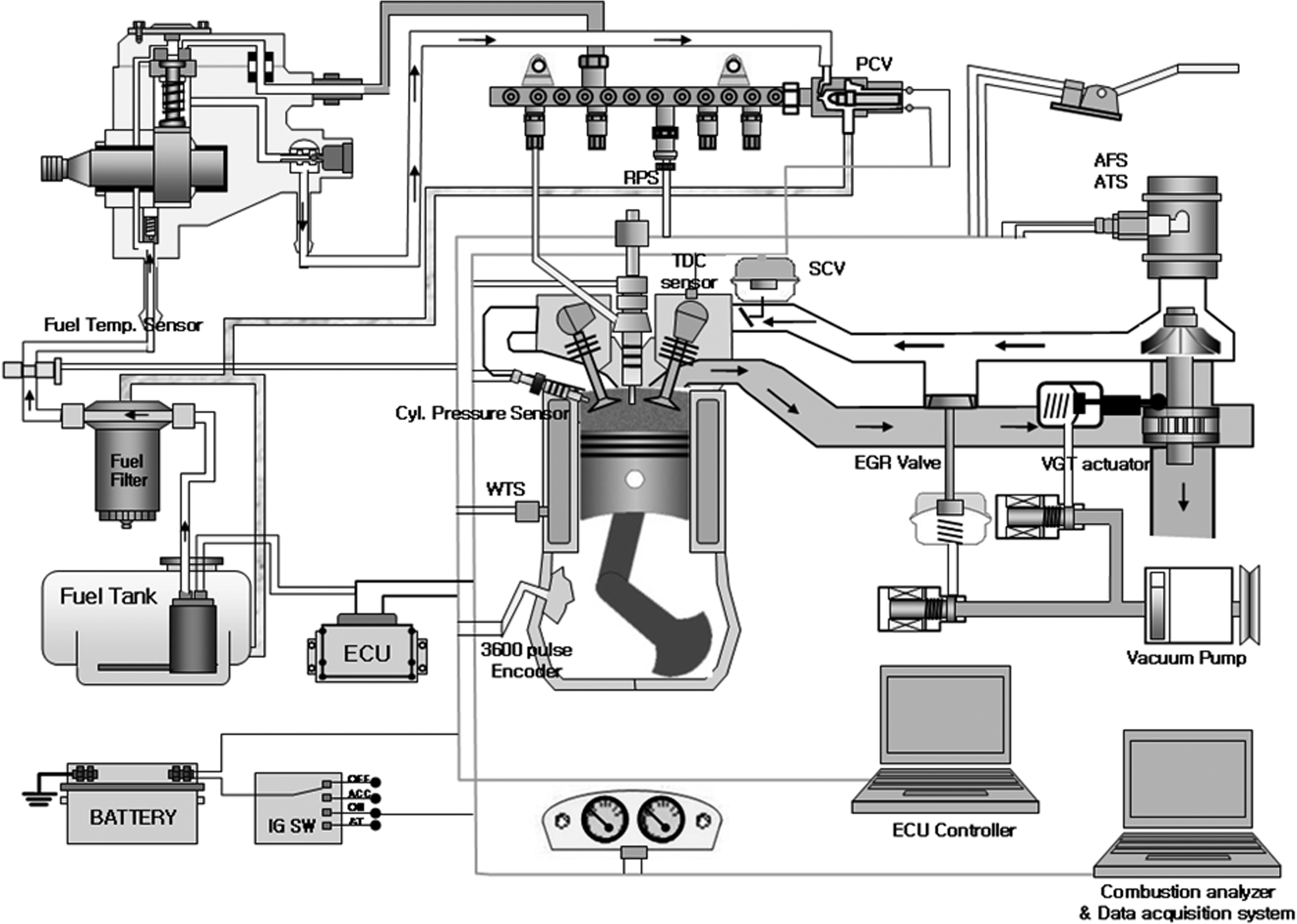
Schematic diagram of a common-rail injection-type PCCI four cylinder engine (Kim et al., 2009). SCV, swirl control valve; EGR, exhaust gas recirculation; TDC, top dead center; VGT, variable geometry turbocharger; PCV, crankcase ventilation system; ECU, engine control unit; RPS, rail pressure sensor; PCCI, premixed charge compression ignition; AFS, air flow sensor; ATS, air temperature sensor.
DI, direct injection; CRDI, common-rail direct injection.
Among Federal Test Procedure (FTP) driving modes, the most common mode (engine speed of 1500 rpm; brake mean effective pressure of 0.4 MPa) was chosen for this study. First, combustion and emission characteristics of the engine that are affected by varying injection timing and injected fuel mass fractions were investigated to find the optimal conditions. A two-stage injection strategy was normally set with a pilot injection in the middle of the compression stroke to ensure sufficient premixing, and the main injection near TDC. An additional investigation was performed on the effects of different injection conditions combined with other prevalent operating parameters affecting PCCI combustion (e.g., EGR rate, swirl ratio, injection pressure, and intake pressure) on combustion and emission characteristics. The operating parameters for engine performance were optimized using the DoE method. Detailed injection and operating conditions are summarized in Table 2.
BMEP, brake mean effective pressure; LIVC, late intake valve closing; ATDC, after top dead center; EGR, exhaust gas recirculation.
Optimization method
Combustion and emission characteristics of the PCCI engine are generally affected by operating parameters such as EGR rate, intake pressure and swirl ratio, and these parameters were selected for the optimization using a DoE technique in this study. A commercial code (MiniTab R14) was employed for the optimization technique, and Response Surface Methodology (RSM) for DoE tools was chosen to optimize the formulation for optimal performance of the PCCI engine.
A flowchart of the RSM optimization process is shown in Fig. 2. Arbitrary testing ranges for each parameter were initially determined based on previous case studies and many references, and these ranges were experimentally evaluated. The testing ranges were reduced by repeatedly conducting an experiment until a linear experimental result was obtained. A new experimental plan was then set using the DoE software. The three aforementioned parameters that most significantly influence three responses, brake-specific fuel consumption (BSFC), brake-specific NOx (BSNOx) and brake-specific PM (BSPM) were selected, and the determined test range for each parameter was divided into five steps. The three responses are strongly dependent on the condition of the parameters and their interactions. A total of 125 experiments was required to thoroughly evaluate the effect of the three parameters on the responses with respect to the five test conditions for each parameter. The optimization software selected 20 experiments consisting of the most reliable test conditions for each parameter within the determined test range.
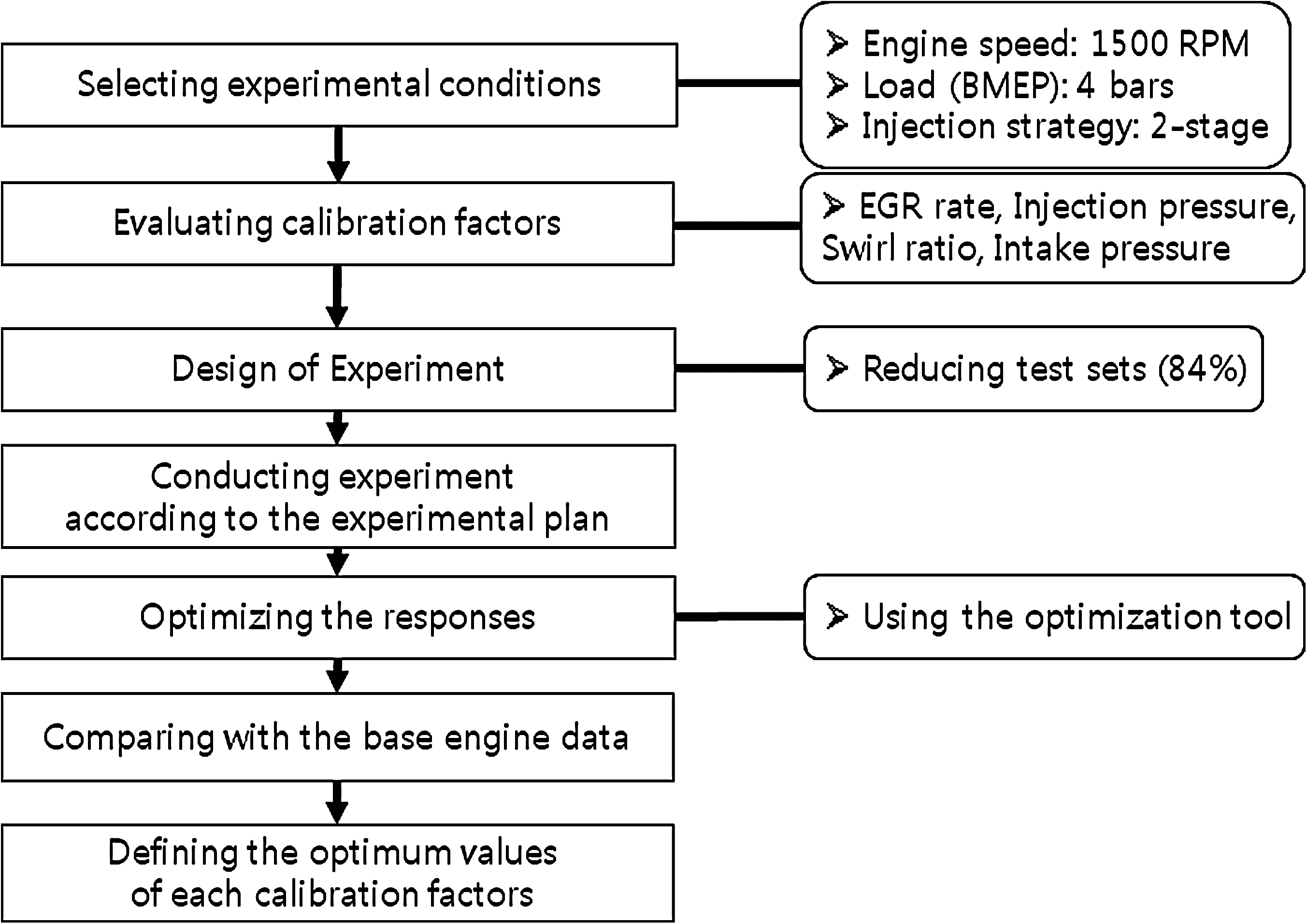
Flowchart of the DoE process. BMEP, brake mean effective pressure; DoE, design of experiments.
After 20 experiments were performed according to the experimental plan, second-order polynomial regression models were created using a central composite design. The optimum conditions for each parameter were then determined by considering target values in terms of BSFC and BS emissions. A fuel efficiency and emissions characteristics of a shaft reciprocating engine are often described in terms of the brake specific (BS) parameter that takes a friction loss into account; thus, different reciprocating engines can be directly compared using the parameters.
Experimental Results and Discussion
Effect of injection timing and mass rate
To determine the optimum injection timings for the two-stage injection strategy in terms of engine emissions and fuel consumption, the pilot injection timing was varied from before top dead center (BTDC) 70° to 45° while the main injection timing was fixed at after top dead center (ATDC) 5°. Figure 3 shows the effect of the pilot injection timing on BS emissions and fuel consumption. As the pilot injection timing was approached TDC, high NOx, and PM emissions along with an increase in BSFC were observed. A pilot injection close to TDC was thought to have led to low wall wetting and high combustion temperature. Based on BS emissions and BSFC results, the optimum timing for the pilot injection was concluded to be BTDC 60°.

Effect of a change in the first injection timing on
In contrast, the main injection timing was varied from BTDC 5° to −7.5° while the pilot injection timing was fixed at BTDC 60°. Figure 4 shows the effect of the main injection timing on BS emissions and fuel consumption. As a consequence, BSFC increased, but NOx emission decreased. PM did not change much initially, but then increased at the main injection timing of BTDC −7.5°. These results may be attributed to reduced combustion efficiency resulting from a decrease in the combustion temperature. Based on the results of this test, the main injection timing of BTDC −5° was considered the optimal.
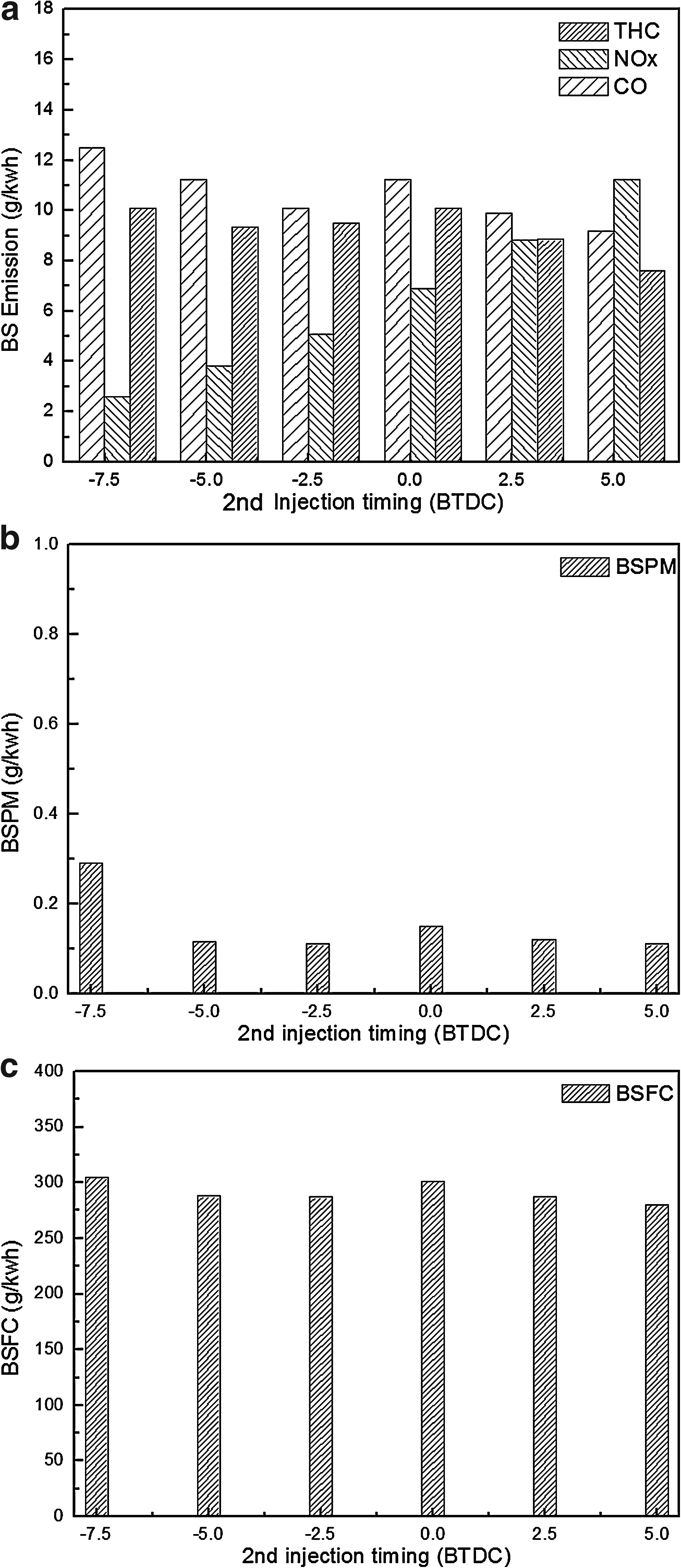
Effect of a change in second injection timing on
Variations in the injected fuel mass rate and injection timings also significantly affect the characteristics of BS emissions and BSFC in the two-stage injection strategy. Therefore, an investigation was carried out to determine how the injected fuel mass rate influences combustion and emissions when the fuel mass rate of the main injection was increased from 50% to 90% of the total fuel mass. The injection timings for the pilot and main injection were BTDC 60° and BTDC −5°, respectively. Figure 5 shows that the BSFC and BS emissions decreased with increasing fuel mass rate of the main injection, resulting from improved combustion efficiency in the chamber. A ratio of 3:7 was concluded to be the optimum injection mass ratio for the pilot and main injection. While injection timings and ratio were constrained as listed in Table 2, the effects of operating parameters affecting PCCI combustion characteristics were evaluated in terms of combustion and emission characteristics.
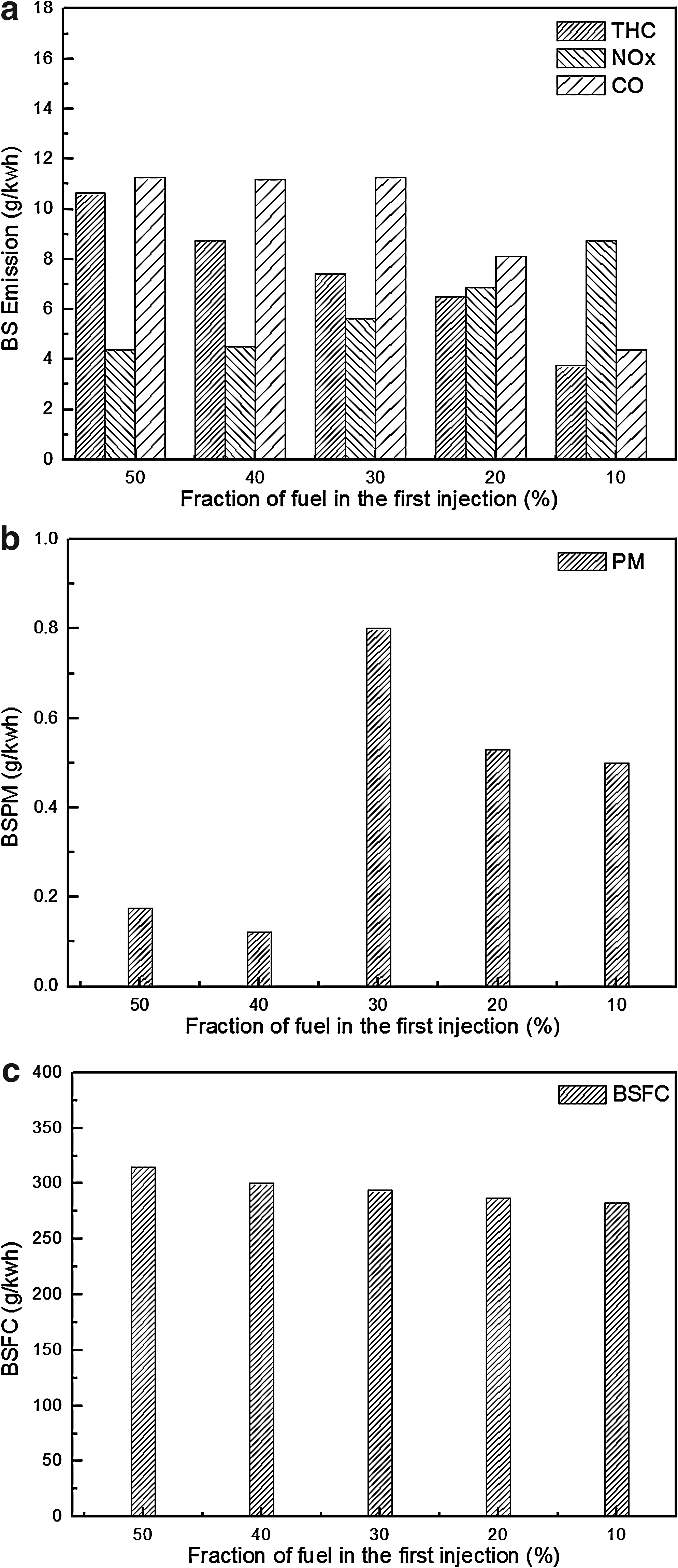
Effect of fraction of fuel in the first injection on
Effect of operating parameters
EGR affects the combustion temperature and air-to-fuel ratio flow in cylinders; therefore, an increase in the EGR rate from 20% to 35% reduced NOx emission but increased PM emission along with BSFC. When the injection pressure was varied from 850 to 1300 bar, PM and BSFC decreased, and NOx emissions rose slightly as the injection pressure increased up to 1150 bar. The higher injection pressures resulted in better atomization of the fuel, leading to improvement in combustion efficiency. However, excessively high injection pressure, ∼1300 bar, caused wall wetting, resulting in increased fuel consumption. Raising the swirl ratio reduced the combustion pressure, which led to a long ignition delay. As a result, NOx and PM emissions were expected to decrease simultaneously. However, the high swirl ratio reduced NOx emission to some degree, but it rarely affected PM emissions. Although a high swirl ratio could enhance combustion efficiency, it could decrease intake air flowing into a cylinder that could lead to a fuel rich condition in the chamber. The elevated intake pressure promoted the efficiency of the first combustion, resulting in a short ignition delay for the second combustion and slightly increased PM emissions. Diffusive combustion took place due to the short ignition delay. The combustion temperature also significantly increased in the chamber, which contributed to high NOx emissions. BSFC increased since the first ignition occurred prior to TDC. The ignition can be delayed further by decreasing the CR inside the cylinder so that PM and NOx emission levels can be decreased. For this purpose, an LIVC strategy was employed in combination with the aforementioned operating parameters to considerably reduce PM and NOx emission levels without much increase in BSFC. A commercially available cam shaft was remodeled, and cam angles were modified to change IVC timings.
Effect of LIVC
The effects of advancing second injection timings with LIVC on PCCI engine performance in terms of BS emission and BSFC are shown in Fig. 6. Simultaneous reductions in PM and NOx emissions were accomplished via a PCCI combustion strategy applied with multiple injections at ATDC −60° and ATDC 5°, in comparison to conventional diesel engine emission. However, the BSFC increased ∼13%, which is an inevitable trade-off due to downgraded combustion efficiency. The increase in BSFC was compensated for by advancing the second injection timing by 5°, resulting in increased combustion temperature accompanied by reduced PM emissions. A high NOx emission was of concern in this case, but that issue was also solved using LIVC, which led to a low CR. As a result, the NOx emission level was reduced as much as the emission level observed with the second injection timing of 5° while the PM emission level and BSFC remained constant. In addition, when the second injection timing was advanced 2.5° from TDC, BSFC decreased to as low as that of the base engine, but NOx and PM emissions increased.

Effect of injection timing and LIVC on
Optimization using DoE
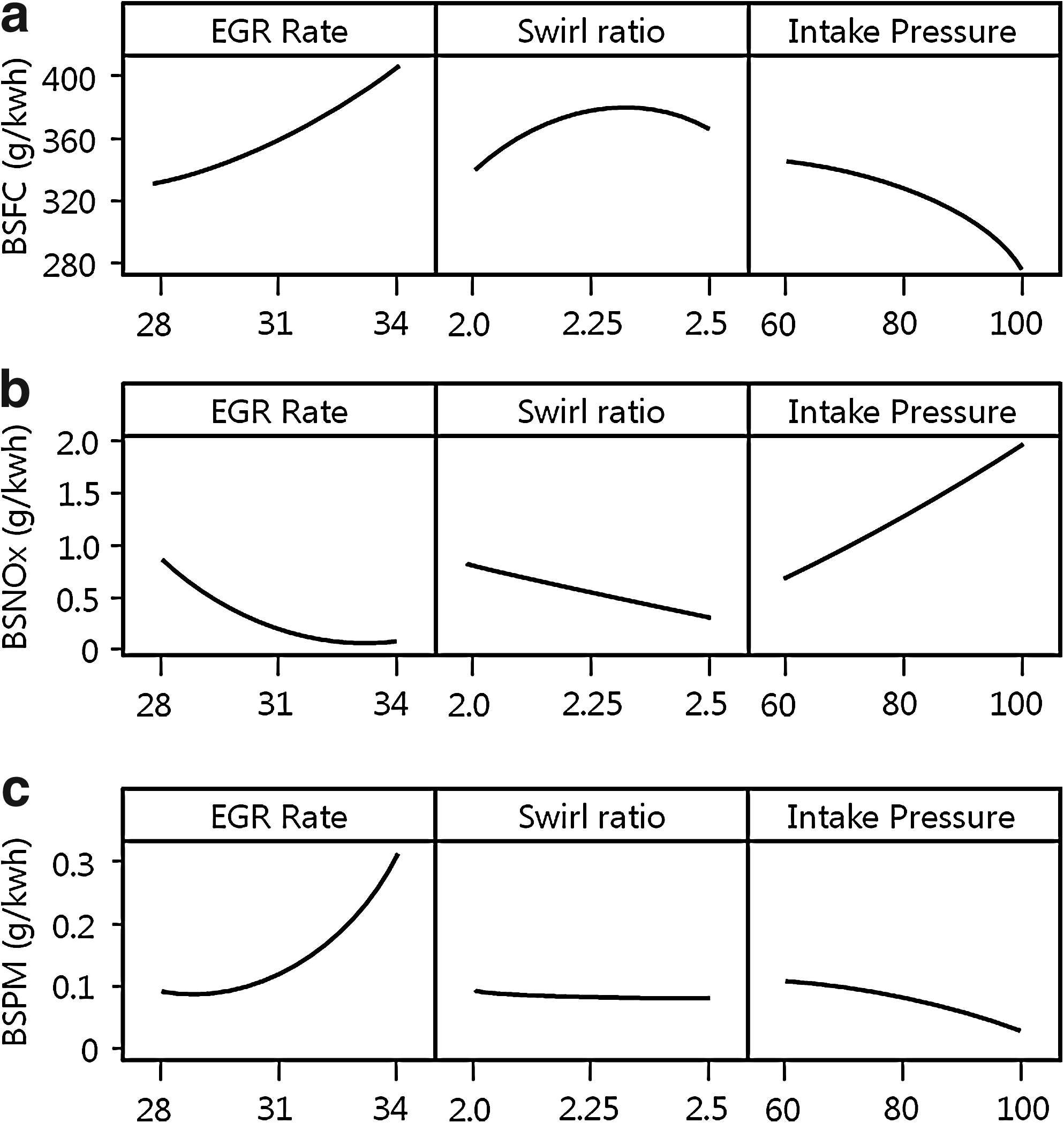
As of now, emissions and fuel consumption characteristics affected by operating parameters have been investigated and a rough trend was obtained. The test ranges of each parameter and level were carefully chosen for the optimization study, and they are summarized in Table 3. Since a small number of experiments are beneficial for saving time and costs, the central composite design involved the use of the RSM method to carry out the analysis with the minimum number of experiments and to find dominant engine operating parameters and their proper combination. According to previous experimental data, the influence of injection pressure on the emissions and fuel consumption was relatively trivial compared with other operating parameters, thus the injection pressure was excluded in the optimization to reduce the number of operating parameters. The test ranges for three parameters were divided into five levels such that a three to five power (i.e., 125) experimental set would be needed to completely identify the effect of three parameters on responses. However, the optimization software randomly selected 20 experimental conditions for the optimization according to experimental design. Figure 7 shows the main effect plots of the operating parameters with respect to BSFC, BSNOx, and BSPM. In Fig. 7 it is evident that an increase in EGR rate causes high BSPM emissions and BSFC but a low BSNOx emission. Swirl ratio and intake pressure also have a significant effect on the three responses, and the trend is in excellent agreement with the experimental results. In addition, the optimization technique led to an 84% reduction in experiments while preserving more than 90% accuracy.
Second-order polynomial regression models were developed to predict the interaction between the operating parameters on the responses as derived below.
where x1, x2, and x3 denote EGR rate, swirl ratio, and intake pressure, respectively. The regression models based on 20 experiments predicted the responses reasonably well. The second order polynomial regression analysis was found to have more than 89% of accuracy in terms of BSNOx, BSPM, and BSFC. The coefficients in the regression models represent the impact of parameters and their interactions on responses. EGR rate was a dominant parameter that significantly affected all responses.
Experimental data and optimized points are plotted in Fig. 8, and an optimum curve was obtained to determine the optimum responses in terms of BSNOx, BSPM, and BSFC. The trade-off relation between BSNOx and BSPM is shown in Fig. 8. The condition of the operating parameters corresponding to the optimum point was an EGR rate of 30%, swirl ratio of 2.5, and intake pressure of 100 mm Hg. Under this condition, BSNOx and BSPM were simultaneously reduced by 57% and 39%, respectively, compared with conventional diesel engines without increasing BSFC. The final results are summarized in Table 4. In addition, NOx emission decreased by up to 76% and fuel consumption and PM emission were retained when the LIVC strategy was utilized as listed in Table 5.

Experimental and optimized data obtained using a DoE technique on BSNOx and BSPM maps.
Conclusions
The effects of various operating parameters combined with a two-stage injection strategy on the combustion and emission performance of a high-pressure DI PCCI engine were experimentally investigated. Detailed results and discussion were presented in a previous article (Kim et al., 2009), therefore the reader is expected to refer to that reference. In addition to that study, an additional study was carried out to further reduce PM and NOx emission levels by using the LIVC strategy and optimization. The principle conclusions can be summarized as follows:
(1) A PCCI combustion strategy is effective in simultaneously decreasing NOx and PM emissions; however, an increase in fuel consumption is inevitable. (2) An increase in BSFC can be compensated for by advancing the second injection timing. When the second injection timing is advanced 5°, an increase in combustion temperature is accompanied by decreasing BSFC and PM emissions. A high NOx emission is of concern in this case, but LIVC leads to a low CR such that it can reduce NOx emissions while the PM emission level and BSFC remain constant. In addition, when the second injection timing is advanced 2.5° from TDC, BSFC decreases to as low as that of the base engine, but NOx and PM emissions increase. (3) As a result of the optimization of three operating parameters combined with decreasing CRs achieved by LIVC, simultaneous reductions in NOx and PM emissions were obtained without increasing fuel consumption. In addition, NOx emissions with the optimized parameters were decreased by 76% compared with a conventional diesel engine while the fuel consumption and PM emission remained the same.
Footnotes
Acknowledgment
This work was supported in part by the Industrial Core Technology Development Project of the Ministry of Knowledge Economy of the Republic of Korea.
Author Disclosure Statement
No competing financial interests exist.